3. The neuron
 Call Kai
 Learn
Learn Practice Test
 Spaced Repetition
 Match
Match Flashcards
 Knowt Play
1/20

There's no tags or description
Looks like no tags are added yet.
Name | Mastery | Learn | Test | Matching | Spaced | Call with Kai | Chat |
|---|
No analytics yet
Send a link to your students to track their progress
21 Terms
Syllabus point
The reflex arc comprises of specially structured neurons, including sensory, interneuron & motor neurons, to transmit information from the receptor to the effector to respond rapidly to stimull.
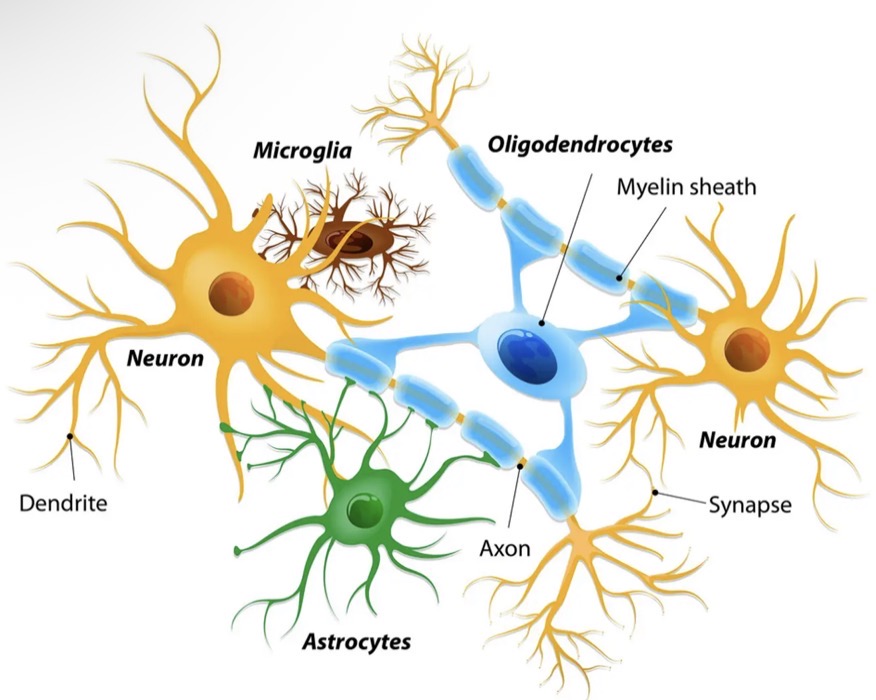
Nervous tissue is made up of two main cell types
Neuron
Neuroglia (glial cells)
Neuron
neurons are the basic structural and functional unit of the nervous system.
Neurons are specialised cells that transmit chemical and electrical signals.
Nearly 86 billion neurons work together within the nervous system to communicate with the rest of the body.
Neurons vary in size and shape, but all consist of:
cell body
Two different types of extensions from the cell body: axon and dendrites.
Structure of a typical neuron
dendrites
Cell body
Schwann cells
Node of ranvier
Axon terminal
Myelin sheath
axon
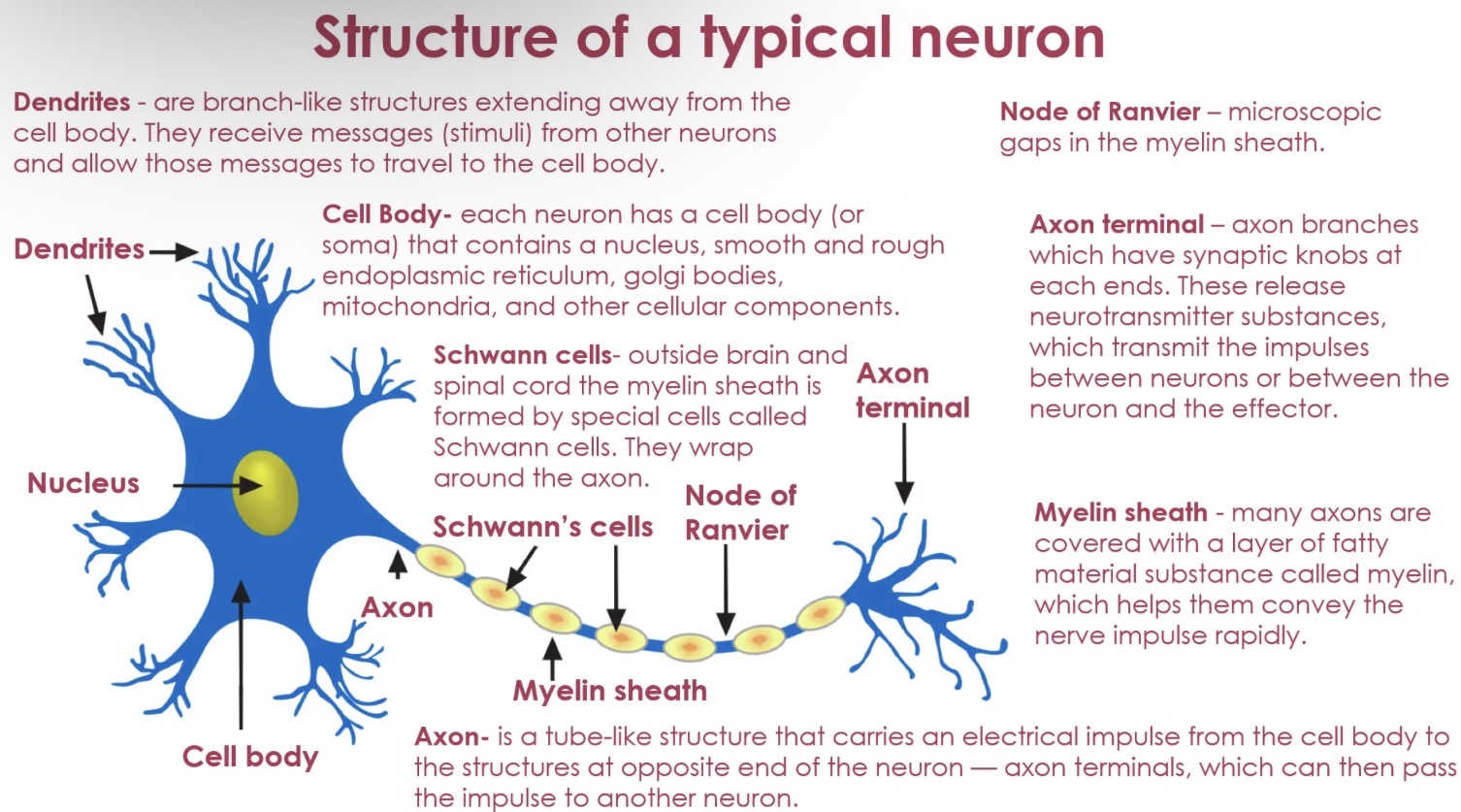
Dendrites
are branch-like structures extending away from the cell body. They receive messages (stimuli) from other neurons and allow those messages to travel to the cell body.
Cell body
each neuron has a cell body (or. soma) that contains a nucleus, smooth and rough endoplasmic reticulum, golgi bodies, mitochondria, and other cellular components.
Schwann cells
outside brain and
spinal cord the myelin sheath is formed by special cells called Schwann cells. They wrap around the axon.
Node of ranvier
microscopic gaps in the myelin sheath.
Axon terminal
axon branches which have synaptic knobs at each ends. These release neurotransmitter substances, which transmit the impulses between neurons or between the neuron and the effector.
Myelin sheath
many axons are covered with a layer of fatty material substance called myelin, which helps them convey the nerve impulse rapidly.
Axon
is a tube-like structure that carries an electrical impulse from the cell body to the structures at opposite end of the neuron — axon terminals, which can then pass the impulse to another neuron.
Pathway of an impulse down the neuron
Once a signal is received by the dendrite, it then travels passively to the cell body.
The cell body contains a specialised structure, the axon hillock, that integrates signals from multiple synapses and serves as a junction between the cell body and an axon.
The axon propagates the integrated signal to specialised endings called axon terminals.
These terminals, in turn, synapse on other neurons, muscles, or target organs.
Chemicals released at axon terminals allow signals to be communicated to these other cells.
Some axons are covered with myelin, which acts as an insulator to increase the speed on conduction.
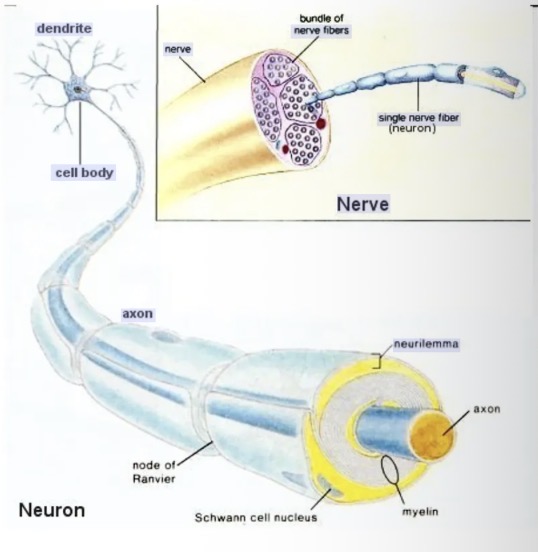
Neuron versus nerve versus nerve fibres
A neuron is an individual specialised cell which are primarily involved in transmitting information through electrical and chemical signals.
A nerve fibre is the the axon of a neuron together with the tissues associated with it (such as a myelin sheath).
A nerve is a bundle of nerve fibres held together by connective tissue
Types of neurons
Neurons can be classified according to their structure - how many projections extend from their soma (cell body).
Three main types:
Bipolar
Multipolar
Unipolar
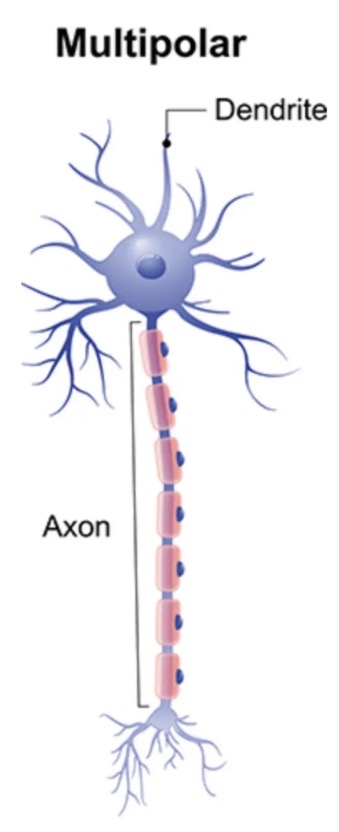
Multipolar neurons
Multipolar neurons are the most common type of neuron.
Each multipolar neuron contains one axon and multiple dendrites.
Most interneurons of the brain and spinal cord and motor neurons that carry messages to the skeletal muscles are multipolar.
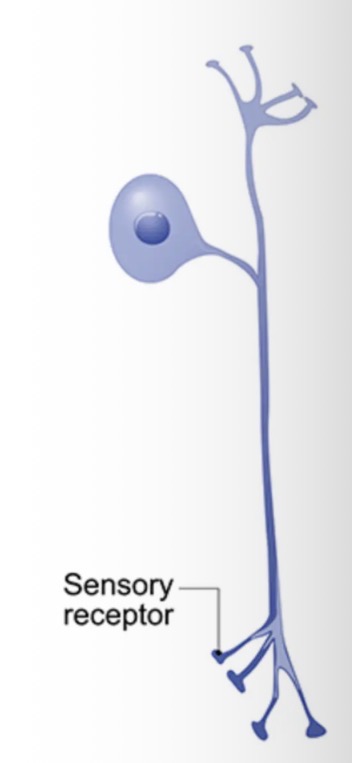
Unipolar neurons
Have one extension which is an axon.
Cell body is to one side of the axon.
Most sensory neurons are unipolar.
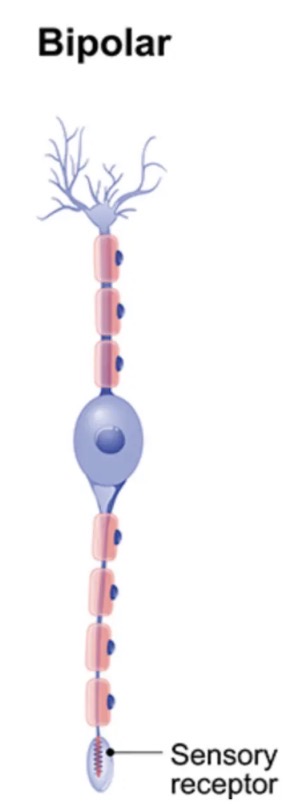
Bipolar neurons
A bipolar neuron has one axon and one dendrite extending from the soma.
Both the axon and dendrite have many branches at each end.
An example of a bipolar neuron is a retinal bipolar cell, which receives signals from photoreceptor cells that are sensitive to light and transmits these signals to ganglion cells that carry the signal to the brain.
Types of neurons
Neurons can be also classified according to their function.
Three main types:
Sensory
Motor
Interneuron
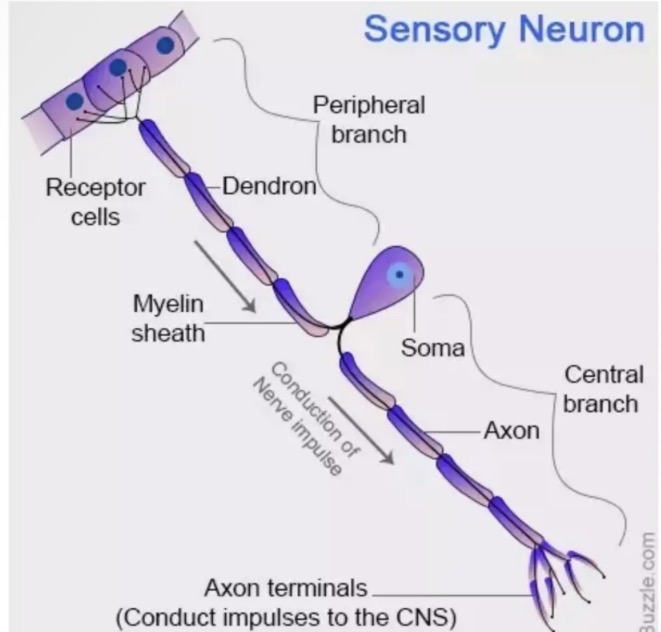
Sensory neuron
Transmit impulses from receptors in sense organs or the skin to other neurons in the central nervous system.
Most sensory neurons are unipolar but some are bipolar e.g. eye, ear and nose.
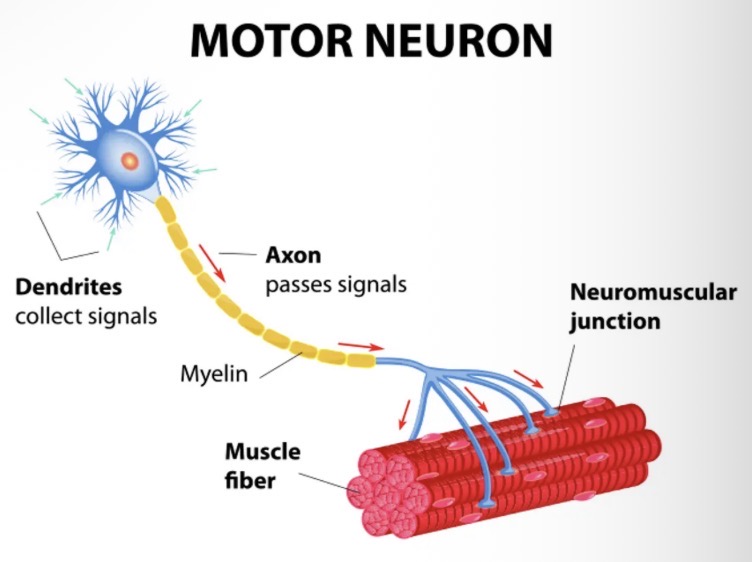
Motor neuron
Transmit impulses from the central nervous system to the muscles or glands.
Most motor neurons are multipolar.
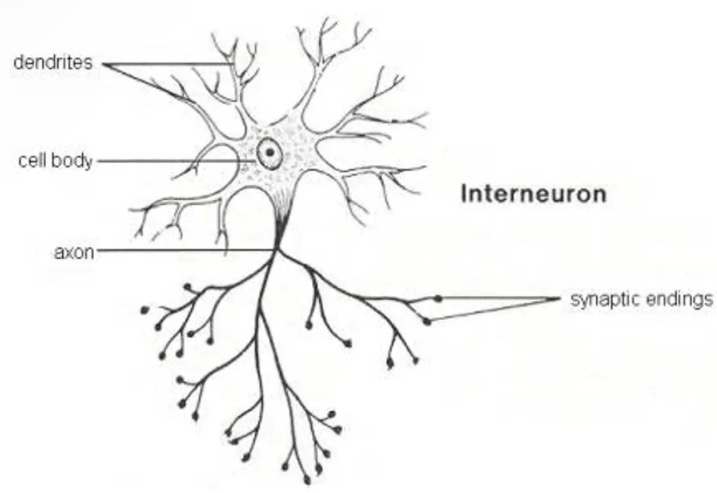
Inter neuron
Also called relay or association neurons.
Located in the central nervous system.
Transmit impulses from sensory to motor neurons.