Lecture 5: Polyesters and Polycarbonates
 Call Kai
 Learn
Learn Practice Test
 Spaced Repetition
 Match
Match Flashcards
 Knowt Play
1/18

There's no tags or description
Looks like no tags are added yet.
Name | Mastery | Learn | Test | Matching | Spaced | Call with Kai | Chat |
|---|
No analytics yet
Send a link to your students to track their progress
19 Terms
What are the two main classes of polyesters?
Partly aromatic polyesters: PET, PEN, PBT
Aliphatic polyesters: PLA, PGA, PCL, PHA.
What is one way to synthesize polyesters?
Step-growth polymerization with diol and dicarboxylic acid.
Ring opening polymerization of Lactones (such as PLA and PCL)
What are important properties of the ester group in polyesters?
susceptible to hydrolysis, aminolysis and ester exchange
polar
How do aromatic and aliphatic polyesters differ?
Aromatic: stiffer, higher Tg and Tm
Aliphatic: more flexible and often biodegradable.
What are the key properties of PET?
hard, stiff, strong
excellent CO₂ barrier
high dimensional stability
good chemical resistance
relatively low impact resistance.
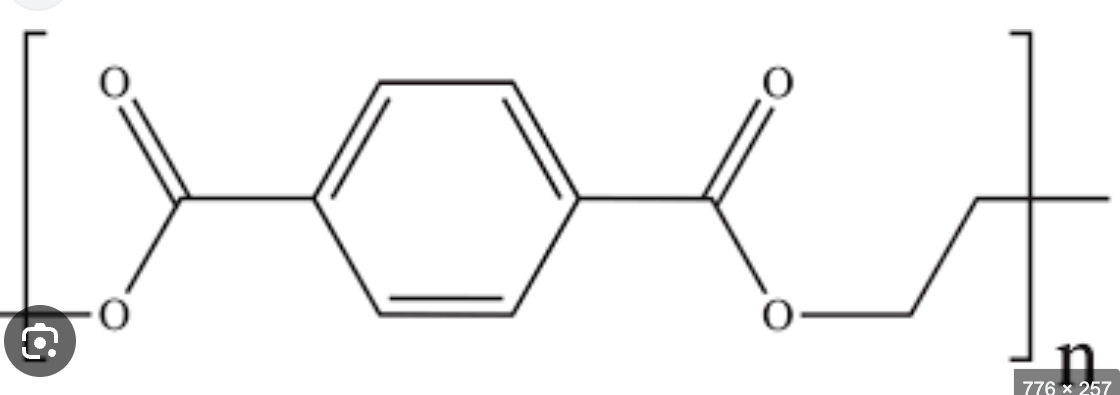
What must be considered when processing PET?
hygroscopic, so it must be properly dried before processing.
slow crystallization
mold shrinkage
What additives are commonly used in PET?
nucleating agents
glass fibers
elastomers
What are the main applications of PET?
fibers (largest use)
bottles
food packaging
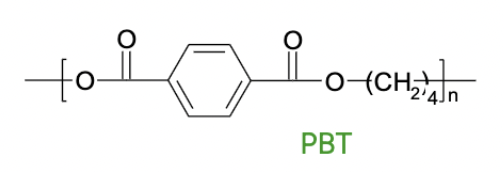
What are the key properties of PBT?
low water absorption
High strength and modulus
good solvent resistance.
Why are many aliphatic polyesters biodegradable?
Many aliphatic polyesters are biodegradable because their ester bonds can be hydrolyzed, and the flexible aliphatic chains allow water and enzymes to break down the polymer more easily compared to a bulky aromatic polyester.
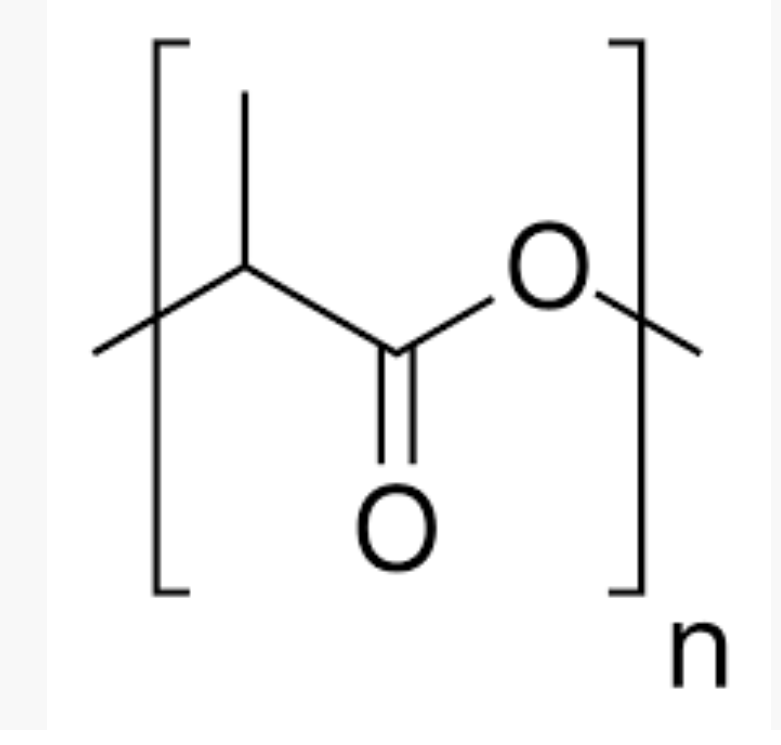
What characterizes PLA?
biodegradable
produced from renewable resources
used in biomedical and packaging applications.
What is the difference between Polyesters VS. Polycarbonates?
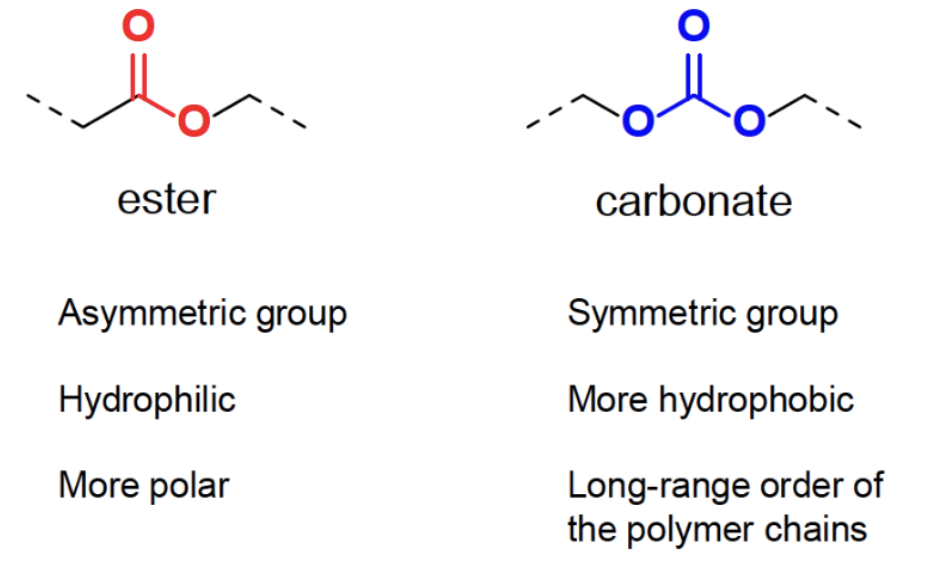
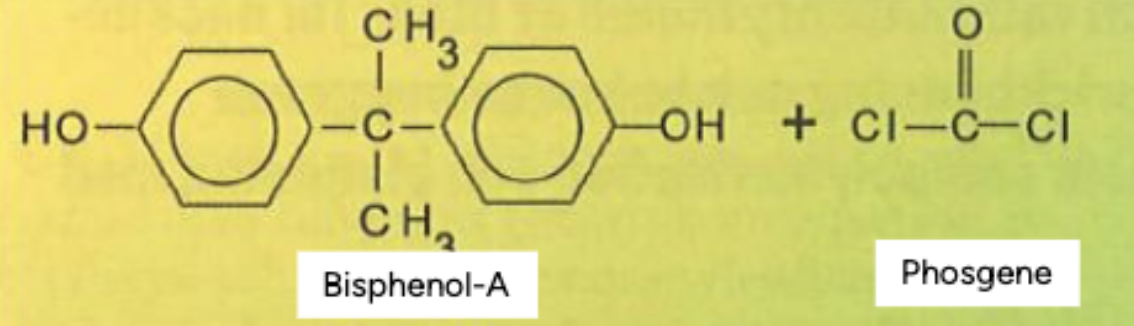
What monomers are used to synthesize polycarbonate?
Bisphenol-A (BPA)
Phosgene
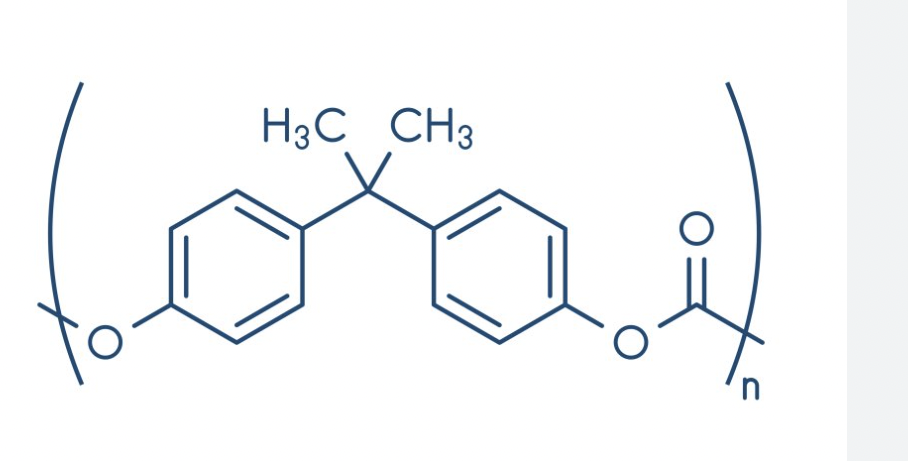
Why does polycarbonate have high Tg and toughness?
Because aromatic rings restrict chain mobility
What are the key properties of polycarbonate?
amorphous and transparent
veeeeeeery high impact resistance
good electrical insulation
What are disadvantages of PC?
limited resistance to chemicals and UV
more expensive than commodity plastics.
Why must polycarbonate be dried before processing?
Because water causes hydrolytic degradation and foamy products.
What additives are commonly used in PC?
UV stabilizers
antioxidants
What are common applications of polycarbonate?
Bullet proof vests
automotive components