NVCC BIO 141 Chapter 6
 Call Kai
 Learn
Learn Practice Test
 Spaced Repetition
 Match
Match Flashcards
 Knowt Play
1/51

There's no tags or description
Looks like no tags are added yet.
Name | Mastery | Learn | Test | Matching | Spaced | Call with Kai | Chat |
|---|
No analytics yet
Send a link to your students to track their progress
52 Terms
Functions of the skeletal system
Protection
Mineral Storage/pH homeostasis
Blood Cell Formation: hematopoiesis
Fat Storage: triglycerides
Movement
Support
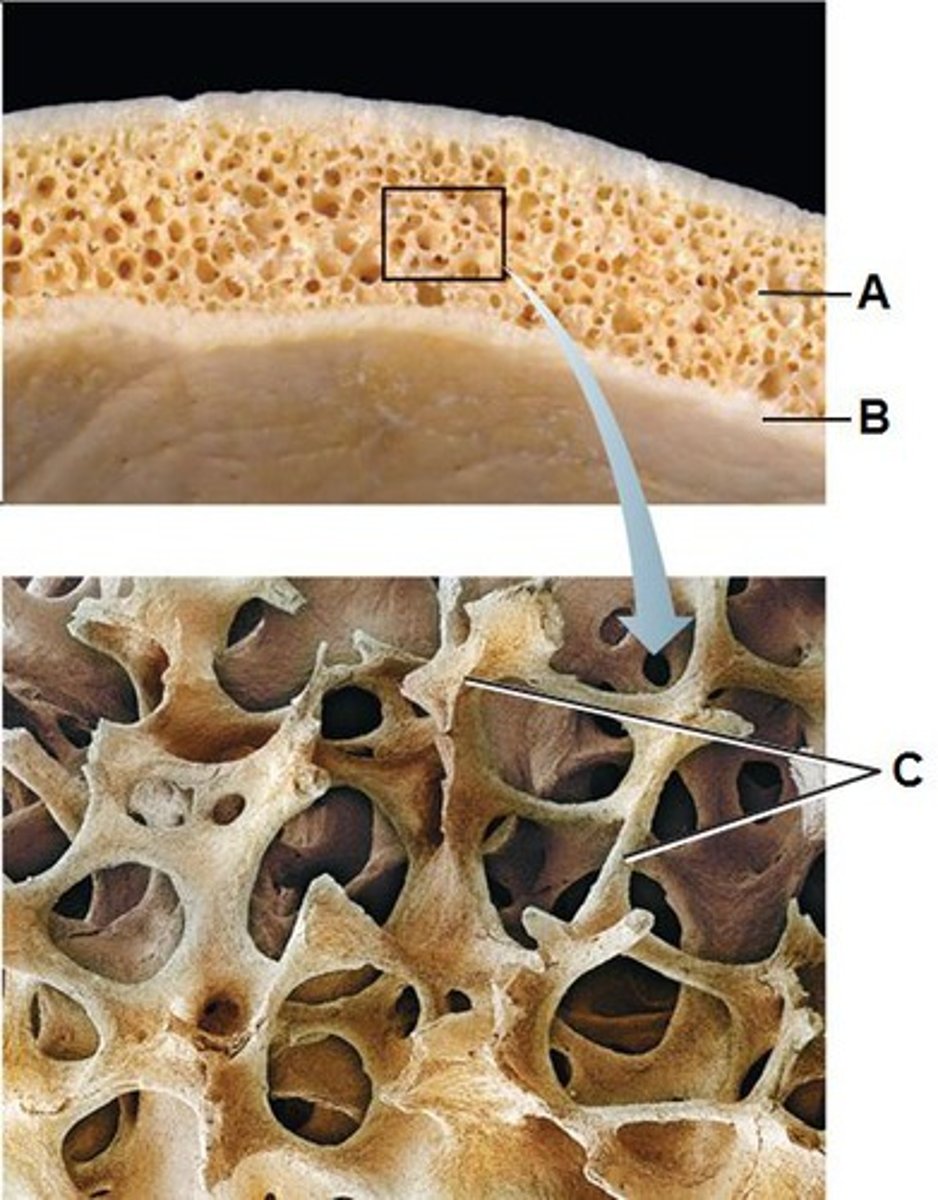
Compact bone
hard, dense outer layer
resists majority of stresses placed on it
linear compression/twisting
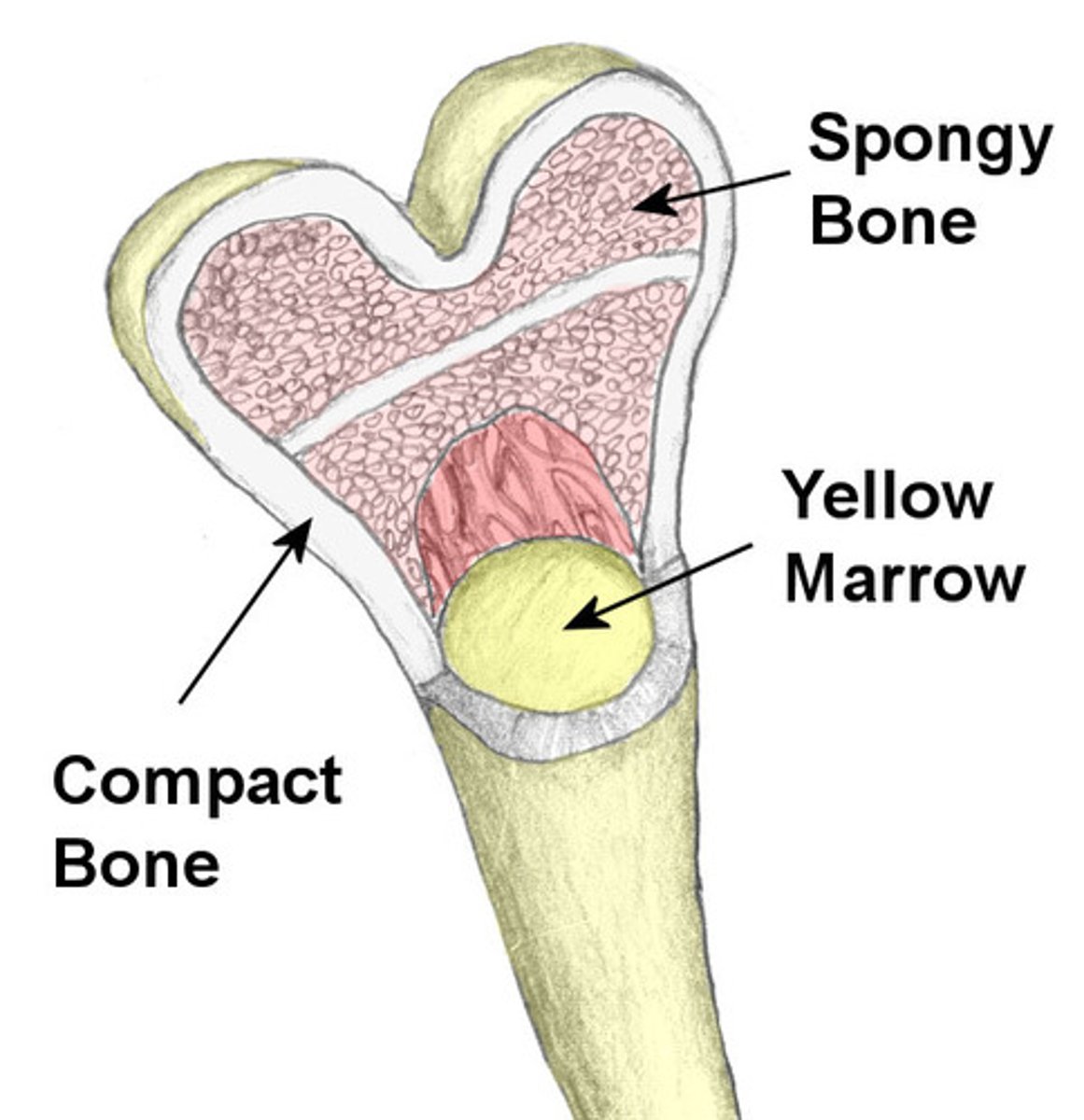
Spongy bone
inner honeycomb-like
resist forces in many directions
holds bone marrow
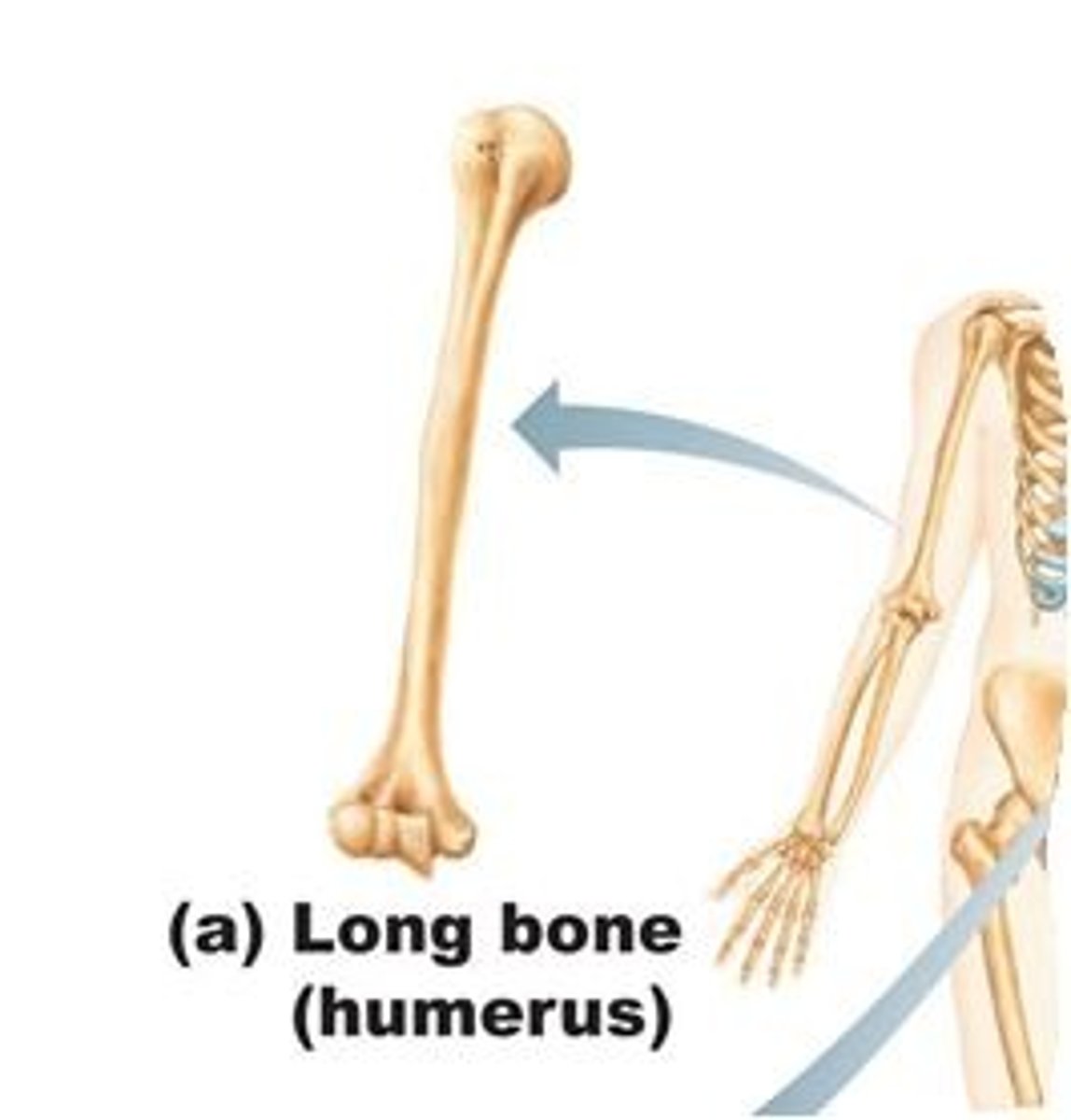
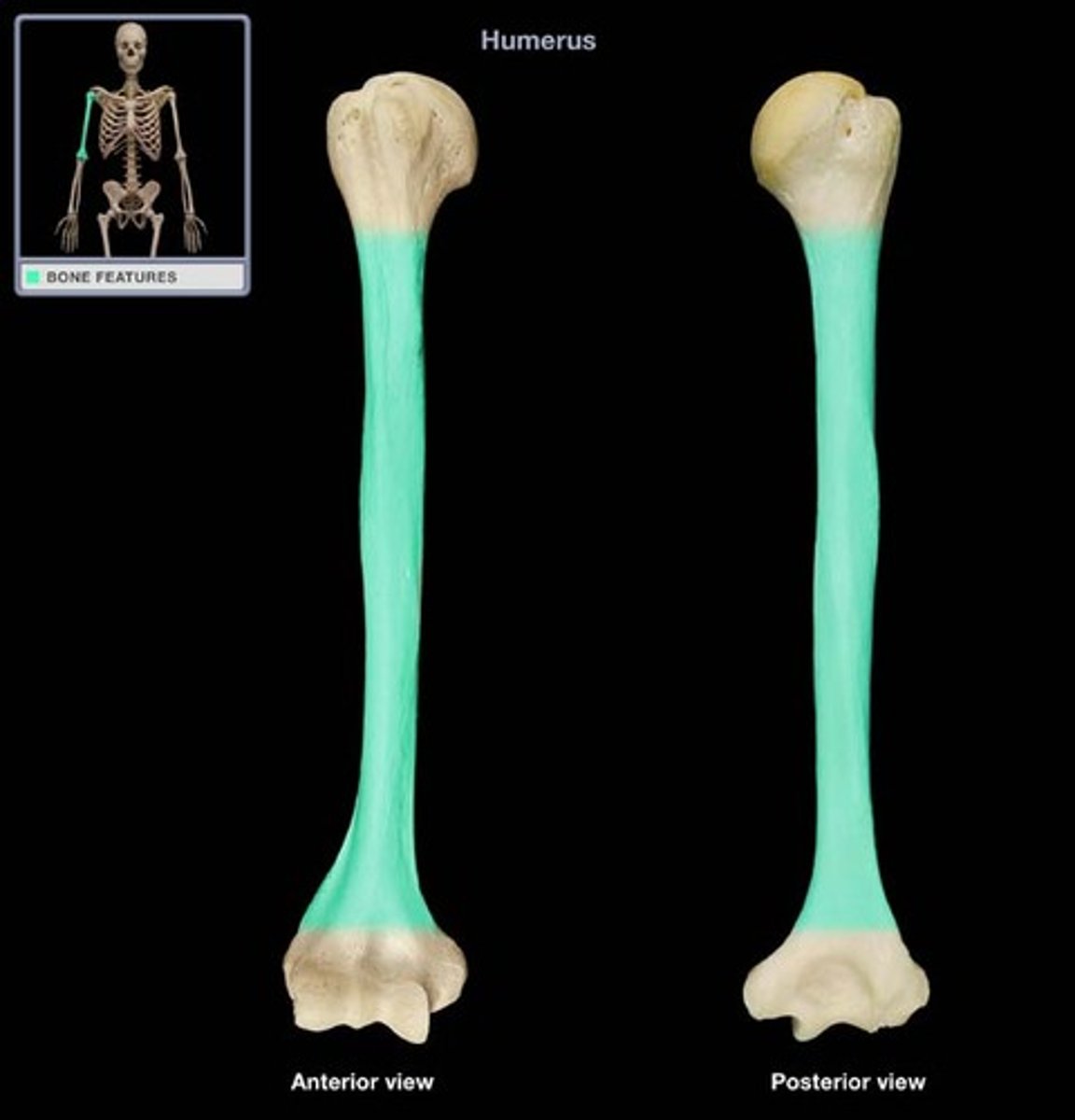
Long bones
Longer than they are wide, shaft with head at both ends, mostly compact, all bones of limbs except patella, wrist and ankle bones are long bones.
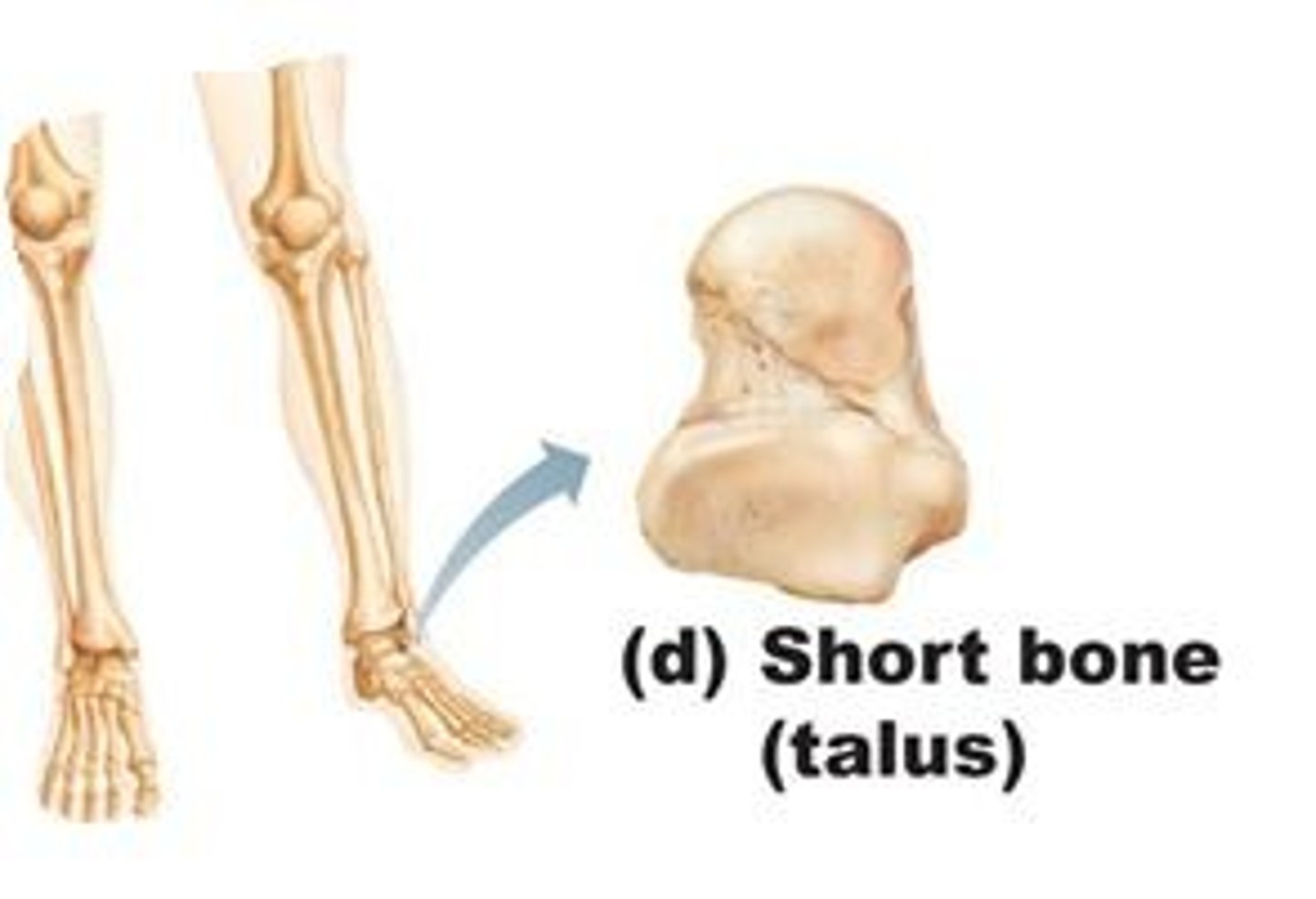
Short bones
Generally cube shaped, contain mostly spongy bones. Includes patella (knee cap), and bones of wrist and ankle.
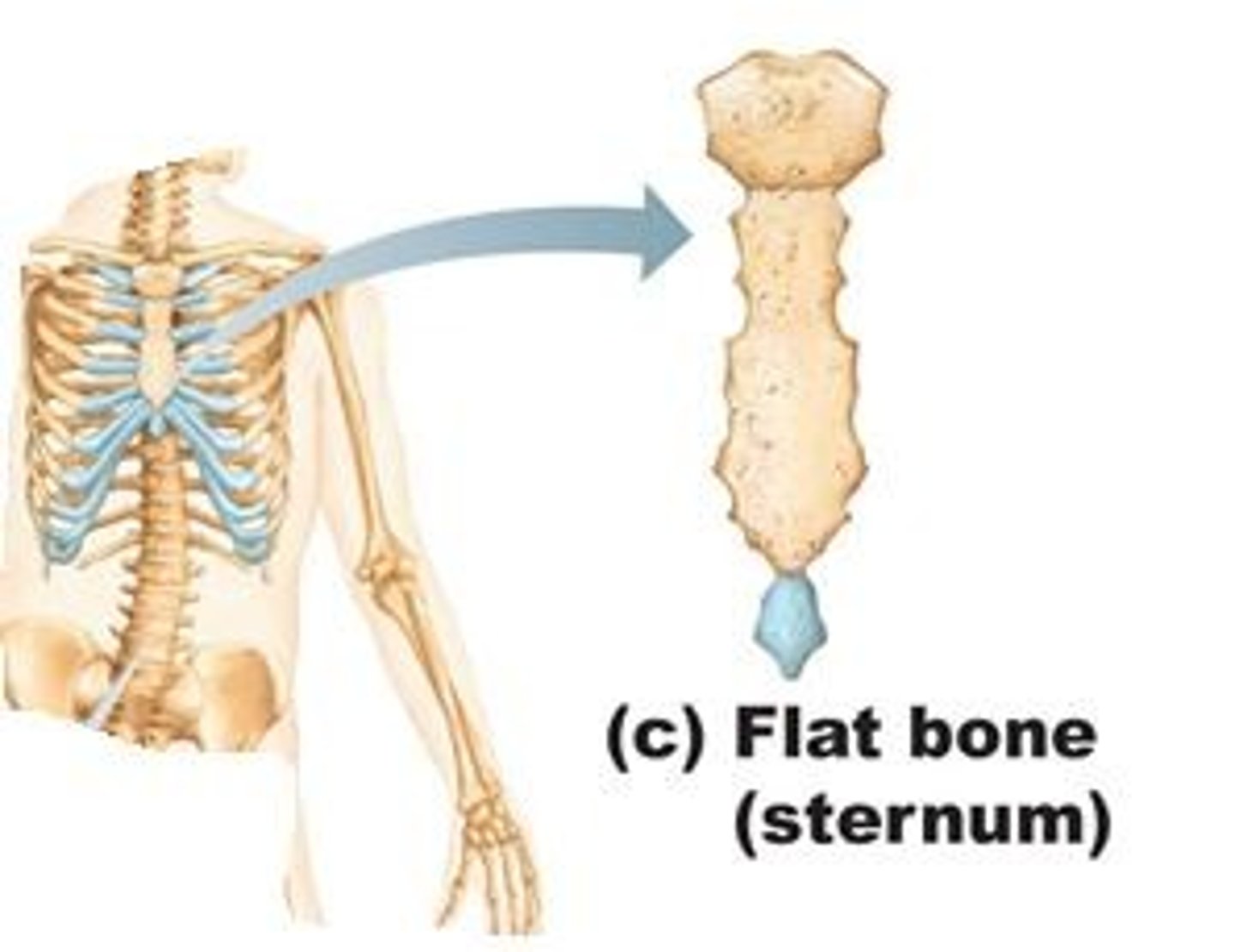
Flat bones
Thin, flat and usually curved, two thin layers of compact bones surrounds a layer of spongy bones, most bones of the skull, ribs and sternum
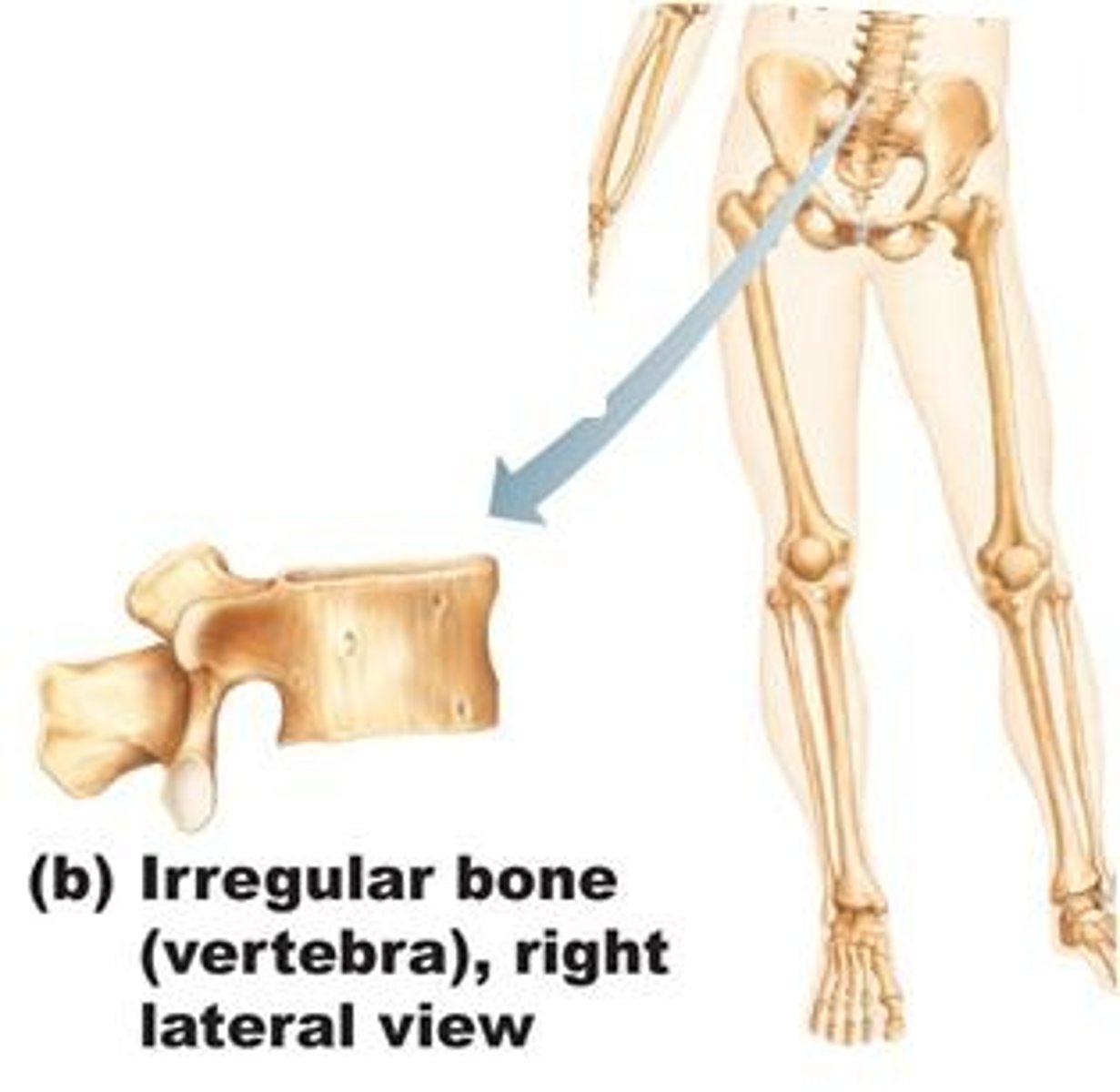
Irregular bones
Bones that don't fit into other categories, hip and vertebra
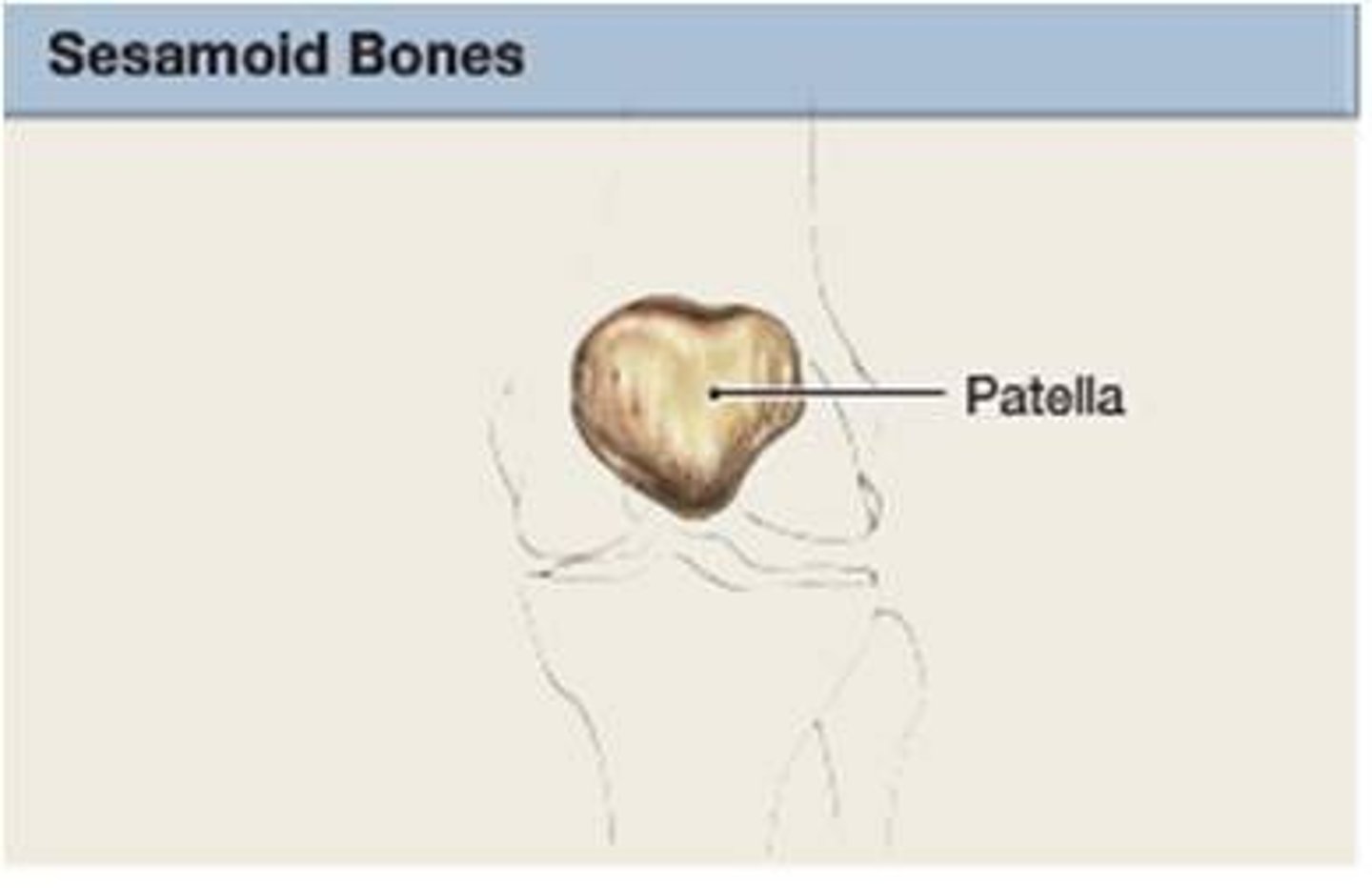
Sesamoid bones
unique irregular bones that are normally found embedded within tendons, close to joints
Diaphysis
shaft of a long bone
Epiphysis
End of a long bone
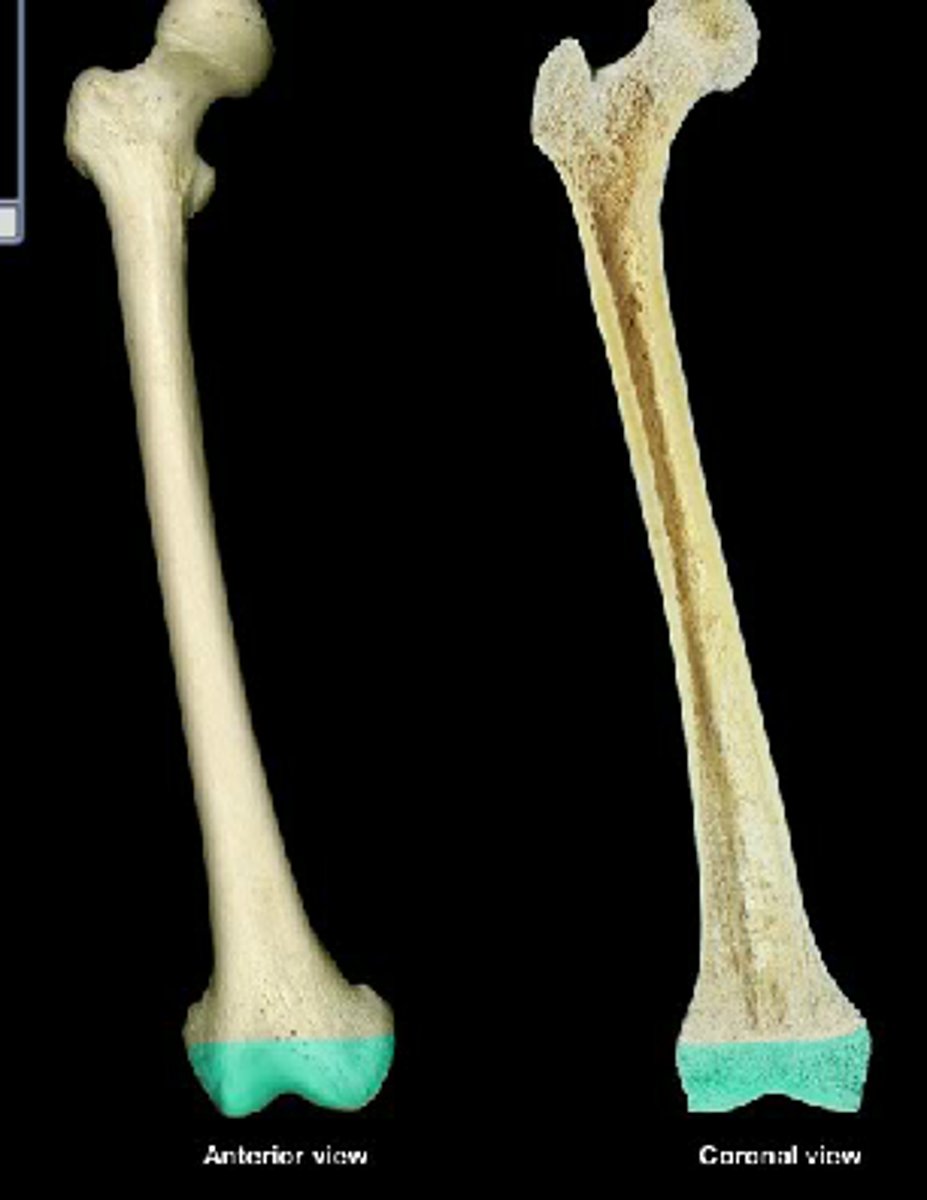
Epiphyseal Line
remnant of epiphyseal plate
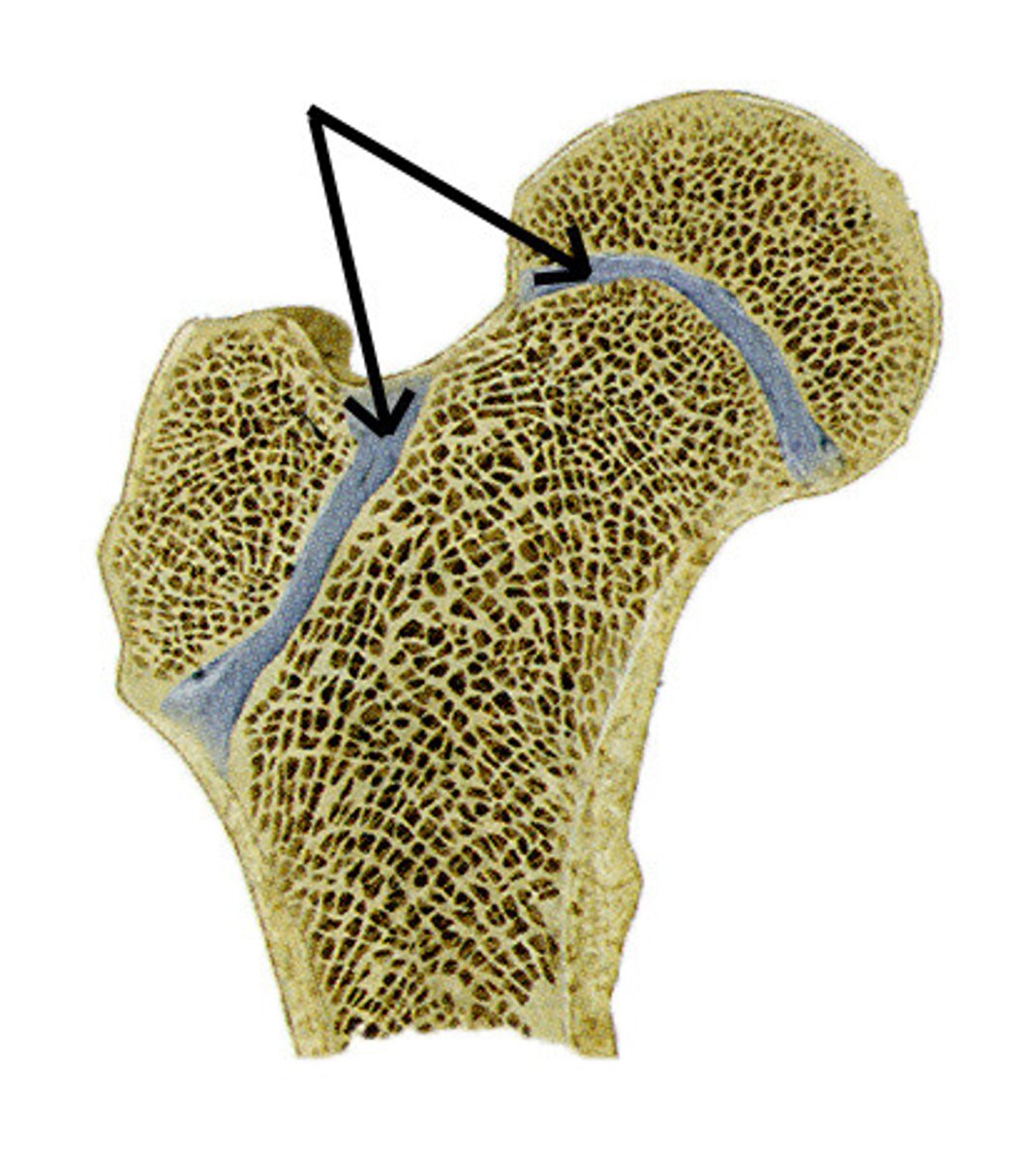
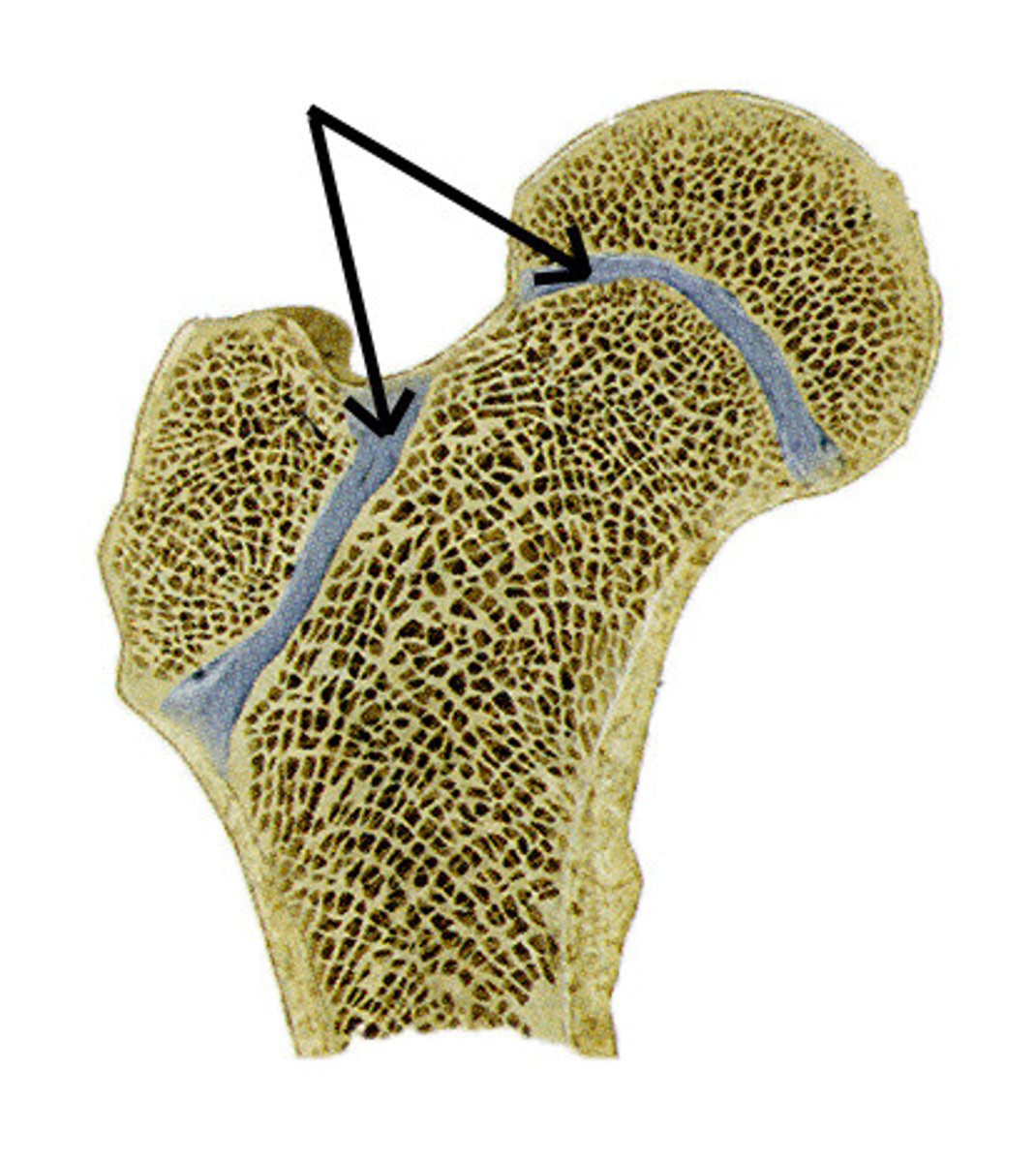
Epiphyseal Plate
Growth plate, made of cartilage, gradually ossifies
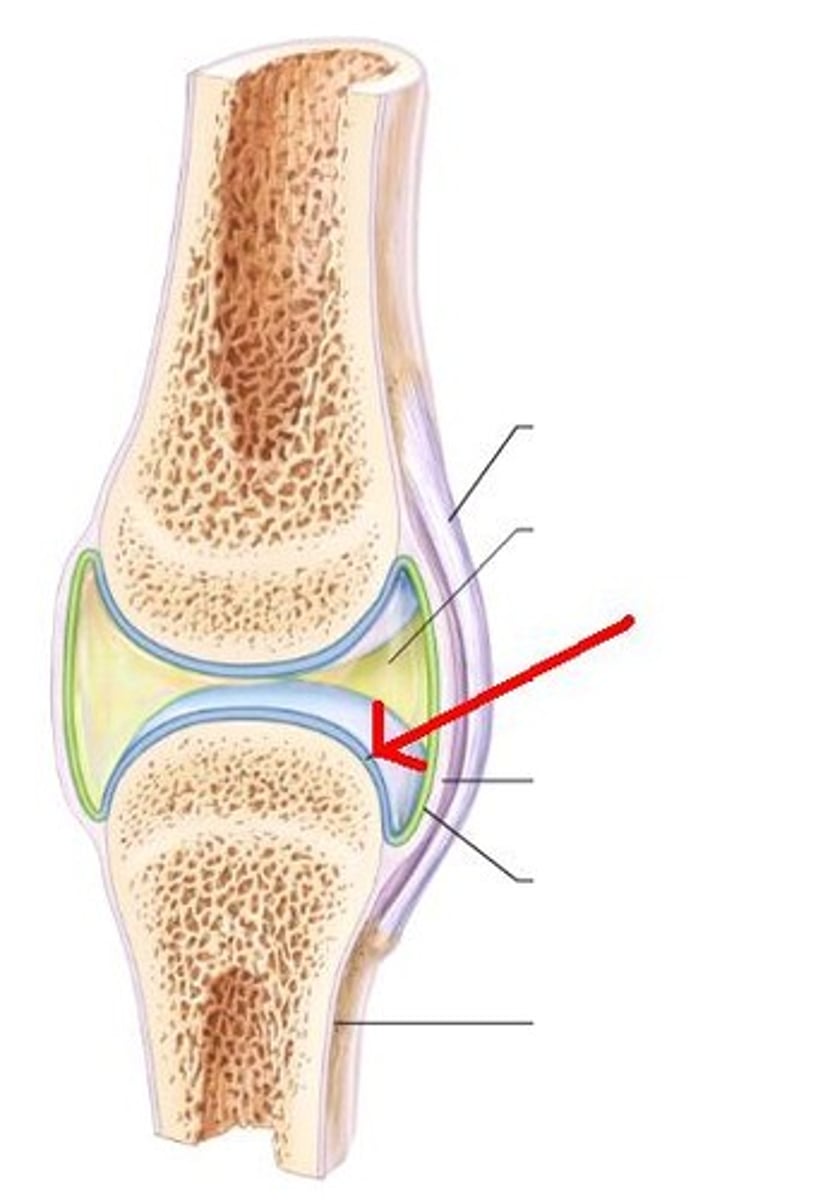
Articular Cartilage
covers the surfaces of bones where they come together to form joints
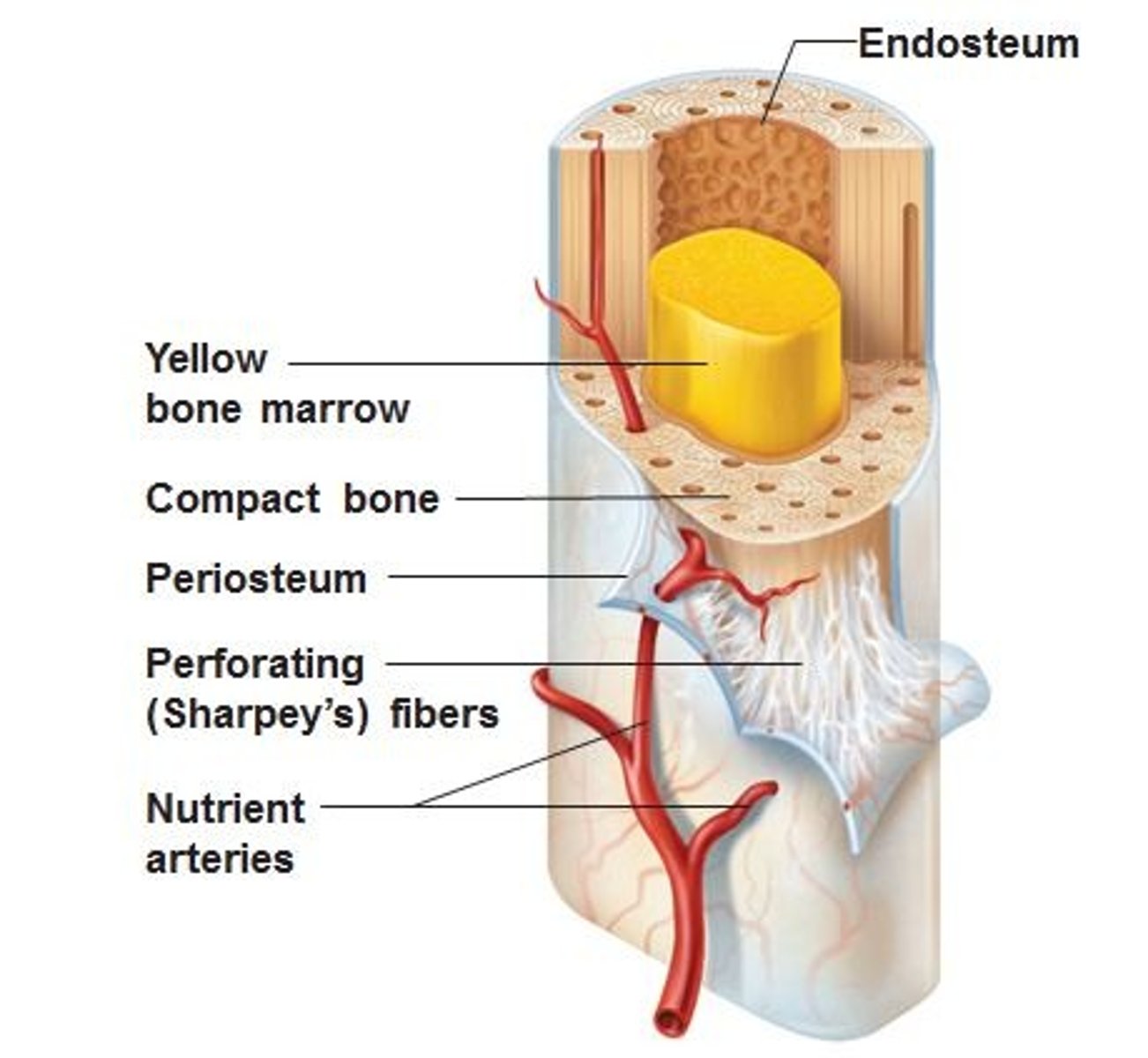
Periosteum
A dense fibrous membrane covering the surface of bones richly supplied with blood vessels and nerves
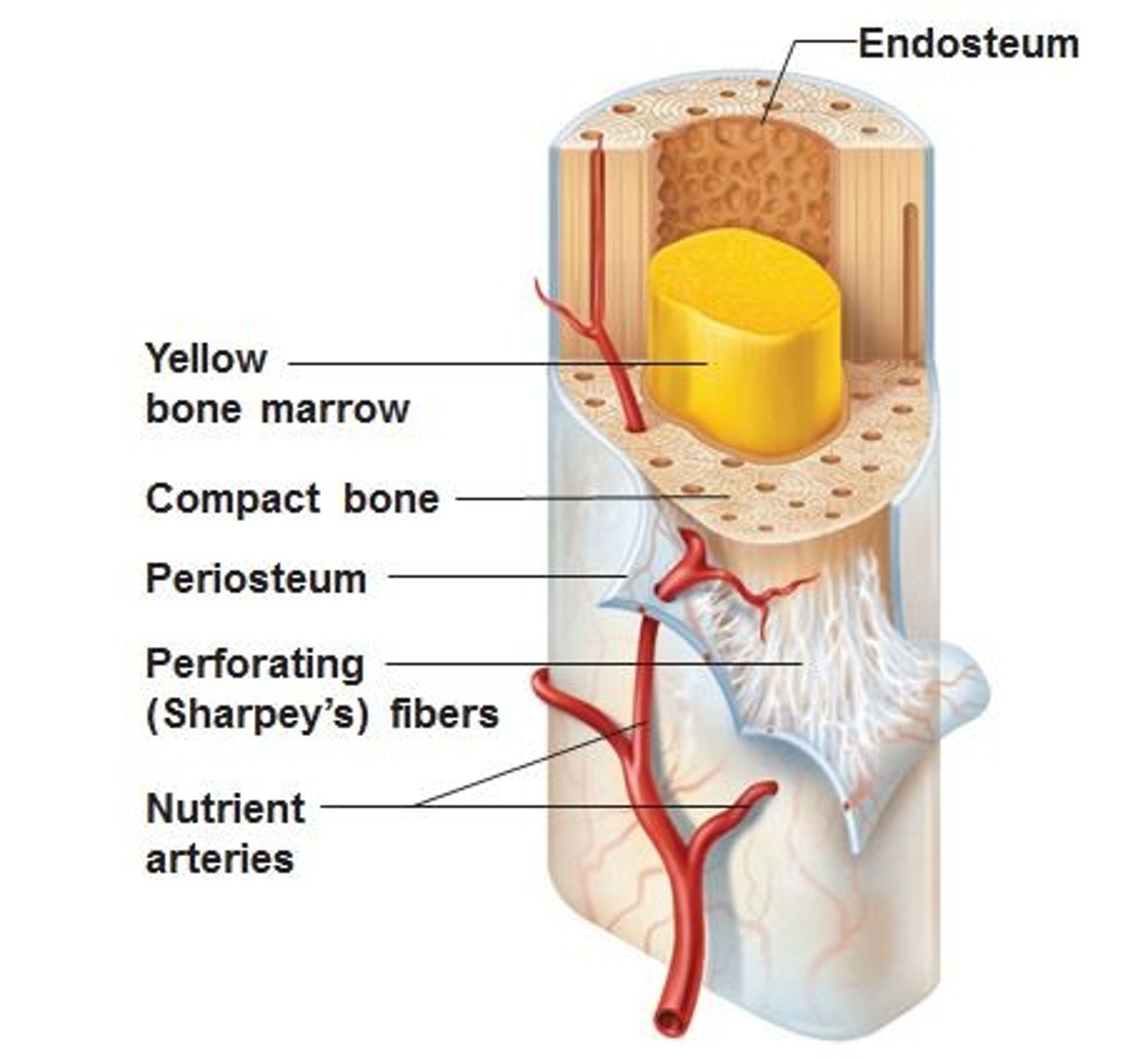
Endosteum
membranous lining of the hollow cavity of the bone
thinner and lacks fibrous outer layer
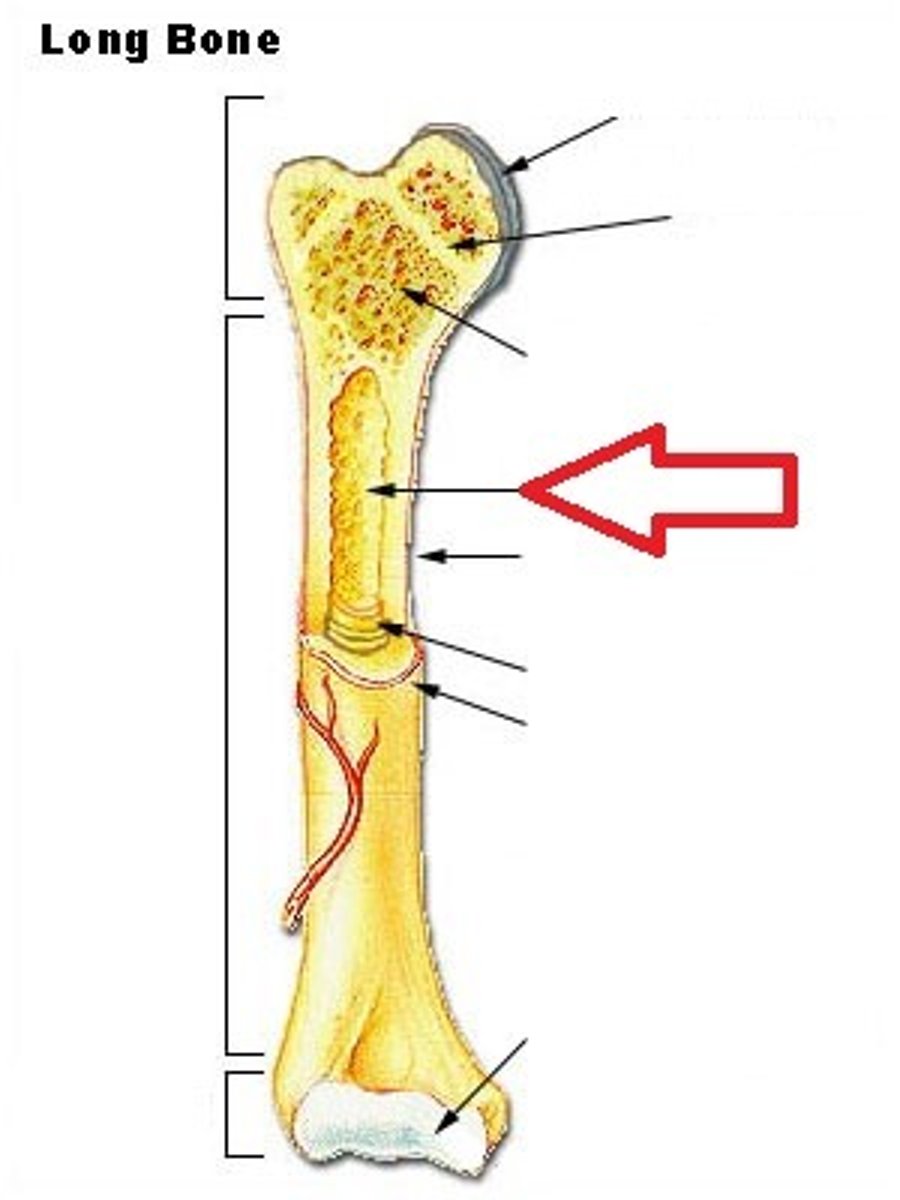
Medullary Cavity
marrow cavity
Inorganic components of extracellular matrix of bone
65% of total weight
minerals like calcium salts turned into hydroxyapatite crystal
Organic components of the extracellular matrix of bone
35% of total weight
protein fibers, proteoglycans/glycosaminoglycans: draw water out of blood vessels to matrix to resist compression
glycoproteins: bind different components together
osteocalcin
collagen fibers to resist twisting/stretching
Red Bone Marrow
network of reticular fibers supporting islands of blood forming hematopoietic cells; growth
Yellow Bone Marrow
stores fat as triglycerides; replaces red marrow as adults
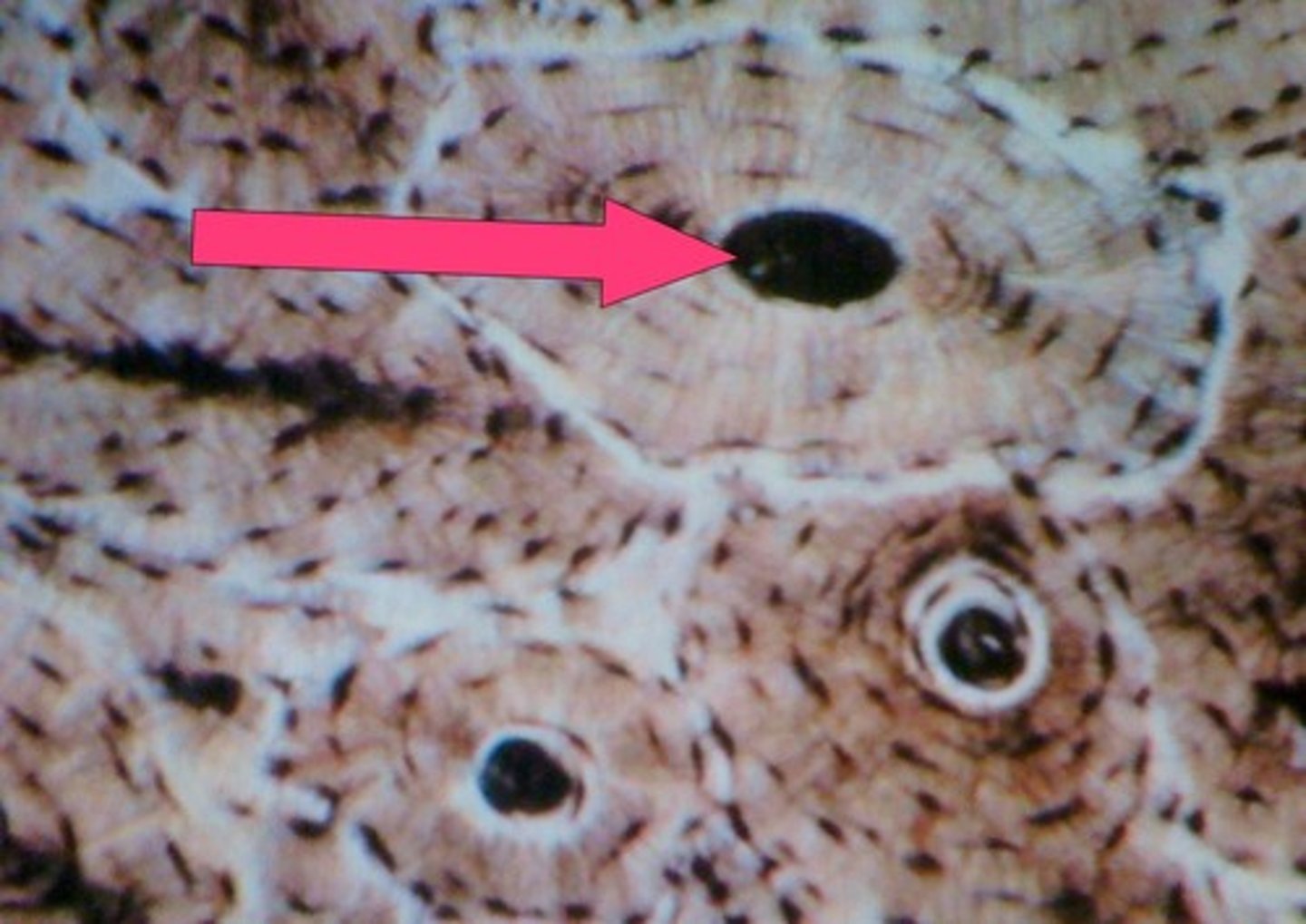
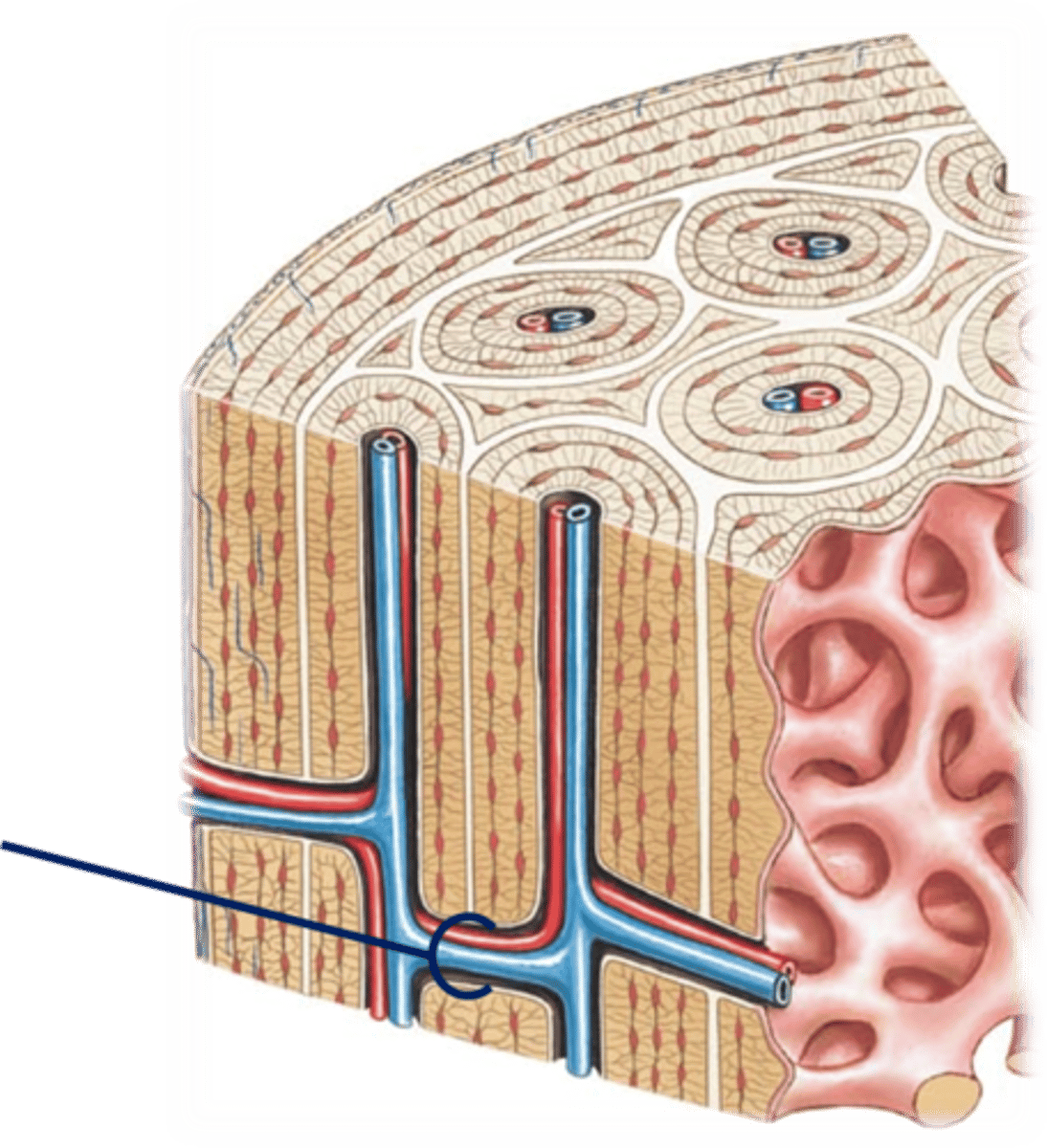
Central Canal (compact bone)
blood vessels and nerves lined by endosteum
Perforating Canals (compact bone)
Perpendicular to the central canal
connects neighboring cells
Carry blood vessels into bone and marrow
Canaliculi (compact bone)
Hairlike canals that connect lacunae to each other and the central canal
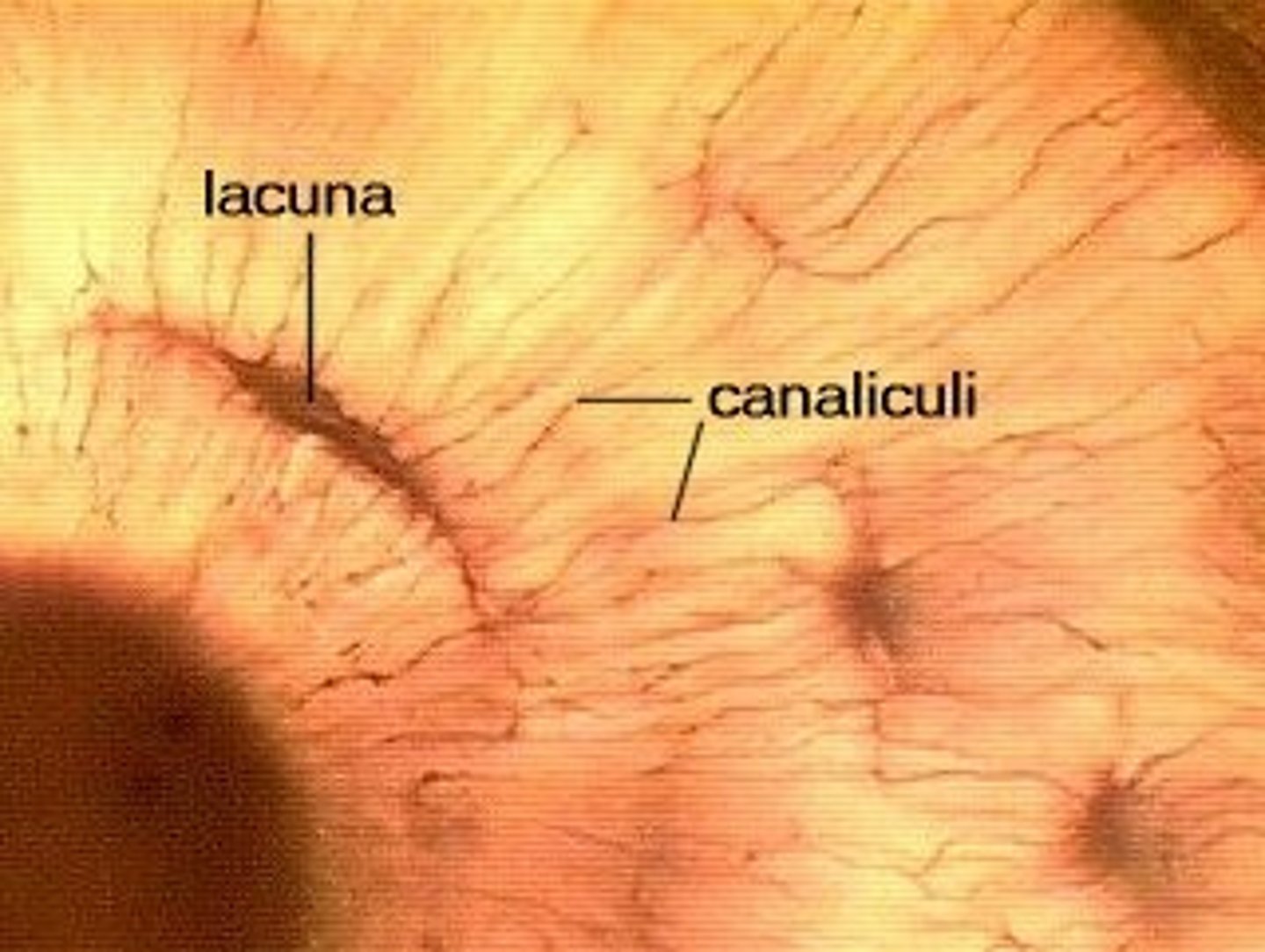
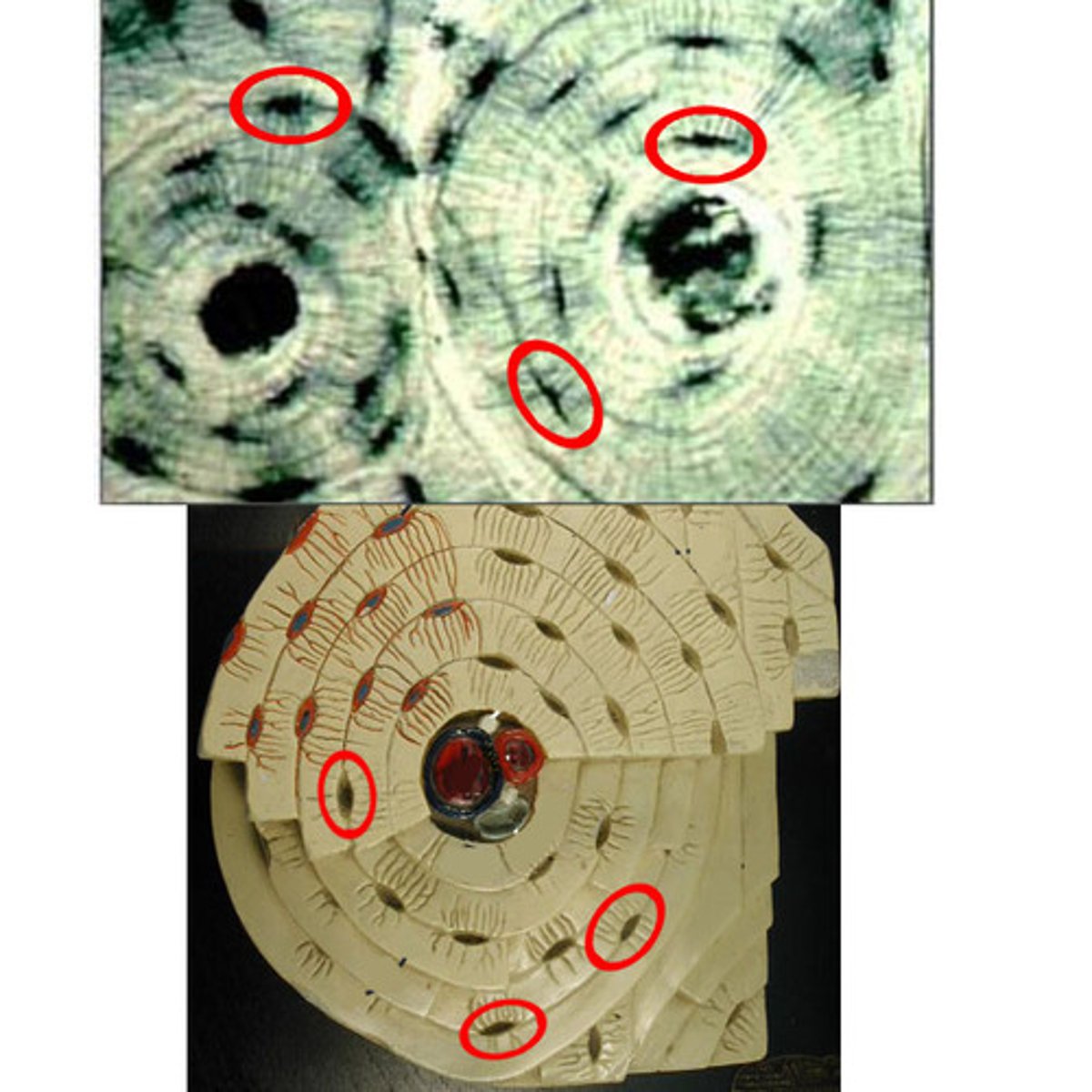
Lacuna (compact bone)
small cavities in bone that contain osteocytes
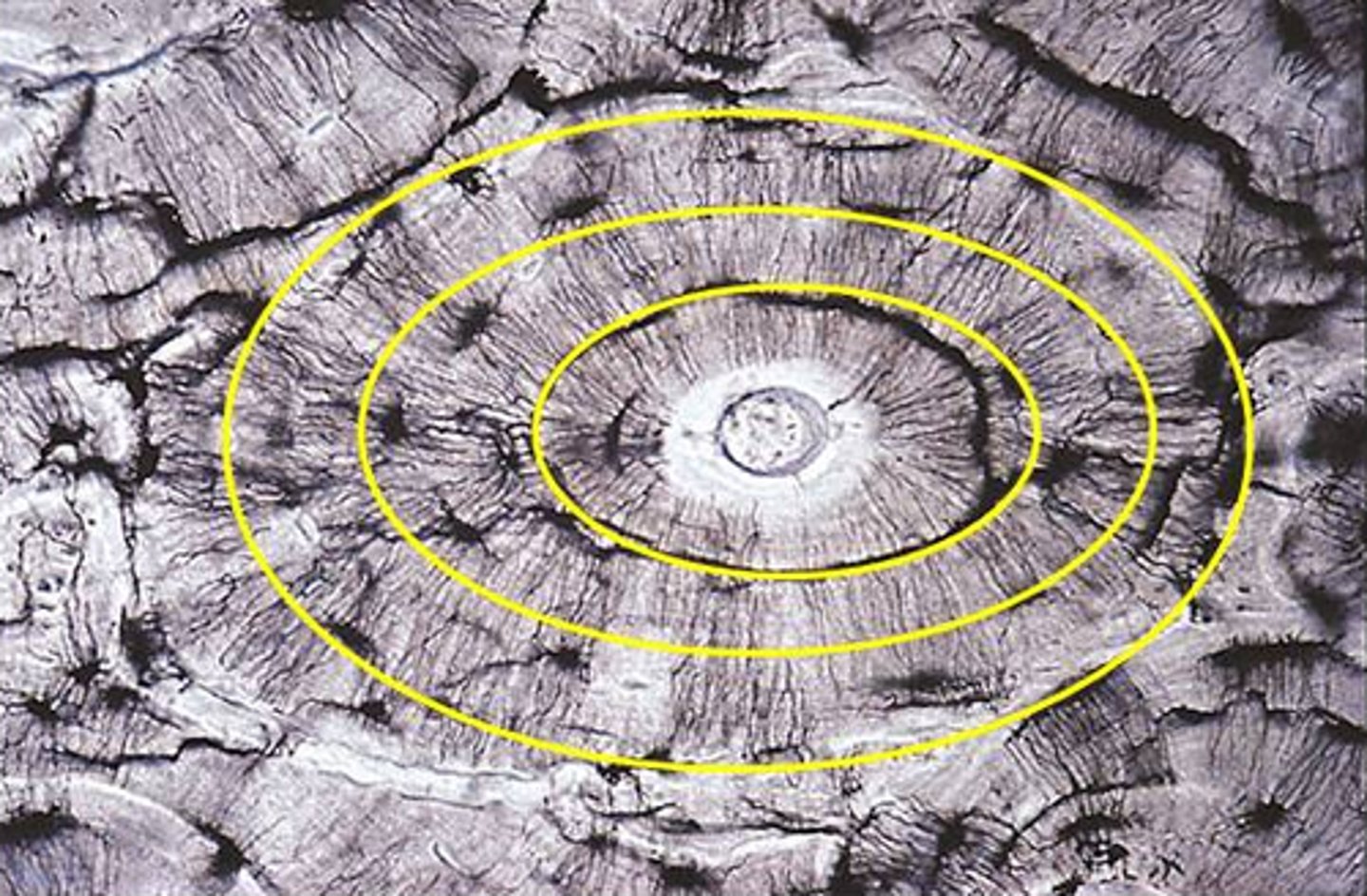
Concentric lamellae (compact bone)
layers of bony matrix around a central canal
Interstitial Lamellae (compact bone)
remains of old osteons that broke down as bone grew and remodeled itself
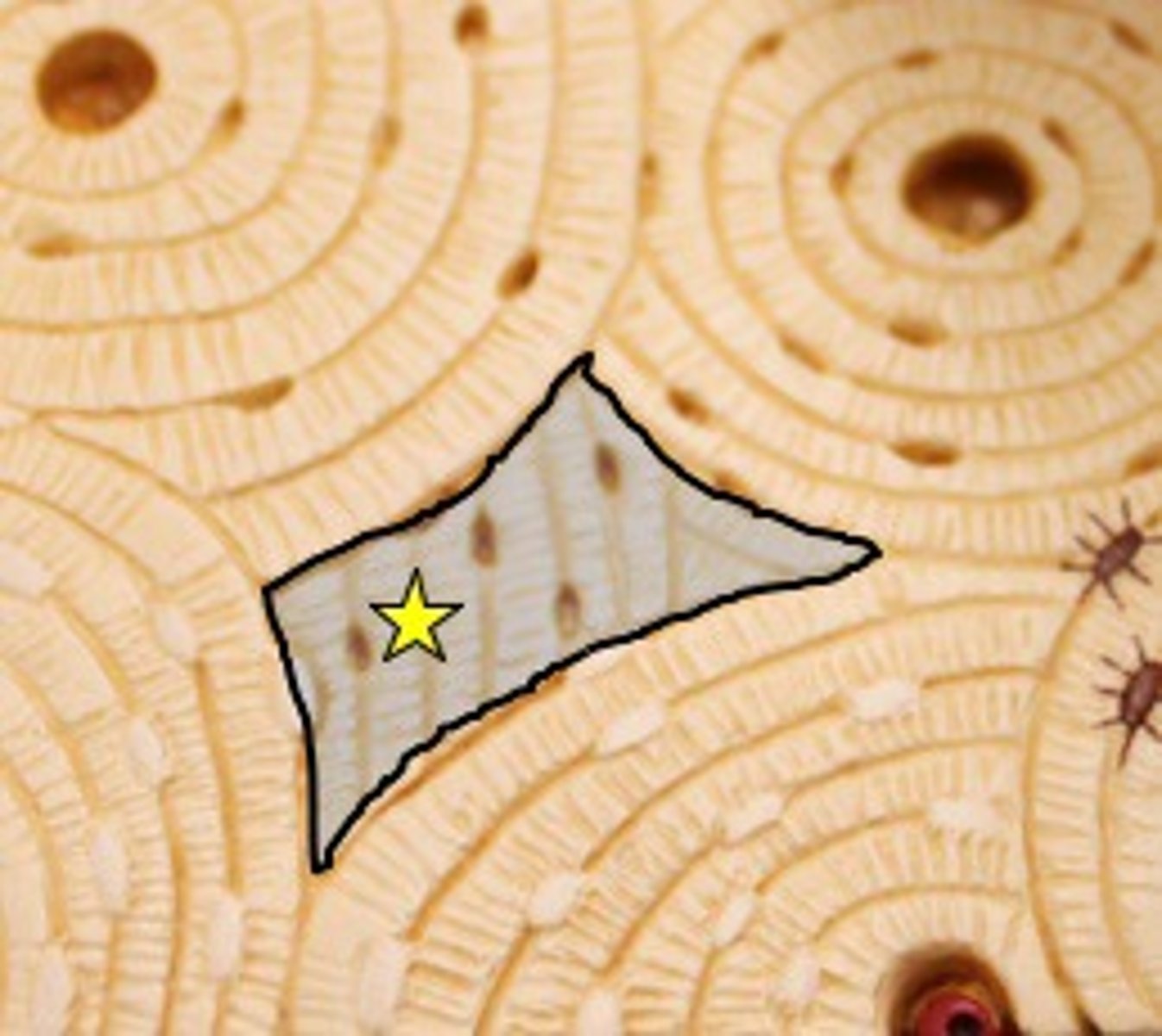
Trabeculae
branching ribs of bone hat project into marrow to reinforce framework
covered by endosteum with no osteons but have concentric lamellae
no central/perforating canals
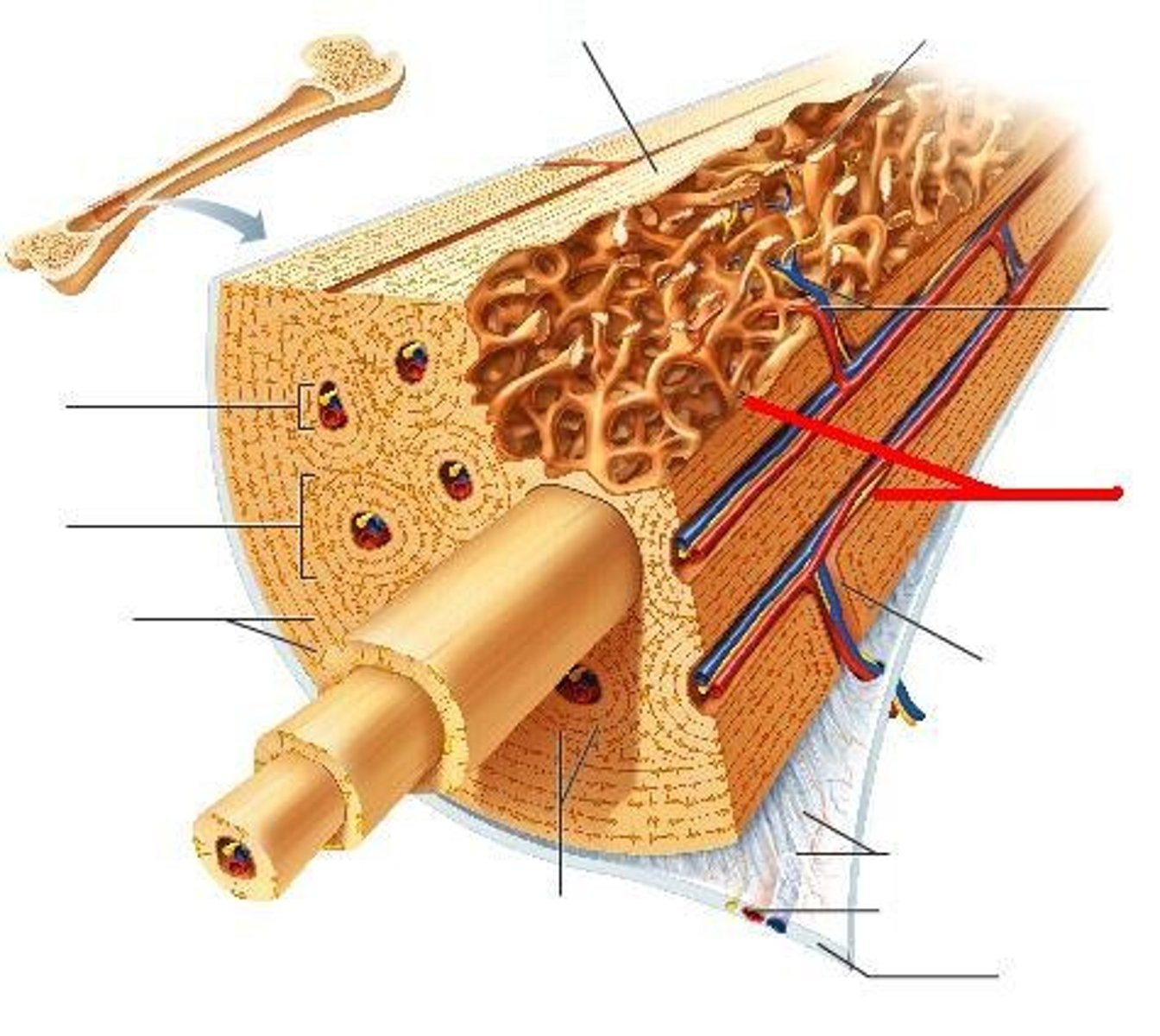
Osteoblasts
bone forming cells
Osteocytes
mature bone cells found in lacunae
Osteoclasts
large cells that resorb or break down bone matrix
Primary Bone
immature bone
irregularly arranged collagen bundles
abundant osteocytes
little inorganic matrix
mostly replaced
Secondary Bone
Mature bone tissue that replaces immature bone
fully formed lamellae with regularly arranged collagen bundles that are parallel
higher % of inorganic matrix
Intramembranous Ossification
process by which bone forms directly from mesenchymal tissue
flat bones (skull/clavicles)
Endochondral Ossification
Bone forms by replacing hyaline cartilage
Bones are called cartilage (endochondral) bones
Form most of skeleton
Longitudinal Growth
how bones lengthen via division of chondrocytes in epiphyseal plate
Appositional Growth
increase in bone thickness
growth between periosteum and surface
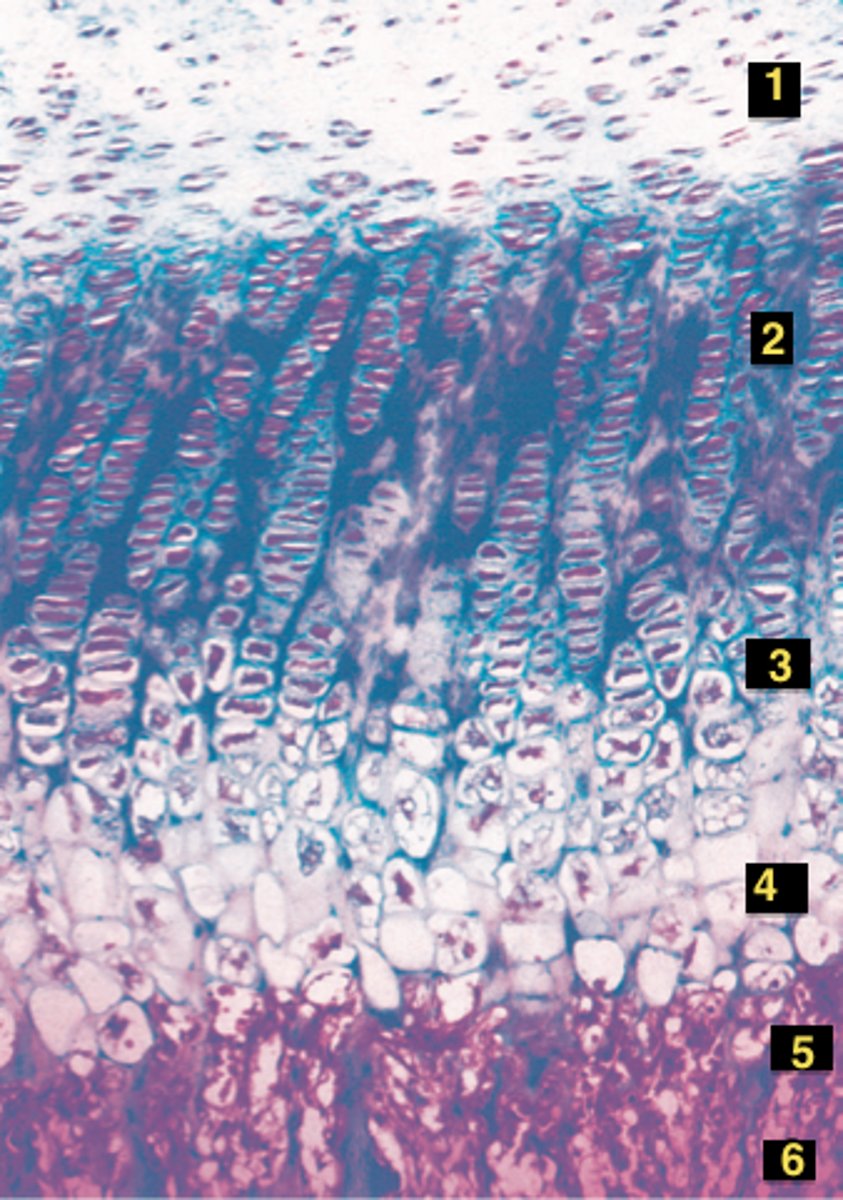
Zone of Proliferation
actively dividing chondrocytes
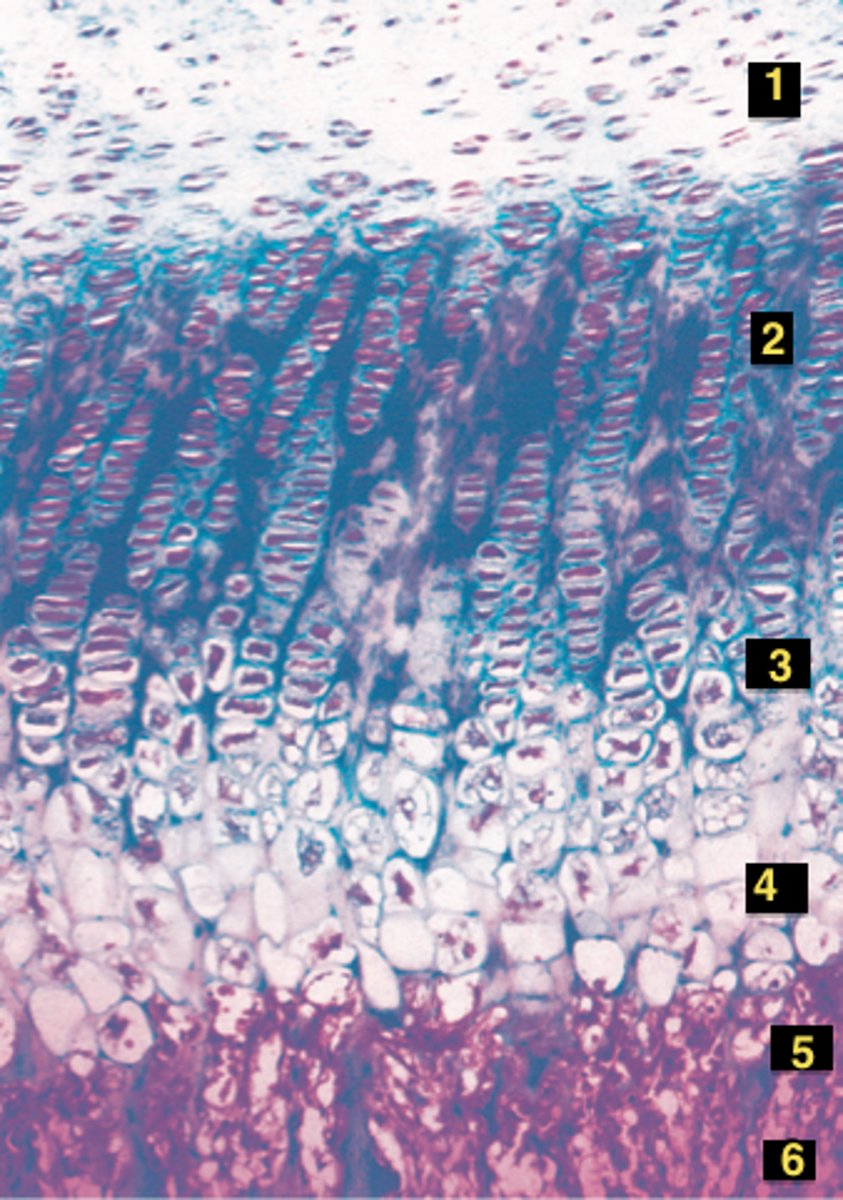
Zone of Hypertrophy and Maturation
contains mature chondrocytes
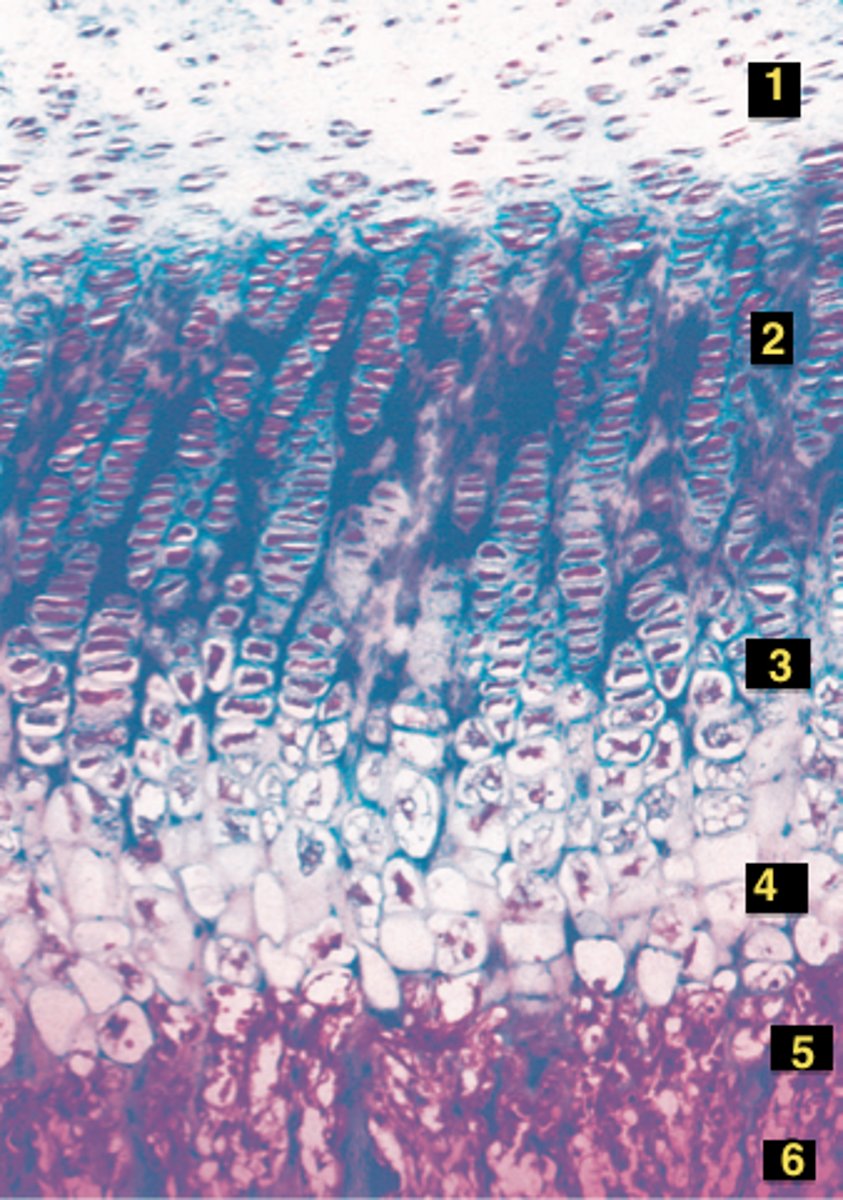
Zone of Calcification
dead or dying cartilage cells undergoing rapid calcification
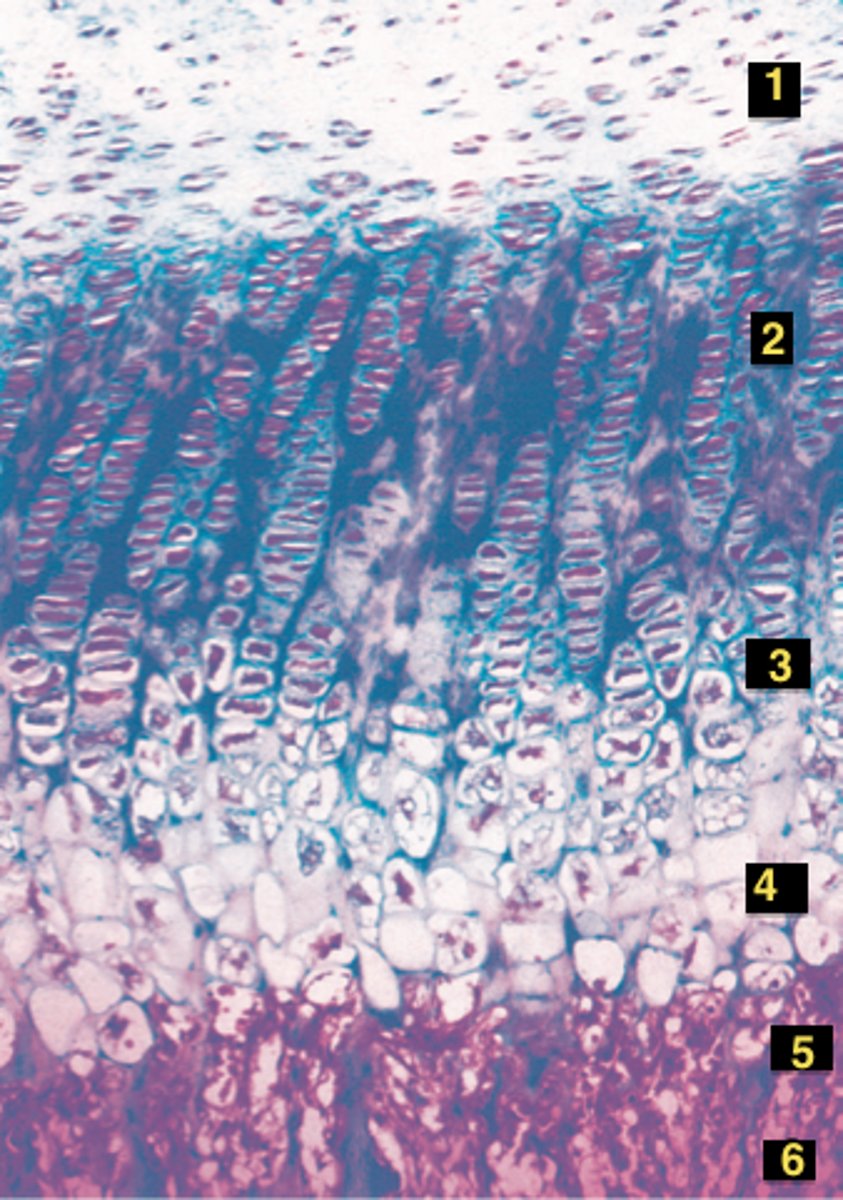
Zone of Ossification
consists of calcified chondrocytes and osteoblasts
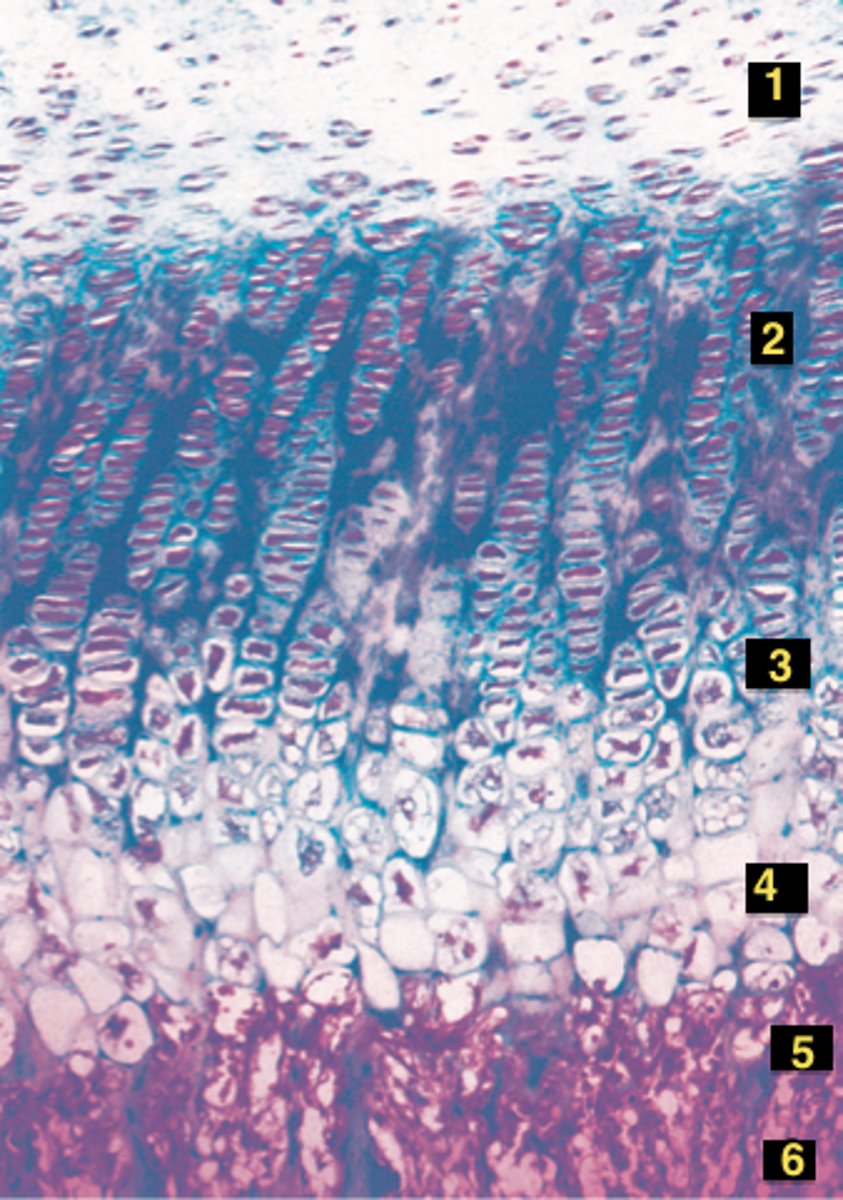
Zone of Reserved Cartilage
not directly involved but can divide
Calcitonin
Lowers blood calcium levels from thyroid gland
Parathyroid Hormone
A hormone of the parathyroid gland that regulates the metabolism of calcium and phosphorus in the body.
Vitamin D
promotes calcium ion absorption
Growth Hormone
hormone secreted by anterior pituitary gland that stimulates growth of bones
Thyroid Hormone
modulates activity of growth hormone, ensuring proper proportions
Testosterone
increases wide growth causing men's bones to be thicker
increases calcium salt deposits
increases rate of mitosis in epiphyseal plate causing growth spurts
Estrogen
increases rate of longitudinal bone growth
inhibits osteoclasts causing growth spurts
accelerates closure of epiphyseal state faster than testosterone which is why women are typically shorter
Formation of Bone Matrix
osteoblasts in periosteum/endosteum secreting proteoglycans/glycoproteins that bind calcium ions that eventually crystalize
Reabsorption of Bone Matrix
osteoclasts secrete H+ which is acidic compared to calcium crystals
also secretes enzymes to catalyze reactions to breakdown other molecules which then could be reused
Purpose of Bone Remodeling
maintains calcium ion homeostasis
bone repair
replacement of primary bone with secondary bone
replacement of old brittle bone
bone adaption to tension/stresses
Explain effect of mechanical stress on bone remodeling
stress on bones (amount of compression) stimulates bone growth which increases bone mass