Animal Nutrition Carbohydrates
 Call Kai
 Learn
Learn Practice Test
 Spaced Repetition
 Match
Match Flashcards
 Knowt Play
1/63

There's no tags or description
Looks like no tags are added yet.
Name | Mastery | Learn | Test | Matching | Spaced | Call with Kai | Chat |
|---|
No analytics yet
Send a link to your students to track their progress
64 Terms
What are Carbohydrates used for
Energy
How are Carbohydrates initially produced
Produced in nature by plants (phtoosynthesis)
Carbohydrate Sources
In plants
Found in large amounts in forages
Highly concentrated energy source in grains
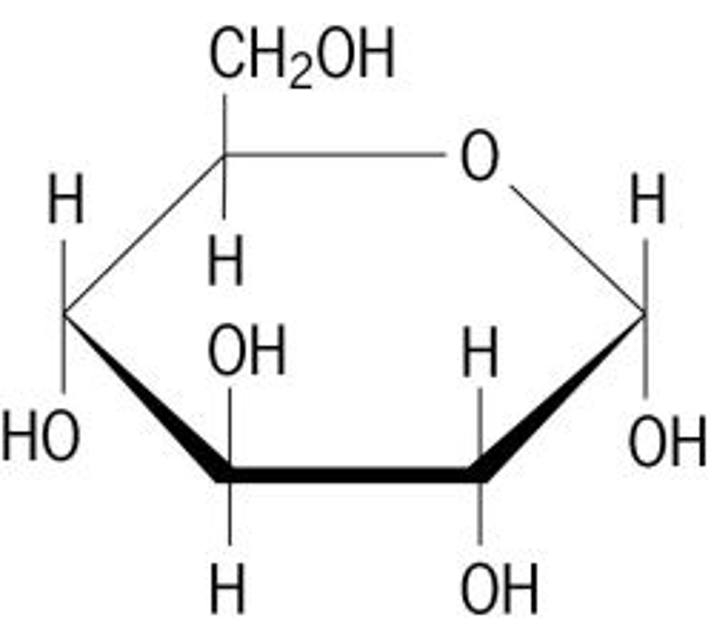
What carb is this
Glucose
Monosaccharides
Monemers(one unit building block) make up monosaccharides and they can be put together to make other carbs
Made of 5-6 carbon rings
The Simple Sugars
C6H12O6
Examples of Monosaccharides
1.Glucose
2.Fructose
3.Maltose
4.Galactose
Glucose
Also called Dextrose
Most important monosaccharide
Glucose Function
Principle energy source metabolized by the body and transported in blood
-Used to make ATP
-Used to transport energy (ATP can’t leave cells)
Fructose
-Occurs in small amounts in fruits, honey, nectar, and plant juices
-Sweetest of all sugars
-Converted to glucose in liver
Disaccharides
Contains 2 sugar molecules or 2 monomers
Sweeterns
Types of Disaccharides
1.Sucrose
2.Lactose
3.Maltose
Sucrose
Sugar: Glucose attached to a Fructose
Thats why its sweet
Lactose
Lactose is in milk
(Galactose attatched to Glucose)
Malatose
Glucose attatched to Glucose
Lactose process
Sucrose enzyme breaking bond release glucose and fructose
Table sugar is an example
Extracted from:
-Sugar cane and beets
-Sugar maple trees
Lactose Example
Table sugar
Extracted from
-Sugar cane and beets
-Sugar maple trees
How are Disaccharides used in livestock feeds?
-They are sweeteners,improve palatability (increase desire to eat
Horse: sweet food and using molasses in it
Pigs: gain more weight when eating sweeter feed and help when weaning pigs to encourage them to eat sweet feeds.
Maltose
Animals have multate enzyme to break bond and release glucoses
-Found in starchy plants and roots
-Used for maltzs
Animals that break down lactose
Horses, Pigs, Cows, Bunny
Lactose in Mammals
-Young mammals have lactase enzyme to break bonds in lactose to release glucose and galactose
-Primary carbohydrate in milk and gives young animals energy

What Carbohydrate is this?
Starch (polysaccharide)
Polysaccharides
Consist of multiple monomers more than 2
Important Polysaccharides
1.Strach
2.Cellulose
3.Glycogen
Starch
Glucose linked bonds which animals have enzymes to break
Two types of Starches
Amylose-Linear
Amylopectin- some branching
Where is starch found?
Grains, tubers and roots
Starch Purpose
Energy storage molecules
Glycogen
-Glucose molecules
-Highly branched
-Synthesized in ANIMALS only
Glycogen Function
-Energy Storage
-Muscle and Liver
Cellulose background
-Refered to as a dietary fiber
-Most common organic molecule on Earth
Examples of Cellulose
-Wood, Leaves, Stem, Cotton
Cellulose
Glucose linked with no branching
-Animals dont have enzymes to break down it
-Microbes are used instead to provide enzyme to break down the fiber
Hemicellulose
-Found in Plants
-Mixed polysaccharide (Pentoses and hexoses)
-Branching chains
-Microbes needed to break bonds
Lignin
Plant component that is basiclly indigestible, even by microbes.
-Can block breakdown and decrease utilization of nutrients
NonRuminant digestion of sugar and starch?
Majority of digestion occurs in the small intestine
-Amylase enzymes from pancreas breaks to disacharides
-Broken down into monosaccharides by enzymes then absorbed
Minority of digestion occurs in mouth or stomach
-Salivary amalyse
Fiber digestion in NonRuminants
Cellulose, hemicellulose and other fibers are digested by microbes in cecum and colon.
-Volatile Fatty Acid (VFA’s) produced and absorbed, then converted to ATP
-Horses, swine and rabbits digest best, dogs and cats dont digest much fiber.
Types of Volatile Fatty Acids (VFA’s)
1.Acetate
2.Propionate
3. Butyrate
Microbial Digestion
Cow digestion tract is 75% microbial digestion
Horse digestion tract is 46% microbial digestion
Pig is 36%
Human digestion is 17% microbial digestion
Glucose Absorbtion location in Nonruminants
Mostly in upper SI (duedenum and jejunum)
Fructose is converted to glucose in intestinal mucosal cells
Nonruminant Absorption of Nutrients
Most monosaccharides require active diffusion by requiring sodium (NA+)
-Pumped from SI lumen across intestinal membrane
-Transported into blood
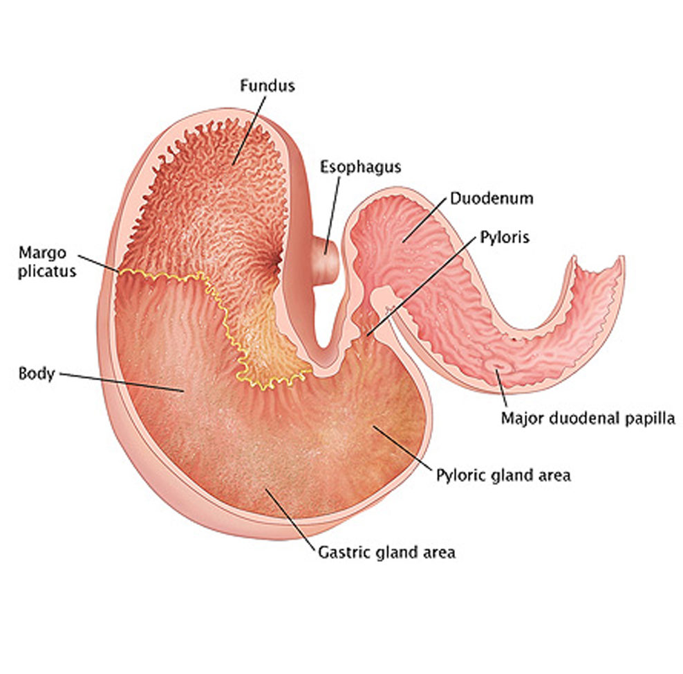
Non-Ruminant (Horse)
1 chambered stomach
-Food travels down esophagus through the smaller tunnel into stomach chamber

Ruminant( Cow)
-Goes into the 4 chambers of the stomach
-Reticulum+ Rumen ,Omasum, Abomasum
Digestion of Sugar, Starch, and Fiber in Ruminants
-Occurs in stomach by using microbial fermentation,
Produces:
CO2, H20, Heat, Volatile fatty acids (used for ATP)
VFA’s: Acetic, Propionic, Butyric(lowest amounts)
VFA’s in Ruminants
VFA’s are absobed rapidly in rumen/reticulum and some in omasum
-Rumen: dip in dots (most of absorption occurs here)
-Reticulum: Honeycomb (feed stays here)
Omasum: stack of leather flaps (absorbs water and filters feed)
Carbohydrates energy uses
Carbohydrates fuel quick burst and are the fastest to access
-Sprinting, jumping, lifting
Carbohydrates Three Branches
-Absorbable Carbs
-Digestible Carbs
-Indigestible Carbs
If we keep pumping glucose across the membrane into blood it will raise blood sugar. How do we regulate this
Hormones regulate glucose so it doesnt cause high blood pressure buy using
-Insulin: helps store glucose
-Glucagon: helps release glucose when needed
(Insulin and Glucagon are opposits)
Hormone secreted by the pancreas when blood glucose levels are high?
Insulin
What does the Insulin Hormone do?
-Allows liver or muscle cells to absorb glucose from bloodstream
Used for energy storage or converted to glycogen(glycogenesis) for storage if there is excess
Insulin inhibits release of glucagon
How do we release stored glucose when we need it?
Glucagon
Glucagon Function
Glucagon is a hormone that helps release glucose
-Breaks down glycogen
-Glucagon is secreted by pancreas when blood sugar is low
Glycogen in liver and Muscle
Glycogen—> glucose back into bloodstream in liver
Glycogen—> glucose used in mucscle
What happens to metabolism after a meal?
Called the Postprndial State
-Absorb glucose from food
-Produce insulin
-Stores glucose as glycogen
When happens to your metabolism when you fast?
-No glucose absorption
-Produce of glucagon (helps with low blood sugar)
-Breaks down glycogen into glucose
Postprandial State
Post eating or post meal full state
What disease is commonly associated with insulin production problems or use problems?
Diabetes
Type I is problems with production
Type II is problems with use
Implications of glucose in urine (Glucosuria)
-Insulin not promoting glucose uptake from blood so the blood is filtered by kidneys
Kidneys can only absorb so much glucose from the blood and the rest gets excreted.
Implications of a dog having excessive thirst in relations to glucose
-Glucose in urine draws more water via osmosis
-Needs to replenish
Diet fix is to eat low starch and sugar amounts but high fiber
Dietary Energy overview
Energy is typically first concern when developing diets
Carbohydrates used to provide most energy in lifestock diets
Energy Chemical Breakdown
-Heat produced when compound completley oxidized
-In cell, glucose oxidized to CO2+H20+energy(ATP)+heat
How to quantify energy in nutrition
Calories
Digestible Energy
Measurement of energy within feed stuff
-Energy absorbed from feed after digestion
-GE- Energy Lost in feces
-Determined by digestibility trial
Metabolized Energy (ME)
-Energy after losses from feces and urine
-More accurate than DE but harder and costlier to determine