waves
 Call Kai
 Learn
Learn Practice Test
 Spaced Repetition
 Match
Match Flashcards
 Knowt Play
1/18

Earn XP
Description and Tags
Name | Mastery | Learn | Test | Matching | Spaced | Call with Kai |
|---|
No analytics yet
Send a link to your students to track their progress
19 Terms
waves
travelling disturbances that transport energy from one to location to another without transporting matter
examples of waves
ripples on water surface
vibration in a guitar string
electromagnetic waves - light, radio waves, x-rays, microwaves, IR, UV
seismic waves from earthquakes
medium
a substance to travel through
electromagnetic waves
only waves that can travel through a vacuum (empty space)
mechanical waves
all other waves requiring a medium
travel large distances but individual particles in medium never move far from their original positions
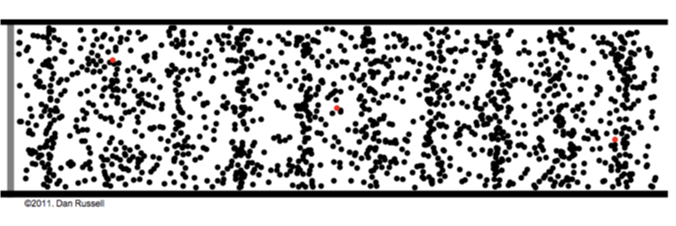
transverse waves
particles in medium vibrate perpendicular to direction the wave is travelling
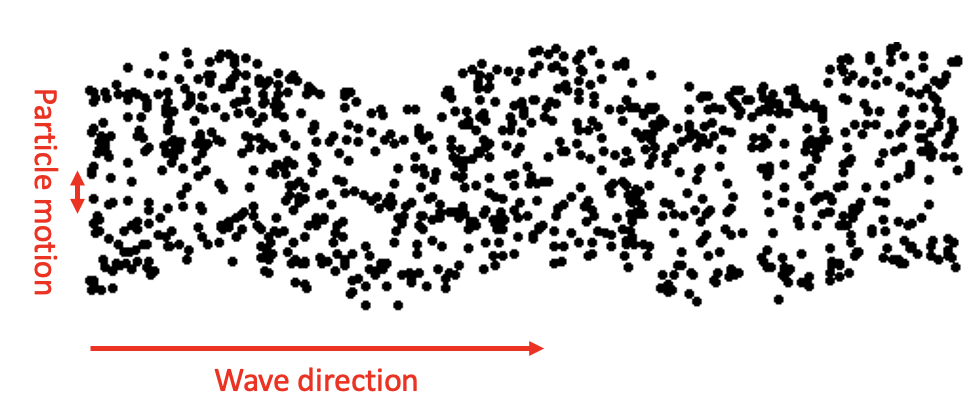
positon of particles in transverse waves
When the particles are displaced upwards from their resting position, they reach a maximum positive displacement called a crest or peak.
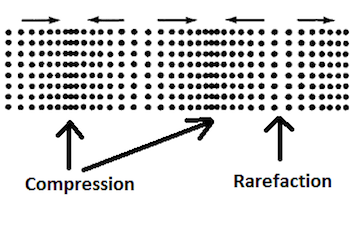
longitudinal wave
particles in medium vibrate parallel to direction the wave is travelling
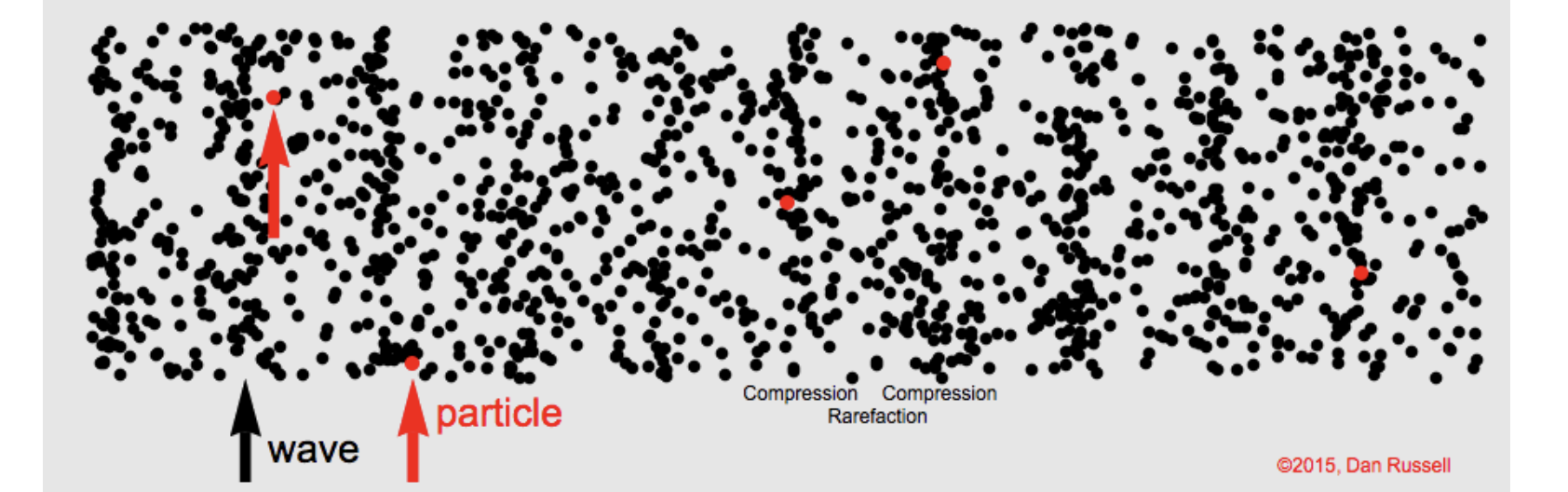
compression
regions of high pressure
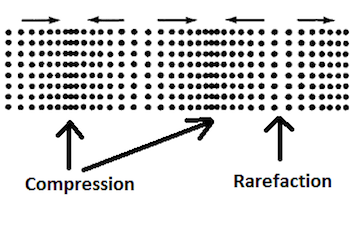
rarefaction
regions of low pressure
features of waves
amplitude
wavelength
frequency
period
speed
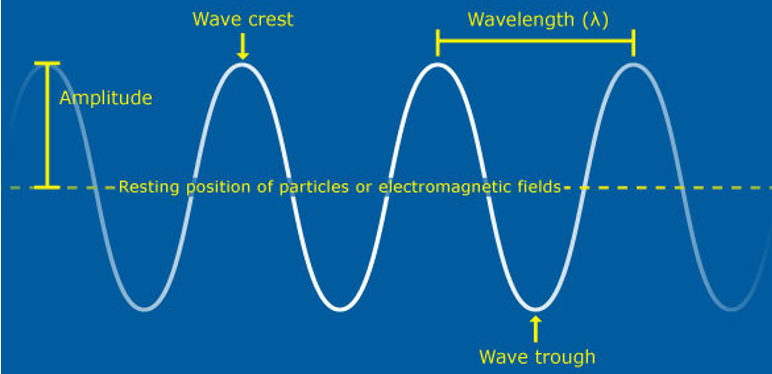
amplitude (A)
maximum displacement of particle from resting position
metres
wavelength (λ)
distance over which wave’s shape repeats
(distance between two crests/troughs
metres
frequency (f)
number of wave cycles per second
hertz (hz)
hertz to seconds conversion
1 hz = 1 s-1
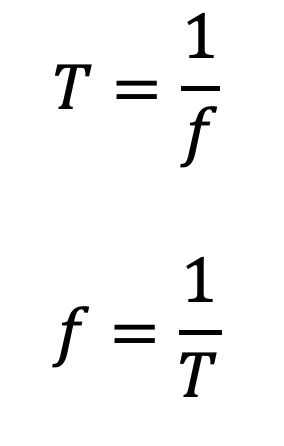
period (T)
amount of time it takes for one complete wavelength to pass a specific point
seconds
frequency is inverse of period
velocity (v)
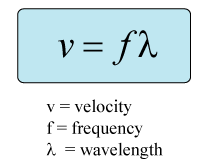
v = displacement / time = wavelength / period = wavelength x frequency
m s-1