Unit 1. Intro to Microbiology (History)
 Call Kai
 Learn
Learn Practice Test
 Spaced Repetition
 Match
Match Flashcards
 Knowt Play
1/84

There's no tags or description
Looks like no tags are added yet.
Name | Mastery | Learn | Test | Matching | Spaced | Call with Kai | Chat |
|---|
No analytics yet
Send a link to your students to track their progress
85 Terms
Microbiology
a branch of science that studies microorganisms. They are a large and diverse group of microscopic organisms made of a single cell or cluster of cells. They are very minot in size, so we need the aid of a microscope to observe them.
bacteria
protozoans
Examples of microorganisms made of a single cell:
fungi
tapeworms
Examples of microorganisms made of clusters of cells
350 yrs
Microniology started _______ ago
LUCRETIUS (98-55 B.C)
GIROLAMO FRACASTORO (1478-1553)
Suggested that diseases were caused by “invisible living creatures.”
This is the start of spontaneous generation theory, telling that microorganisms came from non-living things.
GIROLAMO FRACASTORO
Wrote a book about contagion and contagious disease, the disease experienced by humans are caused by contagion, it started contagion theory. It gave scientists the idea that diseases were caused by something that they called that time “contagion”
syphilis
Girolamo studied the start of epidemiology, it was during the time that he studied about ________, that he once described as “french disease” in one of his poems
epidemiology
__________ is the study and analysis of the determinants and patterns of health and disease.
Hippocrates
He said that No diseases are not from supernatural causes but natural causes.
for an individual to maintain his or health, there should be balance between those four humors. For one to be able to treat their sickness, the four humors should be balanced.
Blood
Phlegm
Yellow bile
Black bile
4 humors

4 humors and their respective element & personality types:
Blood

+ introvert
4 humors and their respective element & personality types:
Phlegm

+ past oriented
4 humors and their respective element & personality types:
Yellow bile

+ decisive
4 humors and their respective element & personality types:
Black bile
FRANCESCO STELLUTI (1577-1652)
Made the earliest observations on bees and weevils using a microscope supplied by Galileo.
ROBERT HOOKE
Reported to the world that life’s smallest structural units were “little boxes,” or “cells”
Marked the beginning of cell theory
During this time, he first observed the blood cell, it is said that it is the same with the animal cell.
Micrographia
Robert Hooke’s book on Cell Theory that inspired Anton van Leewenhoek
ANTON VAN LEEUWENHOEK (1632-1723)
Considered as the “first true microbiologist”
First actually to observe live microorganisms through the magnifying lenses of more than 400 microscopes he constructed.
red blood cells,
protozoa, and
sperm cell
First type of cells Anton van Leeuwenhoek observed were the _____________
ANTON VAN LEEUWENHOEK (1632-1723)
Father of Microbiology
Father of Protozoology
Founder of Bacteriology
“animalcules” or “wee beasties”
Anton van Leeuwenhoek first observed _________________ from rainwater, his own feces, and material scraped from his teeth
Tiny living and moving cells.
Observed in droplets of water, which may also refer to body fluids.
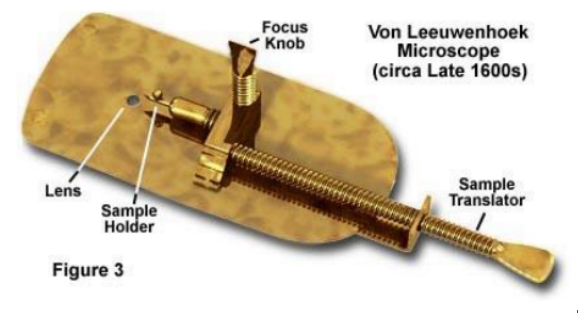
LEEUWENHOEK’S MICROSCOPE
3” to 4” microscope
Required good lighting and patience
SPONTANEOUS GENERATION THEORY
The first to propose this was actually Aristotle, but many scientists tried to support this theory.
Believed that some life forms could arise spontaneously from non-living matter. How did this theory emerge? During that time, they observed that when cheese with bread wrapped in a rag and was placed in a dark place, they said that it produced mice. So they believed that the bread and cheese suddenly produced the mice.
Toads, snakes, and mice could be born of moist soil.
Flies could emerge from manure
Maggots, the larvae of flies, could arise from decaying corpses.
ARISTOTLE (384-322 B.C)
Mentioned that simple invertebrates could arise from spontaneous generation.
First supported the Spontaneous generation theory
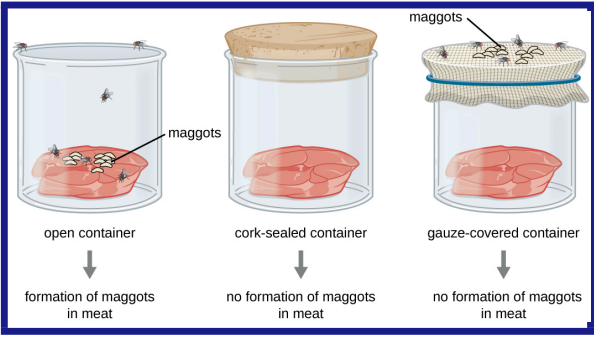
FRANCESCO REDI
Demonstrate that maggots did not arise spontaneously from decaying meat (1668)
Results of his investigation invalidated the long-held belief that life forms could arise from non-living things.
FRANCESCO REDI
Father of experimental biology.
JOHN NEEDHAM (1731-1781)
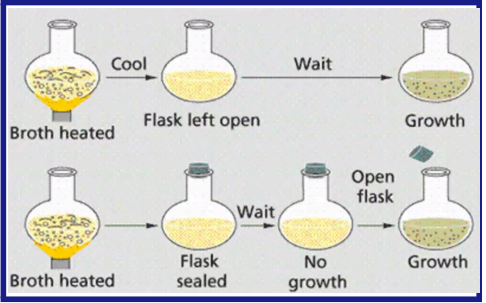
Observed that a boiled mutton broth eventually became cloudy after pouring it into a flask that was then sealed tightly.
Found that even after he heated nutrient fluids (chicken broth and corn broth) before pouring them into covered flasks, the cooled solutions were soon teeming with microorganisms.
Claimed that microbes developed spontaneously from the fluids.
Asserted that organic matter possessed a “vital force” that could give rise to life.
LAZZARO SPALLANZANI
Suggested that microorganisms from the air probably had entered Needham's solutions after they were boiled
proposed that air carried microorganisms to the culture medium
showed that nutrient fluids heated after being sealed in a flask did not develop microbial growth
ANTON LAURENT LAVOISIER
Showed the importance of oxygen to life.
Aristotle
John Needham
Scientists that supported the Spontaneous Generation Theory
Francesco Redi
Lazzaro Spallanzani
Theory of Biogenesis Supporters:
Rudolf Virchow
Theodor Schwann
Heinrich Schroder & Theodore von Dusch
Louis Pasteur
Scientists that challenged/refuted the Spontaneous Generation Theory
RUDOLF VIRCHOW (1821-1902)
Challenged the case for spontaneous generation with the concept of biogenesis.
He started the study of Histology, he observed that living cells are from pre-existing living cells, they are not from non-living matter.
THEORY OF BIOGENESIS
Theory that states all living cells can arise only from pre-existing living cells.
THEODOR SCHWANN (1810-1882)
Observed that no growth occurred in a flask that contained a nutrient solution after allowing the air to pass through a heated tube.
Why? The heat may have killed the microorganisms that may have possibly entered the flask. The idea of Aseptic technique is slowly emerging.
HEINRICH SCHRODER (1810-1885)
THEODORE VON DUSCH (1824-1890)
Noticed that no growth occurred after allowing the air to pass through a sterile cotton wool placed on a flask of heat-sterilized medium.
LOUIS PASTEUR (1822-1895)
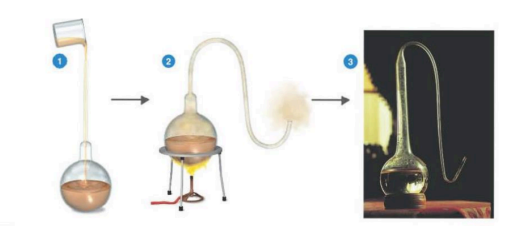
demonstrated that microorganisms are present in the air and can contaminate sterile solutions, but that air itself does not create microbes. It’s not the air that creates microbes, it’s just the place where they thrive but it is not where they arise from.
showed that microorganisms can be present in nonliving matter-on solids, in liquids, and in the air.
demonstrated conclusively that microbial life can be destroyed by heat and that methods can be devised to block the access of airborne microorganisms to nutrient environments .
form the basis of Aseptic Techniques.
LOUIS PASTEUR (1822-1895)
DISPROVED the doctrine of spontaneous generation
LOUIS PASTEUR
(sometimes also ROBERT KOCH)
Father of Modern Biology
ASEPTIC TECHNIQUES
techniques that prevent contamination by unwanted microorganisms, which are now the standard practice in laboratory and many medical procedures
sterilization
autoclaving
handwashing
PPE
heating
the basis of aseptic technique
JOHN TYNDALL
Showed that dust carry germs that could contaminate a sterile broth
TYNDALLIZATION
is a form of sterilization in the 19th century that uses moist heat for 3 consecutive days to eradicate vegetative cells and endospores
For the first day, heat at 100C or less than that then cooled, on the second day, heated and cooled again, 3rd day, same process. Then on the next consecutive days, there will be no growth seen on vegetative cells and endospores.
not often used now, autoclaving na ngaun.
Autoclaving
121 degrees C, 15 psi, 15-30 mins
most effective sterilization technique
FERDINAND COHN (1828-1898)
Discovered that there are bacteria that could withstand a series of heating and boiling because of heat resistant structures known as endospores.
Bacillus
Clostridium
That’s why they were able to develop a sterilization technique that would kill the endospores
THEODOR SCHWANN
stated that yeast cells are responsible for the conversion of sugars to alcohol
LOUIS PASTEUR;
FERMENTATION
Found that microorganisms called yeasts convert the sugars to alcohol in the absence of air = ____________
LOUIS PASTEUR;
PASTEURIZATION
His solution to the spoilage problem was to heat the beer and wine just enough to kill most of the bacteria that caused the spoilage:
less then 100 degrees C
does not alter/affect the quality and taste of the goods
LOUIS PASTEUR;
vinegar (acetic acid)
Stated Souring and spoilage are caused by different microorganisms called bacteria; in the presence of air, bacteria change the alcohol in the beverage into ______________
GERM THEORY OF DISEASE
Theory that states that microorganisms might have relationships with plants and animals---specifically, that microorganisms might cause disease
AGOSTINO BASSI
GERM THEORY OF DISEASE:
had proved that another silkworm disease was caused by a fungus.
IGNAZ SEMMELWEIS (1816-1865)
GERM THEORY OF DISEASE:
demonstrated that physicians, who at the time did not disinfect their hands, routinely transmitted infections (puerperal, or child -birth, fever) from one obstetrical patient to another
demonstrated that routine hand washing can prevent the spread of disease
IGNAZ SEMMELWEIS (1816-1865)
GERM THEORY OF DISEASE:
Father of Handwashing/ Hand disinfection
JOSEPH LISTER (1821-1912)
GERM THEORY OF DISEASE:
introduced the system of antiseptic surgery in Britain
applied the germ theory to medical procedures
began treating surgical wounds with a phenol solution
pioneered in promoting among surgeons handwashing before and after an operation, the wearing of gloves, sterilization of surgical instruments.
ROBERT KOCH (1843-1910)
GERM THEORY OF DISEASE:
First to show irrefutable proof that bacteria indeed cause disease
first to cultivate bacteria on boiled potatoes, gelatin, meat extracts and protein
Koch's Postulates
GERM THEORY OF DISEASE:
He established a sequence of experimental steps for directly relating a specific microbe to a specific disease called as _____________
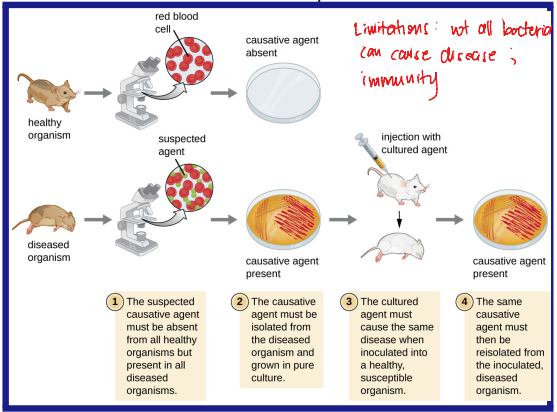
The microorganism should be found in all cases of the disease in question, and its distribution in the body should be in accordance with the lesions observed.
The microorganism should be grown in pure culture in vitro (or outside the body of the host) for several generations.
When such a pure culture is inoculated into susceptible animal species, the typical disease must result.
The microorganism must again be isolated from the lesions of such experimentally produced disease.
Enumerate the Koch’s Postulates
Bacillus anthracis (1876) - from the blood of cattle that had died of anthrax
Mycobacterium tuberculosis (1882) - called “Koch’s bacillus”
GERM THEORY OF DISEASE:
discoveries of Koch
FANNY HESSE (1850-1934)
COLLABORATORS OF KOCH:
suggested the use of agar, a solidifying agent, in the preparation of the culture media
JULIUS RICHARD PETRI (1852-1921)
COLLABORATORS OF KOCH:
developed the Petri Dish, which is a circular glass or plastic plate for holding the culture media.
MARTINS BEIJERINK (1851-1931)
SERGEI WINOGRADSKY (1856-1953)
COLLABORATORS OF KOCH:
developed the enrichment-culture technique and the use of selective media
Supportive media
Enrichment media
Enriched media
Selective/Inhibitory media
Differential media
5 TYPES OF CULTURE MEDIA:
1. Supportive Media
5 TYPES OF CULTURE MEDIA:
Media that support the growth of many microorganisms without special substances.
Purpose: General cultivation of bacteria.
Examples:
Nutrient agar
Nutrient broth
Peptone water
Example organism grown: Escherichia coli infection bacteria (E. coli)
2. Enrichment Media
5 TYPES OF CULTURE MEDIA:
Liquid media containing extra nutrients that help increase the number of a particular pathogen when it is present in small amounts.
Purpose: Enhance growth of desired organisms from mixed samples.
Examples:
Selenite F broth – enriches Salmonella
Alkaline peptone water – enriches Vibrio cholerae
3. Enriched Media
5 TYPES OF CULTURE MEDIA:
Supportive media supplemented with blood, serum, or egg to grow fastidious organisms (organisms with complex nutritional needs).
Purpose: Grow delicate bacteria.
Examples:
Blood agar
Chocolate agar
Loeffler’s serum slope
Example organisms:
Streptococcus
Neisseria
4. Selective/Inhibitory Media
5 TYPES OF CULTURE MEDIA:
Contain substances that inhibit unwanted microbes while allowing desired organisms to grow.
Purpose: Isolate specific bacteria.
Examples:
MacConkey agar – inhibits Gram-positive bacteria
Mannitol salt agar – selects salt-tolerant bacteria like Staphylococcus
Thayer-Martin agar – selects Neisseria
5. Differential Media
5 TYPES OF CULTURE MEDIA:
Contain indicators that show visible differences between microorganisms based on biochemical reactions.
Purpose: Differentiate bacteria by appearance or color change.
Examples:
MacConkey agar – lactose fermenters turn pink
Blood agar – shows hemolysis patterns
EMB agar (Eosin Methylene Blue agar)
Example:
E. coli produces a metallic green sheen on EMB agar.
a. lactose fermenters — pink
b. non-lactose fermenters — colorless
Differential media culture classifies bacteria into 2 groups
EDWARD JENNER (1749-1823)
IMMUNOLOGY: ADVENT OF VACCINATION
embarked on an experiment to find a way to protect people from smallpox
introduced the concept of vaccination
EDWARD JENNER (1749-1823)
Father of Immunology
“vaccinia/ cow pox”
IMMUNOLOGY: ADVENT OF VACCINATION
Jenner’s small pox vaccine was the _________ that caused mild infection → immunity → vaccination
PHYSICIANS IN CHINA
Variolation
IMMUNOLOGY: ADVENT OF VACCINATION
immunized patients by removing scales from drying pustules of a person suffering from a mild case of smallpox, grinding the scales to a fine powder, and inserting the powder into the nose of the person to be protected
riskier than vaccination
IMMUNOLOGY: ADVENT OF VACCINATION
Pasteur used the term vaccine for an attenuated (weakened/killed) culture
both made a series of experiments to produced attenuated strains of bacteria
prove that when attenuated strains are introduced into a healthy host, the latter remains protected and healthy against the virulent agent
Ex: MMR (measles, mumps, rubella) vaccine
Bacillus anthracis attenuation - heating the bacterial suspension at 42 °C the bacteria loses its endospore - nonvirulent form of anthrax
Cholera attenuation - serial passages (serial subcultures)
Rabies vaccine - by drying the spinal cords of rabbits using the material to prepare a series of 14 injections of increasing virulence.
IMMUNOLOGY: ADVENT OF VACCINATION
Pasteur discovered that attenuated (weakened) bacterial cultures could produce immunity
CHARLES CHAMBERLAND (1851-1908)
IMMUNOLOGY: ADVENT OF VACCINATION
created a porcelain bacterial filter and developed the anthrax vaccine together with Pasteur
They developed vaccines not just for bacteria but also for pathogenic viruses.
EMIL VON BEHRING (1854-1917)
IMMUNOLOGY: ADVENT OF VACCINATION
prepared antitoxins for diphtheria and tetanus
ELIE METCHNIKOFF (1845-1916)
first to described the immune system cells and the process of phagocytosis
Mesangial cells - macrophages found in kidney
Kupffer cells - macrophages found in liver
MHC II - CD4+ cells
MHC I - CD8 cytotoxic cells
CHEMOTHERAPY
treatment of disease by using chemical substances
chemical treatment of non-infectious diseases, such as cancer
ANTIBIOTICS
chemicals produced naturally by bacteria and fungi to act against other microorganisms.
Example: penicillin
SYNTHETIC DRUGS
chemotherapeutic agents prepared from chemicals in the laboratory
PAUL EHRLICH (1854-1915);
Salvarsan (Arsphenamine);
syphilis
THE FIRST SYNTHETIC DRUGS
speculated about a “bullet" that could hunt down and destroy a pathogen without harming the infected host
found a chemotherapeutic agent called ______________, an arsenic derivative effective against _______ from Treponema pallidum
SELMAN WAKSMAN (1888-1973);
streptomycin & neomycin
THE FIRST SYNTHETIC DRUGS
regarded as “Father of Antibiotics” by some historians.
discovered __________ and __________ antibiotics
ALEXANDER FLEMING (1881-1955);
Penicillium notatum (renamed Penicillium chrysogenum)
A FORTUNATE ACCIDENT - ANTIBIOTICS:
accidentally discovered Penicillin
mold was later identified as ____________
HOWARD FLOREY (1898-1968)
ERNST CHAIN (1906-1979)
A FORTUNATE ACCIDENT - ANTIBIOTICS:
Made the purification process for penicillin and clinical trials to humans EDWARD
EDWARD ABRAHAM (1913-1999)
A FORTUNATE ACCIDENT - ANTIBIOTICS:
First to propose the correct biochemical structure of Penicillin.
Gram (+) bacteria
Penicillin was effective against ____________