Pharmacognosy | Glycosides
 Call Kai
 Learn
Learn Practice Test
 Spaced Repetition
 Match
Match Flashcards
 Knowt Play
1/444

There's no tags or description
Looks like no tags are added yet.
Name | Mastery | Learn | Test | Matching | Spaced | Call with Kai | Chat |
|---|
No analytics yet
Send a link to your students to track their progress
445 Terms
Glycosides
Sugar ethers;
heteropolysaccharides
compounds that yield one or more sugars among the products of hydrolysis.
Glycoside — general structure
R1-O-R2
Glycoside — R1
glycone
Sugar portion of a glycoside;
composed of different sugars (heteropolysaccharides).
Glycoside — R2
Aglycone/Genin
Non-sugar portion of a glycoside
Glycoside — Glycosidic bond
Connects the sugar and non-sugar portion and can be hydrolyzed by acids or enzymes.
Glycoside — Formation of a glycosidic bond
Hydroxyl of the sugar portion is condensed with a hydroxyl group of the non-sugar portion.
Glycoside — Glycoside configurations
Both α and β glycosides are possible; only β form occurs in plants.
Glycoside biosynthesis — aglycone
Aglycones are too different to be generalized; two important pathways include the mevalonate pathway and shikimic acid pathway.
Glycoside biosynthesis — glycone
Glycone comes from photosynthesis.
Glycoside biosynthesis — Actual glycoside formation
Formation of UDP-sugar followed by condensation with the aglycone.
Tannins — biosynthesis
Tannins are also from the shikimic acid pathway.
Two important biosynthetic pathways related to glycosides
Mevalonate pathway and shikimic acid pathway.
3-Dehydroshikimic acid
Precursor of shikimic acid.
Shikimic acid pathway
Gives rise to aromatic amino acids.
branches: Prephenic acid and chorismic acid
shikimic acid: Plant acid derivative of all aromatic compounds.
Prephenic acid vs. chorismic acid
They differ in the location of the CH2COCOOH substituent; C1 for prephenic acid and C3 for chorismic acid.
Prephenic acid branch
Can give rise to phenylpropanoids; shortcut: C6-C3.
Many glycosides and volatile oils are classified as phenylpropanoids.
Prephenic acid — products (3)
Aldehyde, lactone, flavonoid.
Chorismic acid products — amino acids
Anthranilic acid and amino acid (serine).
Prephenic acid products — amino acids
Phenylpyruvic acid becomes phenylalanine; p-hydroxyphenylpyruvic acid becomes tyrosine.
Coumaric acid
Produces lactone glycosides.
Gallic acid
From dehydroshikimic acid; produces hydrolyzable tannins.
Coumaric acid
produces chalcones, which produce flavonoids.
Flavonoids are required for production of condensed tannins, which is why flavonoid glycoside is linked to condensed tannins.
Mevalonate pathway
Acetyl CoA becomes HMG CoA through HMG CoA reductase, then becomes mevalonic acid.
Mevalonic acid pathway — products (2)
Saponins, cardiac glycosides
Other glycosides (3)
Cyanophores, glucosinolates, and miscellaneous glycosides.
Other products of the mevalonic acid pathway
Hormones, cholesterol, and fat-soluble vitamins (ADEK).
Shikimic acid pathway — product apart from CAPA and PALF
Lignans
Chorismate branch — glycosides (3)
Anthraquinone glycoside, phenol, alcohol.
Anthraquinone glycosides — use
Stimulant cathartics except for chrysarobin.
Anthraquinone glycosides — MOA
Increase tone of smooth muscle in the wall of large intestines and inhibit Cl ion channel.
Anthraquinone glycosides — aglycones (4)
Anthracene derivatives such as chrysophanol, emodin, aloe-emodin, and rhein.
Chrysophanol — sources (2)
Anthraquinone aglycone found in rhubarb and cascara.
Emodin — sources (2)
Anthraquinone aglycone found in rhubarb and cascara.
Aloe-emodin & Rhein — sources (2)
Anthraquinone aglycone found in rhubarb and senna.
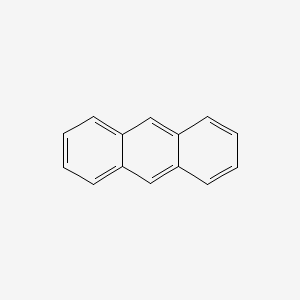
Anthracene
3 fused rings
Anthraquinone derivatives — color
Orange-red colored compounds.
Anthraquinone derivatives — solubility
Soluble in dilute alcohol and boiling/hot water.
Anthraquinone derivatives — with a base
Give a characteristic red, violet, or green color with NH3 or NaOH.
Anthraquinone derivatives — types (5)
Anthraquinone
Anthranol/Anthrone
Diantrones
Oxanthrone
Aloin type/ C-glycoside
Anthraquinone
2 =O groups; anthracene derivative

Anthraquinone — types (2)
Dihydroxy phenol
Trihiydroxy phenol
Anthraquinone — dihydroxy phenols (4)
chrysophanol, rhein, aloe emodin, physcion
Anthraquinone — trihydroxy phenols (2)
emodin, emodic acid
Anthrone
1 =O group.

Anthranol
1 -OH group.

Anthranol/Anthrone — example
Chrysarobin
most reduced type of anthraquinone
Anthranol — distinction
Oxanthrone
1 -OH and 1 =O
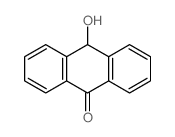
Oxanthrone — example
Emodin
intermediate between anthraquinone and anthranol
Oxanthrone — distinction
Dianthrone
Two molecules of anthrone.
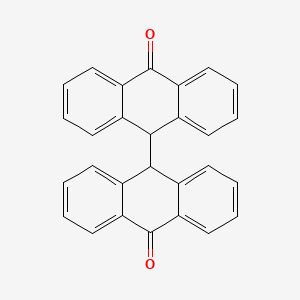
Dianthrone — examples
Senna
Cassia, Rheum, Rhamnus
high cathartic effect
Aloin type/C-glycoside
Cascara sagrada (main constituent: barbaloin)
Borntrager's test
Test for anthraquinone glycosides involving extraction using organic solvent followed by addition of base.
Borntrager's test — positive result
Red color on the lower alkaline layer.
Borntrager's test — negative result
Indicates a very stable form of anthraquinone, especially reduced types of anthranol; sample must be hydrolyzed and oxidized first.
Modified Borntrager's test
Presence of a very stable type of anthraquinone; Uses additional ferric chloride/peroxide to force oxidative hydrolysis.
Modified Borntrager's test — positive result
Pink or red color in the alkaline layer.
Borntrager's tests — Anthranol
Anthranol: negative Borntrager's test but positive modified Borntrager's test.
Anthraquinone glycosides (7)
Sacred bark
Frangul
Aloe
Rhubarb
Senna
Goa
St. John’s Wort
Sacred bark — synonym
Cascara sagrada
Sacred bark — source
Dried bark of Rhamnus purshianus.
Sacred bark — family
Rhamnaceae.
Sacred bark — constituents (2)
Cascarosides A and B, optical isomer of barbaloin;
Cascarosides C and D, optical isomer of chrysaloin.
Sacred bark — uses (2)
Cathartic for habitual constipation; restores natural tone of the colon.
Sacred bark — Casanthranol
Purified mixture of the anthranol glycosides; combined with surfactants or hydrocolloids.
Sacred bark — aging
Should be aged for at least 1 year prior to use.
Sacred bark — curing
To reduce bitter taste, cure with MgO or alkaline earths.
Frangula — synonym
Alder buckthorn
Frangula — source
Dried bark of Rhamnus frangula.
Frangula — family
Rhamnaceae.
Frangula — constituents (2)
Frangulin and glucofrangulin.
Frangula — use
Cathartic.
Aloe — synonym
Sabila
Aloe — sources (2)
Dried latex leaves of Aloe barbadensis and Aloe spicata.
Aloe — family
Liliaceae.
Aloe — constituents (2)
Barbaloin (aloe-emodin anthrone) and chrysophanic acid.
Aloe — use
Cathartic (drastic); used for compound benzoin tincture.
Aloe — preparations (2)
Aloe vera gel; stabilized aloe
Aloe vera gel — uses (5)
Treatment of burns, abrasions, skin irritations, purgative, and alopecia (BASPA).
Stabilized aloe — use
Used for lotion or yogurt production.
Rhubarb — synonyms (2)
Rheum/Chinese rhubarb
Rhubarb — sources (3)
Rheum officinale, R. palmatum, and R. raponticum.
Rhubarb — family
Polygonaceae.
Rhubarb — constituents (3)
Rhein anthrones (2.2%), glucorhein, and glucogallic acid.
Adulterant from rhapontic rhubarb; shows blue fluorescence, absent for other rhubarb.
Rhaponticin
Rhaponticin — scientific name
Rheum rhaponticum
Senna — synonym
Slimming tea
Senna — sources (2)
Dried leaflets of Cassia angustifolia and Cassia acutifolia.
Senna — species (2)
Tinnevelly senna; Alexandria senna
Tinnevelly senna — source
Cassia angustifolia
Alexandria senna — source
Cassia acutifolia
Senna — family
Fabaceae.
Alexandria senna — determination
Pink with MgOAc in daylight;
green-orange in filtered UV.
Tinnevelly senna — determination
Orange with MgOAc in daylight;
‘yellow-green in filtered UV.
Senna — constituents (2)
Sennosides A and B are major;
sennosides C and D are minor.
Senna — aglycone
Sennidin A and B.
Senna — use
Very potent cathartic
Senna — potency
more potent than cascara sagrada; due to dianthrone structure
Senna — cultivation
Cultivated on wet lands resembling rice paddies, as successor to rice.