PSY200 Exam 2 - Biopsychology and Cognition
 Call Kai
 Learn
Learn Practice Test
 Spaced Repetition
 Match
Match Flashcards
 Knowt Play
1/64

Name | Mastery | Learn | Test | Matching | Spaced | Call with Kai | Chat |
|---|
No analytics yet
Send a link to your students to track their progress
65 Terms
Cognition
Thinking
What cognition includes
- Perception
- Learning
- Judgement
- Memory
- Problem Solving
Concept
category or grouping of linguistic information, objects, ideas, or life experiences
Prototype
best representation of a concept
Trial and Error
problem-solving strategy in which multiple solutions are attempted until the correct one is found
Algorithm
a slow problem-solving strategy characterized by a specific set of instructions
Heuristic
a fast but error-prone mental shortcut to solve problems
Mental set
continually using an old solution to a problem without results
functional fixedness
mental set in which one can only see an object's intended use

Confirmation bias
tendency to focus on information that confirms your existing beliefs
hindsight bias
belief that the event just experienced was predictable, even though it really wasn't
availability heuristic
faulty heuristic in which you make a decision based on information readily available to you

Cognitive psychology
field of psychology dedicated to examining how people think.
problem-solving strategies
1. Trial and Error
2. Algorithms
3. Heuristics
# of genes in the human body
20,000
# of chromosomes in the human body
46 (23 pairs)
Percentage of DNA humans share
99%+ DNA
Neurons are comprised of...
dendrites, axons, and myelin sheaths
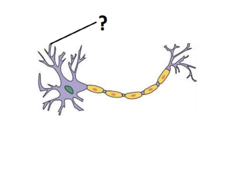
Dendrites
branchlike; collects and receives info
Axons
Carries electrical signals

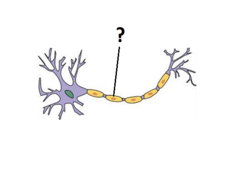
Myelin sheath
fatty tissue that insulates axons
Neurotransmitters
chemical messengers
synaptic cleft
gap between adjacent neurons where chemical signals transfer
Genes
sequence of DNA that controls or partially controls physical characteristics
alleles
specific version of a gene

Range of reaction
genes set the boundaries, and our environment interacts with the genes to determine where in that range we will fall

the two major subdivisions of the nervous system
1. Central Nervous System (CNS)
2. Peripheral Nervous System (PNS)
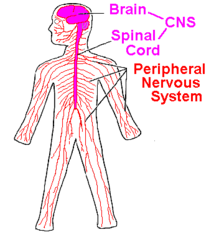
The central nervous system (CNS) consists of
the brain and spinal cord
Divisions of Peripheral Nervous System
somatic and autonomic
Somatic nervous system
Controls voluntary movements of skeletal muscles.
Contains motor and sensory neurons
autonomic nervous system
unconcious and involuntary (like internal organs and glands)
divisions of autonomic nervous system
1. Sympathetic
2. Parasympathetic
sympathetic nervous system
Preps body for stress; EXCITES
parasympathetic ns
returns body to routine operations. CALMS
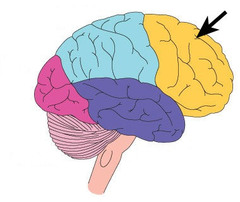
Frontal Lobe
Reasoning, motor, emotion, and language
Parietal lobe
Processes info from senses

occipital lobe
visual processing

temporal lobe
hearing, memory, emotion, and language

approximate # of sensory neurons
millions
approximate # of motor neurons
millions
approximate # of interneurouns
billions
where sensory neurons travel to/from
PERIPHERAL NS to CENTRAL NS
where motor neurons travel to/from
CENTRAL NS to PERIPHERAL NS
corpus callosum
band of neural fibers that connect brain hemispheres; sometimes cut to reduce seizures

cerebral cortex
higher brain functions
Motor cortex
plans/coordinates movement
thalamus
relays sensory information
limbic system
processes smell and emotion
hippocampus
learning and memory; does not finish developing until 3-4 years!
amygdala
gives emotional meaning to memories
hypothalamus
Regulates homeostasis and endocrine functions.
cerebellum
balance, coordination, and movement
founder of phrenology
Franz Joseph Gall
Sensation
detecting sensory info
perception
interpreting sensory information
transduction
translation of sensory stimuli into action potential
absolute threshold
the minimum stimulation needed to detect a particular stimulus 50 percent of the time
Just Noticeable Difference
how much difference between stimuli is required to detect it
subliminal messaging
messages that are presented below the threshold for conscious awareness
inattentional blindness
a failure to perceive objects that are not the focus of attention
sensory adaptation
diminished sensitivity as a consequence of constant stimulation
top-down processing
having expectations or prior knowledge that influences how we perceive our senses

bottom-up processing
sensing something before being cognitively aware of it, then analyzing afterwards
Gestalt Psychology
a view that the whole is greater than the sum of its parts

somatosensory cortex
touch, temperature, pain