2A1 Chapter 5 Management and Supervision
 Call Kai
 Learn
Learn Practice Test
 Spaced Repetition
 Match
Match Flashcards
 Knowt Play
1/178

Earn XP
Description and Tags
2nd Class Power Engineering
Name | Mastery | Learn | Test | Matching | Spaced | Call with Kai | Chat |
|---|
No analytics yet
Send a link to your students to track their progress
179 Terms
What is management?
The process of coordinating and integrating work activities to accomplish them efficiently and effectively.
What is Planning in management?
To establish organizational goals, develop strategies to achieve them, and coordinate activities.
What is Organizing in management?
Deciding how people are grouped, what activities are to be accomplished, and who will do them.
What is Leading in management?
Directing, coordinating, and motivating employees in their work.
What is Controlling in management?
Monitoring performance by comparing it to previously set goals and making necessary adjustments.
What are the three categories of managers?
First-line managers, Middle managers, and Top managers.
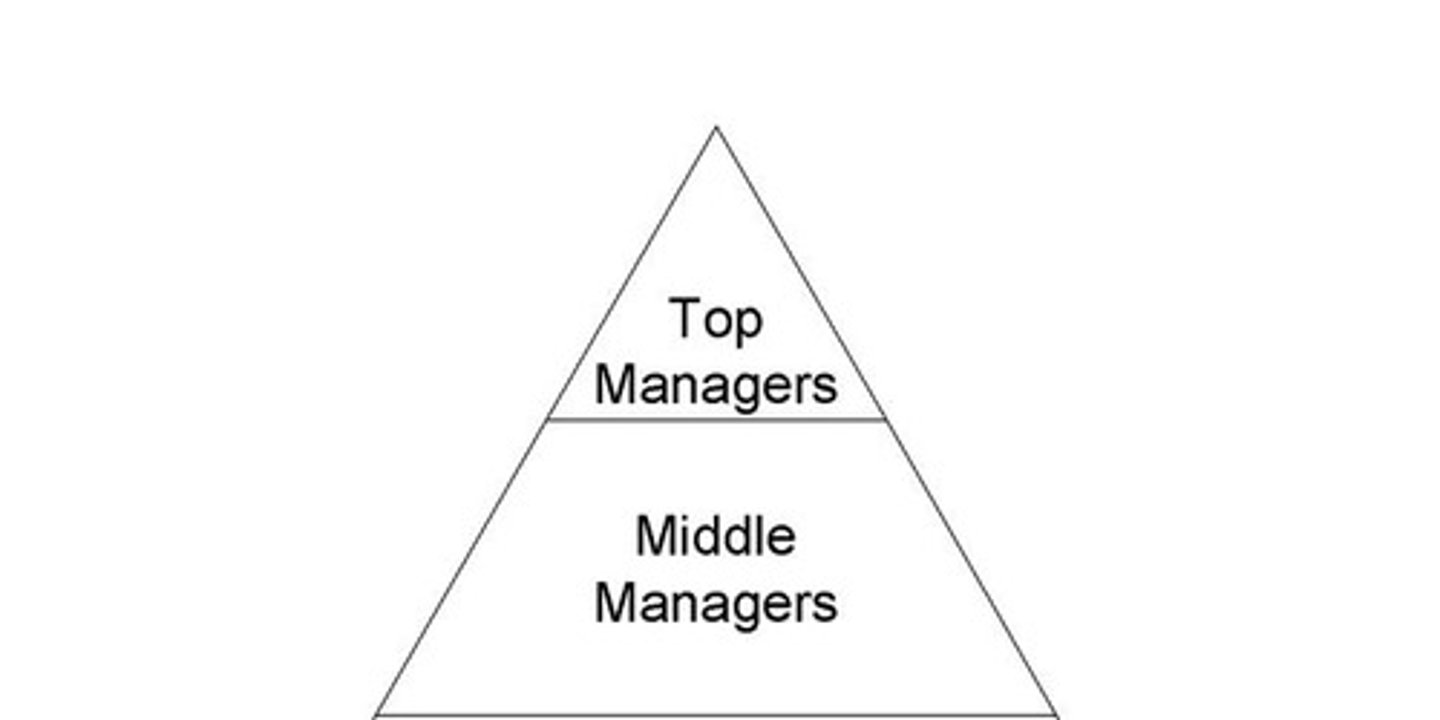
What is the role of First-line managers?
To directly coordinate the work of non-managerial employees.
What is the responsibility of Middle managers?
Coordinating and integrating the activities of various work teams or organizational units.
What do Top managers do?
Make organizational decisions and set policies, strategies, and objectives for the entire organization.
What is the significance of organizational structure?
It governs activities and defines and limits the behavior of its members.
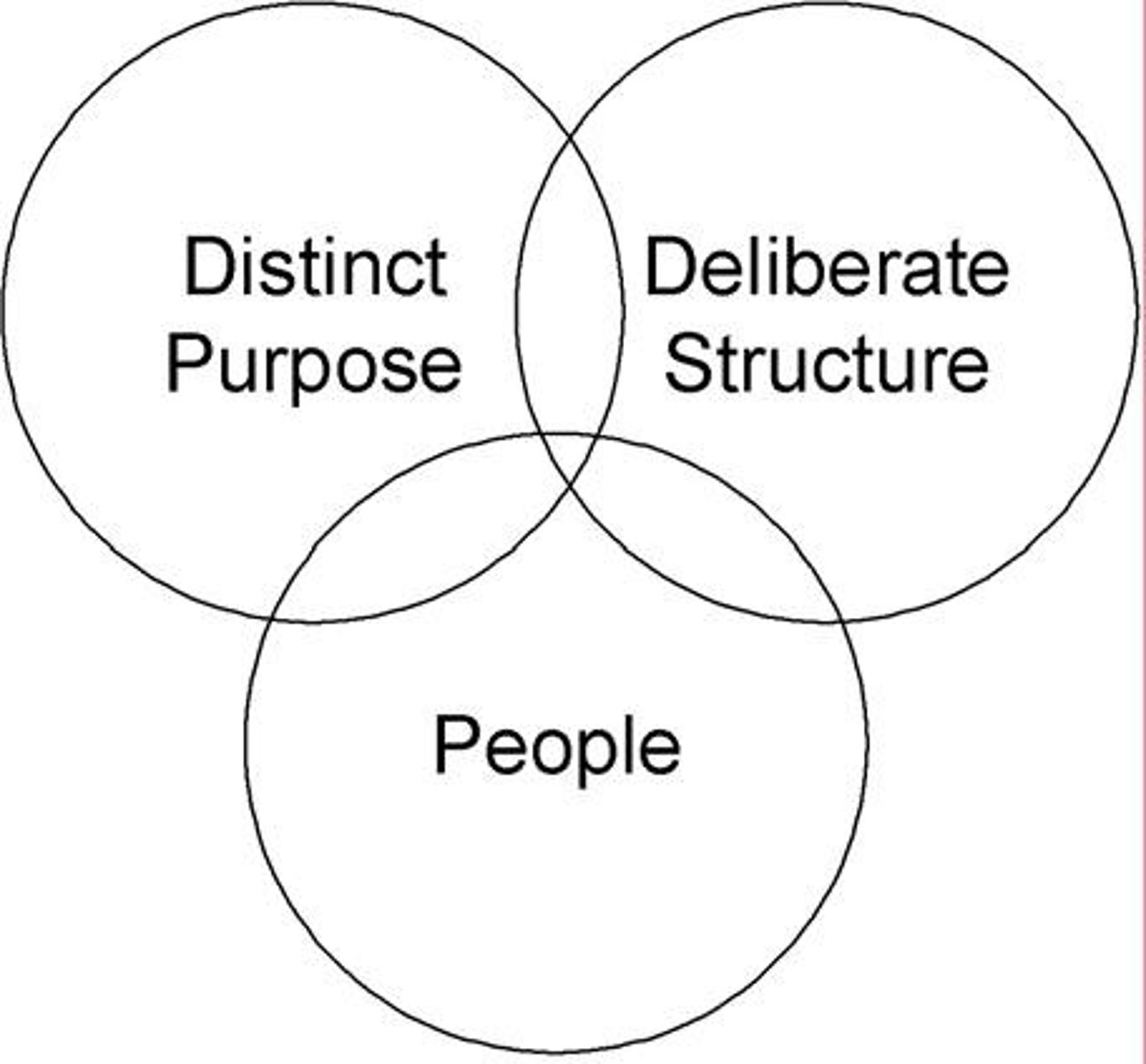
What are the three common characteristics of organizations?
A distinct purpose, people, and a deliberate structure.
What is the relationship between efficiency and effectiveness in management?
Efficiency is about resource use, while effectiveness is about completing activities as required; they are not necessarily dependent on each other.
What are interpersonal roles in management?
Roles that involve interacting with others, such as being a figurehead, leader, or liaison.
What are informational roles in management?
Roles that involve seeking, transmitting, and officially communicating information.
What are decisional roles in management?
Roles that involve making decisions as an entrepreneur, disturbance handler, resource allocator, or negotiator.
What is the primary responsibility of managers and supervisors?
To integrate and coordinate the work of others to meet business objectives.
What is the role of power engineers in management?
They may transition from technical roles to management, guiding and directing other employees.
What does effective management require?
Flexibility, creativity, and the ability to integrate management functions.
What is a formal report in management communication?
A structured document that conveys information clearly and professionally.
What is the importance of employee training in management?
To ensure employees have the necessary skills and knowledge to perform their roles effectively.
How can managers motivate employees?
By providing leadership, support, and recognizing their contributions.
What is the significance of monitoring employee performance?
To ensure that activities align with organizational goals and to identify areas for improvement.
What is the role of communication in management?
To facilitate the exchange of information and ensure clarity in organizational objectives.
What is the relationship between management and organizational goals?
Management functions are designed to support the achievement of organizational goals.
Defining corporate goals and objectives, Establishing strategies for achieving goals and objectives, and Developing specific plans for implementing goals and objectives are the _____.
Three aspects of Planning
What are the three main groups of management roles identified by Henry Mintzberg?
Interpersonal, Informational, and Decisional
What is the role of a leader in interpersonal roles?
To motivate employees.
What does the informational role of a monitor involve?
Seeking and receiving information.
What is the purpose of a spokesperson in informational roles?
To transmit information officially to outsiders.
What is the role of an entrepreneur in decisional roles?
Organizing strategy and review sessions to develop new programs.
What does a disturbance handler do in decisional roles?
Takes corrective action for unexpected problems.
What is the responsibility of a resource allocator in decisional roles?
Identifying and scheduling activities.
What is formal planning?
Planning that requires plans to be developed, documented, and clearly communicated.
What are strategic plans?
Plans that describe overall corporate objectives over a long time period.
What are operational plans?
Plans that cover detailed aspects of how objectives are to be achieved, usually for a short time period.
What is the difference between short-term and long-term plans?
Short-term plans are usually a year or less, while long-term plans are typically 2-5 years in length.
What are specific plans?
Plans with detailed objectives and means to accomplish them.
What are directional plans?
Plans that outline objectives but do not specify how they are to be achieved.
What is the difference between single use and standing plans?
Single use plans address specific situations that occur once, while standing plans address repetitive procedures.
What are objectives in management?
Desired outcomes for the organization, groups, and individuals that guide decision-making.
How are objectives used in the management function called “Controlling”?
They serve as criteria for measuring actual performance and taking corrective action.
What is the traditional approach to developing objectives?
Top-level managers develop overall corporate goals, then collaborate with middle managers to identify accountability.
What is Management by Objectives (MBO)?
A process where employees jointly develop objectives and progress is periodically reviewed.
Specific goals and objectives, Joint decision making by participants, An explicit time period, and Performance feedback are the ____.
Basic elements of MBO
What is the first step in a typical MBO program?
Overall objectives and strategies are formulated by top-level managers.
What is the role of middle managers in the MBO process?
They set specific objectives in collaboration with their superiors.
What happens after action plans are implemented in the MBO process?
The plans are reviewed regularly and feedback is provided.
What is the significance of performance-based rewards in MBO?
They are given when objectives are successfully completed.
How does planning help in managing change?
It forces managers to look ahead and develop appropriate responses to needed changes.
What is the hierarchy of objectives?
A structure where general objectives are at the top and more specific objectives are at lower levels.
What are the primary corporate goals for power engineers?
Production of oil, gas, electric power, petrochemical products, manufacturing of goods, or provision of a service.
List one specific objective for power engineers.
Plant performance and capacity.
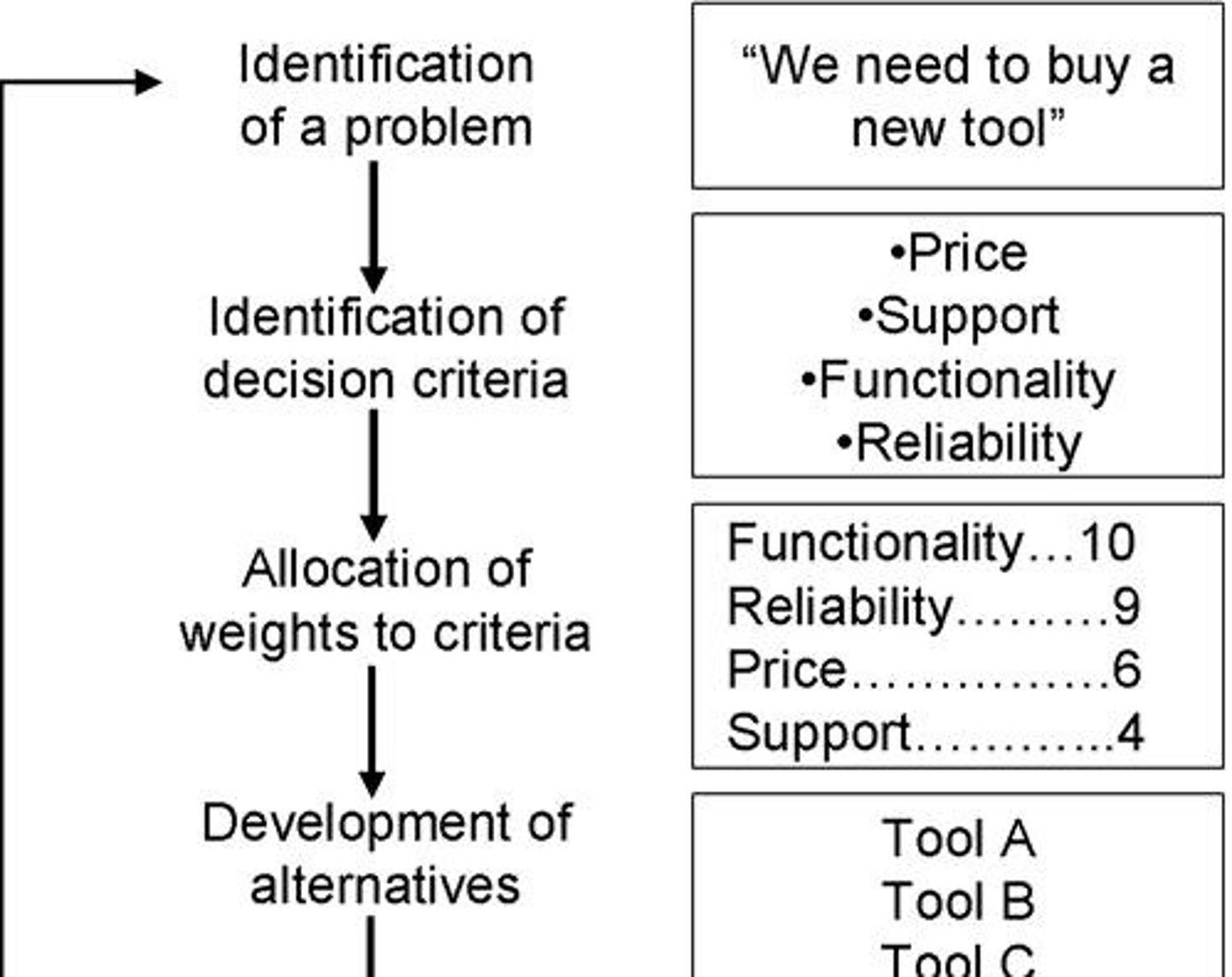
What is the first step in the decision making process?
Identifying a Problem.
Why is identifying a problem often the most difficult step?
Different people may perceive the problem differently.
What must managers do to identify a problem for action?
Accept there is a discrepancy and assign resources to rectify it.
What is the second step in the decision making process?
Identifying Decision Criteria.
What should be considered when identifying decision criteria?
Only criteria that will sway the decision if all other factors are equal.
What is the third step in the decision making process?
Allocating Weights to Criteria.
How are weights allocated to criteria?
Using a scale, typically 0-10, to establish importance.
What is the fourth step in the decision making process?
Developing Alternatives.
What is the fifth step in the decision making process?
Analyzing Alternatives.
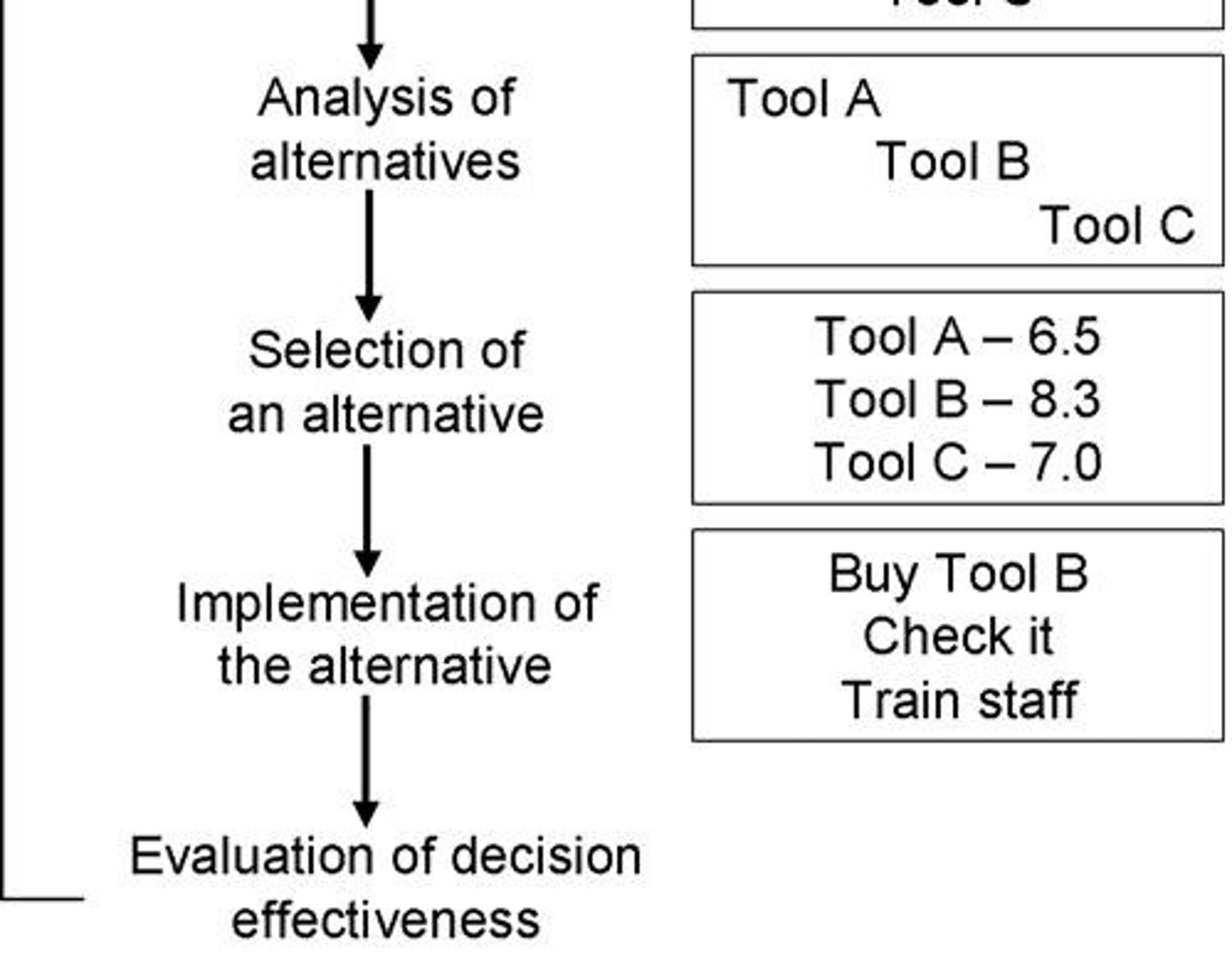
What is done during the analysis of alternatives?
Each alternative is scored against all criteria using a scale.
What is the sixth step in the decision making process?
Selecting an Alternative.
What factors may influence the selection of an alternative?
Political factors or budget constraints.
What is the seventh step in the decision making process?
Implementing the Alternative.
What is crucial for the acceptance of the decision?
Involving affected staff in the decision making process.
What is the eighth step in the decision making process?
Evaluating Decision Effectiveness.
What should managers do if a decision is ineffective?
Conduct a new evaluation to identify the failure point.
What assumptions are made for a rational decision making process to work?
Clear problem identification, no conflicting goals, all options known, stable evaluation criteria, no constraints, and maximum payoff.
What is a key challenge for managers in decision making?
Balancing the need for thorough analysis with the reality of time constraints.
What is the difference between decision making and troubleshooting?
Decision making is proactive, while troubleshooting is reactive to crises.
Why is proactive decision making more effective?
It avoids the need to deal with breakdowns after they occur.
Who should be involved in the decision making process?
People with relevant knowledge and those responsible for managing the outcome.
What can undermine the decision making process?
Involving people who do not have a stake in the decision.
How can day-to-day decisions be made more effectively?
By those most directly affected by the decisions.
What is Human Resource Management?
Attracting and retaining qualified staff.
Identification and selection of employees, Ensuring employee competency, and Retaining and rewarding employee performance are the _____.
Three major functions of Human Resource Management
What is the first step in the Human Resource Management process?
Identification and selection of employees.
What does human resource planning involve?
Translating corporate objectives into staff requirements and ensuring the right number of people with the right skills are in place.
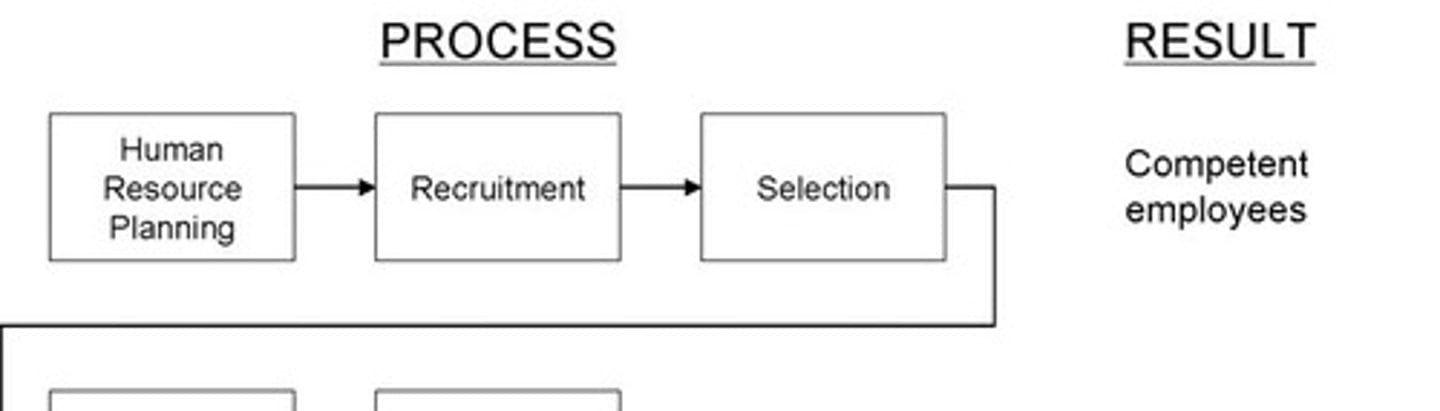
What is recruitment in the context of Human Resource Management?
The process of locating, identifying, and attracting capable applicants.
How do organizations typically begin their recruitment process?
By looking internally for candidates.
What is the purpose of job descriptions in recruitment?
To match current roles and responsibilities with the required skills and qualifications.
What is the selection process in Human Resource Management?
The method used to evaluate potential employees to hire the most appropriate candidate.
What are some common methods used in the selection process?
Application forms, written tests, and job interviews.
Why is the application form important in the selection process?
It is used for initial screening and communicates the candidate's education, skills, accomplishments, and experience.
What role do written tests play in candidate selection?
They assess general knowledge and specific skills relevant to the job.
What is the most common method of candidate selection?
The job interview.
What are some drawbacks of the job interview method?
Interviewer biases and the stress of the interview can affect candidate performance.
What are some suggestions to maximize interview effectiveness?
1. Prepare fixed questions 2. Agree on job requirements beforehand 3. Use behavioral questions 4. Standardize evaluation forms.
What is the purpose of a background investigation in the selection process?
To verify application data such as educational qualifications and previous work experience.
What is the role of reference checks in candidate selection?
To provide a third-party opinion on the applicant's experience and suitability.
What is performance appraisal in Human Resource Management?
A process that allows feedback and regular review of actual performance against objectives.
What are some ways to reward employee performance?
Compensation, benefits, and opportunities for career development.
What is the significance of accountability in decision-making within organizations?
Accountability should be at the level of those most directly affected by the decision for effective implementation.
Why is documenting decision factors important?
To justify decisions to higher management through a formal business case.
What is the relationship between employee competency and orientation/training?
Proper orientation and training are essential for developing fully competent employees.
What is the impact of hiring the wrong person?
It incurs costs related to training, incompetence, removal, and further recruitment.
How can organizations ensure they have the right number of staff?
By performing a human resource inventory and predicting future needs.
What is the importance of follow-up by management after a decision is implemented?
To ensure the implementation is completed and desired results are achieved.
What can influence the recruitment process for a position?
The roles and responsibilities associated with the position.