MGMT3140: Module 4 - Selection and Performance
 Call Kai
 Learn
Learn Practice Test
 Spaced Repetition
 Match
Match Flashcards
 Knowt Play
1/63

There's no tags or description
Looks like no tags are added yet.
Name | Mastery | Learn | Test | Matching | Spaced | Call with Kai | Chat |
|---|
No analytics yet
Send a link to your students to track their progress
64 Terms
Job Performance
Individual work behaviors that contribute positively or negatively to an organization's goals.
Three Components of Job Performance
Task Performance, Organizational Citizenship Behaviors, Counterproductive Work Behaviors.
Task Performance
Behaviors that contribute directly to the transformation of
organizational resources into goods and services.
Routine Performance
Responding to normal, routine work
demands.
Adaptive Performance
Responding to novel, unusual, or
unpredictable demands.
Creative Performance
Involves the creation of something new or
useful.
What task performance is a teacher who creates lesson plans?
Routine.
What task performance is a teacher who is revising lesson plans in
response to inclement weather (eg, shifting online)?
Adaptive.
What task performance is a teacher who is creating a new figure to help students understand a concept?
Creative.
Organizational Citizenship Behaviors (OCB)
Voluntary behaviors outside of one's job description that contribute to an organization's goals, typically by improving the work context.
Examples of Organizational Citizenship Behaviors
Civic Virtue, Sportsmanship, Altruism, Courtesy.
Counterproductive Work Behaviors (CWB)
Intentional behaviors that hinder organizational
goals.
Examples of Counterproductive Work Behaviors
Production deviance, Political deviance, Property deviance, Personal Agression.
Personnel Selection
Process of using instruments (tests) to select (hire) people for a work role based on the ability of those instruments to predict job performance.
Validity
The extent to which a selection tool accurately predicts an applicant's future job performance.
Reliability
The extent to which a selection tool produces consistent and dependable results over time.
Utility
The overall value of a selection tool is determined by whether its benefits outweigh its costs.
Fairness
The extent to which a selection tool is fair and does not discriminate based on characteristics like race, gender, or age.
Cognitive Ability Tests
Tests that measure general mental ability (intelligence) to predict job performance.
Integrity Tests
Tests that assess honesty and likelihood of counterproductive work behavior through overt or personality-based (covert) questions.
Interviews
Common selection method to evaluate applicants: structured interviews are more reliable than unstructured interviews.
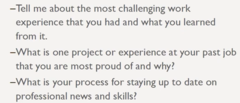
Behavioral Interview Questions
Asks about past job-related behaviors to predict future performance.
Informational Interview Questions
Asks about an applicant's experience, knowledge, or qualifications.

Situational Interview Questions
Questions that present job-related scenarios and ask how the candidate would respond.

Work Simulations
Assess applicants' performance at job-related tasks.
Work Samples
Evaluating performance on a sample of work.
Situational Judgment Test (SJT)
Test with items assessing applicants' judgment in job-related situations.
Assessment Center
A series of structured exercises evaluated by
human observers (eg, inbox exercise, role-play, presentations).
Reference Letters
Primarily used to verify information or avoid applicants with "red flags".
Physical Ability Tests
Measure physical abilities such as strength, stamina, flexibility, and coordination.
Selection Battery
A combined set of predictor methods (tests) used to select candidates for a job.
Complementary Validity
Using multiple selection methods together to improve the prediction of job performance because each measures different qualities.
Overall Battery Structure
Multiple Hurdle, Multiple Cutoff, Compensatory Approach.
Multiple Hurdle
Candidates must achieve a certain score to progress through each round of tests.
Multiple Cutoff
Must pass all selection tests by meeting the required score on each.
Compensatory Approach
High scores can offset low scores on other tests.
Job Analysis
Systematic process for determining the core elements of a work role, such as tasks, responsibilities, and necessary attributes (KSAO's).
Tasks
The basic elements of a job.
Knowledge
Information people can learn (eg, human anatomy).
Skills
Something people can learn how to do (e.g., presenting).
Ability
Something innate that people bring to the job (eg, physical
ability).
Other Characteristic
Something other than knowledge, skill, or ability (eg, personality traits).
Job Analysis Steps
1. Collect job info 2. Draft tasks 3. Identify KSAOs 4. Refine (SMEs) 5. Link tasks & KSAOs 6. Finalize job analysis
Performance Appraisal
Subjective evaluation of employee work performance based on pre-established criteria.
Targets of Appraisal
Abilities and traits, knowledge and skills, behaviors, and outcomes.
Abilities and Traits
Should be generally avoided.
Knowledge and Skills
Use with caution unless evaluating for
promotion, effects of training, etc.
Behaviors
Preferred because these are specific and observable (typically rated using a scale).
Outcomes
It can be acceptable if based on mutually agreed-upon goals vs. metrics alone.
Rater Bias
A personal preference or perception that unfairly influences an employee's rating.
Rater Error
A mistake in evaluating performance that leads to inaccurate ratings.
Leniency Error
Giving all workers high ratings.
Strictness (severity) Error
Giving all workers low ratings.
Central Tendency Error
Giving all workers "average" ratings.
Contrast Effect
When ratings are affected by comparing to others.
Halo/horn Effect
When overall impressions of a person affect their ratings on specific performance dimensions.
Similarity Effect
When workers who are more similar to the rater receive higher ratings.
Recency Error
When recent events have an outsized influence on performance ratings.
Minimize Rating Errors By
Use better rating tools, train raters, hold calibration meetings, keep performance records, hold raters accountable, and use multiple raters to improve accuracy and reduce bias.
What is Absolute Performance Appraisal?
A method that evaluates an employee against pre-established performance standards.
What tools are used in Absolute Performance Appraisal?
Graphical rating scales and behaviorally anchored rating scales (BARS).
What is Relative Performance Appraisal?
Evaluates an employee by comparing their performance to other employees.
What tools are used in Relative Performance Appraisal?
Forced ranking and forced distribution.
360 Degree Feedback
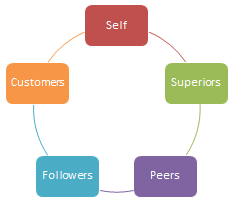
Uses multiple raters (self, peers, and supervisor) to evaluate performance; most effective for employee development and often paired with job coaching