AP Biology Exam (units 5-8)
 Call Kai
 Learn
Learn Practice Test
 Spaced Repetition
 Match
Match Flashcards
 Knowt Play
1/107

There's no tags or description
Looks like no tags are added yet.
Name | Mastery | Learn | Test | Matching | Spaced | Call with Kai |
|---|
No analytics yet
Send a link to your students to track their progress
108 Terms
CELL CYCLE
cell cycle stages
interphase, mitosis, cytokinesis
interphase
G1 phase, S phase, G2 phase
G1 phase
The first gap, or growth phase, of the cell cycle, consisting of the portion of interphase before DNA synthesis begins.
S phase
The synthesis phase of the cell cycle; the portion of interphase during which DNA is replicated.
G2 phase
The second growth phase of the cell cycle, consisting of the portion of interphase after DNA synthesis occurs.
Mitosis
part of eukaryotic cell division during which the cell nucleus divides
-prophase, metaphase, anaphase, telophase
prophase
Chromosomes become visable, nuclear envelop dissolves, spindle forms

Metaphase
Chromosomes line up in the middle of the cell

anaphase
Phase of mitosis in which the chromosomes separate and move to opposite ends of the cell

telophase
After the chromosome seperates, the cell seals off, Final Phase of Mitosis.

Cytokinesis
division of the cytoplasm to form two separate daughter cells

G0 phase
A nondividing state occupied by cells that have left the cell cycle, sometimes reversibly.
cell cycle check points
control mechanisms in eukaryotic cells which ensure proper division of the cell
G1, S, G2, M
G1 checkpoint
checks for cell size, nutrients, growth factors and DNA damage
S checkpoint
checkpoint that determines if DNA has been replicated properly
G2 checkpoint
checks for cell size and DNA replication
M checkpoint
Spindle assembly checkpoint. Mitosis will not continue if chromosomes are not properly aligned.
MPF
mitosis promoting factor
cyclins and cyclin-dependent kinases (cdks)
two types of regulatory proteins involved in cell cycle control
How MPF and cyclins and cdks interact
MPF provides a chemical signal that tells the cell to continue past the G2 checkpoint. MPF is made up of cyclin, a protein encoded by photo-oncogenes, and a kinase which provides energy through phosphorylation for process necessary for successful mitosis. The cyclin breaks down after the cell passes through G2 checkpoint (if it stayed available always, cell would be pushed through G2 checkpoint even if not ready). The kinase does not degrade and instead stays to be reused later on.

cancer
any malignant growth or tumor caused by abnormal and uncontrolled cell division
6 ket mutations:
-unlimited cell growth
-ignore checkpoints
-escape apoptosis
-immortality=unlimited divisions
-promote blood vessel growth
-overcome anchor and density dependence
(2/12 notes)
binary fission
A form of asexual reproduction in single-celled organisms by which one cell divides into two cells of the same size
binary fission steps
1. DNA Replication
2. Chromosome Segregation (when the replicated chromosomes move to different ends of cell)
3. Separation (new plasma membrane growth, cytoplasm divide, and new cell walls form around the new cells)
MOLECULAR GENETICS
chromosomes in prokaryotes
single circular DNA w/ proteins, smaller than DNA of eukaryotes
chromosomes in eukaryotes
multiple and linear
histones
semi-conservative replication
in each new DNA double helix, one strand is from the original molecule, and one strand is new
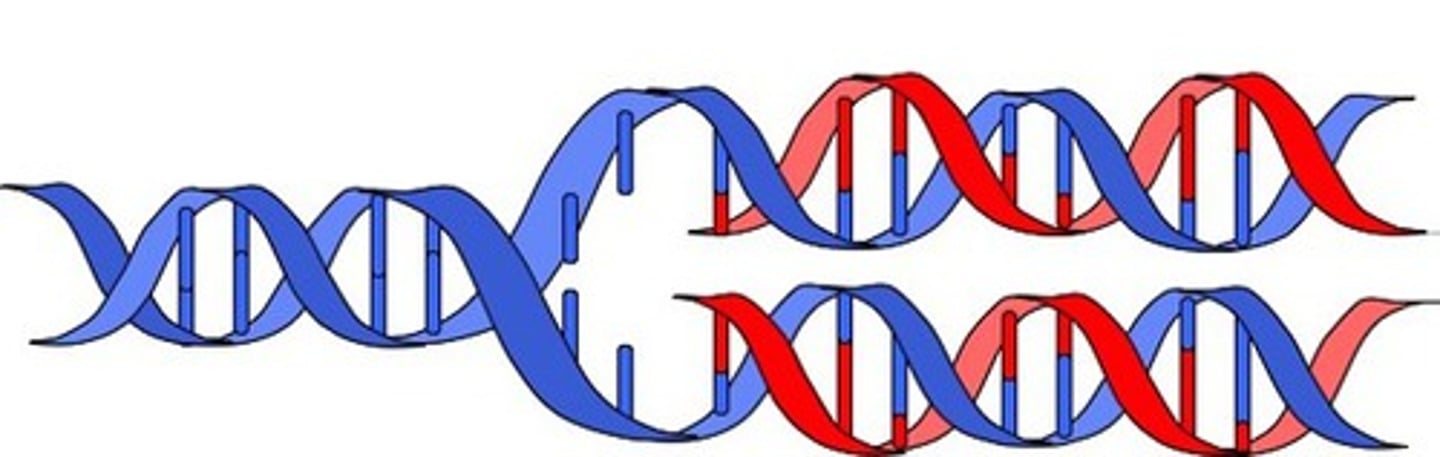
DNA replication
DNA unzips into two parts and splits with the cell. In it's new home each side of the DNA strand attack to matching nucleotides to create 2 exact copies. It is important in puberty and other times of growth as it is the reproducing of your cells.
3' vs 5' end of DNA strand
replication goes 3'->5'
- 3' (of original molecule) is leading strand
- 5' is lagging strand
RNA primer
A small piece of single-stranded DNA. It acts a signal, binding to and marking the piece of DNA which is to be copied in the polymerase chain reaction (PCR).
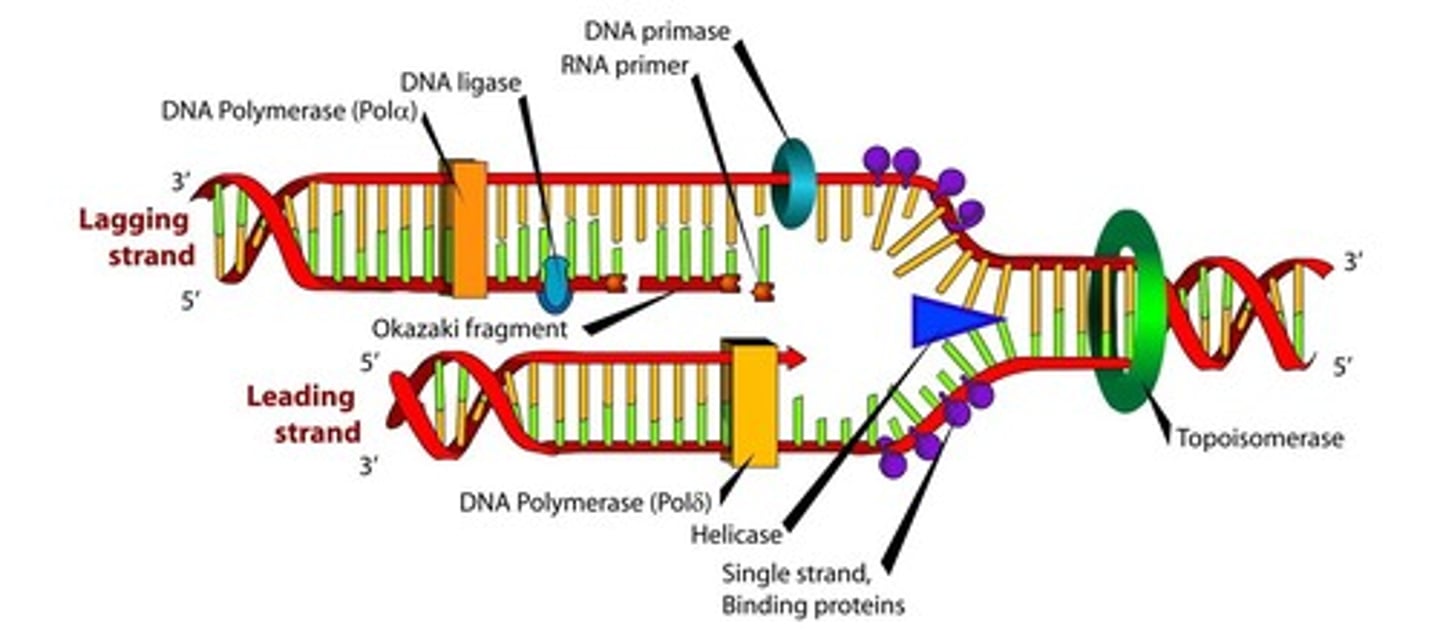
DNA primase
synthesis of RNA primer

DNA polymerase
Enzyme involved in DNA replication that joins individual nucleotides to produce a DNA molecule

Okazaki fragments
Small fragments of DNA produced on the lagging strand during DNA replication, joined later by DNA ligase to form a complete strand.
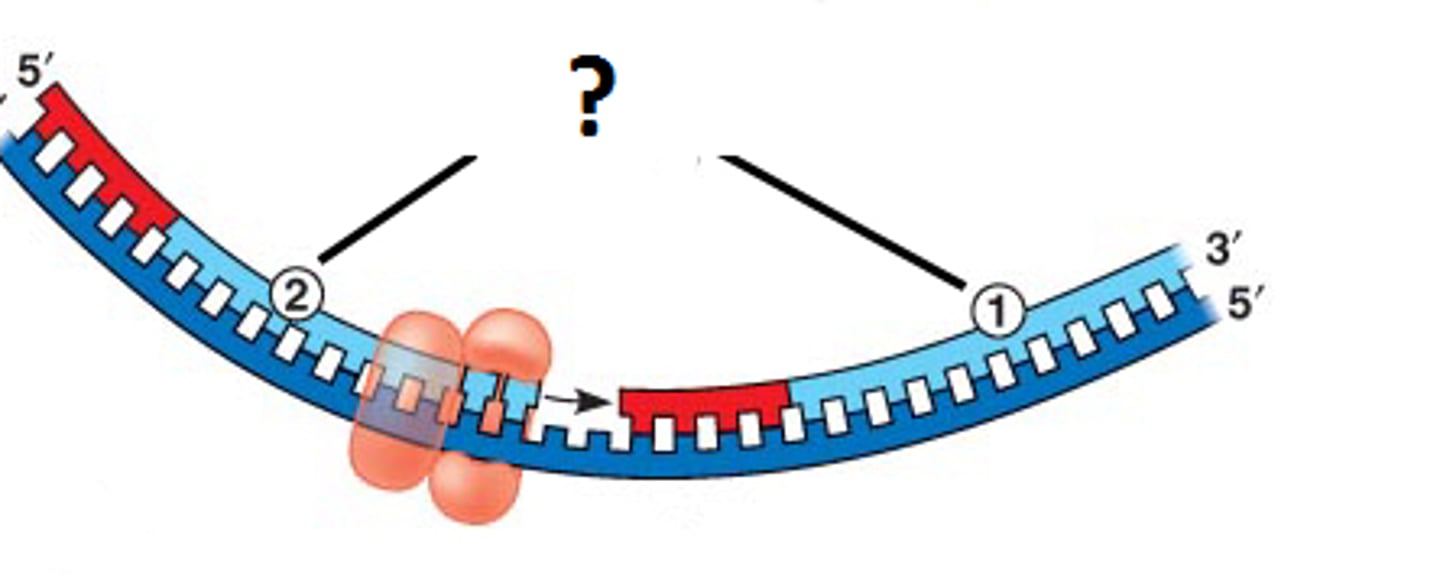
DNA ligase
A linking enzyme essential for DNA replication; catalyzes the covalent bonding of the 3' end of a new DNA fragment to the 5' end of a growing chain.

nuclease
An enzyme that cuts DNA or RNA, either removing one or a few bases or hydrolyzing the DNA or RNA completely into its component nucleotides.
telomeres
DNA at the tips of chromosomes
-protects from losing too many nucleotides during reproduction to cause issues in the cell
telomerase
An enzyme that catalyzes the lengthening of telomeres in eukaryotic germ cells.
-adds to teh 5' end
-different levels of activity in each cell
RNA
single-stranded
ribose
CGAU
DNA
double helix
deoxyribose rugar
CGAT
transcription
(genetics) the organic process whereby the DNA sequence in a gene is copied into mRNA

mRNA
messenger RNA; type of RNA that carries instructions from DNA in the nucleus to the ribosome
RNA polymerase
enzyme that links together the growing chain of RNA nucleotides during transcription using a DNA strand as a template

promoters
region of DNA that indicates to an enzyme where to bind to make RNA
transcription initiation
RNA polymerase attaches to the promoter region of DNA strand, and synthesis begins
transcription elongation
After binding, RNA polymerase unwinds the DNA
Transcription bubble produced
moves with the polymerase as it transcribes mRNA from template strand
within the bubble a temporary RNA:DNA hybrid is formed
transcription termination
When RNA polymerase reaches terminator, transcription stops & RNA chain is released
poly-A tail
Modified end of the 3' end of an mRNA molecule consisting of the addition of some 50 to 250 adenine nucleotides.
postranscriptional modifications
cap on 5' end
poly-A tail to 3' end
splicing
polycistronic genes/alternative splicing
splicing
the process of removing introns and reconnecting exons in a pre-mRNA

translation
Process by which mRNA is decoded and a protein is produced
translation initiation
brings together mRNA, a tRNA with the first amino acid, and the two ribosomal subunits
translation elongation
codon recognition, peptide bond formation, translocation
translation termination
ribosome reads stop codon UAA/UAG/UGA
post-translational modification
Changes to the new protein that may be critical to its final function, like folding, phosphorylating glycosylating, or lipidating
prokaryotic gene regulation
DNA-binding proteins in prokaryotes regulate genes by controlling transcription
lac operon
the operon that controls the metabolism of lactose
trp operon
tryptophan binds to the repressor protein and enables it to repress gene transcription.
epigenetics
the study of environmental influences on gene expression that occur without a DNA change
MENDELIAN GENETICS
meiosis
a type of cell division that results in four daughter cells each with half the number of chromosomes of the parent cell, as in the production of gametes and plant spores.

homologous chromosomes
Chromosomes that have the same sequence of genes and the same structure
-occur after DNA replication

crossing over
exchange of genetic material between homologous chromosomes during prophase I of meiosis

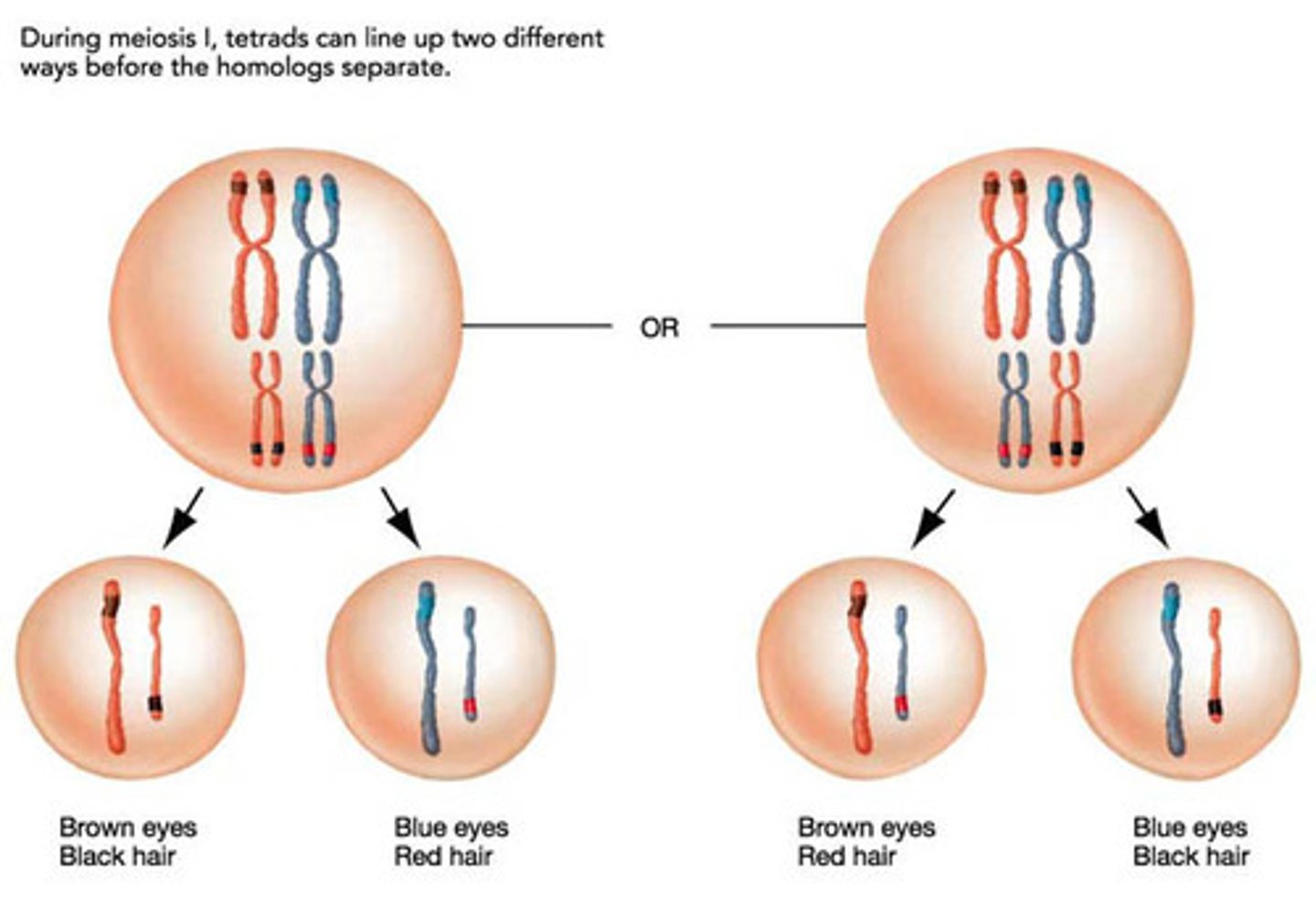
independent assortment of chromosomes
The random distribution of maternal and paternal chromosomes into gametes during meiosis metaphase
Punnett Square
A chart that shows all the possible combinations of alleles that can result from a genetic cross
gene linkage
Traits that tend to be inherited together as a consequence of an association between their genes

Pedigree
A diagram that shows the occurrence of a genetic trait in several generations of a family.

codominace
A condition in which neither of two alleles of a gene is dominant or recessive.

incomplete dominance
A pattern of inheritance in which two alleles, inherited from the parents, are neither dominant nor recessive. The resulting offspring have a phenotype that is a blending of the parental traits.

multiple alleles
A gene that has more than two alleles
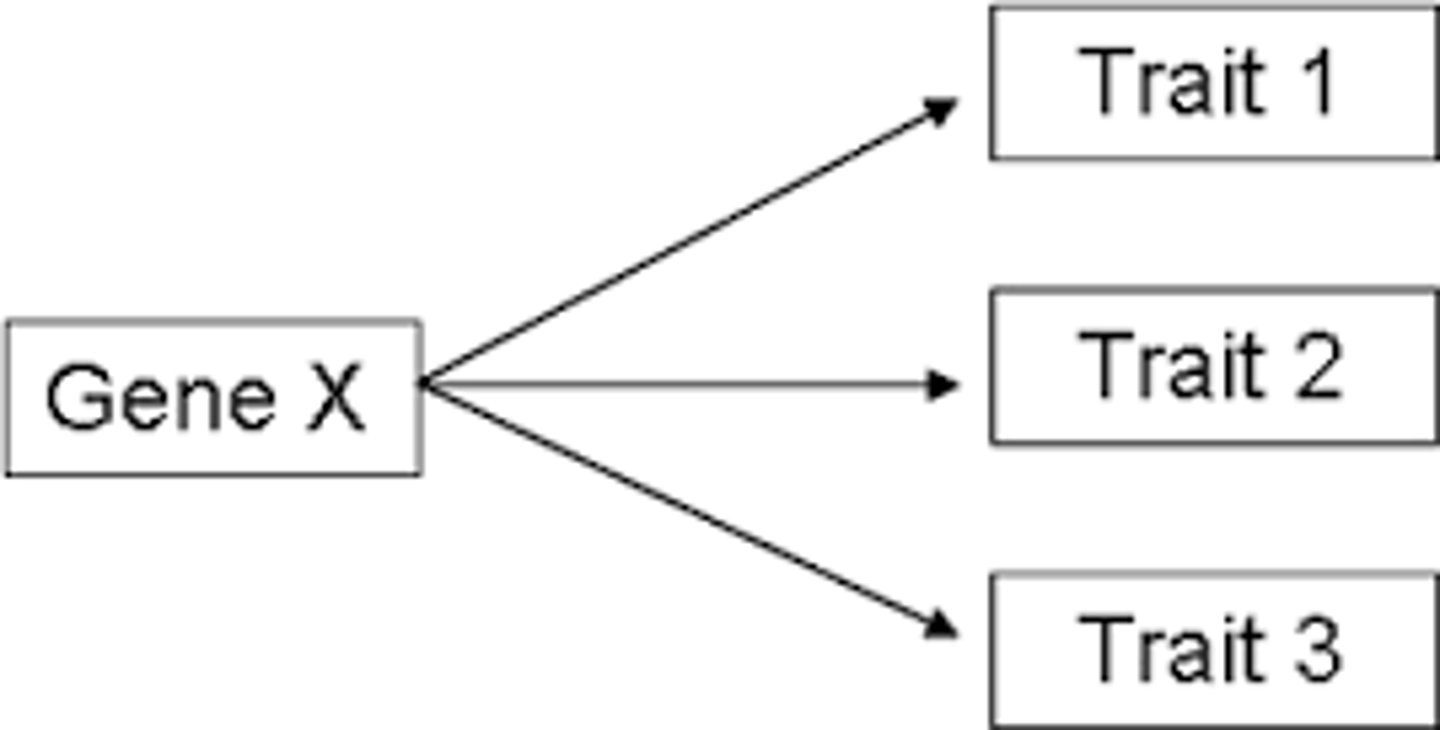
pleiotropy
A single gene having multiple effects on an individuals phenotype
epistasis
A type of gene interaction in which one gene alters the phenotypic effects of another gene that is independently inherited.

sickle cell anemia
hereditary disorder of abnormal hemoglobin producing sickle-shaped erythrocytes and hemolysis
AUTOSOMAL RECESSIVE
PLEIOTROPY
Tay-Sachs
autosomal recessive
Huntington's disease
A human genetic disease caused by a dominant allele; characterized by uncontrollable body movements and degeneration of the nervous system; usually fatal 10 to 20 years after the onset of symptoms.
Colorblindness
a recessive x-linked disorder in which an individual cannot distinguish between certain colors
Trisomy 21
condition in which an individual has three number 21 chromosomes, resulting in Down syndrome
NONDISJUNCTION
Klinefelter's
XXY
NONDISJUNCTION
Barr bodies
inactivated X chromosomes found only in females
non-nuclear DNA is transmitted
1. Transformation: 1 bacteria dies and cell wall dies, DNA can be picked up by another bacteria and use it
a. We use it for making insulin
2. Transduction: phage (virus that infects bacteria), sends DNA and makes copies, sometimes escapes and enters bacteria that can make use of it
3. Conjugation: "sex" transfer of plasmid (chromosomal DNA)
environmental factors can influence traits
1. Can affect the histones and turn genes on and off
2. Temperature can affect gene expression
ECOLOGY
innate behavior
an inherited behavior that does not depend on the environment or experience
-fixed action pattern
-biological clocks/rhythms
-communication(pheromones)
-movement
learned behavior
a behavior that has been learned from experience or observation
-imprinting
-spatial learning/cognitive maps
-associative learning
--habituation
--conditioning
-cognition and problem soliving
-social learning
altruism
unselfish regard for the welfare of others
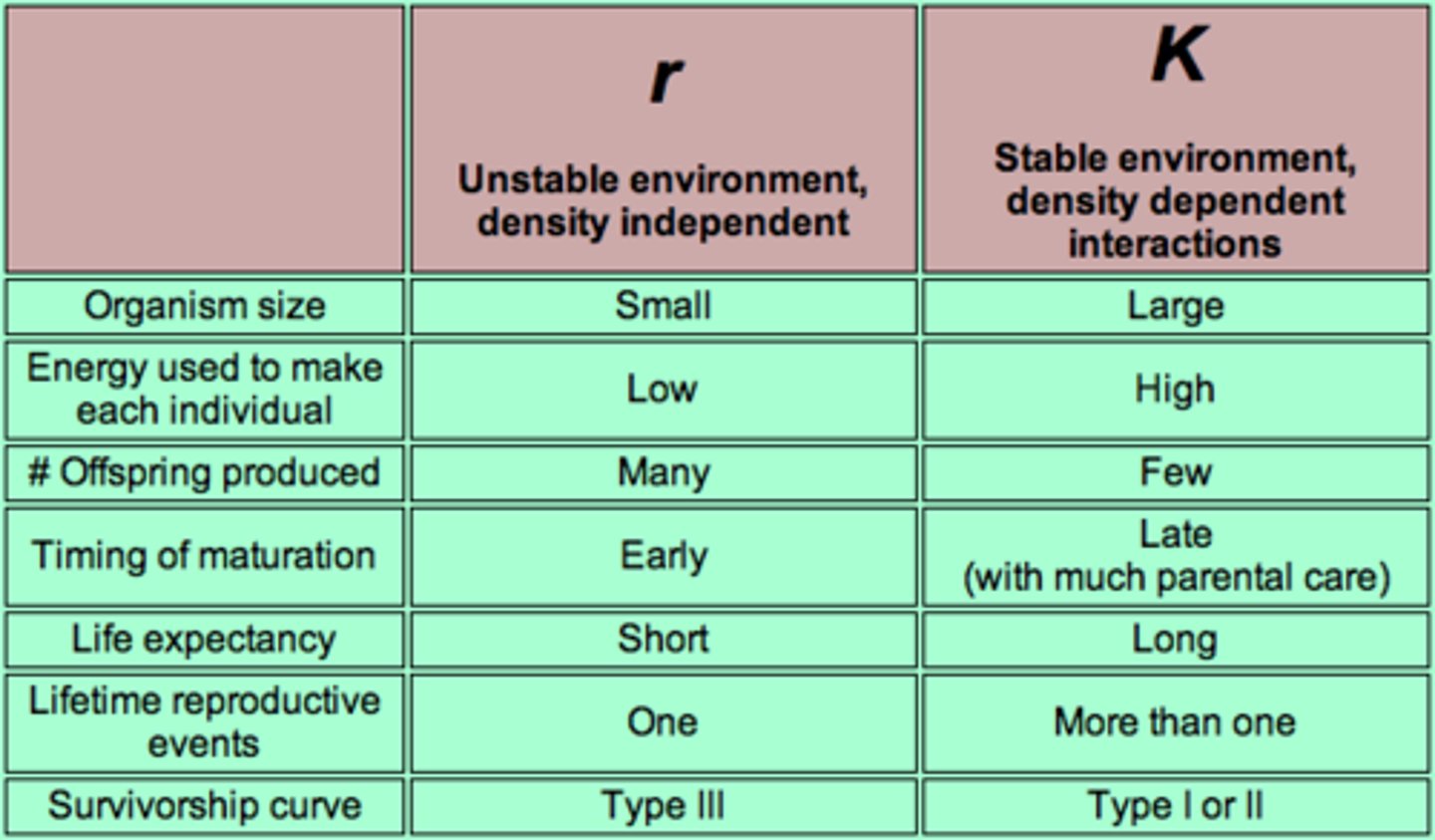
K vs r selected species
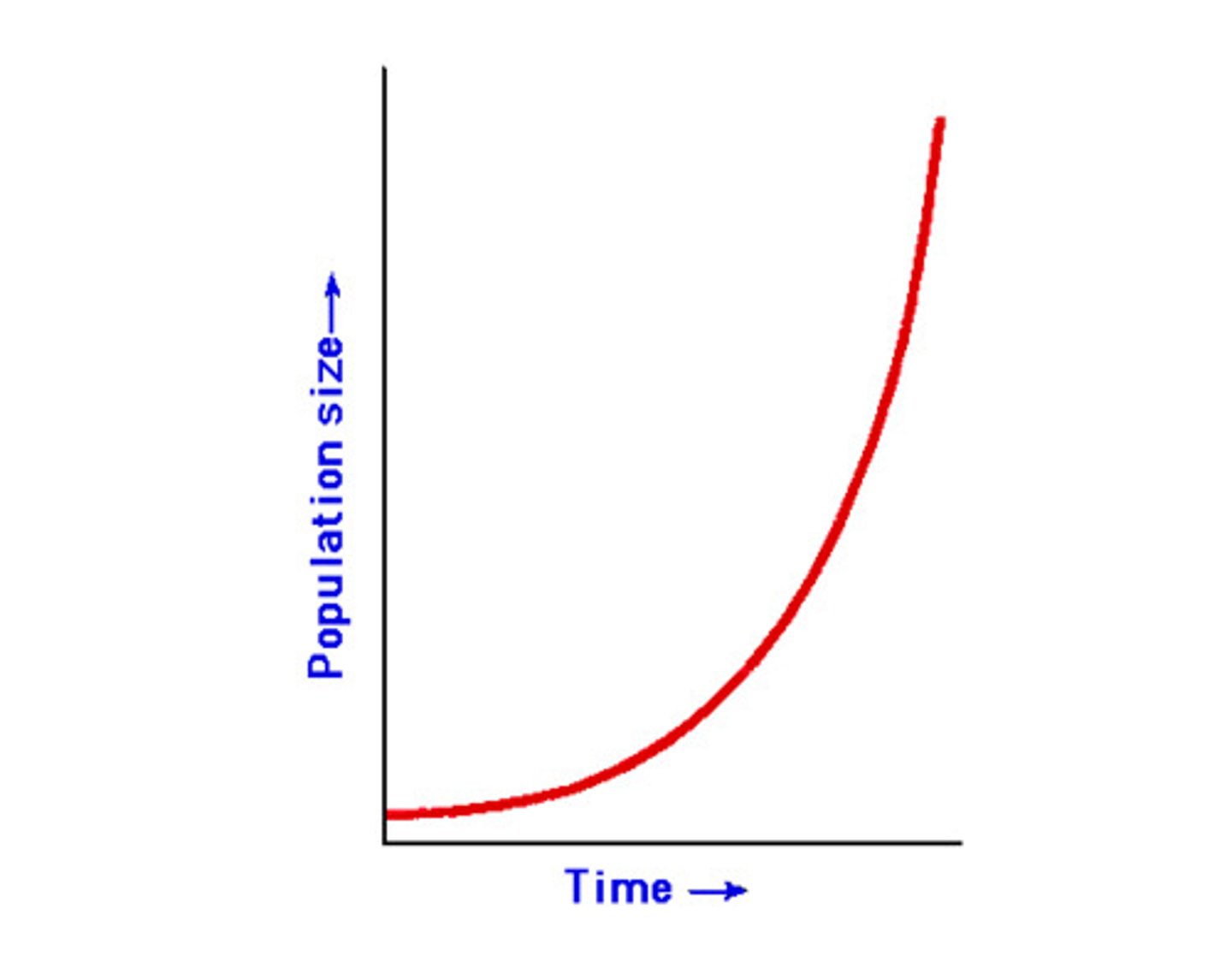
exponential growth
unlimited resources
logistic growth
Growth pattern in which a population's growth rate slows or stops following a period of exponential growth
-hit density dependent limiting factors

density dependent limiting factors
limiting factors that are affected by the number of individuals in a given area
density-independent regulation
influence population no matter how big it is (ie natural disasters, new predator, etc)
-random
predator-prey relationship
mechanism of population control in which a population is regulated by predation
symbiosis
A relationship in which two different organisms live in close association with each other
mutualism
A relationship between two species in which both species benefit
Commensalism
A relationship between two organisms in which one organism benefits and the other is unaffected
Ammensalism
relationship when one organism is harmed, the other is unaffected
parasitism
A relationship between two organisms of different species where one benefits and the other is harmed
competition
the struggle between organisms to survive in a habitat with limited resources
keystone species
a species on which other species in an ecosystem largely depend, such that if it were removed the ecosystem would change drastically.
10% rule
Only 10% of the total energy produced at each trophic level is available to the next level. The amount of energy passed up to the levels of the food pyramid reduces as you go up.
GPP
gross primary productivity
Explore top notes

Explore top flashcards
