The Energetic Costs of Meeting Environmental Challenges
 Call Kai
 Learn
Learn Practice Test
 Spaced Repetition
 Match
Match Flashcards
 Knowt Play
1/31

There's no tags or description
Looks like no tags are added yet.
Name | Mastery | Learn | Test | Matching | Spaced | Call with Kai |
|---|
No analytics yet
Send a link to your students to track their progress
32 Terms
Temperature Impact on Metabolic Reactions
Endotherms
Maintain a stable internal body temperature
Their metabolism is optimized for that temperature
They must spend energy to keep that temperature constant
Ectotherms
Even small temperature changes can drastially affect metablism
Enzymes
All metabolism depends on enzymes, and enzymes are very temperature sensitive
Acclimatization: short term adjustment to environmental change
Changing enzyme activity
Producing more or less enzymes
Behavioral changes
Seasonal changes (winter to summer coat)
In ectotherms:
Metabolism typically increases 2-3x for every 10 degree C increase, known as the Q10 effect
Some organisms, like intertidal invertebrates experience huge temperature swings daily, have very stable enzymes, and their metabolsim barely changes across large temperature changes
Cells involved in circadian rhythms
Have enzymes that don’t change with temperature
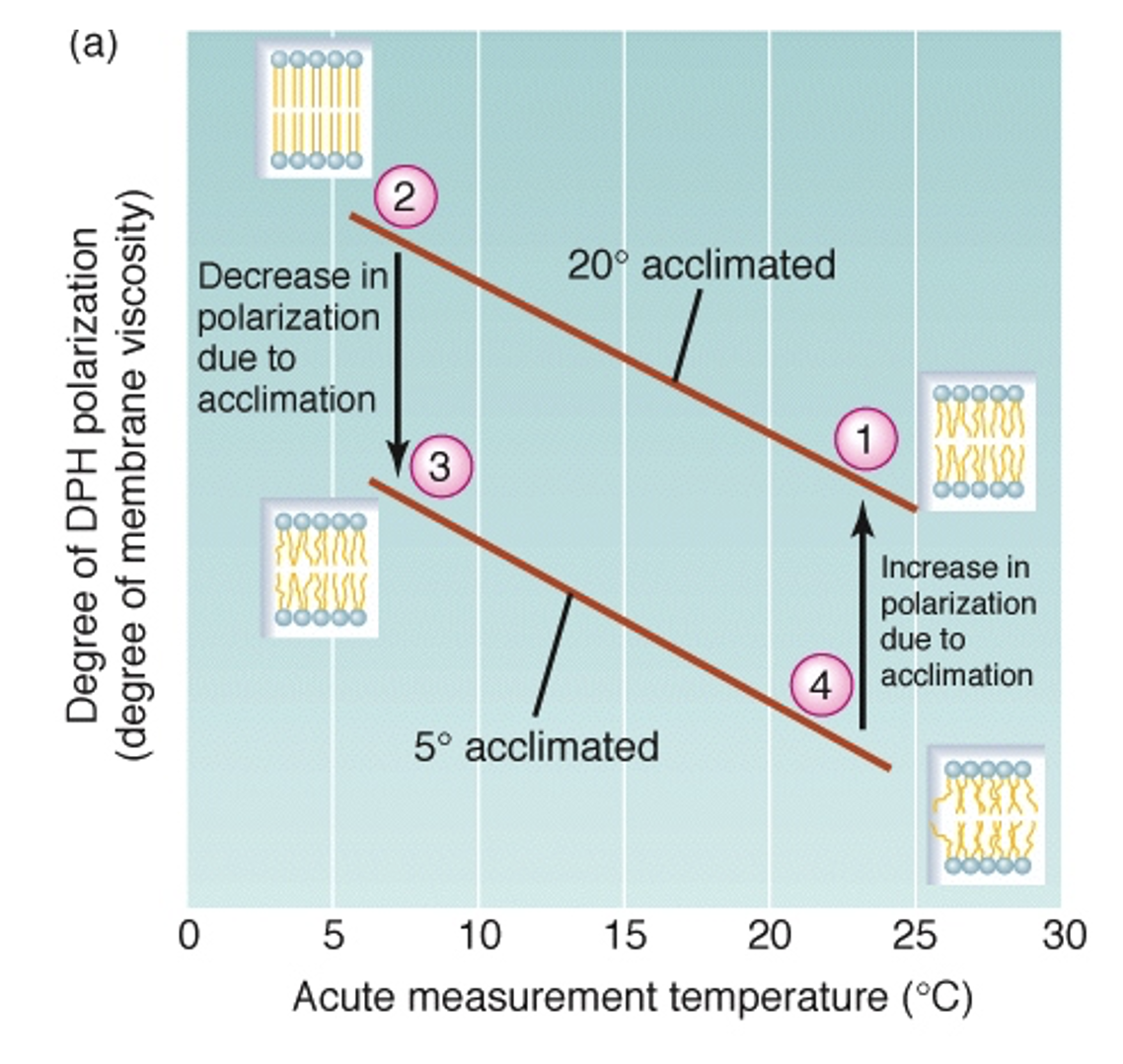
Homeoviscous Membrane Adaptation
If membranes are too rigid, proteins can’t move - but if they are too fluid, structure breaks down
How cells adjust membrane fluidity
Cold temperatures: more unsaturated fats
Warm temperatures: more saturated fats
Role of cholesterol: acts as a membrane stabilizer
Cold temperature: less cholesterol, more flexibility
Warm temperature: more cholesterol, more rigidity
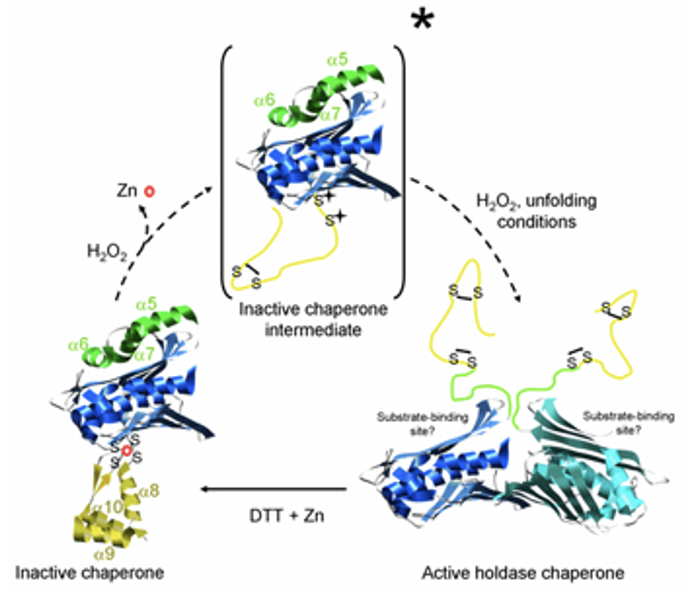
Heat Shock Proteins (Molecular Chaperones)
When temperatures become extreme, proteins can unfold, misfold, or stop working. To prevent this, cells produce heat shock proteins (HSPs)
They help proteins fold correctly, stabilize damaged proteins, and prevent proteins from clumping
Animals that live in extreme temperatures already have higher baseline levels of HSPs so they can quickly respond to temperature stress
The Physics of Body Heat and Temperature
Body heat = heat produced + heat gained - heat lost
Htot = Hv + Hc + Hr + He + Hs
Hv = metabolic heat production
Hc = conduction/convection heat transfer
Hr = radiation
He = evaporation
Hs = heat stored
Body temperature changes when heat production and heat transfer are unbalanced
Where Body Heat Comes From
Factors that increase heat production:
Movement (muscle activity): muscles generate heat
Hormones (ANS control): speed up metabolism, burn fat
Acclimatization: long-term increase in baseline metabolism
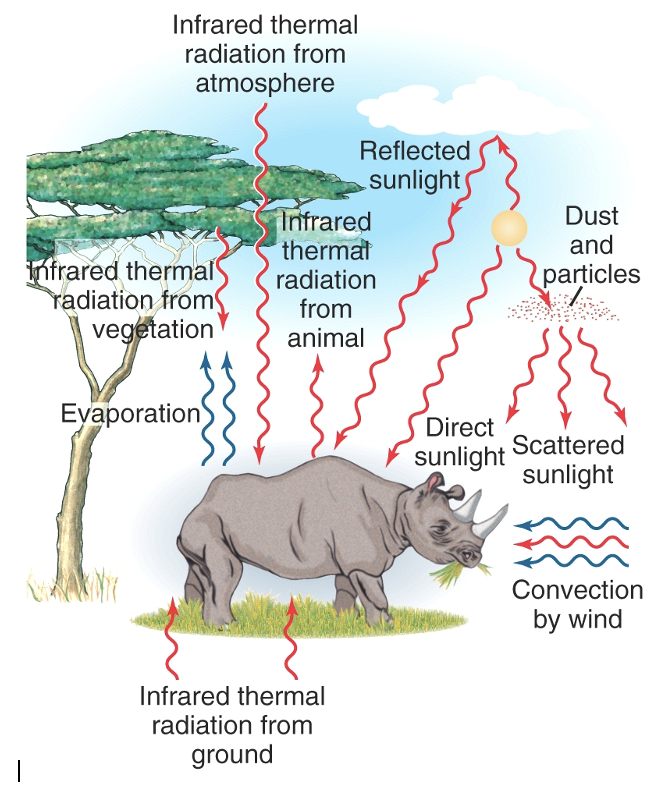
How Heat Moves Between Animals and the Environment
Conduction (direct contact)
Ex: reptile warming on a rock
Convection (movement of fluids/air)
Think of a convection oven or air fryer
Heat moves through moving air or water
Faster than conduction because fluid keeps moving
Ex: wind removing heat from skin
Radiation (infrared heat transfer)
Heat transfer via electromagnetic waves - no contact required
Ex: basking lizard absorbing sunlight - body radiating heat in cold air
Evaporation (heat loss via liquid to gas)
Requires heat energy
Ex: sweating, panting
Heat Storage and Body Size Effects
Big animals:
Low surface area relative to mass
Heat changes slowly
Small animals
High surface area relative to mass
Loses and gains heat quickly
Needs more energy to regulate temperatuer
Factors Affecting Rate of Heat Exchange
Surface area
More surface area: faster heat exchange
Animals can change posture to adjust surface exposure
Temperature gradient
Heat always moves from hot to cold
Bigger temperature difference: faster heat transfer
Insulation/Conductance
Fur, feathers, and fat reduce heat loss
Animals with high insulation maintain stable body temperatures
Animals with low insulation track environmental temperatures
How Animals Regulate Heat Exchange
Behavioral mechanisms: animals change where they are or how they position themselves
Moves into sun or shade
Change posture to absorb or reduce heat
Migration
Physiological (short-term internal control)
Blood flow control:
Vasodilation: more heat lost (warm skin)
Vasoconstriction: conserve heat
Insulation control:
Hair or feathers stand up to trap air
In mammals: arrector pili muscles (goosebumps)
In birds: arrector plumarum
Long-term acclimatization (structural changes)
Seasonal adjustments: winter coat to summer coat, molting in birds
Classifying Animals Based on Temperature Stability
Homeotherms (stable temperature)
Controlling heat production and heat loss
Usually stay within a very narrow range
Mammals, birds
Poikilotherms (variable temperature)
Body temperature changes with environment
Temperature varies depending on ambient conditions
Reptiles, amphibians, fish, most invertebrates
Some ectotherms in very stable environments can be homeothermic
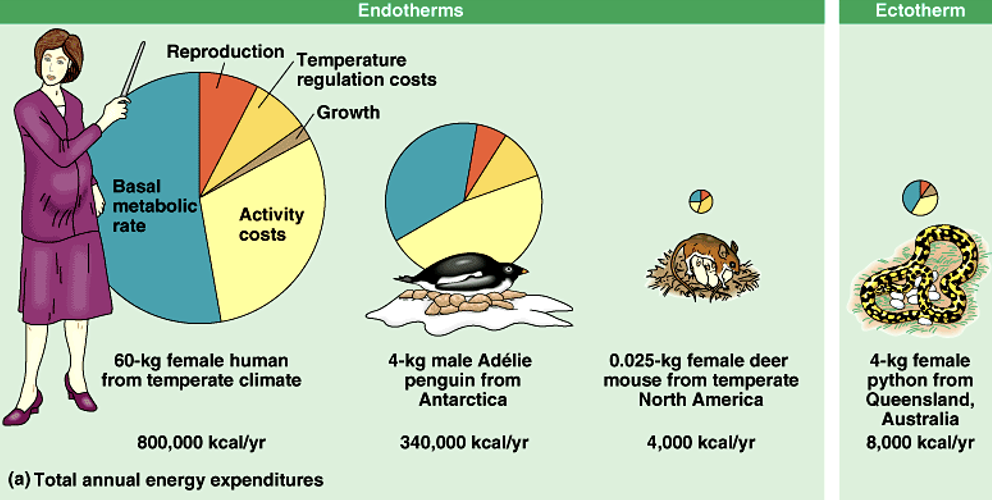
Classifying Animals Based on Source of Body Heat
Endotherms (heat from within)
Generate heat using metabolism
Maintrain body temperature above environment
High metabolic rate (≈5x ectotherms)
Require a lot of food/energy
Often have insulation
Mammals, birds
Can live in cold or extreme environments
Ectotherms (heat from environment)
Metabolism produces little heat
Low energy requirements
Behavior controls temperature
Reptiles, amphibians, fish, most invertebrates
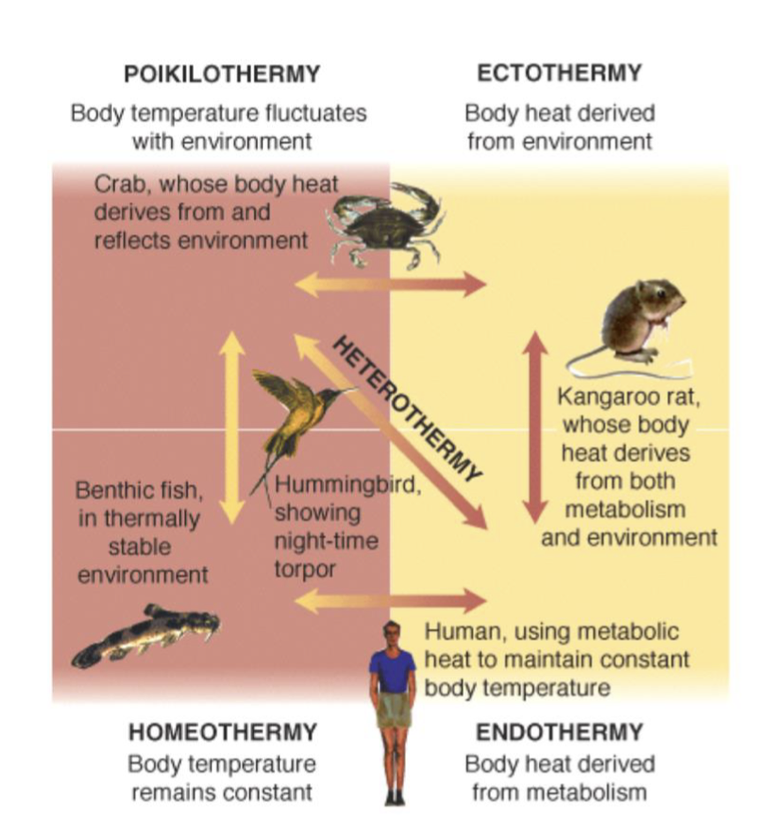
Real animals fall on a spectrum
Homeothermic endotherm: human
Poikilothermic ectotherm: lizard
Homeothermic ectotherm: deep sea fish
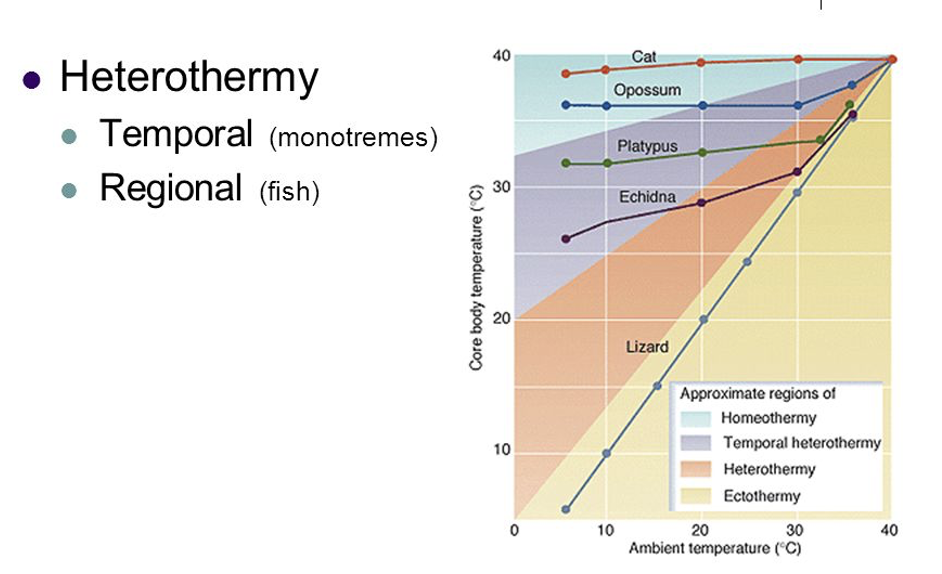
Heterothermy (The in-between strategy)
Animals that alternate between:
Endothermy ↔︎ ectothermy
Homeothermy ↔ poikilothermy
Types of heterothermy
Temporal heterothermy (changes over time)
Body temperature changes over hours, days, or seasons
Bats, hummingbirds, camels, hibernating animals
Includes:
Torpor (short-term)
Hibernation (long-term)
Body temperature drops near environmental temperature
Metabolism drops to ~1% of normal
Occasional arousals bring body temperature back up
Regional heterothermy (different body parts)
Done using countercurrent heat exchangers
Penguins: warm body, cold feet
Arctic birds: prevent freezing on ice
Tuna: keep swimming muscles warm
Leatherback turtles: retain heat in flippers
Bumblebees and honeybees: warm thorax for flight
Ectotherms in Cold and Freezing Environments
In cold environments, their body temperature drops, which can cause:
Slower metabolism
Enzyme malfunction
Membrane damage
Dangerous electrolyte imbalance
Ice crystal formation (cell rupture)
To survive, theyve evolved three main strategies:
Freeze avoidance:
Burrow below frost line
Stay under water beneath ice
Supercool body fluids
Produce antifreeze molecules
Many insects, spiders, fish, salamanders, and snakes
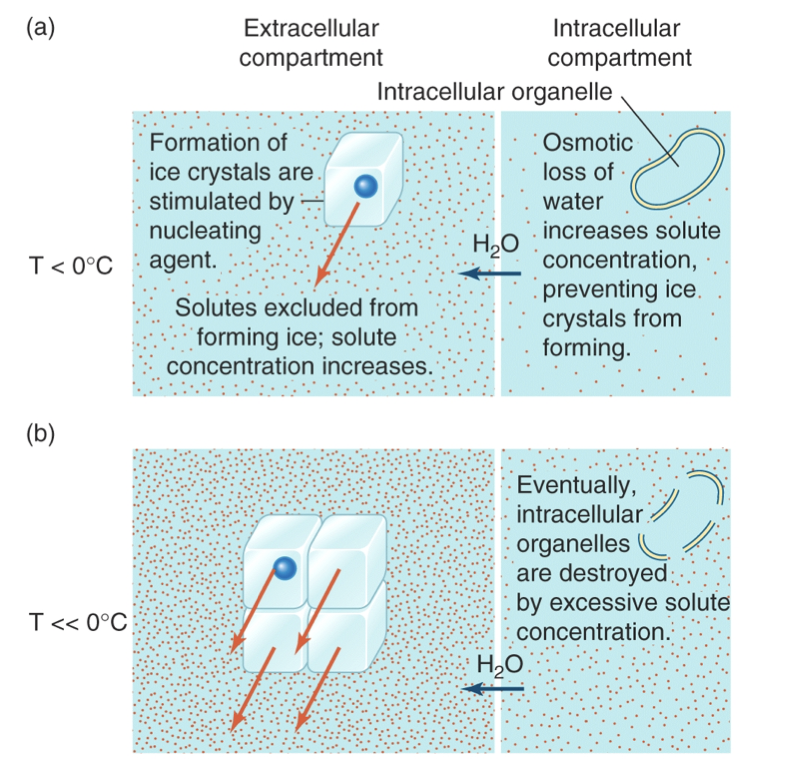
Freeze tolerance:
Ice-nucleating agents
Promote freezing in extracellular fluid first
Pull water out of cells
Prevent ice crystals inside cells
Cyroprotectants (like glycerol)
Lower freezing point
Protects cells from dehydration damage
Antifreeze proteins
Prevents ice crystal growth
Found in antarctic fish
Supercooling:
Body fluids cool below freezing but don’t freeze because ice crystals don’t form
Terrestrial insects
Arctic fish (must avoid contact with ice nuclei)
Ectotherms in Warm/Hot Environments
All ectotherms have a Critical Thermal Maximum (CTmax), or the temperature above which they lose coordination and risk death. Usually
Around 45 degrees C for most species
Deep-sea vent species can tolerate much higher
High temperatures are dangerous because:
Enzymes denature
Oxygen transport decreases (hemoglobin binds less O2)
Membranes become unstable
Some adaptations:
Heat shock proteins (protect enzymes)
Behavioral thermoregulation (move to shade)
Physiological regulation (blood flow adjustments)
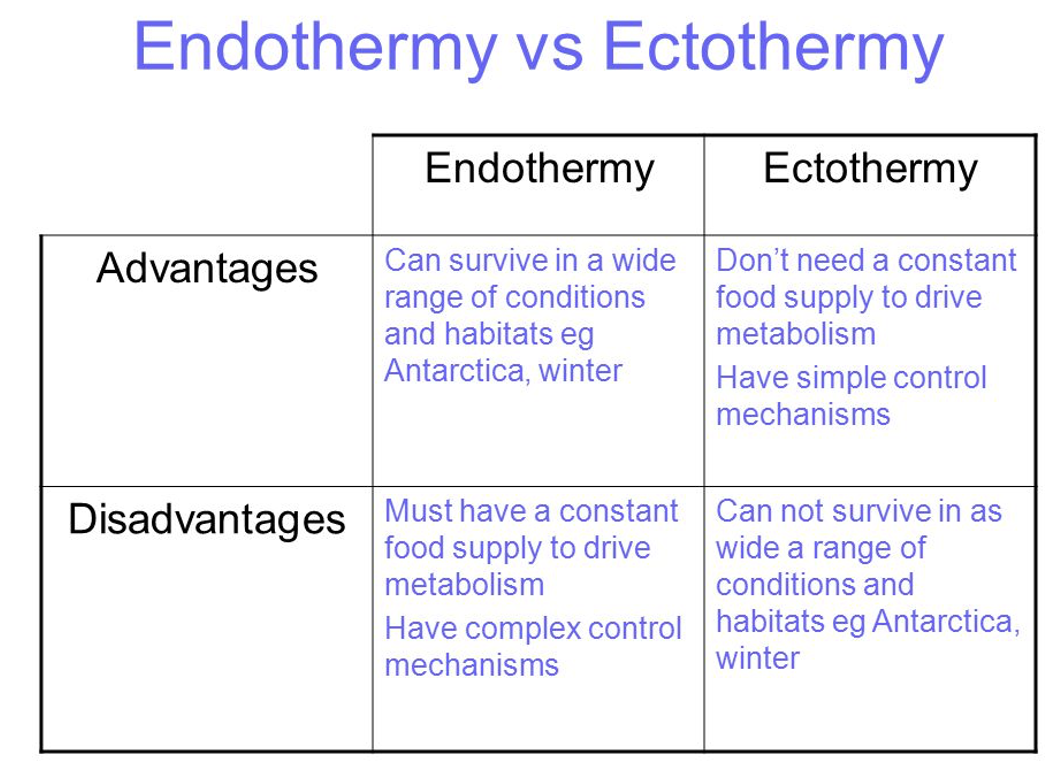
Ectothermy vs Endothermy
Endotherms (birds, mammals)
Advantage:
High activity level in cold
Stable body temperature
Can live in colder environments (occupy more ecological niches)
Disadvantage:
HIgh energy demand
Need constant food supply
Ectotherms
Advantage:
Energy efficient
More individuals per area (higher carrying capacity)
Disadvantage:
Limited activity when cold
Restricted by environmental temperature
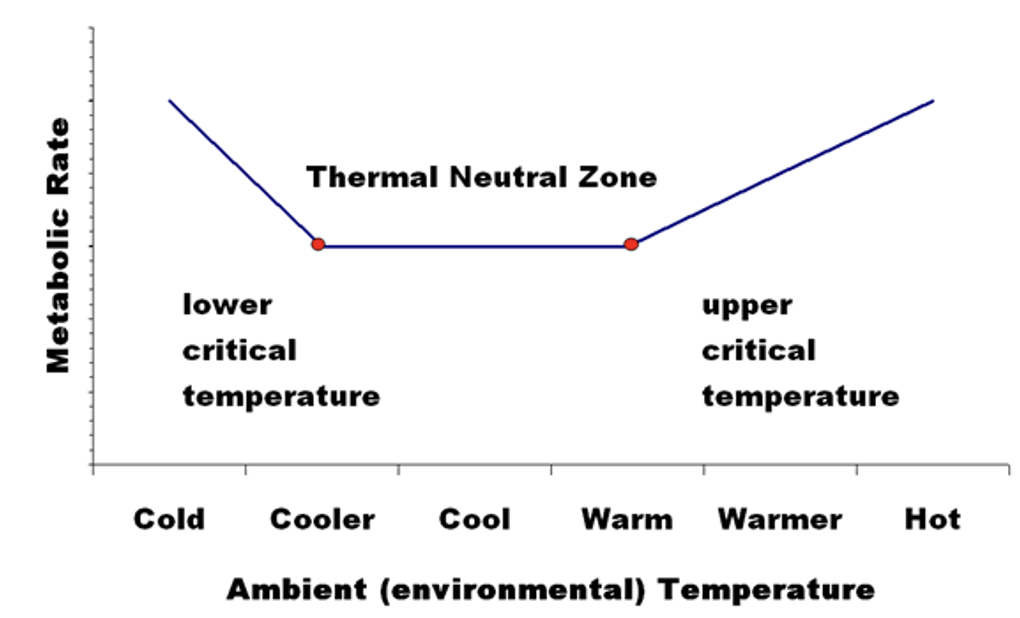
The Thermal Neutral Zone (TNZ)
the TNZ is the temperatuer range where an endotherm can maintain body temperature without increasing metabolic rate
Inside the TNZ: heat production = heat loss
The animal uses low-energy mechanims:
Postural changes:
Curling up vs stretching out
Basking or avoiding sun
Vasomator Responses
Vasodilation: more heat loss
Vasoconstriction: conserve heat
Insulation adjustments
Raising fur or feathers
Goosebumps (arrector pili muscles)
Traps warm air layer
BELOW TNZ: Lower Critical Temperature (LCT)
Metabolic rate increases
Thermogenesis increases
Eventually, hypothermia
ABOVE TNZ: Upper Critical Temperature (UCT)
Evaporative cooling increases
Eventually, hyperthermia
Endothermy in Cold Enviornments
Thermogenesis (Heat Production)
Exercise thermogenesis
heat from muscle activity
Non-exercise thermogenesis:
Shivering thermogenesis:
Rapid muscle contractions
ATP → heat + small movement
Used to rewarm hibernators
Inefficient, but fast
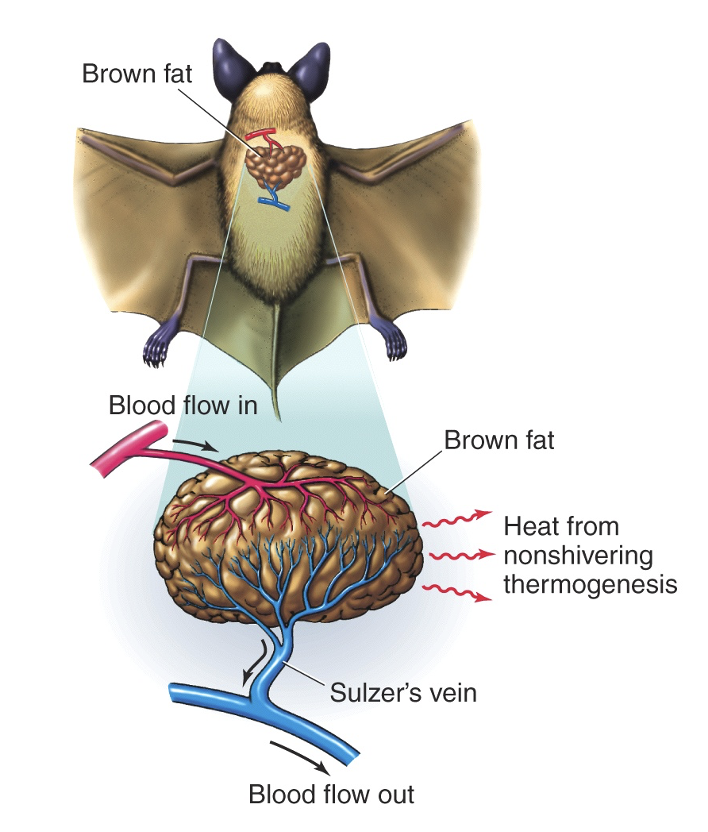
Non-shivering thermogenesis
Uses fat metabolism
White Fat Thermogenesis
Fat → fatty acids → burned in tissues
Epinephrine stimulates ATP breakdown → heat
Brown Fat Thermogenesis
Found in hibernators and newborn mammals
Lots of mitochondria, rich blood supply, contains Thermogenin (UCP-1)
Protons bypass ATP synthase, no ATP made, energy released as heat
Super efficient heat production
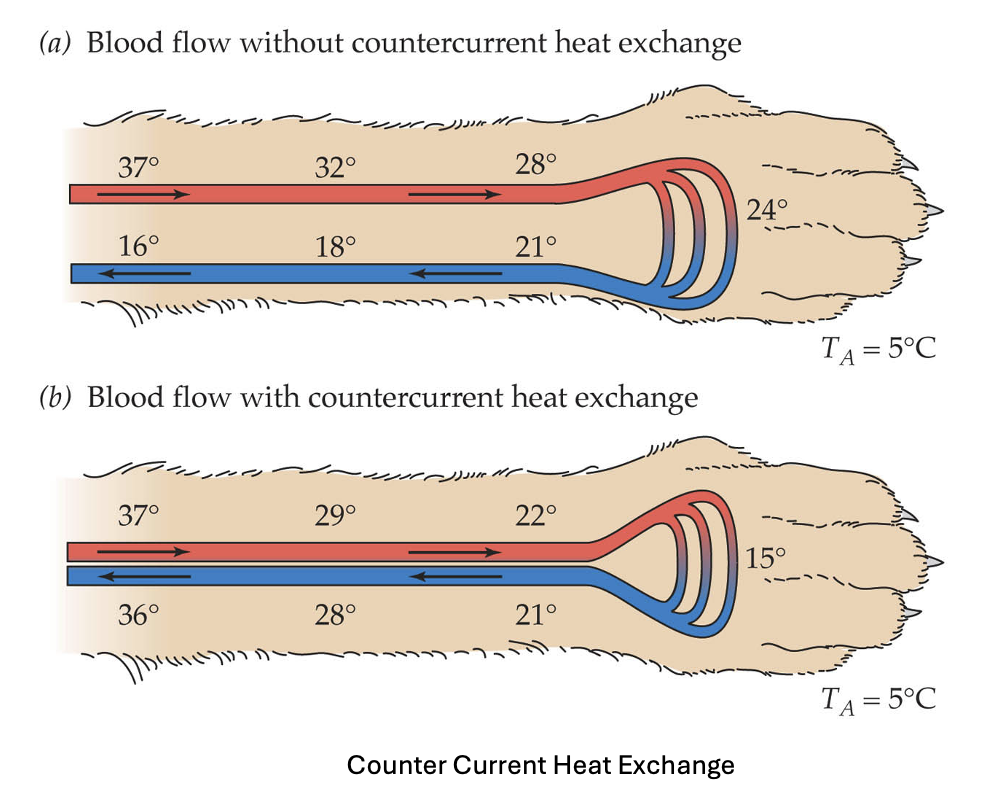
Countercurrent Heat Exchange
Used to conserve heat in limbs
Warm arterial blood → transfers heat to cold venous blood returning from limbs
Arteries and veins run side-by-side
Blood reaching limbs is cooler → less heat loss
Blood returning to core is warmed
Reduces energy needed for thermoregulation
Insulation Adaptations
Short term: Fluff fur/feathers
Seasonal: winter coats, molting
Structural: blubber in marine mammals
Body Shape Adaptations
Bergmann;’s Rule:
Larger body size in colder climates
Lower surface area to volume → retain heat
Allen’s Rule:
Smaller extremities in cold climates
Reduce heat loss
Ex: arctic fox ears (small) vs desert fox ears (large)
Endothermy in Hot Environments
Must dump excess heat while often conserving water
Limited Heterothermy
Ex: Dromedary camel
Camels allow body temp to fluctuate
Less sweating, conserves water, uses environment for cooling
temporal heterothermy
Heat windows
Special body regions that release heat
Characteristics:
Highly vascularized
Thin or no insulation
Examples:
Rabbit ears
Vicuna axilla (armpit region)
Evaporative Cooling
Highly effective but costs water
Sweating:
Controlling by ANS
Evaporation removes heat
Problem in deserts: dehydration
Panting:
Rapid shallow breathing
inhale through nose (conserves water)
Exhale through mouth (dump heat)
Nasal cavity conserves heat/water, oral cavity allows heat loss
Dehydration Trade-Off
If dehydrated:
Reduce evaporation
But heat loss also decreases
Dangerous for small mammals
Solutions:
Burrow during day
Nocturnal activity
Concentrated urine and dry feces
Neuronal Thermoregulation
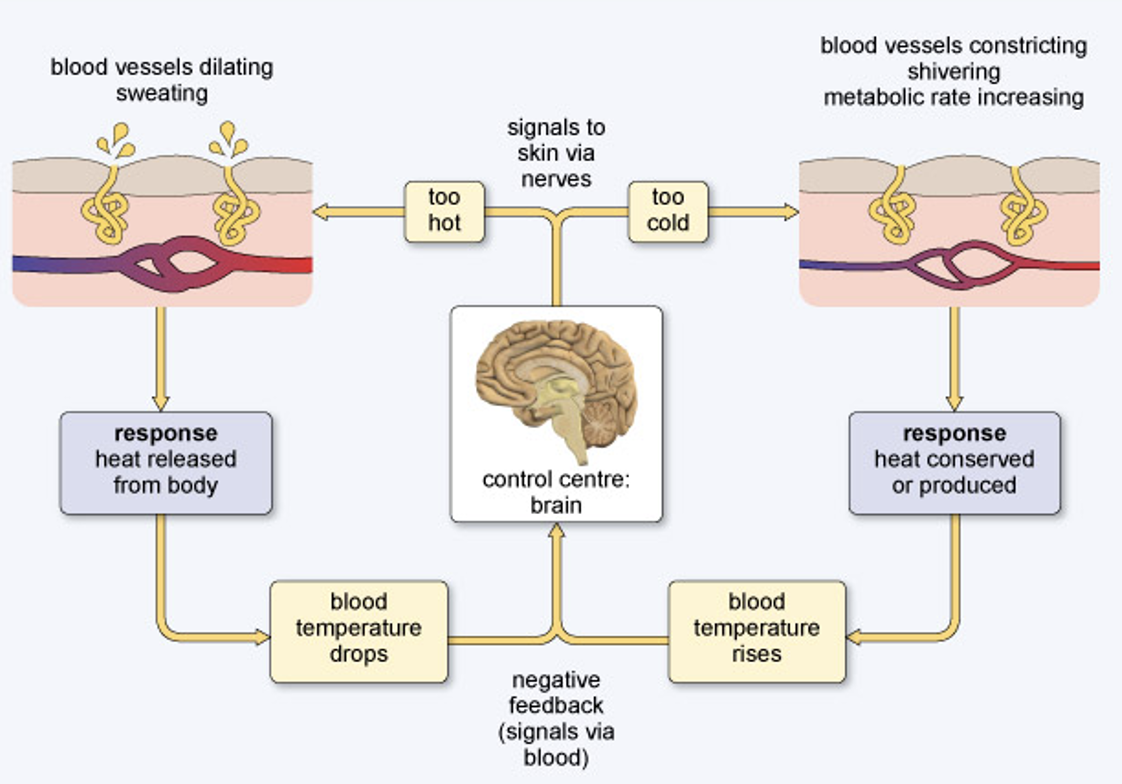
Both endotherms and ectotherms can control temperature using neural pathways
The body::
Detects temperature (thermoreceptors)
Processes it in the brain/spinal cord
Activates responses to either:
Gain heat
Conserve water
Lose heat
Thermostatic Regulatiom (The “Set Point” System)
Mammals: The Hypothalamus is the Body’s Thermostat
How temperature is sensed:
Thermoreceptors in the skin
Thermoreceptors in the body core
Temperature-sensitive neurons in the brain and spinal cord
The hypothalamus is ~20x more sensitive to core temperature than skin temperature
Three neuron groups in the anterior hypothalamus
Heat-Loss activating neurons
Triggered when body temperature rises
Stimulates sweating, panting, and vasodilation
Heat-Production Inhibiting Neurons
Triggered when body temperature rises
Stops shivering, non-shivering thermogenesis
Lowers metabolism
Suppresses appetite
Heat-Production Activating Neurons
Triggered when body temperature drops
Increases shivering, metabolism
Activates heat conservation
Stimulates appetite
Thermoregulation in Non-Mammals
Birds
Hypothalamus has little direct control
Main control center is the spinal cord
Hypothalamus may control behavioral responses
Fish
Hypothalamus temperature rises, metabolism rises
Brainstem temperature changes cause behavior:
Warm → swim to cooler water (thermophobic)
Cool → Seek warmth (thermophilic
Reptiles
Warm hypothalamus → seek shade
Cool hypothalamus → bask in the sun
Amphibians
Mix of fish and reptile strategies
Invertebrates
Not well studied
Many still show temperature-driven behaviors
Hypoxia and Temperature Control
Warm air or water holds less oxygen, so hot envionrments can become oxygen poor
Hypoxia resets the thermostat
Animals move to cooler, oxygen-rich areas
Temperature Control During Activity (Exercise Physiology)
Heat production during exercise
When muscles work, only ~25% energy goes toward movement - the other ~75% is lost as heat
Typically raises 2-4 degrees C
A moderate increase in temperature is beneficial to improve heat loss (bigger gradient to environment), improves oxygen delivery to tissues, and speeds up metabolic reactions
How Animals Dump Heat During Activity
Evaporative Cooling
Sweating, panting
Red kangaroos lick their forearms
Blood vessels dilate, saliva evaporates, cools blood
Countercurrent Cooling for the Brain
Carotid Rete: a heat-exchange network that cools blood before it reaches the brain
Warm arterial blood (to the brain)
Passes next to cooler venous blood (from the nose)
Heat transfers away
Brain stays cooler than the rest of the body
Dormancy (Hypometabolism) in Endotherms
Used to survive seasonal food shortages
This reduces energy needs and changes thermoregulation by lowering the body temperature set point
Types of dormancy vary in depth and duration
Sleep
Torpor
Hibernation (winter dormancy)
Aestivation (summer dormancy)
Sleep
A reversible state of reduced activity, awareness, and muscle movement
Occurs in vertebrates and some invertebrates
Two main types in birds and mammals:
REM sleep: hypothalamus becomes less sensitive to temperature, and body temperature drops slightly
Non-REM sleep
Torpor
A short-term drop in metabolic rate and body temperature
Helps animals survive daily or short-term food shortages
Two forms:
Daily torpor (hours; seen in hummingbirds and bats)
Long torpor bouts (days-weeks, seen in hibernators)
Torpor is a controlled thermoregulatory process, not a shutdown.
Placental mammals (eutherians) use brown fat to reward
Marsupials rewarm using different/unknown mechanisms
Hibernation (Winter Dormancy)
Long-term, seasonal form of torpor
Characterized by low body temperature, slow heart rate and breathing, and very low metabolism
purpose: conserve energy when food is unavailable
Prepare by:
Storing fat (large animals)
Caching food (small animals)
Can last days to months
Some species give birth during hibernation
Aestivation (Summer Dormancy)
Dormancy during hot, dry conditions
Occurs in both aquatic and terrestrial animals, but is rare in mammals
Main goals:
Conserve water
Reduce energy use
Protect cells and proteins from heat damage
Physiological strategies include
Lower metabolism
Increased antioxidants and chaperone proteins to stabilize tissues
Ex: earthworms, frogs, bees, snails, salamanders, tortoises, and crocodiles
Fever and Pyrogens
Fever (Pyrexia)
An increase in body temperature caused by a higher hypothalamic set point
Helps slow pathogen growth
Pyrogens (Fever-causing substances)
Endogenous Pyrogens
Produced inside the body
Are cytokines released by immune cells
They act on the hypothalamus to raise the temperature set point
Exogenous Pyrogens
Come from outside the body, often bacteria
Example: Lipopolysaccharide (LPS) from bacterial cell walls
LPS binds to LBP protein
This complex activates macrophages
Macrophages release cytokines, producing a fever response

