Pulm Phys: Defense, Repain, and Changes with Aging, Pregnancy, Obesity, Altitude, and Exercise
 Call Kai
 Learn
Learn Practice Test
 Spaced Repetition
 Match
Match Flashcards
 Knowt Play
1/14

There's no tags or description
Looks like no tags are added yet.
Name | Mastery | Learn | Test | Matching | Spaced | Call with Kai | Chat |
|---|
No analytics yet
Send a link to your students to track their progress
15 Terms
Steady-state airway defense mechanisms?
Cough
What triggers innate immunity in the lungs?
PAMPs (pathogen-associated molecular patterns)
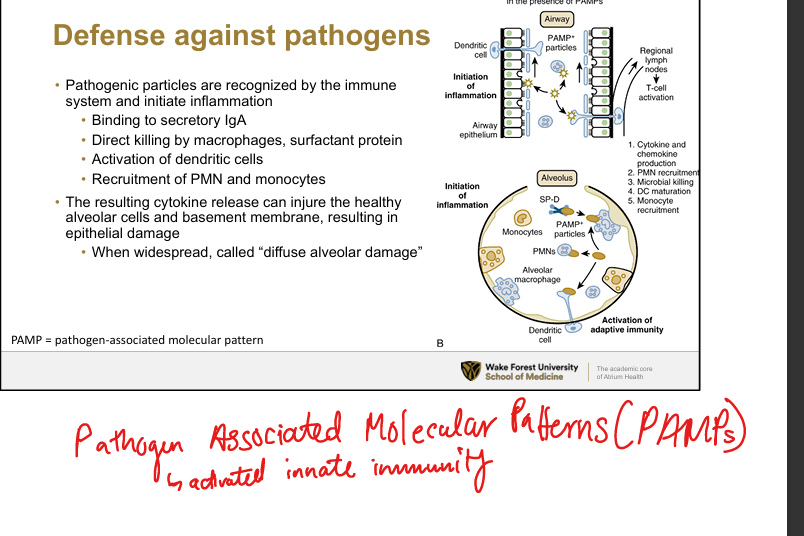
Diffuse alveolar damage mechanism?
Cytokine-mediated injury to alveolar epithelium and basement membrane
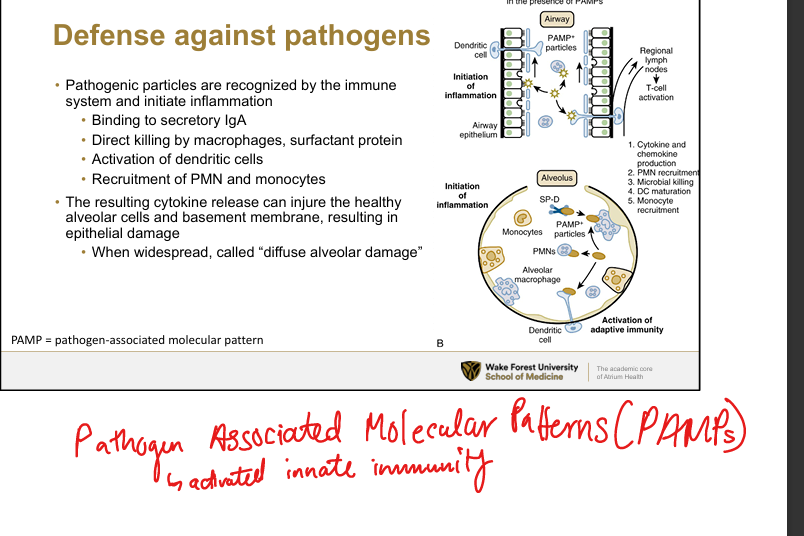
Role of Type I alveolar cells?
Gas exchange
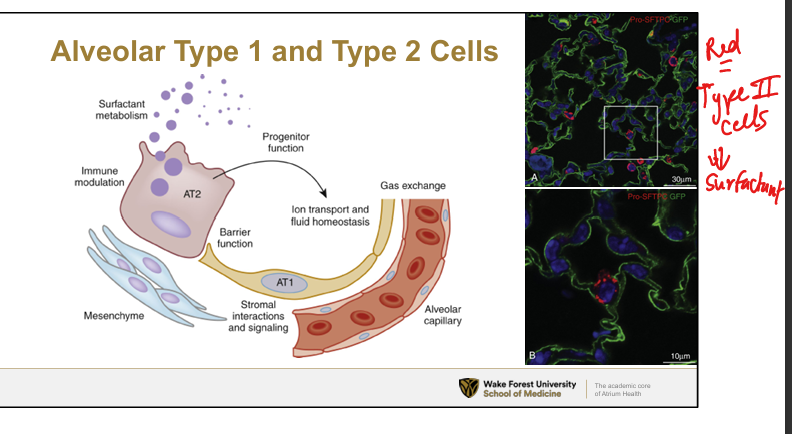
Role of Type II alveolar cells?
Surfactant production + make type 1 cells
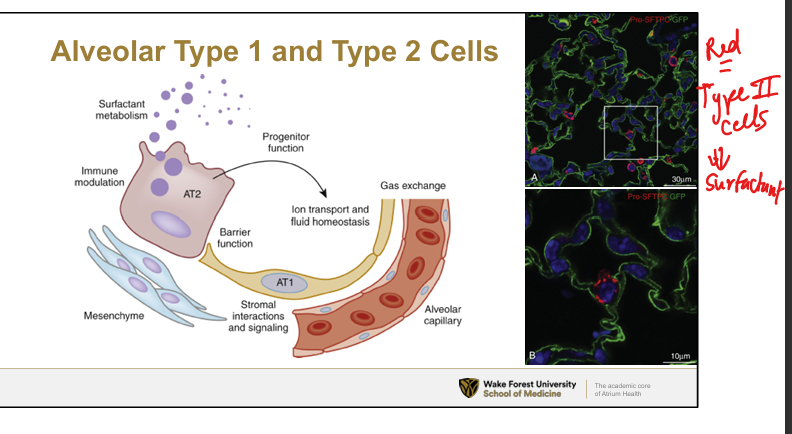
Is the lung sterile?
No — low-biomass microbiome present
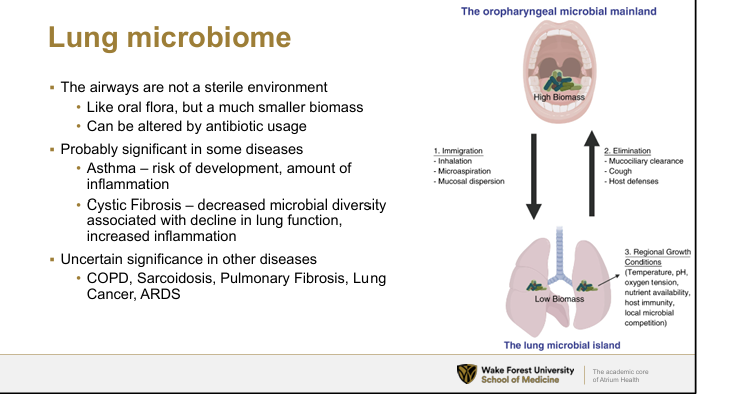
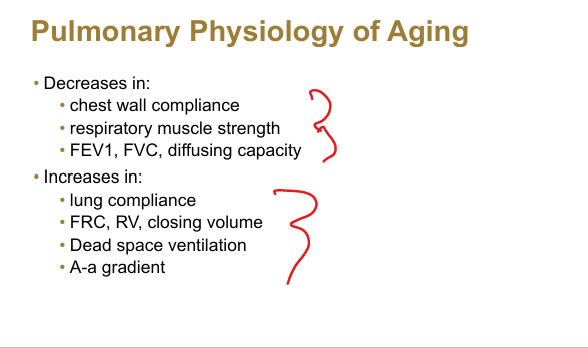
Pulmonary aging: what decreases?
Chest wall compliance, repsiratory muscle strength, FEV1, FVC, diffusing capacity
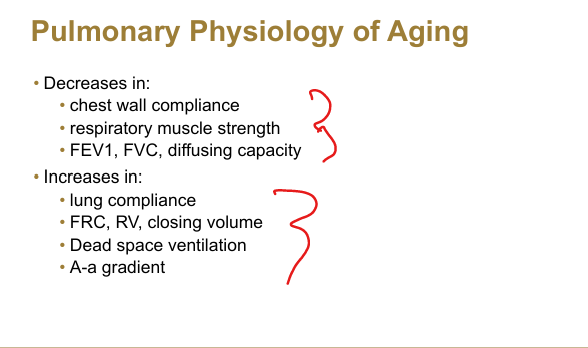
Pulmonary aging: what increases?
Lung compliance, FRC, RV, closing volume, dead space, A-a gradient
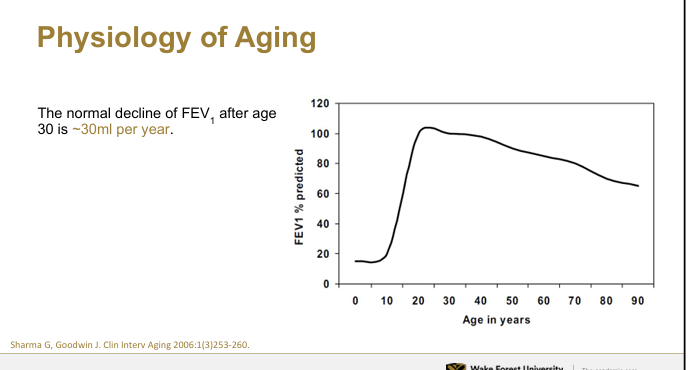
Normal FEV1 decline per year after age 30?
~30 mL/year
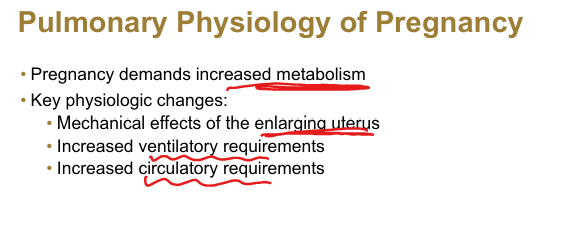
Pulmonary Physiological changes in pregnancy
Mechanical effects of enlarging uterus, increased ventilatory requirements, increased circulatory requirements, increased metabolism
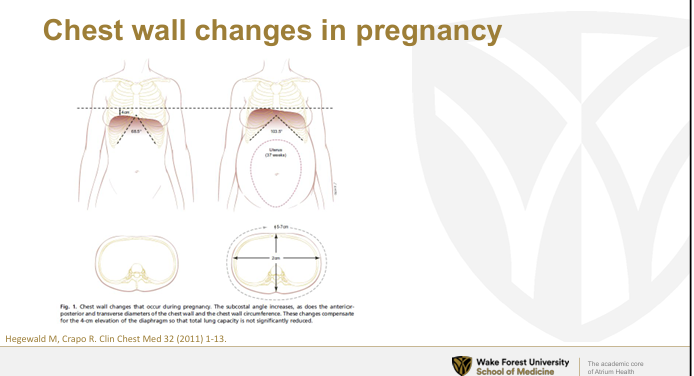
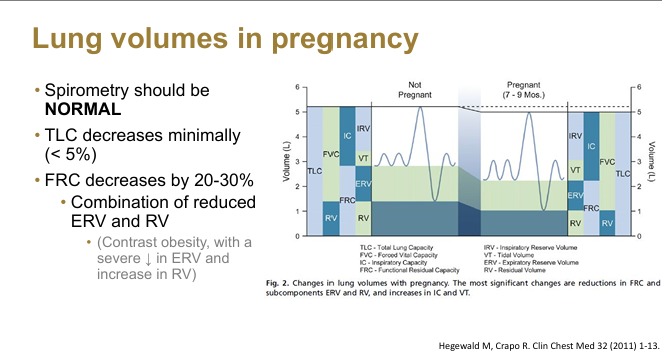
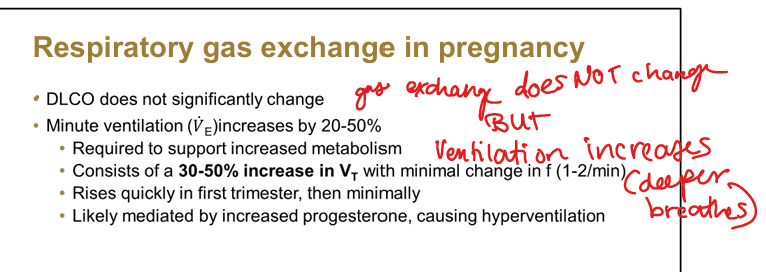
Pregnancy: what happens to minute ventilation(Ve)? FRC? Spirometry?
Ve Increases 20–50%(increased ventilation»deeper breathes). FRC Decreases 20-30%(due to reduced ERV and RV. Spirometry is normal
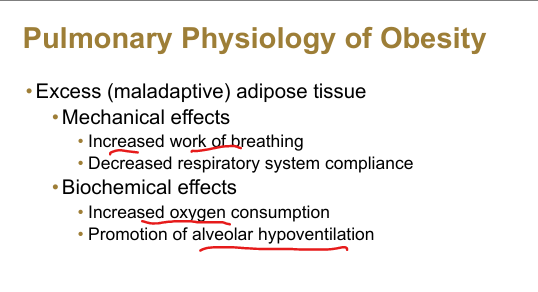
Obesity: major mechanical effect?
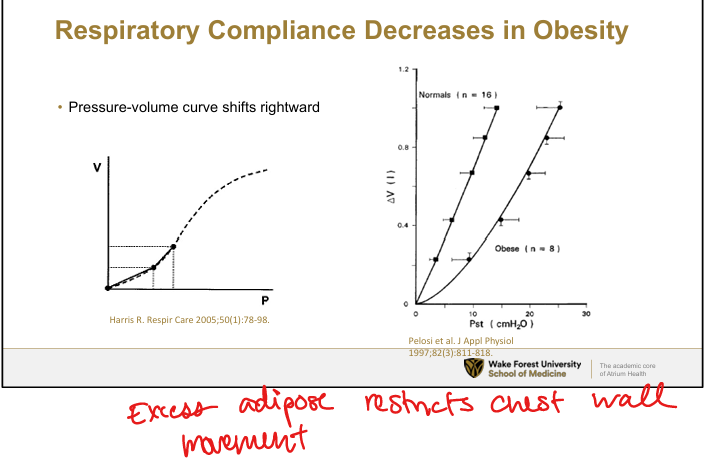
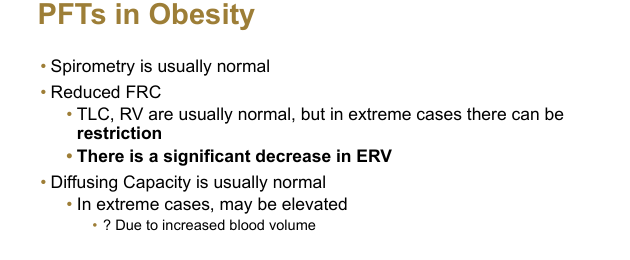
↓FRC(function of residual capacity), increased work of breathing, decreaed respiratory system compliance
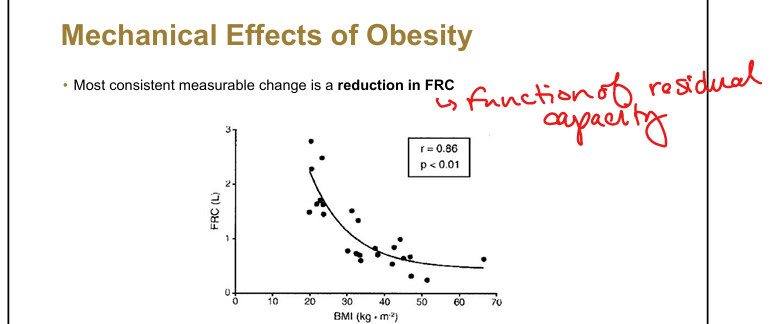
Obesity: effect on ERV?
Significant decrease
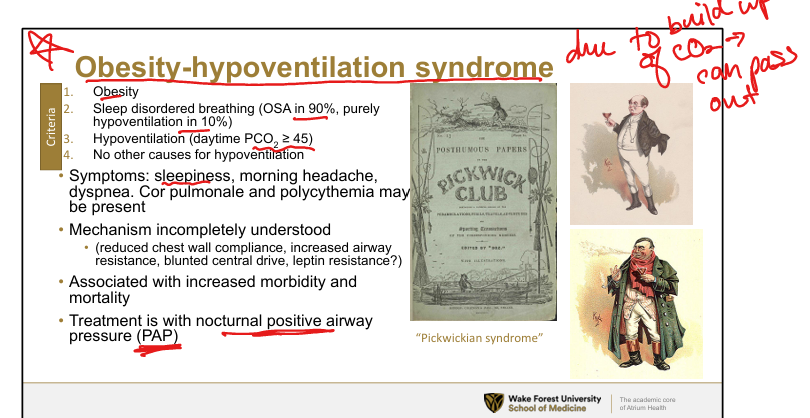
Obesity-hypoventilation syndrome
Criteria: Obesity, sleep disordered breathing, hypoventilation (with no other causes).
Sx: sleepiness, morning headache, dyspnea all due to build up of CO2
Tx: Nocturnal positive airway pressure (PAP)
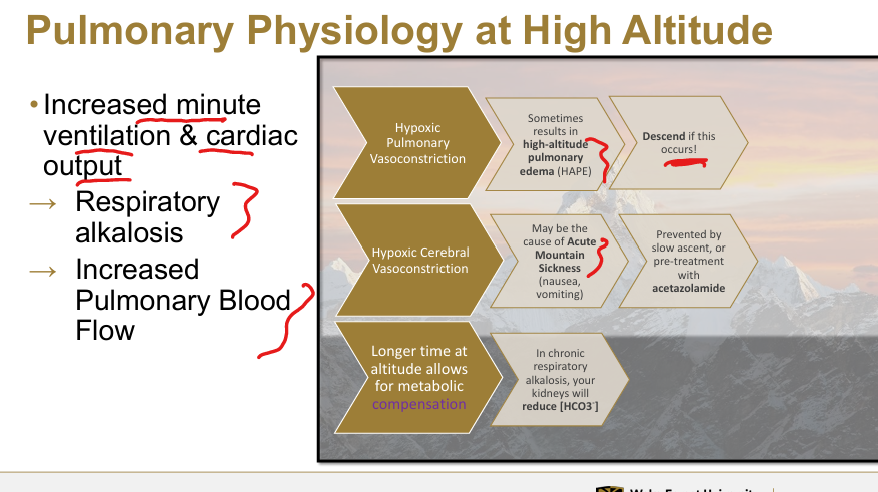
High altitude risk?
HAPE (high-altitude pulmonary edema)