Property Test Cards
 Call Kai
 Learn
Learn Practice Test
 Spaced Repetition
 Match
Match Flashcards
 Knowt Play
1/73

There's no tags or description
Looks like no tags are added yet.
Name | Mastery | Learn | Test | Matching | Spaced | Call with Kai | Chat |
|---|
No analytics yet
Send a link to your students to track their progress
74 Terms
What does s13 of the trust acts 2019 state
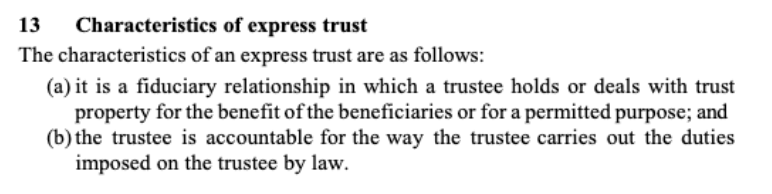
S 14 of the trust act

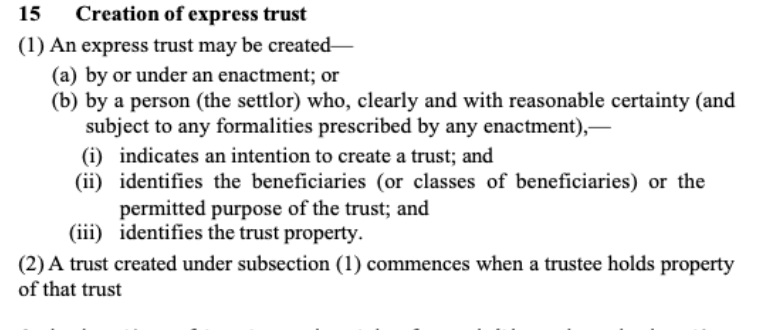
s 15 of the trusts act
s 25 (2) of the Property Law Act
a decleration of the trust need not be formal though a decleration of trust of land needs to be manifested and proven by writing
Paul v Constance
Does not have to be expressly stated can be implied as long as intention, subject and object is very clear.
Concurrent intrest
when a settlor wants the beneficaries to share an intrest. This could be a joint tenancy or tenancy in common. If property was held on joint tenancy then it is shared between the joint tenants left if a tenancy in common goes to the estate
life intrest
= life tenant but must not excede the maximum duration of 125 years per s 16 of the trusts act 2019. Must also imply in the trust deed what is to occur if it collapses if not the law will presume then it will spring back to the actual settlor ( resulting trust)
Succession intrest
all have vested intrest now but it only cyrsalises when the person who has the intrest before them dies. Person A has the intrest and is such entitled to income from the property
Obligations of express trustees s 22
duties of obedience to the trust instrument
duties od prudent management
duty of loyalty to the beneficiary
s 23 of trusts act compulsory to a trust
they must know the terms of the trust
s 24 Trusts act compulsory to a trust
must act in accordance with the terms of the trust
s 25 compulsory to a trust
they must act honestly and in good faith
s 26 compulsory to a trust
they must hold and deal with trust property and otherwsie act for the benefit of the beneficaries and accordance with the terms of the trust
s 27- compulsory to a trust
they must exercise there powers for a proper purpose
Lee v Torrey
settlor had a a trust for the benefit of one son as she had fallen out with the other
after hear death they paid the son that was not apart of the will 25k to prevent him from contesting the will
they sold a car held in trust to a friend for no money
transffered half of the trust money to themselves
The son who was the beneficary succesfully sued the trust for breach of trust
Court held that the obligation is to act fairly in making investment decisions for diffrent classes of beneficaries . It is not inappropriate for the wife to have more due to the nature of there relationship
Default duty s 35
Duty of impartiality, one group of beneficaries must not be unfairly partial to another group
R v Mulligan
allegation that the trustees took no steps to protect the captial of the trust against inflation
After his death left the trust to his wife and after her death his 10 nieces and nephews
the equivlent money at his death was enough to buy 14 properties in chch today it is not enough for 1
found liable for breach of trust as they had not managed the trust in a prudent manner
s 56
general powers, all the powers necessary to manage the trust property that an absoloute owner of the property would have
s29
imposes a general duty of care for skill and discreetion in a reasonable circumstance e.g. if your a lawyer should have more understanding compared to a grandame
s 30
duty to invest prudently, must exercise the care and sill that a person of business would exercise in managing the affairs of others
s 35
Duty to act impartially
defualt duty but can be altered
does not require all beneficaries be treated the same
The trustee must act impartially to indivdual beneficaries and not side with one if there is a dispute
the trustee must act impartially between diffrent classes of beneficaries
s 34
duty to avoude conflict of intrest
the fiducarys duty not to act in a situation which there is a conflict of intrest
the fiducarys duty not make a profit at the expense of the beneficary
s 73
duty to relive from personal liablity if the trustee has acted reasonably and honestly
the onus is on the trustee to prove this
Re mulligan the company was found to not be abale to use this clause as they were aware and could not provide evidence of Mrs Mulligans stuborness
Ways trustees may cause a loss to the trust
not investing it so inflation eats away at the amount
make an aunothorised investment that turns out to loose money
though the investment was not aunothorise it iwas made at a bad or and bad choice
leaving money in an investment for to long
s 58
trustees have the power to invest
s 59
a trustee exercising power to invest must have regard to:
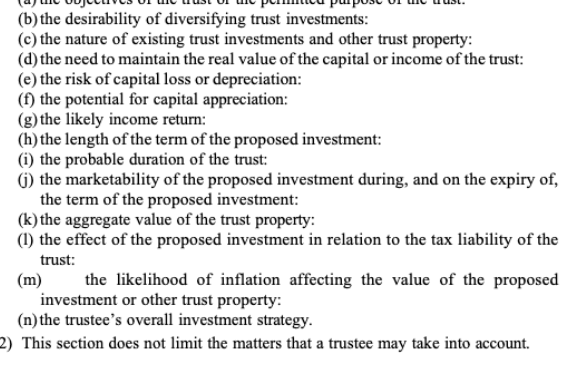
s 128
court may take into account investment stratgey in action for breach
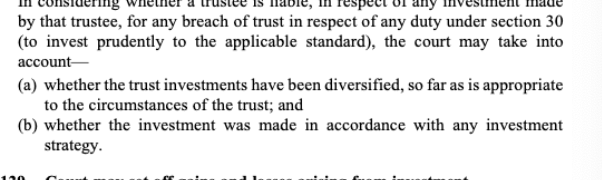
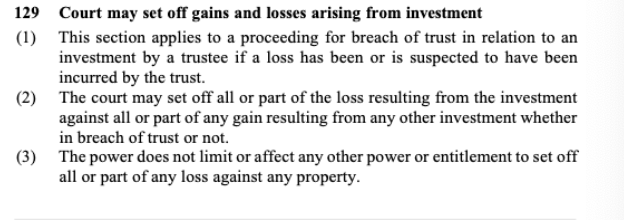
s 129
court may off set gains and losses arising from investment
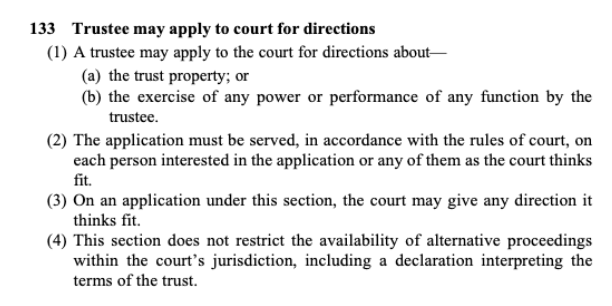
s 133
a trustee may apply to courts for directions
s 40
restiction on trustees expemption clause

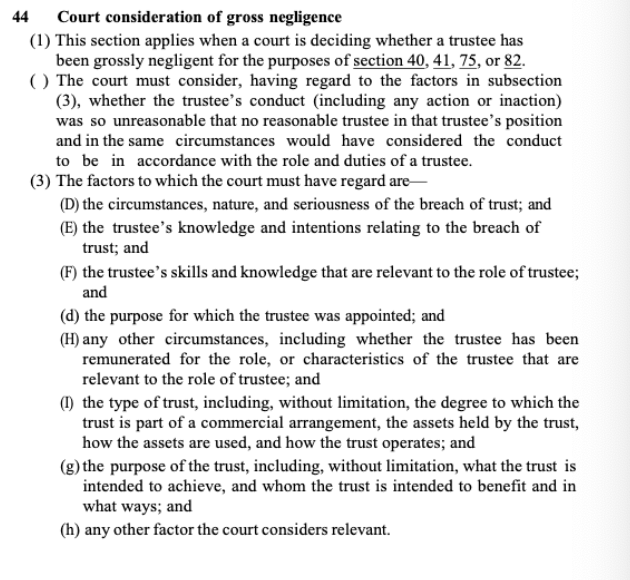
s 44 Courts consideration of gross negligence
Campbell v Walker
states that a trustee can not buy the trust property
Patchett v Williams
application to the court under s113 to approve the sale of a trust asset
they wish to sell the farm to the current people who lease it. 2 beneficaries object because the value of the farm they are selling it for does not reflect the true nature.
they had a lease for 5 years and then a right to renewal for a further 3 court assumes the renkewal failed as it is now on a monthly tenancy
he died left a will within it there was that they should give the person farming it a chance to buy it for the value set by a valuer and this be distributed equally between the beneficaries
the perosn leasing was a trustee
court found could not sell to him as he also had his own intrest in mind e.g. getting the cheapest price when he should be getting the best price as such this a conflict of the trust duty
Bray v Ford
a person in a fiducary position is not unless otherwise expreslly provided entitled to make a profit he is not allowed to put himself in a position where his intrests and duty conflict.
Thomson v Allen
T created a trust
Carried out a yacht business
He appointed Allen and daughter to be trustee and beneficiaries
The beneficiaries were to be A and daughters
They had the ability to sell it to Allen or H and if they sold it to anyone else it is to go to T
Allen originally tried to buy it but no agreement so he decided to set himself up
Issue: By setting up a yacht business is this in conflict of his fiduciary duties
Court:
A yacht agent like a real estate agent, they have to convince then sell with them
If the agent succeeds then they get commission
A because it is commission based if he was the first to convince and secure a buyer he would get a %
So is there a problem between doing this and with the benefiaries of the will
Given the nature of the business most that are on the market they will be on with everyone else ( don’t have exclusive contract with one person) therefore every yacht agent is in competition
So has he breached his fiduciary duties if he secured a sale who may well have entered into a similar contract with MR Thompson.
In the context of this case is that an executor and trustee, having duties to discharge of a fiduciary nature he shall not enter into a deal that may have an effect on those as beneficiaries.
In applying it to this case, if he had entered into a business like this was the personal interest conflicting with those he was bound to protect. Answer is yes because it is in breach of his fiduciary duties as stated in his will. His overarching duty is to look out for beneficiaries in the execution of the will. By setting himself up as his own agent that is purely his own interest.
Phipps v Boardman
defendants where boardman and the solictor
had shares in a company they were dissatsifed with how it was preforming suggested they take control of it
they tried to use the 8000 shares that they owned to get confidentail info bu they did not
they tried again this time to buy more shares but the trust could not do this as it had no money and no legal ppower
they both represented themselves as being apart of the trust but were not and purchased them for themselves
they then gained a profit from this
HL held that they had fiduciary profit and they only obtained it through acting as part of the trust therefore a constructive trust it should be held on
s 37 duty to act for no reward
s 37
to act for no reward exceptions to this:
the normal rule can be cahnged by altering the trust deed
the beneficaries may agree to renumeration
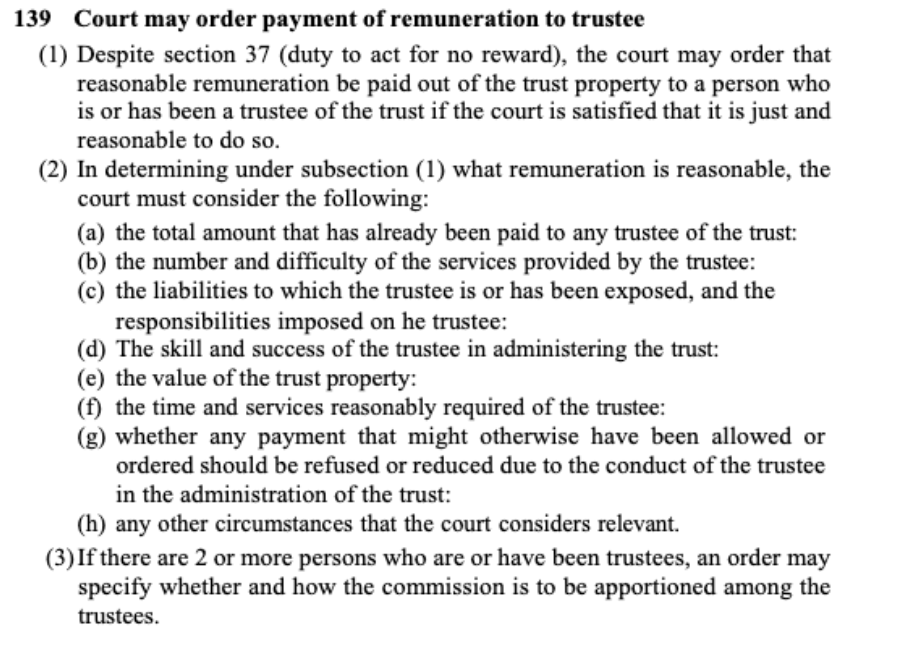
the trusts act 2014 s 139 gives a court may order payments to a trustee if it is reasonable to do so
trustees are forbidden from trust dealings Prattchet v Williams
s 139
Courts may order payment for renumeration to trustee
Terminating a trust
it is possible to do this without a court order if all the beneficaries agree are over the age and are of sound mind. they can do this weather the trustees agree or the settlor agrees as it is for the benefiaries so they can do what they would like.
Account of profits
boardman v phipps an example of this they were personally liable
Chirnside v Fay
joint venture gone wrong, Fay succeeded in his claim that Chirnside owed Fay fiducary duties and that by leaving him out of the venture and developing the site making substantial profit . Chirnside was allowed to keeping extra 200k but he had o divded the 1.7 between them
account for profit was the appropriate remedy as this is what Fay lost but also ensuring that Chirnside got some money for his skill
Spencer v Spencer
3 children but one of them was disabled the trust set up to give him $200 a week
- trust set up after a separation of Barry spencer and his first wife Alida
Beneficiaries were there three children
Where to be 3 children of the marriage including Robert
He had a disability and was given an entitlement of 200 a week
Trustees were 2 and Barry spencer so a settlor and trustee
One of the primary assets was a commercial building
Number of tenants and was managed by the spence group limited
BS the father the settlor and trustee was also a director and main shareholder and only employee of spencer group limited
Case was brought by Robert but he wanted his 200 a week and thought the trustees liable for some loss suffered by the trust
The issue was that the commercial building did not make much money
The building was sold and the trust became insolvent and spencer group limited was struck off the companies register
So all Robert could do was sue them personally
Why a breach: after the number 2 was established the 200 a week to Robert stopped and when an explanation was sort they said there was no payment to give as no money in the trust.
What went wrong?
Unclear but the accounts suggest it was getting a rental income it did not make profit
Therefore there was nothing to pay Robert
The company SGL was listed in the accounts as owing the trust 190k
Court said unclear what lead to it being owed
This debt lead to the first finding of a breach,
Problem: the trustees had made no effort to try and collect on this debt
If the trustees had attempted to collect on that debt they may well have had heaps of money to pay Robert
But they did not even try
Spencer group limited was run by a trustee so the trustees were in breach by at least failing to consider if action should be taken.
Trustees argued:
That while they didn’t try and get that debt would have been offset by the debt that the trust owed to SGL
SGL would charge a management fee of 1.75 pa on rent and outgoing
So it was outweighed by the money
Question became weather this off setting was a valid exercise of the power of the trustees
Court concluded that the management fees trust accepted were not authorized by the trust deeds
This is because the trust deed included a clause --> but neither Barry Spencer nor the person preforming it on his behalf is not able to charge. This prohibited him from charging the trust
So therefore the trustees had breached that term of the trust
If Barry spence had personally managed it would be seen as personally managing not as company it can not be intended that he can do it through a company therefore still liable --> therefore he could not do it. And a breach of trust by paying these management fees
Moreover these fees was excessive
In summary the trustees have breached the trust by failing to get the debt, and offsetting the management fees and giving office space to sgl which they did not charge for
Had the trustees acted differently and not breach the trust there would have been enough money to pay Robert.
All of these actions cause loss and they were all held personally liable for 155k.
Payments went to Robert of 65k as he had not got his 200 a week.
The damages idea is to put the trust back in the position it would have been without the breach
How can u be excused from paying remedies
an exclusion clause in itself
a statuory provision
a gneral equitable relief
Spencer v Spencer Remedies
stated in the terms that there would be limited liablity. However the trustees had not acted in good faith so they could not rely on the exclusion clause as the loss had been incurred by there dishonesty
statutory defence to personal liability
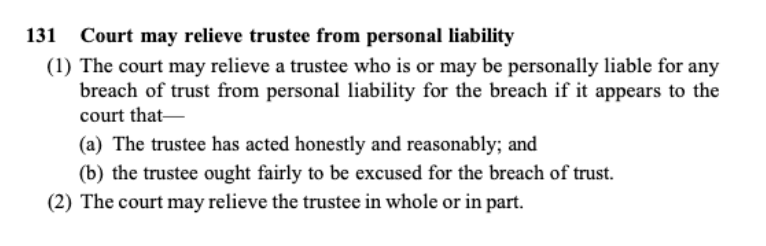
s 131 the court has the power to relive trustee from personal responsiblity. Must have acted honestly and reasonably and demonstrate that you ought to hav reasonably excused
Mulligan and remedies
the company did not act reasonably at best they recognised the problem. Mrs Mulligan even making an allowance for her age and experience can not find that she acted reasonably.
s131
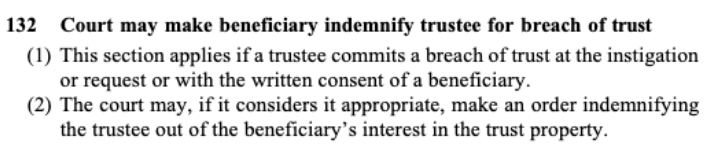
s 132
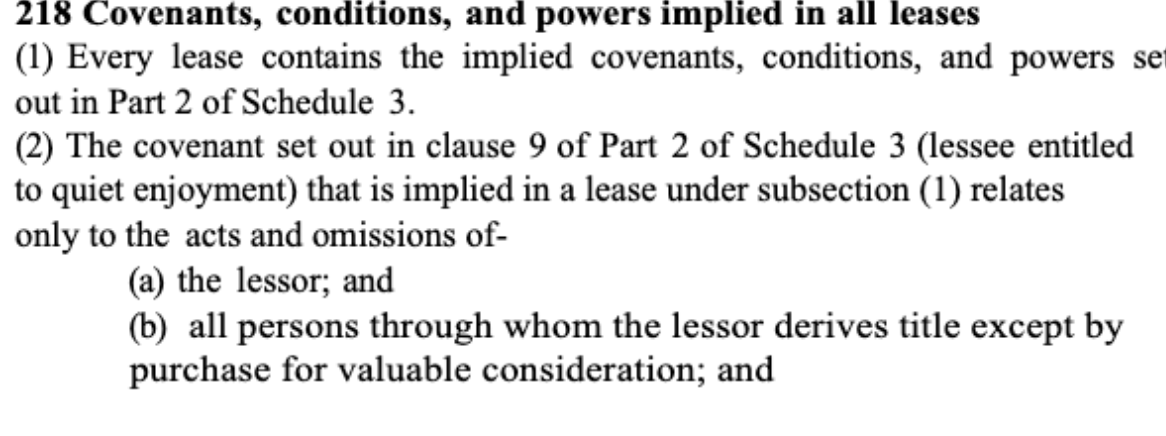
s 218 of property law act 2007
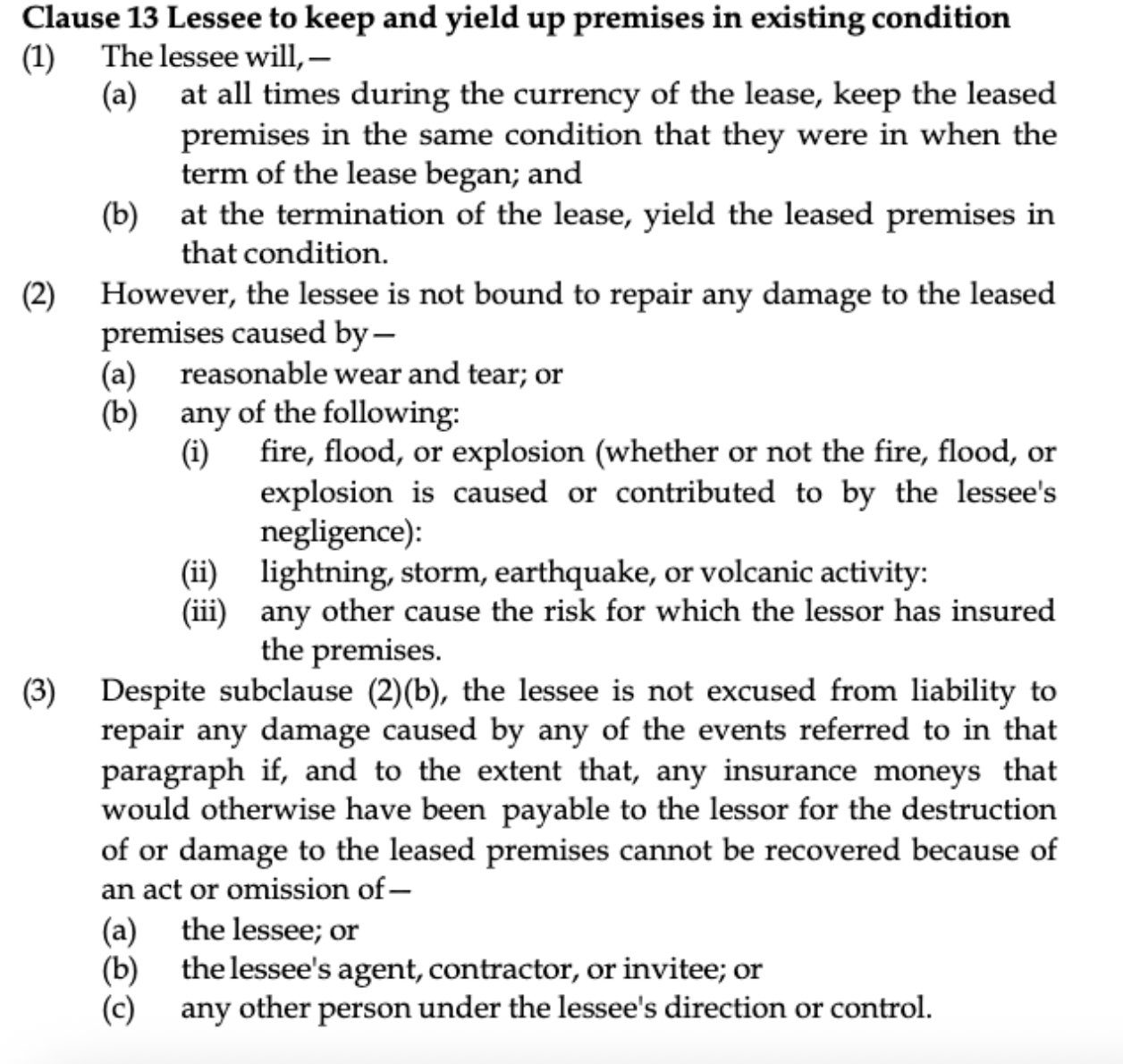
clause 13 of property law act 2007
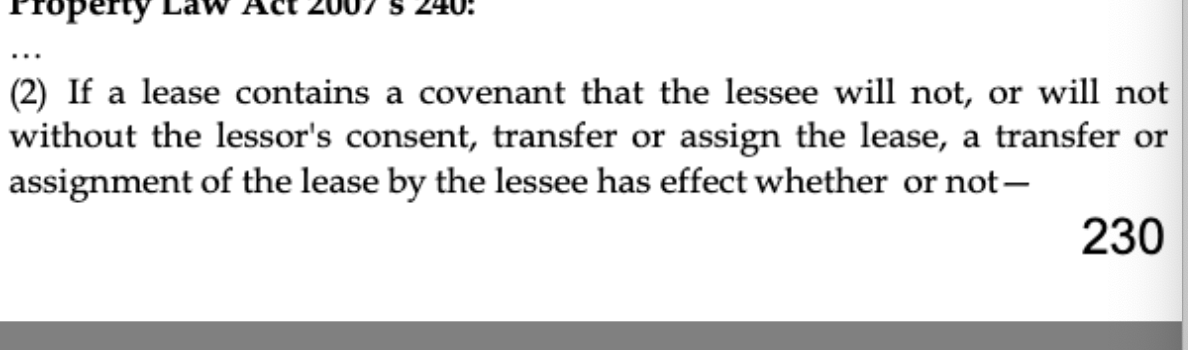
property laws act s 240
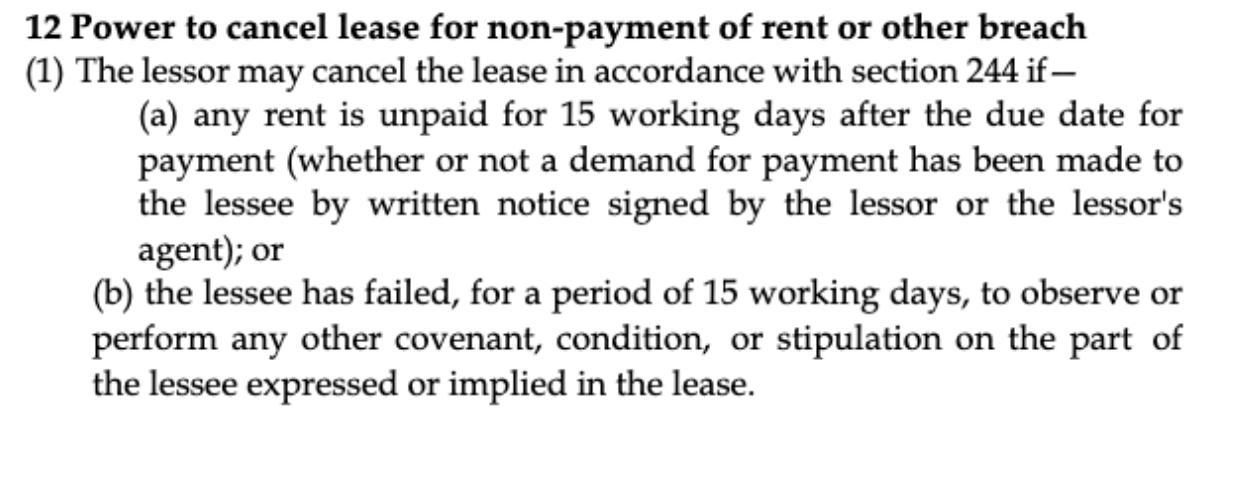
s 12 of property law act
property law act 244
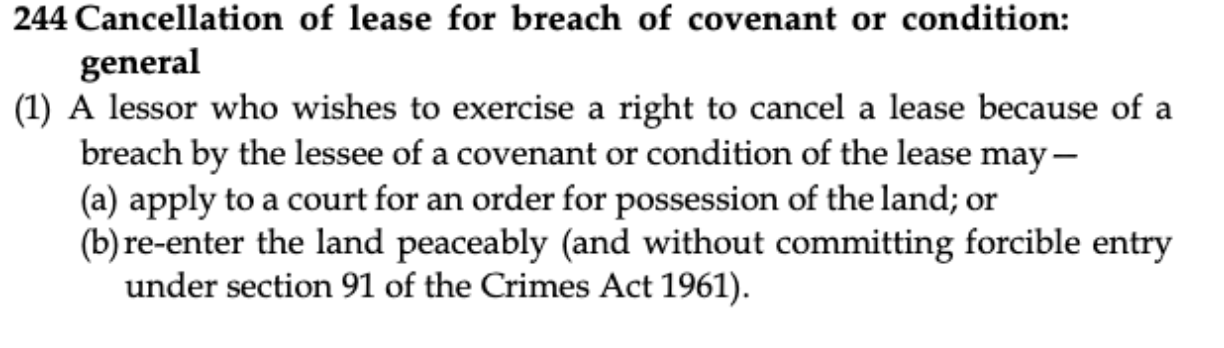
s 244 to 246 Property Laws act
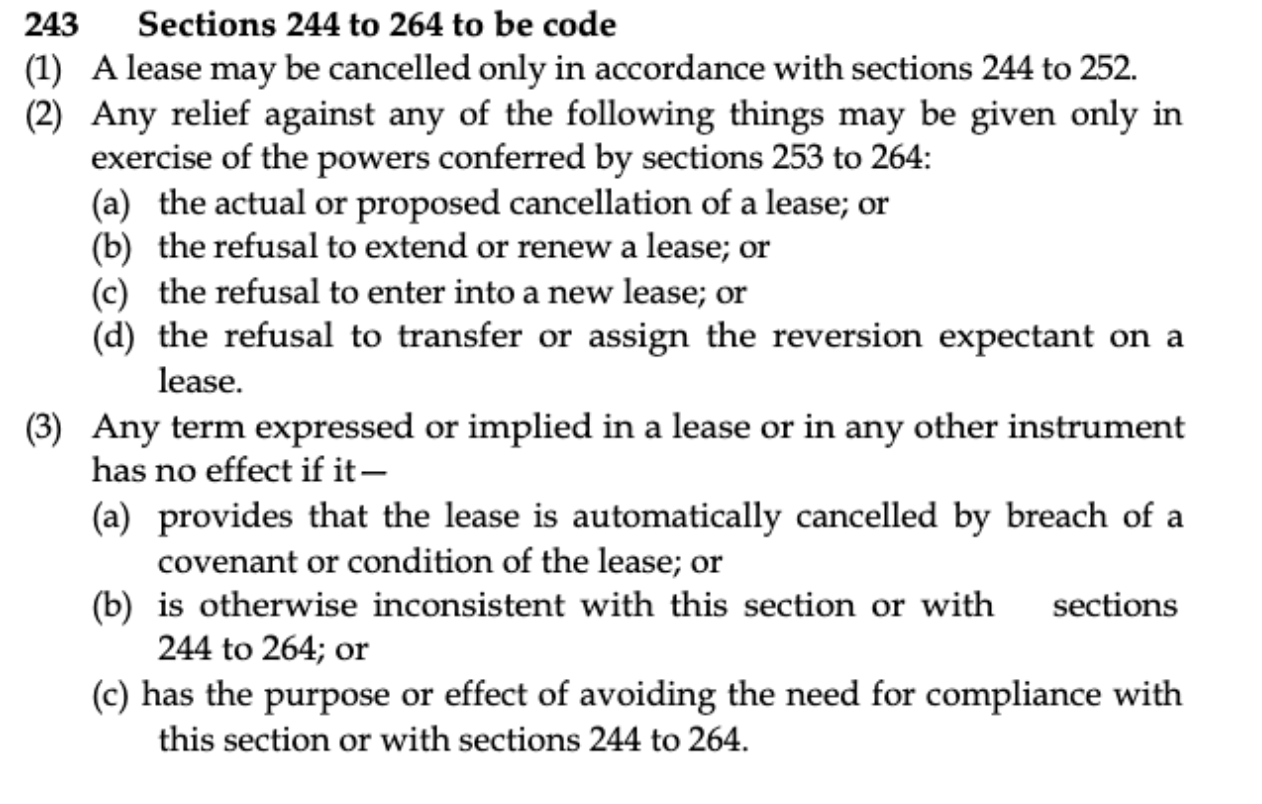
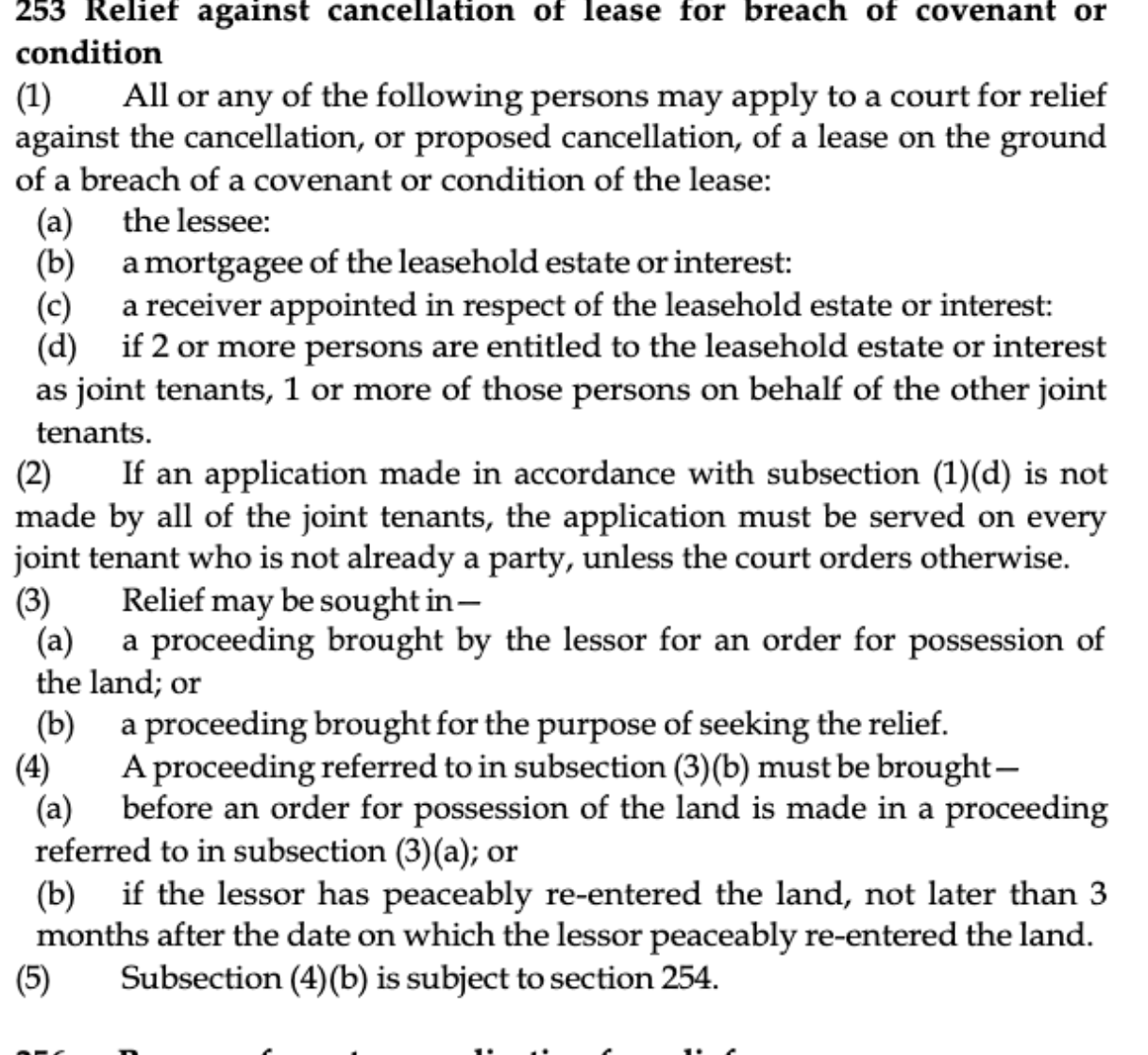
s 253 of property laws act
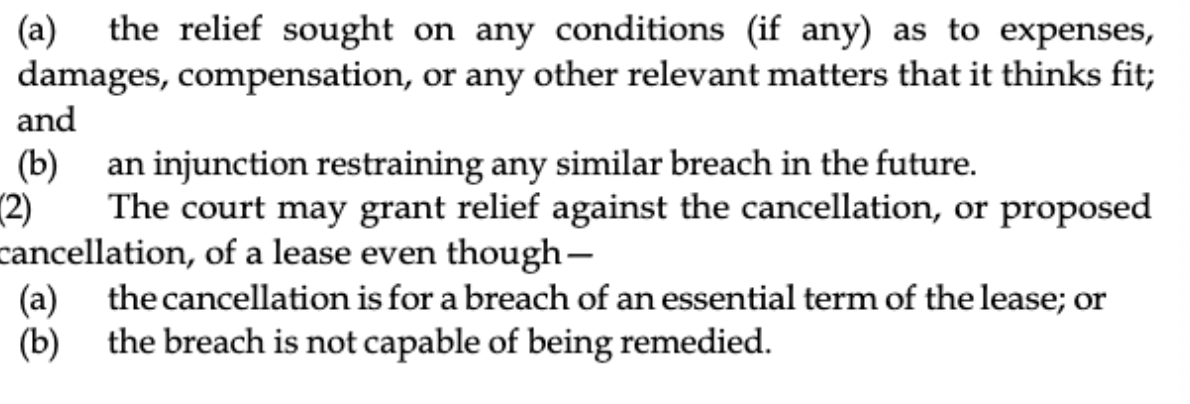
s 256 property laws act
power of courts on application of releif may grant:
Mulholland v Waimarie Industries
Example of court declining to grant relief to a tenant who had not paid rent
If breach solely failure to pay rent presumptive right to relief on payment
The tenant had not attempted to clear there rent, only in exceptional circumstance will this be not given out
Even if tenant has tried but cant pay there will be an exception to this general rule
Strong v Hurunui Hotel
fundamentals of a lease
a time period or estate for that the leasee is going to lease for a substantive period e.g. a year or every Saturday
while normally have rent it is not absolute necessary
you must have the lease agreement in writings and signed
must be a contract
Consequences of a lease
general freedom to “treat as own” and have right to deal with it how you would like
parties use the standard form lease —> Auckland Law society one but even if dont parties get this as a covenant
s 218 covenant for the quiet enjoyment, promise that the landlord wont substantially intereder with the tenants right to land
schedule 3 to pay rent sch 5 to not alter the building sch 6 obligation not damage or distrub
cancellation in lease
in 2 circumstances:
tenant fails to pay rent
the tenant has failed to obliged with some covenant obligation
law recongising abuse of power in landlord cancelling leases
regulatory code 244 -252 balances things out
limits what the parties can agree to concerning cancellation
it puts in place formal procedural requirments which limits how easy a landlord can exercise there power
Property laws act can empower courts to grant relied against cancellation
s 253 of Property laws act
where a landlord has cancelled or proposed to cancel they can go to court to see this is not relieved. Says who can apply for relief and how can do it
s 256 of property laws act
how the court decide should grant relief, it says nothing about how they make these decisions rather they come out of the case law and how the courts engages in and decides to grant relief
s 244 of Property Laws Act
landlord may cancel any lease in accordance with s 244 if rent is unpaid for 15 working days or if the leasee has failed for a period to act adequalty with the covenant
cancellation procedures of a lease
follow s 243-264 so long as it is in accordance with s 253-264
Mulholland v Waimarie
T had failed to pay rent and sought relefi but had not paid the other arrears before this, when it is just a breach of paying rent there is a presumption that once they pay they dont need to cancel it, but the tenant here had not paid. Idea that you should come to equity with clean hands.
strong v Hurunui hotel- facts
L wanted to cancel as the T had not redecorated as required. there had already been a private dispute resoloution process and T was given a timeline to remedy the breaches but had not. There was a conditional offer by the time got to court for someone to buy the lease off of the T
Strong v Hurunui considerations for cancellation
Extract from Studio X court will consider when granting relief:
- was the breach advertently or delibertly committed
was it inadvertent or beyond the tenants control
did the breach involve and immoral or illegal user
wether the tenant has made or will make good of the breach but will comply in the future
conduct of the landlord
personal qaulifications of the tenant
financial position of the tenant ( sometimes a third party should be considered)
weather the breahc has caused lasting damage
Strong v Hurunui outcome
granted conditional relief but this was narrow had to do it within 50 days and put up a security deposit.
the idea that this could be remedied quickly
however this could have gone the other way was a very fine margin
Sibrad Company v Kanters and Edwards- Facts
L did not want renewal because of T continuing breaches
4 breaches:
farming bulls not dairy
not conducting fertliser testing
using land outside of lease
causing nusiences disturbance
Sibrad Company v Kanters and Edwards- outcome
the breach of farming bulls was very serious they wouldnt have leased it had they known— makes the T look much less attractive
casual attitude by and tenant in terms of the soil also meant could not measure the detteroration
disturbance was minor breaches but taken in the round they are serious
this breach was very difficult to remedy unlike hurunui who could easily redecorate
not serious harm going to occur to Sidbrad as they had own farm etc. therefore they did not have to reknew