Week 11: Autonomic Nervous System and Pelvic Viscera
 Studied by 0 people
 Call Kai
 Learn
Learn Practice Test
 Spaced Repetition
 Match
Match Flashcards
 Knowt Play
1/25

There's no tags or description
Looks like no tags are added yet.
Name | Mastery | Learn | Test | Matching | Spaced |
|---|
No study sessions yet.
26 Terms
What does the ANS innervate and where it is distributed?
Innervates involuntary structures eg. heart, SM and glands. Distributed throughout CNS and PNS.
What is the ANS divided into?
2 divisions - sympathetic and parasympathetic.
Both have anatomical differences, different neurotransmitters and different physiological effects.
List the neurones of the PNS.
1. Somatic sensory neurone - preganglionic.
2. Somatic motor neurone - post-ganglionic.
3. Autonomic motor neurone - pre and post-ganglionic.
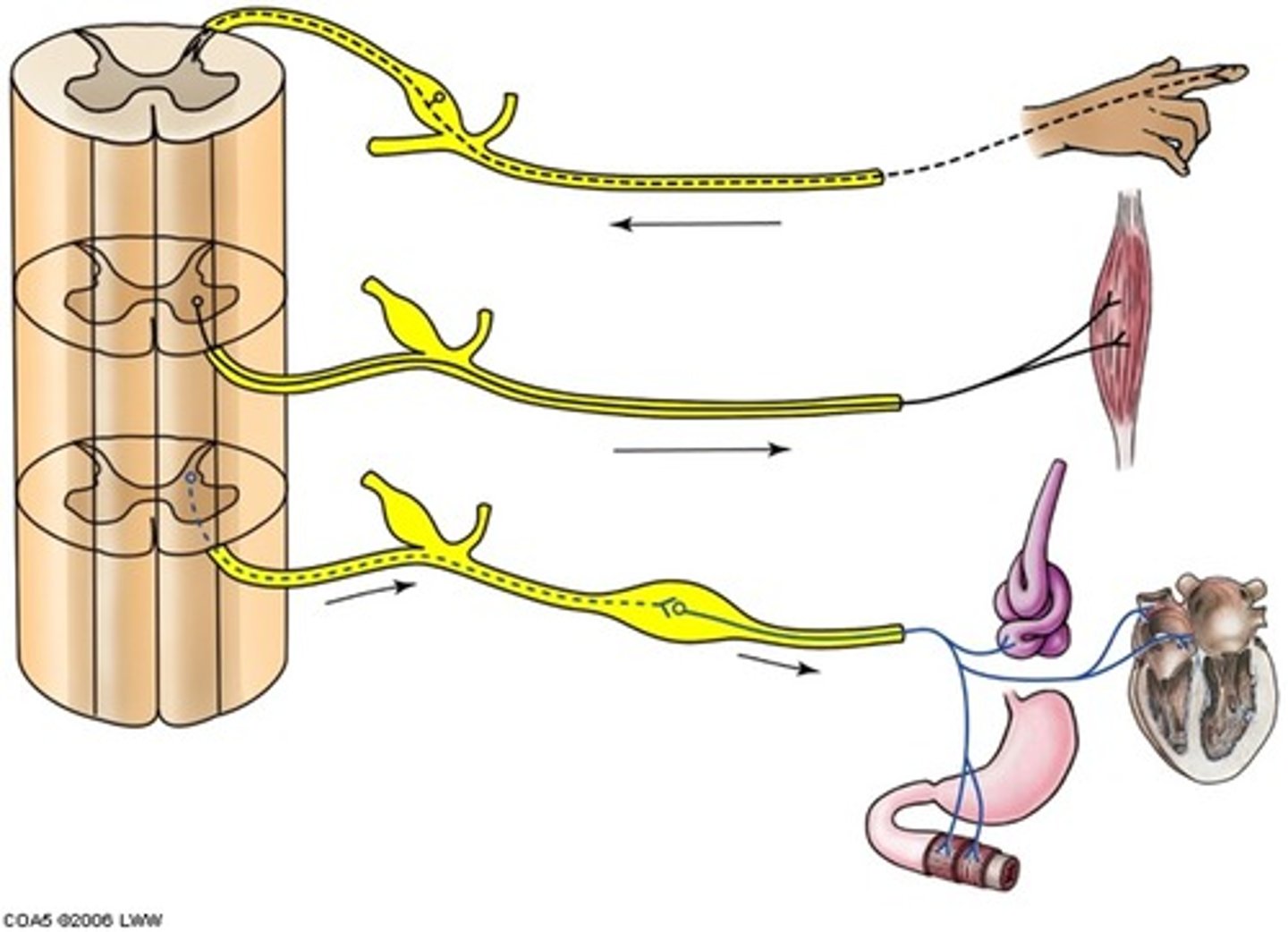
Where are the cell bodies of the preganglionic autonomic motor neurones located?
In the lateral grey horn of the spinal cord.
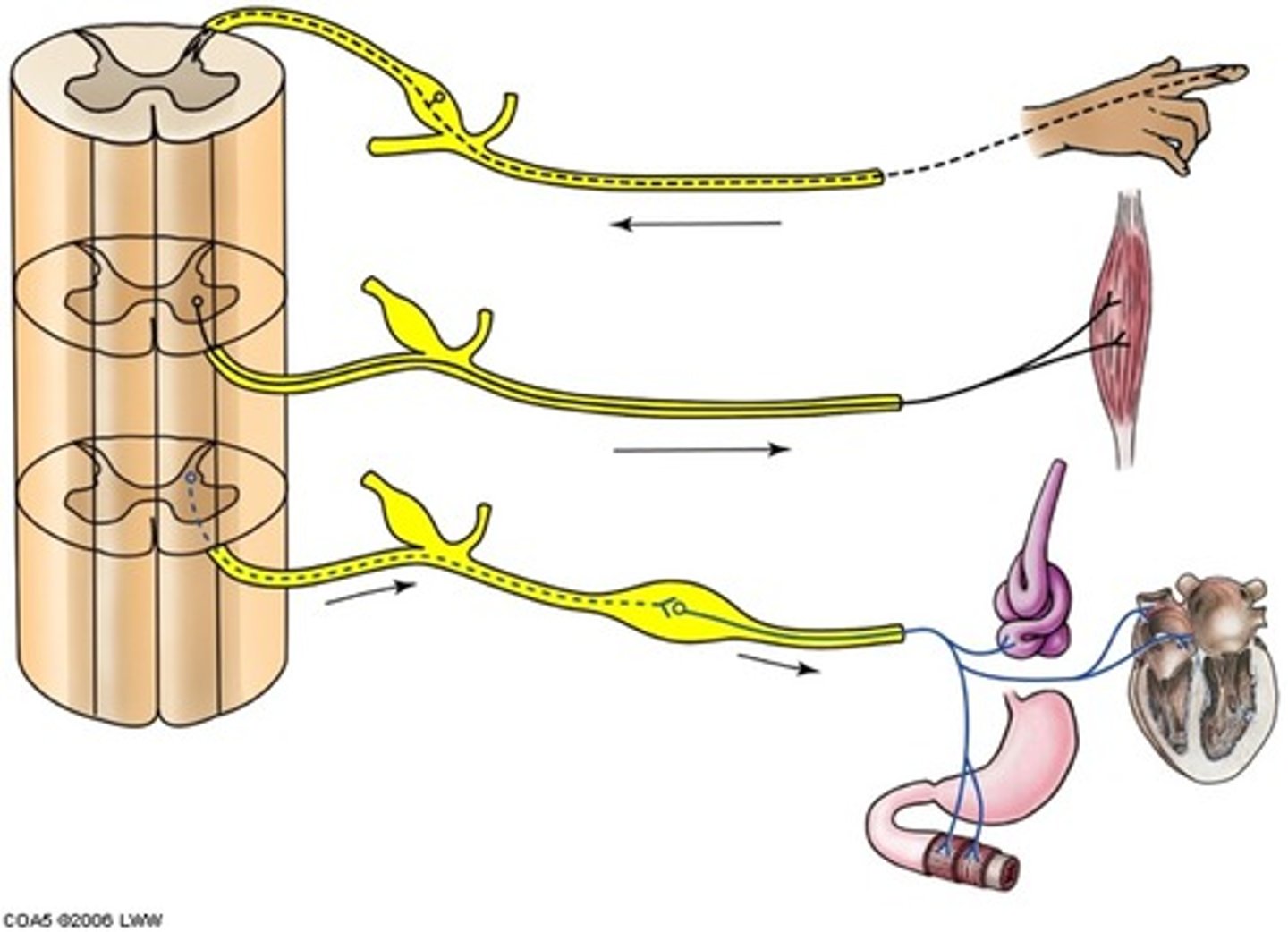
What are the main functions of the sympathetic division of ANS? (3)
Prepare body for emergency.
1. Increase HR
2. Redistribute blood (vasoconstriction of skin and intestines, vasodilation of SkM)
3. Increase BP.
What does the sympathetic division consist of?
Efferent outflow from the spinal cord, sympathetic trunk, branches, plexus and ganglia.
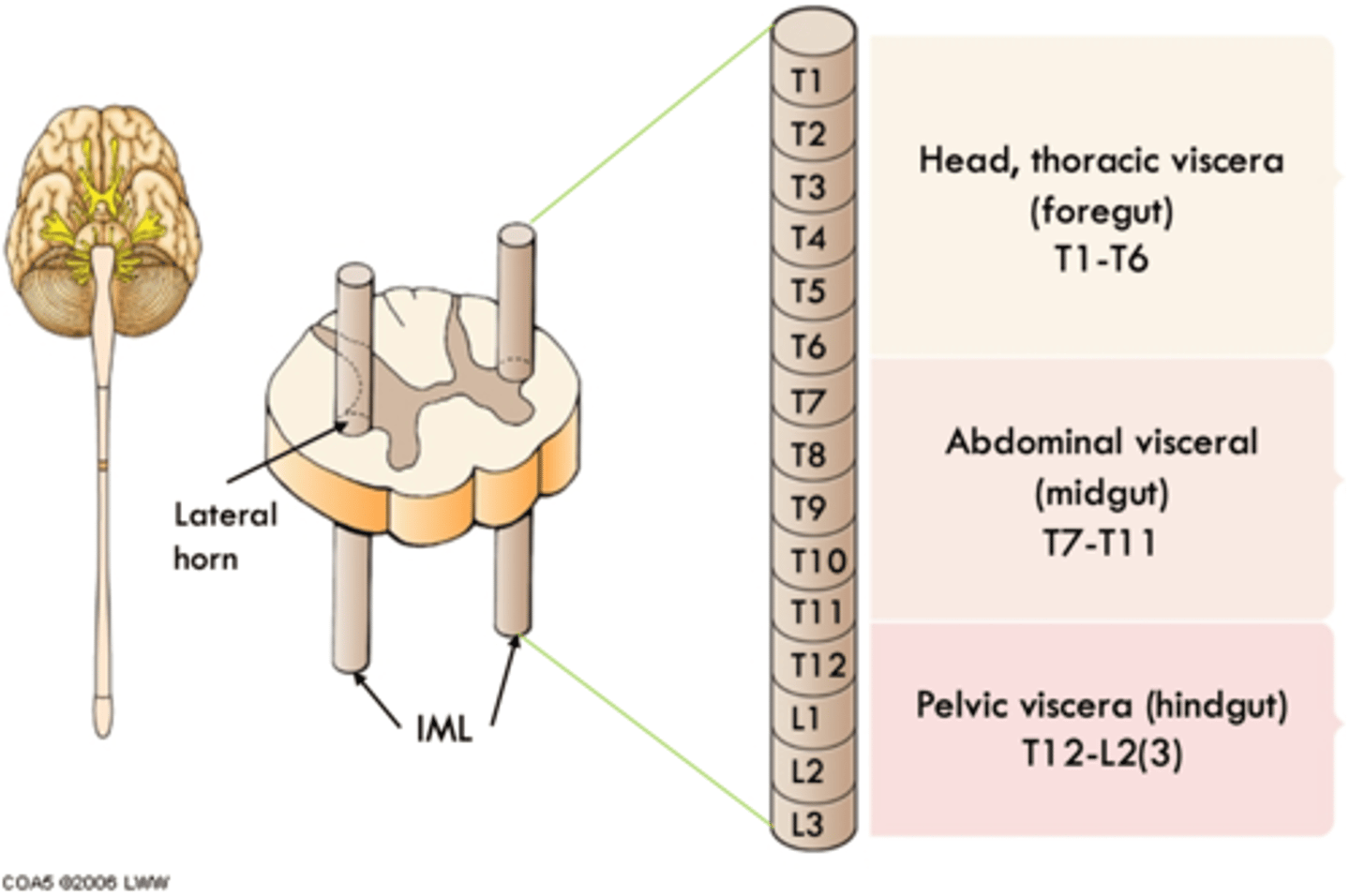
List the vertebral roots of thoracolumbar outflow - foregut, midgut and hindgut.
Foregut (head, thoracic viscera) - T1-6.
Midgut (abdo visceral) - T7-11.
Hindgut (pelvic viscera) - T12-L2 (sometimes L3).
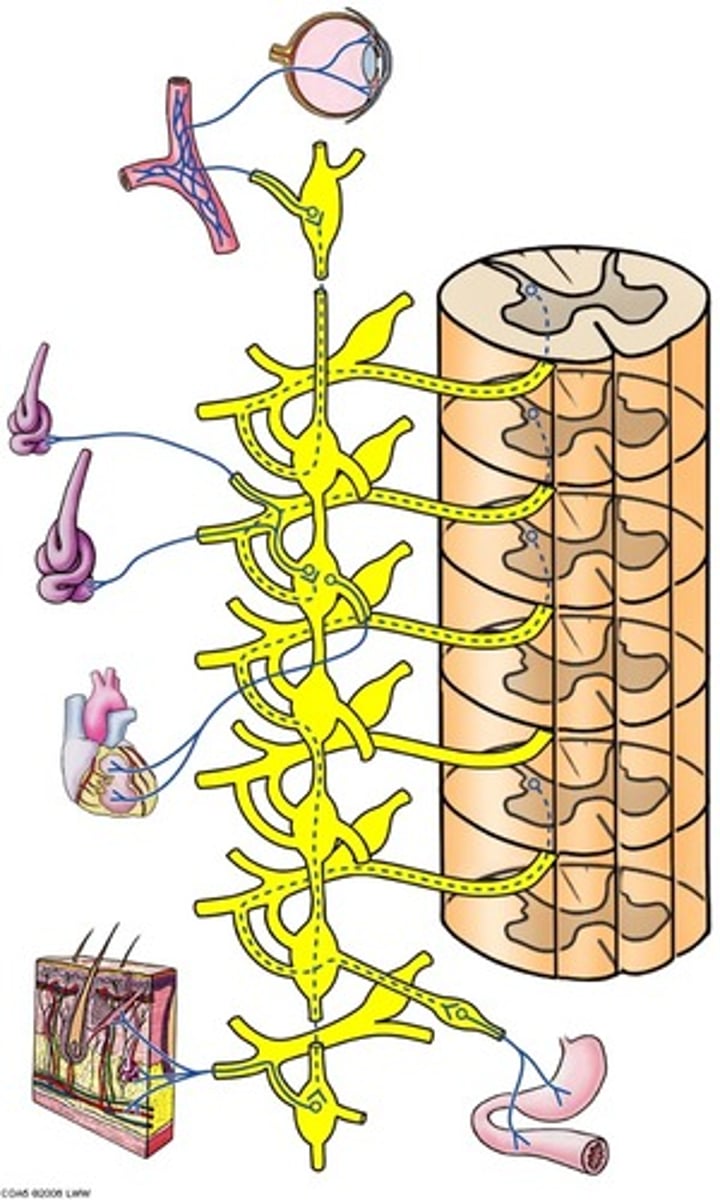
What are the 4 routes that the preganglionic neurones can take from their exit from the lateral horn of the spinal cord?
1. Synapse at entry level
2. Ascend and then synapse
3. Descend and then synapse
4. No synapse, form splanchnic nn.
1-3 innervate - head, neck, limbs, thorax.
4 - abdomino-pelvic viscera.
What are paravertebral ganglia?
Paired sympathetic ganglia parallel to spinal column above diaphragm, connected by nerves which form the sympathetic chain.
What is the sympathetic chain?
A double row of ganglionic nerve trunks extending entire length of vertebral column. They unite at the coccyx.
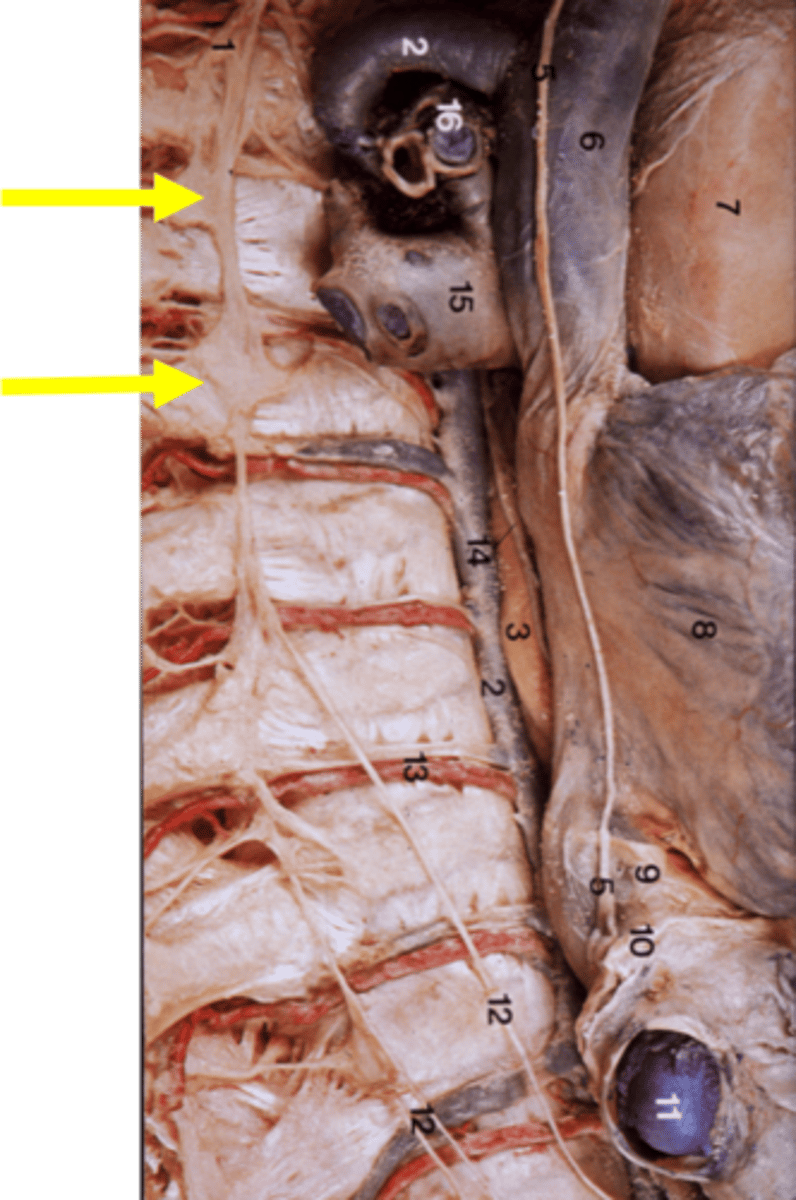
How many sympathetic ganglia are in the - neck, thorax, abdomen and pelvis?
Neck: 3
Thorax: 11/12
Abdomen: 4/5
Pelvis: 4/5.
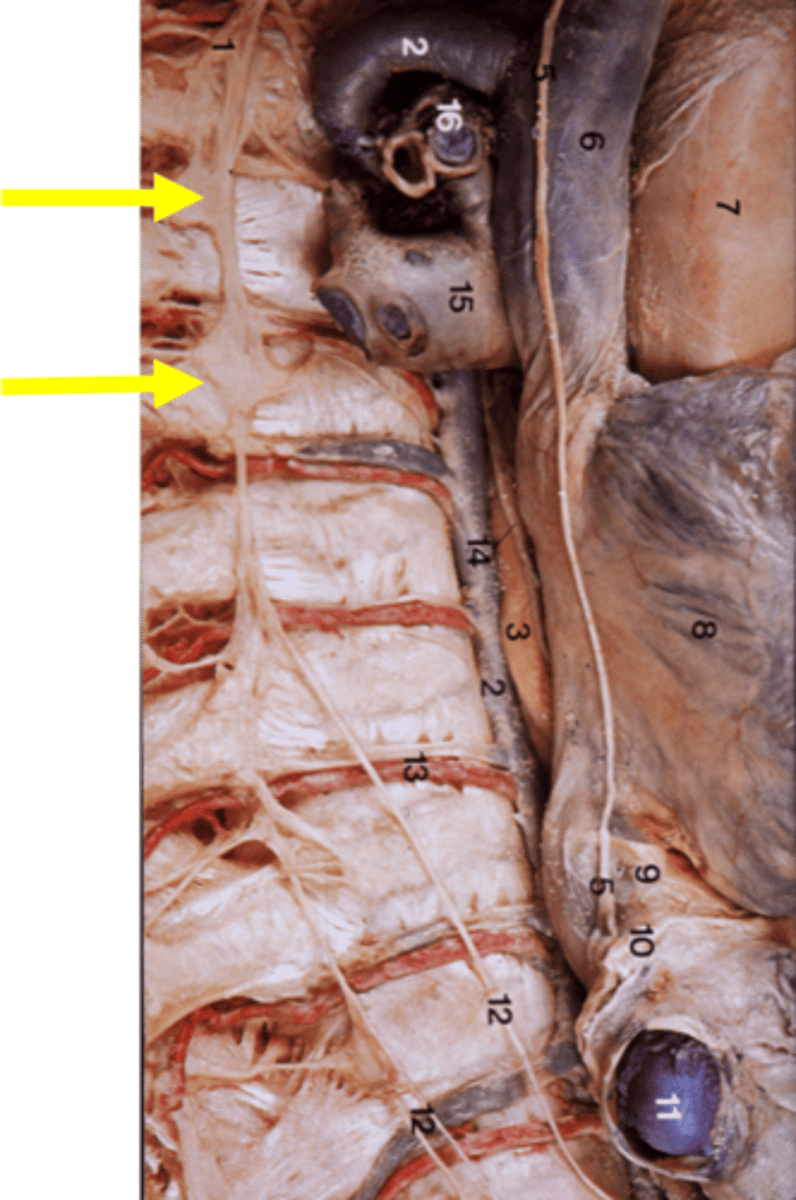
What are splanchnic nerves?
Are preganglionic fibres.
Paired visceral nerves (nerves that contribute to innervation of the internal organs), carrying visceral efferent fibres of the ANS as well as sensory fibres from the organs (visceral afferent fibre).
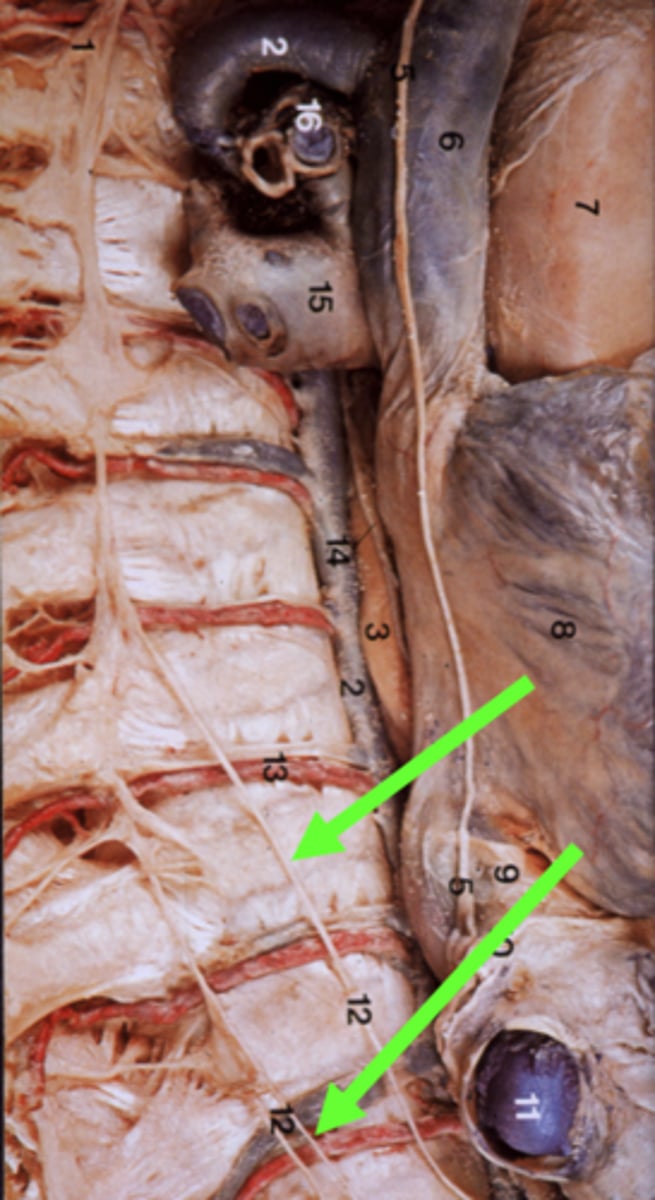
Where do the splanchnic nerves originate and target?
Origin: Thoracic sympathetic trunk
Target: Abdominal prevertebral ganglia.
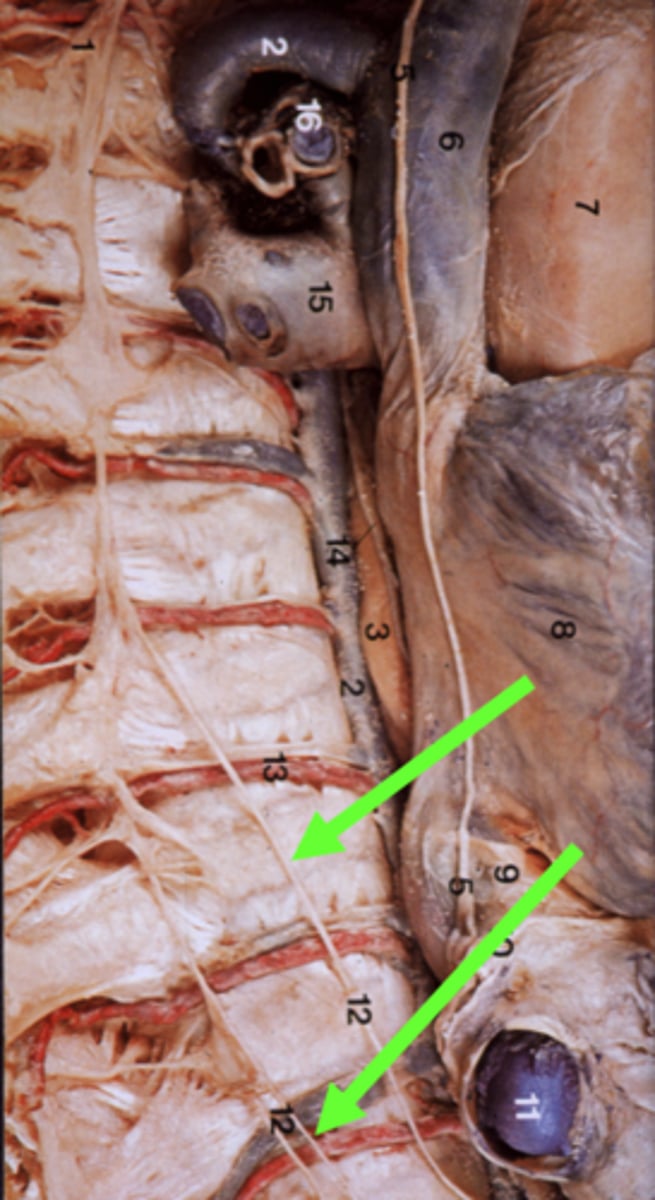
What are the vertebral roots of the splanchnic nerves - greater, lesser and least?
Greater: T5-9 (sometimes 10).
Lesser: T10-11.
Least: T12.
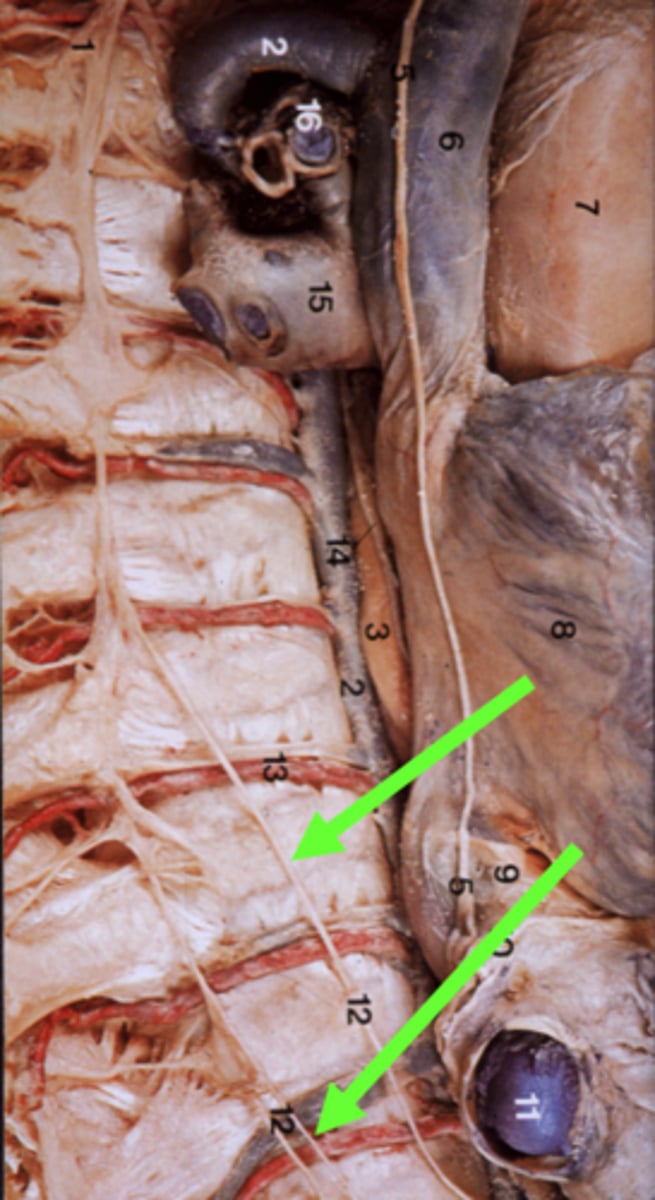
Where do preganglionic sympathetic fibres go?
To other prevertebral ganglia eg. SM ganglia, IM ganglia, coeliac plexus.
What are the functions of the parasympathetic division of the ANS? (5)
They conserve and restore energy.
1. Decrease HR
2. Increase peristalsis and glandular activity
3. Open sphincters
4. Contract bladder wall
5. Constrict pupils
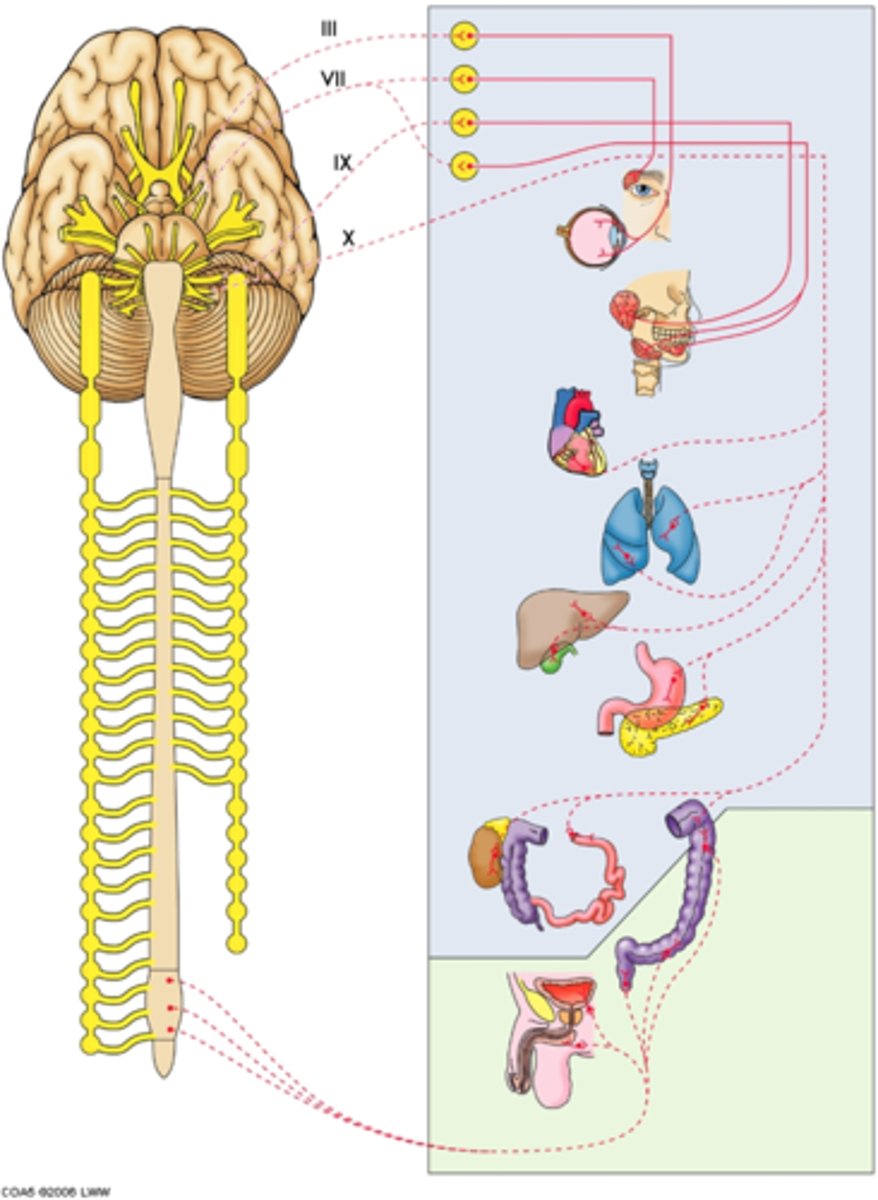
Where are the cell bodies of parasympathetic preganglionic fibres located?
Grey matter of spinal cords, nuclei found between S2-4 and brainstem.
Which brainstem nuclei is craniosacral outflow derived from? (4)
4 cranial:
1. CNIII (oculomotor)
2. CNVII (facial)
3. CNIX (glossopharyngeal)
4. CNX (vagus)
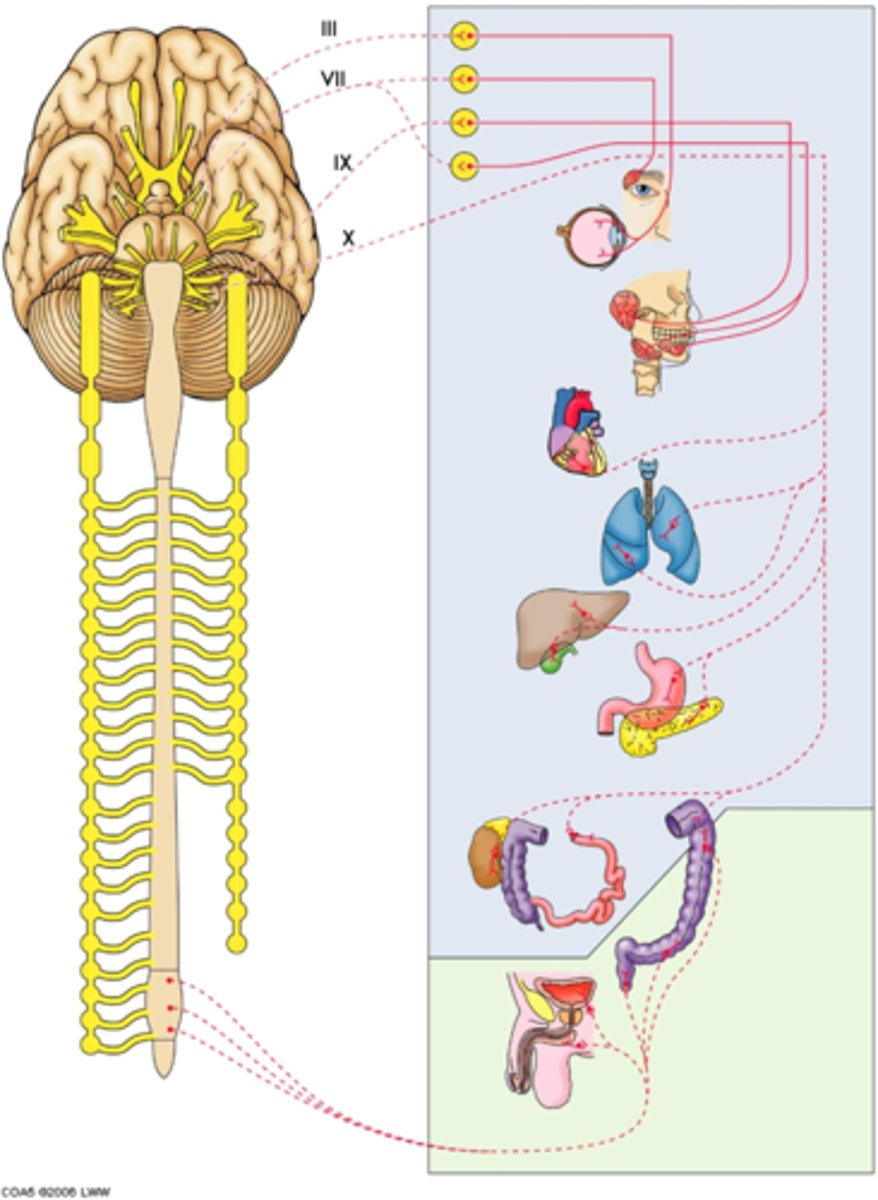
Which sacral segments of the spinal cord is craniosacral outflow derived from?
S2-4.
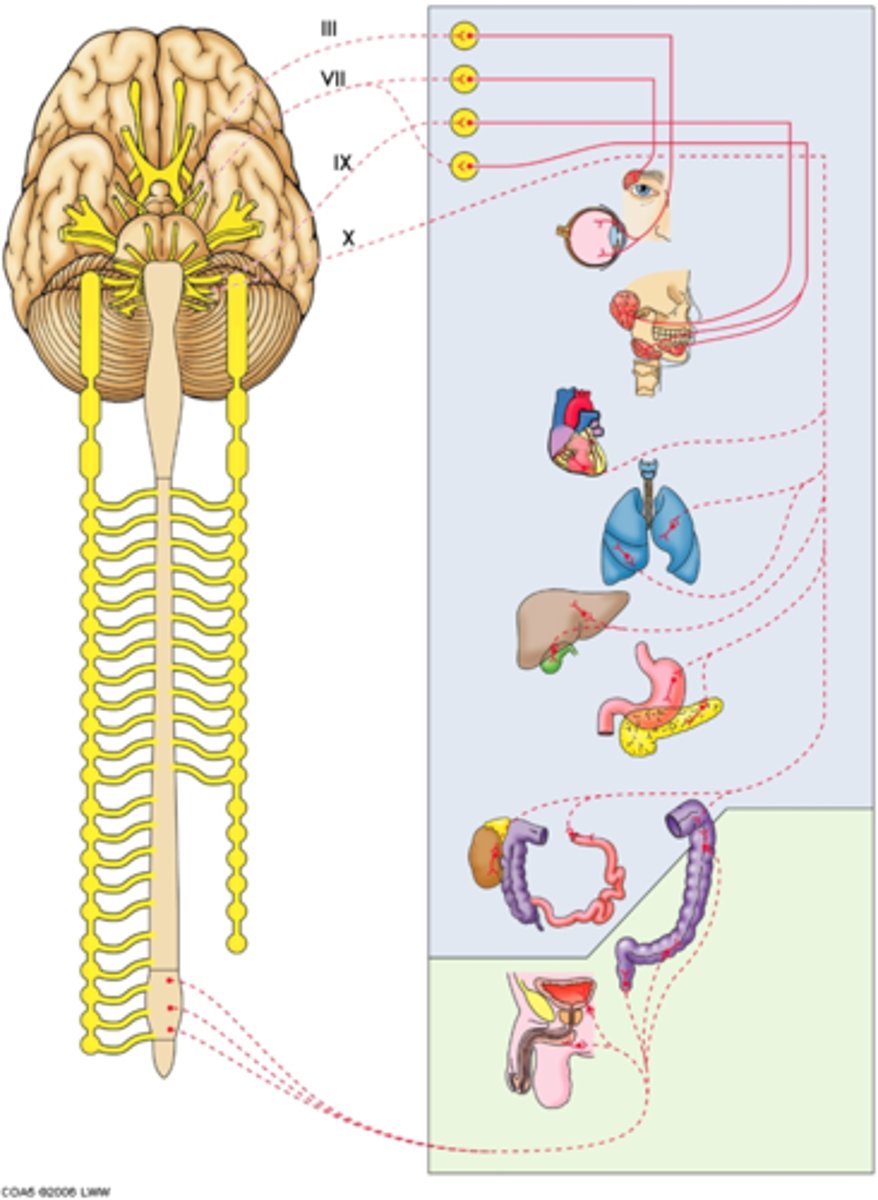
What are the vertebral roots for the pelvic splanchnic nerves?
S2-4.
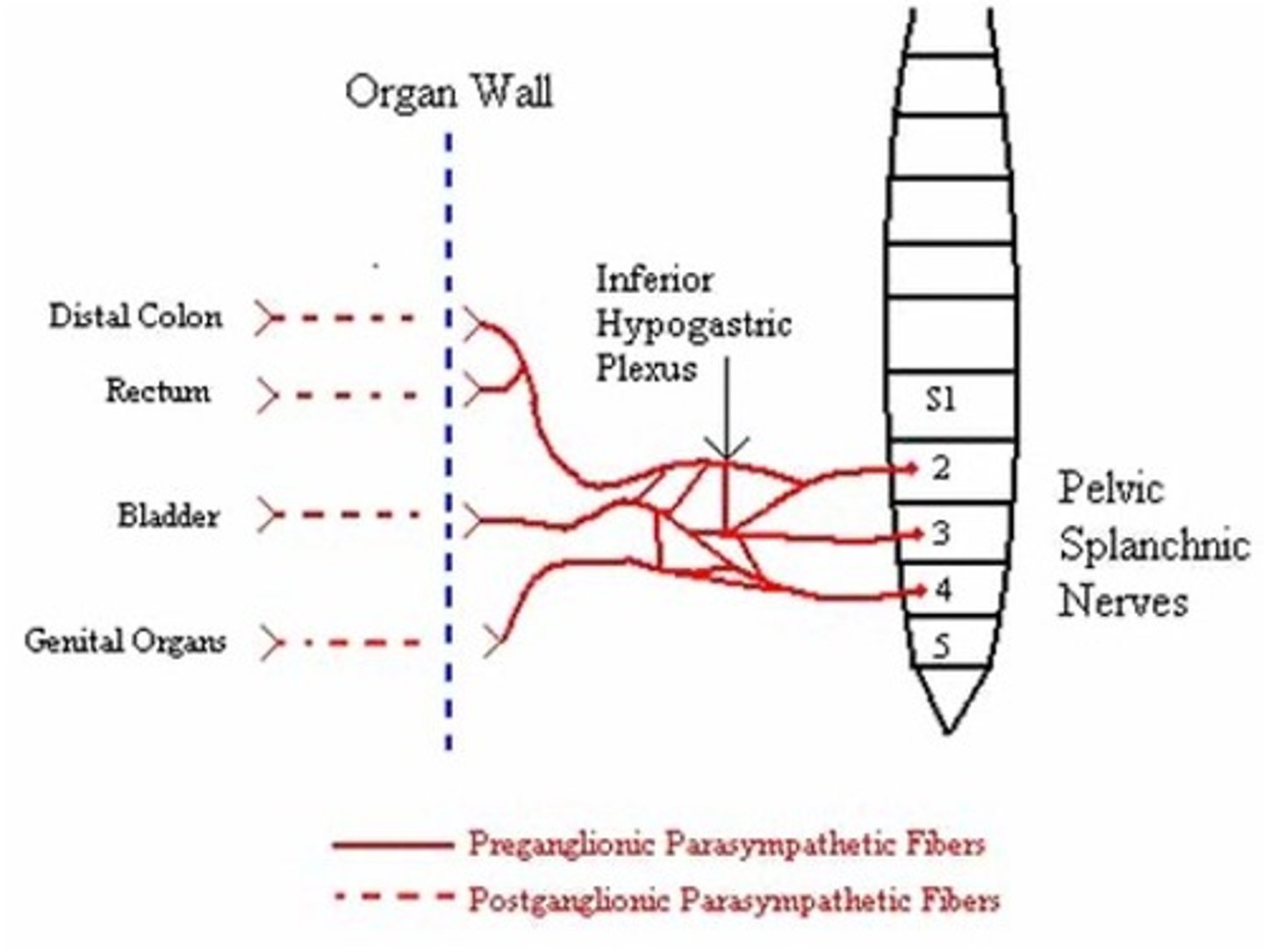
Where are pre and post-ganglionic fibres of craniosacral outflow?
Pre-ganglionic fibres from S2-4 take innervation to rest of abdominopelvic viscera so are very long.
Post-ganglionic fibres are on the viscera walls and so are short.
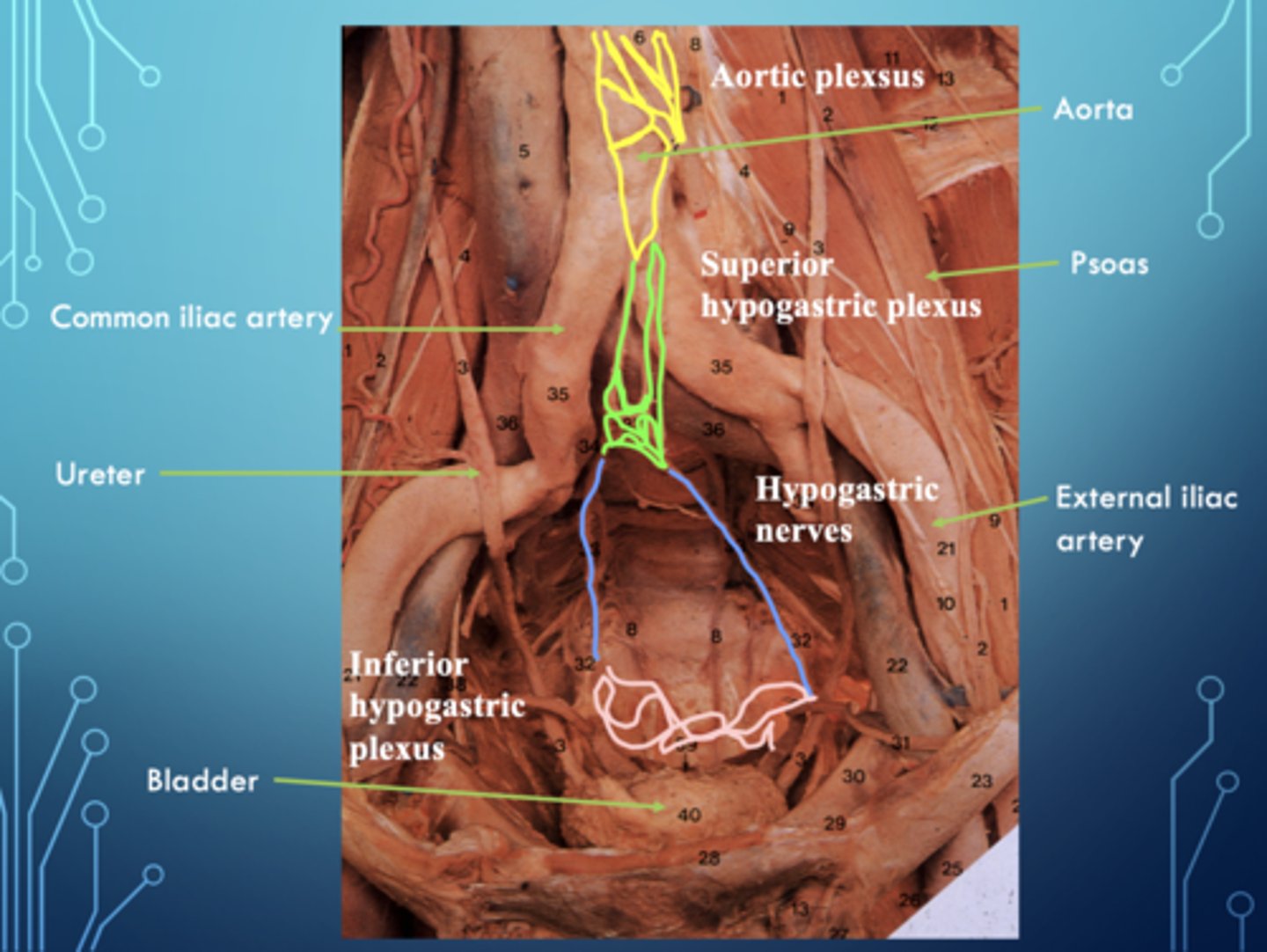
What do the pelvic splanchnic nerves have to form before they pierce the organ wall and innervate their respective organs?
Inferior hypogastric plexus - preganglionic.
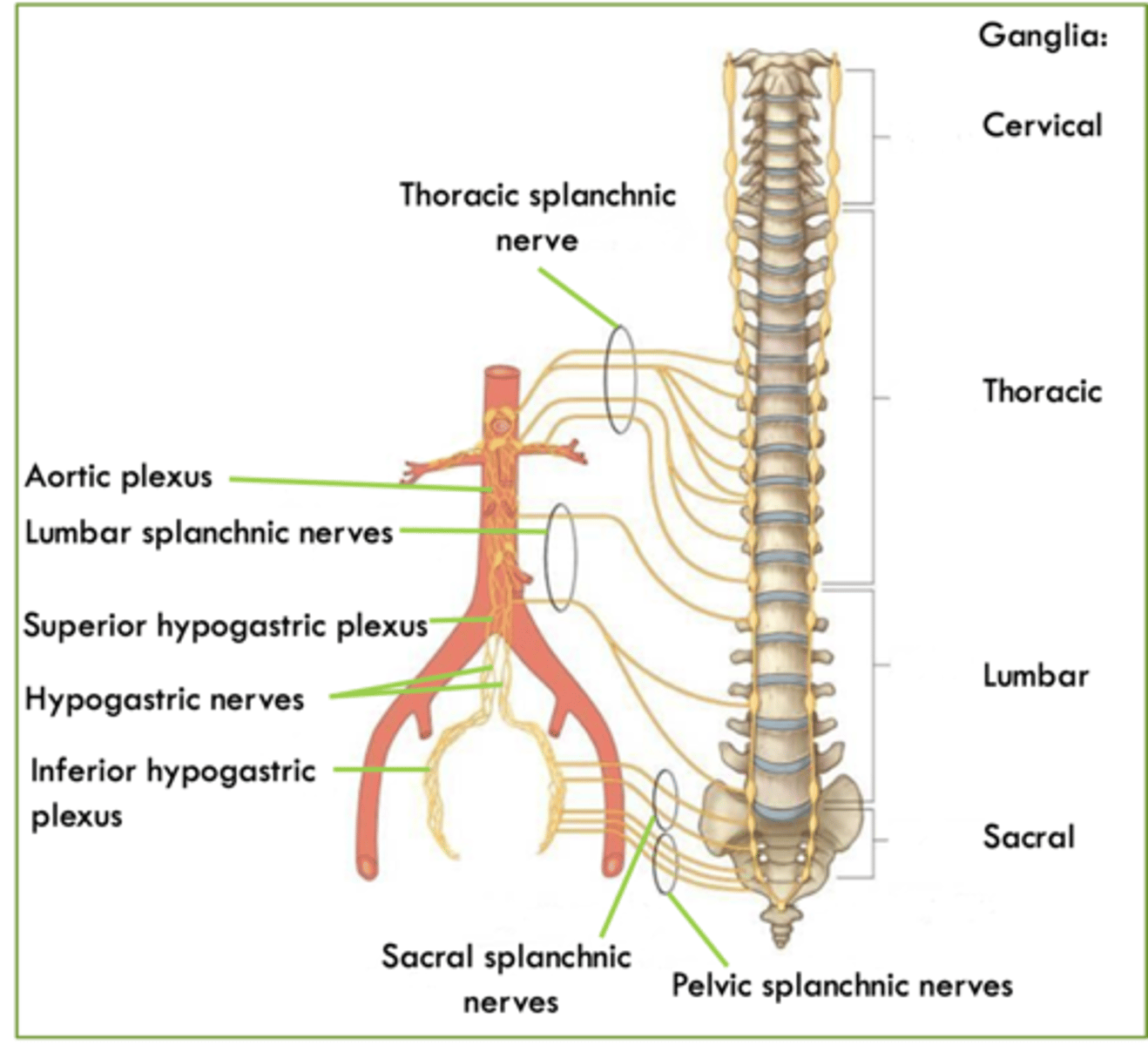
Locate the autonomic ganglia and plexuses within the abdomen and pelvis.
What are the sympathetic and parasympathetic functions on the digestive tract?
Sympathetic:
- Inhibits peristalsis
- Blood vessel constriction to tract so more blood for SkM
- Contracts internal anal sphincter
Parasympathetic:
- Stimulates peristalsis + secretion of digestive juices
- Contracts rectum
- Inhibits internal anal sphincter (defecation)
What are the sympathetic and parasympathetic functions on the urinary tract?
Sympathetic:
- Vasoconstriction of renal vessels
- Contraction of internal sphincter of bladder
Parasympathetic:
- Inhibits contraction of internal sphincter of bladder
- Contracts detrusor mm of bladder (urination)
What are the sympathetic and parasympathetic functions on the genitals?
Sympathetic:
- Ejaculation + vasoconstriction causing remission of erection
Parasympathetic:
- Erection (engorgement) of erectile tissue of external genitals.