par 1
 Call Kai
 Learn
Learn Practice Test
 Spaced Repetition
 Match
Match Flashcards
 Knowt Play
1/17

There's no tags or description
Looks like no tags are added yet.
Name | Mastery | Learn | Test | Matching | Spaced | Call with Kai |
|---|
No analytics yet
Send a link to your students to track their progress
18 Terms
What was Germany’s role in the development of modern design?
Key role - the country was very rich & had a fair education
between 19th and mid 20th century Germany was focused on INDUSTRIAL PRODUCTION (franco-prussian war)
This focus on industrial production, sparked a debate on the quality of mass developement
Industry was influenced by craftsmanship & architecture (creativity, invention & high quality)
What was DEUTSHER WERBUND?
association founded in 1907 as an association of architects, craftsmen, industrialists, educationalisis & publicists
The purpose was the revaluation of the work, driving the narrative that industrial revolution is the future
In their eyes the machine was a tool to produce quality objects, hence believing that the MACHINE CANNOT BE STOPPED
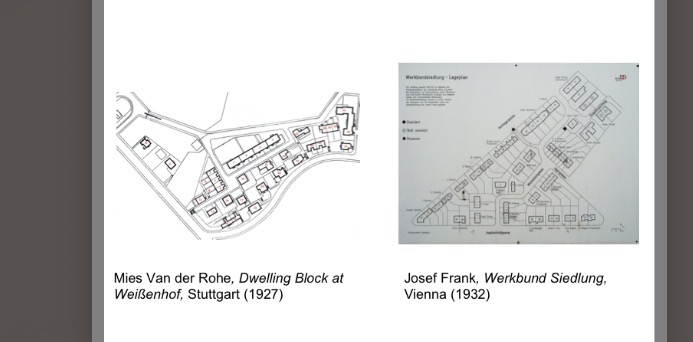
There were 2 group of buildings that were given rise as 2 promotional districts, to see the new trends of architecture (Weißenhof in Stuttgart 1927 & Vienna 1932)
This group divides into EXPRESSIONISTS (…) & FUNCTIONALISTS (…)
Peter Behrens
1863-1940
more connected to the functionalists movement
he was one of the founders of the Munchener secession (1893)
he directed the Kunstgewerbeschule in Dusseldorf - …
he was active in many artistic fields, with prominent collaborations in electricity involving products
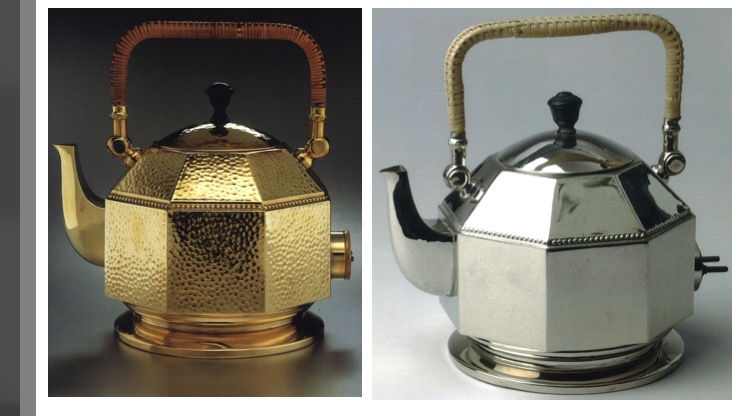
Electric kettle, Behrens, AEG (1909)
this kettle was made to be mass produced,
Even though it was an industrial production, it was made to satisfy the customer (it could be personalised by being made from different materials, finishes, etc.)
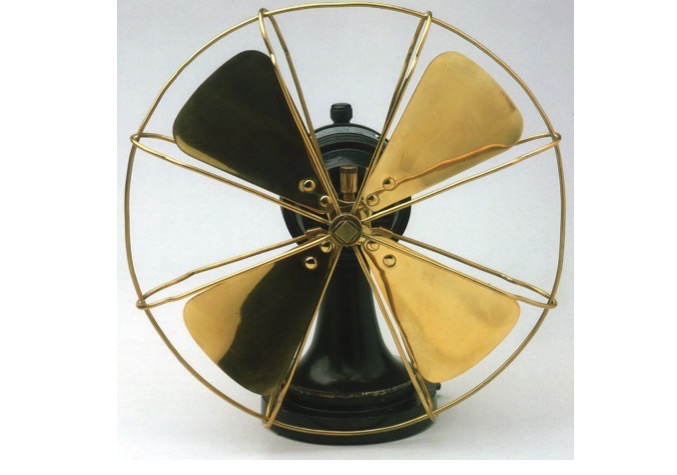
Electric Fan, Behrens, AEG (1908)
made in pieces & mass produced on assembly line
Some of the first electric mass products on the market
Since the product is complex & novel, the artist had to relax them through their concept/design - pushing the IDEA OF ORDER
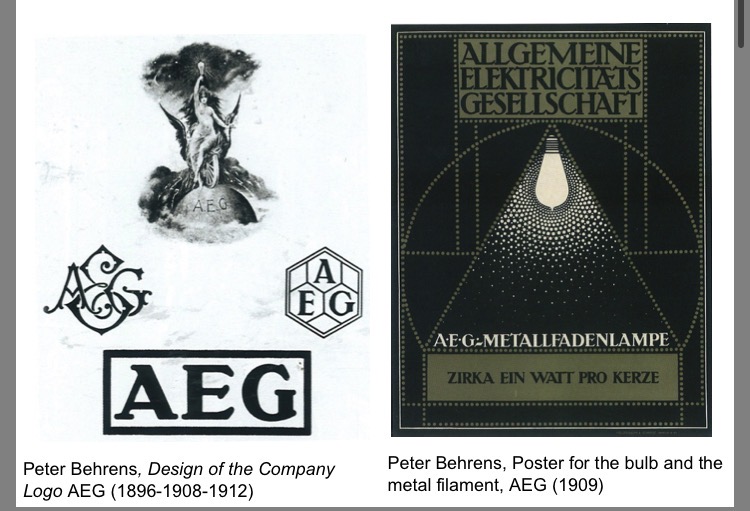
Design for company logo & poster, Behrens, AEG (1896-1912)
he was not only creating designs for the products, but also their COMPANY IDENTITY
He made the logo & the font
The light bulb, symbolises the ideas that are diffusing knowledge everywhere. The company’s principles are high - not only to sell but to make the comfort of living higher
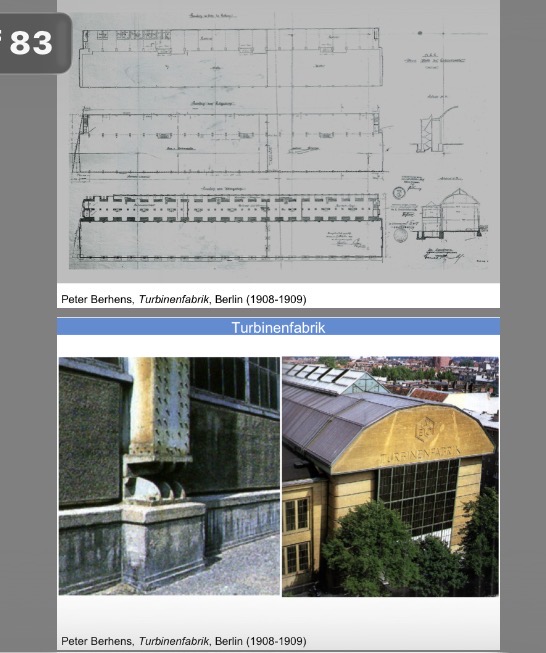
TurbinenFabrik, Behrens, 1908-09
AEG building in which the products were produced
He was creating things that were functional & not ornamental (the plan is easy and clearly laied out)
It is also known as the TEMPLE OF WORKING - classical architecture with arches & symmetry
Even though it was a temple, it was new for the people (CENTRIPETAL MIGRATION), hence the broken-line roofing, is supposed to symbolise the farm roofs (farmers can feel less intimidated)
Total work of art approach
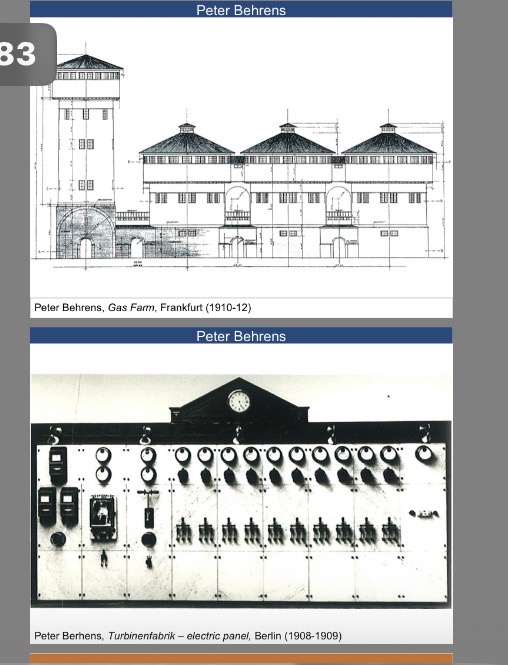
Gas Farm, Behrens, 1910-12
again very simple in shape
Recall of history - the silos are supposed to connect the modernity with the history (Medieval period - castle connection)
Total work of art - even the electric panel (its high complexity is hidden by simplicity & symmetry)
The main purpose of the designer during this period is to accustom people with the new by delicate and unthreatening design
EXpressionism
Reflection of literary & artistic ideas
Germany’s counterpart of
Forms correspond to feelings
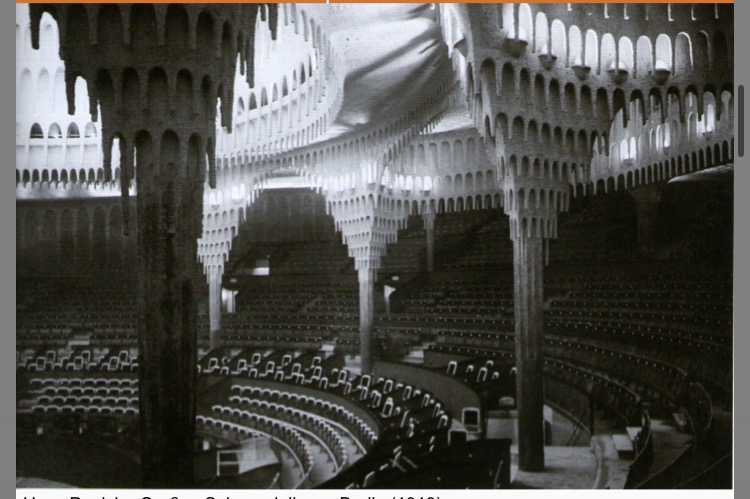
Großes Schauspielhaus, Hans Poelzig, 1919 Berlin
Beautiful theatre with continuous, very complex shapes
Applied to a scale of a whole interior
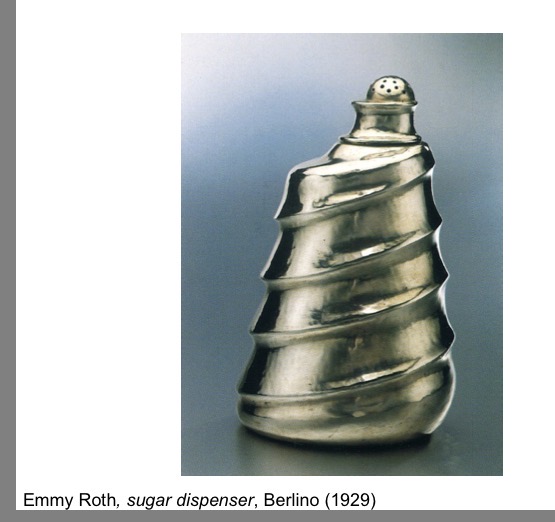
Sugar dispenser, Emmy Roth, 1929 Berlin
the concept is that the shapes are complex
Shows how the same idea of expressionims can be applied also to small products
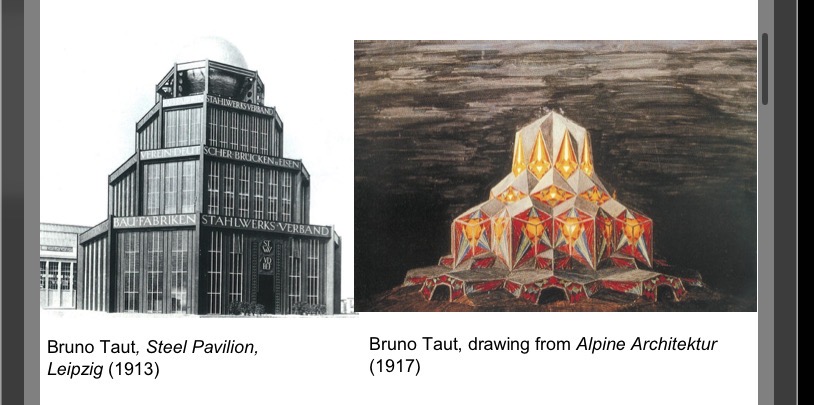
Steel pavilion:
building that was supposed to introduce & accustom people with the spike in the use of steel
Alpine Architektur:
shows the use of natural symbols (mountains), to mak eit easire for people to accept the new
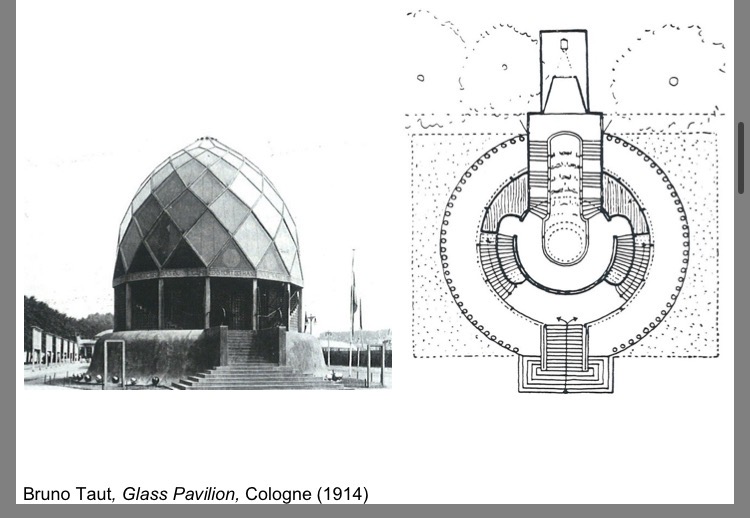
Glass suddenly starts being a more prominent material
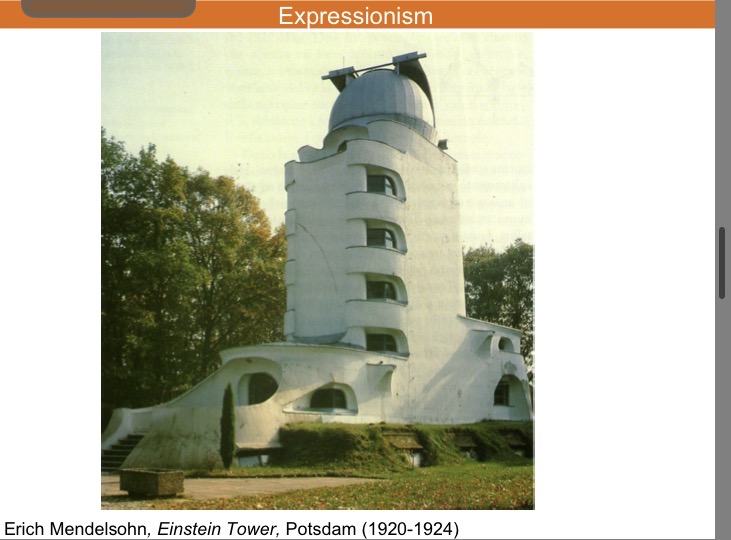
Einstein Tower, Erich Mendleson, 1920-24
peak of expressionism - shapes that are. Completely free of order & geometry
Highest complexity - the building appears unreal, like a mould of plastic
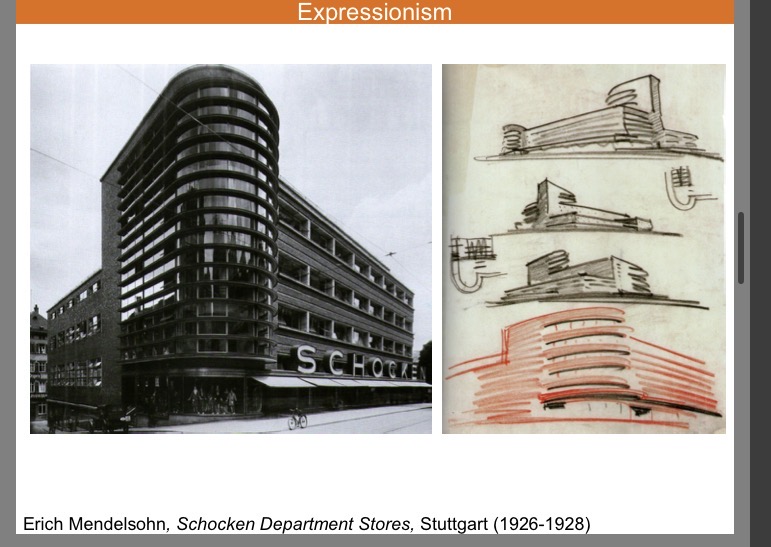
Schocken Department Stores, Mendleson, 1926-19289
still connected to the idea of complex shapes
Evolution of Expressionism into more controlled

