Radial Tire Conditions
 Call Kai
 Learn
Learn Practice Test
 Spaced Repetition
 Match
Match Flashcards
 Knowt Play
1/53

There's no tags or description
Looks like no tags are added yet.
Name | Mastery | Learn | Test | Matching | Spaced | Call with Kai | Chat |
|---|
No analytics yet
Send a link to your students to track their progress
54 Terms
Casing
The tire structure (body) without the tread rubber
Bead
The hard bottom edge of the tire that locks onto the wheel rim.
Sidewall
The flexible side of the tire between the tread and the bead.
Crown/Tread Area
The top part of the tire that contacts the road.
Inner liner
The airtight rubber layer inside a tubeless tire.
*Separation
When layers of the tire pull apart from each other.
retread
Putting a new tread onto a used casing to extend tire life.
*Scrap
Throw the tire away — it cannot be safely repaired or retreaded.
Underinflation
Not enough air pressure in the tire.
*Overload
Putting more weight on the tire than it is rated to carry.
Zipper (Circumferential Fatigue Rupture)
Dangerous long crack around the mid-to-upper sidewall from severe underinflation/overload. Always scrap.

Run Flat
Tire driven while severely underinflated or completely flat. Always scrap.

Buff Line
The dividing line between the original casing and the new retread rubber.
*Defense Groove
Groove molded into the outer shoulder to help reduce irregular wear.
Skive
Area where damaged rubber or belt material is cut out before repair or retread.
Section Repair
Major structural repair in the sidewall or large repair through the casing in the crown.
Nail Hole Repair
Small repair in the crown (3/8" or less).
Weathering / Ozone Cracking
Tiny hairline cracks on the sidewall from oxygen, ozone, and weather.

Bead Damage from Rim Flange Wear
Rough, abraded bead all the way around. Cause: low air, wrong rim, or overload. Scrap if cords show.

Torn Beads
Bead toe rubber torn or cut, wire or fabric exposed. Cause: poor mounting/demounting technique, bad lubrication, forklift damage, or rough handling.
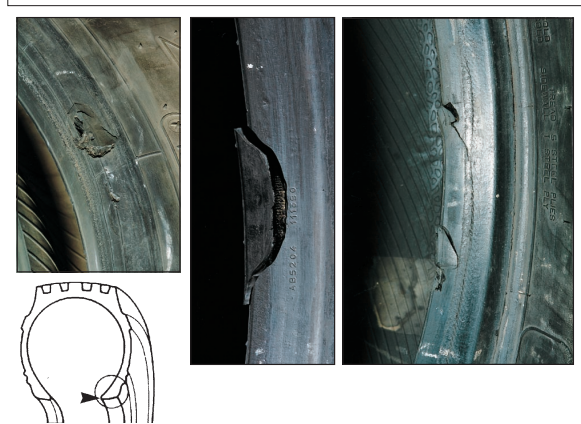
Bead Deformation
Circumferential indentation in the bead area. Cause: rusty/corroded rims, improper lubrication, petroleum lube, bent rims, overload or underinflation. Scrap if plies show.

Bead Damage due to Overload/Underinflation*
Severe rim impression + distorted bead. Always scrap.
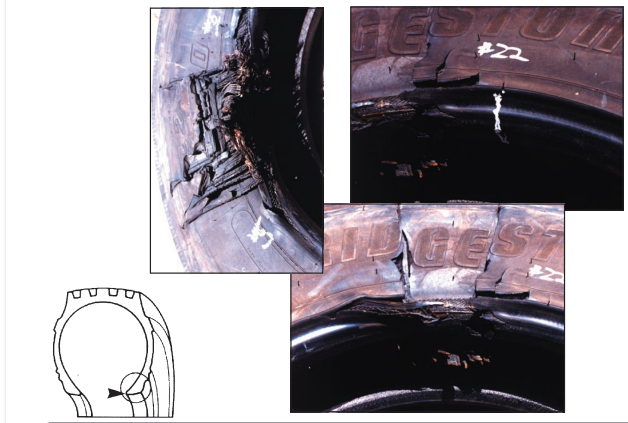
Kinked / Distorted Beads
Localized bend or kink in the bead seat. Cause: bad mounting. Always scrap.

Burned Beads
Discolored, rough, brittle, hard surface on the bead. Cause: excessive brake heat or petroleum-based lubricants. Always scrap.

Bead Damage from Curbing
Localized rippling or waviness in bead flange area. Scrap.

Reinforce / Chafer Separation
Circumferential cracks above the bead flange that expose cord. Cause: improper bead seating, wrong rim width, overload, underinflation, or manufacturing. Remove and contact manufacturer.

Spread / Damaged Cord
Radial, pencil-shaped bulge in the sidewall. Cause: wider-than-normal wire cord spacing or damaged body ply cord.
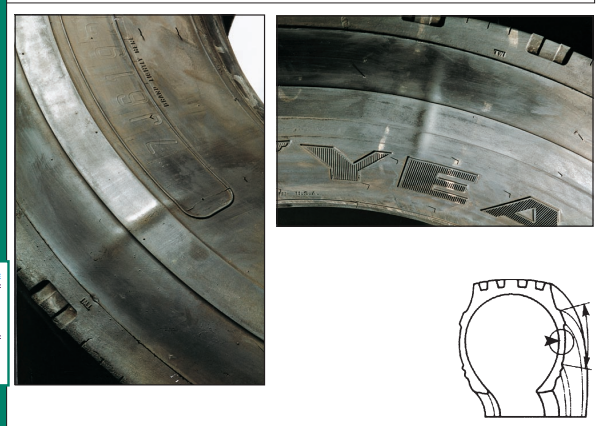
Sidewall Separation
Irregular-shaped bulge in mid/upper sidewall (may progress to complete separation). No puncture or damage visible. Loss of adhesion between sidewall rubber and body ply. Contact manufacturer.

*Sidewall Separation – Damage Induced
Same bulge but caused by puncture, impact, or bead cut. Always scrap.

*Circumferential Fatigue Rupture (Zipper)
Long break in mid-to-upper sidewall with clean line of broken cords. Extremely dangerous. Always scrap.

*Run Flat
Dark abraded stripe 360° on upper sidewall (later stages show cracks or missing tread). Always scrap.

Run Flat – Only Sidewalls Remaining
Tread and belts completely gone, only sidewalls left.

Sidewall Abrasion / Scuff Damage
Large rubbed areas on the sidewall. Return to service if no cords showing.

Sidewall Penetration
Object that punctures the sidewall. Have repair shop evaluate.

Penetrations and Road Hazards
Hole or damage in the tread from nail, screw, etc.

*Brake Skid Damage
Flat spot on the tread from locked brakes.
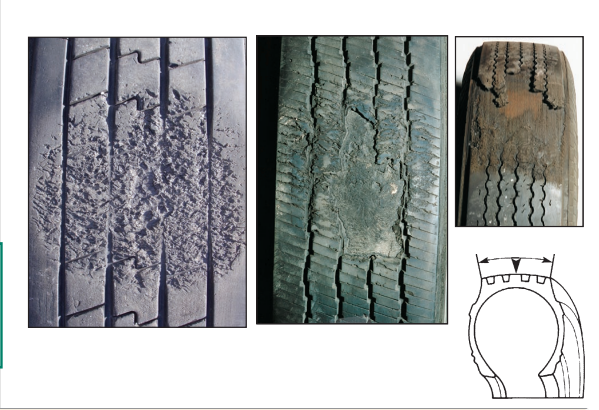
Retread Separation
New tread lifts away from the buffed casing.

Crack at Edge of Retread Wing
Circumferential crack at the base of the tread skirt

Cracking Due to Excessive Sidewall Buff
Circumferential cracks in the shoulder from improper buffing.

Innerliner Bubbles / Blisters / Separations
Bubble or looseness inside the tire.
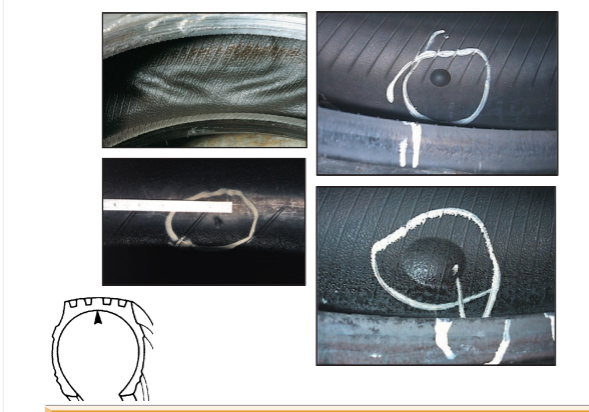
Impact Break
Sudden break from hitting a large object. Usually scrap.

Belt Lift / Separation
Belts separating under the tread. Scrap or consult manufacturer.

Shoulder Step / Chamfer Wear
Wear only on the very outer edge of the shoulder. Often normal. (steer)

Shoulder Step / Chamfer Wear
Wear only on the very outer edge of the shoulder. Often normal. Trailer.

One-Sided Wear
One side of the tire wears much faster. Usually alignment/camber issue

Feather Wear
Tread ribs worn high-to-low across each rib. Classic toe (alignment) problem

Cupping / Scallop / Wavy Wear
Localized scooped-out areas around the tire. Often suspension or balance related.

Heel/Toe Wear
One side of each lug wears more than the other (common on drive tires).
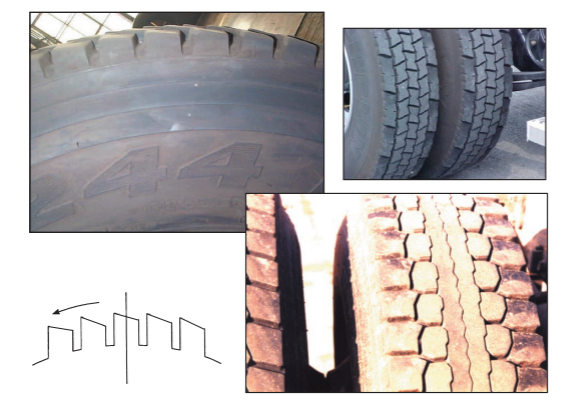
Alternate Lug Wear
Every other lug wears faster (drive tires)
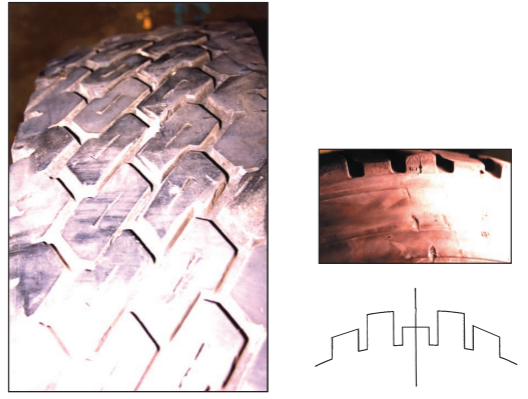
Center Wear
Tread worn more in the middle than the shoulders. Classic underinflation.

Toe-In Wear
Outside shoulders of both steer tires worn.

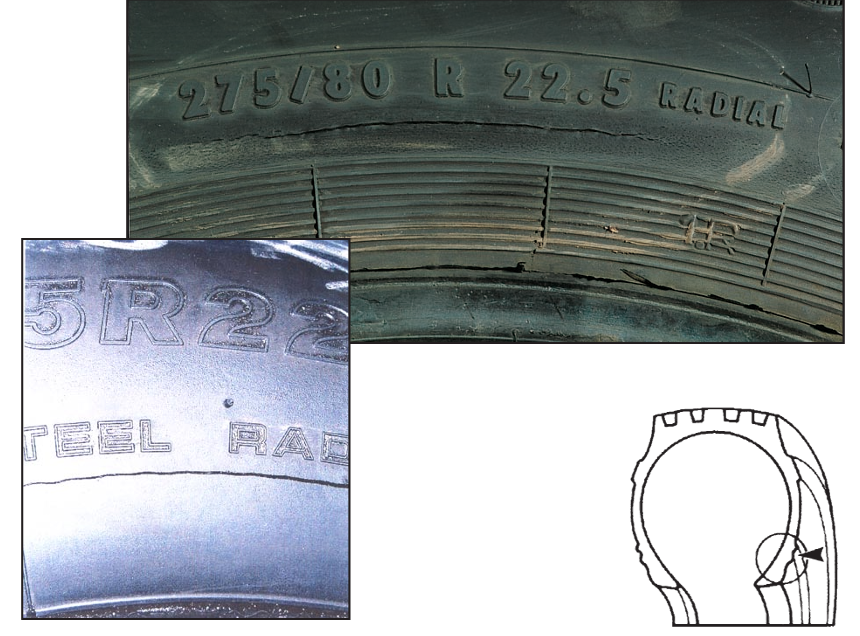
Lower Sidewall/Bead Area Flow Crack
Circumferential crack above the bead with no wire exposed. Cause: improper rubber flow during manufacturing. Remove and contact manufacturer.
Sidewall Separation/Damage Induced
Same bulge as above but caused by puncture, impact, innerliner damage or bead cut. Always scrap.

Sidewall Separation Due to Tread Puncture
Bulge, ruptured bulge, or missing rubber in sidewall directly related to a tread puncture. Air migration from the puncture. Always scrap.
