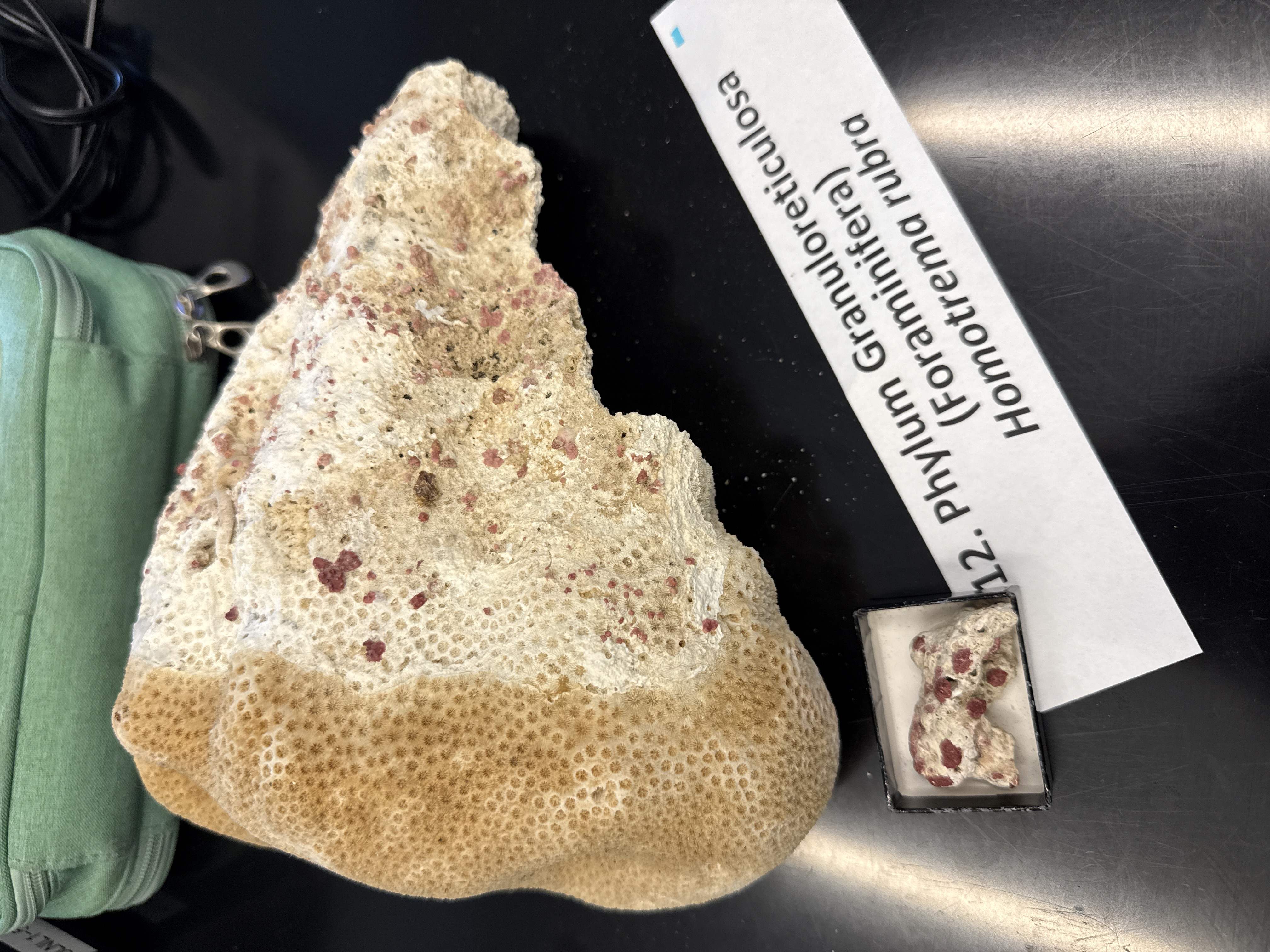
Invert Zoo Lab - Kingdom Protista
 Call Kai
 Learn
Learn Practice Test
 Spaced Repetition
 Match
Match Flashcards
 Knowt Play
1/14

Earn XP
Description and Tags
All the protistas seen in lab for the lab practical
Name | Mastery | Learn | Test | Matching | Spaced | Call with Kai | Chat |
|---|
No analytics yet
Send a link to your students to track their progress
15 Terms

Phylum Euglenida
Genus Euglena
They are famous for bridging the gap between plants and animals, as they can both produce their own food through photosynthesis and consume external food sources.


Phylum Euglenida
Genus Peranema
They are commonly found gliding along the bottom of freshwater ponds, lakes, and stagnant ditches rich in decaying organic matter.

Phylum Kinetoplastida
Genus Trypanosoma
single-celled, parasitic flagellate protozoa

Phylum Parabaslida
Genus Trichonympha
A mutualistic symbiont found in the intestines of termites, aiding in the digestion of cellulose.
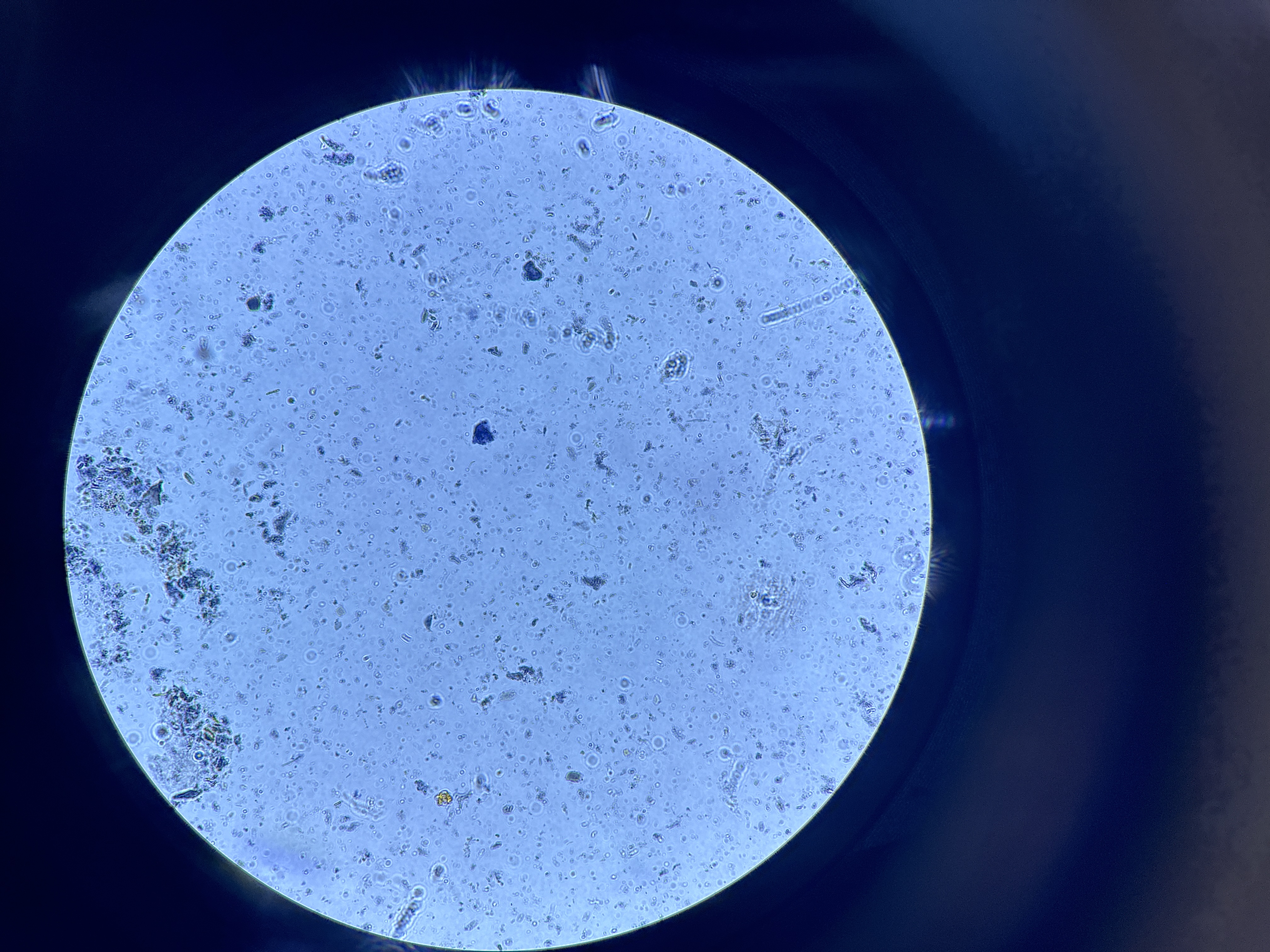
Phylum Diplomonadida
Genus Giardia
single-celled, flagellated parasites that live in the intestines of humans and animals

Photo 1 - 6 a,b
Phylum Dinoflagellata
Genus Peridinium
Photo 2 - 6 c,d
Phylum Dinoflagellata
Genus Ceratium
Photo 1 - 6 a,b
armored, mostly freshwater
Photo 2 - 6 c,d
single-celled aquatic organisms , cellulose armor and distinct horn-like extensions


6 e,f
Phylum Dinoflagellata
Genus Noctiluca
free-living marine dinoflagellates famous for causing glowing blue nighttime waves known as sea sparkle
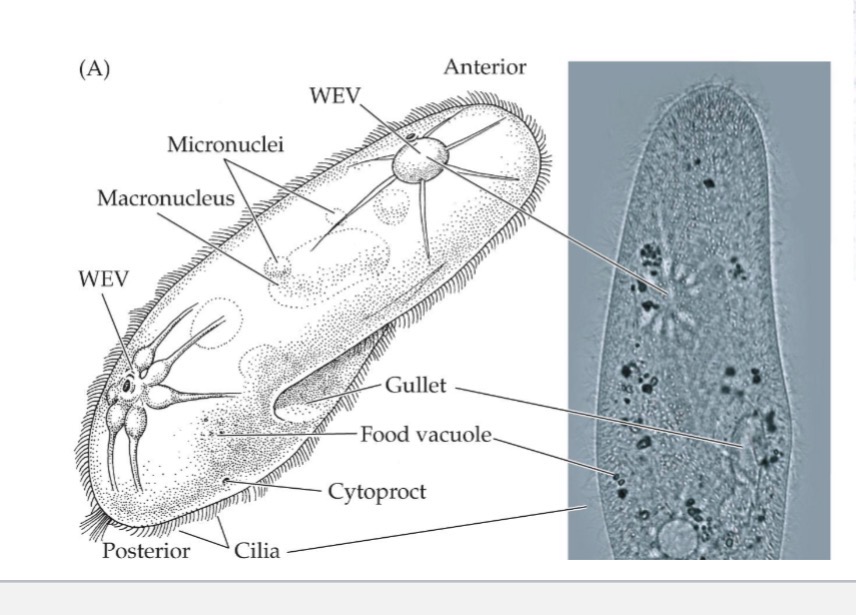
Photo 1 - 7 a,b
Phylum Ciliophora
Genus Paramecium
Photo 2 - 7 c,d
Phylum Ciliophora
Paramecium trichocysts
Photo 1 - 7 a,b
slipper-like shape and rapid movement via tiny hair-like cilia.
Photo 2 - 7 c,d
tiny, spindle-shaped projectile organelles embedded in the outer layer of Paramecium.


Photo 1 - 7 e,f
Phylum Ciliophora
Paramecium fission
Photo 2 - 7 g,h
Phylum Ciliophora
Paramecium conjugation
Photo 1 - 7 e,f
reproduce asexually through transverse binary fission, splitting into two identical daughter cells.
Photo 2 - 7 g,h
a temporary sexual process of nuclear reorganization and genetic exchange between two compatible mating types.