Retina 100-175 Lecture Notes
 Studied by 0 people
 Call Kai
 Learn
Learn Practice Test
 Spaced Repetition
 Match
Match Flashcards
 Knowt Play
1/144

Earn XP
Description and Tags
Flashcards created from lecture notes covering key concepts related to Age-Related Macular Degeneration, retinal diseases, and relevant imaging techniques.
Name | Mastery | Learn | Test | Matching | Spaced |
|---|
No study sessions yet.
145 Terms
Fluorescein Angiography (FA)
An imaging technique used to map and measure the blood flow in the retina.
Neovascularization
The growth of new blood vessels, which can lead to serious vision problems in conditions like AMD.
Foveal Edema
Swelling of the retina at the fovea, often seen in macular diseases and can affect visual acuity.
Retinal Hemorrhage
Bleeding within the retina, often caused by various retinal conditions including diabetes.
Fibrovascular PED
An irregular elevation of the retinal pigment epithelium with progressively stippled leakage.
Age-Related Macular Degeneration (AMD)
A medical condition that typically affects older adults and results in the loss of vision in the center of the visual field.
Intravitreal Injection
A procedure in which medication is injected directly into the eye to treat ocular diseases.
Optociliary Shunt Vessels
Collateral vessels that form in response to retinal ischemia, often seen in retinal vein occlusion.
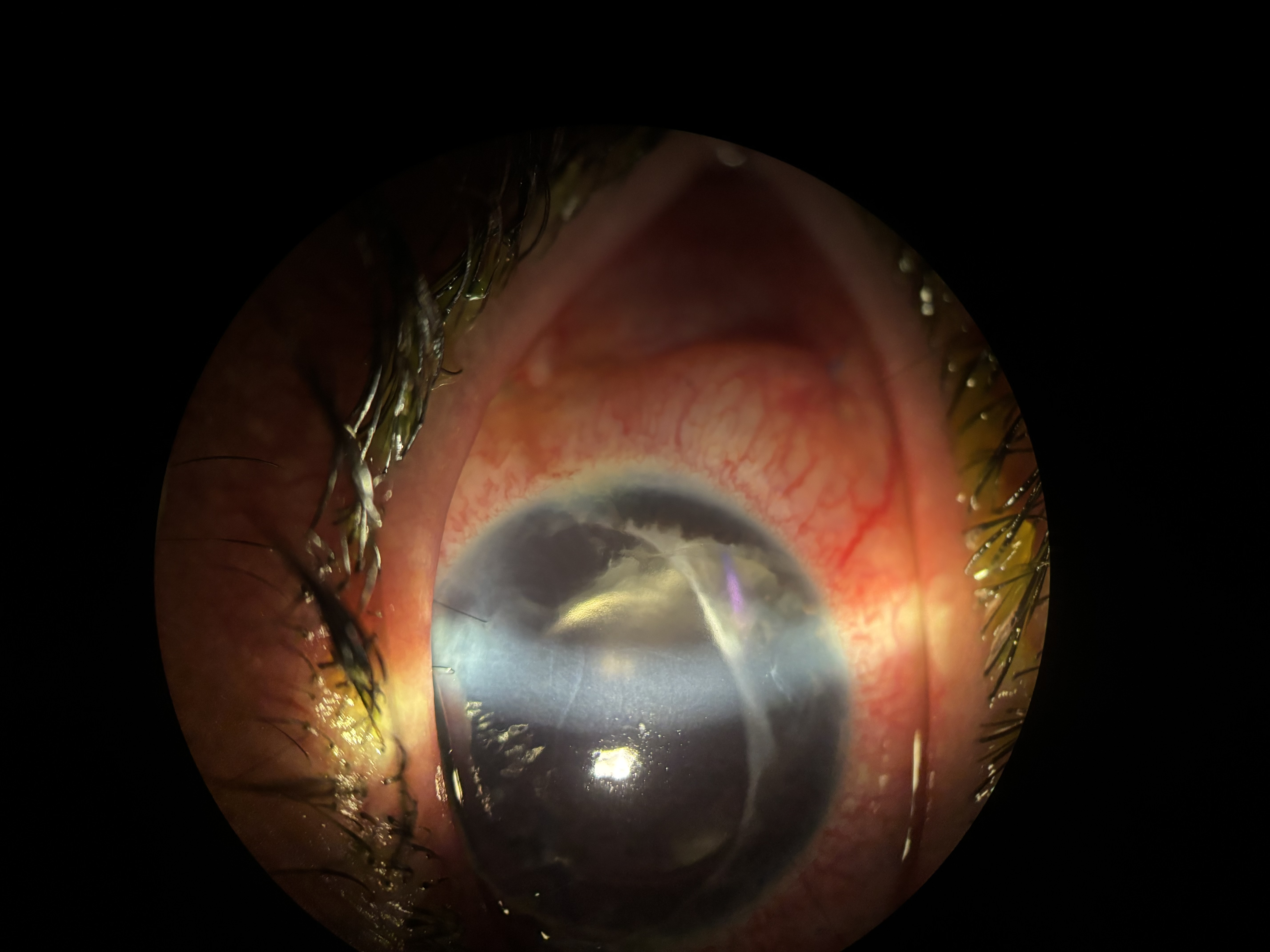
Cotton-Wool Spots
Soft exudates found in the retina, indicative of occlusion of the pre-capillary arterioles.
Macular Edema
A condition characterized by swelling and thickening of the macula due to fluid accumulation.
Type 1 Neovascularization
Mimicking the appearance of classic MNV, typically seen in conditions involving retinal damage.
Type 2 Neovascularization
Neovascularization that usually appears in cases of AMD, related to fibrovascular growth patterns.
Wet AMD
Subtype of Age-Related Macular Degeneration characterized by the growth of abnormal blood vessels.
VEGF (Vascular Endothelial Growth Factor)
A signaling protein involved in angiogenesis and increasing permeability of blood vessels.
CME (Cystoid Macular Edema)
Swelling of the macula that is cyst-like in formation, often seen in various retinal disorders, including diabetes.
Indocyanine Green Angiography (ICGA)
An imaging technique used to visualize blood flow in the choroidal circulation.
Polypoidal Choroidal Vasculopathy (PCV)
A variant of neovascular AMD characterized by polyp-like lesions and recurrent serosanguinous detachments.
Choroidal Neovascularization (CNV)
The formation of new blood vessels in the choroid under the retina, often leading to vision loss.
Macular Telangiectasia
A retinal disorder characterized by abnormal blood vessels in the macula, potentially leading to hemorrhage.
Drusen
Small yellow or white deposits under the retina, often an early sign of Age-Related Macular Degeneration.
Optical Coherence Tomography (OCT)
A non-invasive imaging test that uses light waves to take cross-section pictures of the retina.
Geographic Atrophy
An advanced form of dry AMD characterized by localized, sharply demarcated atrophy of the outer retinal tissue, RPE, and choriocapillaris.
Anti-VEGF Therapy
Medical treatment using drugs such as ranibizumab or aflibercept to inhibit the signaling protein responsible for abnormal blood vessel growth.
Hard Exudates
Lipid and protein deposits that leak from damaged capillaries into the retina, often appearing as distinct yellow spots.
Dry AMD
A subtype of Age-Related Macular Degeneration involving the slow breakdown of light-
Fluorescein Angiography (FA)
An imaging technique used to map and measure the blood flow in the retina.
Neovascularization
The growth of new blood vessels, which can lead to serious vision problems in conditions like AMD.
Foveal Edema
Swelling of the retina at the fovea, often seen in macular diseases and can affect visual acuity.
Retinal Hemorrhage
Bleeding within the retina, often caused by various retinal conditions including diabetes.
Fibrovascular PED
An irregular elevation of the retinal pigment epithelium with progressively stippled leakage.
Age-Related Macular Degeneration (AMD)
A medical condition that typically affects older adults and results in the loss of vision in the center of the visual field.
Intravitreal Injection
A procedure in which medication is injected directly into the eye to treat ocular diseases.
Optociliary Shunt Vessels
Collateral vessels that form in response to retinal ischemia, often seen in retinal vein occlusion.
Cotton-Wool Spots
Soft exudates found in the retina, indicative of occlusion of the pre-capillary arterioles.
Macular Edema
A condition characterized by swelling and thickening of the macula due to fluid accumulation.
Type 1 Neovascularization
Mimicking the appearance of classic MNV, typically seen in conditions involving retinal damage.
Type 2 Neovascularization
Neovascularization that usually appears in cases of AMD, related to fibrovascular growth patterns.
Wet AMD
Subtype of Age-Related Macular Degeneration characterized by the growth of abnormal blood vessels.
VEGF (Vascular Endothelial Growth Factor)
A signaling protein involved in angiogenesis and increasing permeability of blood vessels.
CME (Cystoid Macular Edema)
Swelling of the macula that is cyst-like in formation, often seen in various retinal disorders, including diabetes.
Indocyanine Green Angiography (ICGA)
An imaging technique used to visualize blood flow in the choroidal circulation.
Polypoidal Choroidal Vasculopathy (PCV)
A variant of neovascular AMD characterized by polyp-like lesions and recurrent serosanguinous detachments.
Choroidal Neovascularization (CNV)
The formation of new blood vessels in the choroid under the retina, often leading to vision loss.
Macular Telangiectasia
A retinal disorder characterized by abnormal blood vessels in the macula, potentially leading to hemorrhage.
Drusen
Small yellow or white deposits under the retina, often an early sign of Age-Related Macular Degeneration.
Optical Coherence Tomography (OCT)
A non-invasive imaging test that uses light waves to take cross-section pictures of the retina.
Geographic Atrophy
An advanced form of dry AMD characterized by localized, sharply demarcated atrophy of the outer retinal tissue, RPE, and choriocapillaris.
Anti-VEGF Therapy
Medical treatment using drugs such as ranibizumab or aflibercept to inhibit the signaling protein responsible for abnormal blood vessel growth.
Hard Exudates
Lipid and protein deposits that leak from damaged capillaries into the retina, often appearing as distinct yellow spots.
Dry AMD
A subtype of Age-Related Macular Degeneration involving the slow breakdown of light-sensitive cells in the macula over time.
Retinal Pigment Epithelium (RPE)
The pigmented layer of cells located just outside the neurosensory retina that nourishes retinal visual cells.
Amsler Grid
A tool consisting of a grid of horizontal and vertical lines used to monitor a person's central visual field for distortions or blind spots.
Photodynamic Therapy (PDT)
A two-step medical treatment that combines a light-sensitive drug with a specific laser light to close off leaking blood vessels.
Type 3 Neovascularization (RAP)
Also known as Retinal Angiomatous Proliferation, where the neovascular process originates within the retina rather than the choroid.
Central Serous Chorioretinopathy (CSC)
A condition where fluid accumulates under the retina, typically at the macula, causing blurred
Central Serous Chorioretinopathy (CSC)
A condition where fluid accumulates under the retina, typically at the macula, causing blurred or distorted vision.
Choriocapillaris
The layer of capillaries immediately adjacent to the retinal pigment epithelium (RPE) that supplies oxygen and nutrients to the outer retina.
Angiogenesis
The physiological process through which new blood vessels form from pre-existing vessels, often regulated by signaling proteins like VEGF.
Metamorphopsia
A type of visual distortion where straight lines appear wavy or bent, often monitored using an Amsler Grid in patients with macular disease.
Scotoma
An area of partial alteration or loss in the field of vision surrounded by a field of normal or relatively preserved vision.
Fundus Autofluorescence (FAF)
A non-invasive imaging modality used to visualize the health of the retinal pigment epithelium (RPE) by detecting the accumulation of lipofuscin.
Subretinal Fluid
Fluid that accumulates between the neurosensory retina and the retinal pigment epithelium (RPE), often seen in conditions like wet AMD or CSC.
Intraretinal Fluid
Fluid accumulation within the layers of the neurosensory retina, frequently manifesting as cystoid spaces in conditions like macular edema.
Choroid
The vascular layer of the eye containing connective tissue, located between the retina and the sclera, providing nourishment to the outer retinal layers.
Lipofuscin
Yellow-brown pigment granules composed of lipid-containing residues of lysosomal digestion, which accumulate in the RPE with age and disease.
Bruch's Membrane
The innermost layer of the choroid, situated between the choriocapillaris and the retinal pigment epithelium (RPE).
Vitreous Hemorrhage
The presence of blood within the vitreous cavity, often resulting from proliferative retinopathy, retinal tears, or trauma.
Epiretinal Membrane (ERM)
A semi-translucent, fibrocellular tissue found on the inner surface of the retina, which can cause traction and visual distortion such as metamorphopsia.
Macular Hole
A full-thickness defect in the foveal center of the retina, often associated with vitreoretinal traction and categorized into stages 1 through 4.
Proliferative Diabetic Retinopathy (PDR)
An advanced stage of diabetic eye disease characterized by the growth of abnormal new blood vessels (neovascularization) on the retina or optic disc.
Microaneurysms
Small, round, red spots observed in the retina, representing the earliest clinical sign of diabetic retinopathy and consisting of focal capillary dilations.
Internal Limiting Membrane (ILM)
The boundary between the retina and the vitreous body, formed by the basement membrane of M\u00fcller cells.
Panretinal Photocoagulation (PRP)
A laser treatment used to manage proliferative retinopathy by applying burns to the peripheral retina to reduce the production of angiogenic factors like VEGF.
Posterior Vitreous Detachment (PVD)
A condition in which the vitreous gel separates from the internal limiting membrane (ILM) of the retina, often occurring as a natural part of aging.
Retinal Detachment (RD)
The separation of the neurosensory retina from the underlying retinal pigment epithelium (RPE), leading to potential loss of vision.
Rhegmatogenous Retinal Detachment (RRD)
The most common type of retinal detachment, caused by a break, hole, or tear in the retina that allows fluid to enter the subretinal space.
Cherry-Red Spot
A clinical finding characterized by a bright red center at the fovea surrounded by a pale, edematous retina, classically seen in Central Retinal Artery Occlusion (CRAO).
Hollenhorst Plaque
A cholesterol embolus that lodges in a retinal artery, appearing as a bright, refractile, yellow-orange crystal during fundoscopy.
Vitreous Base
A 3-4 mm wide zone straddling the ora serrata where the vitreous is most firmly adherent to the underlying retina and ciliary body.
Ora Serrata
The serrated junction between the retina and the ciliary body that represents the transition from the non-photosensitive to the photosensitive retina.
Retinal Artery Occlusion (RAO)
A condition where an embolus or thrombus blocks blood flow in the retinal artery, causing sudden, painless vision loss and retinal ischemia.
Retinal Vein Occlusion (RVO)
A blockage of the retinal venous system, which can result in retinal hemorrhages, macular edema, and ischemia.
Commotio Retinae
Also known as Berlin's edema, it is a traumatic retinopathy characterized by transient whitening of the outer retina after blunt trauma to the eye.
Grid Laser Photocoagulation
A therapeutic procedure where a pattern of laser burns is applied to an area of the macula to reduce fluid accumulation and treat macular edema.
Pars Plana
The flat, posterior portion of the ciliary body that is the preferred site for surgical incisions in posterior segment procedures like vitrectomy
Photoreceptors
The light-sensitive cells of the retina, consisting of rods and cones, which convert light energy into electrical signals for the brain.
Vitrectomy
A surgical procedure where the vitreous humor is removed from the eye, often replaced with a saline solution, gas bubble, or silicone oil to treat conditions like retinal detachment or vitreous hemorrhage.
Tractional Retinal Detachment (TRD)
A type of retinal detachment where fibrovascular membranes pull the neurosensory retina away from the underlying RPE, commonly seen in advanced proliferative diabetic retinopathy (PDR).
Ischemia
Inadequate blood supply to a part of the retina, leading to a lack of oxygen and nutrients, which can trigger the release of VEGF and subsequent neovascularization.
Capillary Non-perfusion
Areas of the retina where blood flow through the smallest vessels has ceased, identifiable on fluorescein angiography (FA) as dark, "silent" patches.
Laser Retinopexy
A procedure that uses a laser to create small burns around a retinal tear, creating a scar that "welds" the retina to the underlying tissue to prevent retinal detachment.
Pneumatic Retinopexy
A procedure to repair a retinal detachment by injecting a gas bubble into the vitreous cavity to push the retina back against the eye wall, followed by laser or cryotherapy.
Silicone Oil
A transparent material used as a long-term internal tamponade in complex retinal detachment surgeries to hold the retina in place.
Fundus Photography
The process of taking a photograph of the interior surface of the eye, including the retina, optic disc, macula, and posterior pole.
Myopic Maculopathy
Degenerative changes in the macula of patients with high myopia, which can include lacquer cracks, choroidal neovascularization (CNV), and macular atrophy.
Lacquer Cracks
Mechanical breaks in the Bruch's membrane often associated with high myopia and myopic maculopathy, which can lead to choroidal neovascularization (CNV).
Berlin's Edema
Another term for Commotio Retinae, describing the transient whitening of the outer retina following blunt trauma.
Retinal Angiomatous Proliferation (RAP)
A subtype of neovascularization characterized as Type 3 Neovascularization, where the process begins within the retinal layers.
Vitreoretinal Traction
The pulling force exerted by the vitreous on the retina, which can lead to the formation of macular holes, epiretinal membranes, or retinal tears.
Müller Cells
The primary glial cells of the retina that provide structural and metabolic support; their basement membrane forms the Internal Limiting Membrane (ILM).