Week 7: Endocrine System 3: Hypothalamus & Pituitary glands
 Call Kai
 Learn
Learn Practice Test
 Spaced Repetition
 Match
Match Flashcards
 Knowt Play
1/7

There's no tags or description
Looks like no tags are added yet.
Name | Mastery | Learn | Test | Matching | Spaced | Call with Kai | Chat |
|---|
No analytics yet
Send a link to your students to track their progress
8 Terms
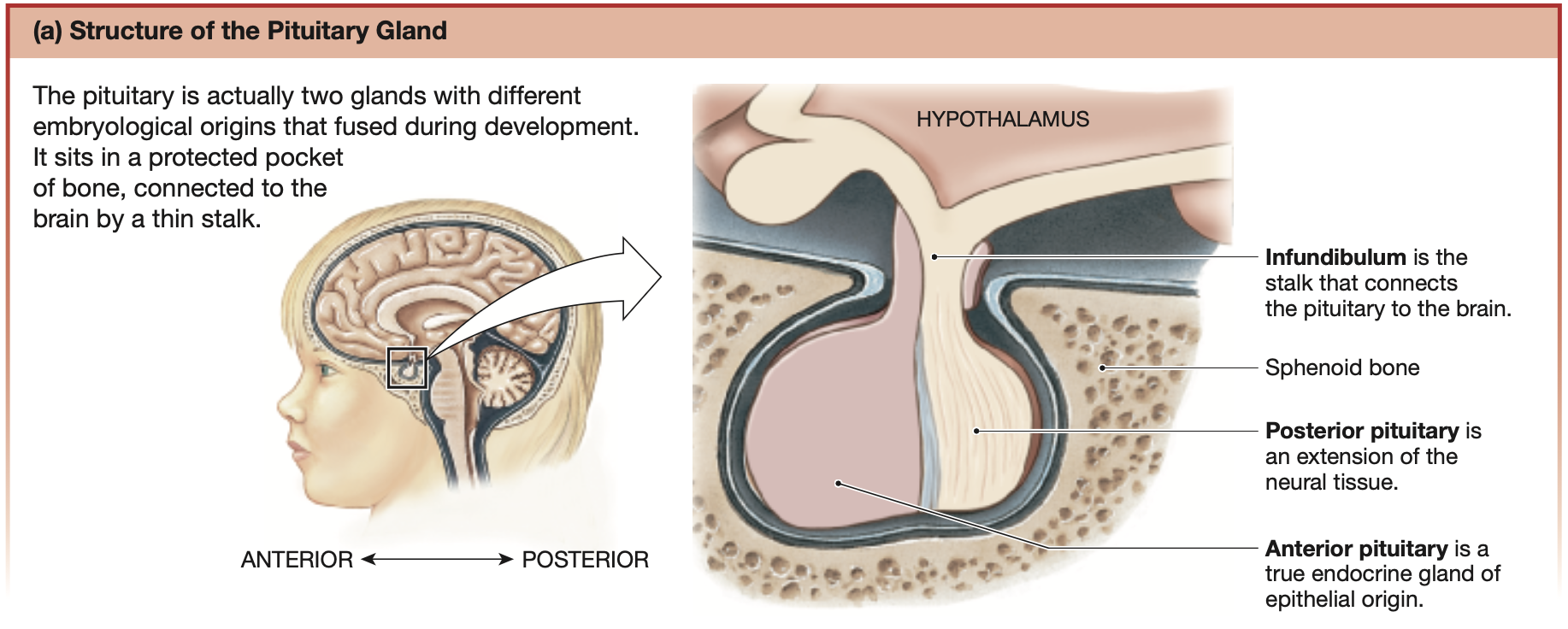
Pituitary gland
Bean-sized gland that is protected within a pocket of bone.
Two different glands which fused during development.
Anterior pituitary: True endocrine gland — secretes hormones
Posterior pituitary: Extension of neural brain tissue — secretes neurohormones from the hypothalamus
Posterior pituitary gland
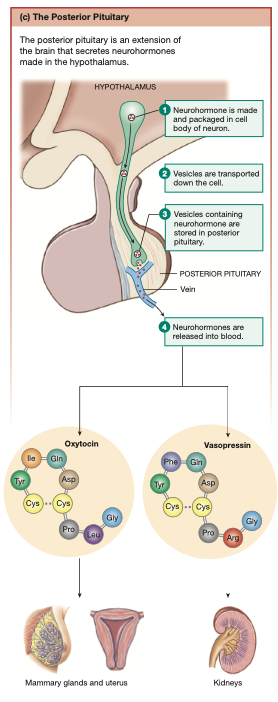
Extension of neural tissue, secretes neurohormones from the hypothalamus.
Secretes 2 hormones: BOTH PEPTIDE HORMONES
Oxytocin: Motor control. Controls ejection of milk when breast-feeding & contractions during labour
Vasopressin: Antidiuretic, acts on kidneys to regulate water balance.
Anterior pituitary gland
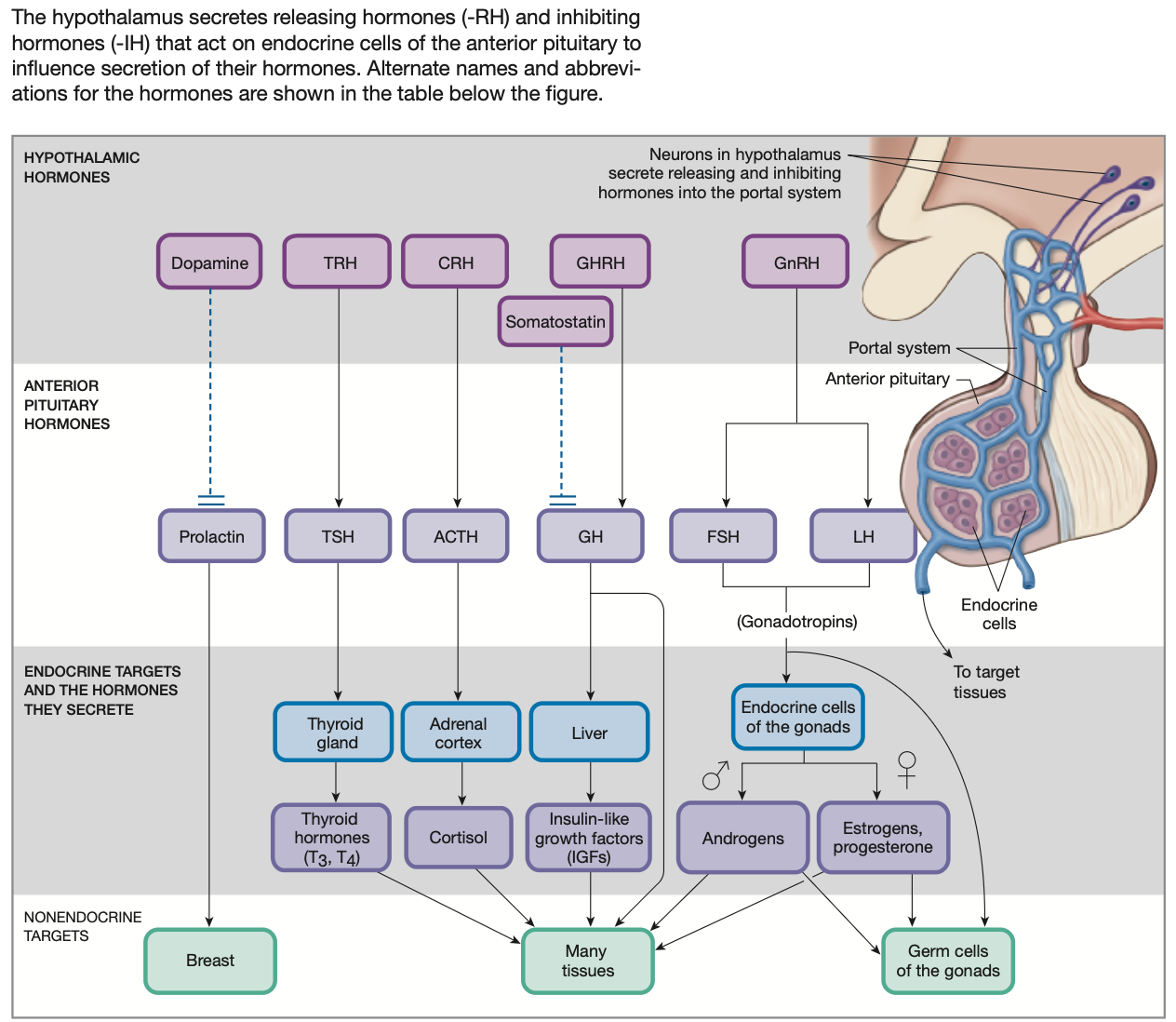
True endocrine gland, secretes hormones.
Secretes 6 hormones:
Prolactin (PRL): Controls milk production during lactation
Thyrotropin (TSH): Controls thyroid hormone production and synthesis
Adrenocorticotropin (ACTH): Controls adrenal glands’ cortisol release & synthesis
Growth hormone (GH): Metabolism of tissues, stimulates liver hormone production
Follicle-stimulating hormone (FSH): Control activity of ovaries/testes cells
Luteinizing hormone (LH): Control activity of ovaries/testes cells
Secretion of these hormones is controlled by other neurohormones found in the hypothalamus,
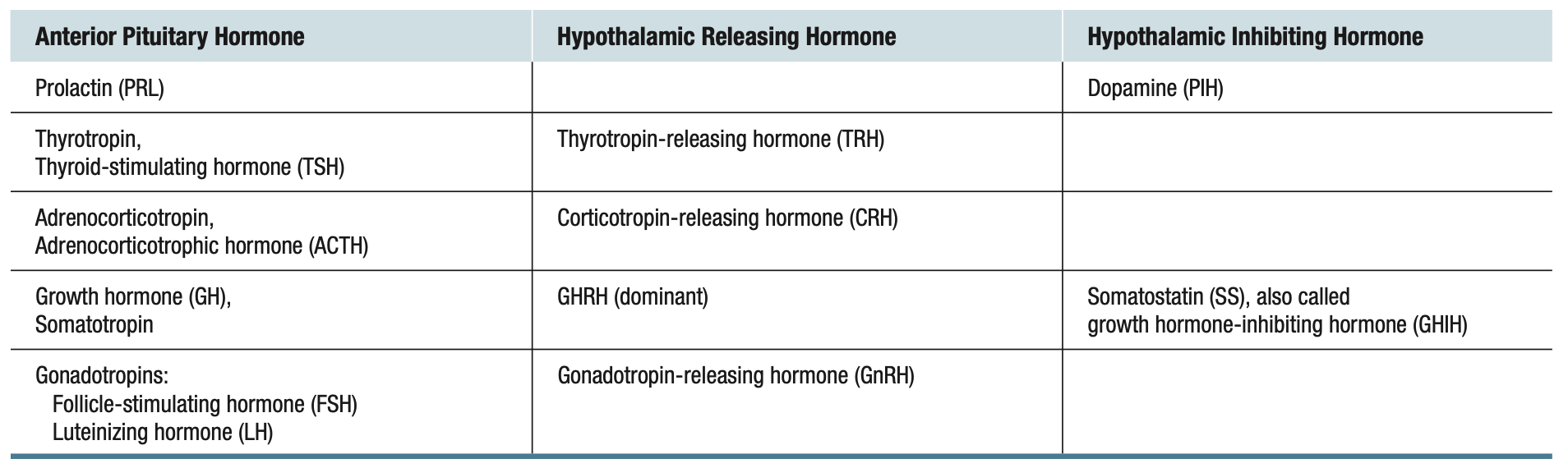
Abbreviations/Synonymous names
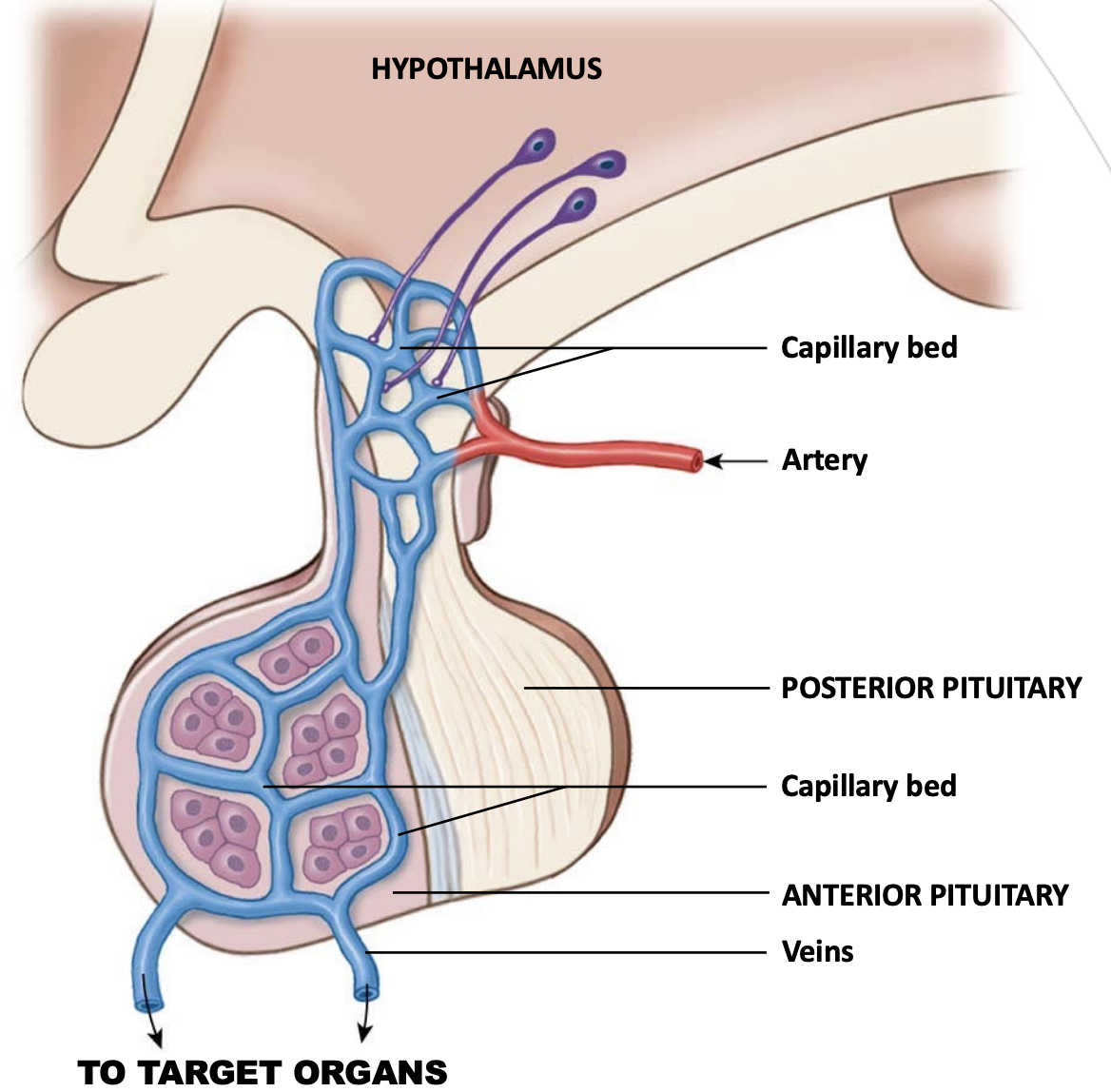
Portal system: Hypothalamus → Anterior pituitary
As the anterior pituitary is not an extension of neural tissue, trophic neurohormones sent from the hypothalamus that control secretion of the hormones must be sent via blood. To ensure these hormones are not diluted by the blood the portal system takes place.
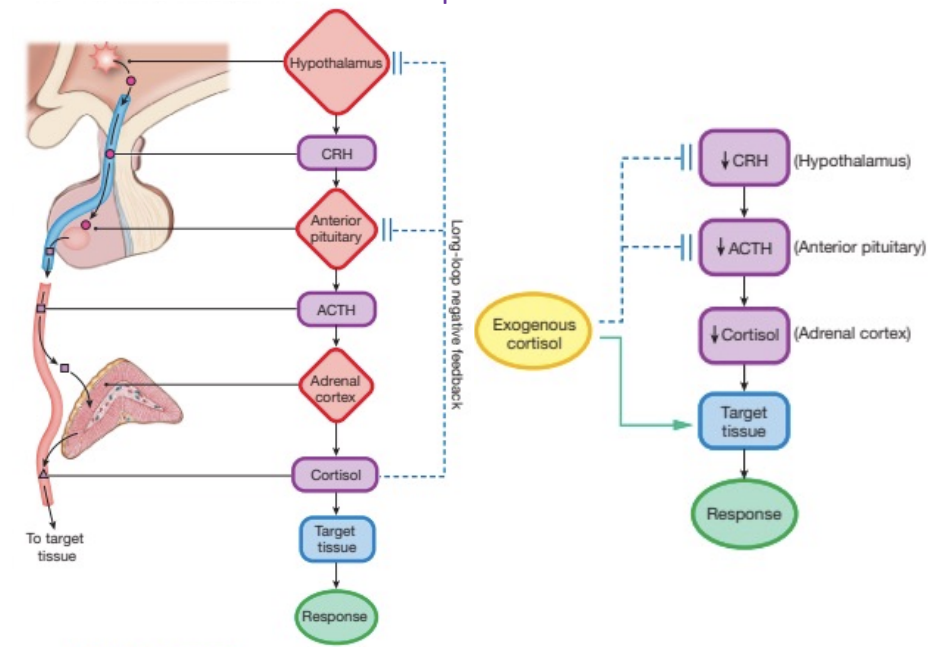
Hormone pathologies: Hypersecretion
Excess presence of a hormone, causes an exaggerated effect of hormones.
Can be caused by benign tumours (adenomas) or cancerous tumours of endocrine glands.
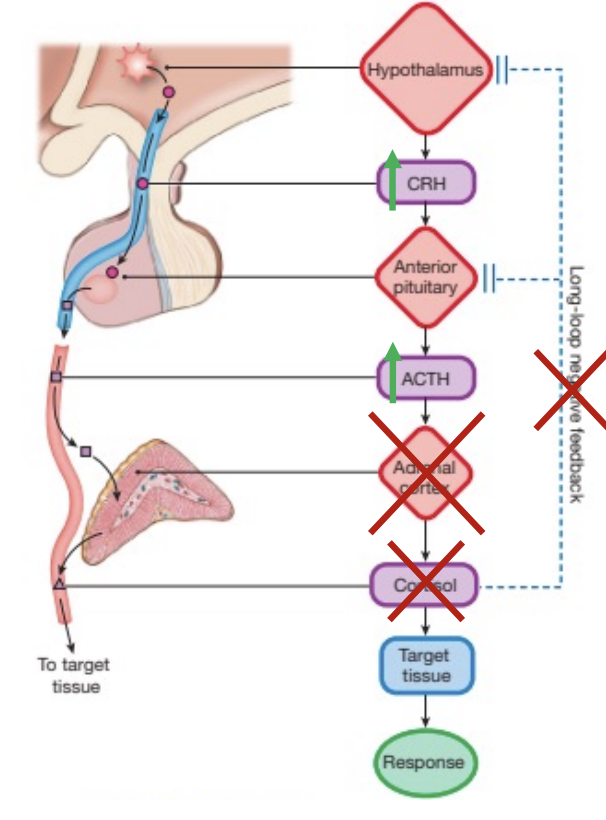
Hormone pathologies: Hyposecretion
Too little presence of a hormone, causes a stop to hormone pathways.
Can be caused by atrophy of endocrine glands.
Hormone pathologies: Abnormal target tissue responsiveness
Target tissues show abnormal responses even though hormone levels may be within the normal range