Pesticide Applicator Test
 Call Kai
 Learn
Learn Practice Test
 Spaced Repetition
 Match
Match Flashcards
 Knowt Play
1/85

There's no tags or description
Looks like no tags are added yet.
Name | Mastery | Learn | Test | Matching | Spaced | Call with Kai |
|---|
No analytics yet
Send a link to your students to track their progress
86 Terms
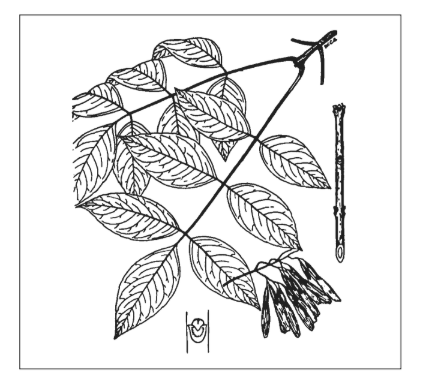
Identify the species
Ash (Black, White, Green)
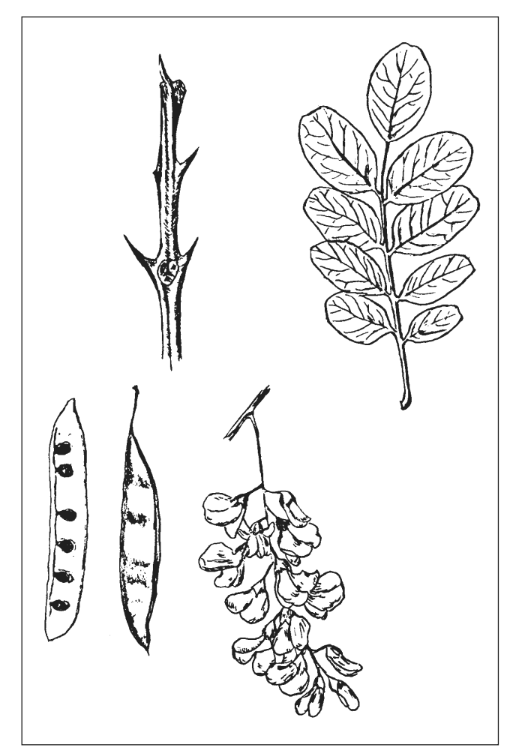
Identify the species
Black locust
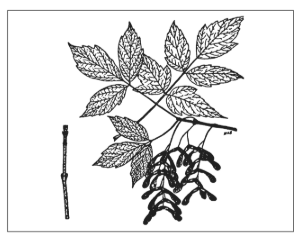
Identify the species
Boxelder (Ash-leaf maple)
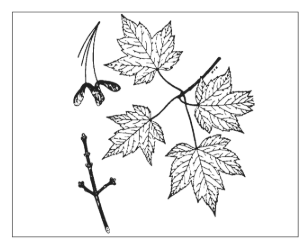
Identify the species
Red maple (soft maple)
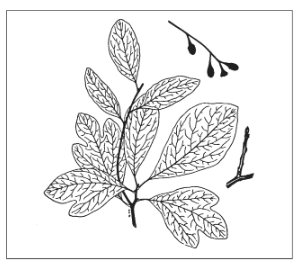
Identify the species
Sassafras
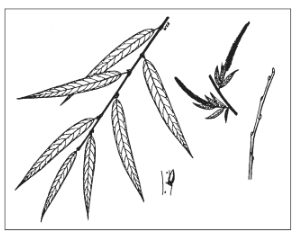
Identify the species
Black willow
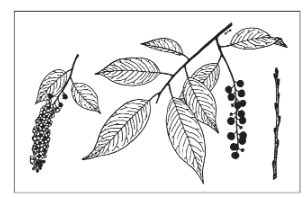
Identify the species
Wild Black Cherry
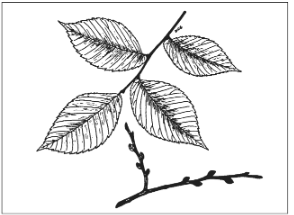
Identify the species
American Elm
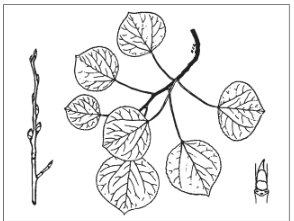
Identify the species
Trembling Aspen (Quaking Aspen, Poplar)
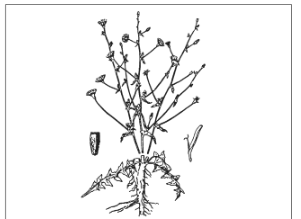
Identify the species
Chicory
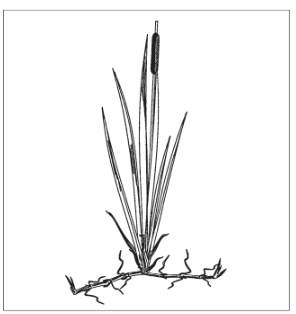
Identify the species
Cattail
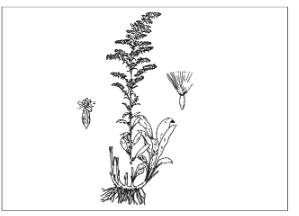
Identify the species
Goldenrod (Gray Golden Rod)
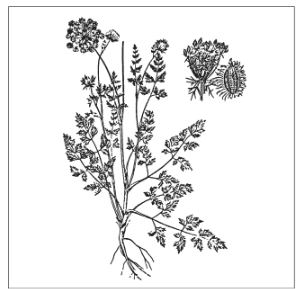
Identify the species
Wild Carrot (Queen Anne’s Lace)
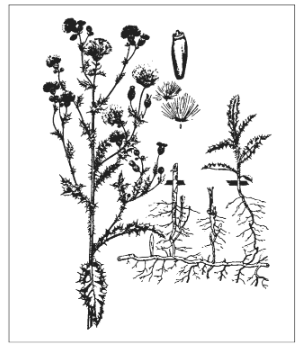
Identify the species
Canada Thistle
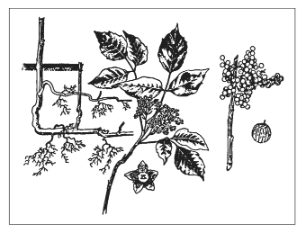
Identify the species
Poison Ivy
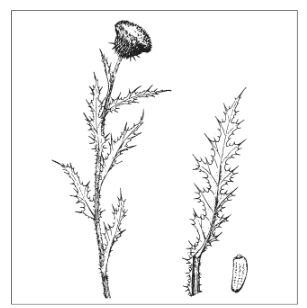
Identify the species
Musk Thistle
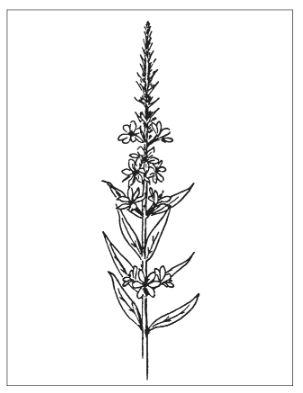
Identify the species
Purple Loosestrife
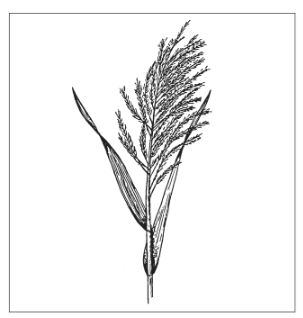
Identify the species
Phragmites
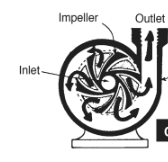
Identify the pump
Centrifugal sprayer pump
Uses an impeller to give high volumes at low pressures.
deliver high volumes of liquid at low pressure; low power requirement; only sprayer that is not positive displacement pump; not self-priming; can pump abrasive mixtures.
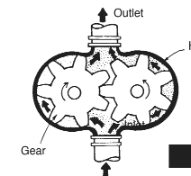
Identify the pump
Gear pump
Agricultural sprayers
Liquids or emulsions, but wear rapidly if suspensions are used.
Low to moderate volumes of liquid.
Not affected by solvents since all parts are metal.
deliver low to moderate volumes of liquid; requires more power than centrifugal pump, but still low power requirement; positive displacement pump; self-priming when in good condition; can pump liquids or emulsions, but wears rapidly if used to pump suspensions
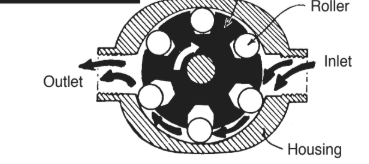
Identify the pump
Roller pump
Low pressure and boom sprayers
More abrasion resistant, but suspensions can wear out rest of the pump after extended use.
used for low pressure treatments and boom sprayers; requires slightly higher power than gear pumps; positive displacement pump; self-priming; more abrasion-resistant than gear pumps, but suspensions wear it after extended use
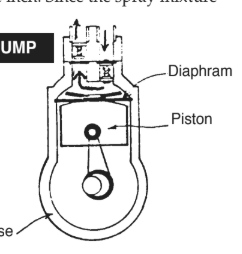
Identify the pump
Diaphragm Pump
Extremely abrasion resistant
Best choice for abrasive spray suspensions
delivers similar volume and pressure as gear pumps; extremely abrasion-resistant, probably the best choice for abrasive spray suspensions
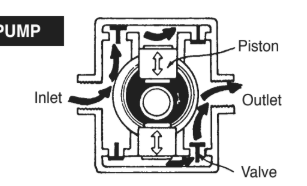
Identify the pump
Piston pump
Can handle wettable powder suspensions. Require more power than other pumps.
Excellent when higher pressures are required, or both high and low pressures are needed.
deliver moderate to high volumes of liquid at high pressures; require more power than the other pumps; abrasion-resistant, capable of handling wettable powder suspensions
Application equipment components—Tanks
Large enough to avoid frequent refilling
Stainless steel and fiberglass are best
Shut-off valve to hold liquid without leaking from pump
Application equipment components—Agitators
Prevent settling out of wettable powder suspensions
Mechanical agitation by paddles or propeller
Hydraulic agitation by return flow of the pump
Application equipment components—Strainers
Prevent scale, rust flakes, and other material from clogging the sprayer.
Application equipment components—Pressure regulator
Controls the pressure
Simple relief valves—by-pass valves that allow pump to keep working
Pressure unloaders—move overflow back into the tank at lower pressure
Application equipment components—Hoses
Composition (chief liner material)
Construction (reinforcement, rigidity, or flexibility)
Working pressure
Size
Application equipment components—Nozzles
Consist of body, screen, cap, tip/orifice plate
Regular flat fan nozzle
Off-center nozzle
Whirling discs
Steps for calibrating boom sprayers
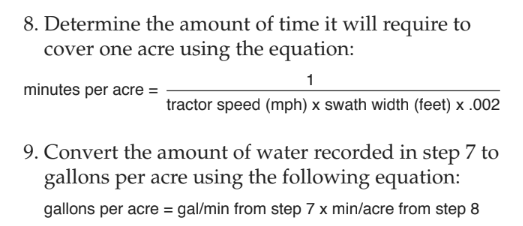
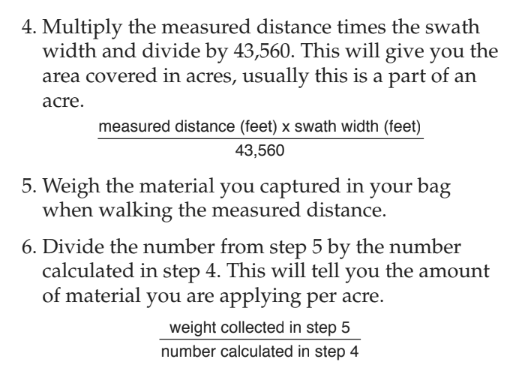
Steps for calibrating granular and pellet spreaders
Right of Way—Biological Controls
Enhance the effects of pest natural enemies
ROW-Cultural Control
Create optimal growing conditions for plants you want to preserve, create unfavorable conditions for pests.
ROW-Mechanical Control
Removal using mechanical or manual tools
ROW Chemical Control
Pesticides
Four stages of plant development
1) Seedling – small, vulnerable plantlets.
2) Vegetative – rapid growth producing stems,
roots, and foliage. The plant’s uptake and
movement of water and nutrients is rapid and
thorough.
3) Seed production – energy directed toward
production of seed. The plant’s uptake of water
and nutrients is slow and is directed mainly to
flower, fruit, and seed structures.
4) Maturity – little or no energy production or
movement of water and nutrients.
Grasses
One leaf, monocot. Narrow with parallel veins.
Fibrous root systems.
Sedges
Triangular stems and three rows of leaves.
Rhizomes and tubers.
Herbaceous broadleaves
Two leaves as they emerge from seeds
Exposed growing points at the end of each stem and in each leaf axil
Perennials could also have growing points on roots and stems.
Vines
Similar to broadleaves, but vigorous sprouting habits
Brush and trees
Woody plants
Ferns
Produce by spores and creeping rhizomes. Moist soils.
Parasitic seed plants
Live on and get food from host plants
Emergent aquatic plants
Bulk is above the surface of the water
Floating aquatic plants
All or part of the plant floats on the surface
Submergent aquatic plants
All of the plant grows beneath the water surface
Algae
Aquatic plants without true stems, leaves, or vascular systems.
Foliage absorbed or root absorbed
Enter plant through leaves or roots, more affective when applied preemergence.
Contact/translocated/systemic
Kill only the green portions of plants, can control annuals and biennials. Move throughout the plant.
Persistent or nonpersistent
Remain active in environment vs. short-lived.
Selective or nonselective
Kills specific weed pests or kills most everything.
Low volume ground foliage treatments
Certain amount of herbicide in water per acre. Not sprayed to point of runoff.
High volume ground foliage treatments
Specific concentration applied instead of rate per acre.
Spray to drip
Conventional basal spraying
Wet entire lower portion of individual stems of plants
Herbicide runs down the root crown
Oil used as carrier for the herbicide
Low volume basal spraying
More concentrated
Anti-gibberellins or gibberellin inhibitors
Alter the ability of plant cells to elongate
Auxin type
Accelerate cell growth and reproduction
Methods for vertebrate control
Mechanical, sanitation, chemical,
Respiratory protection needed for solid pesticides with toxicity class 2, 3, or 4
NIOSH-approved respirator with any N, R, P, or 100 series prefilter.
Respiratory protection needed for liquid pesticides with toxicity class 1
NIOSH-approved respirator with an organic vapor (OV) cartridge or canister with any N, R, P, or 100 series prefilter.
Respiratory protection needed for gas pesticides applied in an enclosed area
Air-supplying respirator with NIOSH TC-19C, or use self-contained breathing apparatus with NIOSH TC-13F
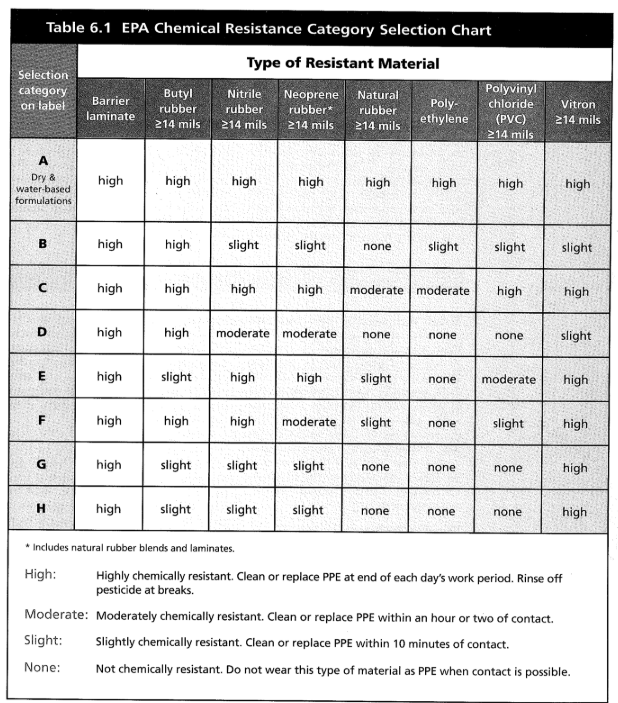
Generally know the EPA chemical resistance category chart
Which statement about the requirements of the FQPA is true?
The FQPA does not require review of older pesticides with established residue tolerances on food.
The FQPA does not consider additional safety standards to account for exposure risks to infants and children.
Testing of pesticides for endocrine disruption potential is required under the FQPA.
For setting new standards, the FQPA considers aggregate exposures to pesticides but not cumulative exposures
Testing of pesticides for endocrine disruption potential is required under the FQPA.
Which federal law governs the establishment of pesticide tolerances for food and feed products?
Federal Food, Drug, and Cosmetic Act (FFDCA)
Cholinesterase inhibition due to exposure to organophosphate or carbamate insecticides can cause acute or delayed effects (T/F)
True
Which is an advantage of microencapsulated materials?
Delayed or slow release of the active ingredient prolongs its effectiveness.
Which statement about sprayer nozzles is true?
A nozzle that primarily produces fine droplets is usually selected to minimize off-target drift.
Nozzle material should be selected based on the pesticide formulation
Coarse-sized droplets supply maximum coverage of the target.
Brass tips should be used when applying abrasive materials.
Nozzle material should be selected based on the pesticide formulation
Solution, suspension, emulsion
Solution—A substance is dissolved in a liquid
Suspension—Fine particles dispersed in a liquid (requires agitation)
Emulsion— One liquid is dispersed in another liquid (requires agitation)
Emulsifiable Concentrates (EC or E)
Liquid active ingredient plus one or more petroleum-based solvents.
Little agitation required, not abrasive.
But, solvents can cause parts/surfaces to deteriorate. Can also cause discoloration.
Solutions (S)
Active ingredient readily dissolves in liquid carrier (water or petroleum-based solvent).
Ultra-Low Volume (ULV)
Close to or 100% active ingredient, applied at rates no more than 0.5 gallon per acre.
High drift hazard, but easy to transport.
Solvents can cause parts/surfaces to deteriorate.
Invert Emulsion
Water-soluble pesticide dispersed in an oil carrier. Require special emulsifier that allows mixing with petroleum-based carrier.
Flowables (F)/Liquids (L)
Used when active ingredient does not dissolve in water or oil. The active ingredient gets put into clay, then ground into a fine powder, then suspended in liquid.
Aerosols (A)
Active ingredient + solvent
Ready-to-use kind in pressurized containers
Others used in aerosol generators that release the formulation as smoke or fog.
Liquid Baits
Insecticide or rodenticide is mixed with water then placed at bait stations. Ants or rats.
Dusts (D)
Low percentage of active ingredients plus a fine carrier made of chalk/talc/clay etc.
Good for cracks and crevices.
Tracking powders—rats ingest when they clean themselves.
Baits (B)
Active ingredient mixed with food or other attractive substance.
Granules (G)
Particles are coarse and made from clay. corncobs, or walnut shells. The active ingredient either coats the granules or is absorbed into them. Release the active ingredient slowly.
Pellets (P or PS)
Similar to granular, but all particles are the same weight and shape.
Wettable Powders (WP or W)
Dry, finely ground formulations that look like dusts. Can be mixed with water and applied as spray or applied as dust.
Abrasive to many pumps and nozzles.
Soluble Powders (SP or WSP)
Look like wettable powders, but form a true solution. No additional agitation is necessary.
Water-dispersible Granules (WDG) or Dry Flowables (DF)
Formulated as small, easily measured granules. Mixed with water, then break into a fine powder.
Microencapsulated Materials
Liquid or dry pesticides within plastic coating. The coating breaks down after application and slowly releases the active ingredient.
Fumigants
Pesticides that form poisonous gases when applied.
Water-Soluble Packets
Package precise amounts of wettable powder or solution into a bag that dissolves when placed in water.
Adjuvants
Chemicals that do not possess pesticidal activity, but improve mixing or application.