1: Intro to Anatomy & Physiology
 Call Kai
 Learn
Learn Practice Test
 Spaced Repetition
 Match
Match Flashcards
 Knowt Play
1/36

There's no tags or description
Looks like no tags are added yet.
Name | Mastery | Learn | Test | Matching | Spaced | Call with Kai | Chat |
|---|
No analytics yet
Send a link to your students to track their progress
37 Terms
anatomy
study of structures of body + their spatial relationships to one another
“to cut apart”`
macroscopic (gross) anatomy
relational anatomy
sectional anatomy
microscopic anatomy
histology - study of tissues
cytology - study of cells
levels of organization
chemical level
cellular level
tissue level
organ level
system level
organismal level
physiology
study of chemistry + physics that underlie function of anatomical structures, individually + in combination w/ other structures
“to study nature/origin of”
main body cavities
dorsal cavity
cranial cavity
vertebral cavity
ventral cavity
thoracic cavity
abdominopelvic cavity
cranial cavity
contains brain
part of cranial cavity
vertebral cavity
contains spinal cord
part of dorsal cavity
thoracic cavity
contains lungs + heart
part of ventral cavity
abdominopelvic cavity
contains abdominopelvic organs (viscera)
part of ventral cavity
abdominopelvic quadrants
divides abdominopelvic cavity into 4 regions
horizontal + vertical lines pass through navel (umbilicus)

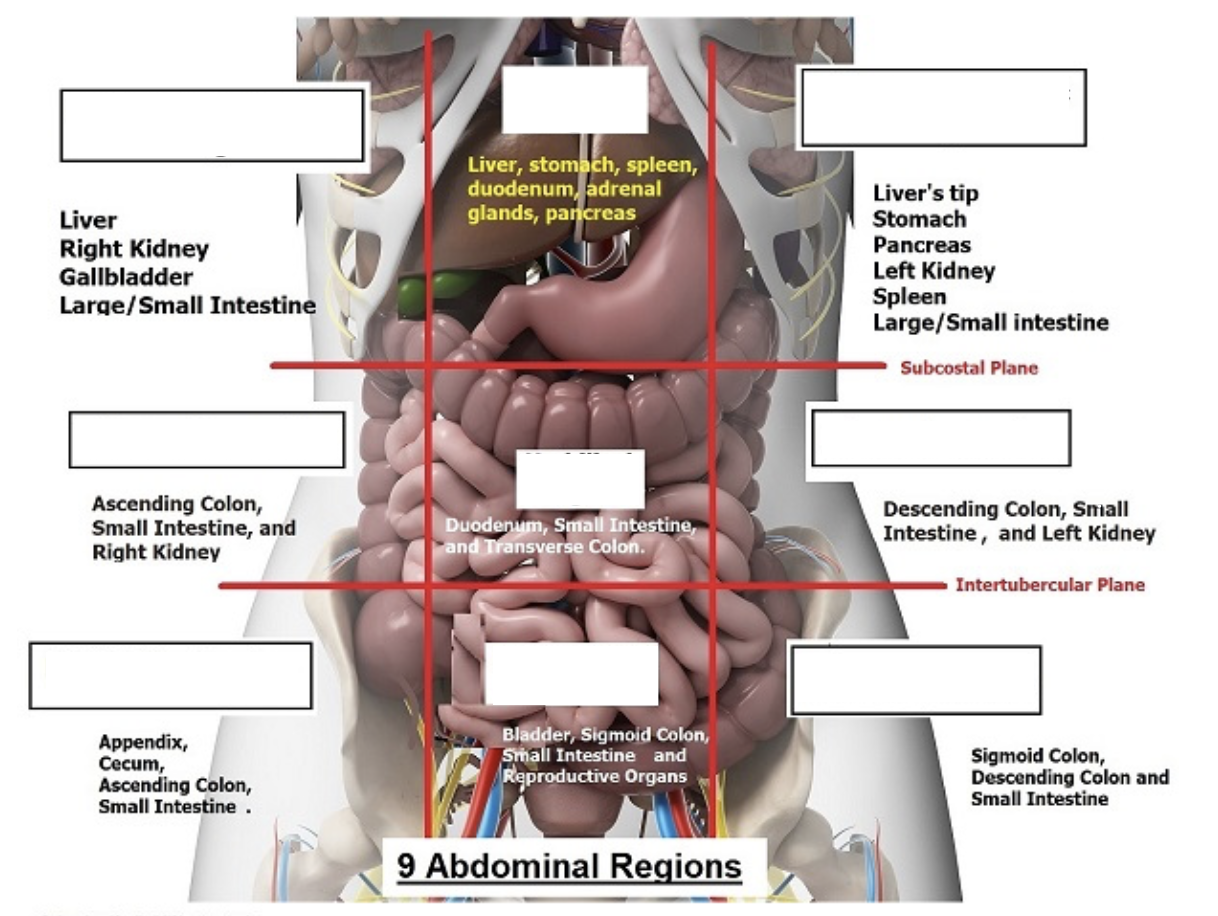
abdominopelvic regions
divides abdominopelvic cavity into 9 regions

anatomical position
used to refer to patient when speaking relationally
upright posture
facing straight ahead
feet parallel + close together
palms facing forward

prone
position - lying on stomach
supine
position - lying on back
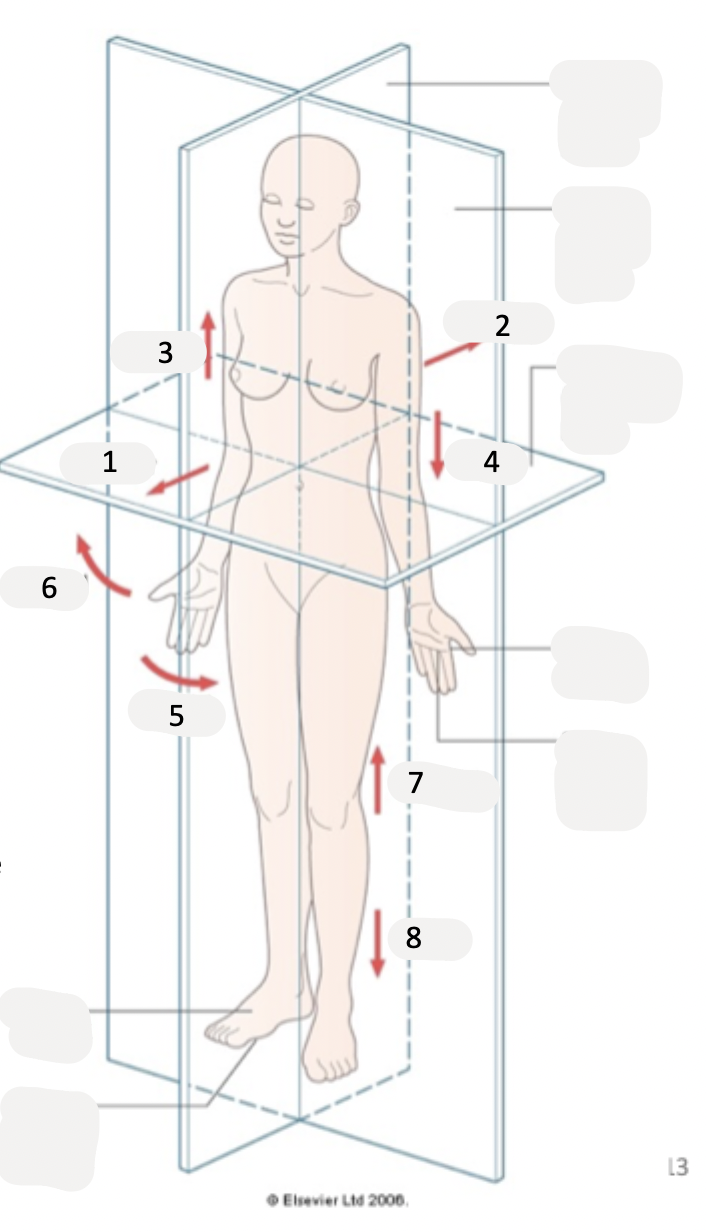
anterior
(1) towards belly

posterior
(2) towards back
superior
(3) towards head

inferior
(4) towards tail
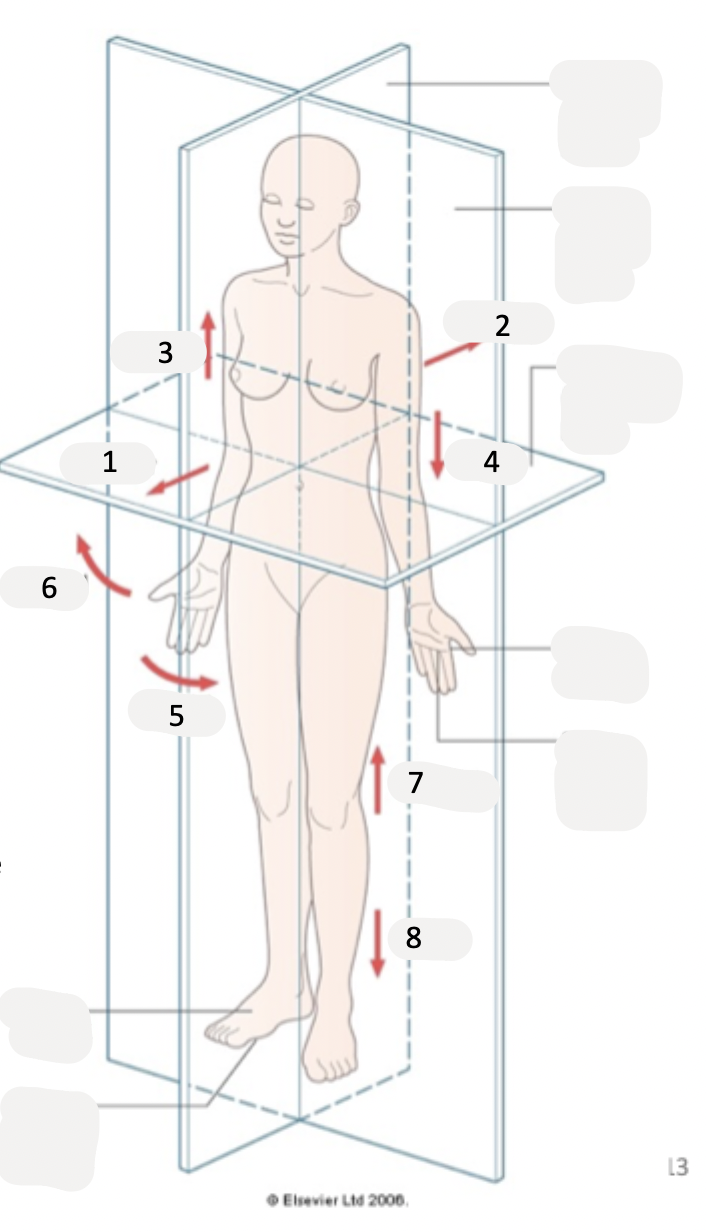
medial
(5) towards midsagittal plane

lateral
(6) away from midsagittal plane
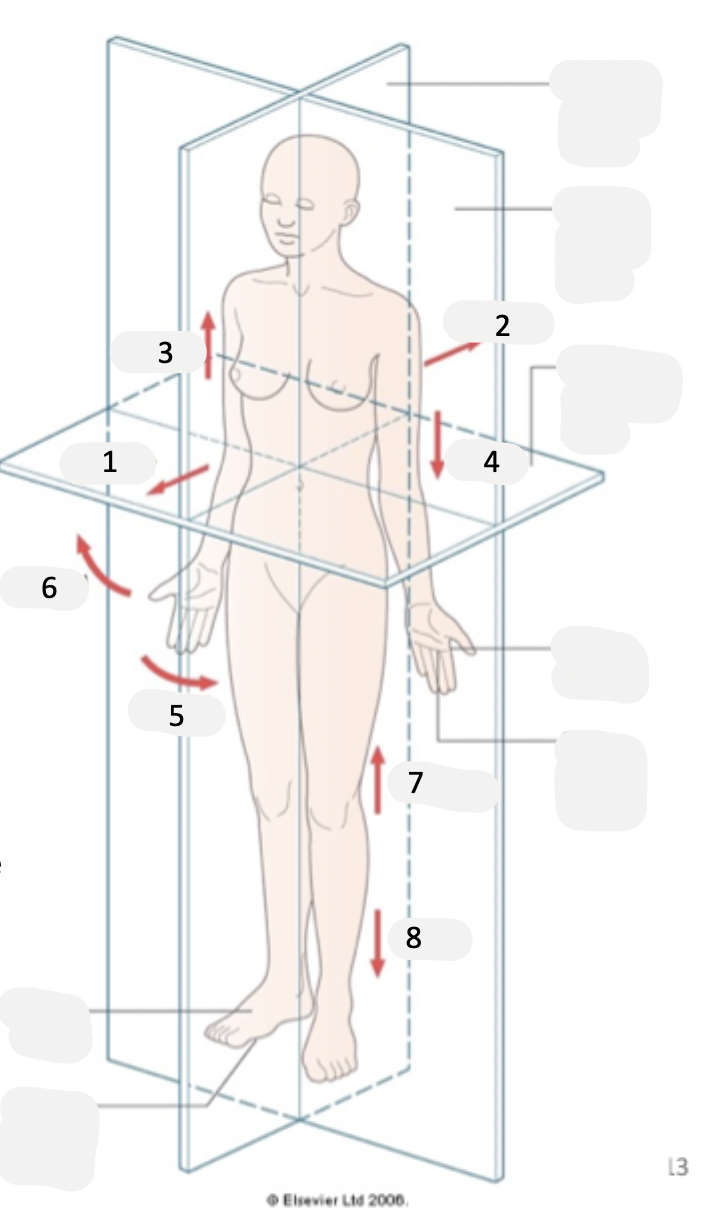
proximal
(7) closer to attachment point
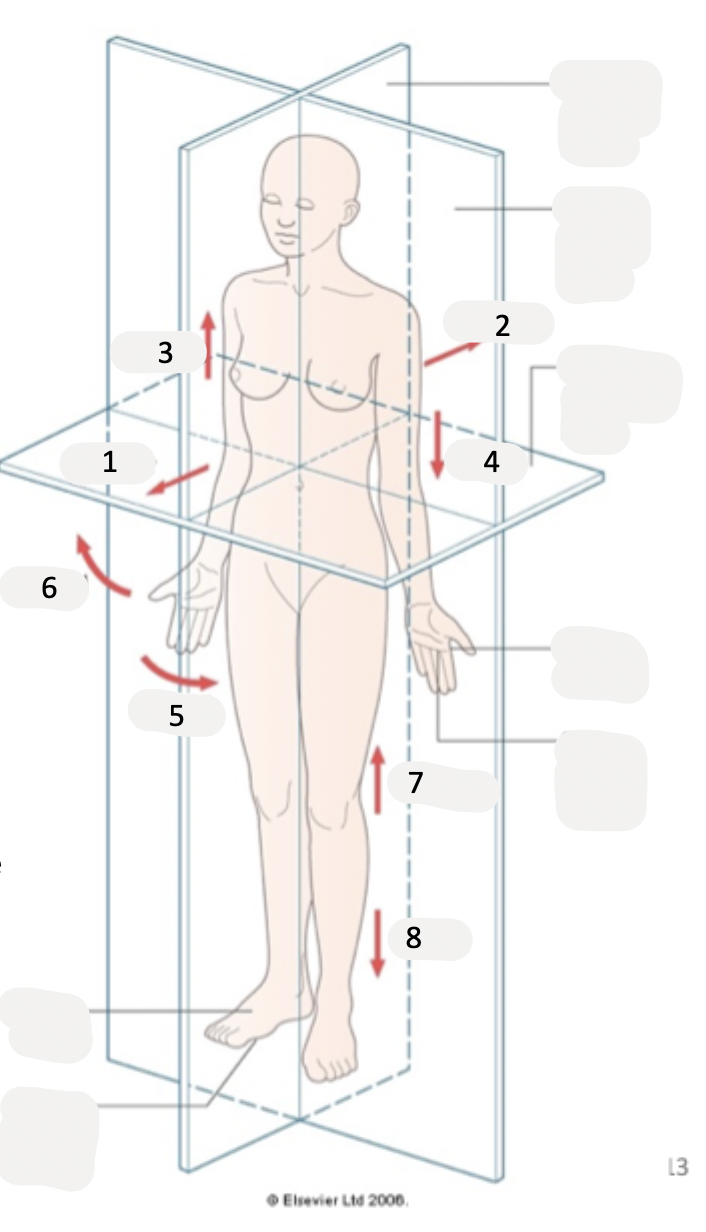
distal
(8) further from attachment point
superficial
towards surface (of skin)
deep
further from surface (of skin)
bilateral
both sides
structures that are on both sides
eg. ears, ears, lungs
ipsilateral
same side
structures that are on the same side
eg. stomach and spleen, left arm and left leg
contralateral
opposite side
structures that are on opposite sides
right hypochondriac region
contains:
liver
right kidney
gallbladder
some small intestine
some large intestine
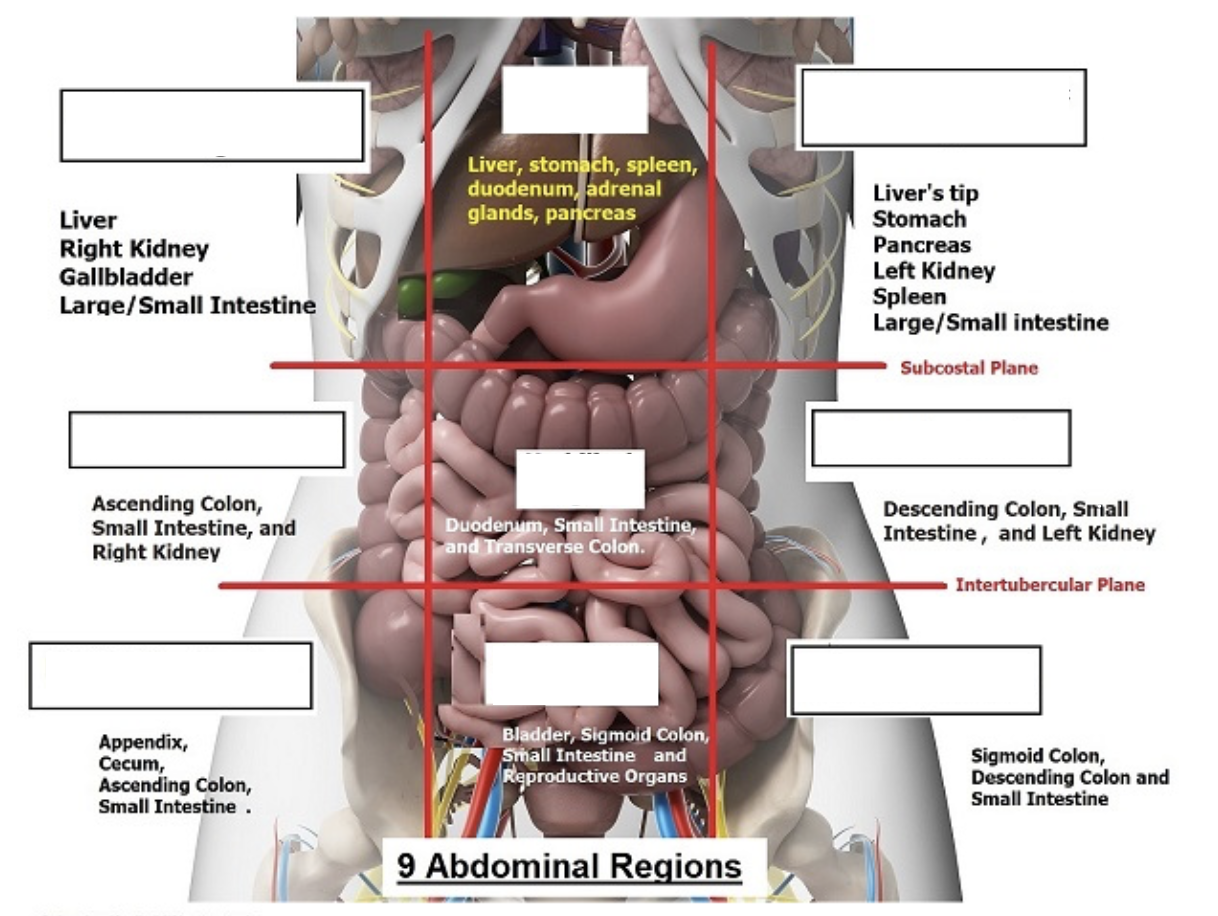
epigastric region
contains:
stomach
liver
pancreas
duodenum (small intestine)
spleen
adrenal glands
right and left kidneys

left hypochondriac region
contains:
spleen
stomach
colon
tip of liver
left kidney
some pancreas
right lumbar region
contains:
tip of liver
gallbladder
some small intestine
ascending colon
right kidney

umbilical region
contains:
small intestine
some stomach
some pancreas
transverse colon

left lumbar
contains:
descending colon
left kidney
some small intestine
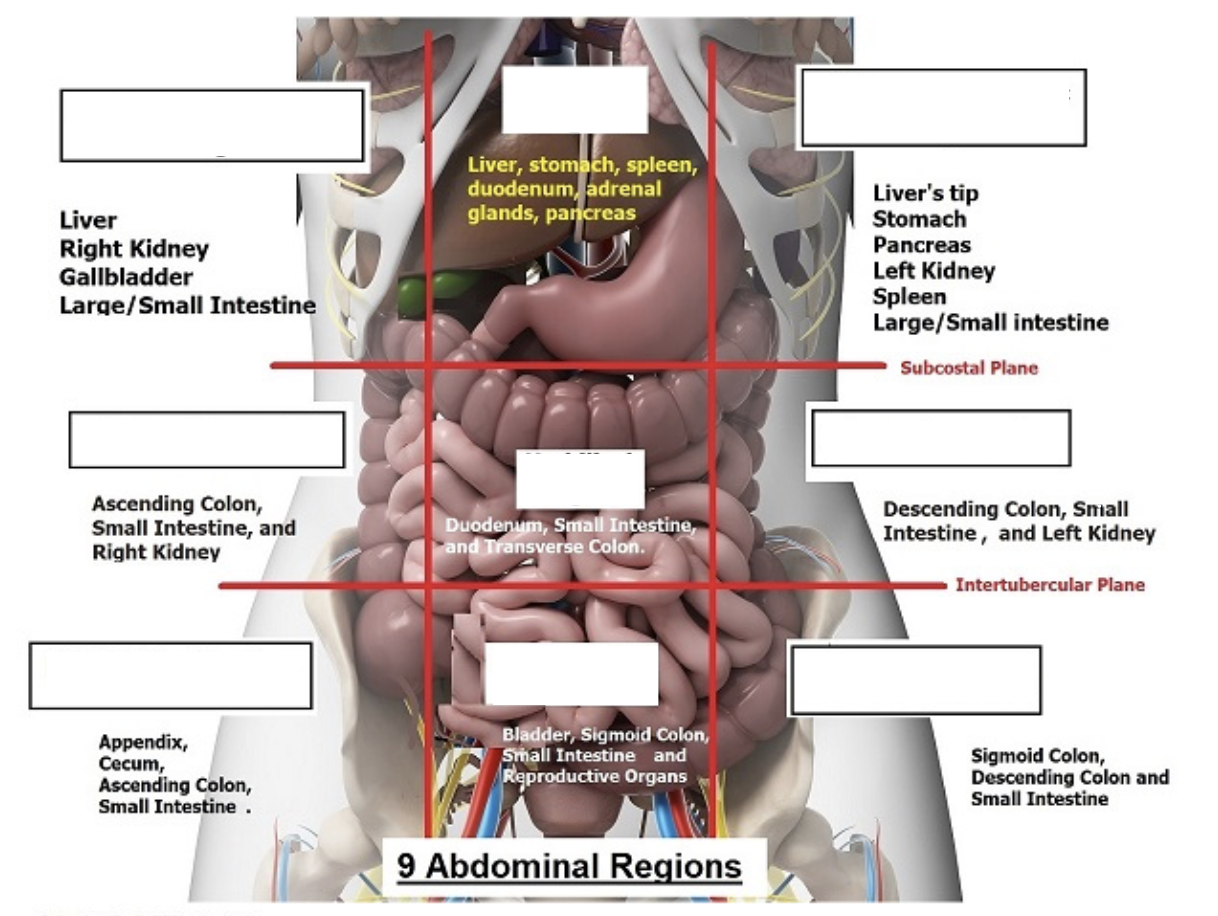
right iliac (inguinal) region
contains:
appendix
some small intestine
ascending colon
cecum (large intestine)

hypogastric region
contains:
bladder
sigmoid colon
some small intestine
reproductive organs

left iliac (inguinal) region
contains:
descending colon
some small intestine
sigmoid colon