Psychology of Human Cognition Exam 1
 Call Kai
 Learn
Learn Practice Test
 Spaced Repetition
 Match
Match Flashcards
 Knowt Play
1/78

There's no tags or description
Looks like no tags are added yet.
Name | Mastery | Learn | Test | Matching | Spaced | Call with Kai | Chat |
|---|
No analytics yet
Send a link to your students to track their progress
79 Terms

Function of the Frontal Lobe
Higher cognition: Decision making, planning, reasoning, personality, voluntary movement.

Function of the Parietal Lobe
Touch, pain, pressure (somatosensory processing), spatial awareness.

Function of the Occipital Lobe
Vision
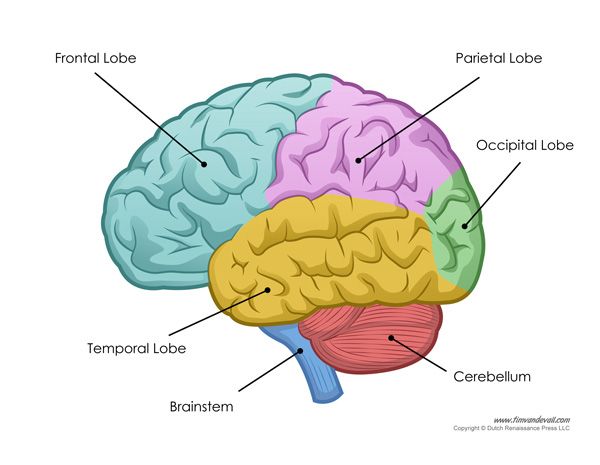
Function of the Temporal Lobe
hearing, memory, language comprehension

Function of the Cerebellum
monitor and regulate motor behavior

Function of the Brain stem
automatic control center. basic life functions: breathing, heart rate, arousal

Function of Dendrites
branch like extensions that receive signals (neurotransmitters) from other neurons.

Function of the Soma (cell body)
Contains the nucleus, integrates incoming signals

Function of the Axon Hillock
Determines whether the summed signals reach threshold to fire

Function of the Axon
Long fiber that conducts the action potential away from the cell body

Function of the Myelin Sheath
Fatty insulation that speeds transmission via saltatory conduction

Function of Nodes of Ranvier
Gaps in the myelin sheath where the impulse ‘jumps’ from node to node

Function of Axon Terminals
End of the axon; release neurotransmitters into the synapse

Function of the Synapse
The small gap between the axon terminal of one neuron and the dendrite of the next.
Where is the input zone located
dendrites
what is the function of the input zone
receive signals from other neurons
where is the integration zone located
Soma/Axon Hillock
Function of the integration zone
sum incoming singals; decide whether to fire
Function of the conduction zone
carries the action potential down its length
Where is the conduction zone located
Axon
Where is the output zone located
Axon terminals
Function of the output zone
release neurotransmitters to the next cell
What is the voltage of resting potential
-70mV
what happens during resting potential
Neuron is at rest, not firing
What is the voltage for action potential
+40mV
What happens during action potential
Neuron firing; rapid Na+ influx flips the charge
Signal transmission within a neuron
electrical
signal transmission between neurons
chemical
what is the all-or-none principle
once threshold is reached, the action potential fires at full strength no matter how strong the stimulus
what is the refractory period
brief time after firing when a neuron cant fire again
what are some major neurotransmitters
dopamine, serotonin, GABA, glutamate, acetylcholine.
who created the neuron doctrine
santiago ramon y cajal
what is the neuron doctrine
neurons are separate, discrete cells with gaps (synapses) between them. this doctrine replaced the incorrect “nerve net”/ reticular theory ( that the nervous system was one continuous web.)
what is CNS and what is included in it
The central nervous system and it includes the brain and spinal cord. it is responsible for receiving sensory information, processing it and coordinating the body’s responses.
what is PNS and what is included in it
The periperal nervous system and includes nerves outside the CNS.
PNS: somatic
voluntary movement
PNS: autonomic
Involuntary functions
PNS: autonomic : Sympathetic
fight or flight
PNS: Autonomic : Parasympathetic
rest and digest
Function of the hippocampus
formation of new memories
Function of the amygdala
emotion, especially fear and threat response
function of the hypothalamus
homeostasis; regulates hunger, thirst, body temperature and other drives.
function of the Thalamus
relay station for sensory information heading to the cortex
function of the corpus callosum
bundle of fibers connecting the left and right hemispheres.
what is the brocas area and where is it located
located in the frontal lobe, in charge of speech production
what is the wenickes area and where is it located
located in the temporal lobe, in charge of language comprehension.
neuropsychology research approach
studies behavioral effects of brain damage (often via case studies) to infer function of damages areas.
Localization of function
the broader concept that specific brain areas are responsible for specific functions
Single neuron recording
measures electrical activity of individual neurons
cognitive neuroscience
studies neural mechanisms of cognition, often using imaging (fMRI, EEG) in healthy and damaged brains.
simple reaction time
one known stimulus → one known response, no decision needed. example: pressing space bar as soon as you see a red circle
choice reaction time
multiple possible stimuli, each requiring a different response. example: press left arrow for red, right arrow for blue
recognition reaction time
must first identify/categorize the stimulus before responding. example: decide if a shape is a letter or number then respond.
simple reaction time speed
~200-250ms. adding decision making or discrimination slows it down.
positive reinforcement example
add candy for an A on an exam
positive punishment example
spray dog with water for jumping on furniture
negative reinforcement example
remove chores for finishing schoolwork on time
negative punishment example
remove dessert for not eating vegetables
what is shaping in relation to behavior
reinforcing successive approximations toward a target behavior
what is extinction in relation to behavior
behavior decreases when reinforcement stops
primary reinforcers
food and water
secondary/conditioned reinforcers
money, praise
unconditioned stimulus
naturally triggers a response. example: watching favorite tv show
unconditioned response
natural, unlearned response. example: popcorn before pairing
conditioned stimulus
neutral stimulus that now triggers a response after pairing. example: popcorn after repeated pairing
conditioned response
learned response to the CS. example: feeling relaxed from popcorn alone
Acquisition
the initial learning of the association
extinction
CR fades if CS is no longer paired with UCS
spontaneous recovery
reappearance of an extinguished CR after a rest period
Ivan Pavlov
dogs/bell/salivation
John B. Watson
little albert
stimulus generalization
responding to stimuli that are similar (but not identical) to the original CS with the same CR. example: a dog conditioned to salivate at a specific tone also salivates somewhat at similar tones
Stimulus discrimination
learning to respond only to the specific CS and not to similar stimuli often through selective pairing of the CS with the UCS. example: the dog learns to salivate only at the exact original tone, not similar stimuli.
core idea of structuralism and who created it
wundt titchener; break conscious experience into basic elements using introspection.
core idea of functionalism and who created it
william james; focus on the purpose/function of mental processes for adaptation
cognitive revolution
shift back toward studying internal mental processes (memory,decision making) after behaviorism
Gestalt psychology
“the whole is greater than the sum of its parts’ -perception as organized wholes.
neuropsychology
study of brain-behavior relationships, often via brain-damaged patients
introspection
training subjects to report their own thoughts/experiences in response to stimuli