Chemistry Ch10: Quizzes
 Call Kai
 Learn
Learn Practice Test
 Spaced Repetition
 Match
Match Flashcards
 Knowt Play
1/16

There's no tags or description
Looks like no tags are added yet.
Name | Mastery | Learn | Test | Matching | Spaced | Call with Kai | Chat |
|---|
No analytics yet
Send a link to your students to track their progress
17 Terms
Which statement correctly compares particle arrangement and motion in solids, liquids, and gases?
A. In solids, particles move independently; in liquids, particles are arranged in a regular pattern; in gases, particles vibrate in place.
B. In solids, particles are far apart and move freely; in liquids, particles vibrate in fixed positions; in gases, particles are tightly packed.
C. In solids, particles are tightly packed and vibrate in fixed positions; in liquids, particles remain close together and move past one another; in gases, particles are far apart and move independently.
D. In solids, liquids, and gases, particles have the same arrangement but different energies.
C
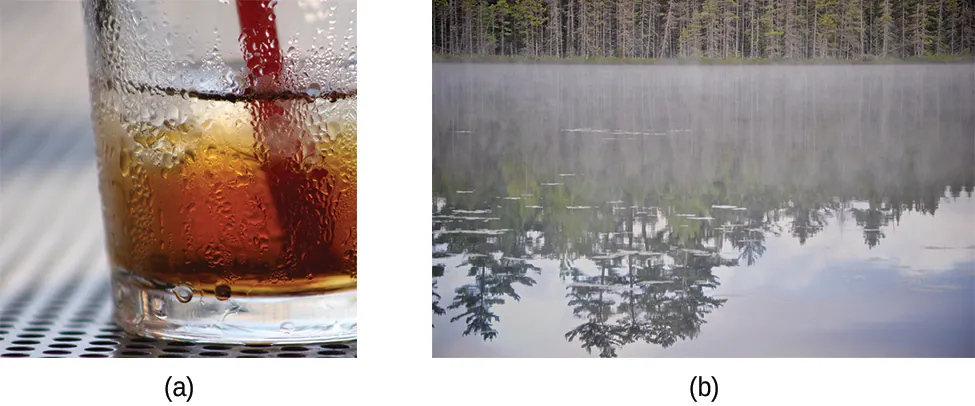
What causes condensation to form?
A. Liquid water gains enough energy to become water vapor
B. Solid ice melts directly into liquid water
C. Water vapor in the air is cooled and changes into liquid water
D. Liquid water absorbs heat and forms fog
C
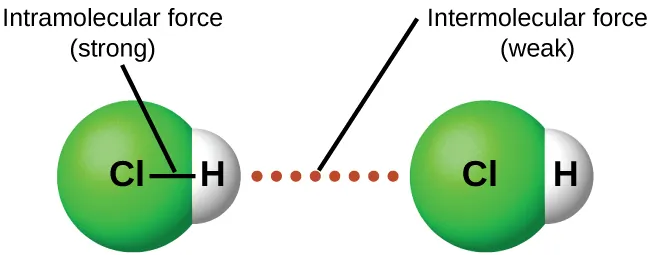
Which statement correctly distinguishes intermolecular forces from intramolecular forces?
A. Intermolecular forces hold atoms together within a molecule, while intramolecular forces act between molecules.
B. Intramolecular forces are weaker than intermolecular forces in most substances.
C. Intermolecular forces act between molecules and determine many physical properties, while intramolecular forces hold atoms together within a molecule.
D. Intermolecular forces are responsible for breaking covalent bonds during phase changes.
C
Arrange the following hydrocarbons in order of increasing boiling point:
C₂H₄, C₃H₆, C₄H₈
A. C₄H₈ < C₃H₆ < C₂H₄
B. C₂H₄ < C₃H₆ < C₄H₈
C. C₃H₆ < C₂H₄ < C₄H₈
D. C₂H₄ < C₄H₈ < C₃H₆
B
Which statement about hydrogen bonds is correct?
A. Hydrogen bonds are a type of covalent bond within a molecule.
B. Hydrogen bonds are stronger than covalent bonds.
C. Hydrogen bonds are intermolecular attractions, much weaker than covalent bonds but stronger than typical dipole-dipole forces.
D. Hydrogen bonds are weaker than most other dipole-dipole interactions.
C
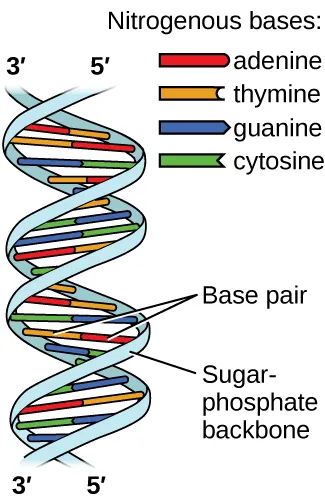
In the DNA double helix, the two strands are held together primarily by which type of interaction?
A. Covalent bonds between sugar and phosphate groups
B. Ionic bonds between nucleotides
C. Hydrogen bonds between complementary base pairs
D. London dispersion forces between nucleobases
c
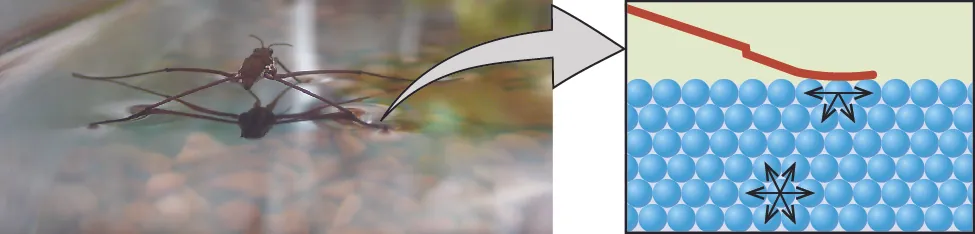
What effect does surface contamination (such as soapy or greasy films) have on water’s surface tension?
A. It increases surface tension.
B. It decreases surface tension.
C. It has no effect on surface tension.
D. It converts water into a solid.
b
Which of the following best explains why water wets glass but not polyethylene?
A. Water molecules are polar, glass is polar, and polyethylene is nonpolar, affecting adhesive forces.
B. Cohesive forces in water are weaker than in polyethylene.
C. Water forms covalent bonds with glass but not with polyethylene.
D. Glass has a lower surface tension than polyethylene.
a
Why do towels and paper towels soak up water effectively?
A. Water forms covalent bonds with the fibers.
B. Hydrogen bonds form between water molecules and the −OH groups in cellulose fibers.
C. Water is nonpolar and spreads easily on cellulose.
D. Cellulose fibers repel water, creating suction.
b
In a closed container, when the rate of condensation equals the rate of vaporization, the system is:
A. Static and no molecules move between phases
B. At dynamic equilibrium
C. Experiencing net vaporization
D. Experiencing net condensation
b
Which statement best explains why water has a lower vapor pressure than diethyl ether, even though water is smaller in size?
A. Water molecules can form extensive hydrogen bonds, which strongly hold the molecules together.
B. Water is nonpolar and has weaker London dispersion forces.
C. Water is larger than diethyl ether, so it experiences stronger London forces.
D. Water evaporates more quickly due to its small size.
a
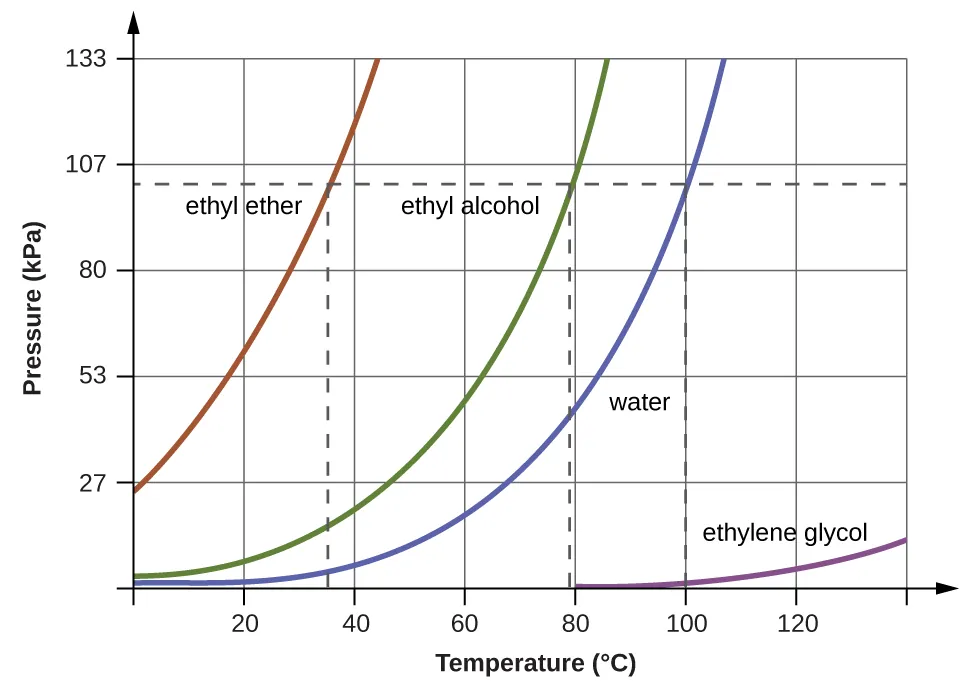
What happens when the vapor pressure of a liquid equals the external atmospheric pressure?
the liquid reaches its boiling point
How much heat is required to vaporize 200.0 g of water at 100 °C if its enthalpy of vaporization is 40.7 kJ/mol?
451.8 kJ
A mixture of solid and liquid is placed in a perfectly insulated container, and no heat is allowed to enter or escape. Which of the following statements is true about the system?
A. The solid and liquid phases remain in equilibrium, with melting and freezing occurring at equal rates.
B. The temperature of the mixture will keep rising as the solid melts.
C. The liquid will continue freezing until all of it becomes solid.
D. The solid will continue melting until all of it becomes liquid.
A
If a stove burner’s heat output is increased while water is already boiling, what happens?
A) The water temperature increases above 100°C.
B) The water boils more vigorously, but the temperature remains the same.
C) Boiling slows down because the water is already at the boiling point.
D) The water immediately evaporates without further boiling.
B
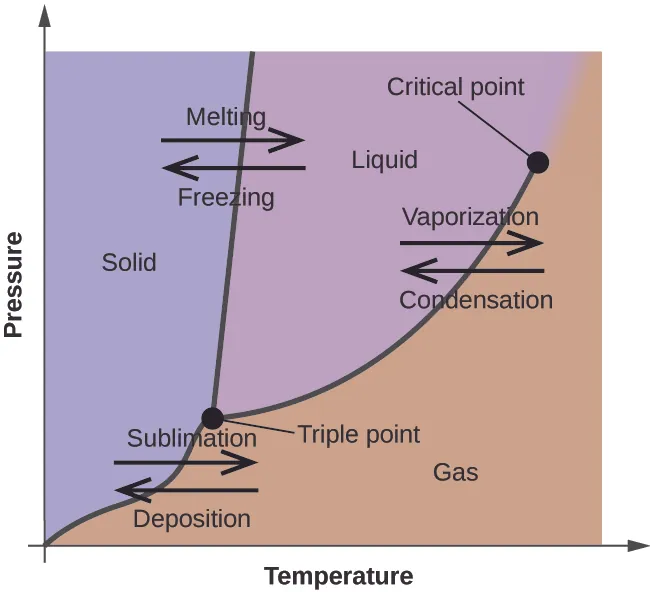
Which of the following statements about phase diagrams is correct?
A. Heating and cooling curves cannot provide any information for constructing phase diagrams.
B. A phase diagram shows only the boiling points of a substance at various temperatures.
C. Phase diagrams are unrelated to the equilibrium vapor pressure of a liquid.
D. A phase diagram combines the pressure–temperature relationships for solid-liquid, liquid-gas, and solid-gas equilibria.
D
Why does a crystalline solid have a precise melting point?
A) Its molecules are arranged randomly, so they melt gradually.
B) All the atoms or molecules are held in place by forces of equal strength, requiring the same energy to break.
C) Its intermolecular forces vary in strength, so melting occurs over a wide temperature range.
D) Crystalline solids do not actually melt; they sublimate directly.
B