Stat unit 1 hw
 Call Kai
 Learn
Learn Practice Test
 Spaced Repetition
 Match
Match Flashcards
 Knowt Play
1/26

There's no tags or description
Looks like no tags are added yet.
Name | Mastery | Learn | Test | Matching | Spaced | Call with Kai | Chat |
|---|
No analytics yet
Send a link to your students to track their progress
27 Terms
Statistics
The science of collecting, organizing, summarizing, and analyzing information to draw conclusions or answer questions. In addition, providing a measure of confidence in any conclusions
Anecdotal
the information being conveyed is based on casual observation, not scientific research
population
entire group being studied
individual
a person or object that is a member of the group being studied
sample
a subset of the population that is being studied
a statistic
a numerical summary of the sample
descriptive statistics
organizing and summarizing data through numerical summaries like tables.
inferential statistics
extending results of the sample to the population and measuring the reliability of the result
parameter
a numerical summary of a population
4 steps of the process of statistics
identify research objective
collect data needed to answer objective
describe data
perform inference
variables
the characteristics of the individuals within the population

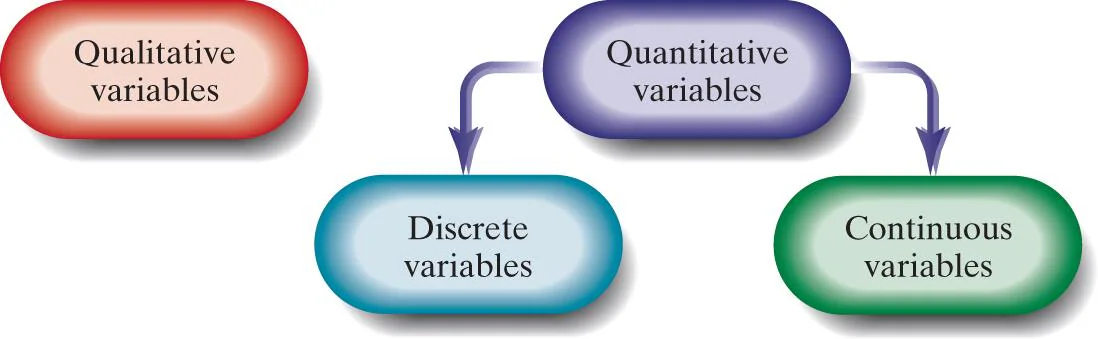
qualitative or categorical variables
allow for classification of individuals based on some attribute or characteristic
quantitative variables
provide numerical measures of individuals.
approach
a way to look at and organize a problem so that it can be solved
discrete variable
a quantitative variable that has either a finite number of possible values or a countable number of possible values.
continuous variable
a quantitative variable that has an infinite number of possible values that are not countable. needs to be measured
data frame
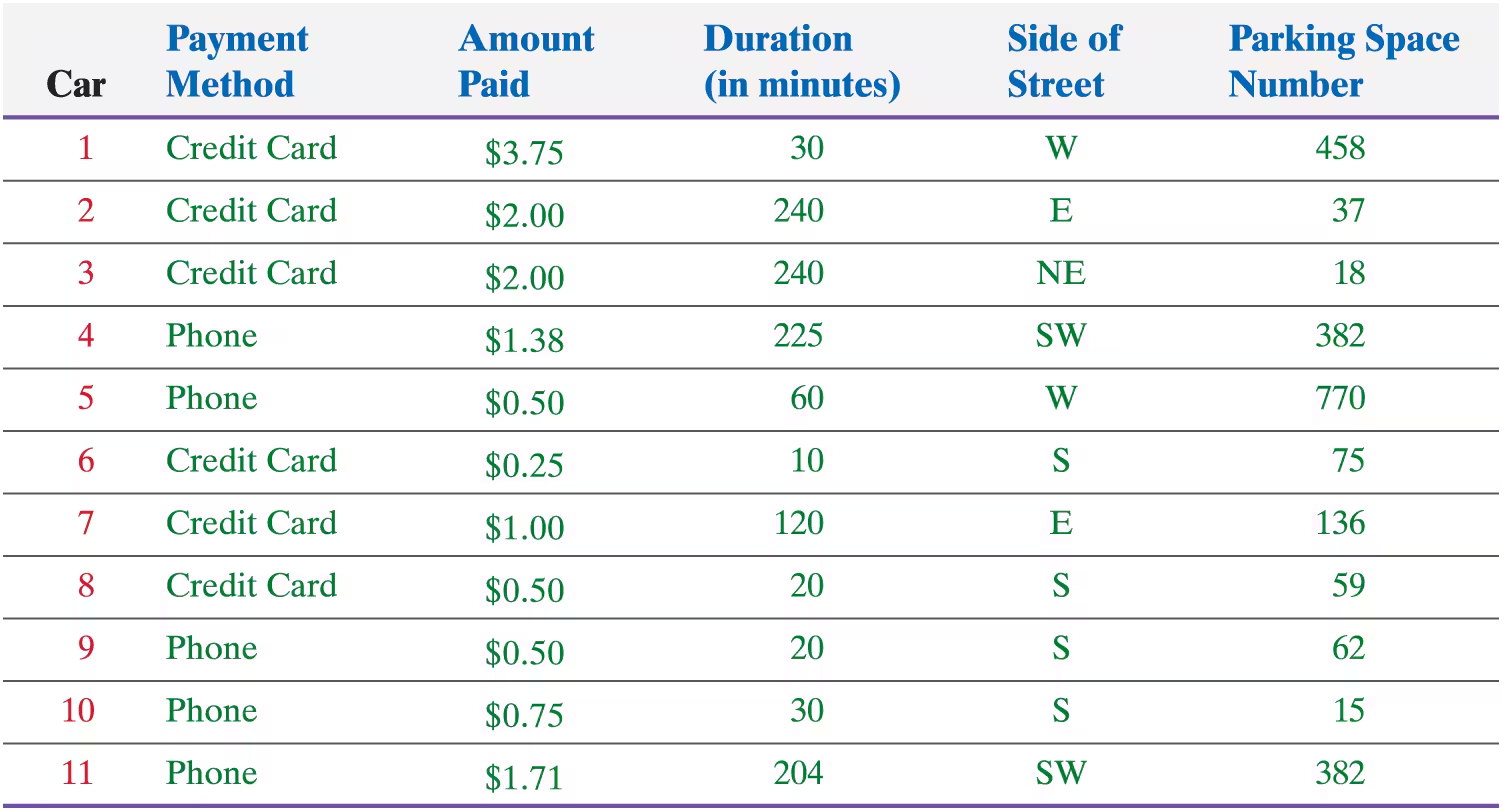
a data structure that organizes data into a table in which each row represents an individual and columns represent variables measured on each individual
nominal level of measurement
the values of the variable name, label, or categorize. In addition, the naming scheme does not allow for the values of the variable to be arranged in a ranked or specific order
ordinal level of measurement
it has the properties of the nominal level of measurement; however, the naming scheme allows for the values of the variable to be arranged in a ranked or specific order
interval level of measurement
has the properties of the ordinal level of measurement and the differences in the values of the variable have meaning. A value of zero does not mean the absence of the quantity. arithmetic operations like adding and subtracting can be performed
ratio level of measurement
has the properties of interval and the ratios of the values of the variable having meaning. a value of zero means the absence of the quanitity. arithmetic operations like multiplication and division can be performed on the values of the variable
determine level of measurement of: Race, temperature, number of day during the week that a student studied, letter grade earned in stats class
nominal, interval, ratio, ordinal
random sampling
process of using chance to select individuals from a population to be included in a sample
convenience sample
lazy way to sample and not effective
stratified sampling
obtained by separating population into nonoverlapping groups called strata, then obtaining a simple random sample from each stratum. individuals should be similar in some way.
systematic sampling
selecting every kth individual
cluster sampling
selecting individuals within randomly selected collection of individuals