review chap 1-4
 Call Kai
 Learn
Learn Practice Test
 Spaced Repetition
 Match
Match Flashcards
 Knowt Play
1/314

There's no tags or description
Looks like no tags are added yet.
Name | Mastery | Learn | Test | Matching | Spaced | Call with Kai | Chat |
|---|
No analytics yet
Send a link to your students to track their progress
315 Terms
Caudal
toward the rear/tail end

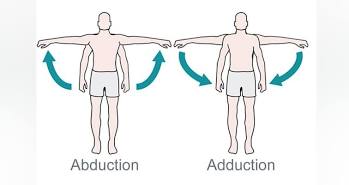
Movements for coronal / frontal plane

movement: lateral flexion (of neck/spine, side to side), abduction, adduction
axis for movements: anterior to posterior
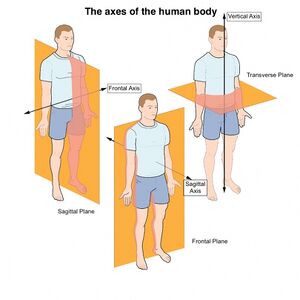
Movements for transverse / cross-sectional plane
rotation
axis for movements: superior to inferior

Movements for sagittal plane
flexion (bending) & extension (straightening)
axis for movements: lateral to medial

Rostral
toward the nose/mouth
Axial region
head, neck, trunk
forms the main vertical axis of the body
Appendicular region
upper & lower limbs
Olecranal
posterior aspect of the elbow

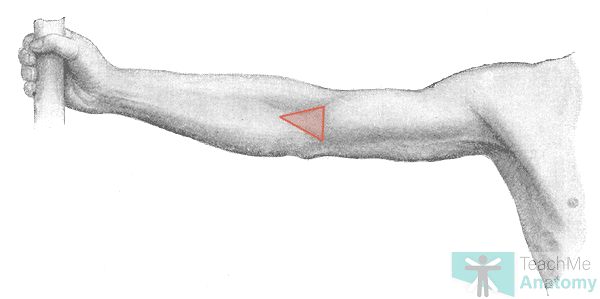
Antecubital / cubital region
region anterior to the elbow
front of elbow
Cervical
neck
Coxal
hip

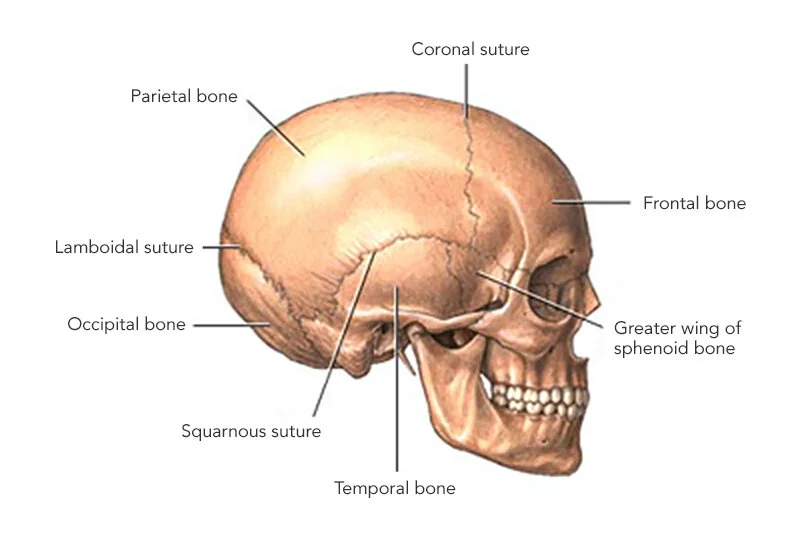
Cranial
upper part of skull that protects the brain
Crural
leg (the portion of the lower limb between the knee and the ankle)

Sural
calf
posterior aspect of the leg
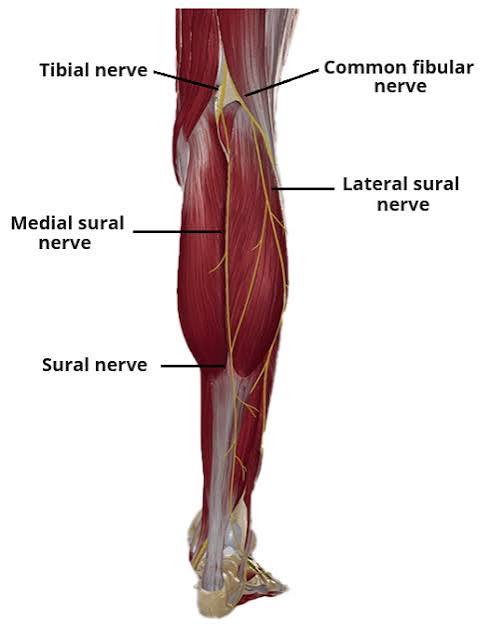
Inguinal
groin (something used to indicate the crease or junction of the thigh with the trunk)
lateral to the pubic region
Mental
chin

pollex
finger thumb
hallux
big toe
Leg bones
fibular (lateral)
tibia (medial)
Arm bones
radius (lateral) thumb side
ulna (medial) pinky side
Posterior aspect (body cavity)
in the back
completely encased in bone
physically & developmentally distinct from ventral cavities
subdivded into cranial cavity & vertebral canal

Ventral cavity
larger than posterior cavity
anteriorly placed in the body
does not completely encase organs in bone
partitioned by thoracic diaphragm into
superior thoracic cavity (heart and lungs)
inferior abdominopelvic cavity (digestive and reproductive organs)
lined with serous membranes
parietal layer: lines internal body wall surface
visceral layer: covers the organs
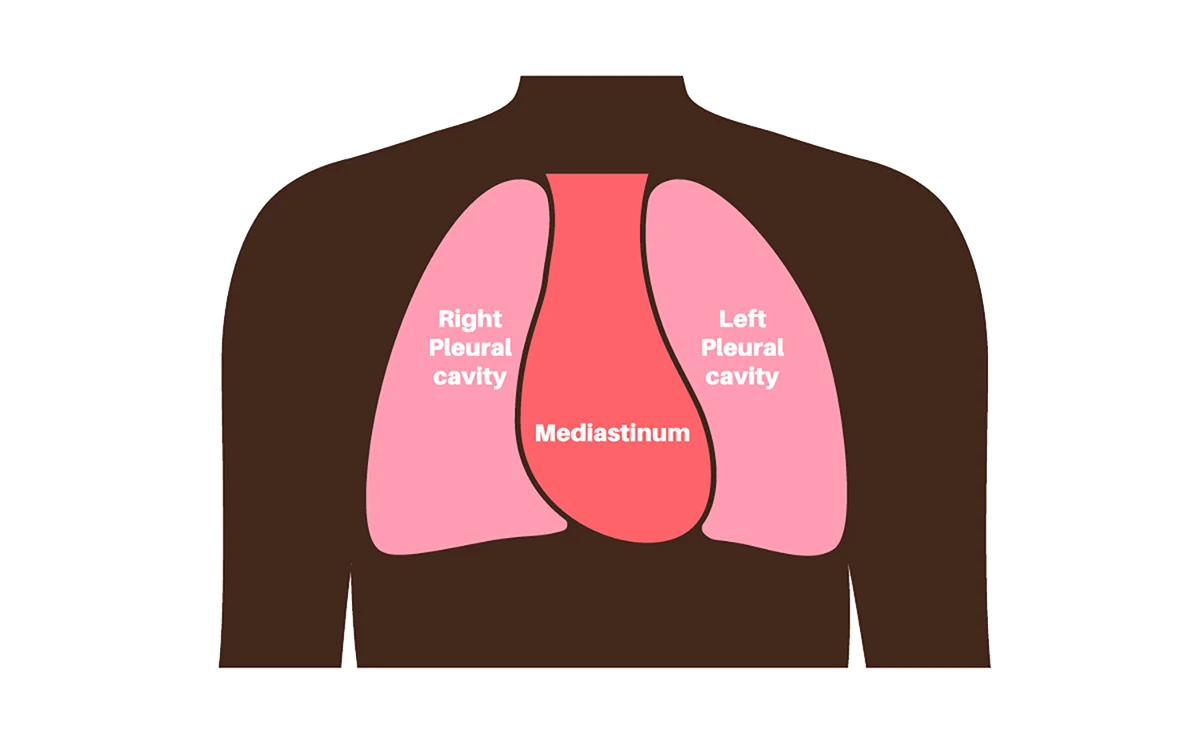
Mediastinum
median space in thoracic cavity
contains heart, thymus, esophagus, trachea, & major blood vessels that connect to the heart
does NOT include lungs, its the space between that
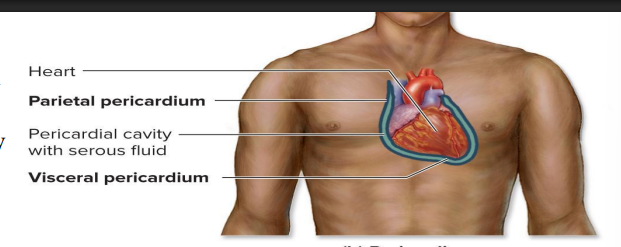
Pericardium
2 layered serous membrane associated with heart
parietal ___: outer layer, forms the sac around heart
visceral ___: forms the hearts external surface
____l cavity: space between parietal & visceral layers containing serous fluid
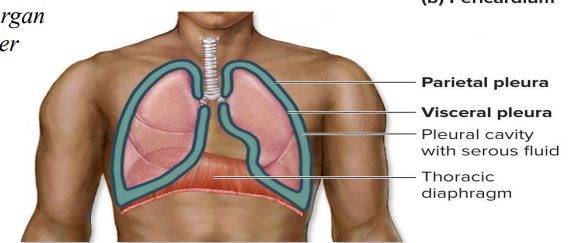
Pleura
2 layered serous membrane associated with lungs
parietal ___: outer layer lines internal surface of thoracic wall
visceral ___: inner layer covers external surface of lungs
___l cavity: space between parietal & visceral layers containing serous fluid
Peritoneum
2-layered serous membrane lining the abdominopelvic cavity
parietal ___: outer layer, lines the internal walls of abdominopelvic cavity
visceral ___: inner layer, covers the external surface of most abdominal & pelvic organs
___oneal cavity: potential space between parietal & visceral layers containing serous fluid

Normal range for homeostatic variable (body temp)
37 C / 98.6 F
Normal range for homeostatic variable (blood glucose)
80 to 110 mg/dL
Normal range for homeostatic variable (blood pressure)
90 to 120/60 to 80 mm Hg
What relies on ionizing radiaition
x rays
angiography
CT
PET scan (small amount)
Most common elements of the human body (99% of weight)
most
Oxygen
Carbon
Hydrogen
Nitrogen
Calcium
Phosphorus
least
*Oh, Can Harry Not Cook Pasta
Minor elements of the human body (less than 1% of weight)
most
Sulfur
Potassium
Sodium
Chlorine
Magnesium
Iron
least
SPS CMI
Left side of periodic table

loose /donate electrons (to form a completie valence shell)
form cations when they react
Right side of periodic table
gain electrons (to form a completie valence shell)
form anions when they react
average atomic mass
the weighted average of the atomic masses of its naturally occurring isotopes
Intracellular
the liquid found inside cells
more negative
ex. potassium (K^+), phosphate (PO4³-), CO2, protein, magnesium (Mg²+),
“Poke Inside” “Kept inside” “Keep Most Positive” “KPMPC”
Extracellular
the liquid found outside of cells
more positive
ex. sodium (Na^+), calcium (Ca²+), O2, chloride (Cl-), bicarbonate (HCO3^-)
“NaCl is out in the ocean, and we are salty on the outside” / “NaCaClB” “NaClCa + bicarbonate
Common cations
Sodium ion (Na^+)
Potassium ion (K^+)
Calcium Ion (Ca²+)
Magnesium ion (Mg²+)
Hydrogen ion (H^+)
“Silly Penquins Can Make Hugs”
Sodium ion (Na^+)
most common extracellular cation
particpant in conducting electrical signals in nerves & muscle
most important in osmotic movement of water
sodium gradient involved in cotransport of other substances across a plasma membrane
Potassium ion (K^+)
most common intracellular cation
participant in conducting electrical signals in nerves & muscle
role in glycogen storage in liver & muscle
function in pH balance
Regulates heart rhythm and supports muscle contraction
Calcium Ion (Ca²+)
extracellular
hardens bone & teeth
muscle contraction
exocytosis (including release of neurotransmitter)
blood clotting
second messenger in hormonal stimulation of cells
Magnesium ion (Mg²+)
required for ATP production
Supports immune function and helps produce energy
Hydrogen ion (H^+)
one proton + one electron
concentration determines pH of blood & other fluids of the body
Common anions
Chloride ion (Cl^-)
Bicarbonate ion (HCO3^-)
Phosphate ion (PO4)
Cheesy Burger Please
Chloride ion (Cl^-)
alters nerve cell responsiveness to stimulation
component of stomach acid (HCl)
___ shift in erythrocytes
keeps body fluids balances

Bicarbonate ion

conversion of CO2 gas to HCO3^- which is transported in the blood
buffering of pH in blood
acts as a weak base
bind with excess hydrogen ions to create carbonic acid
Phosphate ion
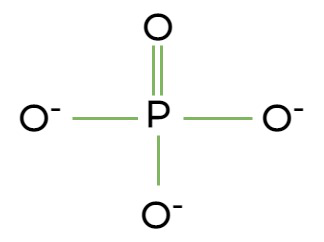
as Ca3 (PO4)2 it hardens bone & teeth
component of phospholipids (membranes)
component of nucleotides, including ATP & nucleic acids (DNA, RNA)
most common intracellular anion
intracelular buffer
Anomalies in the period table
iron (Fe)
it can form more than 1 type of ion, either a ferrous (Fe²+) or a ferric (Fe³+) ion
Whats the most common ionic compound in the body?
calcium phosphate Ca3(PO4)
hardens bone & teeth
GICoS
Give electron = Ionic Bond
Covalent Bonds = Sharing electrons
What elements most commonly form covalent bonds in the human body
Hydrogen (wants 1 bond)
Oxygen (wants 2 bonds)
Nitrogen (wants 3 bonds)
Carbon (wants 4 bonds)
HONC
What determines electronegativity
both by the # of protons in the nucleus (pull on electrons) and the proximity of the valence electron shells to the nucleus
top right of periodic table is the most __
Least to greatest electronegativity for 4 most common elements composing living organisms
hydrogen < carbon < nitrogen < oxygen
"Have Coffee Now, Okay
HCNO
Nonpolar examples
C—C
O—O
oxygen (O2)
triglyercide
carbon dioxide (CO2) (
because its linear, symmetrical shape causes its individual bond pulls to cancel out
has polar covalent bonds that extend in opposite directions can be __ bc the partial charges cancel each other
C—H (the exception) / hydrocarbons
methane gas (CH4)
Polar examples
O—H
C—O
N—H
N—O
water (H2O)
glucose (C6H12O6)
ethanol (C2H5OH)
ammonia (NH3)
carbohydrates
hydroxl (-OH)
carboxyl or carboxylic acid (—COOH)
amine (-NH2)
phosphate (PO4 ³-)
Ionic vs Covalent vs Hydrogen
Bond Type | What Happens | Charge Type | Relative Strength | Example |
|---|---|---|---|---|
Ionic | Complete transfer of electrons | Full positive and negative ions | Strong | Table salt (Nacl |
Covalent | Equal or unequal sharing of electrons | Neutral or partial charges (polar/nonpolar) | Strongest overall / Very stable | Water (H2O) |
Hydrogen | Attraction between molecules (no electron exchange) | Partial positive (H) and partial negative atom | Weak individuall, collectively stong | Water droplet surface tension / DNA strands |
Organic molecules
carbon + hydrogen
are (or were) part of a living organism
ex. glucose, proteins, triglyceridedes
in__ ___ is all other molecules
ex. water, salts, acids, bases
Water
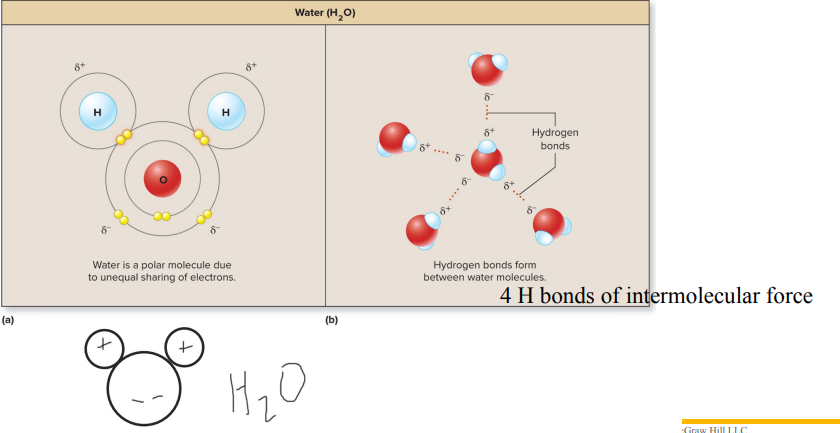
is polar
oxygen atom has 2 partial negative charges
each hydrogen has 1 single partial positive charge
can form 4 hydrogen bonds with other water molecules
inorganic
universal solvent (esp of the body)
bathes organs in fluid which provides protection & support
neutral
+ hydrogen ions (H^+) = - hydroxide ions (-OH)
2/3 of body weight
functions
transports
substances dissolved in water move easily throughout body
lubricates
decreases friction between body structures
cushions
absorbs sudden force of body movements
excretes wastes
unwanted substances dissolve in water are easily eliminated
Properties of water
cohesion
attraction between water molecules due to hydrogen bonding
surface tension
inward pulling of cohesive forces at surface of water / tendency of a liquids surface to resist breaking when placed under stress
causes moist sacs of air in lungs to collapse
surfactant, a lipoprotein, prevents collapse
adhesion
attraction between water molecule & a substance other than water
high specific heat
• Amount of energy required to increase temperature of 1 gram of a
substance by 1 degree Celsius
measures how much heat water can absorb before its temperature changes
water’s value extremely high due to energy needed to break hydrogen bonds
contributes to keeping body temperature constant
high heat of vaporization
• Heat required for release of molecules from a liquid phase into a
gaseous phase for 1 gram of a substance
• Water’s value very high due to hydrogen bonding
• Sweating cools body
• Excess heat dissipated as water evaporates
Substances that dissolve in water
hydrophilic substances
ions (charged stuff)
polar organic molecules (glucose, carbohydrates)
water surrounds substances, forms a hydration shell
some substances dissolve but remain intact
for ex, glucose & alcohol
nonelectrolytes remain intact but do not conduct current
some substances dissolve & dissociate (separate)
NaCl disscoiates into Na^+ and Cl^- ions
salts, acids and bases, such as HCI
electrolytes can conduct current
Nonelectrolytes
dissolve & remain intact
the solution cannot conduct an electric current because it lacks free charges.
ex. polar organic molecules, glucose

Electrolytes
dissolve & dissociate
breaks apart into charged particles called ions in water
free-moving ions carry an electric current through the water
ex. ionic compounds, salts (NaCl), acids (HCI), bases (NaOH)

Micelle
tiny clusters of molecules that trap oils and fats on the inside while staying dissolved in water on the outside.
formed by a single layer (monolayer) of surfactant or lipid molecules / bile salts
are amphiphilic
found in digestive tract
associated w the breakdown & absorption of nonpolar molecules (like triglycerides)
Which property contributes to body temperature regulation through sweating?
high heat of vaporization
waters high specific heat
hydronium ion
H3O^+
a water molecule that picks up an extra hydrogen ion from another as a result of dissociation
H2O + H2O → H3O^+ + OH^- simplified to H2O → H + OH^-
Acid
proton donor: dissociates in water to produce hydrogen ion/protons (H^+) and an anion
increases concentrations of free H^+
strong ___: more dissociation of H^+
for ex, HCl in the stomach
found in stomach juice to break down food
weak ___: less dissociation of H^+
for ex, carbonic acid (H2CO3) in the blood
found in blood to help maintain pH balance.
summary: substance A (an __ in water) → H^+ Anion
+ water = _ic solution
Base
proton acceptor: accepts H^+ when added to solution
decreases concentration of free H^+
stronger __: more absorption of H^+
for ex, ammonia & bleach
weaker __: less absorption of H^+
for ex, bicarbonate (HCO3^-) in blood & in secretions released into small intestine
summary: substance B (a __ in water) + H^+ → B—-H
__ + water = __ic solution
Examples of acidic things (pH<7)
hydrochloric acid (strongest)
lemon juice, stomach acid
wine
grapefruit juice
tomato juice
urine
milk, saliva
Examples of basic things (pH>7)
sodium hydroxide (strongest)
household bleach
household ammonia
antacid
seawater
human blood
Buffers
keep pH stable / help prevent pH changes if excess acid or base is added
act to accept H^+ from excess acid or donate H^+ to neutralize base
carbonic acid (H2CO3) / (weak acid) & bicarbonate (HCO3^-) (weak base) buffer blood pH
both help maintain blood pH in a critical range (7.35 to 7.45)
Mixtures
formed from combining 2 or more substances
2 defining features
substances mixed are not chemically changed
substances can be separated by physical means
ex. evaporation or filtering
types of water __ = suspensions, colloids (emulsion), solutions
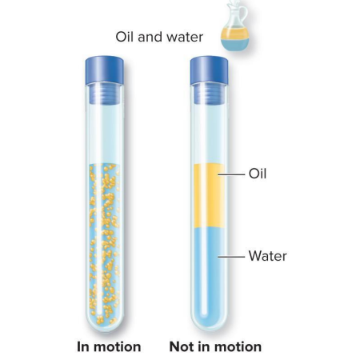
Suspension
material large in size than 1 mm mixed with water (very large)
heterogenous mixture
particle are heavy & settle at bottom if left standing
does not remain mixed unless in motion
blocks/scatters light heavily
appears cloudy or opaque
ex. blood cells within plasma or sand in water

Colloid
smaller (polar) particles than a suspension, but larger than those in a solution (medium)
heterogeneous mixture
remains mixed when not in motion / particles do not settle when left undisturbed
scatters light
appears opaque / mily
ex. fluid in cell (cytosol) & fluid in blood plasma, milk, fog, gelatin, smoke
ex. Blood plasma contains water mixed with proteins
special category: emulsion
water & a nonpolar liquid substance
ex. oil & vinegar salad dressing, breast milk
does not mix unless shaken
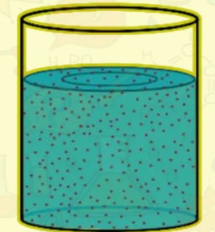
Solution
homogeneous mixture of material smaller than 1 nanometer (very small)
dissolves in water
does not scatter light, does not settle if solution not in motion
ex. sugar water, salt water, soda, blood plasma
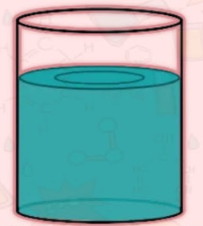
Emulsion
special category of colloid
water (polar) & nonpolar liquid substance
ex. oil & vinegar salad dressing, breast milk
does not mix unless shaken
Mass/volume (solution concentration)
expressed as: mass of solute per volume of solution
unit of measurement: ug solute/dL solution & mg solute/dL solution
ex: results from blood test
normal blood concentration of iron is within the range 40-50 ug/dL
normal blood concentration of glucose is between 70-110mg/dL
Mass/volume percent (solution concentration)
expressed as: grams of solute per 100 milliliters (mL) of solution
unit of measurement: grams/100 mL
ex: IV solutions
5% dextrose intravenous (IV) solution (D5W) has a concentration of 5 grams of dextrose (glucose) per 100 mL of solution
physiologic saline (0.9% NaCl) has a 0.9 gram of NaCl per 100 mL of solution
Molarity (solution concentration)
expressed as: moles of solute per liter of solution
moles solute/L solution
unit of measurement: moles solute/L solution
alters with changes in temp
water temp above 4C, solution expands & __ decreases
is less accurate, but more easily measured in the body so more often used
ex:
molar solution of glucose is made by place 180.10 grams (its molecular mass) of glucose into a container & adding enough water until it measures 1 liter)
0.164 mol/L solution
Molality (solution concentration)
expressed as: moles of solute per kilogram of solvent
moles solute/kg solvent
unit of measurement: moles solute/kg solvent
does not alter with changes in temp
is more accurate, but more difficult to measure in human body
ex:
solution of one __ is made by placing 180.10 grams of glucose into a container & adding 1 kg of water
0.164 mol/kg solvent
Osmoles (osm)
reflect whether a substance either dissolves (nonelectrolytes), or dissolves & dissociates (electrolytes) when placed into a solution
can be expressed as either osmolarity or osmolality
unit of measurement for the # of particles in a solution
generally used to reflect the extent a solution is able to alter water movement through osmosis
if a solute dissolves but does not dissociate, osmolarity = 1 ___
ex. glucose, amino acids or proteins placed in water
if solute both dissolves & dissociates = there is a change in the # of particles after the solute is in solution
ex. NaCl & CaCl2
1 molar (1M) solution of NaCl dissociates in solution to form both 1 M Na^+ & 1 M Cl^-
thus, 2 osm
Each molecule of CaCl2 dissolves into 3 particles: 1 Ca²+ & 2 Cl^-
thus, 1 M CaCl2 = 3 osm
Millosmoles (mOsm)
range of values associated with the body is generally much smaller than osmoles so this is used
1 osm = 1000 mOsm
normal blood serum may be expressed as either 275 to 295 mOsm per liter or kilogram
Functional groups
2 or more atoms that, when present together on a molecule, always exhibit the same specific chemical characteristics
may act as an acid & release H^+ (like a carboxyl group)
may act as a base & bind H+ (like a amine group)
ex. (listed are polar & able to form hydrogen bonds, increasing the molecules solubility in water)
hydroxl (-OH)
carboxyl or carboxylic acid (—COOH)
amine (-NH2)
phosphate (PO4 ³-)
Biological macromolecules
Carbohydrates, Lipids, Proteins, & Nucleic acids (CLPN clip in")
large organic molecules synthesized by the body
(NCHOPS)
always contain carbon, hydrogen, & oxygen
some may also have nitrogen, phosphorus, or sulfur
diverse “carbon skeletons”
hydrocarbons: contain only carbon & hydrogen atoms
contain functional groups (typically more than 1)
most are polar & able to hydrogen bond
some act like acids (ex. carboxyl group)
some act like bases (ex. amine group)
Hydroxyl

Properties
polar
forms hydrogen bonds
increases molecules solubility in water
Representative Molecules
carbohydrates
proteins
nucleic acids
lipids
Carboxyl -COOH (carboxylic acid)

Properties
polar
forms hydrogen bonds
increases molecules solubility in water
acts as an acid
releases H^+
Representative Molecules
proteins
lipids
Amine (-NH2)
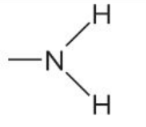
Properties
polar
forms hydrogen bonds
increases molecules solubility in water
acts as a base
binds H^+
Representative Molecules
proteins
nucleic acids
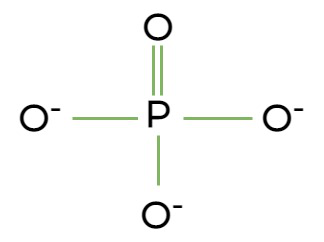
Phosphate (PO4 ³-)
Properties
polar
forms hydrogen bonds
increases molecules solubility in water
forms phosphodiester bonds
acts as an acid
Representative Molecules
nucleic acids
phospholipids
ATP
List the three biological macromolecules that are polymers and the monomers that compose them.
nucleic acid
polymer: DNA, RNA
monomer: nucleotides
carbohydrates
polymer: starch, glycogen, cellulose
monomer: monosaccharides
protein:
polymer: polypeptides
monomer: amino acids
Ethanol
C2 H5 OH
Which element both (a) forms a common ion and (b) is a common element in biological macromolecules?
hydrogen
present in all 4 classes of biological macromolecules (carbohydrates, lipids, proteins, and nucleic acids)
looses a single electron to form the hydrogen ion (H^+)
What functional groups may act as an acid?
Carboxyl (-COOH)
Phosphate (-PO4 ²-)

Triglycerides
composition: glycerol & 3 fatty acids
fatty acids
vary in length & of double bonds
saturated: lack double bonds
unsaturated: 1 double bond
polysaturated: 2 or more double bonds
function: long-term energy storage in adipose connective tissue, structural support, cushioning, insulation of the body
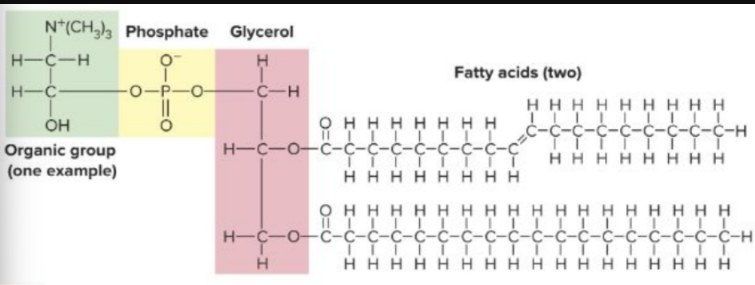
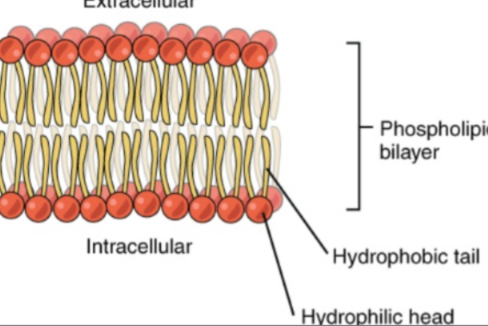
Phospholipids
composition: glycerol & 2 fatty acids, a phosphate & various organic groups
are amphipathic molecules
polar head (hydrophilic): glycerol, phosphate, organic groups
2 nonpolar tails (hydrophobic): fatty acids
function: component of membranes (plasma membrane), serves as chemical barriers of cell membranes

Steroids
composition: 4 rings composed predominantly of hydrocarbons that differ in the side chains extending from the rings
4 carbon rings: three have 6 carbon atoms, one has 5 carbon atoms
ex: cholesterol, __ hormones, bile salts
functions:
cholesterol: component of plasma membranes & the precursor molecule for synthesis of other steroids
___hormones: regulatory molecules released by certain endocrine glands (testosterone, estrogen)
bile salts: facilitate micelle formation in the digestive tract

Eicosanoids
composition: modified 20-carbon fatty acids, synthesized from arachidonic acid, membrane component / from phospholipids composing the plasma membranes
act locally
classes: prostaglandins, prostacyclins, thromboxanes, leukotrienes
function: locally acting signaling molecules associated with all body systems, primary functions in both inflammatory response of the immune system & communication within the nervous system

Saturated
lack double bonds
most animal fats are __
most are solid at room temp

Unsaturated
one double bond
“uno ___”
most vegetable fats are __
most are liquid at room temp
generally healthier
can be converted to the latter through hydrogenation
hydrogenation
a chemical reaction that adds molecular hydrogen (H₂) to another compound
turning unsaturated bonds into saturated single bonds
partial __ may lead to trans fats
increases risk of heart attack & stroke
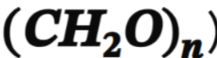
Carbohydrates
hydrated carbon
an —-H & an — OH are usually attached to every carbon
n = # of carbon atoms
ex. glucose, glycogen
Monosaccharides
simple sugar monomers
ex “Go For Ruby & Gold ”
Glucose
Fructose
Ribose (+deoxyribose)
Galactose