Dental Anatomy - Exam 1
 Call Kai
 Learn
Learn Practice Test
 Spaced Repetition
 Match
Match Flashcards
 Knowt Play
1/43

Earn XP
Description and Tags
Flashcards covering dental anatomy terminology, tooth classifications, numbering systems, and periodontal structures based on the ORBG 5005 lecture notes.
Name | Mastery | Learn | Test | Matching | Spaced | Call with Kai | Chat |
|---|
No analytics yet
Send a link to your students to track their progress
44 Terms
Primary Dentition
Also known as deciduous teeth; consists of a total of 20 teeth with 5 teeth per quadrant. NO PREMOLARS
Mixed Dentition
The stage of dentition occurring approximately between the ages of 6 and 12 years.
6 year molars (1st molars) erupt first
Tuberosity Area
The anatomical area located behind the maxillary molars.
Retromolar Area
The anatomical area located behind the mandibular molars.
Succedaneous
A permanent tooth that replaces a primary tooth, specifically incisors, canines, and premolars.
Non-succedaneous
Permanent teeth that do not replace primary teeth, specifically the 1st, 2nd, and 3rd molars.
Palmer Notation
A system where each quadrant has a bracket indicating location followed by a number 1 to 8.
International System
A two-digit numbering system where the first number indicates the quadrant (1 to 4) and the second number indicates the tooth (1 to 8, starting from the central incisor).
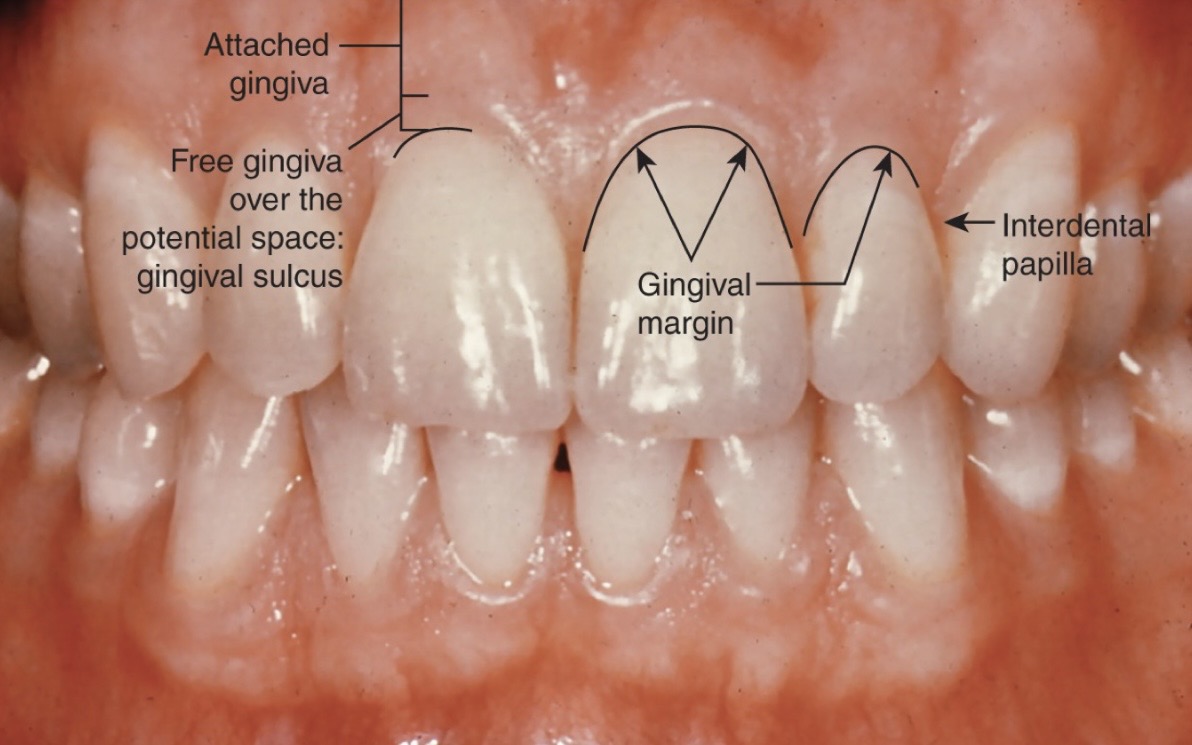
Attached Gingiva
Gingiva that is bound to the underlying alveolar bone.
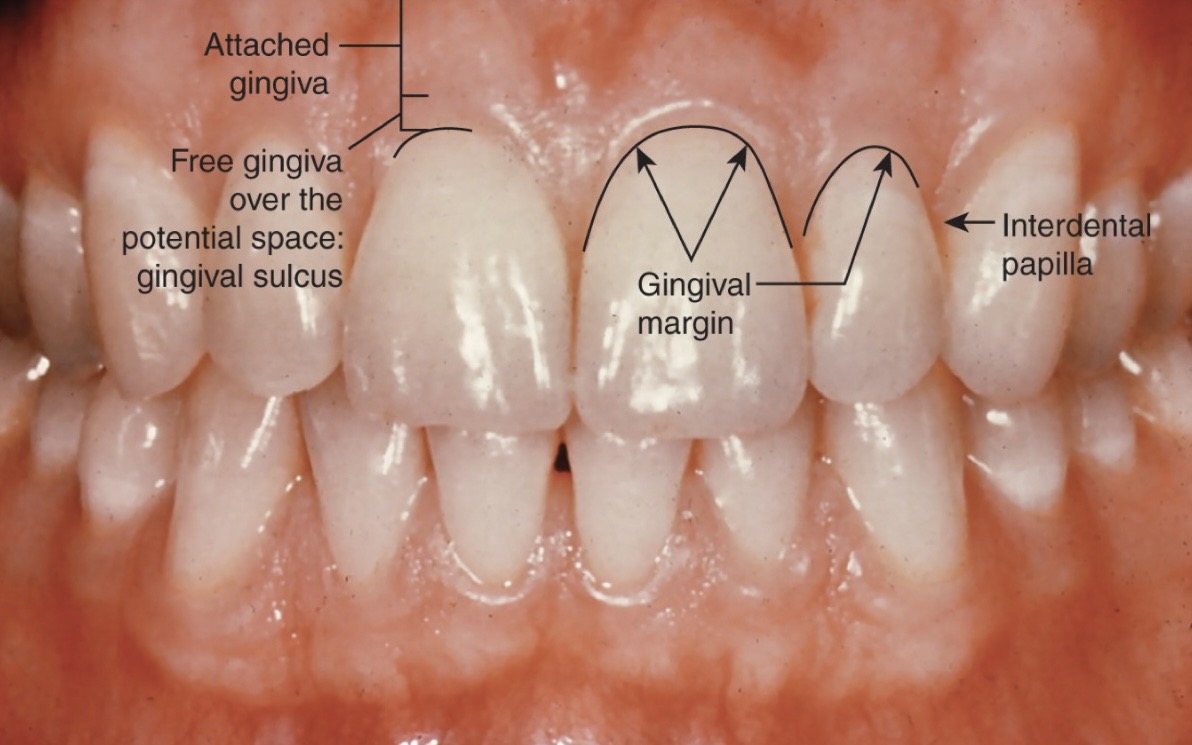
Free Gingiva
A collar of thin gingiva that surrounds each tooth.
Alveolus
The socket or cavity where the root of the tooth is held.
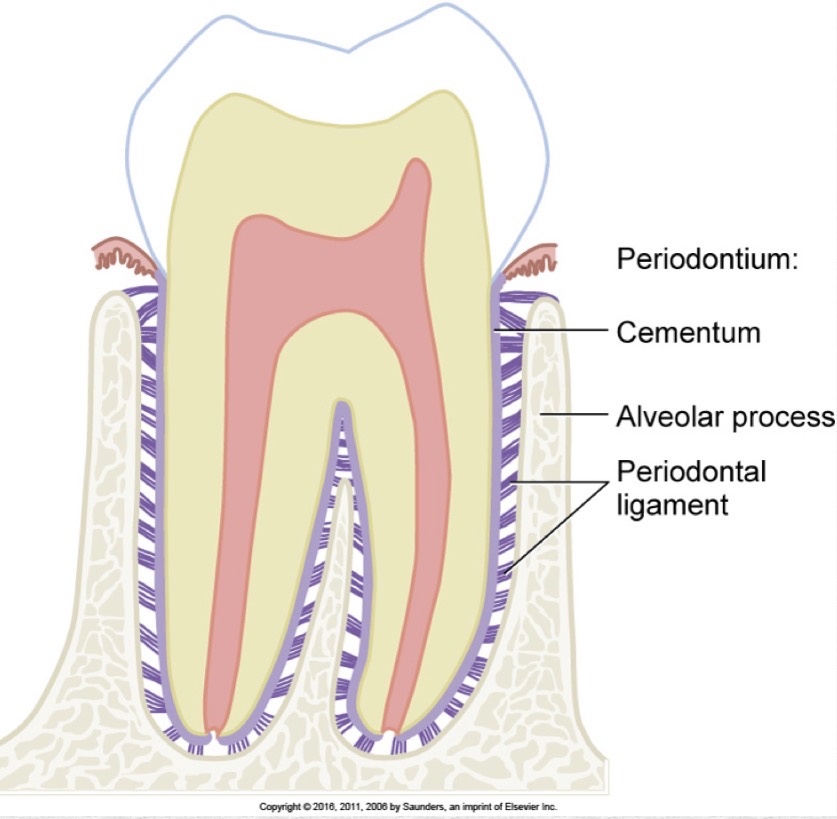
Periodontium
The collective tissues that anchor, support, and protect the teeth, including gingiva, cementum, alveolar bone, and PDL.
Cementum
The tooth tissue that covers the root surface.
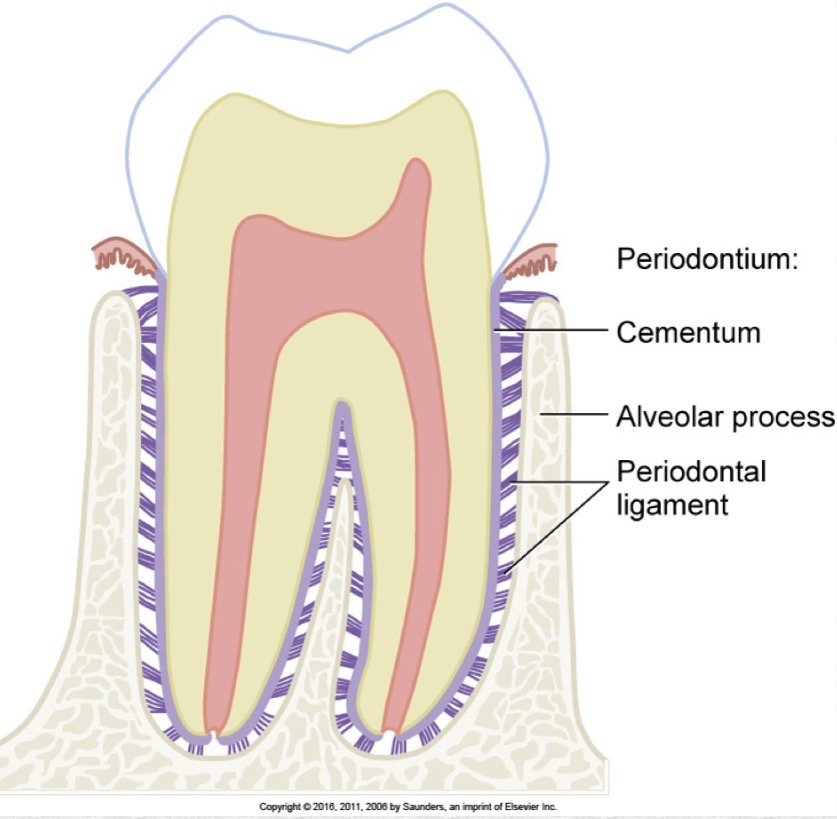
Periodontal Ligament (PDL)
Fibers that connect the cementum on the tooth root to the alveolar bone, anchoring the tooth into the socket.
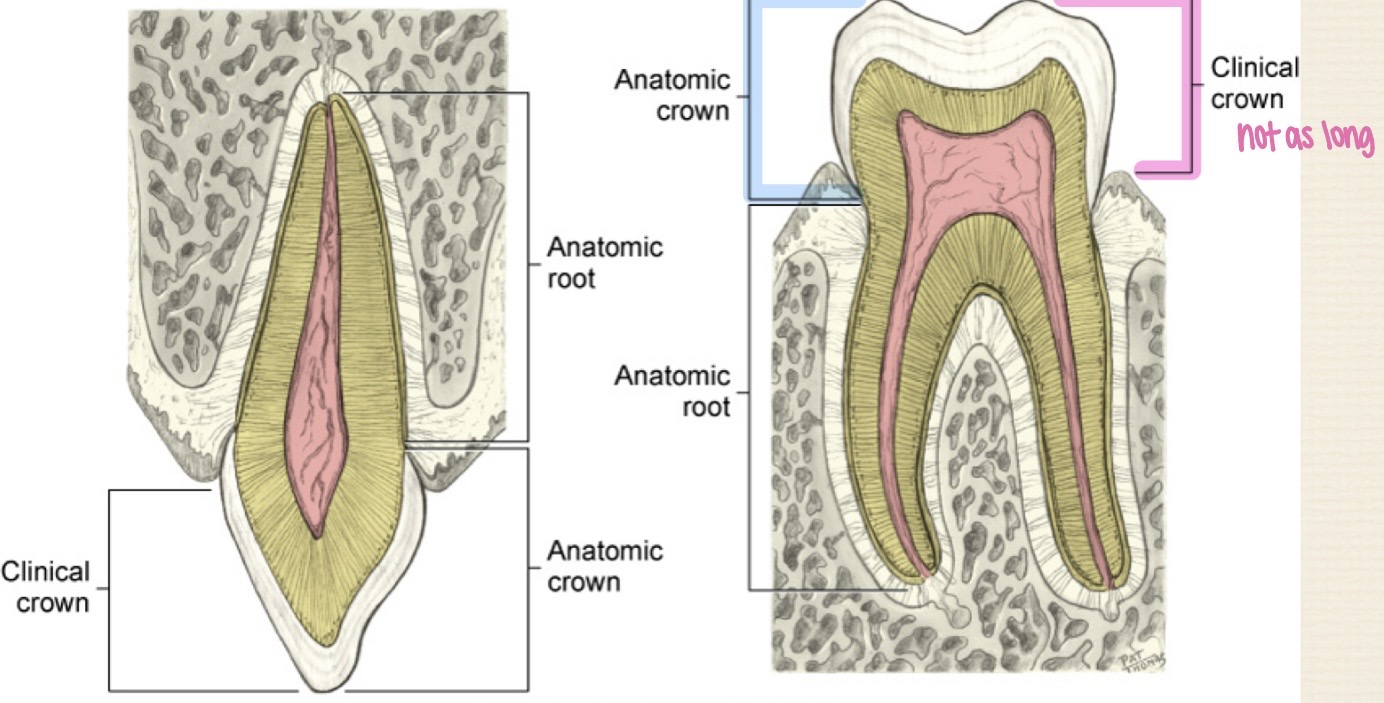
Anatomic Crown
The portion of the tooth covered by enamel.
Anatomic Root
The portion of the tooth covered by cementum.
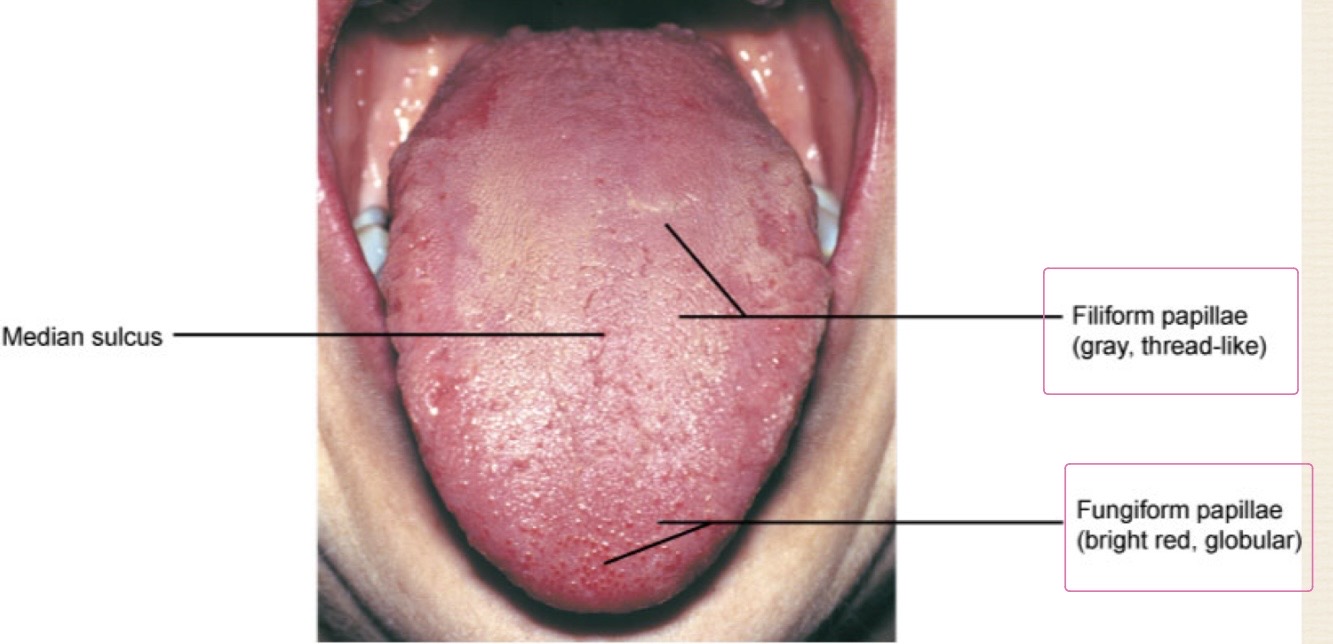
Tongue - filiform
Gray, threadlike. TOUCH
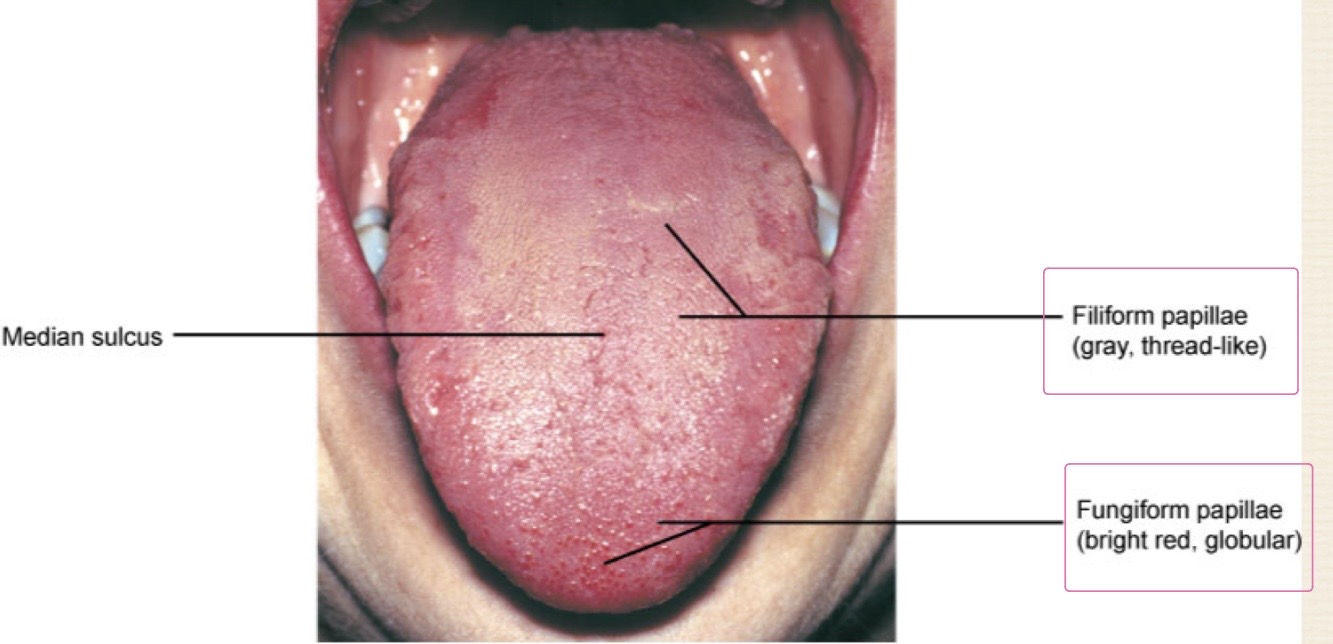
Tongue - fungiform
Red, globular. TASTE
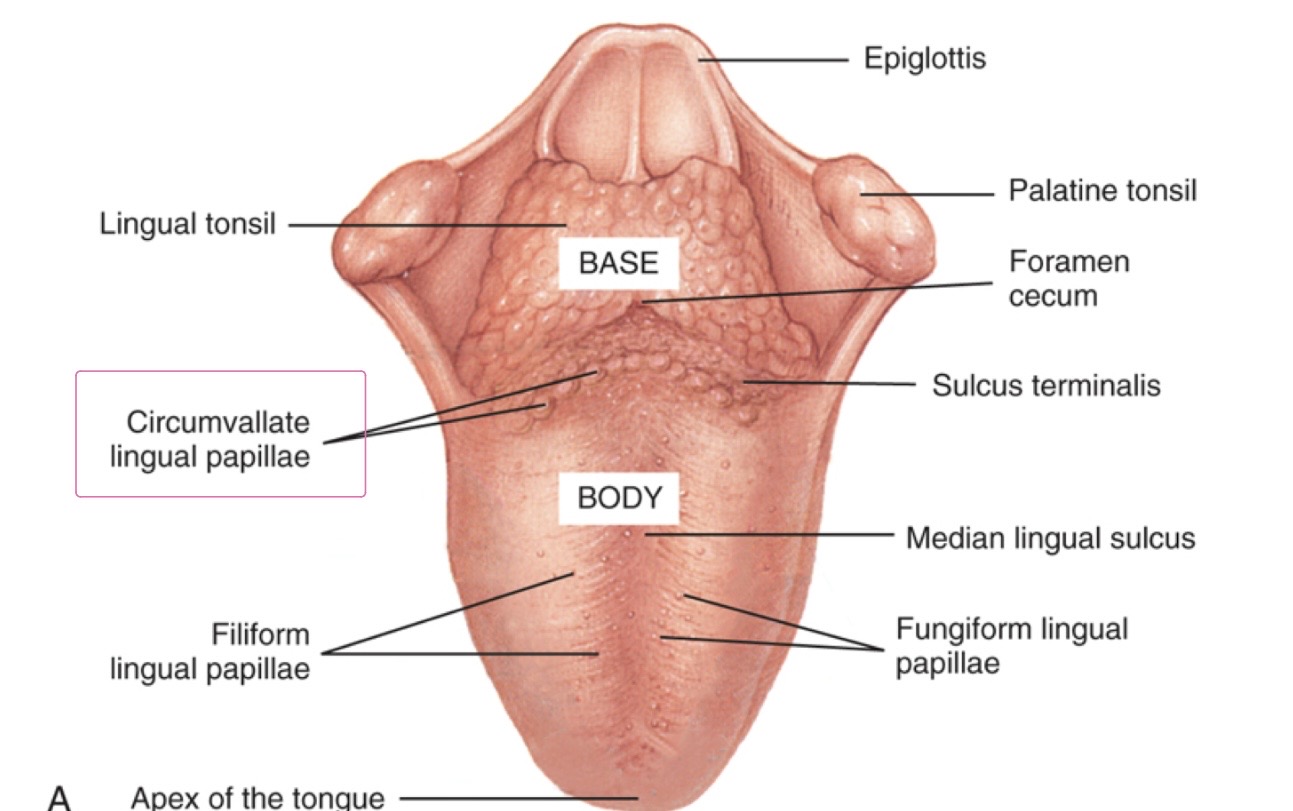
Tongue - circumvallate
Larger papillae in posterior tongue. TASTE
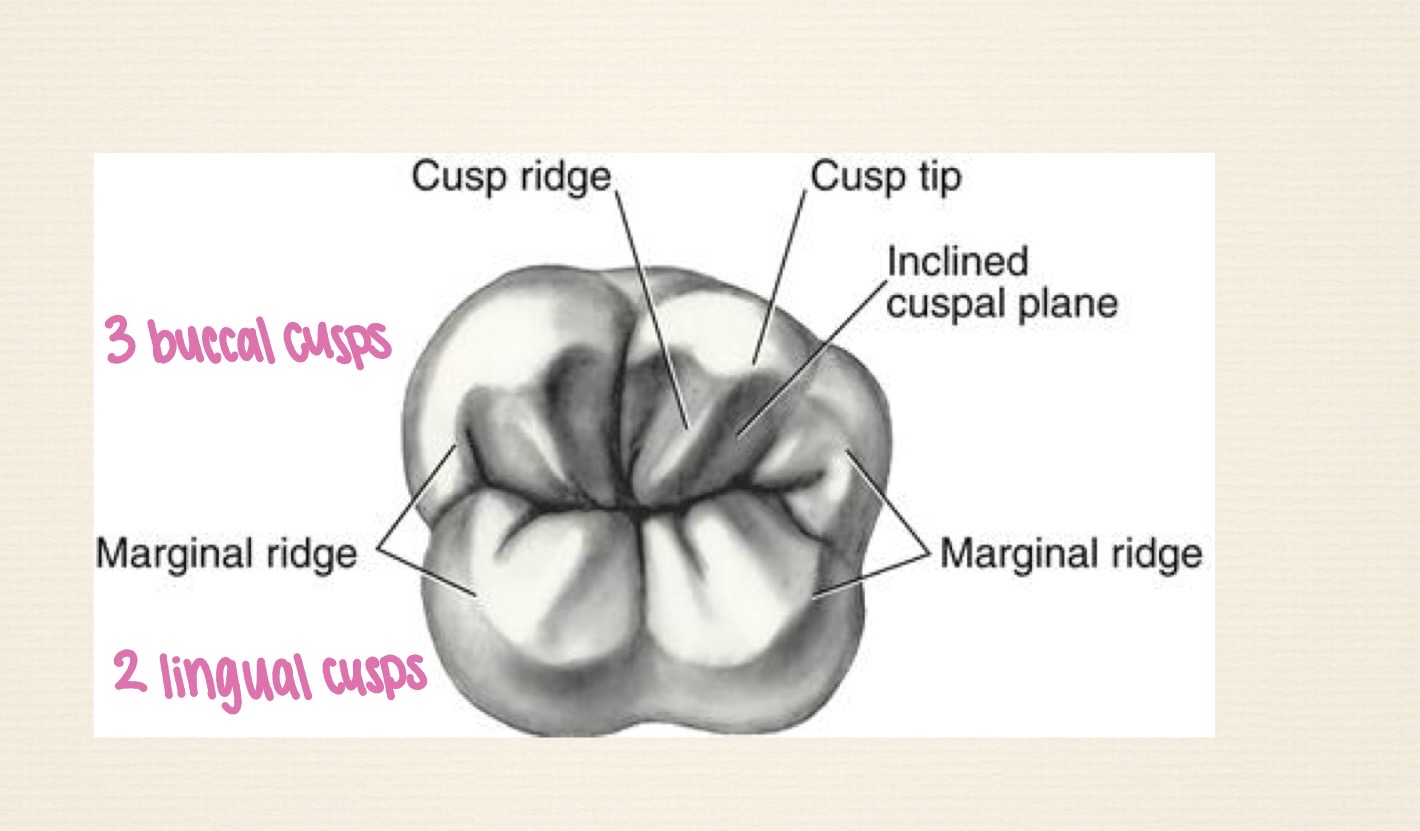
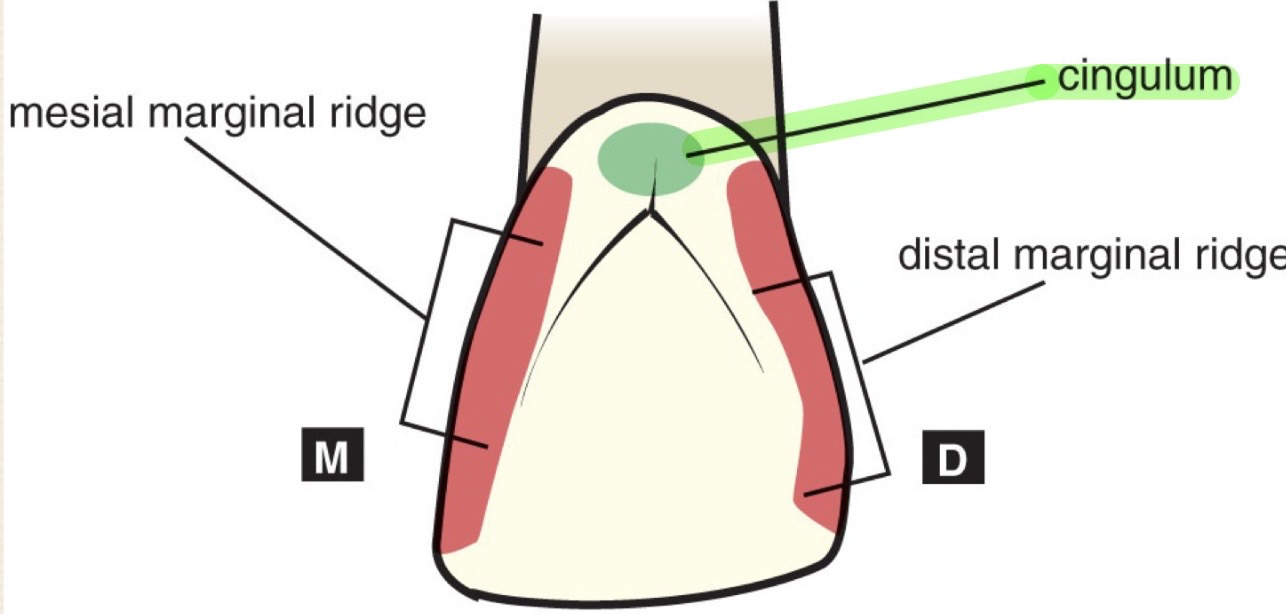
Marginal ridge
Along the borders of enamel; form mesial and distal margins
Transverse ridges
Where buccal and lingual ridge join
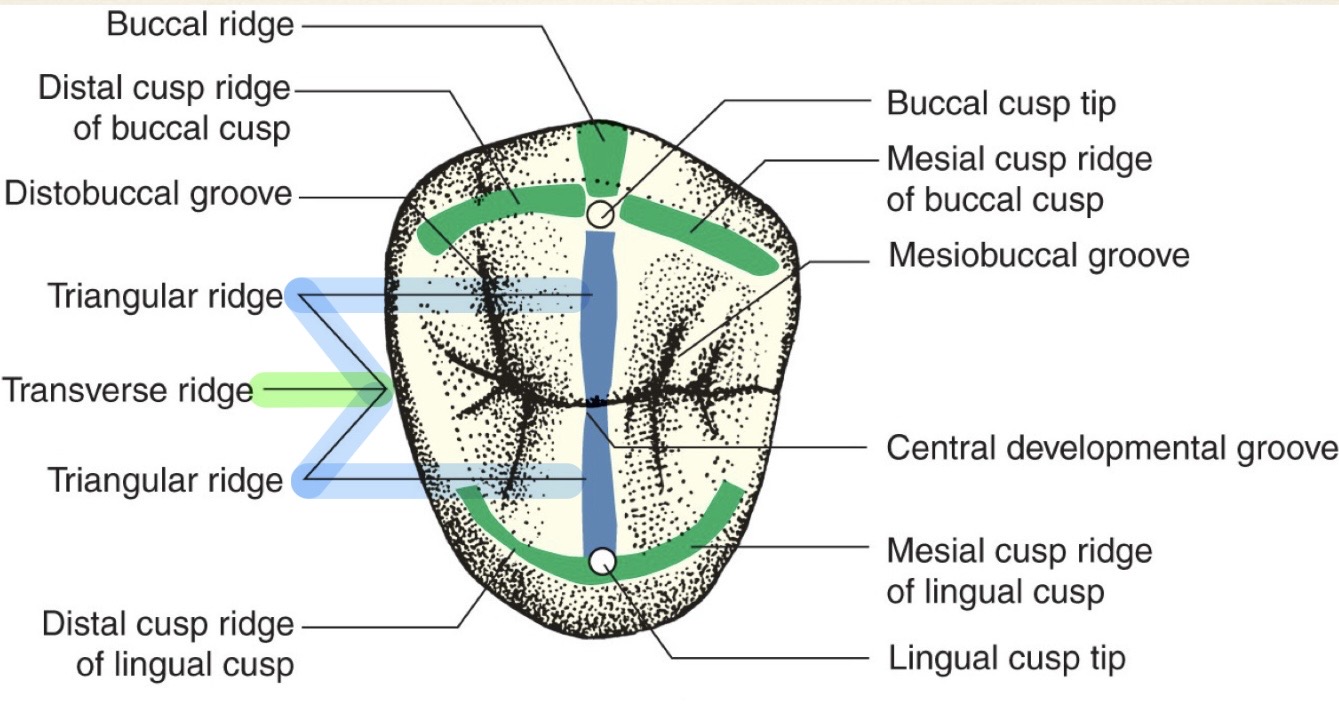
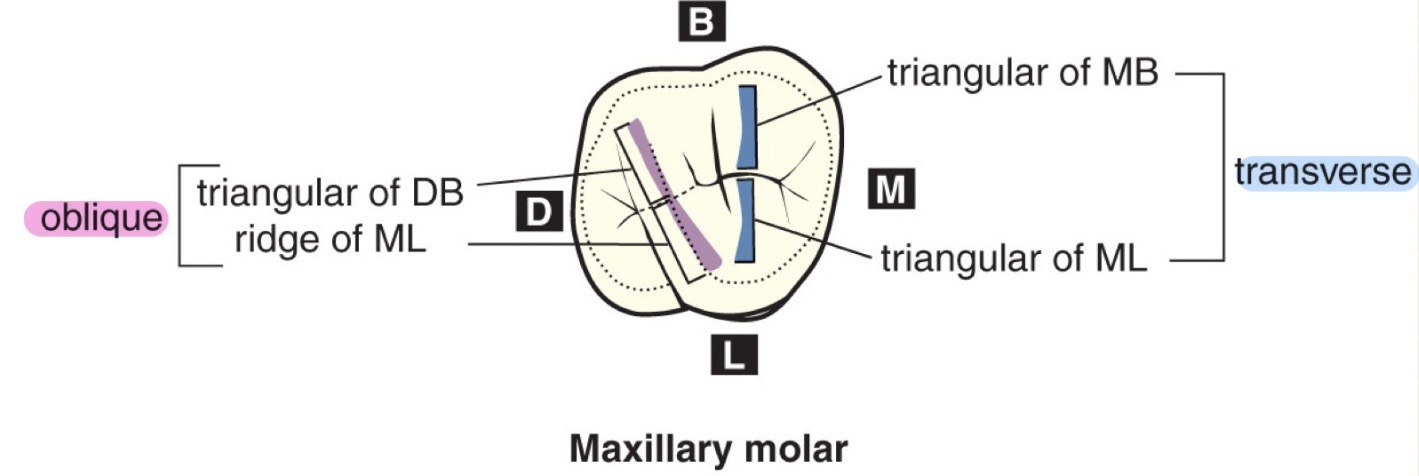
Oblique ridge
Maxillary molars only. Union of distobuccal cusp and the distal cusp ridge of the mesiolingual cusp
Cingulum
Bulge of enamel on cervical third of lingual surface
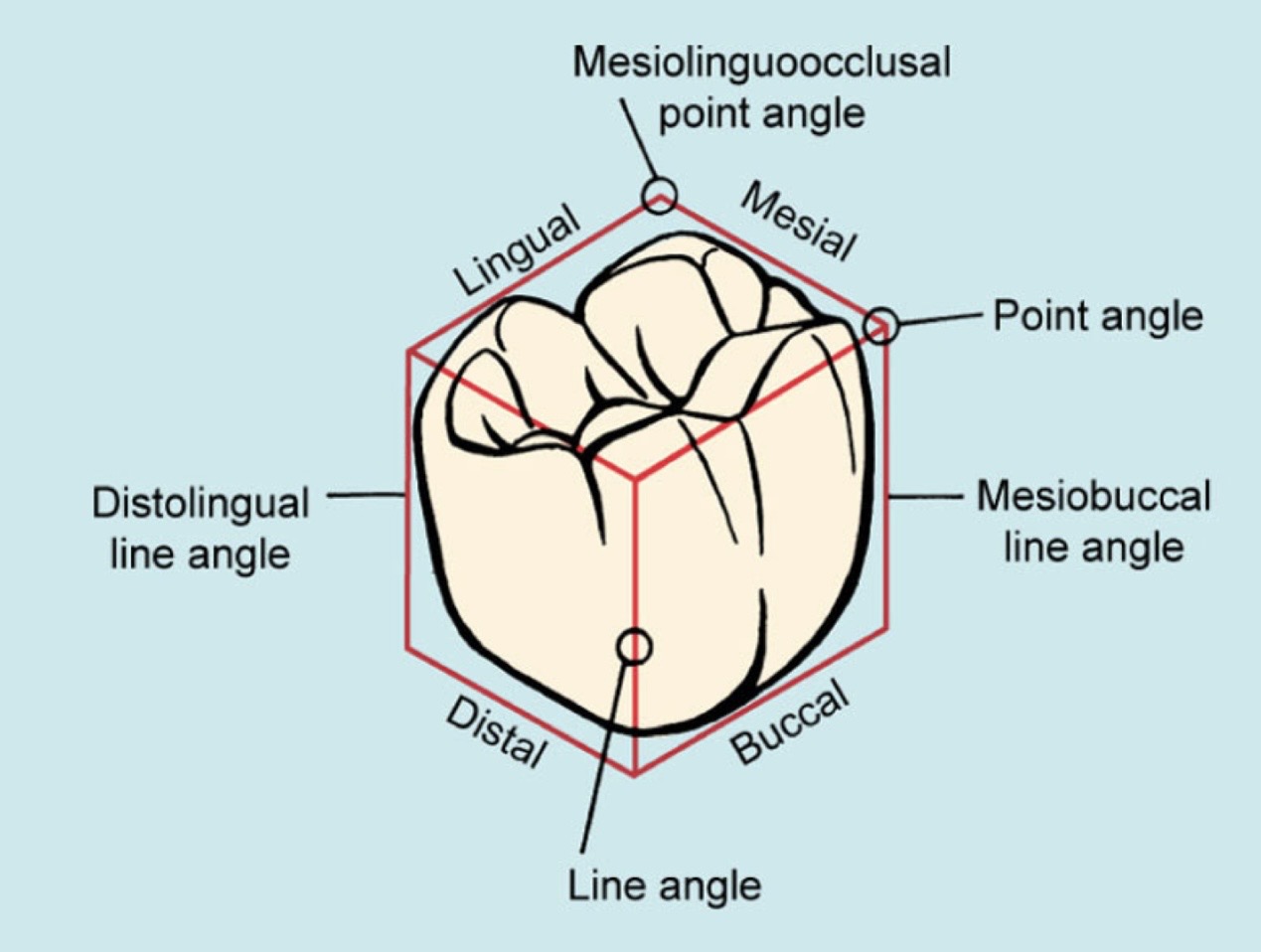
Line angle / point angle
See photo
Anatomic vs clinical crown
See photo
T/F The only anterior tooth that is lacking a cingulum is the mandibular lateral incisor
False - all anterior teeth have a cingulum
The attachment apparatus consists of:
alveolar bone, cementum and periodontal ligament
non - succedaneous teeth:
permanent maxillary molar , primary maxillary first premolar
Which teeth have two lingual fossae separated by a lingual ridge?
all canines
A permanent second premolar replaces which primary tooth:
primary second molar
permanent anterior teeth height of contour
cervical third
mandibular lateral incisor facial view
mesial side of crown is often linger than the distal, causing incisal ridge to slope downward (helps distinguish right and left)
general features of premolars and molars
see photo
T/F mandibular second premolars can have 2 or 3 cusps
T
size comparison of premolars
maxillary - first premolar is larger than second. Opposite is true of mandibular premolars
maxillary first premolar roots
only premolar to have 2 roots / bifurcation of roots (buccal and lingual). First premolars are succedaneous to primary molars
what tooth has a distinct mesial root concavity, extending from contact area to root bifurcation
maxillary first premolar
general features of maxillary molars
as viewed from the occlusal, they are wider buccolingually than mesiodistally; mandibular molars are the opposite (wider mesiodistally than buccolingually). They are non-succedaneous (erupt distal to primary second molars). Has oblique ridge
how many cusp ridges make a cusp?
4
where is the cusp of carabelli located?
lingual surface of ML cusp (1st molars only)
what molars have oblique ridges?
maxillary molars
what molars are bifucated?
Mandibular molars (M and D roots). Usually 3 pulp canals (MB and ML canal in the same root).
features of mandibular first molars
5 cusps: MB, DB, ML, DL, Distal. Usually first permanent teeth to erupt (“6 year molars”)
features of mandibular second molars
smaller than mandibular first molars. 4 cusps: MB, ML, DB, DL; no small distal cusp. Bifurcated