clade afrotheria: orders lagomorpha and rodentia through heteromyidae
 Call Kai
 Learn
Learn Practice Test
 Spaced Repetition
 Match
Match Flashcards
 Knowt Play
1/28

There's no tags or description
Looks like no tags are added yet.
Name | Mastery | Learn | Test | Matching | Spaced | Call with Kai | Chat |
|---|
No analytics yet
Send a link to your students to track their progress
29 Terms
infraclass eutheria/placentalia
jugal typically doesn’t form part of mandibular fossa
angular process of dentary usually not inflected
palate usually not fenestrated
no marsupial pouch
epipubic bone absent
orders/families in clade afrotheria
order tubulidentata/family orycteropodidae (aardvark)
order macroscelidea/family macroscelididae (elephant shrew)
order tenrecoidea/family chyrsochloridae (golden mole)
order tubulidentata/family orycteropodidae
aardvark
cheek teeth homodont, columnar, consisting of numerous vertical tubres of dentine matrix with no enamel
no interparietal bone
no incisors
order macroscelididae/family macroscelididae
elephant shrew
palate usually fenestrated
auditory bullae enlarged
long proboscis
no external cheek pouches
quadritubercular and bunodont teeth
order tenrecoidea (aka afrosoricida)/family chrysochloridae
golden mole
skull strongly triangular in shape
eyes covered with skin
upper molars tritubercular
teeth and crowns with V-shaped ectoloph
orders/families in clade paenungulata
order hyracoidea/family procaviidae (hyrax)
order proboscidea/family elephantidae (elephant)
order sirenia/family dugongidae (dugong)/family trichechidae (manatee)
order hyacoidea/family procaviidae
hyrax
½ incisor count, upper incisors ever-growing and tusk-like
cheek teeth lophodont and relatively simple
postorbital process well developed (often forming complete bar)
specialized elastic pads on soles of feet
jugal forming part of mandibular fossa
interparietal well developed
order proboscidea/family elephantidae
elephant
upper incisors ever=growing, long and tusk-like
cheek teeth polyphyodont and lophodont with many transverse ridges
long proboscis
limbs pillar-like
sole of feet with large elastic pad
no postorbital bar or interparietal bar
order sirenia
pachyostoic (thickened and dense) skull
modified forefoot into a paddle-like flipper
no hindlimbs
includes families dugogidae and trichechidae
absent or reduced nasal bones
family dugongidae
dugong
tail fluke “dolphin-like”
premaxilla large and bent sharply downward
jugal broaden below orbit and in contact with premaxilla
cheek teeth with simple columns
big incisors
family trichechidae
manatee
tail fluke rounded
premaxilla small and only slightly bent downward
jugal broadened behind orbit and not in contact with premaxilla
cheek teeth with two transverse ridges
no incisors
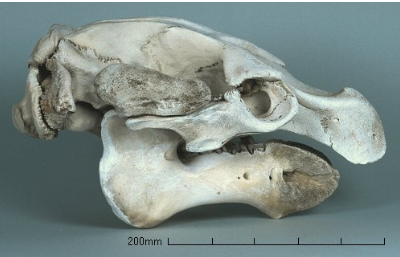
orders/families in clade euarchontoglires
order lagomorpha/family ochotonidae (pika)/family leporidae (hare/rabbit)
order rodentia/family aplodontiidae (mountain beaver)/family sciurdae (squirrels)
suborder castorimorpha/family castoridae (american beaver)/family geomyidae (pocket gopher)/family heteromyidae (kangaroo rat/pocket mouse)
clade glires
orders lagomorpha and rodentia
ever-growing incisors and no canines
order lagomorpha
pikas and hares/rabbits
2/1 incisor count
fenestrated maxilla
cheek teeth transverse bilophodont
2 pairs of upper incisors (2nd pair small and peg-like; located directly behind the enlarged anterior pair)
family ochotonidae
in order lagomorpha
pika
no supraorbital process
maxilla with single (or 2-3) perforations
soles of feet covered in fur but naked digital pads
round ears

family leporidae
in order lagomorpha
hares, rabbits
surpaorbital process present and fan-shaped
maxilla with numerous perforations (web-like fenestration)
soles and digital pads covered in thick hair
elongate ears
order rodentia
families aplodontiidae and sciuridae (mountain beaver and squirrels etc)
1/1 incisor count
teeth are ever-growing
no canines; have broad diastema instead
no fenestrations
unique infraorbital foramen conditions
family aplodontiidae
in order rodentia
mountain beaver
protrogomorphous, skull flattened
crowns of teeth ringlike and each with small projection
auditory bullae not inflated but flask-shaped with a long tympanic tube
body is blocky with vestigial tail
most primitive rodent
angular process strongly inflected on lower jaw

family sciuridae
in order rodentia
squirrels, marmots, prarie dogs
sciuromorphous, postorbital processes present
crowns of cheek teeth usually with distinct cusps or ridges and valleys (“hand peace sign” in teeth cheek
auditory bullae not flask shaped withotu a long tympanic tube
large postorbital process

familes in suborder castorimorpha
family castoridae (american beaver), family geomyidae (pocket gopher), family heteromyidae (kangaroo rat, pocket mouse)
family castoridae
american beaver
sciuromorphous skull
no postorbital process
basioccipital depression
crowns of cheek teeth flat with narrow inner and outer lateral enamel folds
auditory bullae not inflated but somewhat flask-shaped with tympanic tube
tail large, broad, and flat
incisors stained

family geomyidae
pocket gopher
myomorphous infraorbital foramen compressed against side of rostrum (does no perforate through maxilla)
crowns of cheek teeth simple
auditory bulla small
tubular body with small ears and short tail
external fur-lined cheek pouches
no postorbital process
broad zygomatic plate
nasal bones do not extend beyond incisors
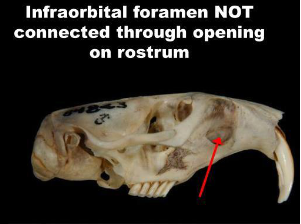
family heteromyidae
kangaroo rat and pocket mouse
myomorphous and rounded skull
infraorbital foramen entirely piercing the rostrum perforates through maxilla
crowns of cheek teeth simple
auditory bulla can be slightly inflated to greatly inflated
limbs modified for saltation
external fur-lined cheek pouches
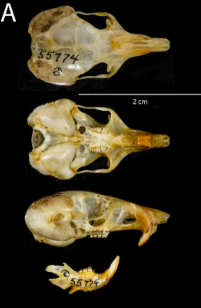
protrogomorphous
only observed in mountain beavers (family alpodontiidae)
only lateral and superficial masseters
both masseters originate on zygomatic arch
small infraorbital foramen
no zygomatic plate
sciuromorphous

note tiny roundish hole
zygomatic plate
lateral masseter originates on zygomatic plate
small infraorbital foramen and canal
myomorphous

zygomatic plate
larger infraorbital canal
hystricomorphous
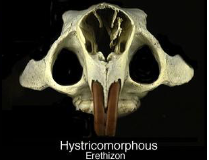
no zygomatic plate
huge infraorbital foramen
lateral masseter originates from zygomatic arch
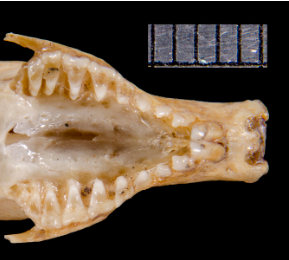
what type of molars are these
tritubercular or zalambdodont
in which families do we observe polyphyodonty
elephantidae (elephants) and trichechidae (manatees)