intracellular compartments and protein transport
 Call Kai
 Learn
Learn Practice Test
 Spaced Repetition
 Match
Match Flashcards
 Knowt Play
1/183

There's no tags or description
Looks like no tags are added yet.
Name | Mastery | Learn | Test | Matching | Spaced | Call with Kai | Chat |
|---|
No analytics yet
Send a link to your students to track their progress
184 Terms
in our cells we have a lot of different _ happening at the same time
chemical reactions
at any one time a typical eukaryotic cell carriers out thousands of
different chemical reactions, many of which are mutually incompatible
at any one time a typical eukaryotic cell carriers out thousands of different chemical reactions, many of which are
mutually incompatible
For a cell to operate effectively, the different intracellular processes that occur simultaneously must somehow
be segregated
two strategies for isolating and organizing different chemical reactions include
-Both prokaryotic and eukaryotic cells aggregate different enzymes required to catalyze a particular sequence of reactions into large multicomponent complexes, such as synthesis of DNA, RNA, and proteins
-Most highly developed in eukaryotic cells, it is to confine different metabolic processes and the proteins required to perform them, within different membrane-enclosed compartments
intracellular compartments and transport slide

there needs a way in the cells to organize the pathways so they are not
“butting heads“
often enzymes are organized into
complexes
eukaryotes put different enzymes for different processes into
different organelles
the nucleus shares a double membrane with the
endoplasmic reticulum
what type of membrane does the nucleus have
a double membrane
intracellular compartments/organelles slide
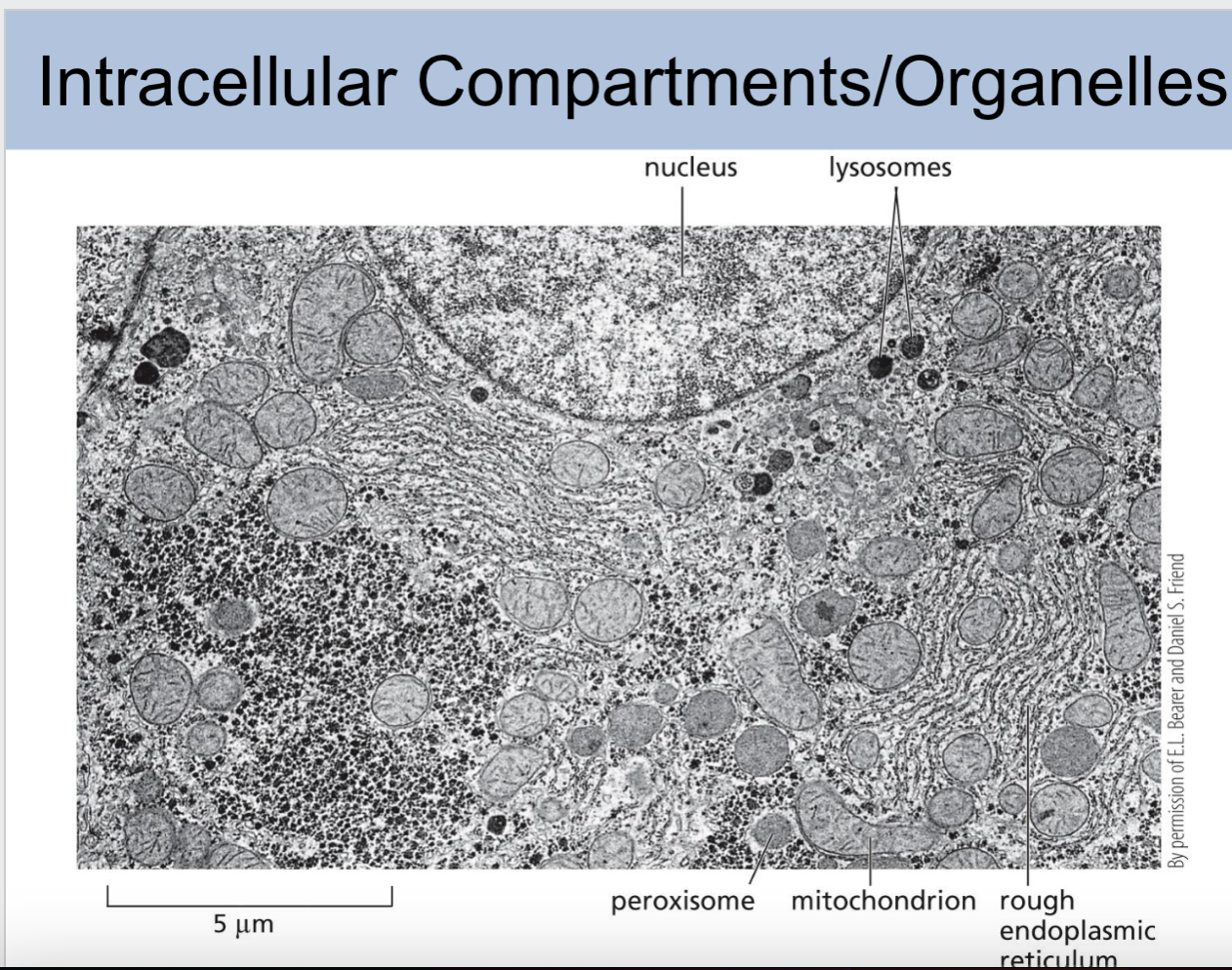
intestinal cell organelles diagram slide

main function of nucleus :
surrounded by a double membrane(nuclear envelope) and communicates with the cytosol via nuclear pores
Two types of endoplasmic reticulum
smooth and rough
endoplasmic reticulum function
major side for synthesis of new membranes
rough ER -
ribosomes attached to its cytosolic surface
smooth ER -
lacking ribosomes
golgi apparatus -
receives proteins and lipids from the ER, modifies them, and then dispatches them to other destinations in the cells
lysosomes:
sacs of digestive enzymes degrade worn-out organelles, macromolecules, and particles taken into the cell by endocytosis
endosomes:
compartments containing endocytosed materials
peroxisomes
single membrane and contains enzymes used in variety of oxidative reactions
mitochondria
pyruvate oxidation, TCA cycle, oxidative phosphorylation
chloroplasts
photosynthesis
main function of membrane bound organelles slide

relative volumes of membrane enclosed organelles slide

people how exercise more typically have more of this organelle
mitochondria
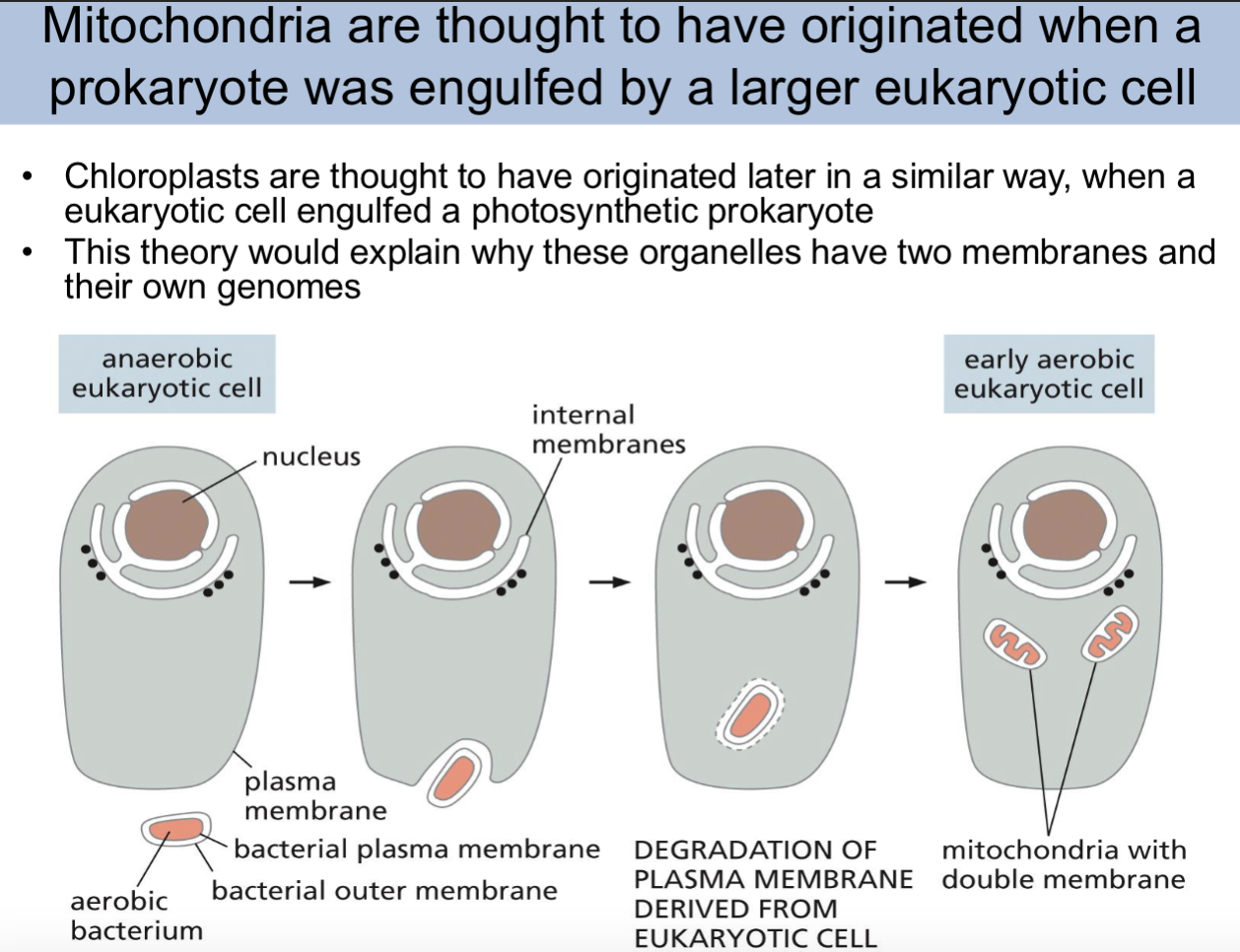
endosymbiotic theory-
nuclear membranes and ER may have evolved through invagination of the plasma membrane
endosymbiotic theory slide

mitochondria and cell symbiotic relationship
mitochondria provide energy, cell provide food and protection
endosymbiotic theory slide 2
synthesis of all proteins begins in the (there are a few exceptions)
cytosol
proteins where their synthesis does not begin in the cytosol
a few mitochondrial and chloroplast proteins
sorting signal:
directs protein to the organelle in which is it is required
3 ways that membrane enclosed organelles can import proteins
1.transport through nuclear pores:from the cytosol into the nucleus
2.Transport across membranes: cytosol into ER, mitochondria or chloroplast for example
3.Transport by vesicles: loaded from the lumen of 1 compartment of the endomembrane system and discharge into the 2nd compartment
membrane enclosed organelles importing proteins slide

signal sequences slide
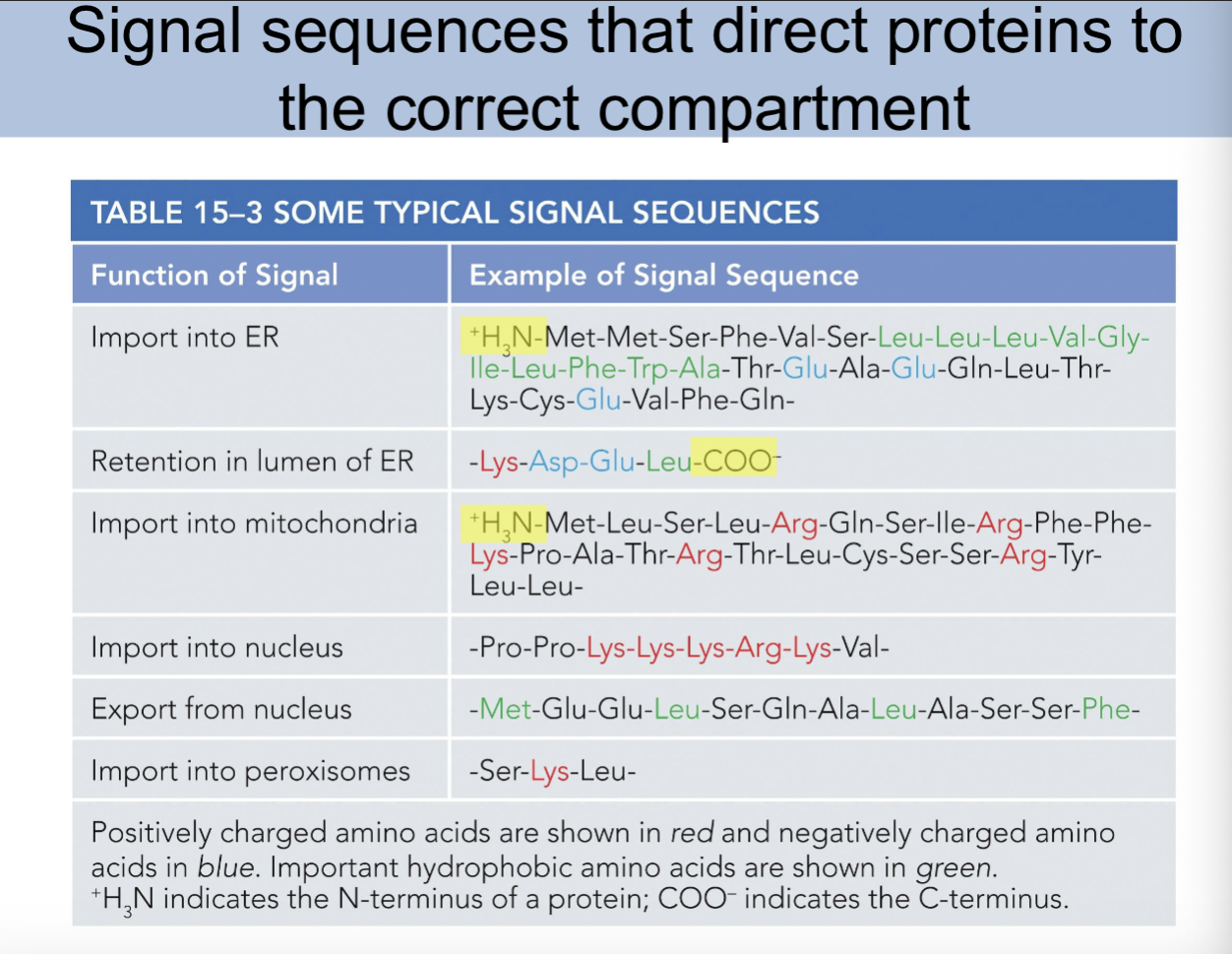
signal sequences direct proteins to the correct organelle slide
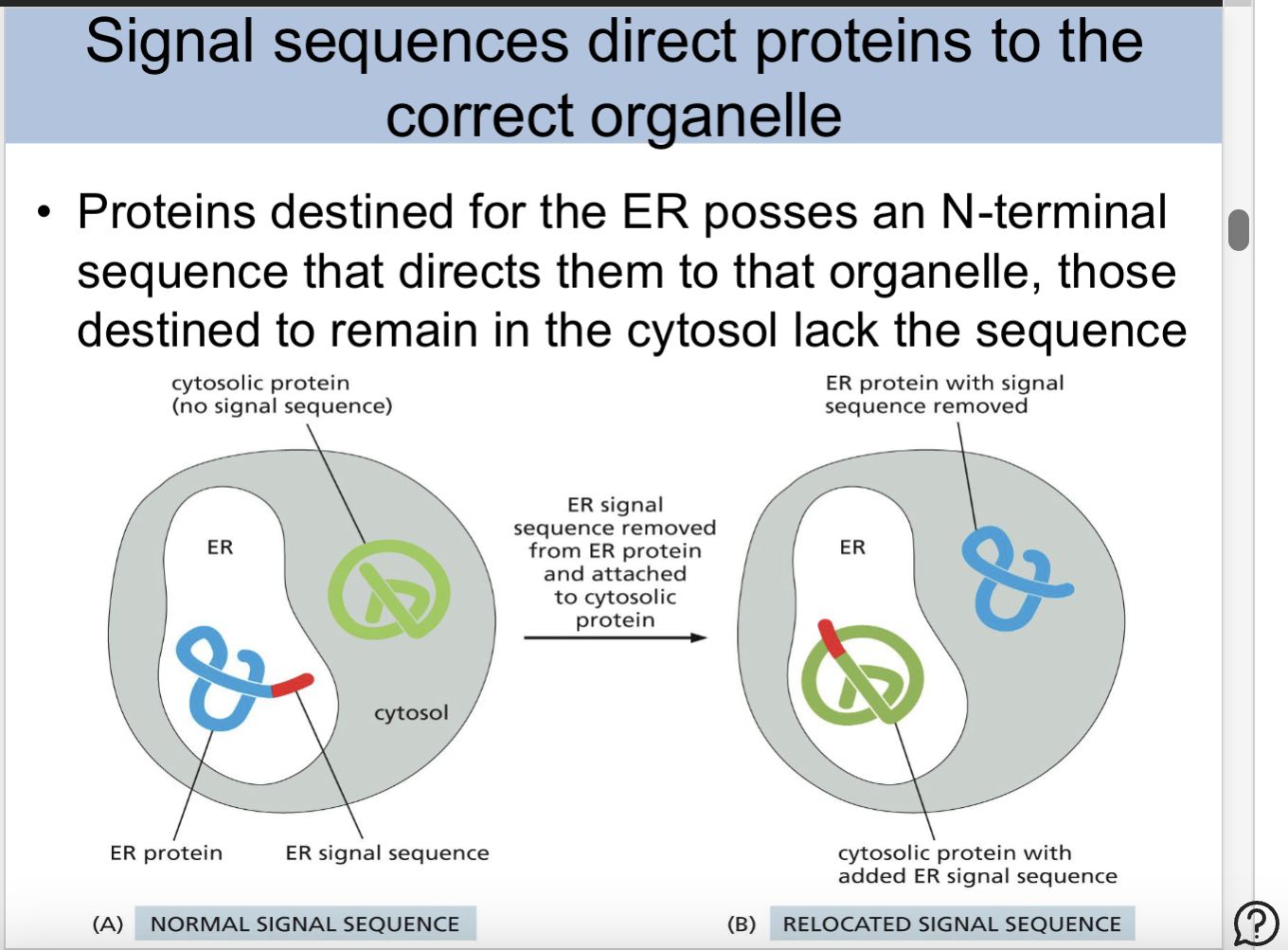
proteins destined for the ER possess a __ sequence that directs them to that organelle, those destined to remain in the cytososl lack the sequence
N-Terminal
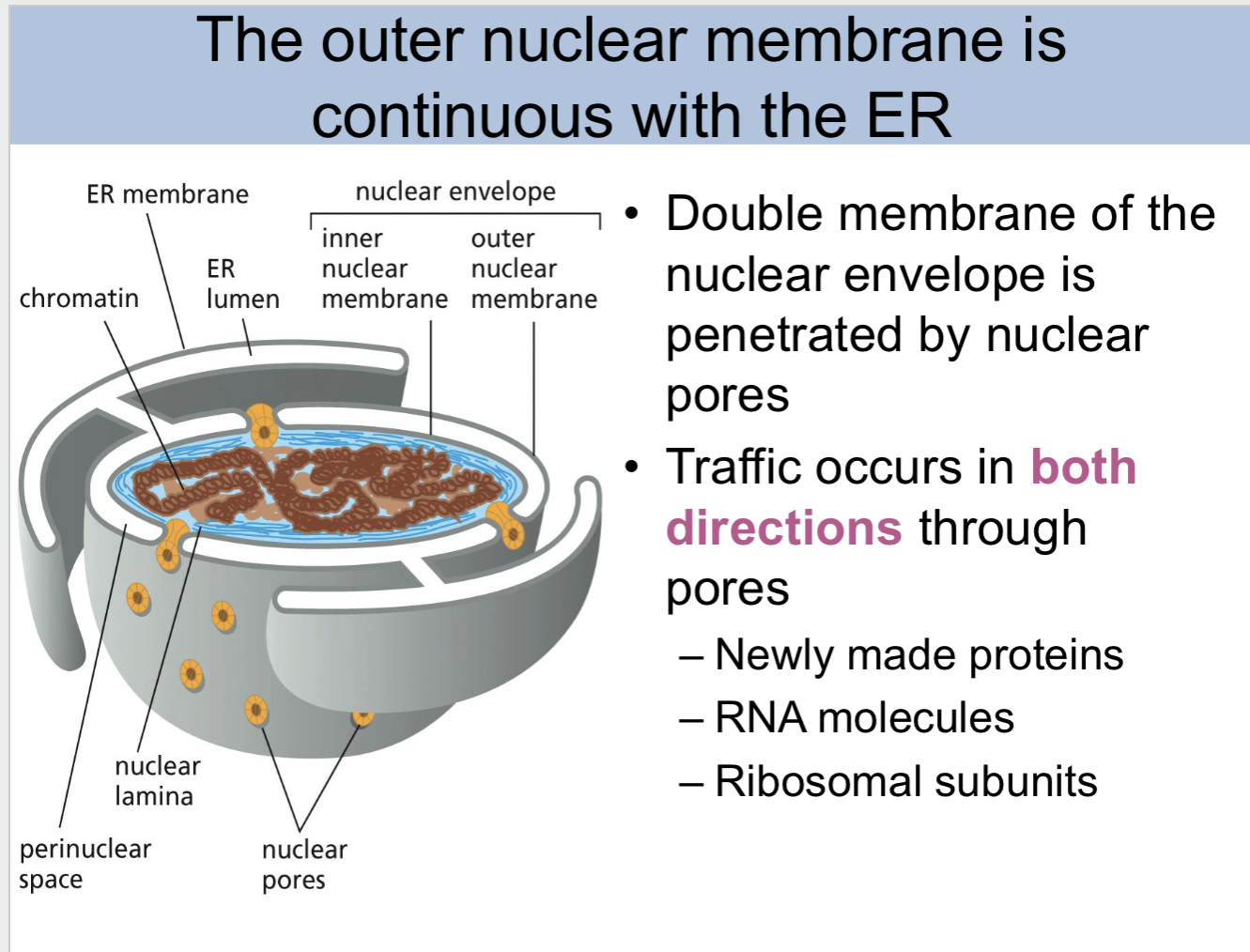
the outer nuclear membrane is continuous with the
ER
double membrane of the nuclear envelope is penetrated by
nuclear pores
which direction does traffic occur in through nuclear pores
both
what passes through nuclear pores
newly made proteins, RNA molecules, Ribosomal subunits
nuclear membrane slide
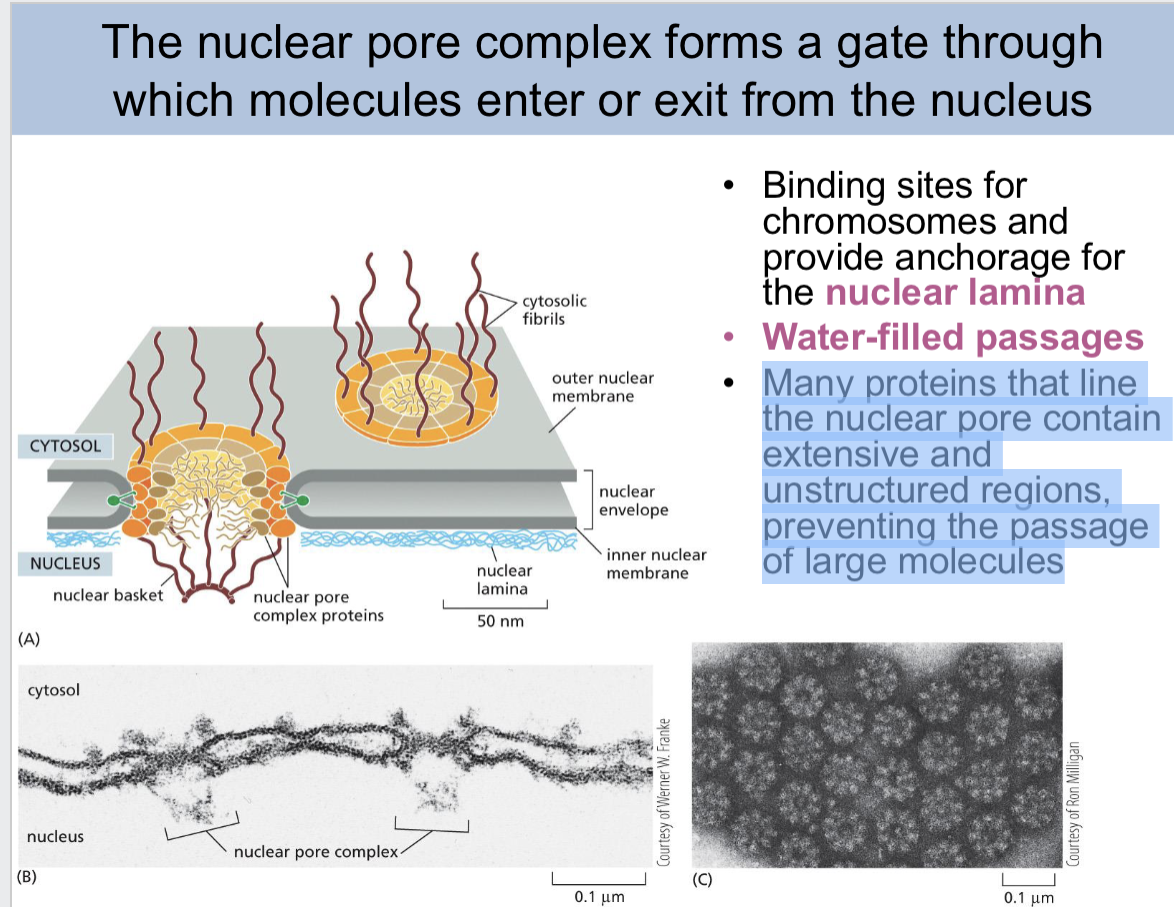
the nuclear pore complex forms a
gate through which molecules enter or exit from the nucleus
nuclear pore complexes are filled with
water
the nuclear pore complex forms the binding site for
chromosomes and provide anchorage for the nuclear lamina
Many proteins that line the nuclear pore contain
extensive and unstructured regions, preventing the passage of large molecules
nuclear pore complex slide
proteins bound for the nucleus are actively transported through
nuclear pores
Nuclear Localization Signal
the signal sequence that directs a protein from the cytosol into the nucleus
Nuclear Transport Receptors
bind to the NLS on newly synthesized proteins destined for the nucleus
proteins bound for the nucleus slide

_ match up with the nuclear import receptor bound to the prospective nuclear protein and bring them towards the nuclear pore
cytosolic fibril
nuclear import receptor arrives in nucleus then
releases protein, then decycles back out to be used again
where does nuclear protein bind to nuclear import receptor
in the cytosol
when nuclear proteins bind to _ they can be transported through nuclear pore
nuclear import receptor
When the nuclear import receptor bound to the nuclear protein enters the cell what happens
Ran GTP binds changing the shape of the protein allowing it to pop-off
step 1 of proteins being brought into the nucleus
nuclear transport receptor picks up its cargo protein in the cytosol and enters the nucleus
step 2 of proteins being brought into the nucleus
in the nucleus, Ran-GTP bind to the nuclear transport receptor, causing it to release its cargo
step 3 of proteins being brought into the nucleus
the nuclear transport receptor-still carrying the Ran-GTP is transported back through the pore to the cytosol
step 4 of proteins being brought into the nucleus
in the cytosol an accessory protein triggers Ran to hydrolyze its bound GTP to GDP
Ran-GDP falls off the nuclear transport receptor, which is then free to bind another cargo protein destined for the nucleus
GTP hydrolysis slide

the energy supplied by _ drives nuclear transport
GTP hydrolysis
do membrane-enclosed organelles import proteins
yes
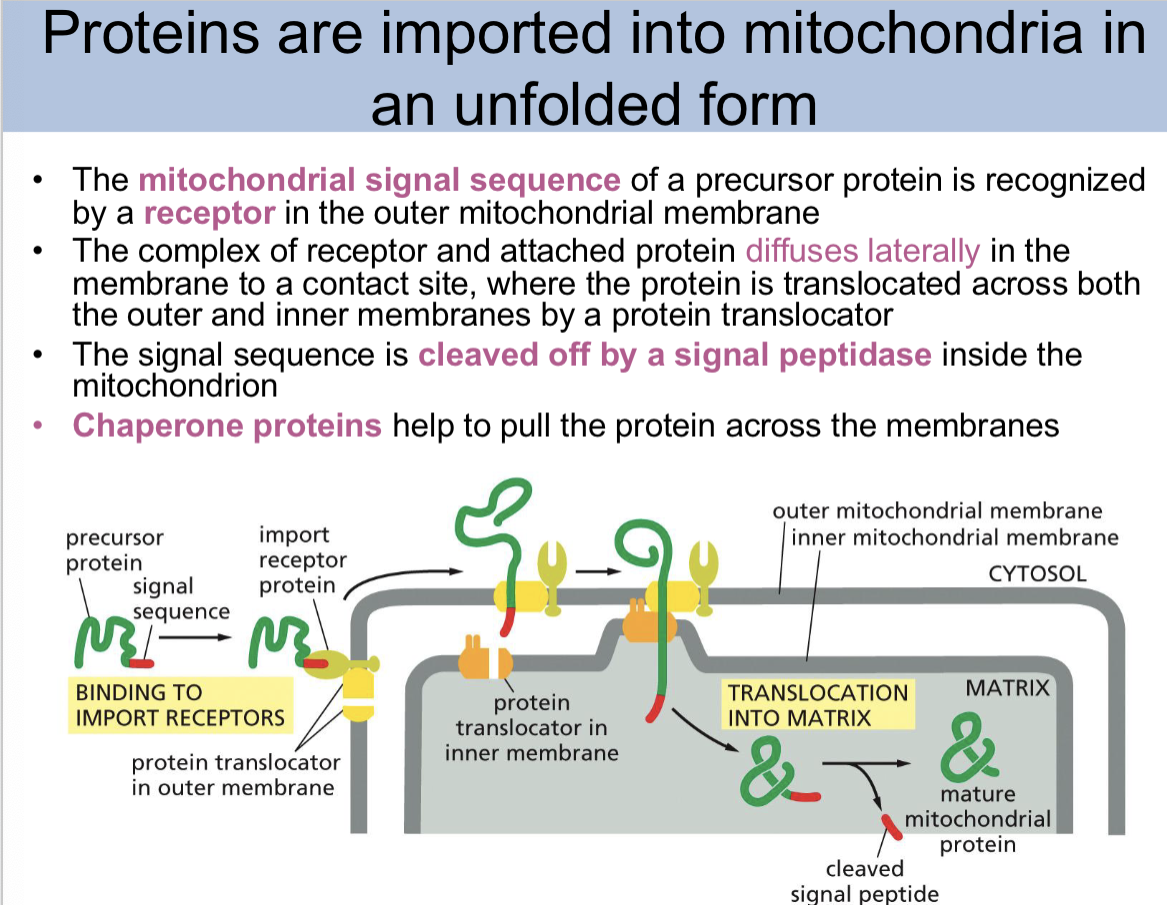
proteins are imported into mitochondria in _ form
unfolded
the same ribosomes are floating cytosol as are attached to
rough ER
the mitochondrial signal sequence of a precursor protein is recognized by
a receptor in the outer mitochondrial membrane
the complex of receptor and attached protein diffuses _ in the membrane to a contact site, where teh protein is translocated across both the outer and inner membranes by a —
laterally, protein translocator
the signal sequence is cleaved off by a _ inside the mitochondrion
signal peptidase
_ help to pull the protein across the membranes
chaperone proteins
proteins imported into mitochondria slide
the ER is the most extensive _ in eukaryotic cells
membrane network
ER slide

the common pool of _ is used to synthesize both the proteins that stay in the cytosol and the ER
ribsomes
membrane bound ribosomes
attached to the cytosolic side of the ER membrane
free ribosomes
unattached to any membrane
at the end of each round of protein synthesis what happens to the membrane bound ribosomes
they are released to rejoin the common pool in the cytosol
ribosomes slide

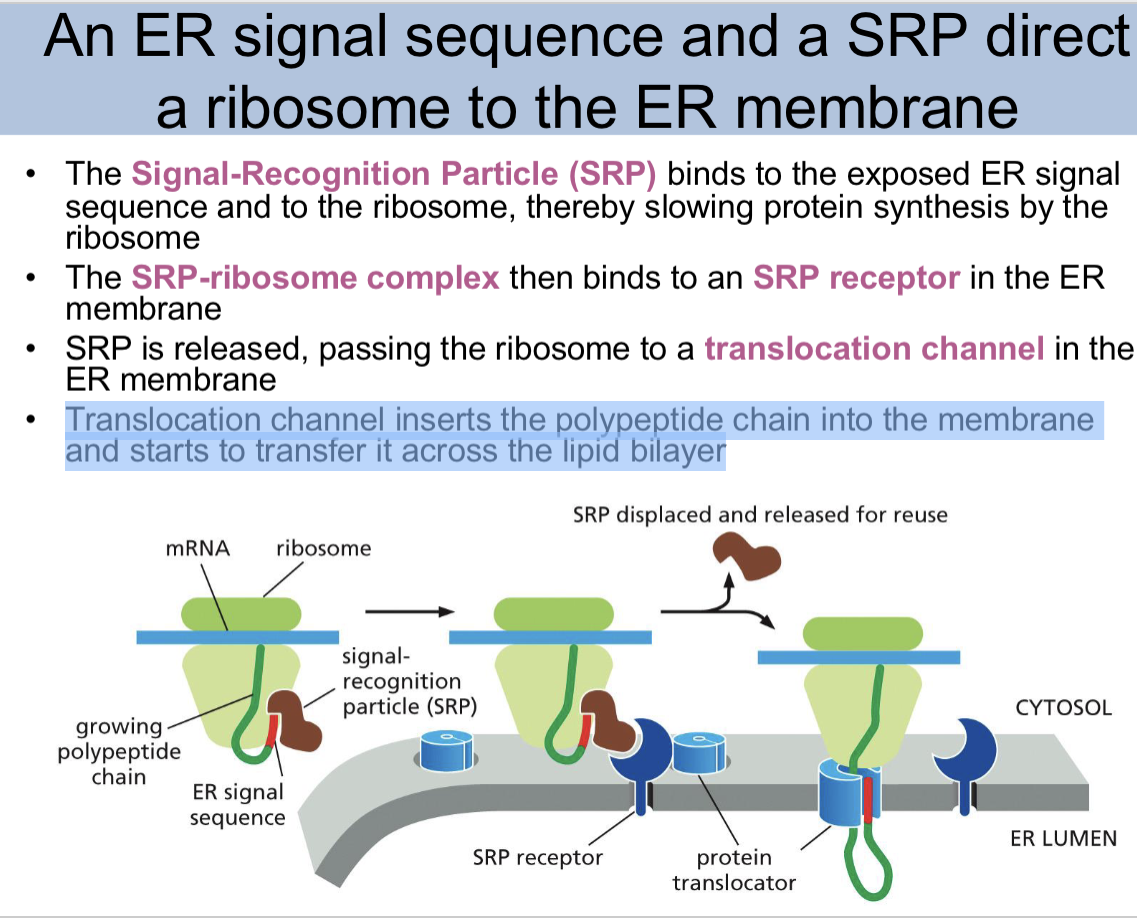
— and — direct a ribosome to the ER membrane
ER signal and a SRP
Signal-Recognition Particle (SRP) first step
binds to the exposed ER signal sequence and to the ribosome, thereby slowing protein synthesis by the ribosome
Signal-Recognition Particle (SRP) binds to the exposed ER signal sequence and to the ribosome, thereby slowing protein synthesis by the ribosome. the SRP-ribosome complex then
binds to an SRP receptor in the ER membrane
After the SRP-ribosome complex binds to an SRP receptor in the ER membrane what happens
SRP is released, passing the ribosome to a translocation channel in the ER membrane
When the ribosome is passed to teh translocation channel what happens
Translocation channel inserts the polypeptide chain into the membrane and starts to transfer it across the lipid bilayer
ER signal sequence slide
A translocation channel binds the —- and actively transfers the rest of the polypeptide ——
signal sequence,across the lipid bilayer as a loop
During the translocation process, the signal peptide is —
cleaved from the growing protein by a signal peptidase
During the translocation process, the signal peptide is cleaved from the growing protein by
a signal peptidase
The cleaved signal is —-
ejected into the bilayer, where it’s degraded, and the translocated polypeptide is released as soluble protein into the ER lumen
protein crossing the ER membrane slide

A single-pass transmembrane protein is
integrated into the ER membrane
An —- ER signal sequence initiates transfer of the protein
N-terminal
An N-terminal ER signal sequence initiates transfer of the protein
• When this sequence enters the translocation channel, the
channel
discharges the protein sideways into the lipid bilayer
An N-terminal ER signal sequence initiates transfer of the protein
• When this sequence enters the translocation channel, the
channel discharges the protein sideways into the lipid bilayer
• N-terminal signal sequence
is cleaved off, leaving the
transmembrane protein anchored in the membrane
single pass trans-membrane protein slide

A —- transmembrane protein uses an internal start- transfer sequence to integrate into the ER membrane
double-pass
Like the N-terminal ER signal sequence, the internal start-transfer signal
is recognized by an SRP that brings the ribosome to the ER membrane.
(double pass transmembrane protein) A ——- ER signal sequence acts as a start-transfer signal and initiates the transfer of the polypeptide chain
internal
(double pass transmembrane protein) When a stop transfer sequence enters the translocation channel—-
the channel discharges both sequences into the membrane