BSC2011L Midterm
 Call Kai
 Learn
Learn Practice Test
 Spaced Repetition
 Match
Match Flashcards
 Knowt Play
1/141

There's no tags or description
Looks like no tags are added yet.
Name | Mastery | Learn | Test | Matching | Spaced | Call with Kai | Chat |
|---|
No analytics yet
Send a link to your students to track their progress
142 Terms
______________ are more common.
Bacteria
Bacterial cell walls are made of ______________.
peptidoglycan
Gram negative bacteria have ______ cell walls and _____ outer membrane. They are ___________ to penicillin.
thin; an; resistant
Gram positive bacteria have ______ cell walls and _____ outer membrane. They are ___________ to penicillin.
thick; no; susceptible
__________ are rod shaped.
Bacillus
_________ are sphere shaped.
Cocci
__________ are spiral shaped.
Spirillum
__________ are comma shaped
Vibrio
Cyanobacteria exist in __________.
colonies
Cyanobacteria are surrounded by a ___________
Mucilaginous sheath
Heterocysts are _________.
specialized cells with the ability to fix nitrogen
Akinetes are __________.
thick walled dormant cells specialized for survival
The Gram Stain is a ___________ technique.
differential stain
Gram Stain is dependent on
differences in cell wall composition (thick/thin peptidoglycan cell walls)
Aseptic technique is _________
method designed to prevent contamination from microorganisms in gram staining.
The counterstain in the Gram Stain lab was ________.
safranin
After rinsing the slide in the Gram Stain lab it was placed in a book of ________.
bibulous paper
Gram positive bacteria appears ________ in color.
Purple
Gram negative bacteria appears _______ in color.
pink
The scientific method (steps 1-5)
1. Observe
2. Question
3. Hypothesize
4. Predict
5. Collect Data
6. Reject/Accept Hypothesis
Secondary endosymbiosis occurs when ___________.
A primary endosymbiont is absorbed (not digested) by another eukaryote. (i.e. excavata and green algae)
Excavata can receive nutrition by ________. (3)
1. Phagocytosis
2. Saprophytic
3. Photosynthesis
Saprophytic
absorption of organic nutrients directly from a medium
Phagocytosis
ingestion of particles of food
Euglena are apart of the ___________ supergroup.
Excavata
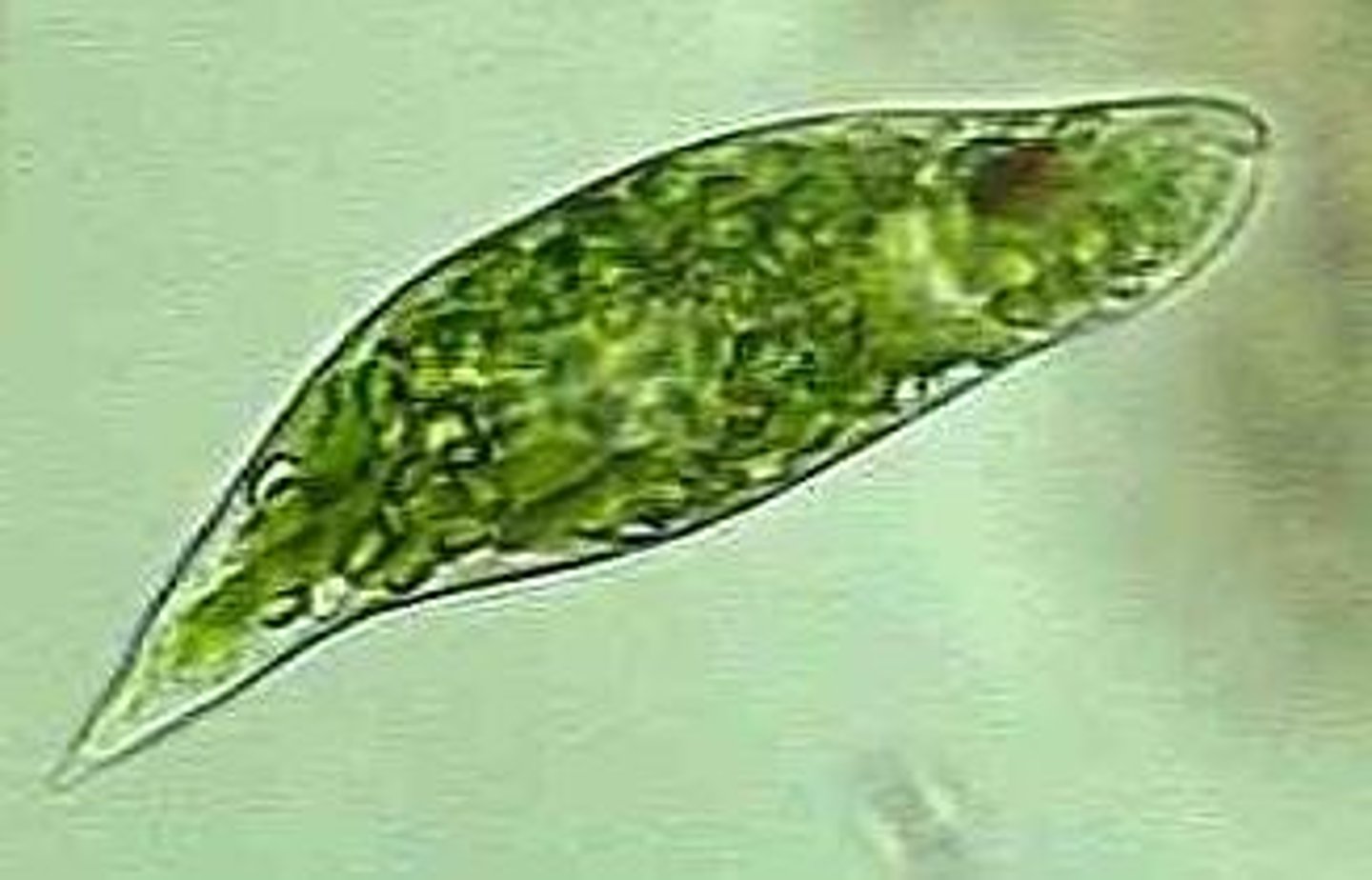
Euglena have a ___________ and are __________ for motility.
Stigma; flagellated
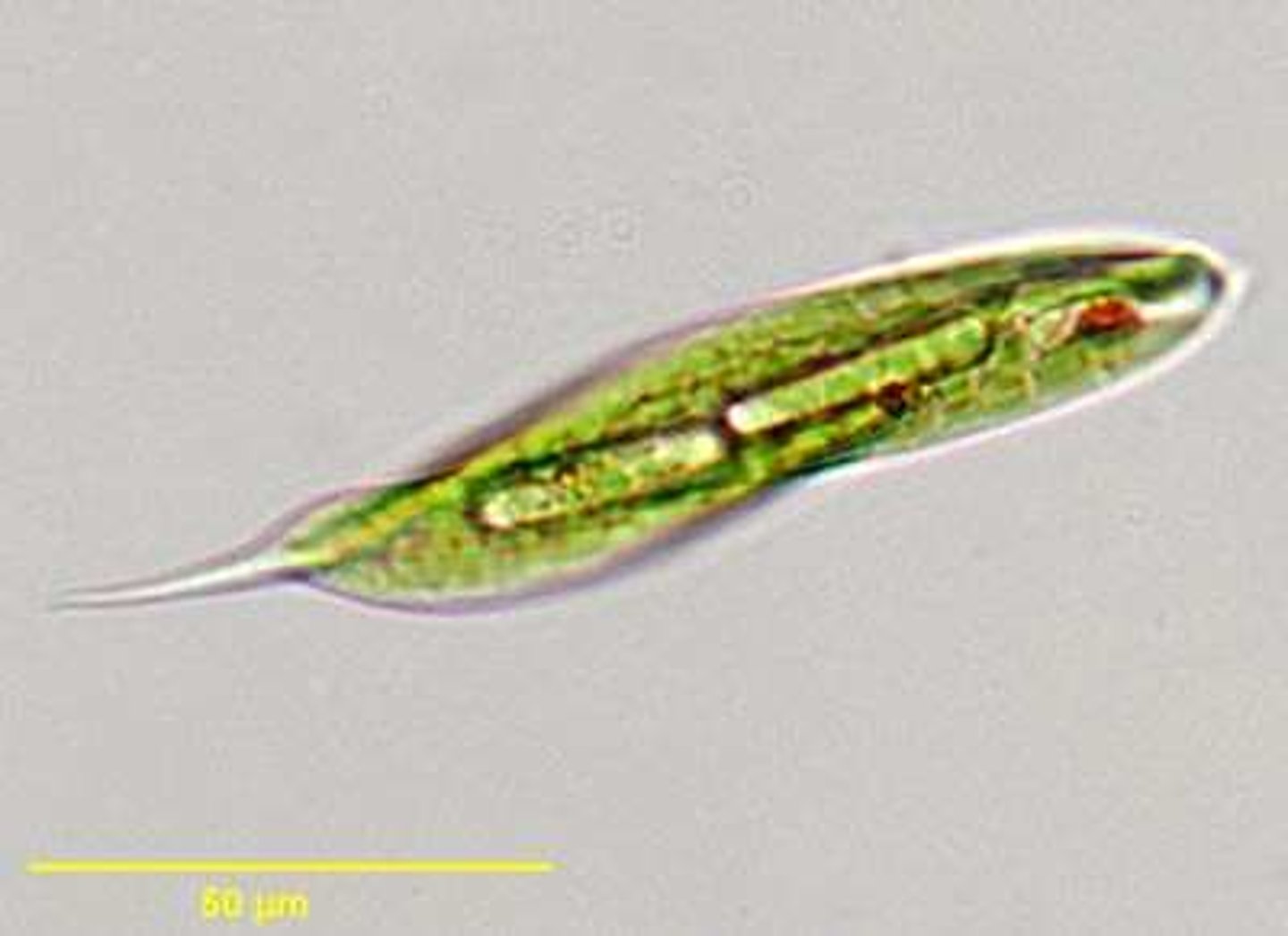
Stigma is responsible for _________.
detecting light (light sensitive)
Gram staining process (7)
1. Transfer bacterium to slide with inoculating loop (aseptic technique).
2. Heat-fix bacteria
3. Apply crystal violet stain and rinse (will st
4. Apply Gram's iodine (this helps force the crystal violet past the thick cell walls) rinse.
5. Add decolorizer until clear. (gram positive now visible, gram negative clear).
6. Counterstain safranin applied (stains clear gram negative bacterium clear).
7. Place between bibulous paper.
Phylogenetic trees are used for ___________.
viewing hypothesized relationships between species
Divergent evolution is when __________.
Two species of a common ancestor undergo speciation to form two separate species. (defined by inability to produce fertile/viable offspring)
Convergent evolution is when _________.
two monophyletic species evolve similar traits
Archaeplastida are closely related to ___________, and received their plastids through both ________ and ________ endosymbiosis.
Plants; secondary and primary
Chlorophyta are _________.
green algae
Conditions for Hardy-Weinberg equilibrium (5)
1. No mutations
2. Large population
3. No migration
4. No natural selection
5. Random mating
HWE is defined by the equation ________.
p^2 + 2pq + q^2 = 1 and p + q = 1
Chlamydomonas are apart of the _____________ supergroup and are classified as _______________. It produces ____________. They are ______-shaped cells that have ___________, one single large ________, and a ________ that is light-sensitive.
Archaeplastida ; green algae ; isogametes ; egg-shaped ; two flagella ; chloroplast ; stigma
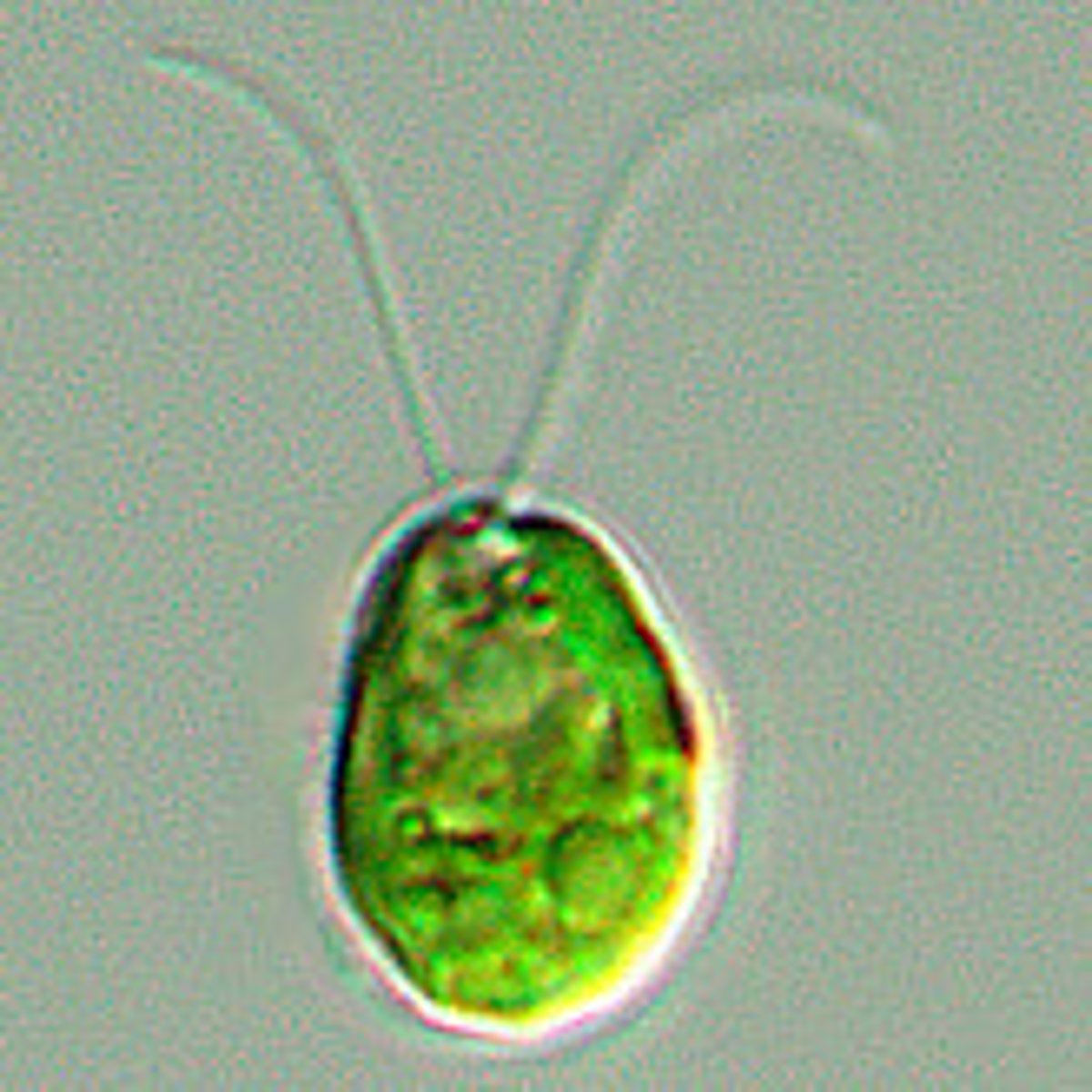
Isogametes are referred to as ______ because they are ________ to one another.
+/- ; identical
Isogametes fuse to produce an extremely resistant _________________.
diploid zygospore
Genetic drift occurs when _______.
chance events cause change in allele frequencies, especially in small populations. (founders effect/bottleneck)
______________ is a parasitic excavate found in _________ contaminated water that causes _________ that is associated with diarrhea, fever, cramps, and vomitting.
Giardia lambia; feces; giardiasis
Protist supergroups (4)
1. Archaeplastida
2. SAR (stramenopiles, alveolata, rhizaria)
3. Excavata
4. Unikonta (amoebozoans)
The super group SAR is composed of _________.
Stramenopiles, Alveolates, Rhizarians
Dinoflagellates are ________ with two _________ and ____________.
Alveolates, perpendicular flagellum, cellulose plates
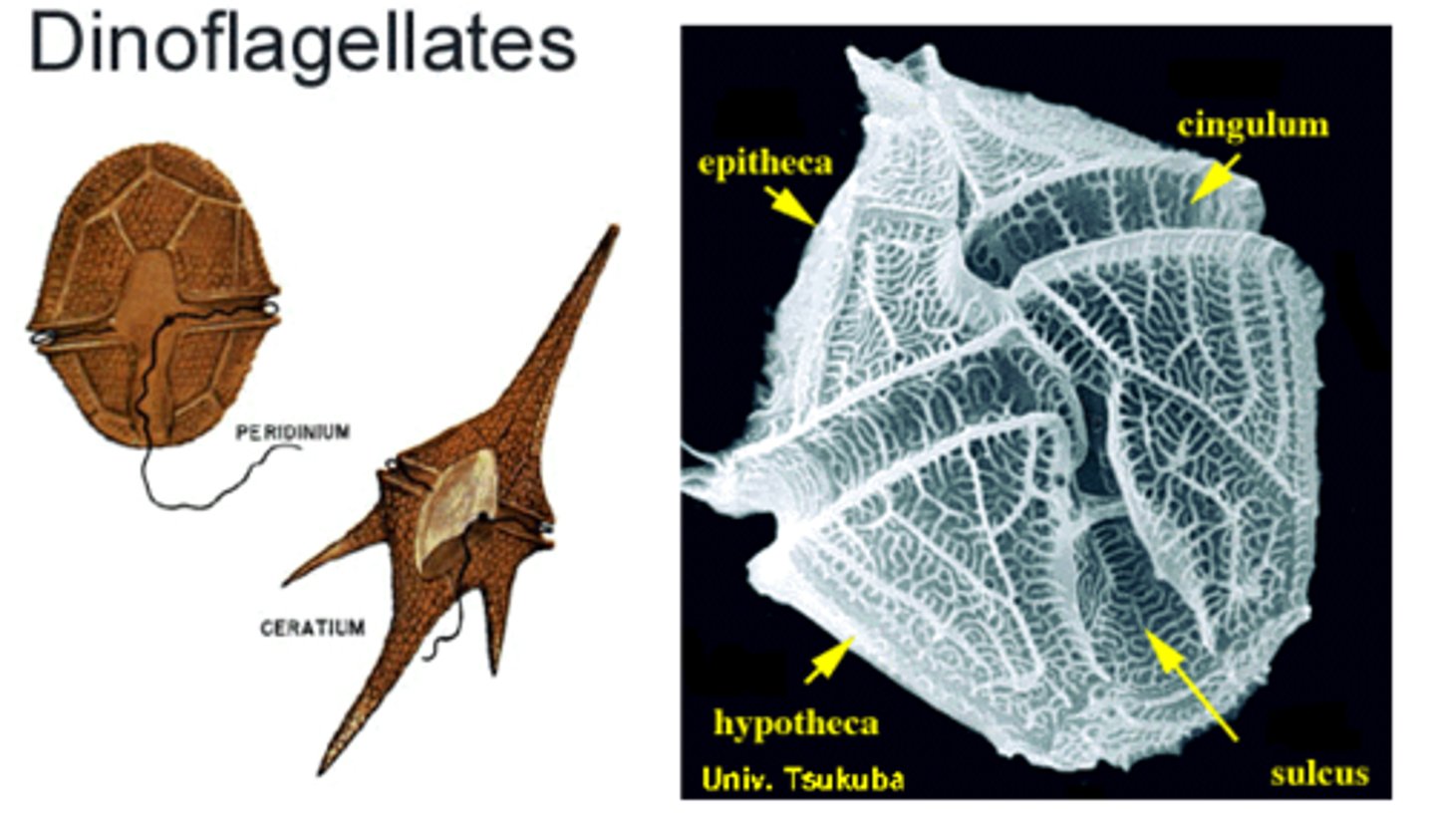
Cellulose plates are responsible for being the ___________ of the ______________.
armor ; dinoflagellate
Taxis is the ________ exhibited by ________.
directional behavioral response to stimulus ; stentor
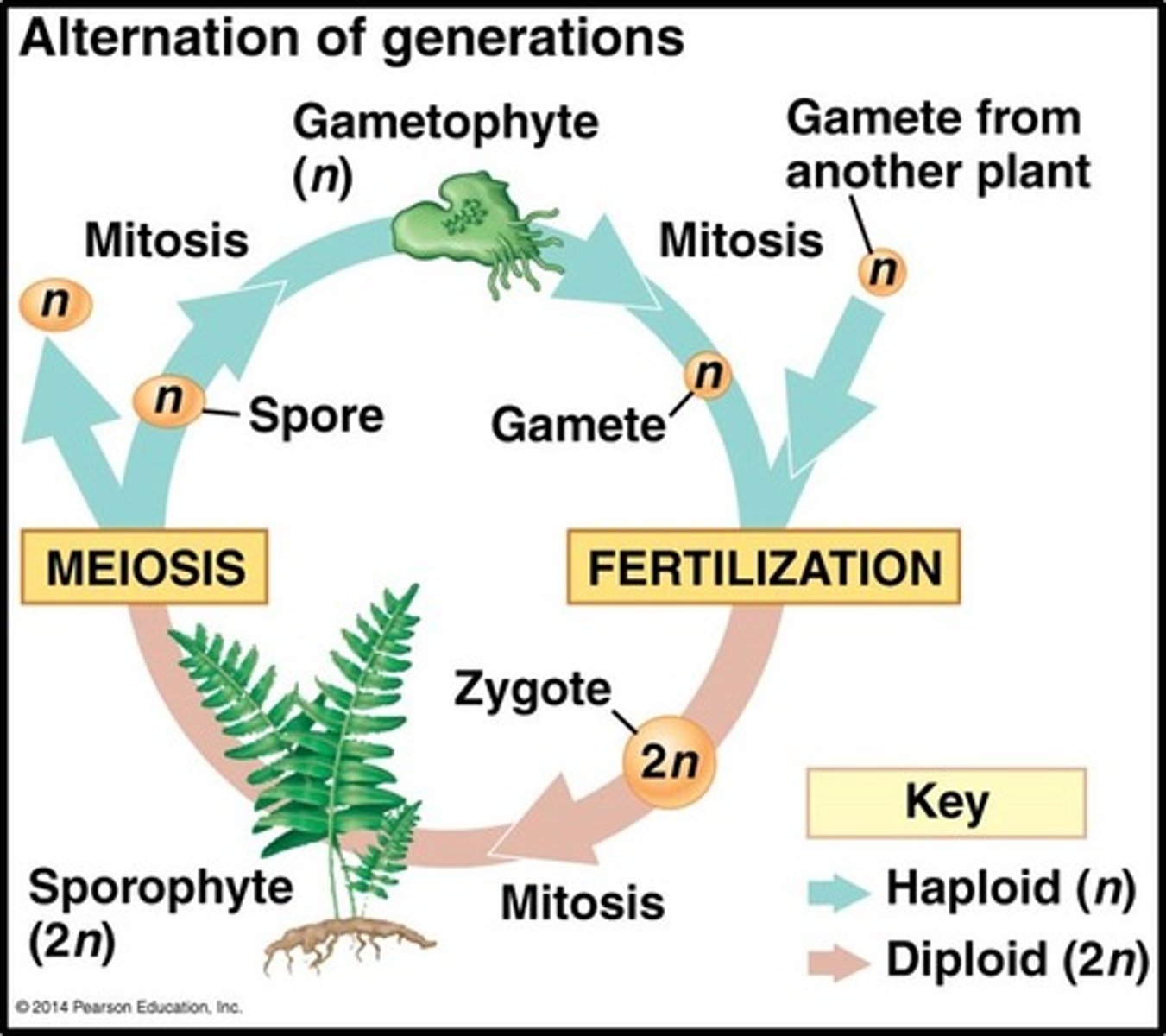
Alternation of Generations
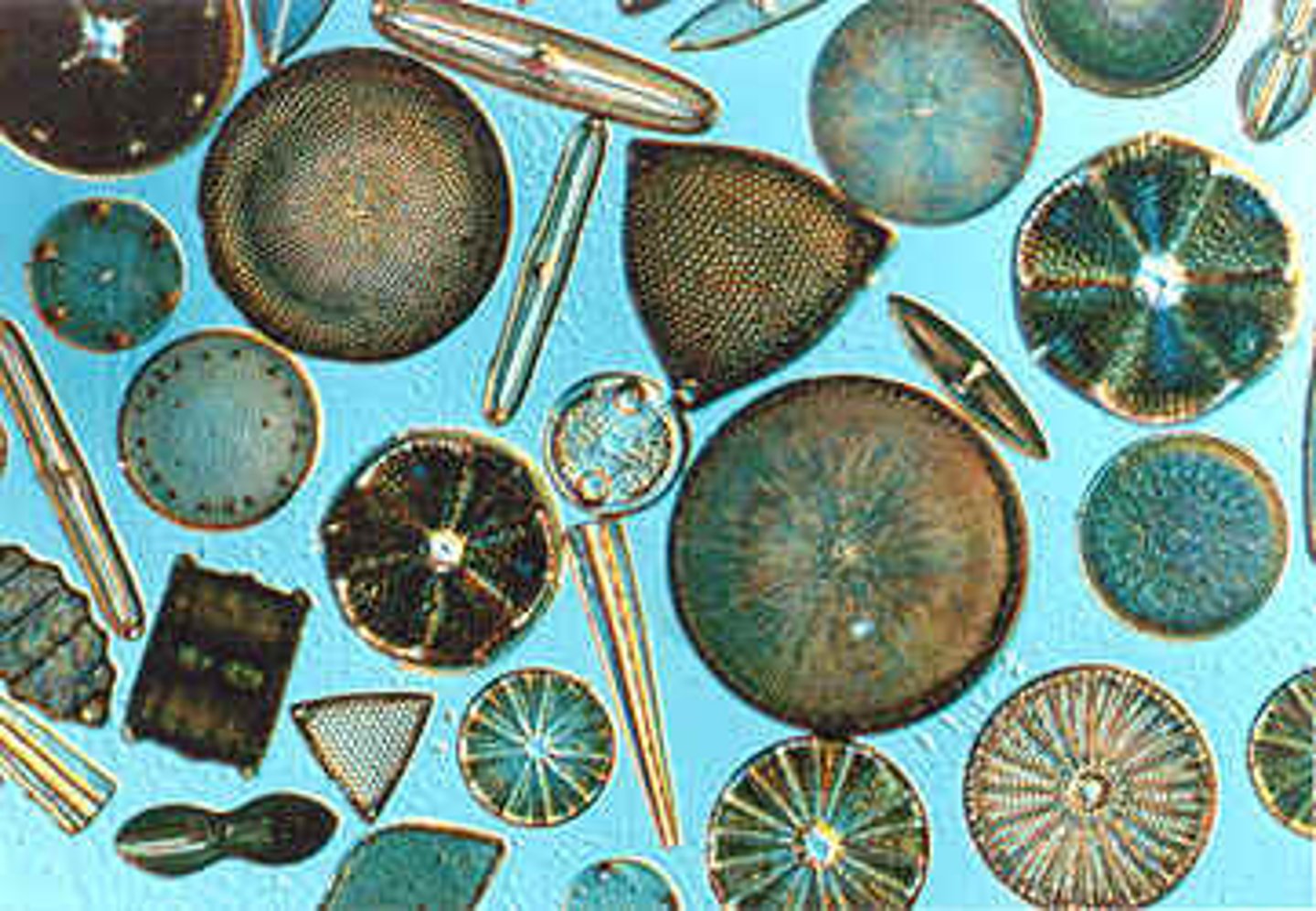
Diatoms are apart of the ___________ subgroup of the ___________ supergroup. They have a cell wall made of ________ that allows them to be resistant to ________.
stramenopile ; SAR ; silica ; stress
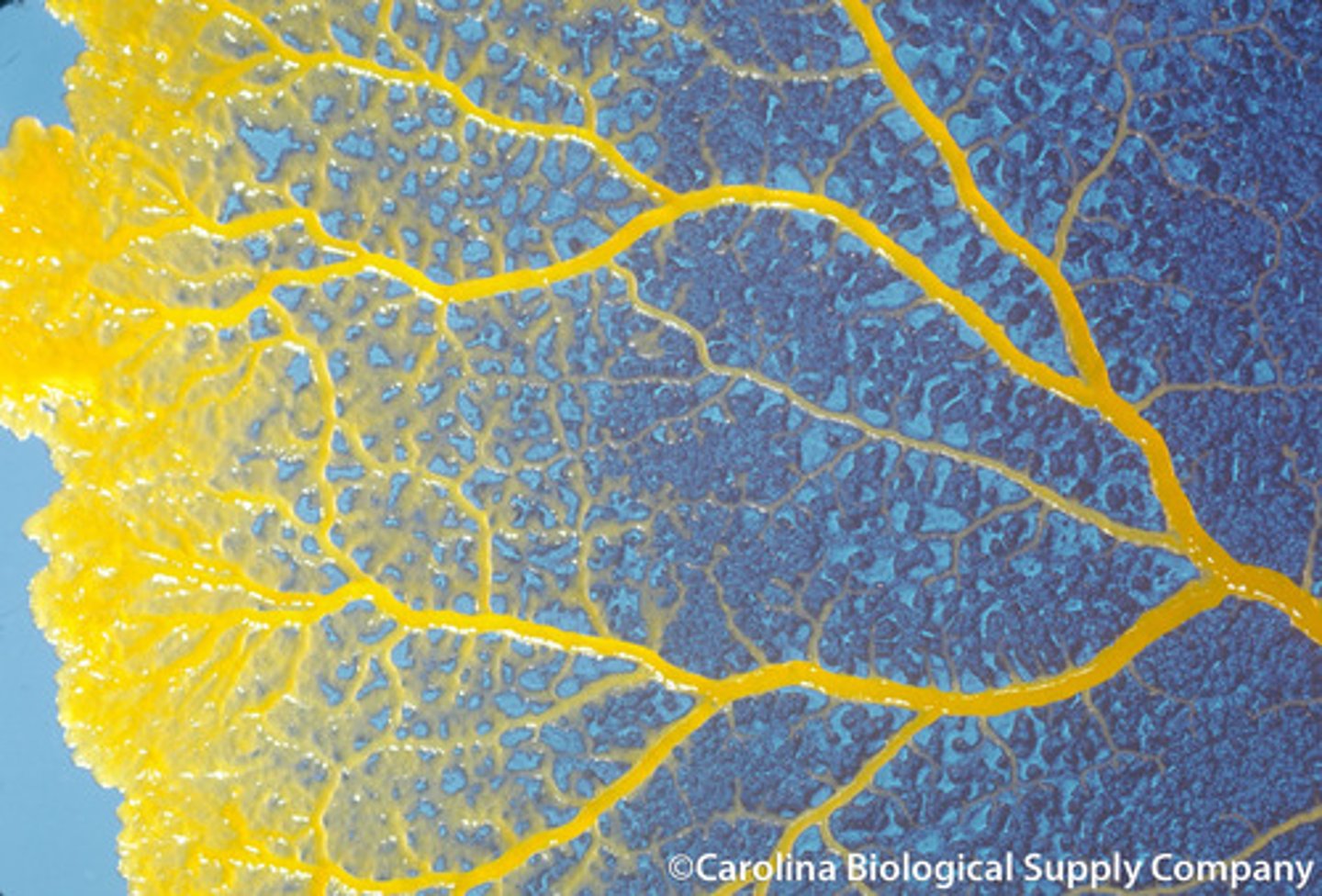
Amoebazoans are apart of the ___________ supergroup and include many types of ___________.
Unikonta ; slime molds
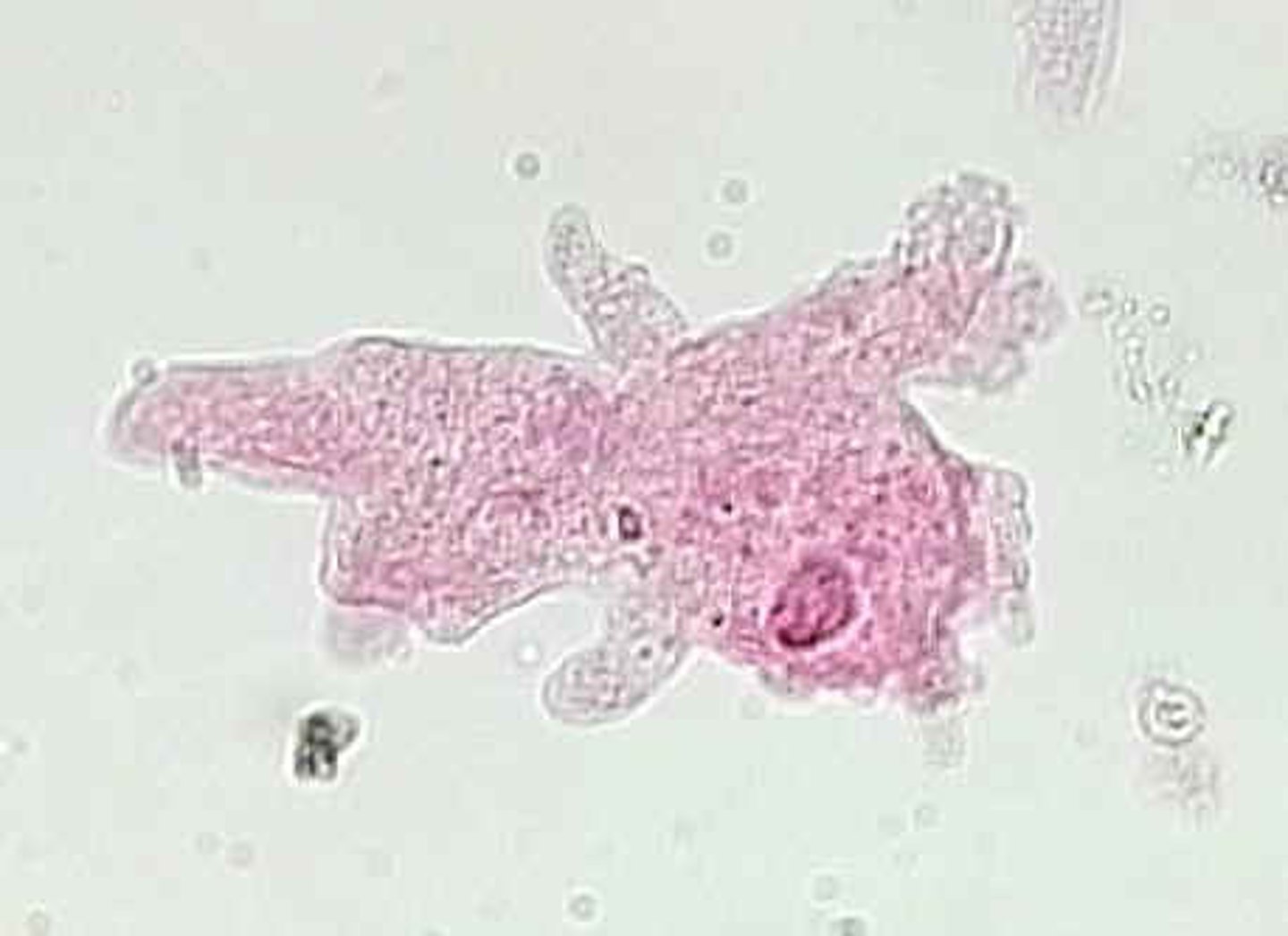
Amoebazoans attain nutrients through __________ and are motile via _______________ streaming to form __________.
phagocytosis ; cytoplasmic streaming ; psuedopodia
Slime molds produce __________ bodies and ________, very similar to fungi.
fruiting bodies ; spores (also multinucleate)
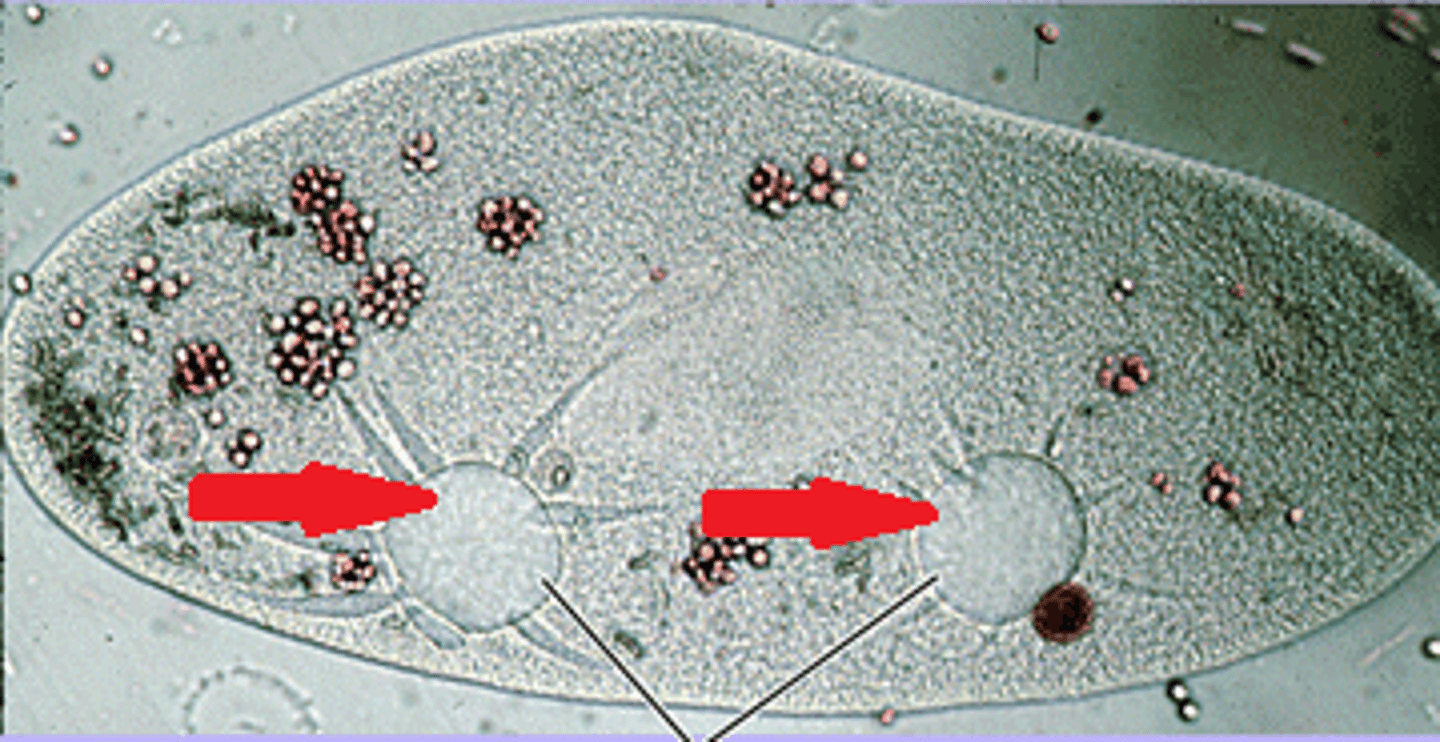
The _________________ is responsible for water balance maintenance in the amoebas because it collects and expels water.
contractile vacuole
Data suggests that land plants descended from a group of green algae called ________, which are now classified as a group called ___________.
charophyceans ; Steptophyta
The distinguishing synamorphies of Steptophytes are ___________. (3)
1. Plasmodesmata
2. Anisogamous sexual reproduction
3. cytokinesis
The distinguishing synamorphies of land plants are ______________. (5) IMPORTANT
1. Meristems
2. Alternation of generations
3. Maternally dependent embryos
4. Specialized structures for production of reproductive cells
5. Desiccation-resistant structures to protect reproductive cells during dispersal
______________ are regions of continuously growing tissues and cell division.
Meristems
Rhodospirillum are red _________oxygen and transparent _______ oxygen.
without ; with
______________ is a parasitic excavate that causes _________ and occurs in __________. It has an ____________ membrane and appears _______-like in viscous liquids like blood.
Trypanosoma ; sleeping sickness ; blood ; undulating ; eel-like
____________ and _________ are specialized structures for the production of reproductive cells.
Sporangia ; gametangia
______________ are similar to roots, that were adapted to ______________.
Rhizoids ; absorb water and, minerals, and nutrients.
_____________ prevent plant embryos from drying out in terrestrial environments.
Gametangium
A ______________ prevents desiccation but posed the problem of preventing _____________.
waxy cuticle ; gas exchange
The ____________ are _________ solved the gas exchange problem posed by the waxy cuticle.
stomata ; specialized pores
Some land plants developed ______________ to help them transport materials throughout their complex bodies.
Vascular tissue
Most plants have a common reproductive cycle called _______________, which alternates between haploid gametophyte generation and diploid sporophyte generation.
Alternation of generations
The sporophyte generation is _________ and produces ____________ via ________.
diploid ; haploid spores ; meiosis
Spores are produced in the specialized structure called ____________.
sporangium
Spores produce ______________________.
Haploid gametophytes
Haploid gametophytes produce __________________ via ____________.
haploid gametes ; mitosis
Eggs are produced in the _____________.
archegonia
Sperm is produced in the ___________.
antheridia
Egg and sperm fuse to form ____________.
a diploid zygote
Bryophytes are made up of (3)
1. Mosses
2. Hornworts
3. Liverworts
Lycophytes and Pteridophytes are ___________ plants.
seedless vascular
Bryophytes are __________________.
seedless nonvascular
Gymnosperms are ___________.
seeded vascular plants with naked seeds
Angiosperms are ____________ characterized by their ________.
seeded vascular plants ; fruit and flowers
Thallus is the ___________ of ___________.
plant body ; bryophytes
Bryophytes have __________ instead of true roots.
rhizoids
Liverworts produced ___________ via fragmentation or _____________.
asexually ; gemmae cups
Gemmae cups are found on the ____________.
dorsal falli
Pteridophytes and Lycophytes are made up of ____________ (3).
1. Ferns
2. Horsetail Ferns
3. Club mosses
Bryophytes have a dominant ____________ generation.
gametophyte
Vascular plants have _______ leaves, stems, and roots, and can therefore grow ______.
true ; taller
Vascular tissue is composed of _______ and ______.
xylem ; phloem
Nutrients are transported by the ____________ to the ________ from the _______________.
phloem ; rest of the plant ; leaves
Water and minerals are transported from the _______ by the ______ to the ________.
roots ; xylem ; rest of the plant
Xylem are reinforced by ________.
lignin
Ferns have a dominant ______________ generation.
sporophyte
Fern labeled
They have a fiddlehead, frond (leaf), leaflet, rhizome (stem), roots, and sori
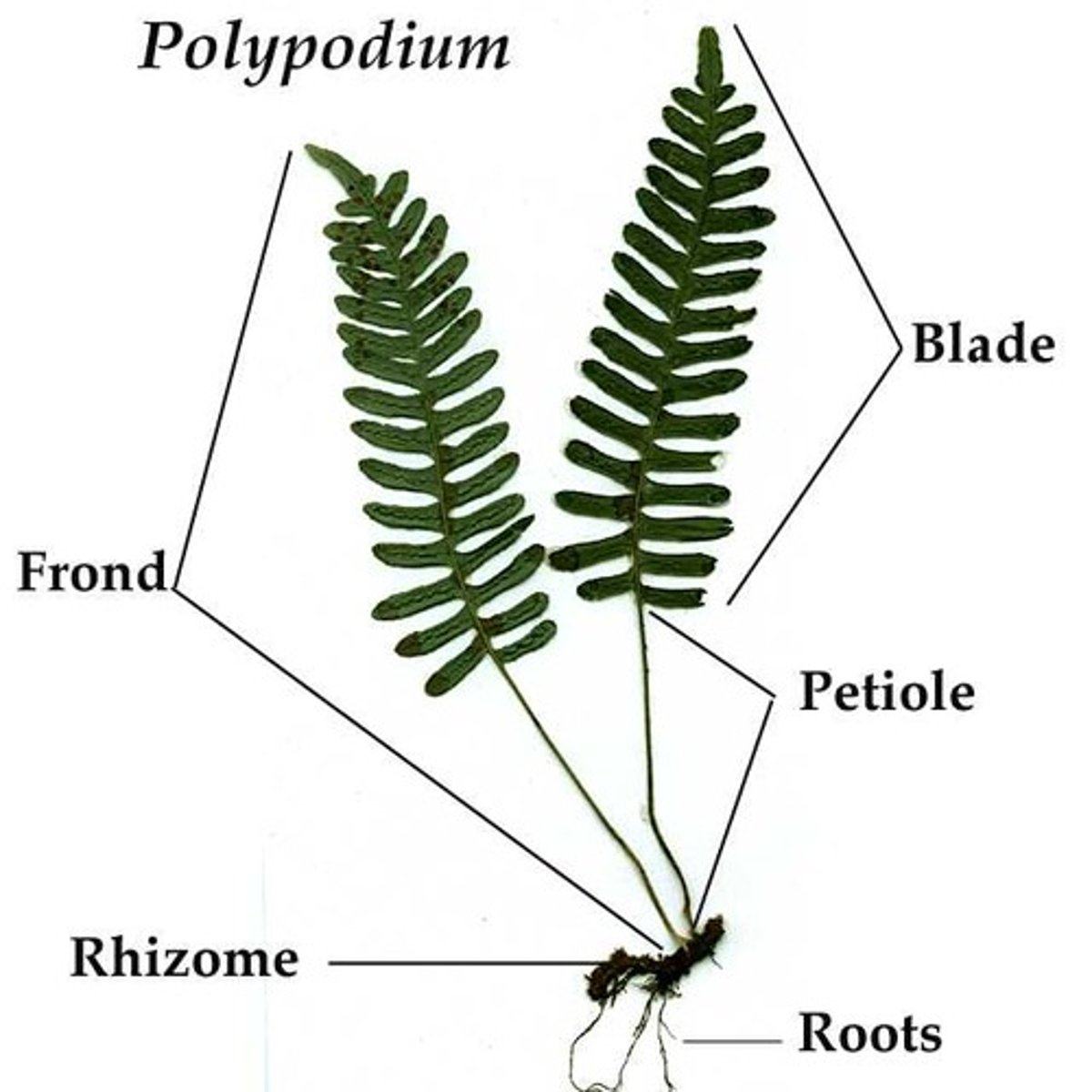
____________ are clusters of sporangia on the underside of the fron responsible for releasing ____________.
Sori ; haploid spores
The heart- shaped gameotphyte is called a _______________. It has the ___________ and ______________ which produce egg and sperm.
prothallus ; archegonia ; antheridia
Ferns have ____________ sperm, so they need a ________ source.
flagellated ; water
A ___________ uncurls to display a ____________ (ferns)
fiddlehead ; frond
Horsetail fern
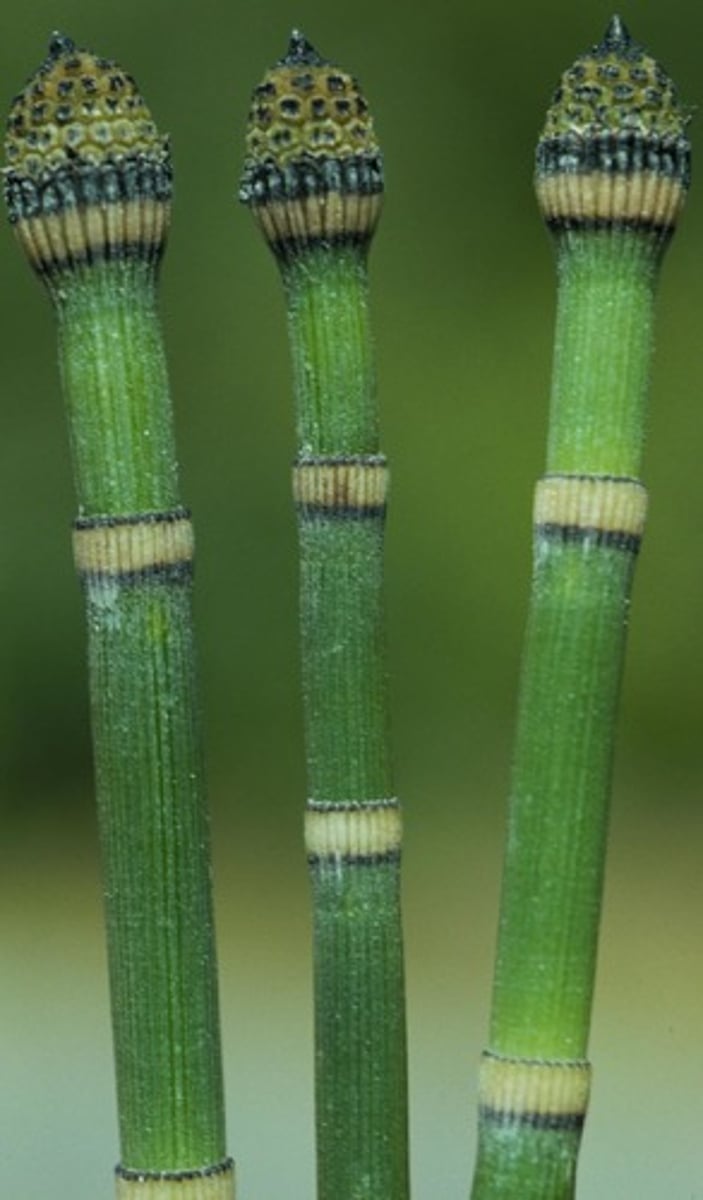
In horsetail ferns, photosynthesis occurs in the __________
stem.
Horsetail ferns and diatoms are similar because they both contain ____________.
silica dioxide
Sporangia of horsetails are grouped together in __________.
strobili
Gymnosperms are dependent on ________ for reproduction.
wind
The development of ___________ and _________ allowed gymnosperms to not rely on __________ like lycocytes/pteridophytes and bryophytes.
pollen grains ; seeds ; water
___________________, or flowering plants, are responsible for the evolution of the ___________.
Angiosperms ; flower