Parasitology. Trematodes
 Call Kai
 Learn
Learn Practice Test
 Spaced Repetition
 Match
Match Flashcards
 Knowt Play
1/46

Earn XP
Description and Tags
Trematodes. Infective in Metacercarial Stage. Infective in Cercarial Stage
Name | Mastery | Learn | Test | Matching | Spaced | Call with Kai | Chat |
|---|
No analytics yet
Send a link to your students to track their progress
47 Terms
General Morphology
hermaphroditic or separate sexes depending on species
flatworms
acetabula - suckers
General Characteristics
all exotic to U.S.
digenetic
intermediate host - snails/mollusks
complicated life cycles with multiple stages/hosts
Digenetic
sexual reproductive cycle in vertebrates (definitive host)
asexual reproductive cycle in invertebrates (intermediate host)
cycles alternate
Acetabula
cup shaped suckers - oral and ventral
General Life Cycle Stages
egg
miracidium
1st generation sporocyst - Mother sporocyst
2nd generation sporocyst. - Daughter sporocyst or redia
cercaria or metacercaria → infective stage
adult worm
Egg
variety of size and shape - depends on species
operculating (infective in metacercarial)
“cutting tool“ spine → lots of pathology (shistosomes)
1st generation sporocyst - Mother sporocyst
asexual stage in snail host
elongated sack with offspring → released via birth pore
produce multiple 2nd gen sporocyst - daughter sporocyst or redia depending on species
2nd generation sporocyst - Daughter sporocyst or redia
part of asexual reproduction in snail host
produces cercaria
daughter sporocyst or redia depending on species
Cercaria
free swimming stage
non-feeding
infective for definitive host
metacercaria or cercaria
Difference between cercaria and metacercaria
cercaria - twin, forked tail; direct infection through skin
metacercaria - single tail; encysts on plants/animal; indirect infection via ingestion
Miracidium
non-feeding
infective for intermediate host - penetrate soft tissue
cilia for swimming
live 24 hours
Difference between redia and daughter sporocyst
daughter sporocyst - no internal organs, only sack
redia - oral cavity, organ cavity
Characteristics of Trematodes Infective in Metacercarial Stage
digenetic
hermaphroditic
operculated eggs
cercaria are straight tailed
infective stage: encysted metacercarias
Fasciolopsis buski Life Cycle
eggs in stool
embryonated eggs in water
miracidia hatch
penetrate snail
sporocyst → radiae → cercariae (in snail)
free-swimming cercariae
metacercariae on water plant
ingestion of contaminated water plant (by human/pig)
exyst in duodenum
adults in small intestine
Fasciolopsis buski Epidemiology
Asia
pig = reservoir host
night soil is a component for transmission
Fasciolopsis buski Pathology
traumatic damage → irritation, ulceration, hemorrhage
intestinal obstruction - small intestine (heavy infection)
toxic metabolites → diarrhea, undigested food, anorexia, green/yellow stool
Fasciolopsis buski Diagnosis
eggs in stool
Fasciolopsis buski Prevention
treat sewage
age night soil
kill snails
boil water plants
Fasciolopsis buski Hosts
intermediate - snail
definitive - human
reservoir - pig

Fasciolopsis buski (LC pic)
Fasciola spp. Life Cycle
unembryonated eggs in feces
embryonated eggs in water
miracidia hatch
penetrate snail
sporocyst → rediae → cercariae (in snail)
free swimming cercariae
metacercariae on aquatic vegetation
ingestion of contaminated vegetation (by ruminants/humans)
exyst in duodenum
penetrate intestinal wall
migrate to liver → bile duct
adults in hepatic biliary duct
Fasciola spp. Epidemiology
eating watercress
more common in animals
brought to the U.S. by infected people
Fasciola spp. Pathology
scar tissue from migration
pipestem fibrosis
cavities with granulation tissue, fibrous tissue, calcification
development of cirrhosis
Fasciola spp. Diagnosis
eggs in stool
duodenal aspirate or bile duct aspirate
ultrasound - sonogram of liver/bile duct/gall bladder
CT/MRI of liver
Fasciola hepatica
Common (sheep) Liver Fluke
Fasciola gigantica
Giant Liver Fluke
Fasciolopsis buski
Giant Intestinal Fluke
Comparison of Fasciola hepatica and Fasciola gigantica
hepatica - prominent shoulders, smaller
gigantica - narrower shoulders, larger

Fasciola spp. (LC pic)
Fasciola spp. Hosts
intermediate - snail
definitive - ruminants (cattle, sheep)
accidental - humans
Fasciola spp. Prevention
cook water-grown vegetables
wash water-grown vegetables (6% vinegar or potassium permanganate)
avoid sewage contamination of growing areas
treatment of animals
use of molluscicides
Clonorchis sinensis Life Cycle
embryonated eggs in feces
eggs ingested by snail
miracidia → sporocyst → redial → cercariae
free-swimming cercaria encyst on the skin/flesh of fish
human ingests contaminated fish
exist in dudodenum
adults in biliary duct
Clonorchis sinensis Epidemiology
reservoir host: cats, dogs
night soil helps distribution
eating raw/undercooked fish
East Asia (Japan, Korea, China, Taiwan, Vietnam)
Clonorchis sinensis Pathology
low exposure → little to no pathology
high worm burden → bile duct & liver damage
irritation, inflammation , cell proliferation, fibrosis, blockage, neoplasia (bile duct)
travel up tributaries to feed on liver → damage & cirrhosis
risk of bile duct cancer
Clonorchis senensis Diagnosis
eggs in feces
Clonorchis senensis Prevention
treat/age night soil
cook fish
kill snails
Clonorchis sinensis
Liver Fluke
Clonorchis sinensis Hosts
intermediate - snails, fresh water fish
definitive - humans
reservoir - cats, dogs
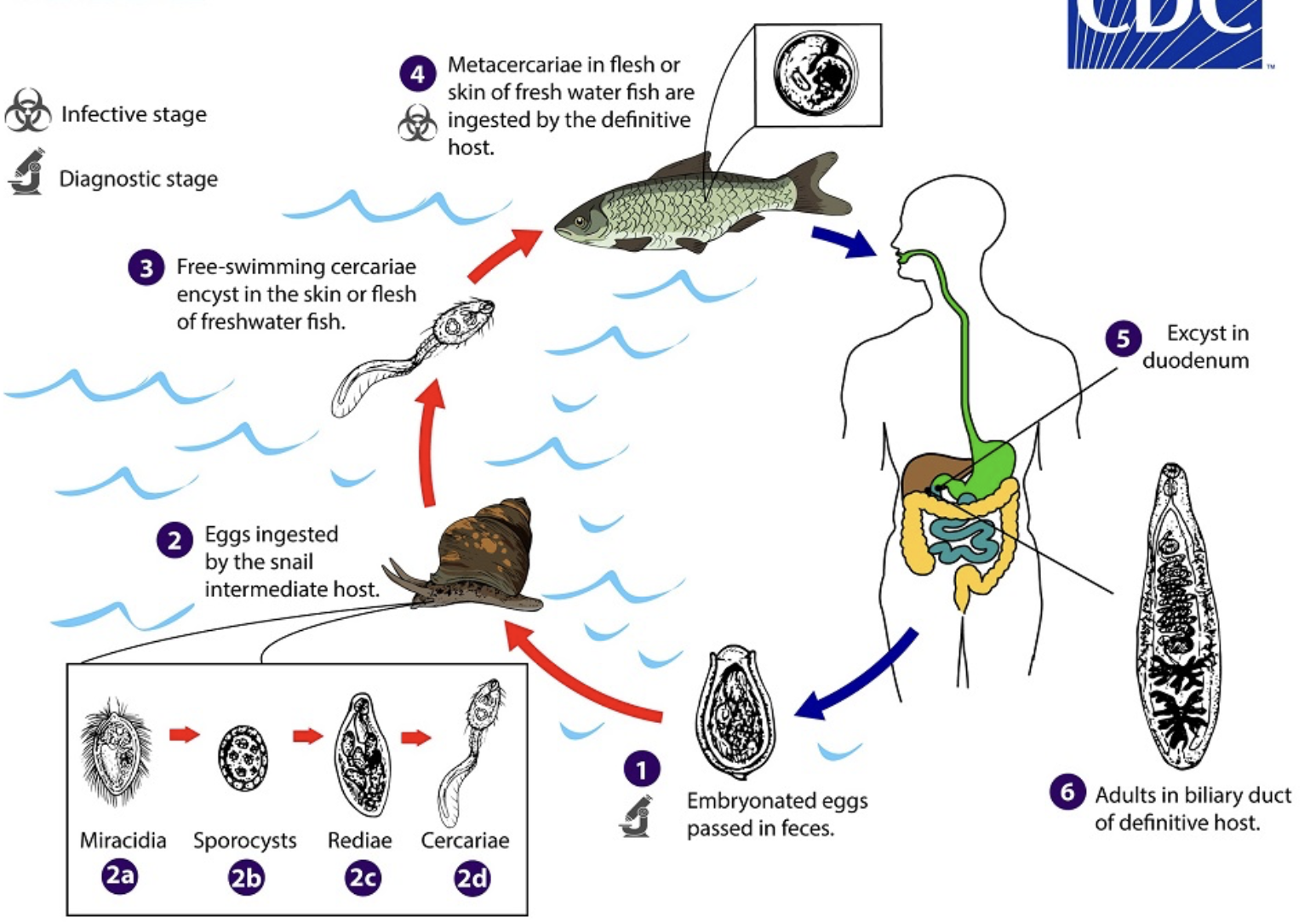
Clonorchis sinensis (LC pic)
Paragonimus westermani Life Cycle
unembryonated eggs → embryonated eggs
miracidia hatch and penetrate snails
sporocyst → rediae → cercariae (in snail)
cercariae invade crustacean
metacercariae in crustacean
human ingests crustacean
exyst in duocedum
travel through diaphragm to lungs
adults in cystic cavities in lungs
eggs in sputum or in stool (if swallowed)
Paragonimus westermani Epidemiology
reservoir host: cats, dogs, pigs
East/Southeast Asia - endemic
U.S. - mostly due to people arriving from endemic areas
possible problem in U.S. - Louisiana, may be endemic
Paragonimus westermani Pathology
mechanical damage from migration
encystment in lung (fibrous capsule, tubercle-like abcess)
cough and chest pain
encystment in other organs
prognosis depends on worm burden
Paragonimus westermani Diagnosis
eggs in sputum
eggs in feces
X-ray and imaging (CT)
Paragonimus westermani Prevention
treat sewage
age night soil
cook or freeze crustaceans
prohibit spitting → no eggs in water
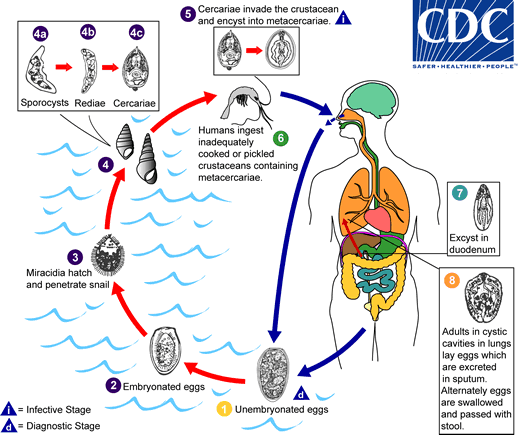
Paragonimus westermani (LC pic)
Paragonimus westermani Hosts
intermediate - snail, crustacean (crabs, crayfish)
definitive - human
reservoir - cat, dog, pig
Characteristics of Trematodes Infective in Cercarial stage
separate sexes
eggs with spines - “cutting tools“
most pathology caused by eggs
cercaria have forked tails → good swimmers
infective stage: cercaria penetrating skin