APES atmosphere practice questions
0.0(0)
Studied by 2 people0%Exam Mastery
Build your Mastery score
 AP Practice
Supplemental Materials Call Kai
Call KaiCard Sorting
1/19

Earn XP
Description and Tags
Last updated 8:02 PM on 5/1/26
Name | Mastery | Learn | Test | Matching | Spaced | Call with Kai | Chat |
|---|
No analytics yet
Send a link to your students to track their progress
20 Terms
1
New cards
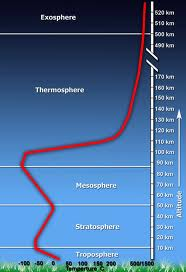
C
Based on the diagram, which of the following identifies a characteristic of the atmosphere between the stratopause and the tropopause?
A
Cloud formation occurs in the stratosphere.
B
The warmest air is found in the mesosphere.
C
The ozone layer is in the stratosphere.
D
The troposphere is the closest layer to the sun.
A
Cloud formation occurs in the stratosphere.
B
The warmest air is found in the mesosphere.
C
The ozone layer is in the stratosphere.
D
The troposphere is the closest layer to the sun.
2
New cards
C
A farm is experiencing extensive crop loss due to high rains causing overly saturated soils. Which of the following approaches would best help the farmer alleviate the problem?
A
Fertilizing the area with manure to eliminate the need for inorganic chemical fertilizers
B
Amending the soil with clay to increase the water-holding capacity of the soil
C
Amending the soil with sand to increase the permeability of the soil
D
Using contour plowing to decrease soil erosion
A
Fertilizing the area with manure to eliminate the need for inorganic chemical fertilizers
B
Amending the soil with clay to increase the water-holding capacity of the soil
C
Amending the soil with sand to increase the permeability of the soil
D
Using contour plowing to decrease soil erosion
3
New cards
E
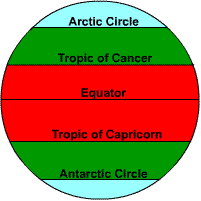
Which latitude shown on the diagram above experiences 24 hours of daylight on December 21?
A
(A) Artic Circle
B
(B) Tropic of Cancer
C
(C) Equator
D
(D) Tropic of Capricorn
E
(E) Antarctic Circle
A
(A) Artic Circle
B
(B) Tropic of Cancer
C
(C) Equator
D
(D) Tropic of Capricorn
E
(E) Antarctic Circle
4
New cards
A
This layer of Earth's atmosphere has the highest density of any atmospheric layer and contains most of the water vapor in the atmosphere.
A
Troposphere
B
Stratosphere
C
Mesosphere
D
Thermosphere
A
Troposphere
B
Stratosphere
C
Mesosphere
D
Thermosphere
5
New cards
D
A (Troposphere) -\> D (Thermosphere)
Which of the following correctly characterizes one of Earth's atmospheric layers?
A
Layer A is the stratosphere, where meteors are found.
B
Layer B is the troposphere, where weather occurs.
C
Layer C is the stratosphere, where the ozone layer is found.
D
Layer D is the thermosphere, where auroras are found.
Which of the following correctly characterizes one of Earth's atmospheric layers?
A
Layer A is the stratosphere, where meteors are found.
B
Layer B is the troposphere, where weather occurs.
C
Layer C is the stratosphere, where the ozone layer is found.
D
Layer D is the thermosphere, where auroras are found.
6
New cards
D
This layer of Earth's atmosphere contains the fewest molecules of the layers shown, and the low density of gas leads to very few molecules transferring heat to an object. In this layer, ultraviolet radiation causes photodissociation of molecules, creating ions.
A
Troposphere
B
Stratosphere
C
Mesosphere
D
Thermosphere
A
Troposphere
B
Stratosphere
C
Mesosphere
D
Thermosphere
7
New cards
D
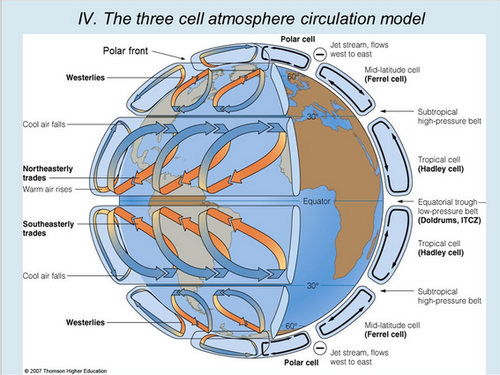
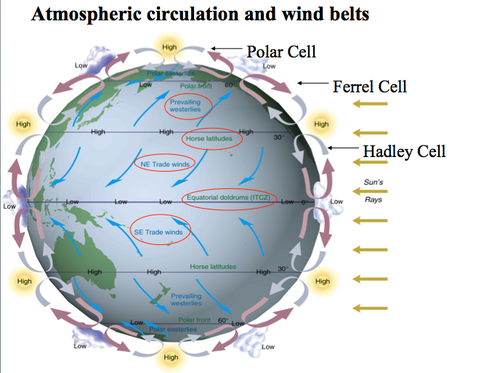
Which of the following is a biome found at 30°N and 30°S as seen in the diagram?
A
Rain forests
B
Tundras
C
Coniferous forests
D
Deserts
A
Rain forests
B
Tundras
C
Coniferous forests
D
Deserts
8
New cards
B
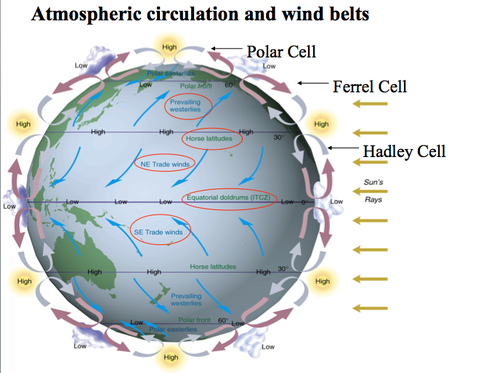
Which of the following is the source of energy driving the circulation pattern labeled C in the diagram?
A
The Coriolis effect
B
Solar radiation
C
Earth's magnetic field
D
The spinning core of Earth
A
The Coriolis effect
B
Solar radiation
C
Earth's magnetic field
D
The spinning core of Earth
9
New cards
C
Which of the following causes the air to rise high into the atmosphere in the areas labeled A, B, and C on the diagram?
A
El Niño circulation patterns
B
The rotation of Earth shifting the direction of the air upward
C
Warm, moist air that is less dense than the surrounding air
D
Rain shadows over mountain ridges
A
El Niño circulation patterns
B
The rotation of Earth shifting the direction of the air upward
C
Warm, moist air that is less dense than the surrounding air
D
Rain shadows over mountain ridges
10
New cards
E
Which of the following shows the approximate concentration of CO2 , N2 , and O2 in dry air?
A
CO2 78%
N2 < 1%
O2 21%
B
CO2 43%
N2 < 1%
O2 56%
C
CO2 36%
N2 8%
O2 56%
D
CO2 10%
N2 70%
O2 20%
E
CO2 < 1%
N2 78%
O2 21%
A
CO2 78%
N2 < 1%
O2 21%
B
CO2 43%
N2 < 1%
O2 56%
C
CO2 36%
N2 8%
O2 56%
D
CO2 10%
N2 70%
O2 20%
E
CO2 < 1%
N2 78%
O2 21%
11
New cards
A
In the desert regions of the southwestern United States, daily high and low temperatures will frequently fluctuate by 40°F (33°C) or more. Which statement below best explains the large variation in temperature?
A
There are no bordering oceans or large bodies of water to provide a stabilizing humidity to the air.
B
The nearby Rocky Mountain range provides a rain shadow effect in the evenings to the west.
C
The flat, light-colored sand formations typical in deserts reflect light from the Sun during the day, but not at night.
D
Desert plants have long tap roots that pull water from deep in the soil, cooling the desert at night.
A
There are no bordering oceans or large bodies of water to provide a stabilizing humidity to the air.
B
The nearby Rocky Mountain range provides a rain shadow effect in the evenings to the west.
C
The flat, light-colored sand formations typical in deserts reflect light from the Sun during the day, but not at night.
D
Desert plants have long tap roots that pull water from deep in the soil, cooling the desert at night.
12
New cards
D
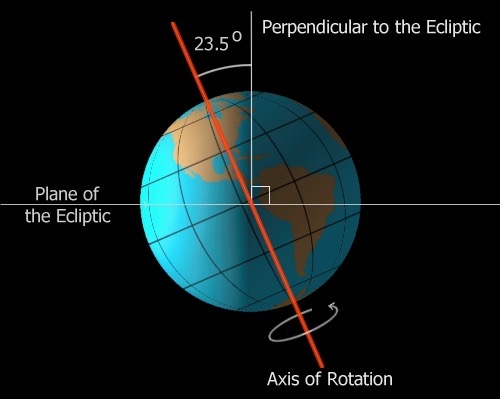
The axis of Earth in relation to the Sun is tilted at a 23.5 degree slant, as illustrated in the diagram below.
If the diagram illustrates Earth's relative position on December 21 of a given year, which of the following statements would be correct?
A
The Tropic of Cancer has a shorter day and higher solar radiation intensity because there is an inverse relationship between length of day and radiation intensity.
B
The Tropic of Capricorn has a shorter day and higher solar radiation intensity because there is a direct relationship between length of day and radiation intensity.
C
The equator has twelve hours of daylight and the greatest solar radiation intensity because there is no direct relationship between day length and radiation intensity.
D
The Tropic of Cancer has a shorter day and lower solar radiation intensity because there is a direct relationship between day length and radiation intensity.
If the diagram illustrates Earth's relative position on December 21 of a given year, which of the following statements would be correct?
A
The Tropic of Cancer has a shorter day and higher solar radiation intensity because there is an inverse relationship between length of day and radiation intensity.
B
The Tropic of Capricorn has a shorter day and higher solar radiation intensity because there is a direct relationship between length of day and radiation intensity.
C
The equator has twelve hours of daylight and the greatest solar radiation intensity because there is no direct relationship between day length and radiation intensity.
D
The Tropic of Cancer has a shorter day and lower solar radiation intensity because there is a direct relationship between day length and radiation intensity.
13
New cards
C
Most of the Earth's deserts are at approximately 30° latitude, north and south, because these latitudes are characterized by
A
generally warm ocean currents
B
predominantly low atmospheric pressure
C
descending dry air currents
D
slow-moving jet streams
E
enhanced solar radiation
A
generally warm ocean currents
B
predominantly low atmospheric pressure
C
descending dry air currents
D
slow-moving jet streams
E
enhanced solar radiation
14
New cards
B
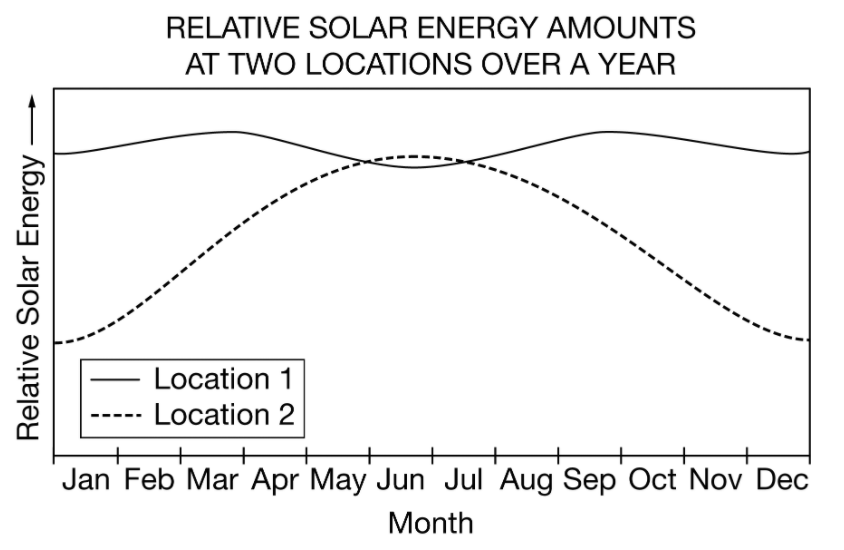
Based on the graph, which of the following can be concluded about the latitudes of the two locations?
A
Both locations are at the same latitude.
B
Location 1 is close to the equator, and Location 2 is in the Northern Hemisphere.
C
Location 1 is in the Northern Hemisphere, and Location 2 is in the Southern Hemisphere.
D
Location 1 is in the Southern Hemisphere, and Location 2 is close to the equator.
A
Both locations are at the same latitude.
B
Location 1 is close to the equator, and Location 2 is in the Northern Hemisphere.
C
Location 1 is in the Northern Hemisphere, and Location 2 is in the Southern Hemisphere.
D
Location 1 is in the Southern Hemisphere, and Location 2 is close to the equator.
15
New cards
A
The primary cause of Earth's seasons is the
A
constant tilt of Earth's rotational axis with respect to the plane of its orbit around the Sun
B
changing distance of Earth from the Sun at different times of the year
C
periodic wobbling of Earth on its axis of rotation
D
changing relative positions of Earth, its Moon, and the Sun
E
periodic changes in solar energy output
A
constant tilt of Earth's rotational axis with respect to the plane of its orbit around the Sun
B
changing distance of Earth from the Sun at different times of the year
C
periodic wobbling of Earth on its axis of rotation
D
changing relative positions of Earth, its Moon, and the Sun
E
periodic changes in solar energy output
16
New cards
C
Which of the following best explains why the lower portion of the troposphere is warmer than the upper portion?
A
The lower portion of the troposphere is separated by the ozone layer from the upper portion, so the lower portion absorbs more sunlight, increasing the temperature.
B
The air in the lower portion of the troposphere is less dense than the air in the upper portion, leading to a higher temperature in the lower portion.
C
The surface of Earth absorbs sunlight, heating the lower portion of the troposphere more than the upper part.
D
The troposphere is the highest layer of the atmosphere, so the lower portion is warmed more than the upper part by rising air.
A
The lower portion of the troposphere is separated by the ozone layer from the upper portion, so the lower portion absorbs more sunlight, increasing the temperature.
B
The air in the lower portion of the troposphere is less dense than the air in the upper portion, leading to a higher temperature in the lower portion.
C
The surface of Earth absorbs sunlight, heating the lower portion of the troposphere more than the upper part.
D
The troposphere is the highest layer of the atmosphere, so the lower portion is warmed more than the upper part by rising air.
17
New cards
A
El Niño, a periodic warming of ocean surface waters, occurs in which of the following regions?
A
Tropical East Pacific
B
Gulf of Mexico
C
Arctic North Pacific
D
Temperate West Atlantic
E
Tropical Indian Ocean
A
Tropical East Pacific
B
Gulf of Mexico
C
Arctic North Pacific
D
Temperate West Atlantic
E
Tropical Indian Ocean
18
New cards
D
During an El Niño-Southern Oscillation event, which of the following best describes conditions in the eastern part of the tropical Pacific Ocean (e.g., near Peru and Ecuador)?
A
Sea Surface/TemperatureRainfall - Low/Low
B
Sea Surface/TemperatureRainfall - Low/High
C
Sea Surface/TemperatureRainfall -High/Low
D
Sea Surface/TemperatureRainfall - High/High
E
Sea Surface/TemperatureRainfall- High/Normal
A
Sea Surface/TemperatureRainfall - Low/Low
B
Sea Surface/TemperatureRainfall - Low/High
C
Sea Surface/TemperatureRainfall -High/Low
D
Sea Surface/TemperatureRainfall - High/High
E
Sea Surface/TemperatureRainfall- High/Normal
19
New cards
A
Brown pelicans are fish-eating birds. As a result of an El Niño event, the population of brown pelicans in southern California declines. Which of the following best explains the relationship between the El Niño event and the population decline?
A
Warmer ocean temperatures can cause fish to move to colder water farther from pelican nest sites.
B
Lower sea surface heights can result in pelican nest sites being isolated too far from their food supply in the ocean.
C
The female reproductive tract of birds does not function at the lower water temperatures of El Niño.
D
Male pelicans get disoriented due to the lack of moisture and fail to return to the nest with food.
E
Predatory seal populations increase dramatically due to decreased rainfall.
A
Warmer ocean temperatures can cause fish to move to colder water farther from pelican nest sites.
B
Lower sea surface heights can result in pelican nest sites being isolated too far from their food supply in the ocean.
C
The female reproductive tract of birds does not function at the lower water temperatures of El Niño.
D
Male pelicans get disoriented due to the lack of moisture and fail to return to the nest with food.
E
Predatory seal populations increase dramatically due to decreased rainfall.
20
New cards
E
Which of the following does NOT exert a major influence on Earth's overall climate?
A
The annual amount of solar radiation that reaches Earth's surface
B
The concentrations of the specific gases in Earth's atmosphere
C
The distribution of land masses and oceans, in combination with Earth's topography
D
The daily rotation of Earth on its axis, and its annual revolution around the Sun
E
The seasonal development of temperature inversions in geographical basins
A
The annual amount of solar radiation that reaches Earth's surface
B
The concentrations of the specific gases in Earth's atmosphere
C
The distribution of land masses and oceans, in combination with Earth's topography
D
The daily rotation of Earth on its axis, and its annual revolution around the Sun
E
The seasonal development of temperature inversions in geographical basins