Weather and Seasonal Changes Assessment Review
 Call Kai
 Learn
Learn Practice Test
 Spaced Repetition
 Match
Match Flashcards
1/9

Earn XP
Description and Tags
Fill-in-the-blank practice flashcards covering weather, seasonal changes, animal adaptations, and erosion mechanisms based on the assessment review.
Name | Mastery | Learn | Test | Matching | Spaced | Call with Kai | Chat |
|---|
No analytics yet
Send a link to your students to track their progress
10 Terms

In the provided image showing fallen foliage and trees, the season depicted is most likely __________.
Autumn
Trees lose their leaves during autumn because there is less daylight and the temperature is __________.
getting cooler
In the spring, trees that lost their leaves in autumn will most likely __________.
grow new leaves

When animals use colors and patterns similar in appearance to their surroundings to avoid harm, as seen in the gray cracker butterfly, this is known as __________.
Camouflage
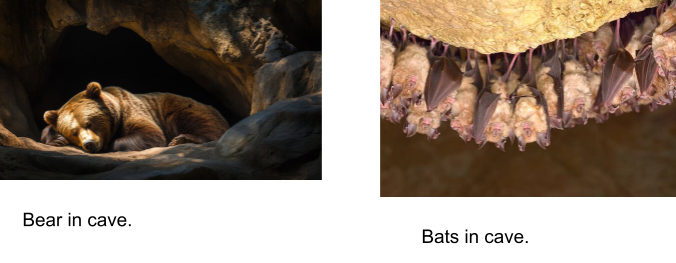
Hibernation is a period of rest where growth slows down, and animals like bears and bats enter this state in response to __________.
seasonal changes
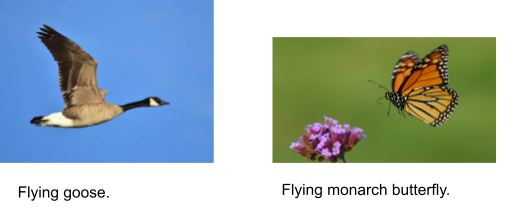
Animals like geese and monarch butterflies travel long distances and back again in search of food, a better climate, or seasonal changes; this behavior is known as __________.
Migration
In response to warmer spring and summer temperatures, a cat will __________ to stay cool.
shed lots of fur
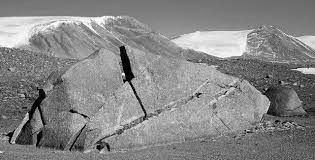
The large rock in the image most likely cracked apart because __________ inside of it.
water froze
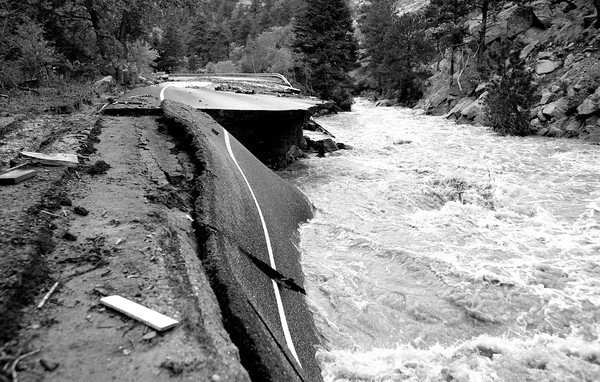
When a large rain storm causes a road to collapse and wash away, this process is known as __________.
Erosion
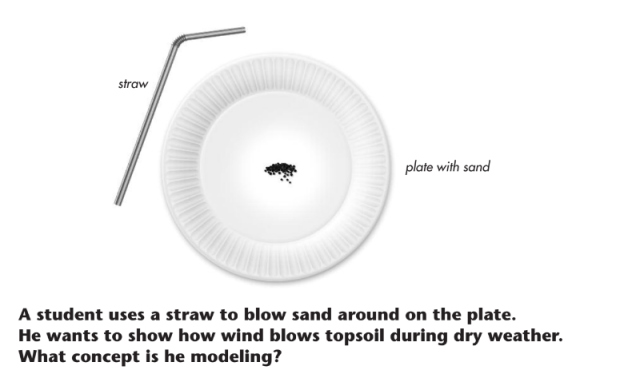
A student using a straw to blow sand around on a plate to show how wind moves topsoil during dry weather is modeling the concept of __________.
Erosion