BLOCK 3 lecture 2
 Call Kai
 Learn
Learn Practice Test
 Spaced Repetition
 Match
Match Flashcards
 Knowt Play
1/14

There's no tags or description
Looks like no tags are added yet.
Name | Mastery | Learn | Test | Matching | Spaced | Call with Kai | Chat |
|---|
No analytics yet
Send a link to your students to track their progress
15 Terms
redox with no oxygen
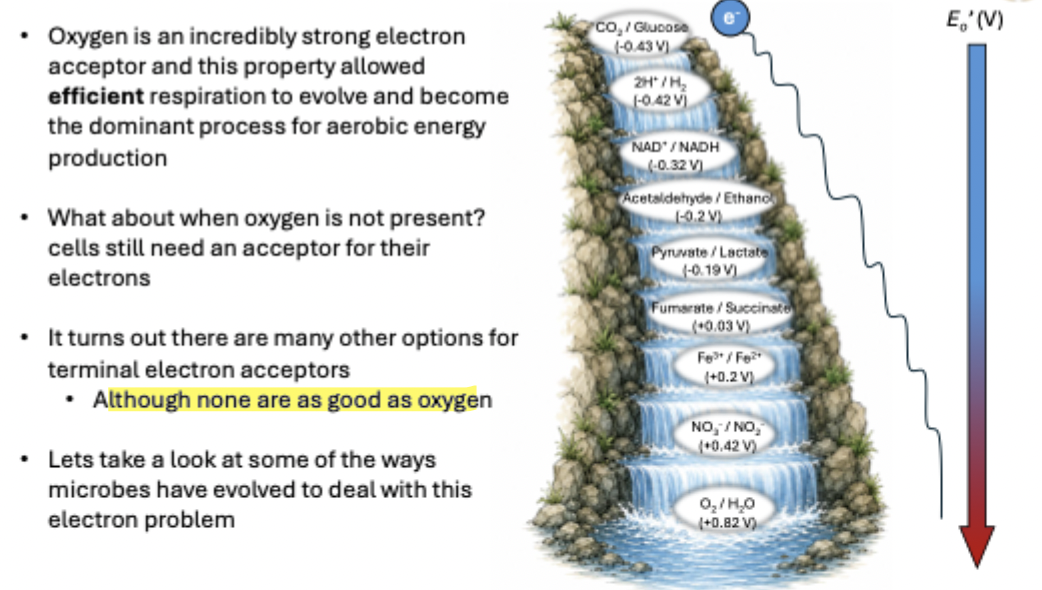
Basically just need a molecule below glucose so there are a lot of other options to be terminal electron acceptors (the role the oxygen plays when it is available)
the problem of electrons
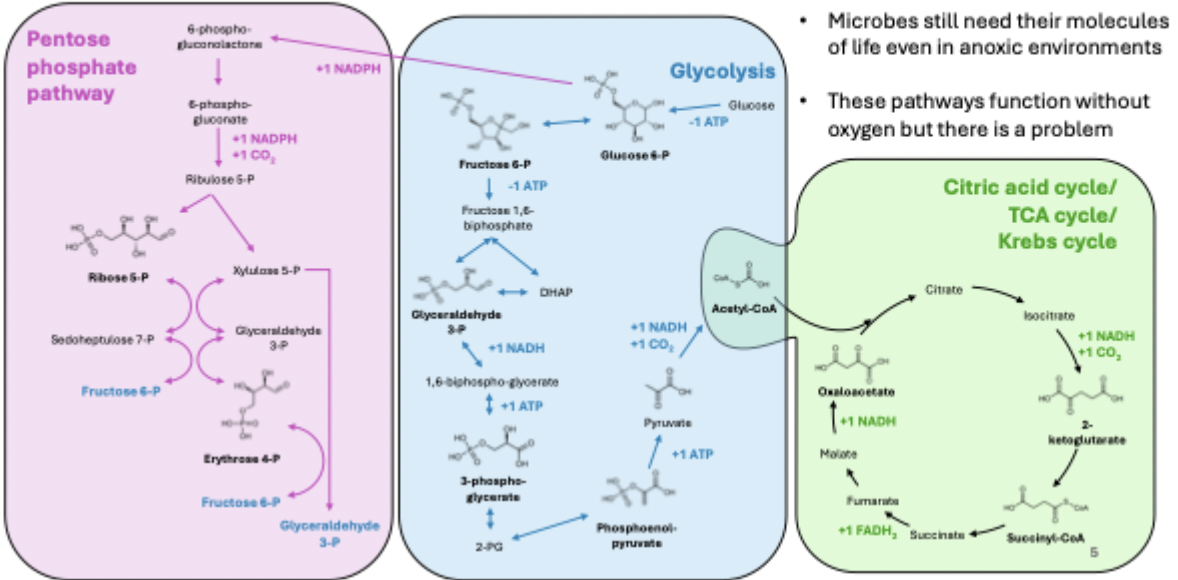
Basically run all these pathways the same way although CAC can only partially run and there are some differences when oxygen is not present
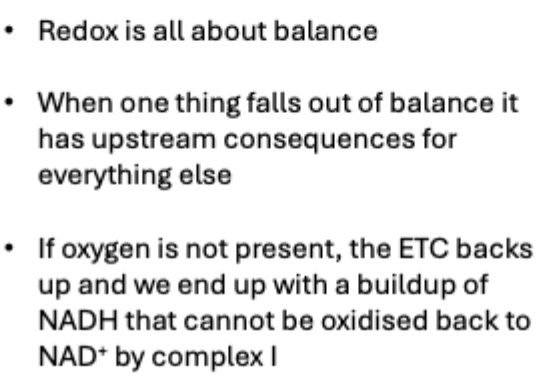
Problem is that there is a buildup of reduced energy carriers - NADH
So in theory there is no place for these electrons to go when there is no oxygen
solutions to the problems of electrons
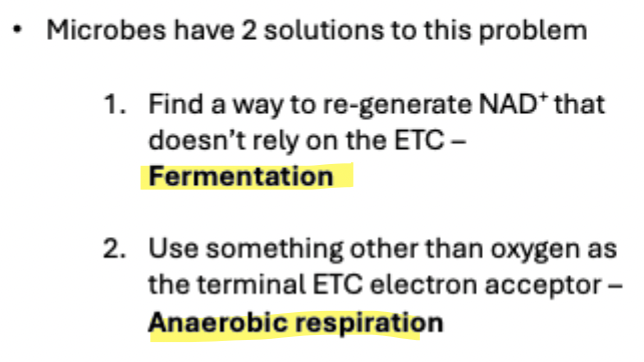
fermentation
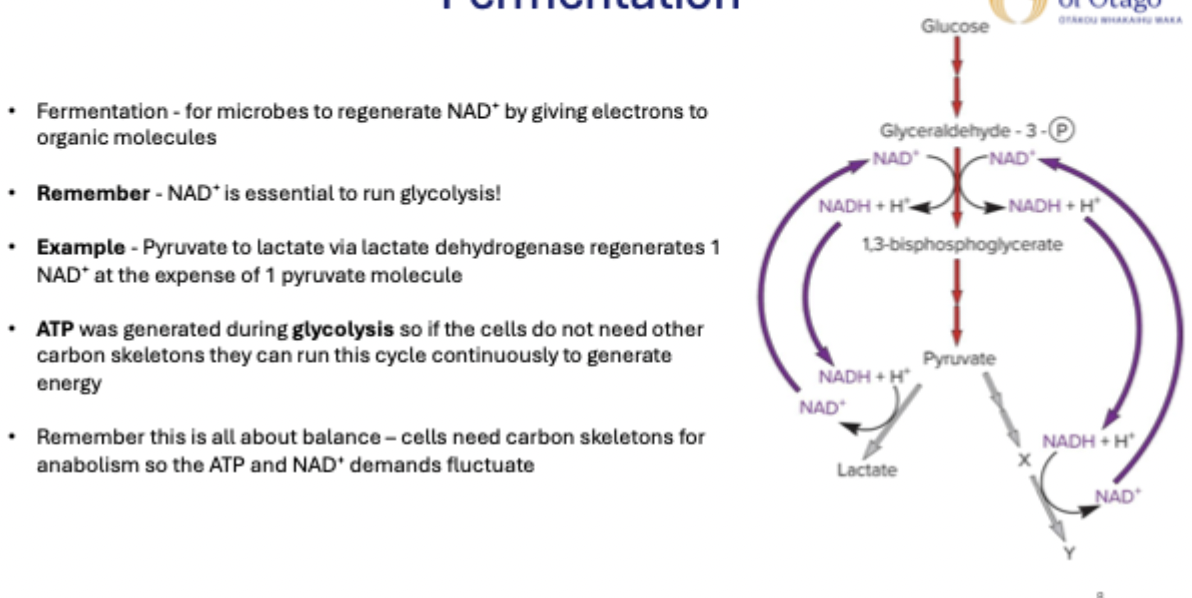
Human cells can also do lactate fermentation when out of oxygen
Turn pyrivate into lactate through lactate dehydrogebase
NADH becomes oxidised in this process
Lactate is not really useful but the point is to regenerate NAD+
Rely on ATP from anaerobic glycolysis - still get energy from this but not as much
There are other molecules that can ferment - not only pyrivate and lactate
mixed acid fermentation
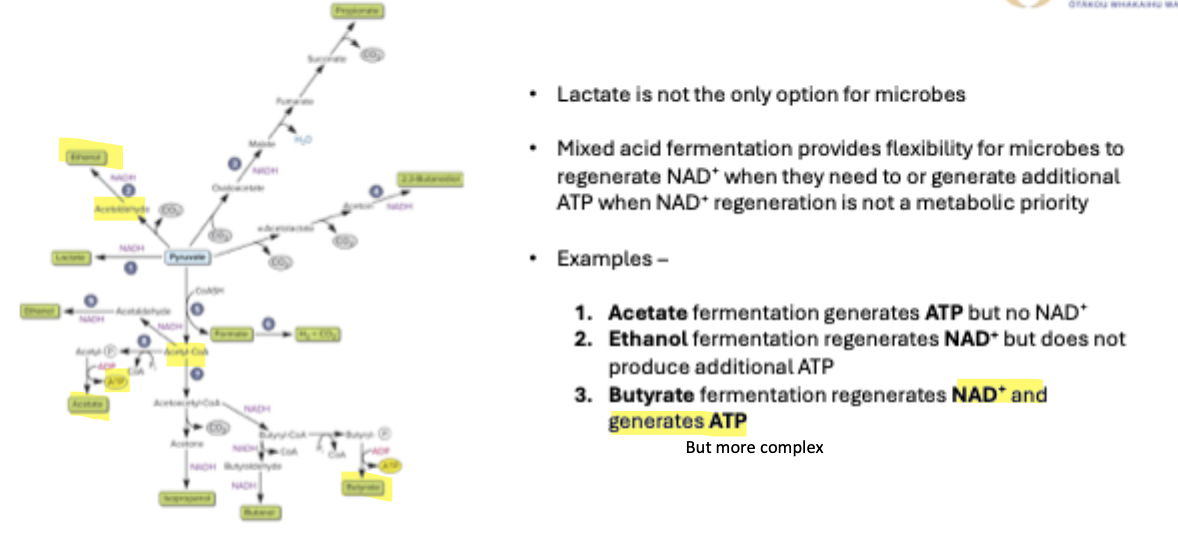
Everything in green here is a potential fermentation product
Basically all have the same goal - to regenerate NAD+
The cell can change what route is being used depending on the energy needs - if the cofactor balance is alright it can choose to use a patheay that generates ATP if it needs more energy, if there is enough energy but not enough nAD+ it can use a different pathway
All these pathways run at the same time and at different levels depending on the damands of the cell
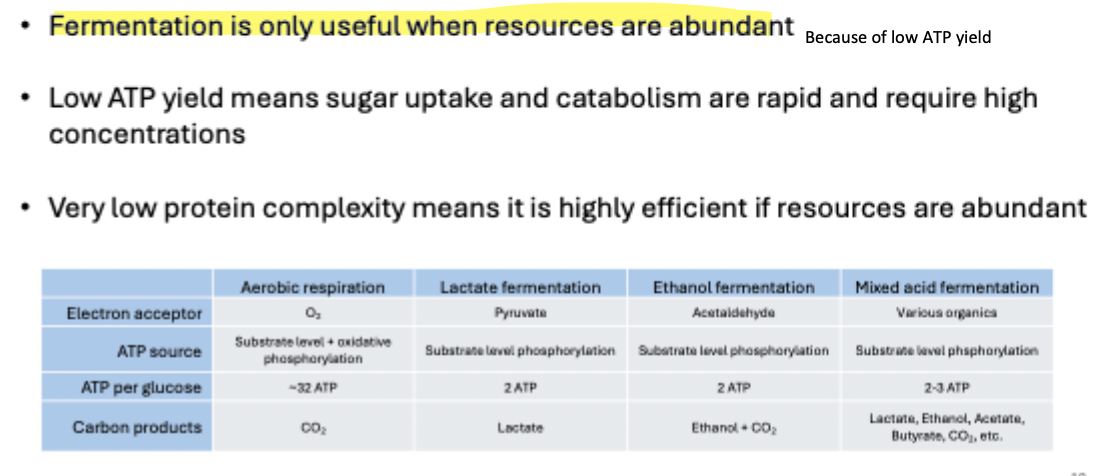
drawbacks and benefits of fermentation
anaerobic respiration
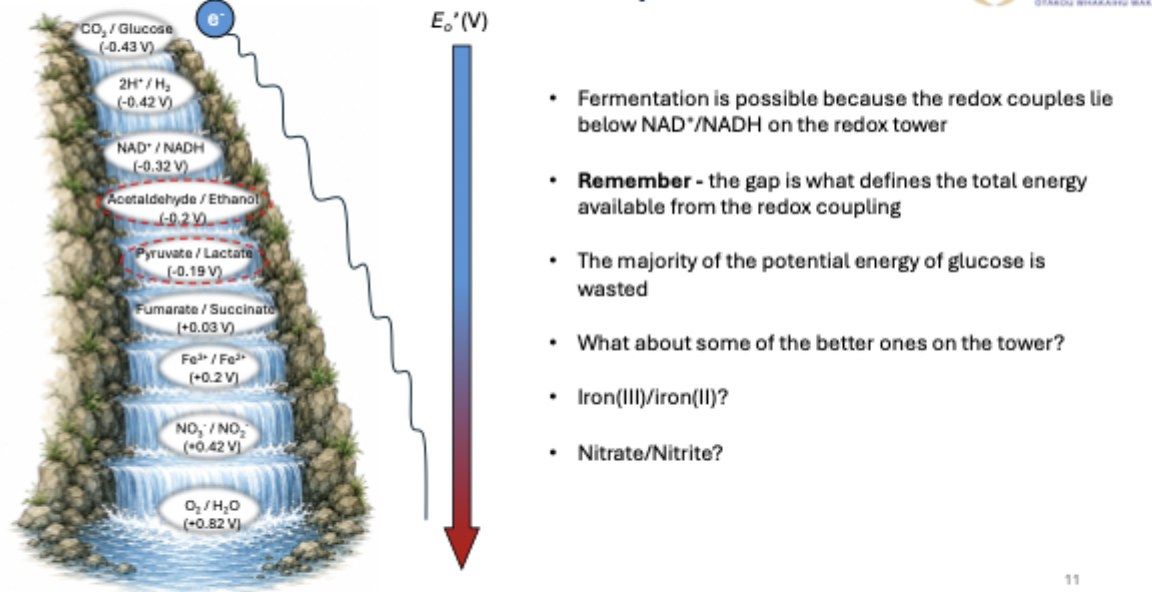
Most of the energy is actually left in the products - wasted I fermentation
There are things that sit further down the chain - utilised through anaerobic respiration
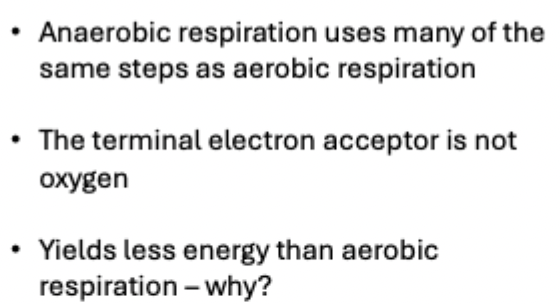
Because it is not oxygen as the terminal electron acceptor - the difference between redox potentials is not as high
anaerobic respiration - dissiilatory nitrate reduction
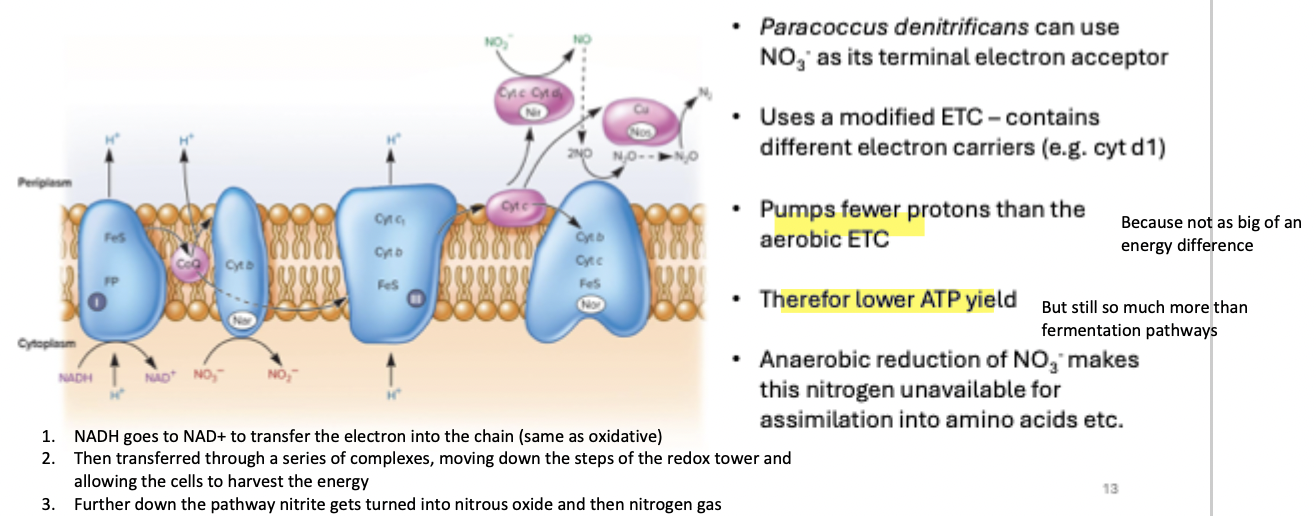
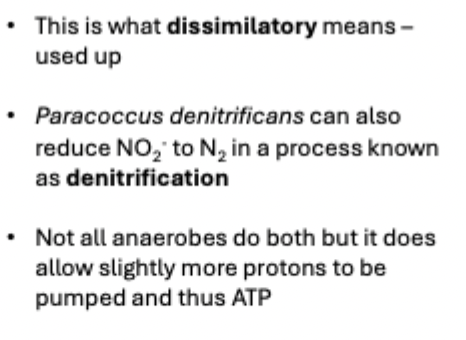
Nitrogen gas is not useful
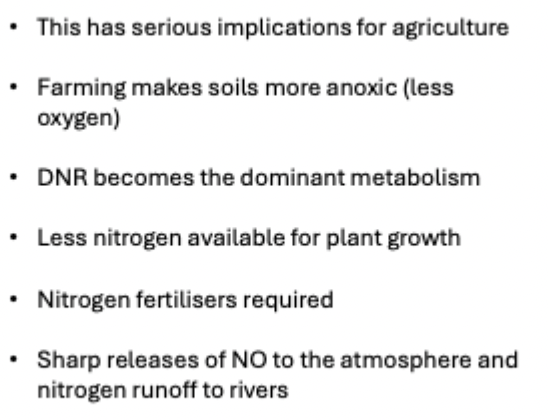
agricultural importance of dissimilatory nitrate reduction
anaerobic respiration - dissimilatory iron reduction
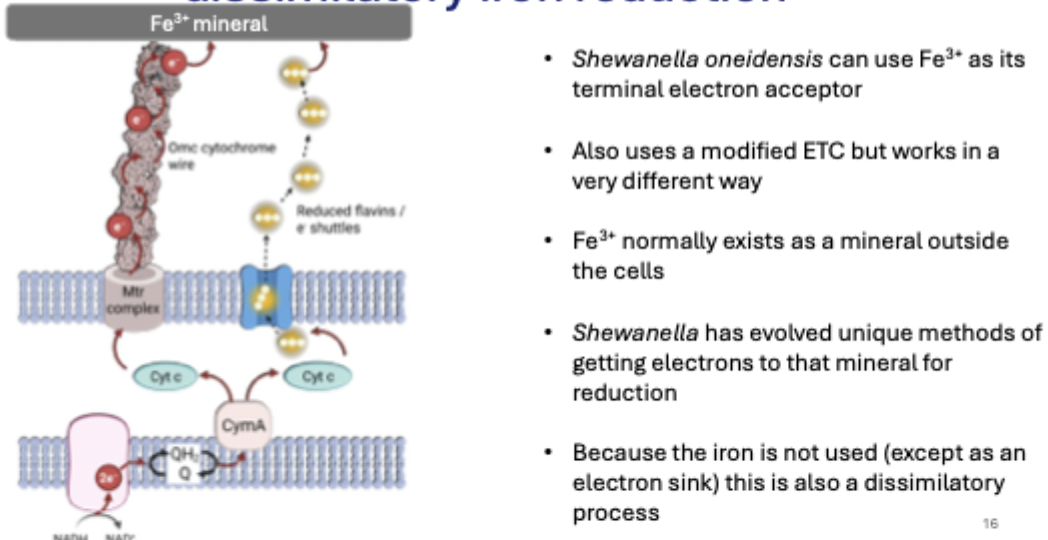
1st step is the same again - take NADH to a membrane complex and oxidize it to NAD+ to get the electron into the ETC
Then have two options
Can pass on to a redox active molecule e.g. flavin which is then passed through a channel into the cells and eventually go on to pass the electron to the Fe3+ mineral
Can use nanowire structures - take electrons from cyt c and have these large wire like proteins which are attacted to the outside of the cells that act as hgihways untul it interacts with the mineral to pass the electrons onto it
Also dissimilatory because the iron cannot be used
syntrophy
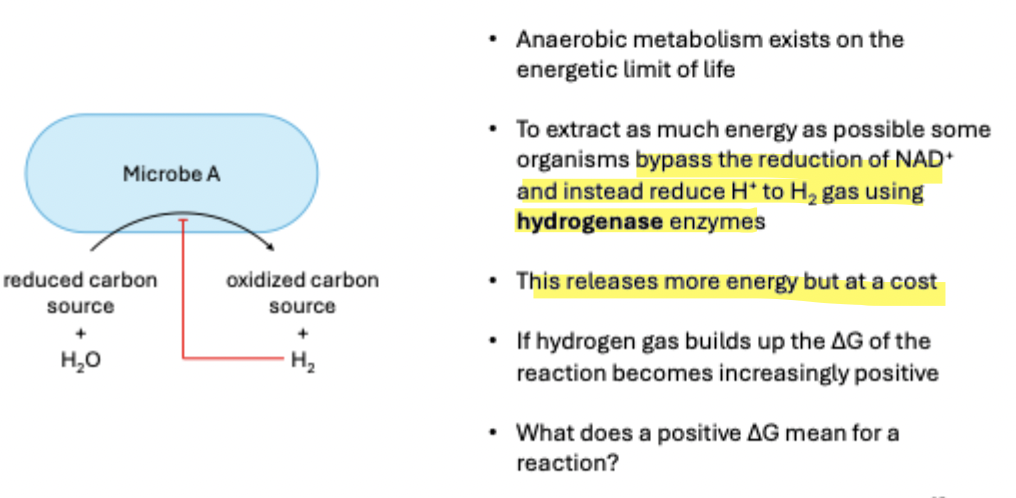
Positive energy means the reaction is unlikely to happen and needs an input of energy in order for it to happen
Energy is the limiting factor so cannot do this when the delta G is positive
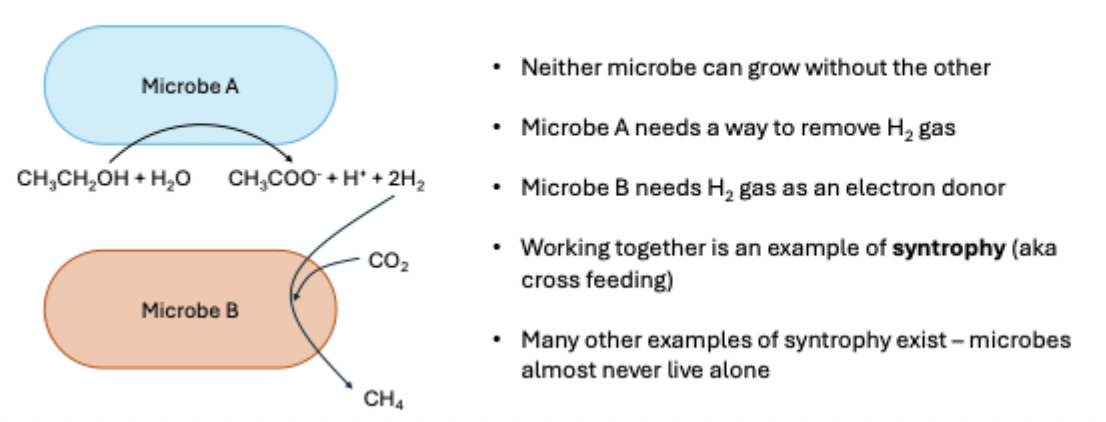
syntrophy - step 1 acetogenesis
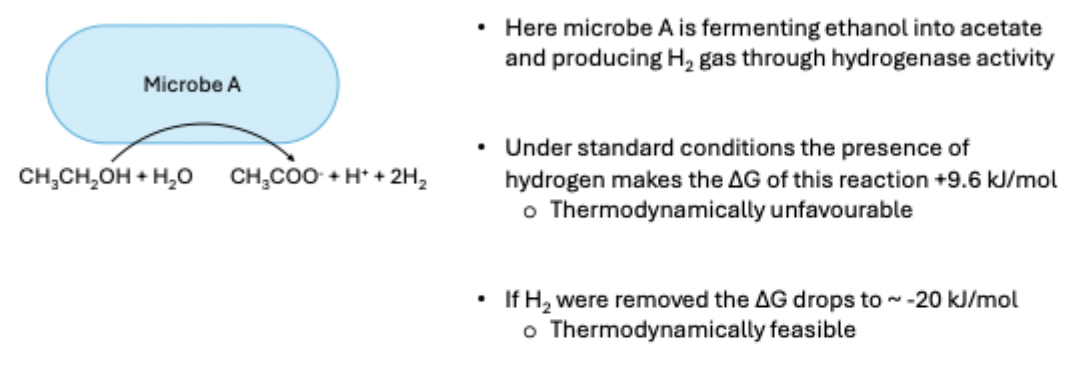
Means they have to continually remove the hydroen gas
syntrophy - stage 2 methanogenesis
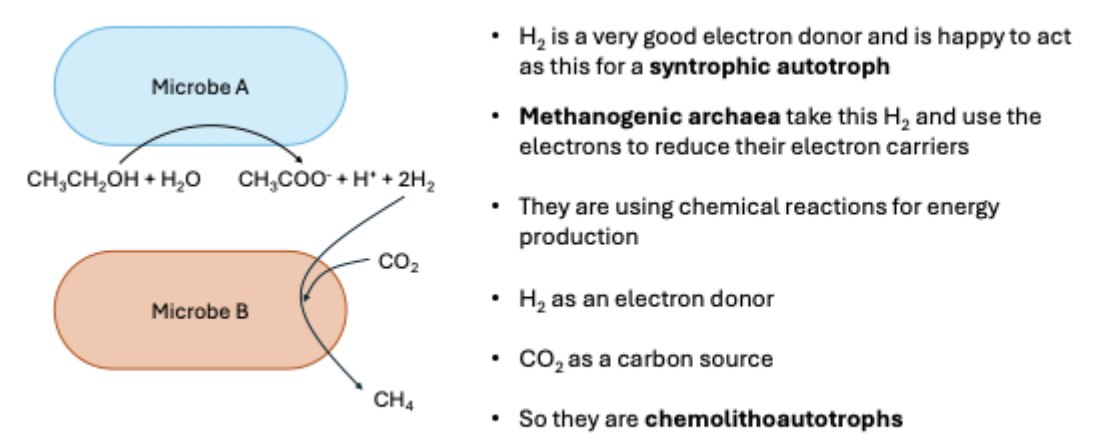
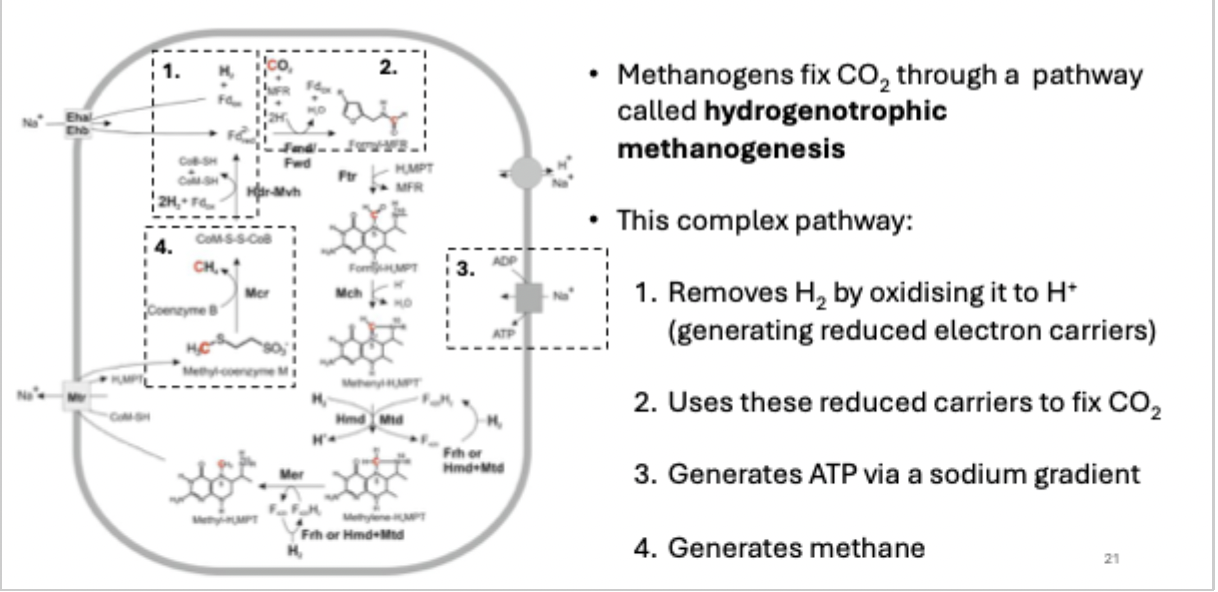
methanogenesis