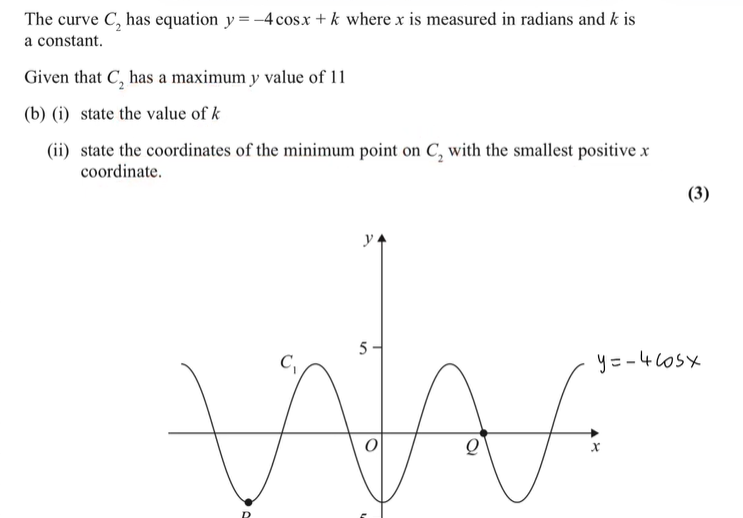
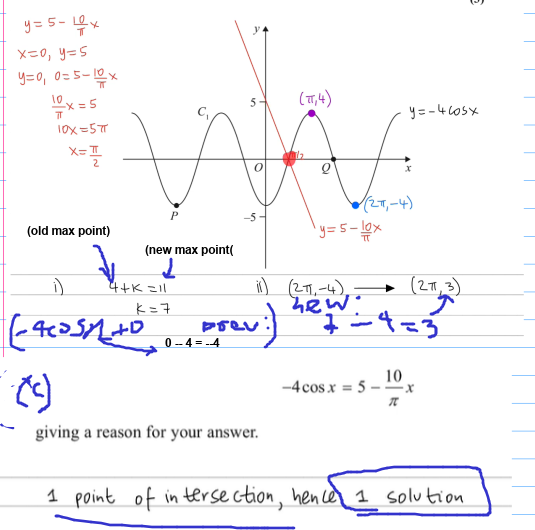
P1 mistakes + theory [IAL]
 Call Kai
 Learn
Learn Practice Test
 Spaced Repetition
 Match
Match Flashcards
 Knowt Play
1/28

There's no tags or description
Looks like no tags are added yet.
Name | Mastery | Learn | Test | Matching | Spaced | Call with Kai | Chat |
|---|
No analytics yet
Send a link to your students to track their progress
29 Terms

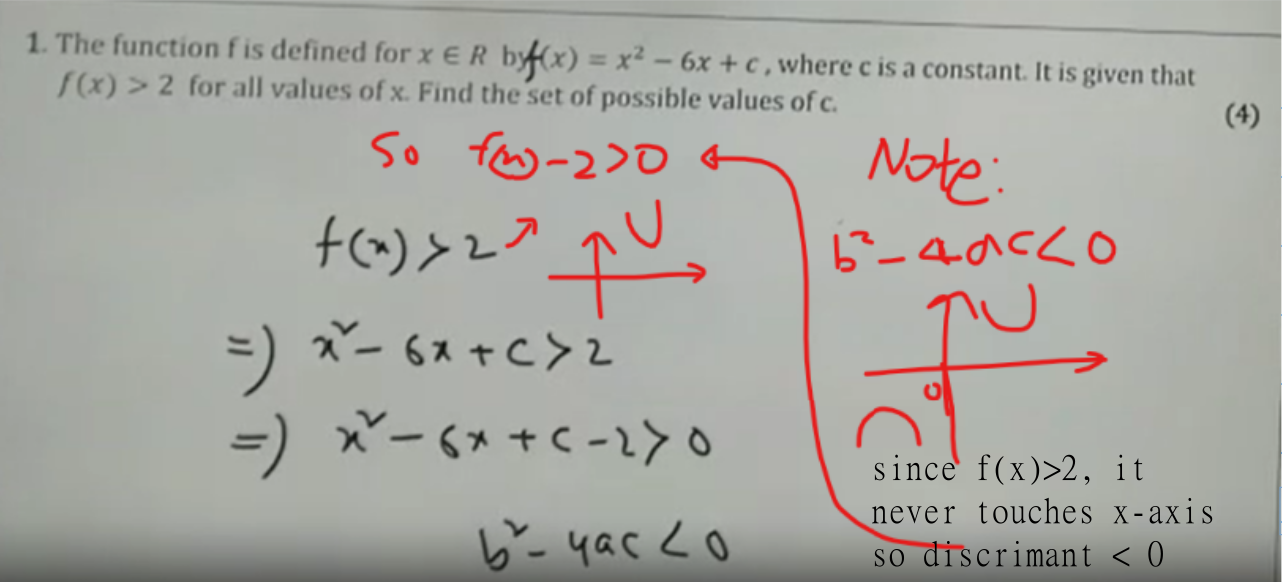
pic shows discriminant way, here is easier way:
f(x) > 2, so min x value > 2
dy/dx = 2x - 6 = 0 (for minimum)
x = 3
plug in x =3 to f(x), it will be:
-9 + c > 2
c > 11
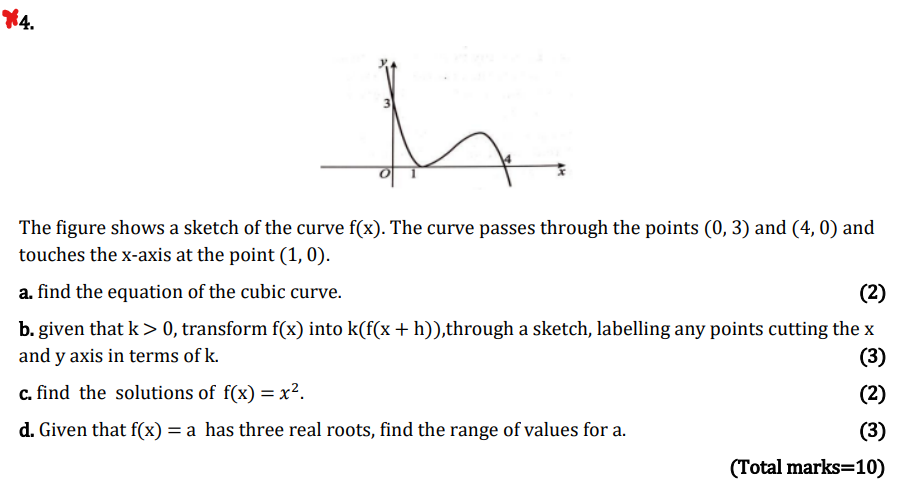
(a) The cubic curve touches the x-axis at (1,0), which means (x−1)2 is a factor. It also passes through (4,0), so (x−4) is another factor. Therefore, the equation is of the form f(x)=A(x−1)2(x−4). We can find A using the point (0,3)
3=A(0−1)2(0−4)
3=A(1)(−4)
A=−43
Thus, the equation is: f(x)=−43(x−1)2(x−4) (ans)
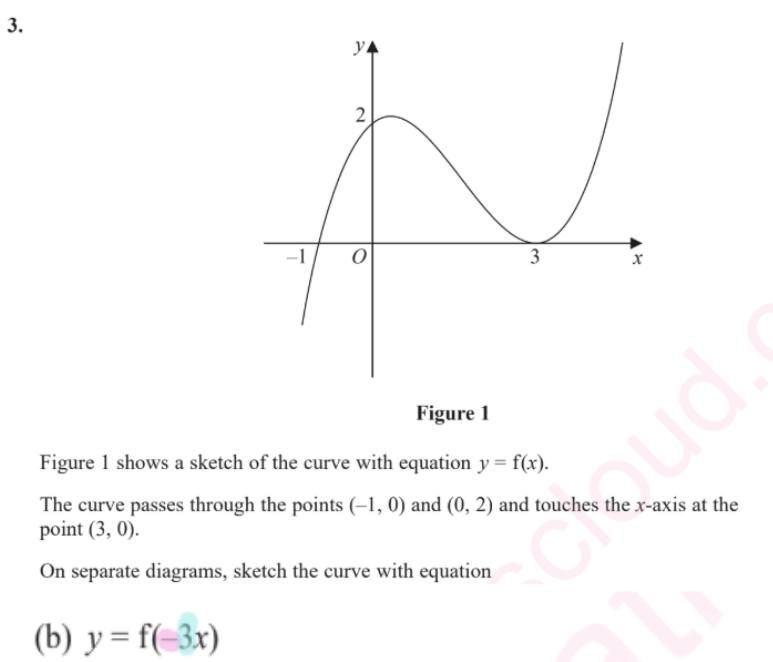
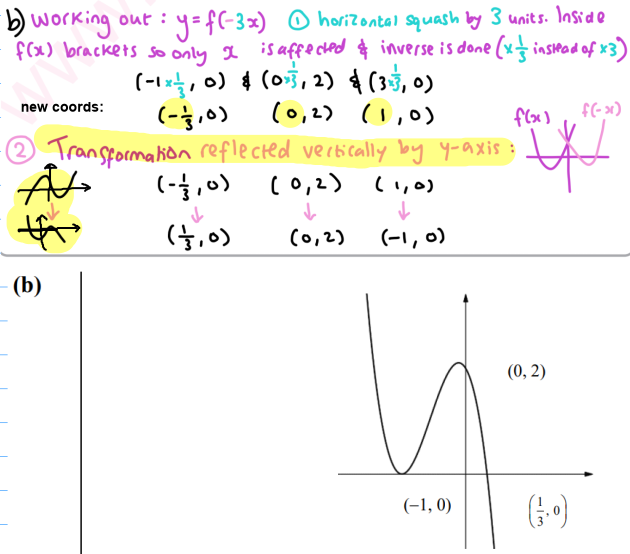
(b)Transforming f(x) into k(f(x+h))
(0, 3) → (-h, 3k)
(1, 0) → (1 - h, 0) (X-1)² so still a “bounce”
(4, 0) → (4 - h, 0)</span></p></li></ul><p><spanstyle="font−size:inherit;"> 3$$
(warnning —> answer for (c )and (d) is incomplete btw)
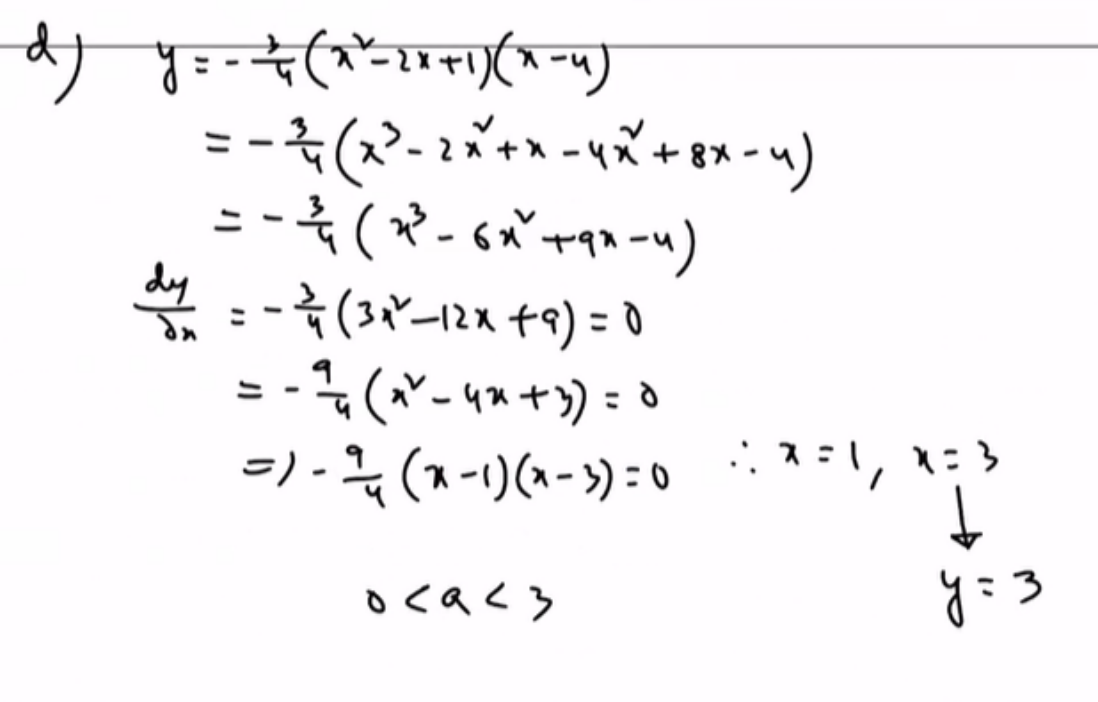
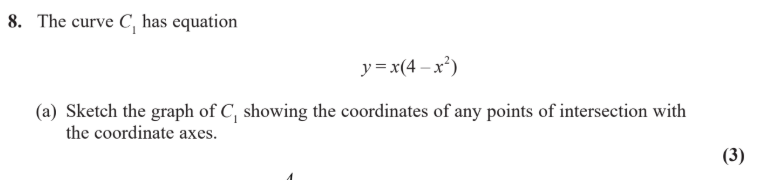
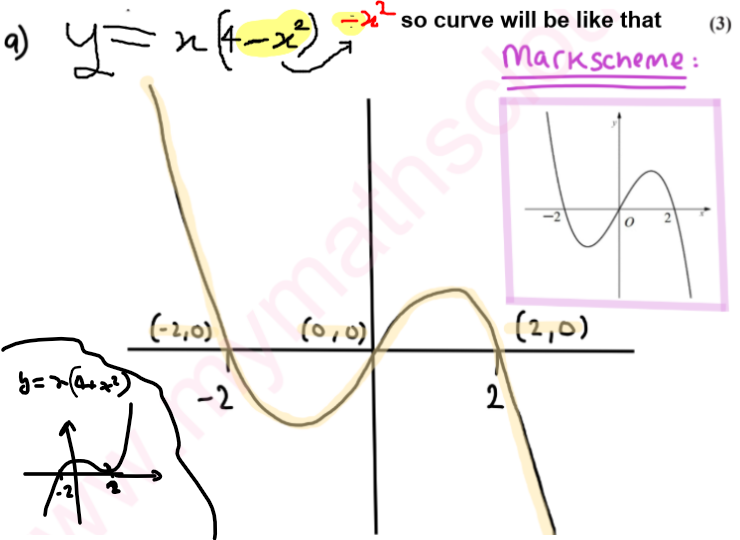
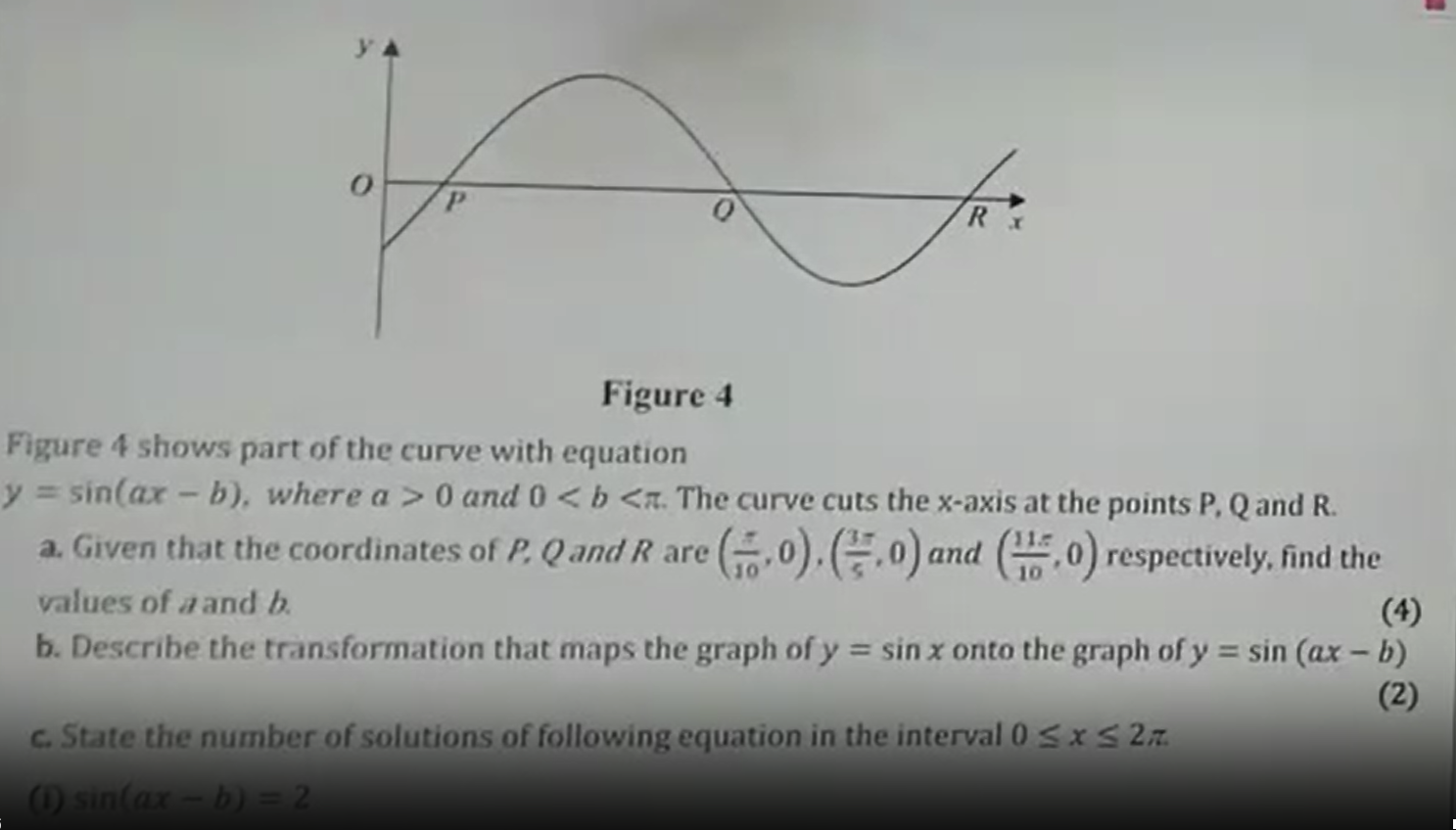
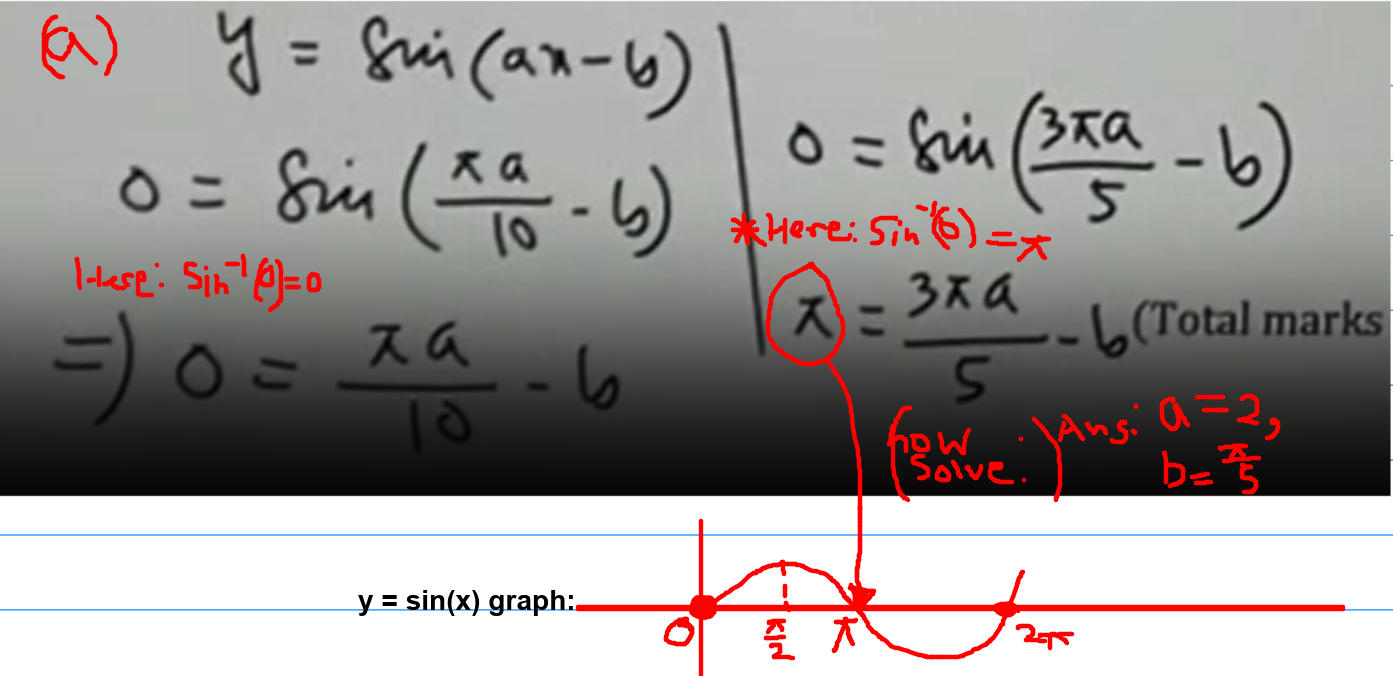
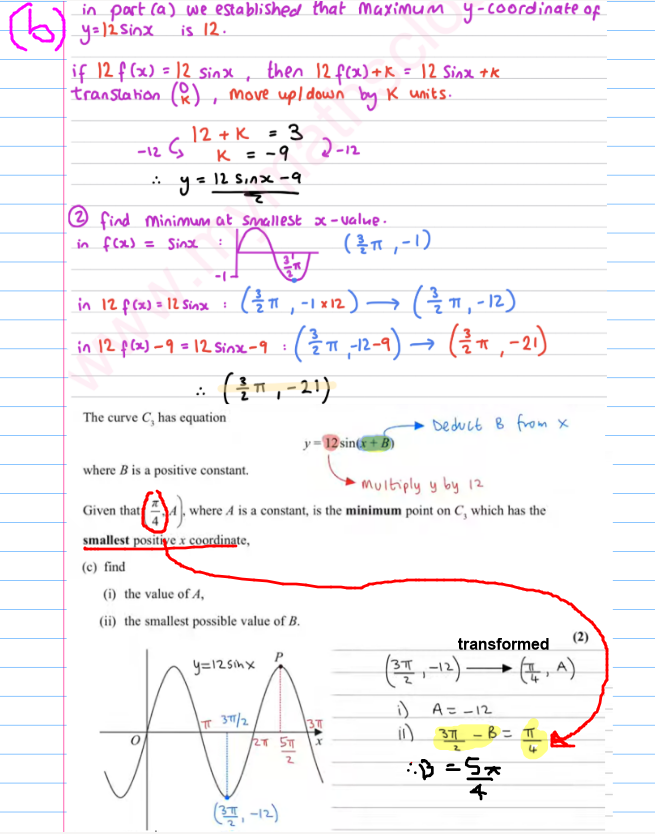
(b) the transformation is:
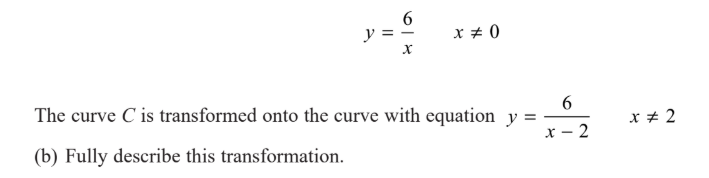
translated by π/5 units to the right followed by stretching with scale factor of ½ parallel to x-axis
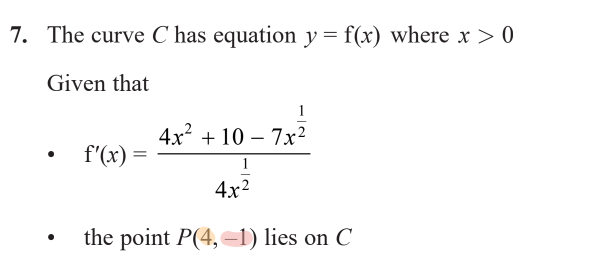
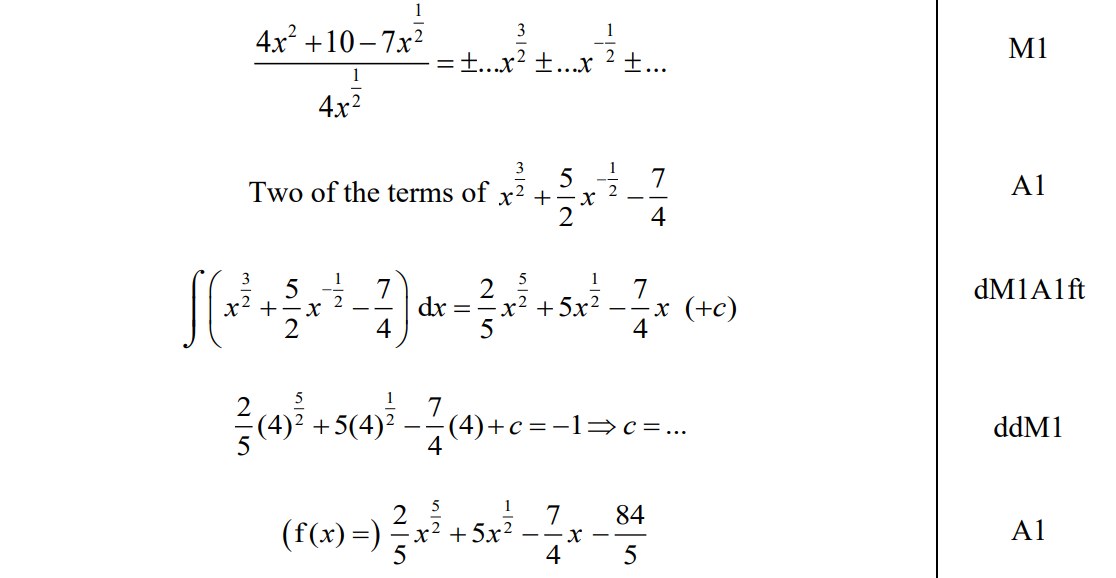
Find f(x)
DON’T forget C, find C by plugging in coords, i.e (4,-1)
no C means -2 marks
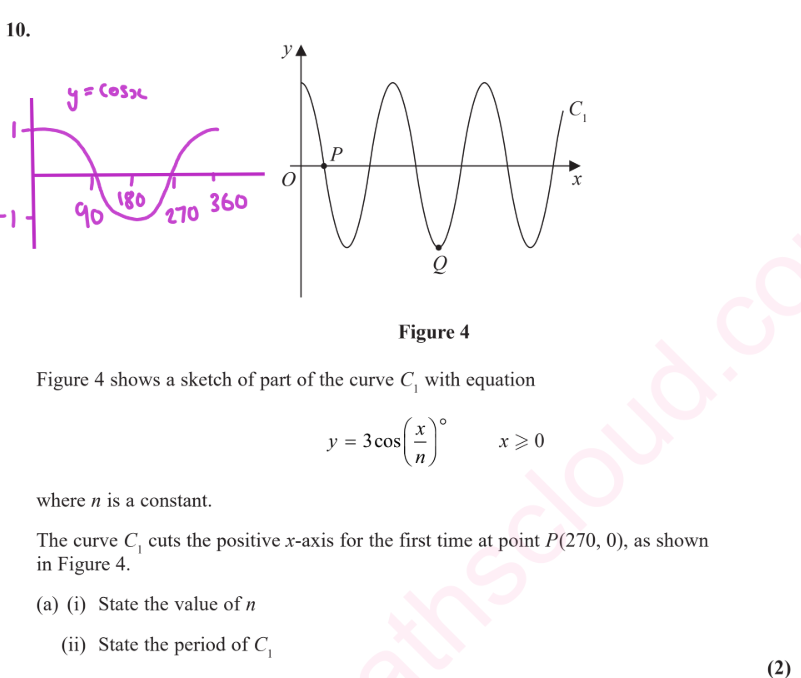
y = cos(θ)
[cos theta curve)
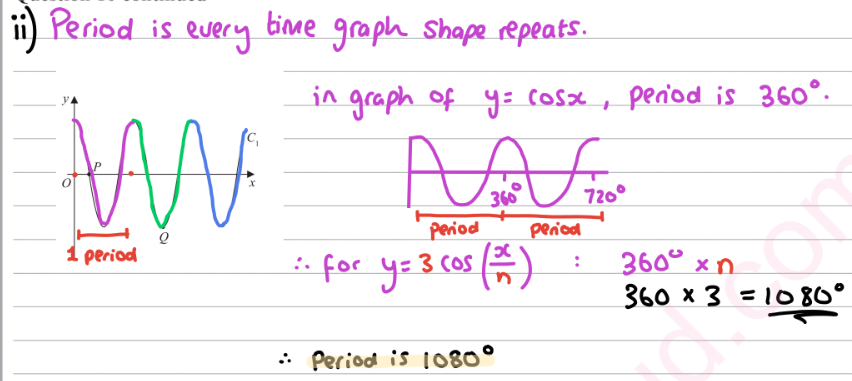
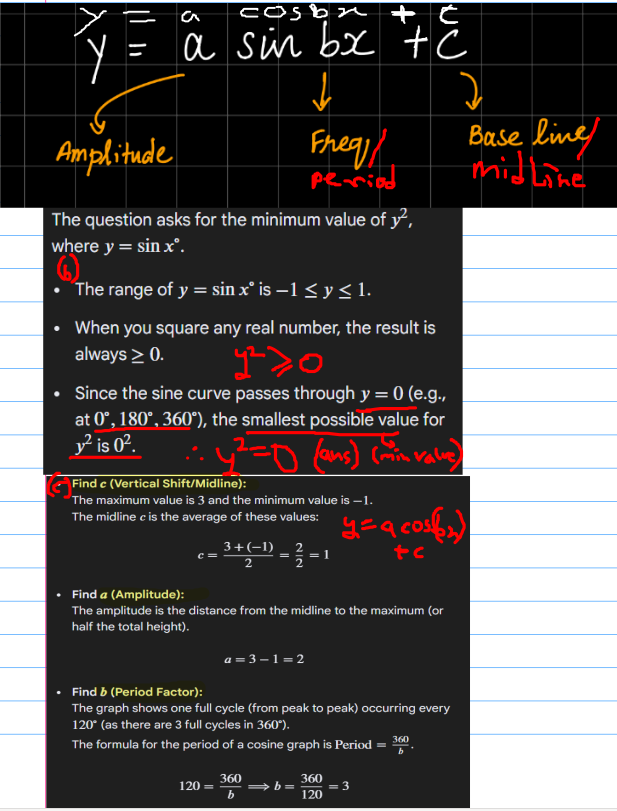
(i) 3cos(270/n) = 0
270/n = cos^-1(0) = 90
n = 3
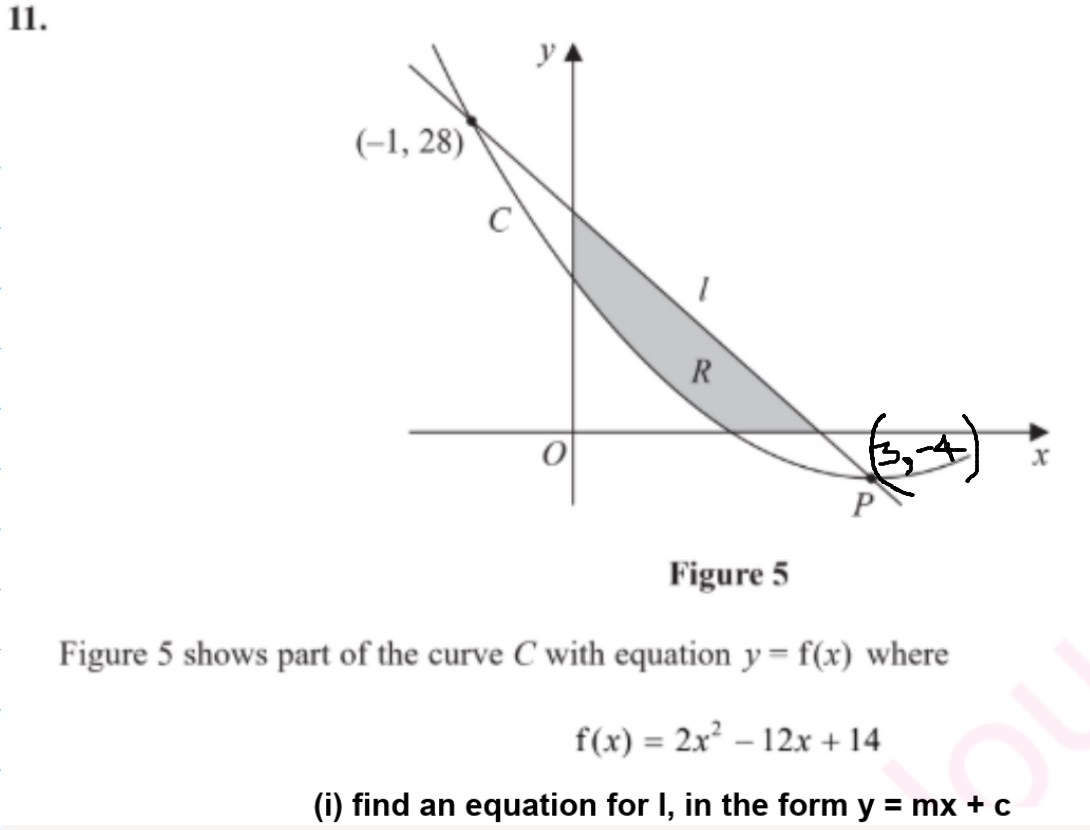
(ii) period = 1 full cylce
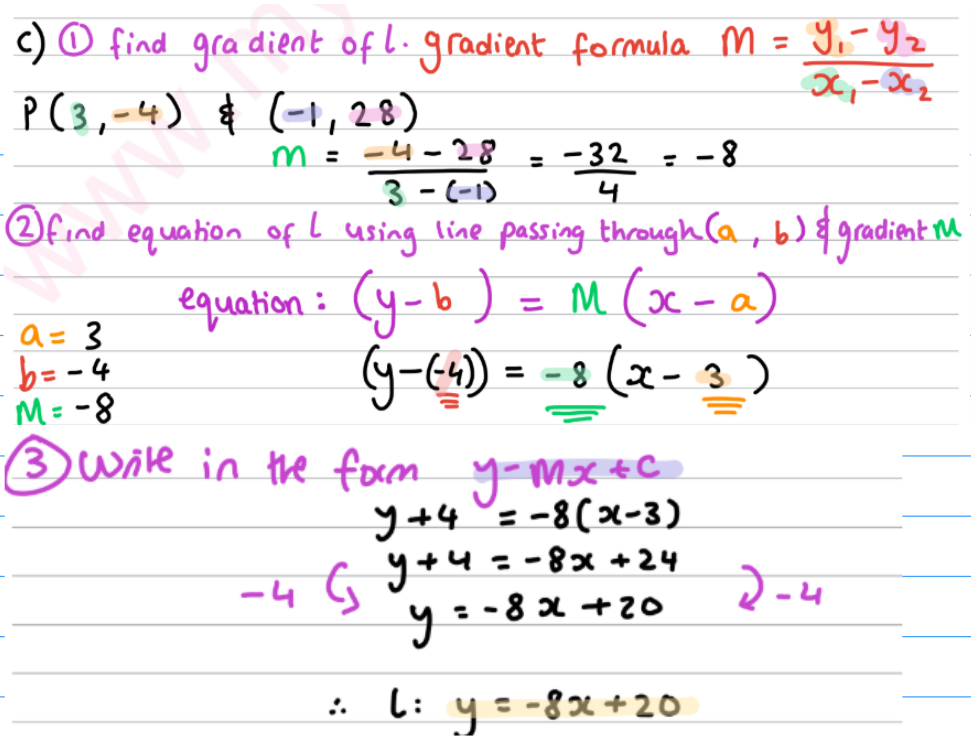
DO NOT DO dy/dx at (−1,28), thats gonna give grad of curve, q. wants grad of l.
Do this:
grad of l = y2 - y1 / x2-x1 (first find the coords of p, not always present)
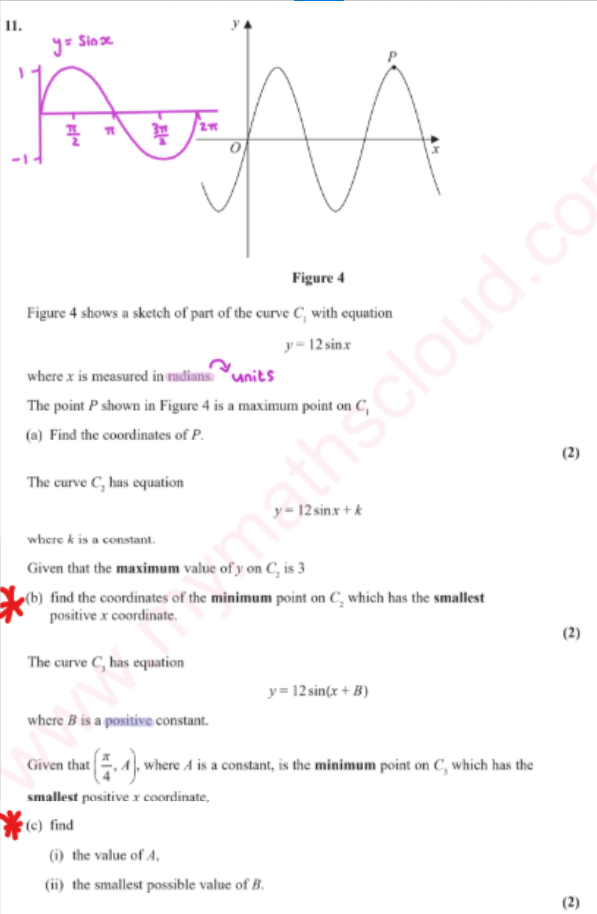
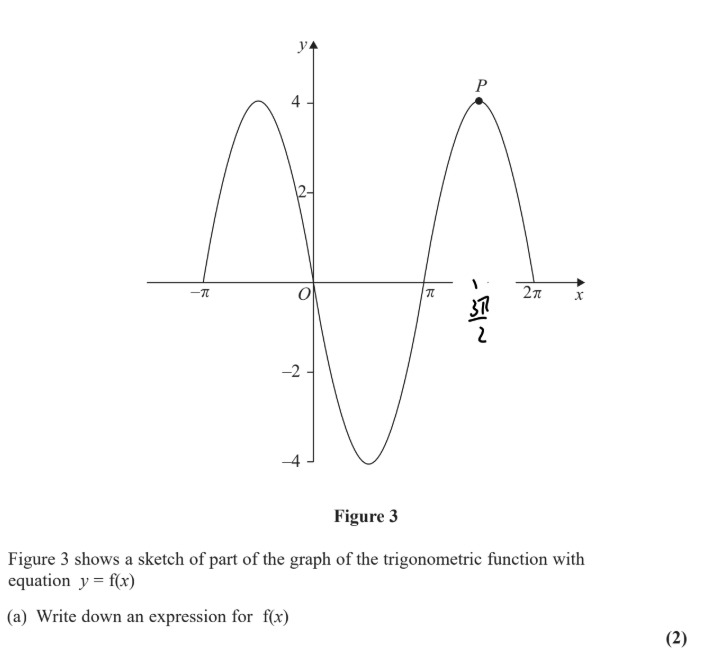
(a) (5/2π, 12)
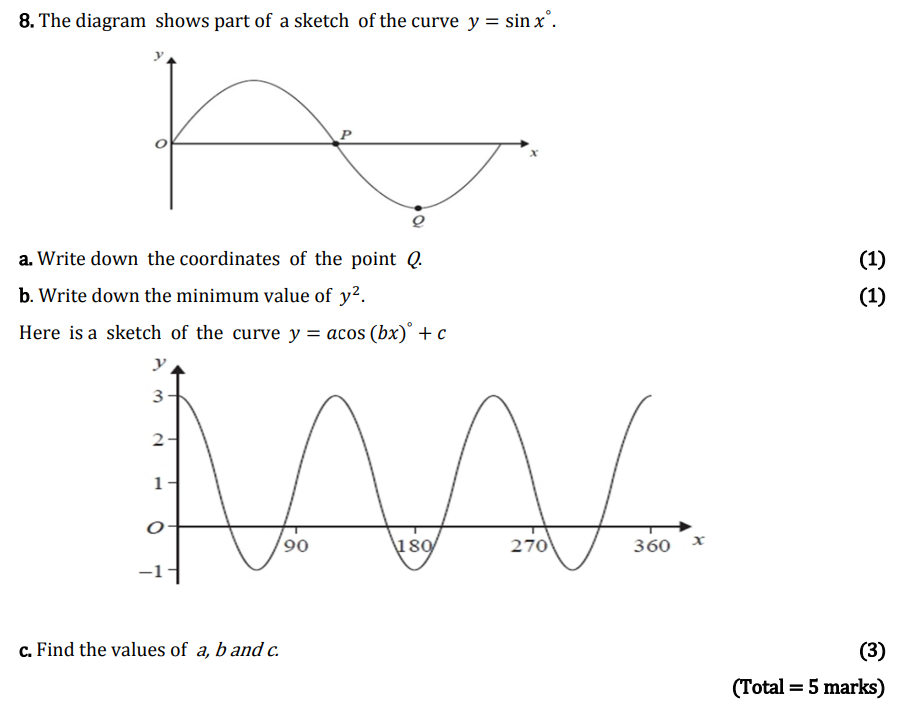
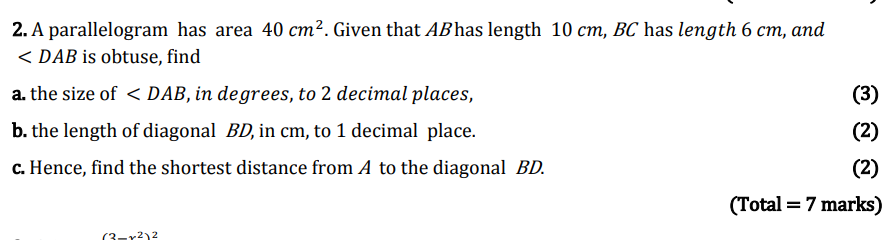
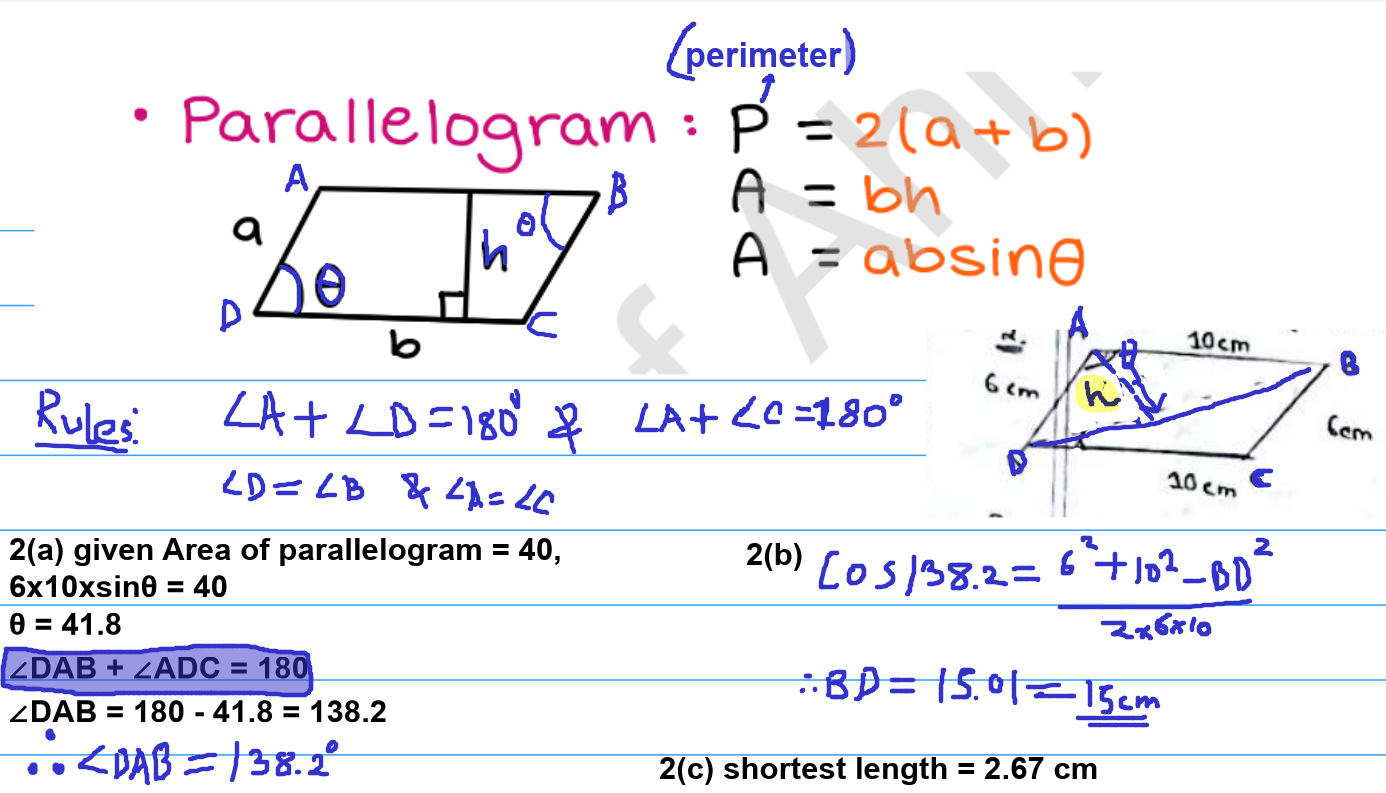
c. The shortest distance from A to the diagonal BD is the perpendicular distance. Let's call this distance h. The area of triangle ABD: 21×AB×AD×sin(∠DAB)
OR Since area of parallelogram = 40 cm2, the area of triangle ABD is half that, which is 20 cm2
Area of triangle ABD=21×BD×h=20
20=21×15.0×h
40=15.0×h
h=15.040≈2.67 cm
Ans: shortest length = 2.67 cm
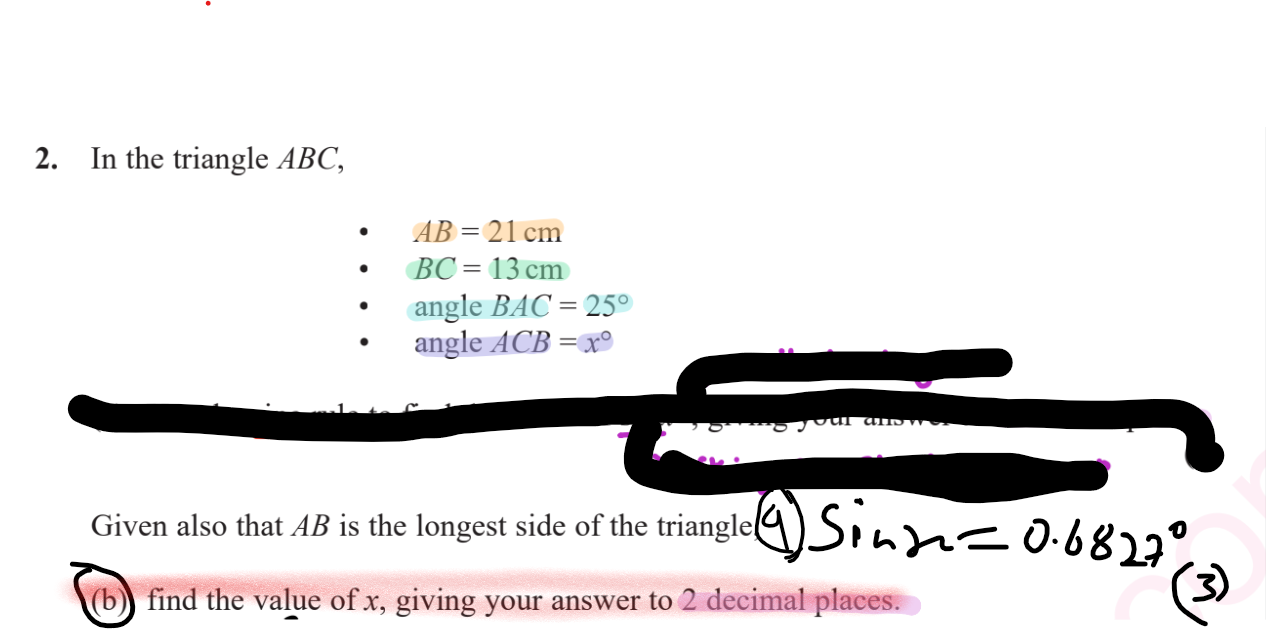
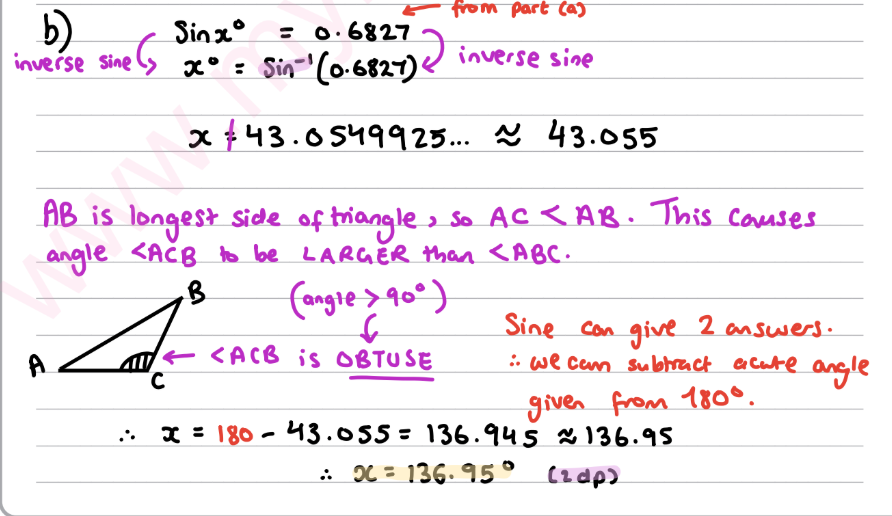
given AB longest side
∴ angle opposite to AB(longest side) = largest angle
so if we took our x = 43, the other angle = 180-43 -25 = 112 (N/P) as angle opposite as largest angle shud be opposite to AB
∴ angle opposite to AB = x = 180 - 43.05 = 136.95
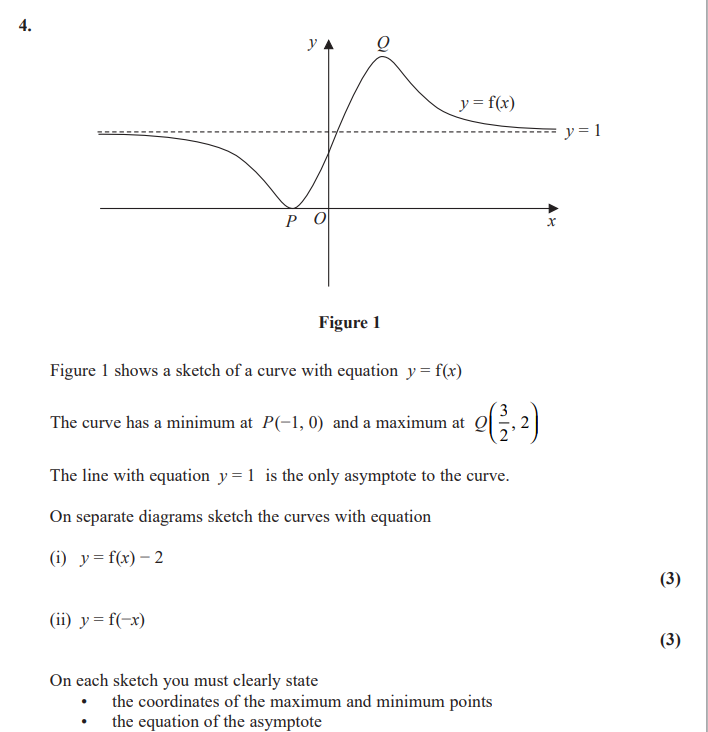
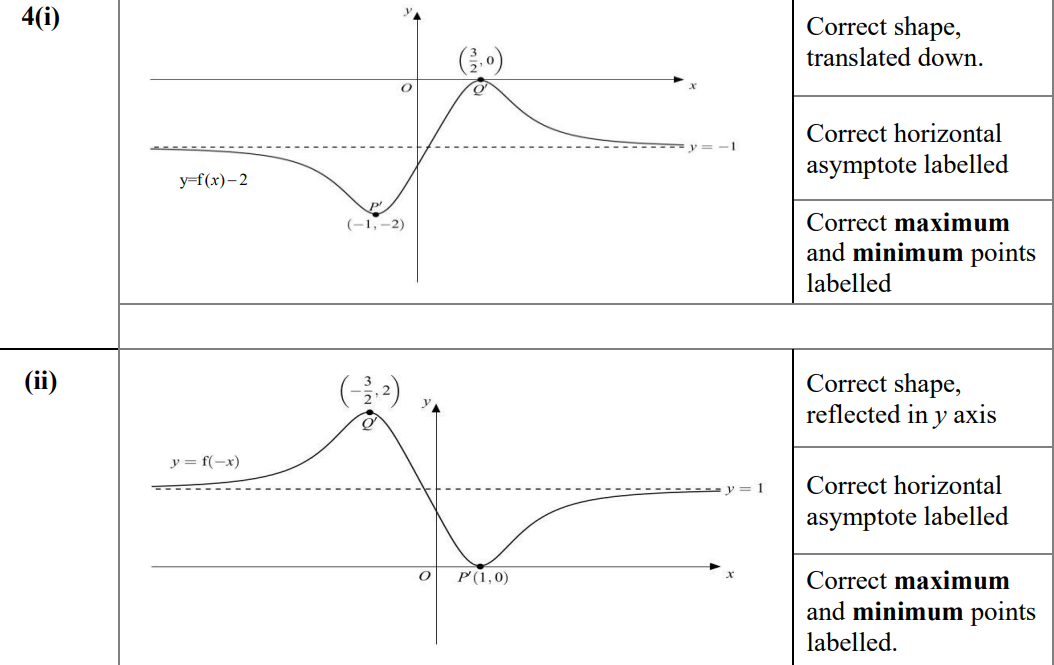
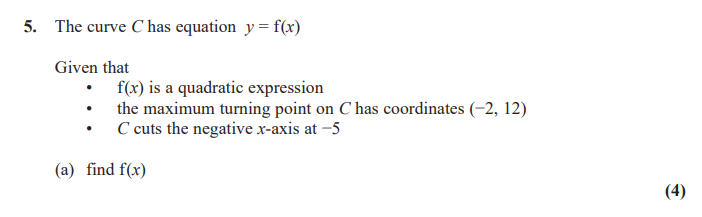
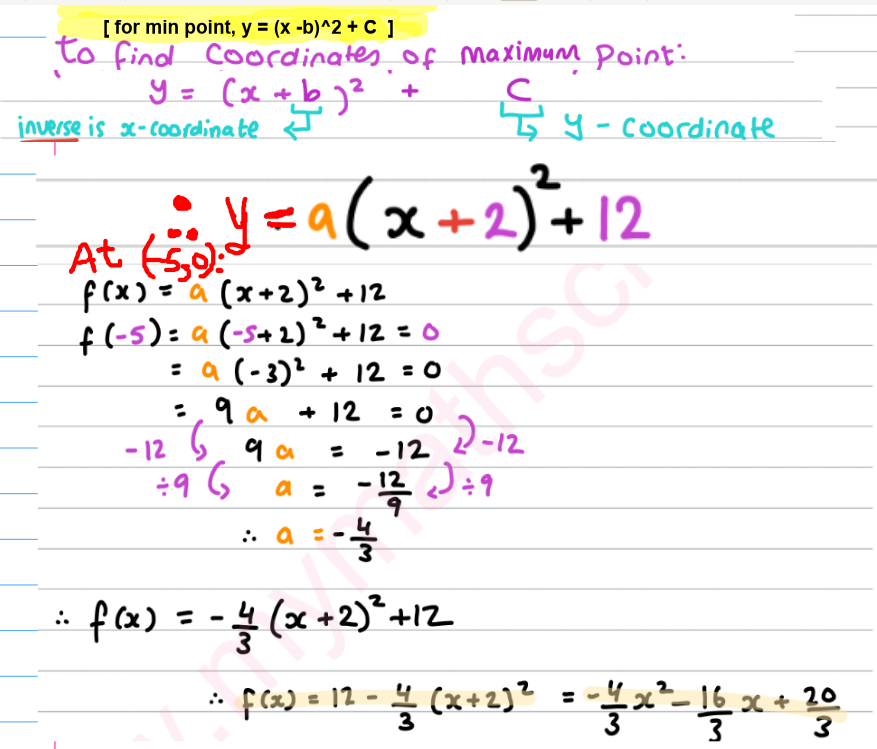
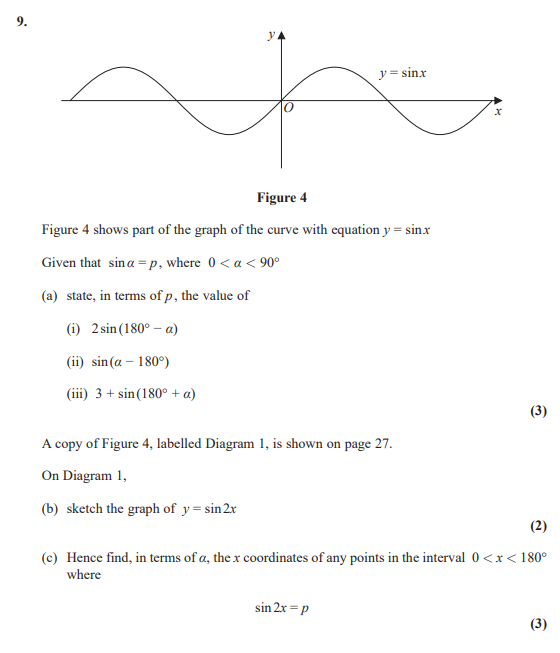
NOTE:
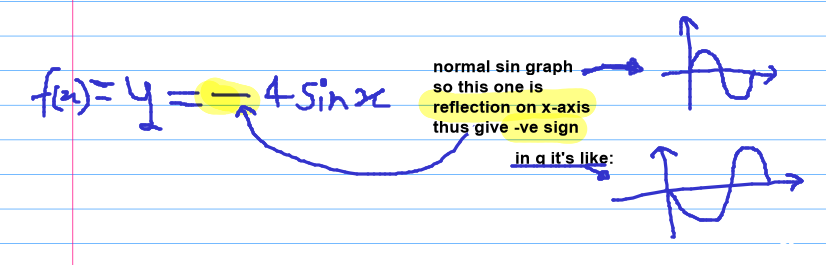
sin(180-θ) = sin(θ)
sin(180+θ) = - sin(θ)
sin (θ-180) = - sin(θ)
given sin(θ) = p, so sin (θ-180) = - sin(θ) = -p
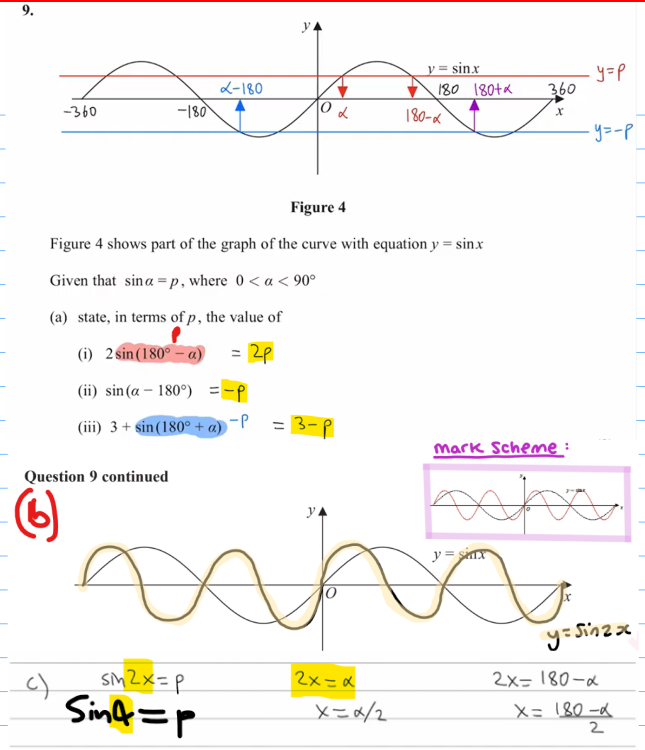
for ( c ), every sin graph has 2 solutions as yk → θ and 180 - θ
(so using this and 2x = a(alpha), we can find in terms of a)
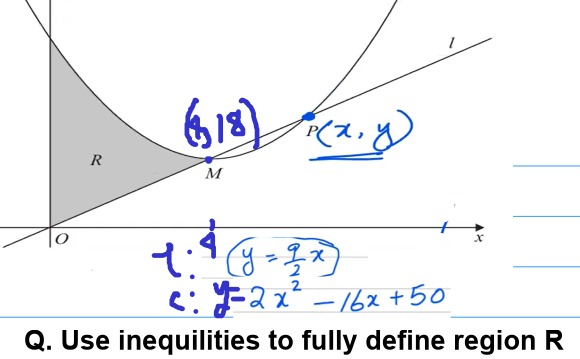


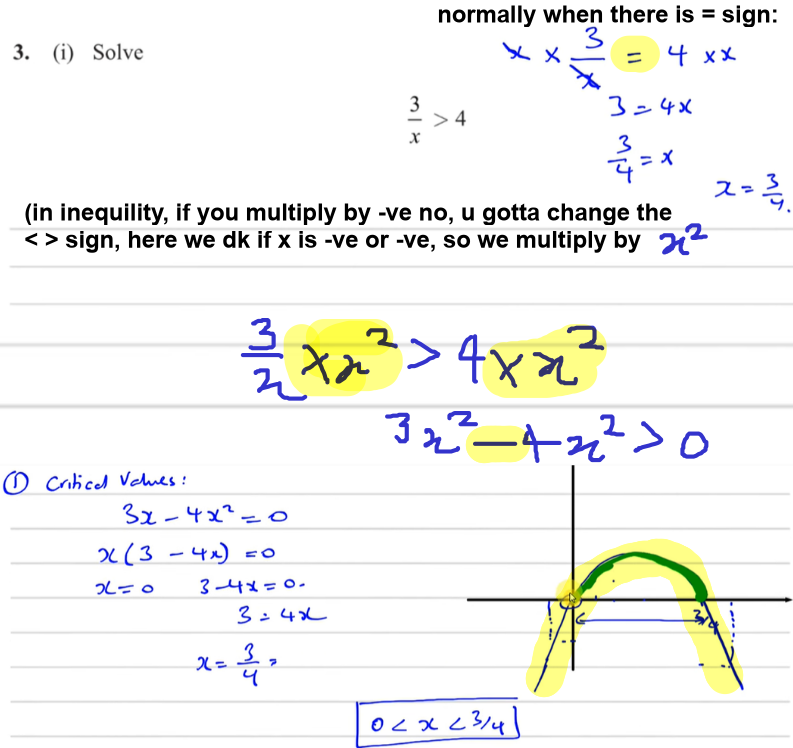
we multiply by x² as for any real number, x² is always positive
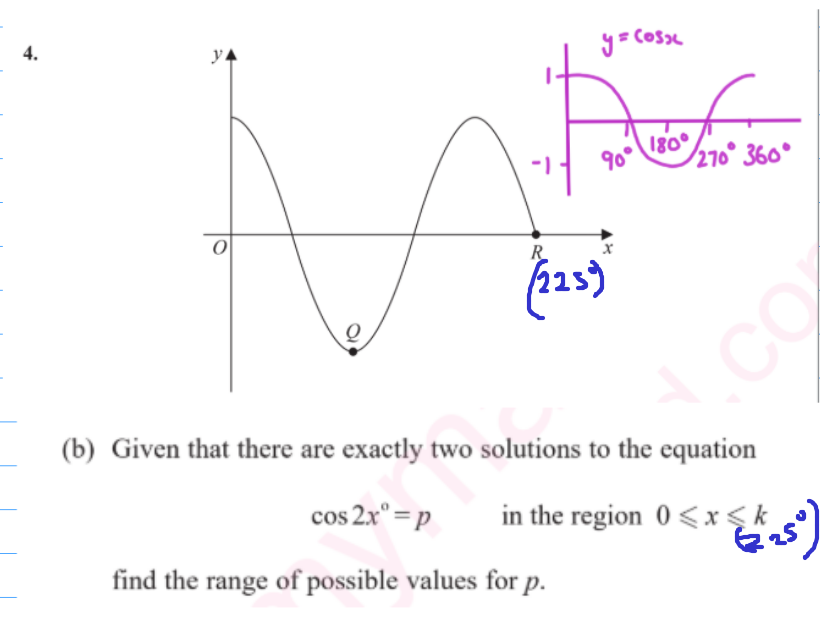
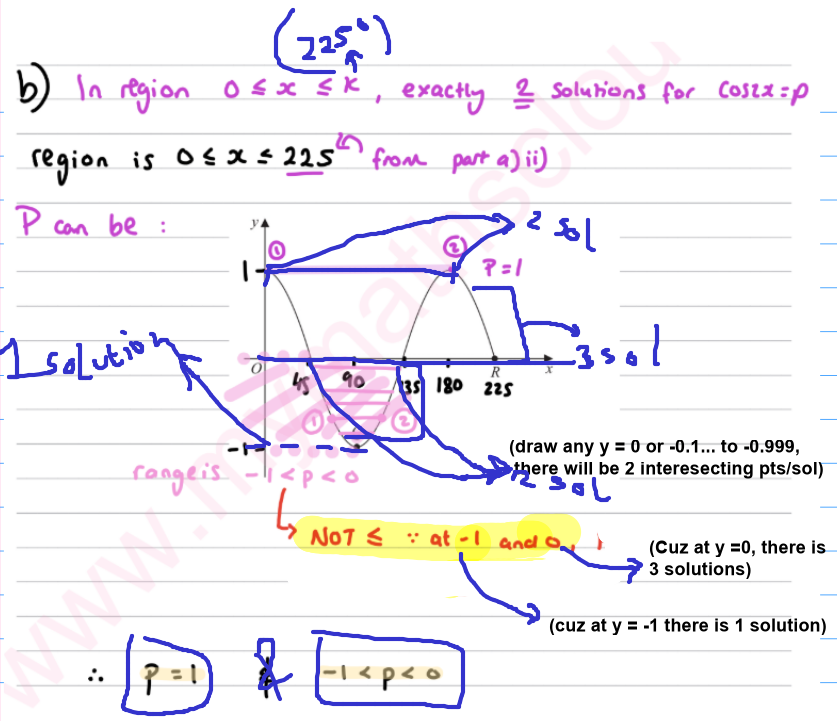
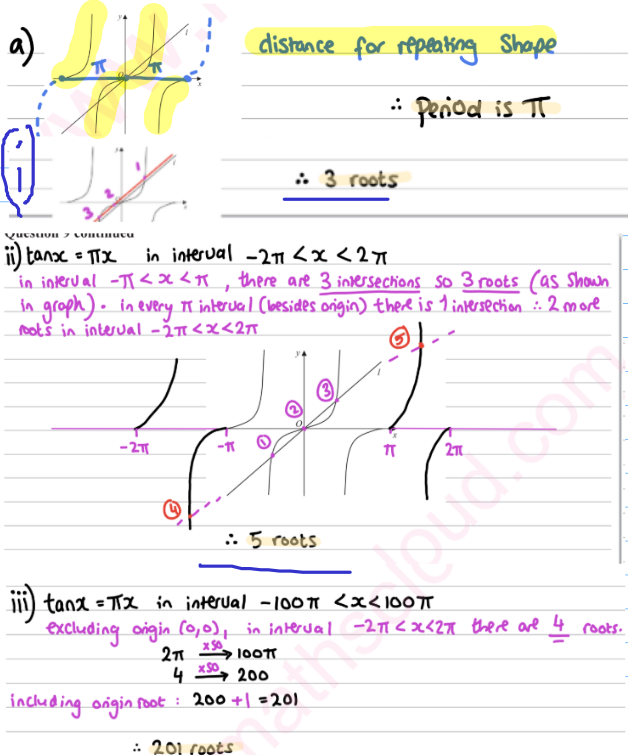
(iii) from -2 to 2 pi there was 5 pi, 2×2 + 1 from origin = 5
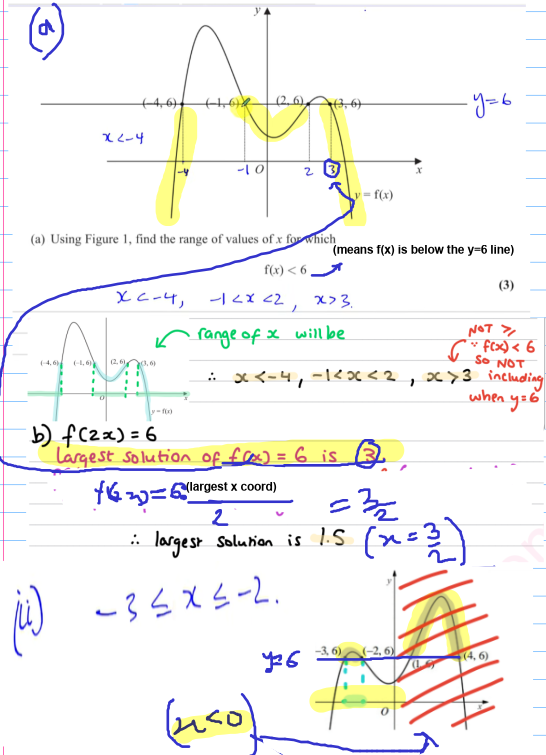
therefore for -100 to 100pi, it is 100×2 + 1 from origin = 201
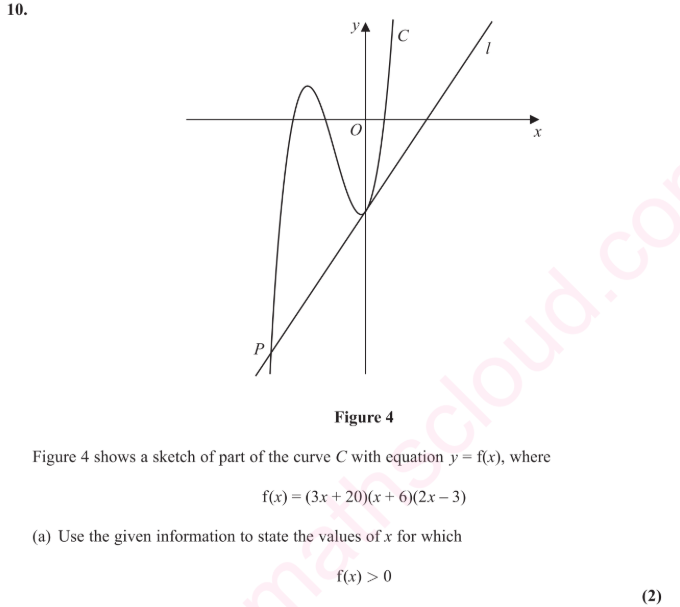
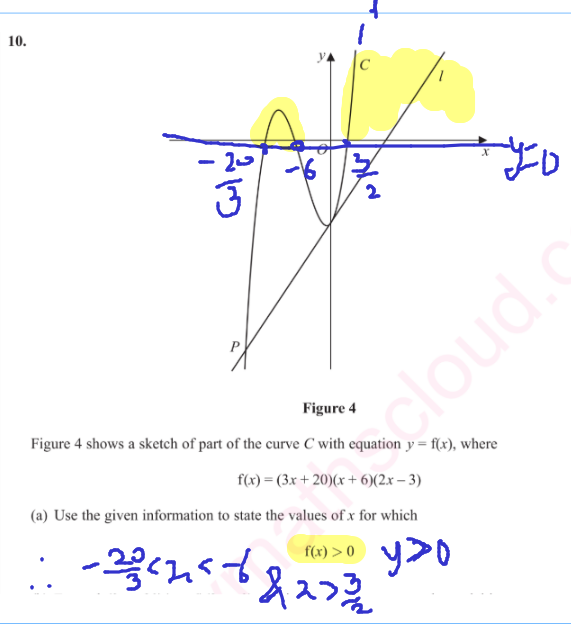
x >3/2 as curve will keep rising so it will keep being f(x)>0

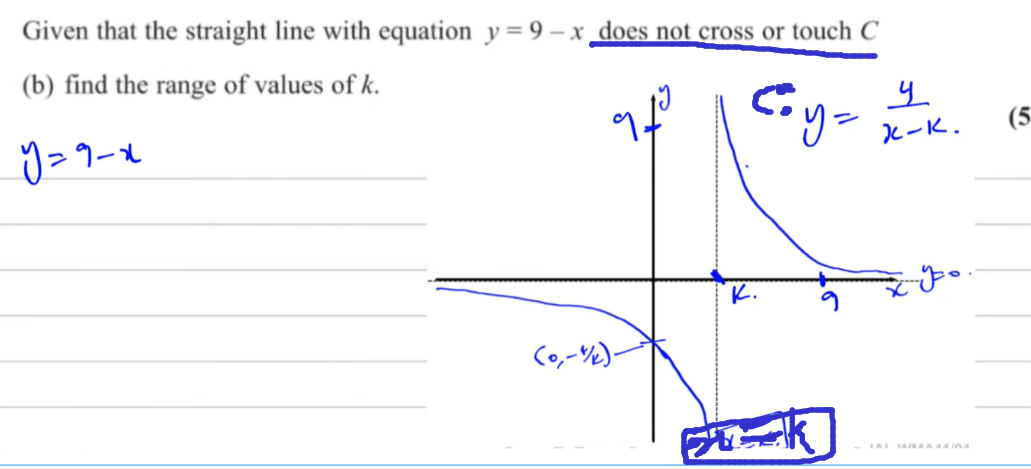
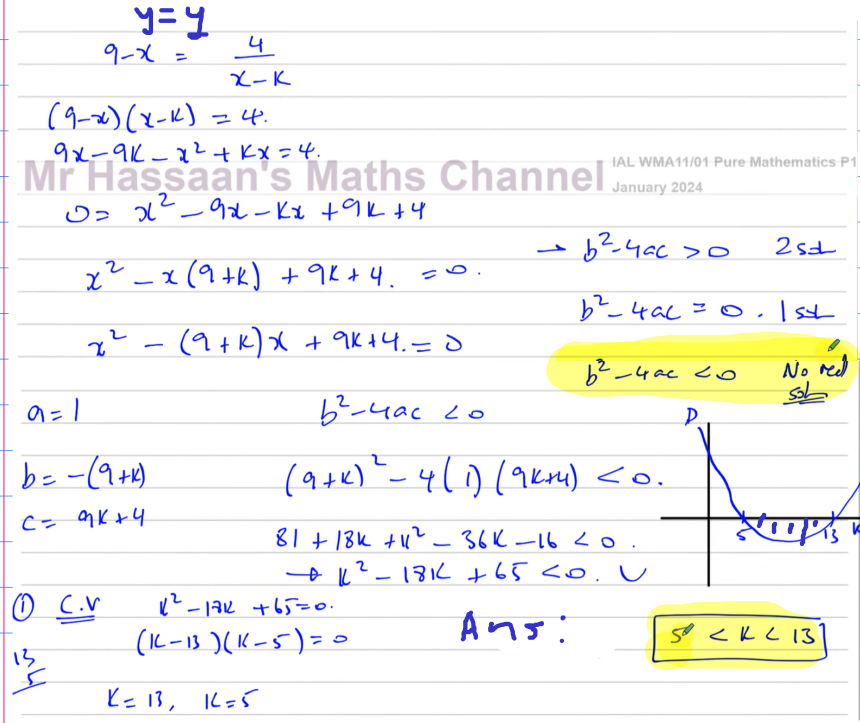
y = 9-x does not cross or touch C, therefore no intersections, therefore b²-4ac < 0
(btw atleast one real solution : b²-4ac >= 0
2 real solutions → b²-4ac > 0)
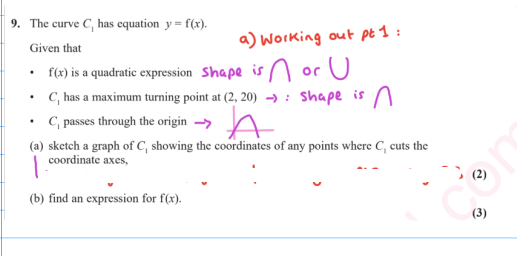
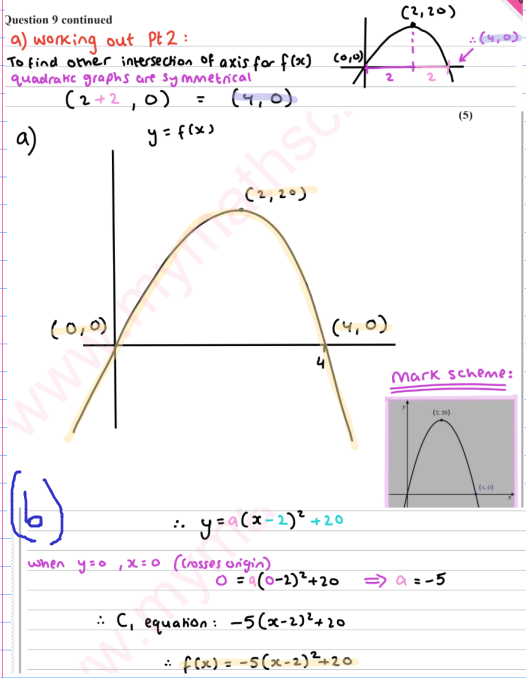
max point is the line of symmetry, so if its 2 units away from origin so other also 2 units away
hence→ (4,0)
read Q. carefully, passes origin
therefore at (0,0) …….. a = -5