History - WW2 - (1939 - 1945)
0.0(0)
Studied by 26 people Call Kai
 Learn
Learn Practice Test
 Spaced Repetition
 Match
Match Flashcards
 Knowt Play
Card Sorting
1/84

Last updated 6:39 PM on 12/16/22
Name | Mastery | Learn | Test | Matching | Spaced | Call with Kai |
|---|
No analytics yet
Send a link to your students to track their progress
85 Terms
1
New cards
League of Nations
Founded in 1919, its main members are Britain, France, Italy which soon leaves and Japan, its goal was to avoid another world conflict like WWI, the league was meant to police international community, nations did not work together to resolve conflicts, the leagues power was tested in 1930s due to the depression and Italy is not trusted due to switching sides
2
New cards
Manchurian Crisis
Japan severely lacked territory and natural resources for production so their solution was to invade another country with resources, Japan decided to stage an explosion on a Japanese owned railway and blamed China and was able to use this to invade Manchuria, China pleads for help from the league so the league asked Japan to withdraw and Japan refused and left the league
3
New cards
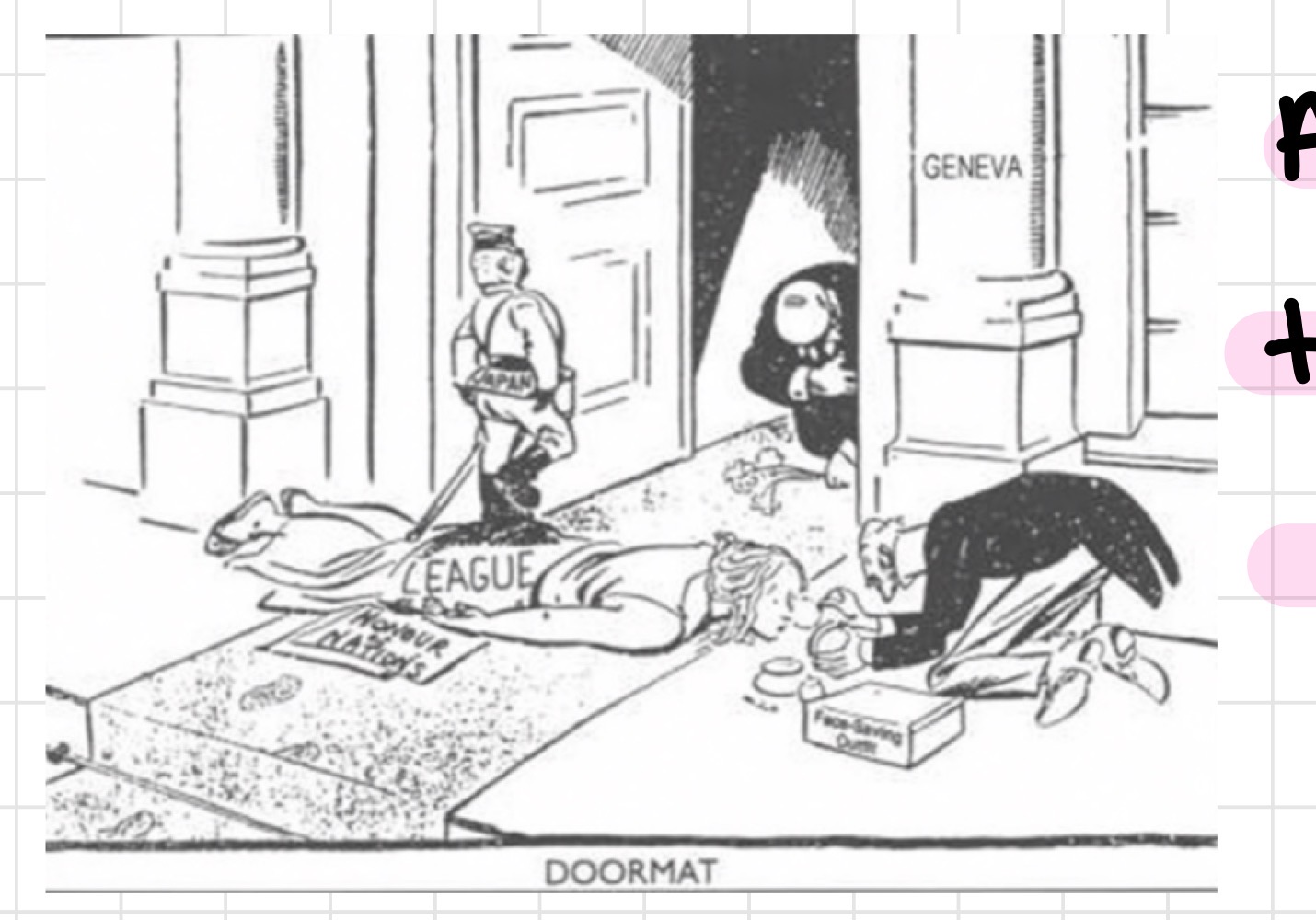
Analyze this Cartoon
This cartoon shows Japan walking over the league and the honour of nations with dirty boots after invading Manchuria, the building represents the league of nations in Geneva, and the Japanese general being welcomed by the doorman with a bunch of flowers to represent peace, the lady is the Liberty who runs the nation and the English gentleman on the right is trying to save her with a bit of make-up to say it is alright
4
New cards
Significance of Manchuria Crisis
Japans invasion on Manchuria and China showed that the league of nations had no power, no country was willing to risk war unless it was on their doorstep, Japans invasion of China would be brutal, Nanking massacre with 100-300 thousand civilians brutally murdered, 1000s of women sexually assualted on the orders of the Japanese generals
5
New cards
Italian Fascism
People in Italy hit hard by the depression and they blamed their democratic government, Benito Mussonlini promised jobs, prosperity and to return Italy to its previous glory, people during the depression felt things were out of contorl and they wanted someone to come in and take control and facism does this, the leader has supreme power to make all the decisions
6
New cards
The Political Spectrum
Is used to illustrate differences in political ideologies. The center is moderate, the right is radical fascism, and the left is radical communism
7
New cards
Communism
Revolutionary and wants drastic change (North Korea, Cuba, China)
8
New cards
Fascism
It is a governmental system led by a dictator having complete power, forcibly surppressing the opposition and criticism, regimenting all industry, commerce and more and emphasizing an aggressive nationalism and often racism (In short: Fascism is reactionary and wants things to go back to the way things were (Germany, Saudia Arabia, Iran) )
9
New cards
Italian Invasion of Abyssinia (Ethiopia)
Mussolini paid attention to the fact that the League did nothing when Japan invaded China this gave Italy the go ahead to attack Abyssinia they did this with tanks, aircrafts, and chemical warfare (mind you the Abyssinian army was ill prepared and not well trained), the league imposed a Boycott on Italian goods and countries condemned Italy in words only so Italy left the Nation.
10
New cards
Boycott
When you abstain from buying goods or using a country’s products as a way of intimidation or coercion
11
New cards
German Fascism
During the first world war Germany has a monarchy known as a Kaiser but after the war the Kaiser was deposed and the Weimar Republic was established which is a democratic government, in the 1920s the people in Germany were not experiencing prosperity and they were hit even harder during the depression so they wanted a strong government with a strong leader to make radical change
12
New cards
How does Hitler help Germany after the First World War?
Hitler promised change, prosperity, stability and a return to German superiority, he offered them a scapegoat for all their problems and an outlet for their frustrations which were coommunists, Jewish people, Bolsheviks, Homosexuals and Gypsies
13
New cards
The so-called end of the Nazis movement?
1919 - Hitler investigates the Germans Workers Party
1920 - he turns the party into the Nazis
1922 - Hitler becomes well known around Munich
1923 - we get the Beer Hall Putsch which was an attempt to takeover the government many were killed and Hitler was captured
1924 - Hitler is freed from prison but is not needed anymore as the economy is doing well due to American donations to Germany
1920 - he turns the party into the Nazis
1922 - Hitler becomes well known around Munich
1923 - we get the Beer Hall Putsch which was an attempt to takeover the government many were killed and Hitler was captured
1924 - Hitler is freed from prison but is not needed anymore as the economy is doing well due to American donations to Germany
14
New cards
Who would want to join the Nazis?
Nazism united the disillusioned of every class, all of these people could become Nazis and take part in Hitlers promises, it appealed to the common German person,
15
New cards
The Treaty of Versailles
Terms against Germany that were harsh, and caused great bitterness amongst Germans, forced Germany to pay reparations to Britain, France, and Belguim for damges caused during WWI, offically blamed Germany for starting the war and forced their military to be severely limited, the treaty established a League of Nations to solve disputes and help countries being invaded however the US did not join and Russia joined in the late 1934 and the league failed to settle disputes in Europe
16
New cards
Conditions in Germany After the War
Germany economy broke down by 1923, the value of the German mark fell dramatically as more money was printed to pay off the reparations owed, there was high unemployment and violent riots broke out and the Weimar Republic struggled with the economy, things started to improve due to America loaning money but then wiped out again when the depression hit all of these problems created a situation which was right for a person woith easy and quick answers
17
New cards
What does Nazi stand for?
National Socialist German Workers Party
18
New cards
What was the Nazis against?
Treaty of Versailles, communism, jews
19
New cards
Hitlers strategy
He copied the technique of the fascists to convince Germans to lobby for their cause and was fueled when the depression hit
20
New cards
Lebensraum
The need for living space for the German nation to expand
21
New cards
What makes a strong Germany?
the Treaty of Versialles abolished aand all German speaking people united in one country
22
New cards
Fuhrer
The idea that there should be a single leader with complete power rather that a democracy
23
New cards
Social Darwinism
The idea that the Aryan race was superior and Jews we 'subhuman'
24
New cards
What was the place called that kept all of the prisoners belongings?
Camp Canada
25
New cards
Autarky
the idea that Germany should be economically self-sufficient
26
New cards
What was Germans belief?
Germans believed Germany was in danger from communists and Jews who had to be destroyed
27
New cards
The Rise of Hitler and the Nazi Party
Hitler wanted to revive the economy and supported big businesses, Hitler revived the economy by opening big factories to produce war time materials such as: weapons, tanks, ammunitions, airplanes, bombs etc. this returned prosperity to Germany which made Hitler and his Nazi very popular
28
New cards
What are Aryans and how did Jews affect them?
Aryans have blond hair and blue eyes, they are physically and mentally superior to all other races by the Nazis, Hitler believed that Jews polluted the pure Aryan blood and were behind the evils confronting Germany
29
New cards
The Policy of Appeasement
Appeasement is giving into the demands of dictators
30
New cards
How did Hitler gain Lebensraum?
Lebensraum is living space and more land, Hitler wanted all German speaking territories to be obtained, German troops walked into Austria without much resistance in 1938 and Austria became a province of Germany (mind you Britain and France did nothing but protest), In late 1938 Hitler wanted Czechoslovakia (considering he got Austria so easily) to give up Sudetenland to Germany, this Czech territory boarded Germany and Austria which held primarily ethnic Germans but the Czech did not want to give up the territory so Hitler invited Neville Chamberlain the British Prime Minister to fly to Germany to discuss the matter of the territory and Chamberlain agreed because he wanted to avoid a conflict
31
New cards
Invasion of Czechoslovakia
The Western leaders flew to Germany for a meeting and agreed that Sudetenland would be given to Germany (no one wanted to risk war) this agreement was known as the Munich Pact although they had been fooled and in March of 1939 Hitler invaded the rest of Czechoslovakia
32
New cards
The Beginning of WWII
August 1939 the Nazi-Soviet Pact which was a secret clause between Germany and the Soviet Union to split Poland up between them which was signed by Hitler and Joseph Stalin this was a way to delay war with each other and gain territory as well as scare the Western powers, Hitler wanted land that was located in Poland but the Western powers would not consider that as they promised Poland they would protect the country if Hitler attacked and on September 1st, 1939 Hitler invaded Poland and two days later Britain declared war on Germany and World War 2 began
33
New cards
Blitzkrieg
Hitler had rebuilt the German army with the latest military weaponry and had a devised plan of attakc that made effective use of this technology, during the invasion of Poland this was the first encounter with this tactic known as Blitzkrieg which was a swift military offensive using synchronization between land, sea and air forces also known as a lightning war this was effective becaause Poland was attacked from 3 directions (north, west and south) all at once and they were able to move with astonishing speed toward the capital which was Warsaw
34
New cards
When did France and Britain declare war?
September 3rd 1939
35
New cards
When did Canada declare war?
For the first time Canada was able to decide whether they wanted to go to war or not, Canada declares war on September 10th, 1939 due to a German U-boat sinking a ship called the Athena carrying 500 Canadians similar to what happened in WWI with the Lusitania
36
New cards
What happened after Blitzkrieg?
In less than a month Germany defeated an army of 700 000 Poles and lost only 14 000 soldiers
37
New cards
Phony War
From the end of September 1939 to April 1940 they was a period of no war known as Sitzkrieg, no shows were fired for the first 7 months, all countries had time to build up their armies and it gave Hitler the opportunity to get in the heads of the other countries making them believe he was done with his invasions then in April he invaded Denmark and Norway and then in May he invaded Belgium and Netherlands
38
New cards
How was Hitler able to cover so much gound in so little time?
The German army had a secret weapon known as Purvitan and it was a pharmaceutical drug given to the German army and air force nowadays known as crack and crystal meth they gave them to the soldiers in forms of chocolate, syringes etc.
39
New cards
Germany Invades France
This invasion is another example of blitzkrieg and it lasted from May 10th to June 25th, 1940, Germany was able to avoid the Maginot Line (France’s greatest defense barrier in WWI located on the border of France and its neighbours) and invade through the Ardennes Forest
40
New cards
The Fall of France
France fell in 6 weeks, Paris was captured on June 14th and France split in 2 where Vichy France was a puppet government for the Germans and now France could no longer help in the allied fight against the Germans as they did in WWI
41
New cards
Dunkirk
When France was invaded 1000s of British troops came across the English channel to help and they were surprised at the speed of German advancement and they became trapped on the coast of France and 300 000 British troops evacuated against all odds this was a grave mistake for Hitler
42
New cards
Battle of Britain
France fell in June and Britain was now alone with Canada as her only ally, Hitler believed Britain would surrender once France fell, Hitler began using massive air strikes to destroy British airplaces and morale leaving 1000s dead and tons of property destroyed, Hitler did this to destroy the Royal Air Force (RAF) and prepare for ground invasions although he made an error when Churchill ordered the bombing of Berlin because this angered Hitler and he ordered the bombing of London and stopped bombing RAF which gave them time to regroup and regain superiority
43
New cards
Hitler Invades Russia
Hitler turned his sights on Russia called Operation Barbarossa, he believe blitzkrieg would topple Russia in 6 weeks and began invasion on June 22nd although Russian resistance and the cold winter slowed down to German assault and many soldiers froze to death leading to surrender
44
New cards
Pearl Harbour
The United States were able to remain isolated and neutral from all fighting due to the fear of Japanese expansion in the Pacific although Japan launched a surprise attack on Pearl Harbour, Hawaii on December 7th, 1941 and over 2000 soldiers and civilians were killed causing the US to declare war on Japan and later on Germany and Italy resulting in WW2 being a fully world scale war at this point
45
New cards
Canadians at Hong Kong
Canadians were sent over to protect British colony of Hong Kong from the Japanese but Japan attacked with airplanes and artillery and a force 10 times the size of the Canadian force so Canadian troops surrendered on Decemeber 25th this resulted in 800 casualties and the survivors were placed in POW camps and used as slave labourers and experienced harsh treatment
46
New cards
Dieppe Raid
August 1942, 5000 Canadian troops tried to invade the heavily defended coast of France at Dieppe to test the German forces called Operation Jubilee, this was supposed to be a surprise but the Germans knew they were coming and the sea and air support was not enough to cover and protect troops arriving by sea although some reached town majority were killed leaving 900 Canadians dead, 1000 wounded and 1900 POWs and only 220 returned to Britain this was a controversial raid and many lessons were learned that day to prepare for D-Day
47
New cards
The Tide Turns - Stalingrad
1942 was the worst year for the allies although by 1943 the situation changed as Russia was able to stop the Nazis in Stalingrad which crushed the Germany army leaving 300 000 German troops dead or captured and the Axis powers were on the retreat
48
New cards
Italian Campaign
July 10th, 1943, Canada, Britain and America troops invaded Italy to create two fronts called Operation Husky , Italian troops were defeated in a month and German troops were sent to defend the territory, Canada was able to display military courage, skill and effectiveness in this long, dangerous battle Ortona and were able to capture and defeat the German military in Italy by June 1944
49
New cards
D-Day
First major invasion on French coast since Dieppe and was able to be kept a secret and was carefully planned this invasion of Normandy was called Operation overlord on June 6th, 1944 this called for massive air raid and beach landing and target 5 beaches (Canadians were responsible for Juno Beach), Canada was the only group to meet their objective which was to capture the beach and this landing beganto push the Axis back from the West coast
50
New cards
Liberation of Europe
Fighting continued for 11 months after D-day and the Canadians managed to push the Germans out Italy and Holland leaving Germany on the brink of defeat and only an unconditional surrended would be accepted by the allies, April 1945, Russian troops entered Berlin and Hitler heard Mussolini was captured and killed and Hitler did not want this so he shot himslef and on May 7th, 1945 VE Day was named (Victory in Europe Day) and the day after (May 8th, 1945) all fighting stopped
51
New cards
What is a Holocaust?
Came from a hebrew term called Sho’ah which originally meant a sacrifice totally burned by fire
52
New cards
What is a genocide?
the systematic extermination of a nationality or group
53
New cards
Statistics on the Holocaust
In 1933 the Jewish popualtion was 9 508 340 and at the end of Holocaust the population was 3 546 211
54
New cards
Stages of Holocaust
Stage 1 - stripping of rights
Stage 2 - segregation
Stage 3 - concentration
Stage 4 - extermination
Stage 2 - segregation
Stage 3 - concentration
Stage 4 - extermination
55
New cards
Stage 1 - stripping of rights
In 1935 the Nuremberg Laws stated that all Jews were:
* stripped of German citzenshio
* fired from jobs/business boycotted
* banned from Germans schools and universities
* marriages between Jews and Aryans forbidden
* forced to carry ID cards
* passports stamped with a "J"
* forced to wear the armband of the Yellowe "star of david"
* Jewish synagogues destroyed
* stripped of German citzenshio
* fired from jobs/business boycotted
* banned from Germans schools and universities
* marriages between Jews and Aryans forbidden
* forced to carry ID cards
* passports stamped with a "J"
* forced to wear the armband of the Yellowe "star of david"
* Jewish synagogues destroyed
56
New cards
Stage 2 - Segregation
Jews were forced to live in designated areas called "ghettos" to isolate them from the rest of society, around 356 ghettos were established by the Nazis in Poland, the Soviet Union, Czechoslovakia, Romania, and Hungary, these ghettos were filthy, poor sanitation and extreme overcrowding caused diseases and short supply of food which lead to starvation and death
57
New cards
Warsaw Ghetto
Largest ghetto which poor conditions which was demolished in 1943 in May
58
New cards
Nazi Ghettos
Ghettos became transition areas and a preliminary step in the annihilation of Jews and used as collection points for deportation to concentration and death camps
59
New cards
Stage 3 - Concentration Camps
Essential to the Nazis systematic oppression and eventual mass murder of enemis of Nazi Germany, prisoners faced undernourishment and starvation adn slave labour and were transported in cattle freight cars these camps were built on railroad lines for efficient transportation
60
New cards
Auschwitz
Largest concentration camp located in Poland where german occupied, had 3 camps including a killing center and was open for 2 years and closed in 1945 of January, more that 1.1 million died in this camp and many faced forced labour or gas chambers
61
New cards
Life in the Camps
Possessions were confiscated, heads were shaved, arms tattoes, prison uniforms, men, women and children seperated, you survived based on skill and strength, was unsanitary, disease ridden and lice infested barracks, and inhumane medical experiments
62
New cards
Medical experiments
* The doctors in the camps tortured men, women, and children and did medical experiments of the unspeakable
* they were placed in pressure chambers, tested with drugs, castrated and frozen to death
* they were exposed to experimental surgeries without anesthesisa, transfusions of blood from one to another
* the doctors made injections with legal germs, sex change operations and removal of limbs and organs
* a victim was even immersed in icy water at the Dachau concentration camp in 1942
* All of these experiments were done so they could observe what would happen if their soldiers underwent this stuff
* they were placed in pressure chambers, tested with drugs, castrated and frozen to death
* they were exposed to experimental surgeries without anesthesisa, transfusions of blood from one to another
* the doctors made injections with legal germs, sex change operations and removal of limbs and organs
* a victim was even immersed in icy water at the Dachau concentration camp in 1942
* All of these experiments were done so they could observe what would happen if their soldiers underwent this stuff
63
New cards
Joseph Menegele
Joined the Nazi in 1937 and died 1979 and was Known as the “angel of death:, was an officer and physican during WWII and used a Nazi radical theroy to justify his experiments on twins, many died from these experiements
64
New cards
Stage 4 - Extermination
Mobile killing units had began killing operations aimed at entire Jewish communites in the 1930s, death factories which were nazi extermination camps fulfilled the singular function of mass murder as well as the Euthanasia programs which was a policy to eliminate “life unworthy of life” (mentally or physically challenged) to promote Aryan “racial integrity”
65
New cards
The Final Solution
Wannsee Conference in Berlin 1942 established the “complete solutoon of the Jewish question” which called for complete and mass annihilation and extermination of Jews as wellas other groups and they did this using Zyklon B gas
66
New cards
Gas Chambers and Crematoriums
Prisoners were sent to gas chambers disguised as showers and they used Zyklon B gas to gas people in 3 to 15 mins, up to 8000 people were gassed per day at Auschwitz (the largest death camp with 4 chambers), gold fillings from victims teeth were melted down to make gold bars and the prisoners themselves had to move the dead bodies to crematoriums
67
New cards
Near the End of the War
By 1945, Nazis began to destroy the crematoriusm and camps as the allied troops closed in, death marches were ordered between 1944-1945 by the Nazis over long distance and approx. 250 000 - 375 000 prisoners perished in death marches, Januray 27th, 1945 the soviet army entered Auschwitz and liberated more than 7000 remaining prisoners who were mostly ill and dying
68
New cards
Swastika - Good
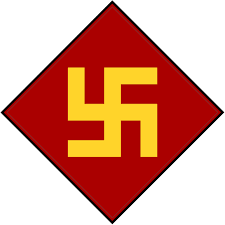
The swastika is an ancient Indian symbol (sanskrit) that is over 3000 years old meaning well being, life and gooodluck/prosperity, this was a sacred religious symbol for Hindus, Hains and Buddhists and was a common symbol in ancient civilizations (Mespotamia, India, China, Central and South America (MAYA))
69
New cards
Swastika - Evil
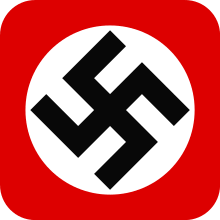
In 1920, Hitler decided the Nazi party needed its own insignia dn flag and chose the swastike to represent the mission o f struggle for the victory fo Aryan men and because of this the swastika became of symbol of hate, anti-semitism, violence, death and murder
70
New cards
Conscription - Beginning of WWII
King wanted to make sure that conscription did not tear the country apart again as it did in WWI so he promised no one would be forced to fight overseas and he would only send those who voluteer (mainly geared towards the French) although English was loyal to Britain so they had enough volunteers to meet Canada’s commitment overseas
71
New cards
The National Resources Mobilization Act (1940)
A law that authorized limited conscription of men and these men were trained to defend Canada in case of an attack or invasion and it required all adult males to register for National Service ONLY within Canda
72
New cards
The Pressure is Mounting
As the war continued on and Hitler won more victories, the pressure mounted to send more soldiers and have Canada contribute further to the ware was high although Britaina dn US had full conscription since that war began it was just that the English Candaians wanted conscription but the French Canadians did not
73
New cards
The Plebiscite
In 1942 King held a plebiscite which allowed Canadian citizens to vote on whether they wanted the liberal government to enact conscription and 90 percent said yes except for Quebec as 72 percent said no
74
New cards
Conscription Began
King said: “Not necessarily conscription but conscription if necessary” in 1944 the pressure for consrciption was high due to D-day and they needed new recruits for the front lines as soldiers who were injured kept getting sent back over and over, King conscripted about 16 000 men and rioting in Montreal and Quebec occurred but not as violent as WWI and many acknoledged that King was doing his best not to instill conscription this showed that he learned from the crisis in 1917 and was able to win the battle of unity
75
New cards
Japan Surrenders
The war was not over yet as the Japanese were still fighting (they will fight till their death to honour their emperor and country), very few soldiers surrendered so Truman decided to used their secret weapon (the atomic bomb created by Britsh and American scientists in 1945) to shorten the war, Truman warned the Japanese to surrender or be destroyed but they ignored
76
New cards
Hiroshima
August 6th, 1945 the bomb was dropped on Hiroshima (“little boy”) and was chosen as it was a major port and army head quarters causing all buildings within a 1 km radius to be flattened by the blast
77
New cards
Nagasako
Japan still refused to surrender so 3 days later they bomb Nagasako (“fat man”) and Japan finally surrendered on September 2nd and this day is known as V-J Day (Victory on Japan Day) and WWII was finally over
78
New cards
When Japan attacked Pearl Harbour what was the Canadian government pressured to do?
They were pressured to deal with the 22 000 Japanese Canadians in BC, 14 000 of which did not speak Japanese and had no little ties to Japan
79
New cards
Why did the government feel it was necessary to intern Japanese Canadians?
They feared they would supply Japan with secret information or help invade so they ordered the seizue of all Japanese boats and in 1942 began to round up the Canadians
80
New cards
When did they implement the War Measures Act?
They implemented the War Measures Act at the beginning of the war and it allowed the government to take their property and remove them from homes
81
New cards
When the Japanese Canadians were relocated where were they and what was it like?
They relocated to detention camps or famrs in British Columbia, Alberta and Manitoba and all their property was auctioned off to pay for their stay at the camp so they lost everything and many lived in papershacks or were ripped from their families and forced to repair roads or work on famrs
82
New cards
What happened in 1945 for the Japanese Canadians?
They had the choice between being deported or relocated to places in the Rocky Mountains many chose Ontario, Quebec and the Prairie provinces (East)
83
New cards
What happened in 1988 for the Japanese Canadians?
The government acknowledged that the way they were treated was unjust so he awarded families with money to compensate for the property loss and a new act came out called the Emergency Act that stated no Canadian will lose their rights due to nationality again and this fell under the Charter of Rights and Freedoms 1982
84
New cards
What country in Europe was not a fascist?
Portugal
85
New cards
Which historical figure does Leroux share her bday with?
Mussolini