Anatomy lecture exam 1
 Call Kai
 Learn
Learn Practice Test
 Spaced Repetition
 Match
Match Flashcards
 Knowt Play
1/134

There's no tags or description
Looks like no tags are added yet.
Name | Mastery | Learn | Test | Matching | Spaced | Call with Kai | Chat |
|---|
No analytics yet
Send a link to your students to track their progress
135 Terms
hemodynamics
responding to stimuli by sending more or less blood to a certain region
homeostatis
a balance in the bodys internal environment
magnesium, calcium, sodium, potassium
cations of 5 physiologically relevant ions
chloride
anion of 5 physiologically relveant ions
soduim
natrium
potassium
kalium
cytology
cellular anatomy
histology
study of tissues
ultrasound
sound waves pass into body and bounce back to receiver, visualized as a sonogram
used for 7 things: evaluate blood flow, monitor baby health, check thyroid gland, diagnose gallbladder disease, examine breast lump, guide needed for biopsy, find genital and prostate problems
coronary artery
carries blood away from the heart
CT Scan
Computed TOMOgraphy
extracorporeal
situated or occurring outside the body
lithotripsy
shock wave therapy that breaks up stones or hard tissue within the body- ultrasound waves are used to break the kidney stone into smaller pieces
16 to 22 weeks
at this point in the pregnancy, an ultrasound can be used to determine gender
why is an ultrasound used
-view the uterus and ovaries during pregancy
-monitor developing babys health
-diagnose gallbladder disease
-elevate blood flow
-guide a needle a biopsy or tumor treatment
-examine a brest lump
-check the thyroid gland
-find genital and prostate problems
thrombosed
affected by a blood clot
thrombosed vein
the great saphenous vein- the longest vein in the human body, runs from the top of the foot to the upper groin area
osis
the condition of
otic
the condition of
stroke
blocked blood flow to brain
tomography
cross section
CAT scan
Computed Axial Scan- rotating x ray tube and a row of detectors to measure x-ray attenuations by different tissues inside the body, uses tomographic reconstruction of images to show cross sections of body
ischemia
not enough oxygen to tissue, no atp
angiography
type of x ray
glycolysis
break the sugar- makes 4 ATP, uses 2- net 2 ATP
endocrine
secrete in - ______ glands
angio
vessels
secrete
positive for body- body is intaking
excrete
getting rid of bad
red blood cells don’t have _______
mitochondria
3 tissues affected by hypoglycemia
brain, red blood cells, liver
angiography
type of xray used to check blood vessels- special dye works as contrast agent
low blood sugar leads to ____
glycolysis being activated
hypoglycemia
low blood sugar
4 hormones that alleviate low blood sugar
glucagon, cortisol, adrenaline (epinephrine), and growth hormone (HGH)
cortisol
stress hormone, comes from adrenal cortex- high cortisol lowers immune system efficiency
high stress linked with _____
lack of sleep- leads to low immune system function
epinephrine = adrenaline
upon the kidney, one of main hormones that alleviate low blood sugar
oxygen is the _____
final electron acceptor
4 tissue types
epithelial, connective, muscle, nervous
blood is a _____ tissue
connective
RMP
resting membrane potential
Positron Emission Tomography (PET Scan)
identify metabolic states of various tissues, RMPs- useful in analyzing metabolically active parts of the brain - gender studies at emory
the inside of the cell is _____
negative, aka resting membrane potential
tissues
group of cells with similar form or function- can be solid or fluid
enamel
densest material the body
hydroxyapatite
Ca10(PO4)6(OH)2
humans cell numbers are MORE _____ than _____
PROkaryote than eukaryote
a crack in your tooth leads to ______
infection, abscess, then pressure
mouth cavity
warzone for PROKARYOTES
abscess
infection- dead white cells and dead bacteria- sign of inflammation
bodily defenses become harmful if
they continue for a long period of time- overzealous
pathology
structural and functional changes caused by disease
exercise physiology
changes in structure and function caused by exercise
pharmacology
study of drugs and drug interactions— alleviate the medical condition
bacteria (prokaryotes) in the lower GI tract produce ________ which helped with blood clotting and coagulation
vitamin K- stored in liver- got name from danish
cirrhotic liver
scarred, cannot store vitamin K, trouble with blood clotting which can lead to someone bleeding out
AP
action potential, only muscle and nervous tissue
tissue level
group of similar cells and materials surrounding them
sclera
white part of eye- if turns yellow/green, then problem with liver (Lee’s dad)
Integumentary System
Skin, hair, nails, glands
integument
skin- largest organ in the body— epidermis at surface (NOT living!)
excretory organs
colon, liver, kidney, skin
sudorus glands
sweat glands
sebaceous glands
produce oil
all bones have _____ at birth
red marrow—- as we get older becomes more yellow
skeletal system function
provides protection, allows body movements, produces blood cells, stores minerals and fat
skeletal system parts
bones (source of Ca and blood cells), marrow cavities, associated cartilages, ligaments, and joints
muscular system function
produces body movements, maintains posture, and produces body heat
exceptions to skeletal muscle being voluntary
shivering and reflexes
nervous system parts
brain, spinal cord, nerves, sensory receptors
nervous system function
detects sensations, controls movements, phyisological processes, and intellectual functions
prefrontal cortices
cognition- ability to think or reason— cause and effect
endocrine
into the blood
cardiovascular system function
transports nutrients, waste products, gases and hormones throughout the body- plays role in immune response and regulation of the body temperature
cardiovascular system parts
heart, blood vessels, blood
lymphatic system function
removes foreign substances from the blood and lymph, combats disease, maintains tissue fluid balance, absorbs fat from the digestive tract
what part of the brain regulates temperature
the hypothalamus
lymphatic system parts
lymphatic vessels, lymph nodes, other lymphatic organs
respiratory system function
exchanges oxygen and co2 between the blood and the air, regulates blood pH
respiratory system parts
lungs and respiratory passages
medulla oblongata
the lowest part of the brainstem that connects the brain to the spinal cord and manages vital automatic body functions
opiates
narcotics
Endocrine secretion is best described as
Substances (usually hormones) secreted into the blood
The hypothalamus initiates sweating in response to rising body temperature, and sweating stopping once temperature returns to the set point, is an example of:
negative feedback
negative feedback
a self regulating process where the output of a system counteracts or reverses a change in order to maintain stability ex. body temp, blood sugar, most homeostasis processes
positive feedback loop
self amplifying control system where an initial change/stimulus causes a response that accelerates or pushes a system farther- ex: childbirth, lactation
what happens to basal metabolic rates if skeletal muscle increases
BMR increases because skeletal muscle is metabolically active tissue
parturition
childbirth
types of tissue that exhibit a resting membrane potential
epithelial, muscular, nervous

simple cuboidal, found in kidneys
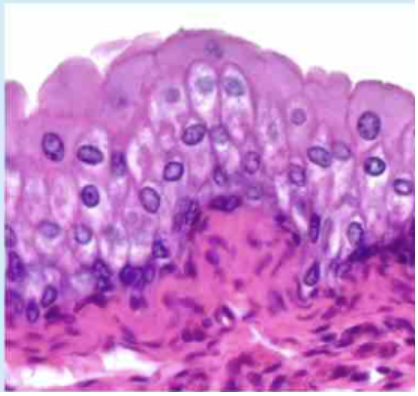
psuedostratified columnar: in respiratory tract

simple squamous: in alveoli in lungs

cardiac muscle: striated, involuntary, intercalated
cardiac muscle
involuntary, striated muscle found only in heart, contracts rhythmically to pump blood
skeletal muscle
voluntary, striated muscle attached to bones that produces body movement
transitional epithilium
can stretch and change shape, lines the urinary bladder and uterters
simple cuboidal epithelium
single layer of cube shaped cells involved primarily in absorption and secretion, commonly found in kidney tubules
fibrocartilage
strong cartilage that resists compression, found in intervertebral disks and pubic symphysis