Integument
 Call Kai
 Learn
Learn Practice Test
 Spaced Repetition
 Match
Match Flashcards
 Knowt Play
1/22

There's no tags or description
Looks like no tags are added yet.
Name | Mastery | Learn | Test | Matching | Spaced | Call with Kai | Chat |
|---|
No analytics yet
Send a link to your students to track their progress
23 Terms
Skin/cutis
is an organ made of epidermis and dermis
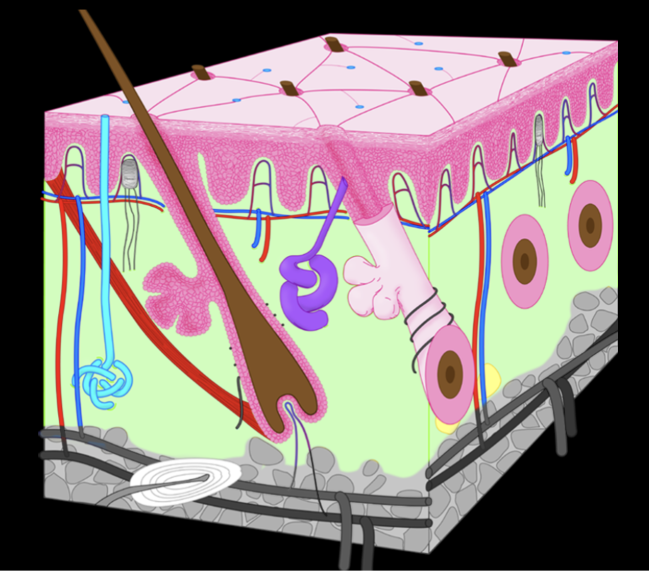
Integument
Organ system: epidermis, dermis, and hypodermis
Functions: keeping the bad out, waterproofing (keeping the good in), protection against abrasions, sensory, exchange, fat metabolism, utilizing UV, and sociosexual communication

Epidermis
The uppermost, avascular layer of the skin/cutis
made of stratified squamous epithelial cells
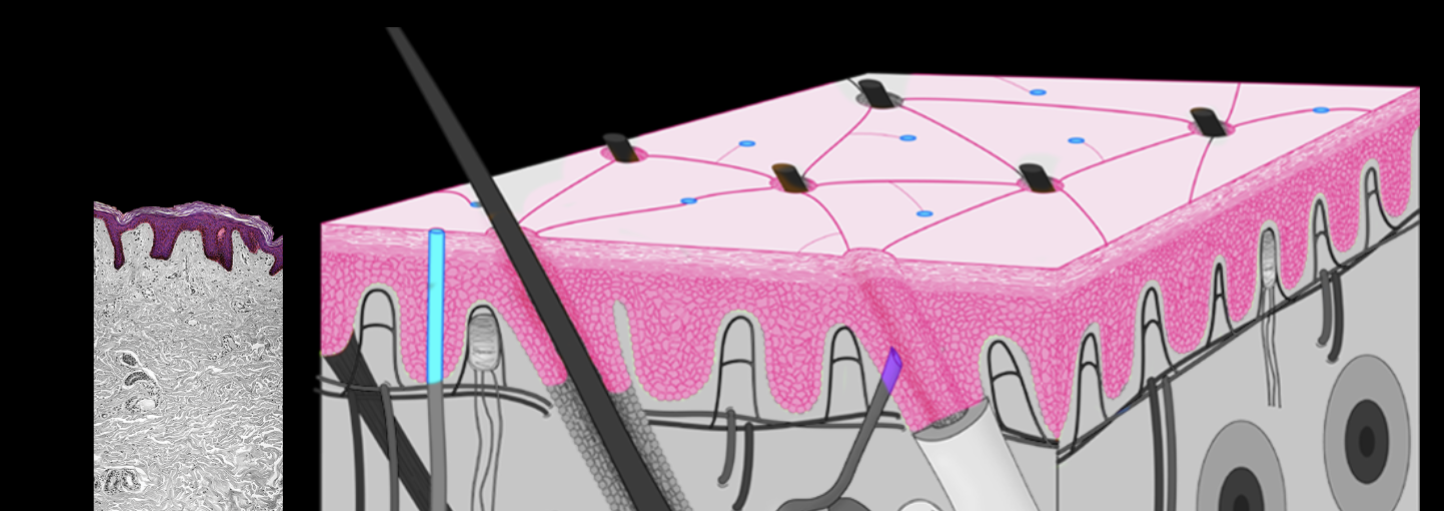
Dermis
The lower, vascular layer of the skin/cutis
mostly made of dense irregular connective tissue

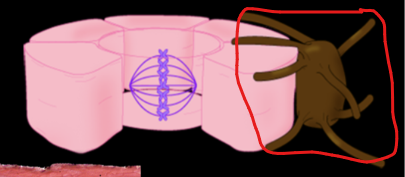
Stratum Basale (germinativum)
mitotic spindle (purple in the middle)
allows the cell to continue to split and replicate
keratinocyte (pink “blocks”)
new cell being produced to go up and push the layers upward
create and hold onto keratin, a tough protein
melanocyte
Functions
cell division
UV protection

Melanocyte
Little brown guy that lives on the stratum basale layer. Reaches his arms out to new keratinocytes that bite off bits of melanin.
darker skin = more active melanocytes (freckles too, except locally)
moles = local proliferations of melanocytes
melanin protects the nucleus of cells from UV to prevent mutations (cancer)
Stratum spinosum
avascular, no replication
main job to create keratin —> toughness of the epidermis
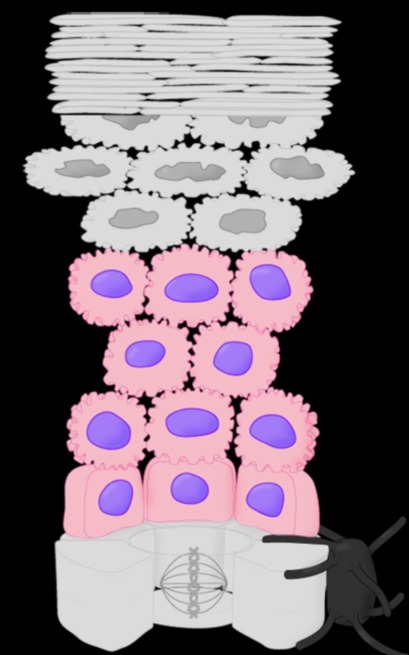
Stratum granulosum
cells are beginning to die —> getting spiny and shrinking —> leaking lipids and fats
leaked lipids fill the gaps between the cells, creating the waterproofing layer to keep all of the liquid inside of our bodies
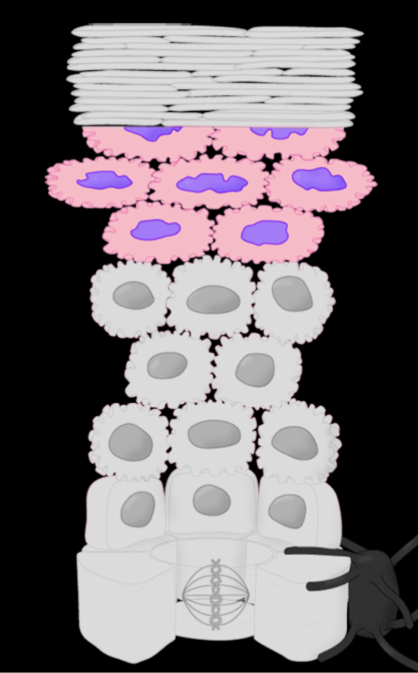
Stratum lucidum
ONLY on palms and soles of the feet
is a sublayer of the stratum corneum
is a clear, thick layer

Stratum corneum
Overall outermost layer of the skin
really thin layer
completely dead cells —> only left keratin
function: protect against abrasions

the life of a skin cell is approximately ________ from birth to death.
3 months
Strata
uppermost layer of the dermis
loose connective tissue
has dermal papilla
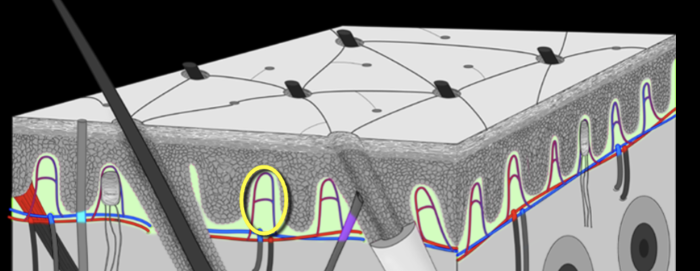
Dermal papilla
look like little fingers
has grooves like fingerprints
has protrusions to increase surface area
Function: blood and nutrient transfer

Reticular layer (stratum reticulare)
dense irregular connective tissue
function: creating cleavage lines for the dermis to tear on

Hypodermis (subcutaneous tissue)
adipose & loose connective tissue (vascular)
there can be more or less of either

Strata
Bottom layer of skin in the hypodermis
fatty layer
Reticulum cutis anchors the fatty layer with fibers (collagen)
fibrous layer
thin layer of dense irregular connective tissue
Hair follicle
follicular wall:
stratified squamous epithelial tissue
grows from the bottom of the follicle where the nutrients are, and pushes dead keratin up
parts of the hair shaft
Inside to outside:
medulla
cortex
cuticle

Arrector pili muscles
smooth muscle
makes goosebumps for temp regulation
material of all glands
simple cuboidal epithelium
Sebaceous holocrine gland
sits on every hair follicle
secretes sebum
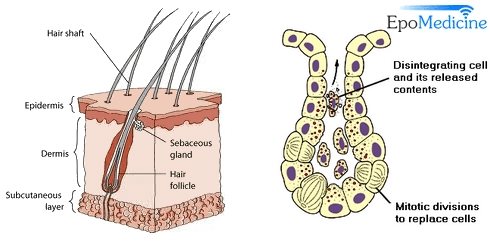
Eccrine sweat or sudoriferous gland
opens onto the skin
is everywhere you have skin
secretes normal sweat

Apocrine sweat or sudoriferous gland
short tube with fat coil
attaches to certain hair follicles
only in the armpits, genital, and anal regions
secretes proteinaceous sweat (pheromones)