N230 Exam #2 Study Guide
 Call Kai
 Learn
Learn Practice Test
 Spaced Repetition
 Match
Match Flashcards
 Knowt Play
1/3

There's no tags or description
Looks like no tags are added yet.
Name | Mastery | Learn | Test | Matching | Spaced | Call with Kai | Chat |
|---|
No analytics yet
Send a link to your students to track their progress
4 Terms
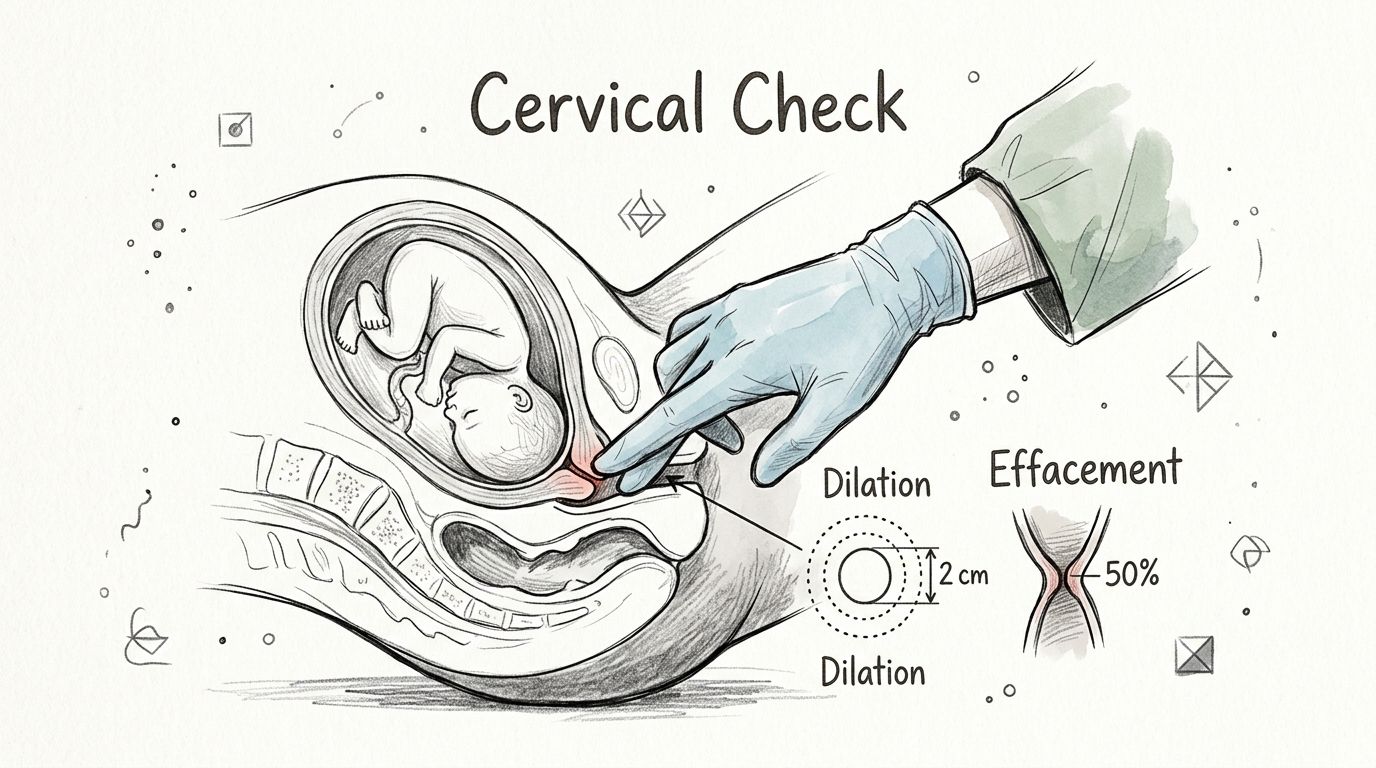
Components of a cervical check during labor
Effacement
Dilation
Fetal descent (station)

Effacement
Effacement of the cervix means the shortening and thinning of the cervix during the first stage of labor. The cervix, normally 2 to 3 cm long and approximately 1 cm thick, is obliterated or “taken up” by a shortening of the uterine muscle bundles during the thinning of the lower uterine segment that occurs in advancing labor. Only a thin edge of the cervix can be palpated by an examiner when effacement is complete. Effacement generally progresses significantly in first-time term pregnancy before more than slight dilation occurs. In subsequent pregnancies, effacement and dilation of the cervix tend to progress together. Degree of effacement is expressed in percentages from 0% to 100% (e.g., a cervix is 50% effaced)
Measurement: Thinning of the cervix recorded in centimeters or percentages (0%-100%)
Normal length: 3-4 cm at end of third trimester
Complete effacement: Cervix thins to only a few millimeters (paper thin)
Pattern differences:
Primipara: Effacement usually precedes dilation
Multipara: Effacement and dilation often occur together
Dilation
Dilation
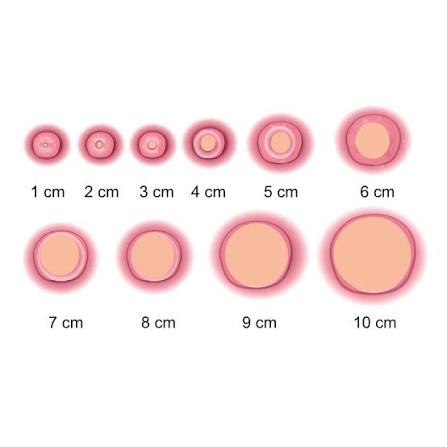
Measurement: Opening of the cervical canal measured in centimeters (0-10 cm)
Full dilation: Approximately 10 cm, marking the end of the first stage of labor
Complete dilation: Cervix can no longer be palpated by the examiner
Progress: Allows passage of the fetus through the birth canal
Dilation of the cervix is the enlargement or widening of the cervical opening and the cervical canal that normally occurs once labor has begun. The diameter of the cervix increases from less than 1 cm to full dilation (approximately 10 cm) to allow birth of a term fetus. When the cervix is fully dilated (and completely retracted), it can no longer be palpated by an examiner. Full cervical dilation marks the end of the first stage of labor.
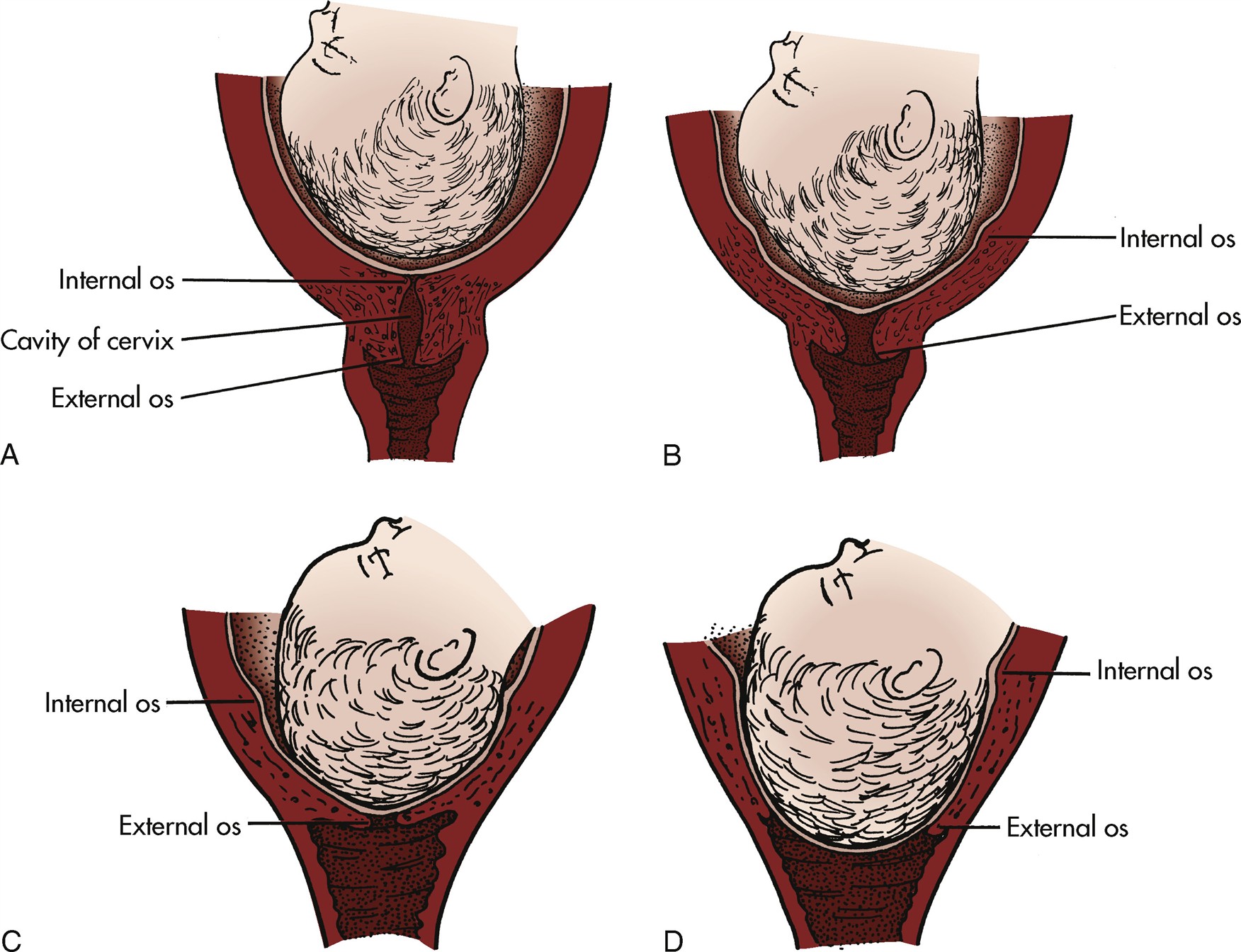
Cervical Effacement and Dilation. Note how the cervix is drawn up around presenting part (internal os). Membranes are intact, and the head is not well applied to the cervix. (A) Before labor. (B) Early effacement. (C) Complete (100%) effacement. The head is well applied to the cervix. (D) Complete (10 cm) dilation. Cranial bones overlap somewhat, and membranes are still intact.
Station
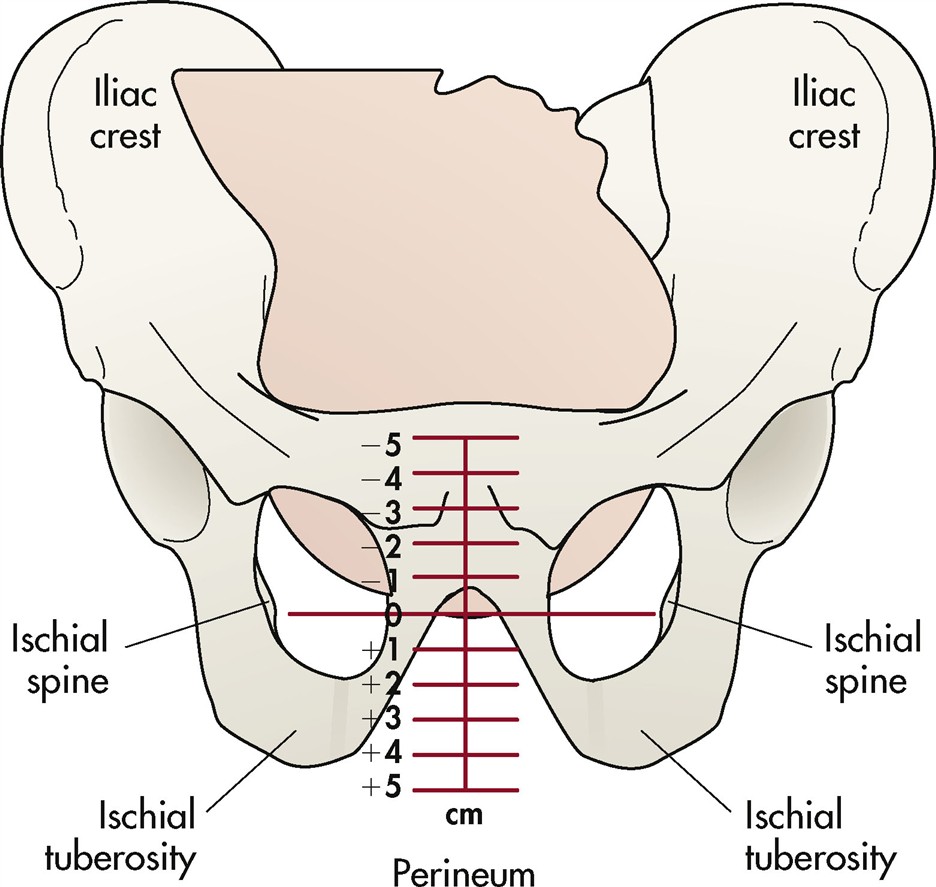
Station is the relationship of the presenting fetal part to an imaginary line drawn between the maternal ischial spines and is a measure of the degree of descent of the presenting part of the fetus through the birth canal. The placement of the presenting part is measured in centimeters above or below the ischial spines. For example, when the lowermost portion of the presenting part is 1 cm above the spines, it is noted as being minus (−) 1. At the level of the spines, the station is referred to as 0 (zero). When the presenting part is 1 cm below the spines, the station is said to be plus (+) 1. Birth is imminent when the presenting part is at +4 to +5 cm. The station of the presenting part should be determined when labor begins so that the rate of descent of the fetus during labor can be assessed accurately.
Definition: Relationship of the presenting fetal part to the maternal ischial spines
Measurement scale: Recorded in centimeters with plus/minus signs
Above spines: Negative numbers (e.g., -1, -2, -3)
At the spines: 0 (zero station)
Below spines: Positive numbers (e.g., +1, +2, +3)
Birth imminent: When presenting part reaches +4 to +5 cm
Engagement: Largest transverse diameter passes through pelvic inlet (usually corresponds to station 0)