U10 - Disorders of the Digestive System
 Call Kai
 Learn
Learn Practice Test
 Spaced Repetition
 Match
Match Flashcards
 Knowt Play
1/9

There's no tags or description
Looks like no tags are added yet.
Name | Mastery | Learn | Test | Matching | Spaced | Call with Kai | Chat |
|---|
No analytics yet
Send a link to your students to track their progress
10 Terms
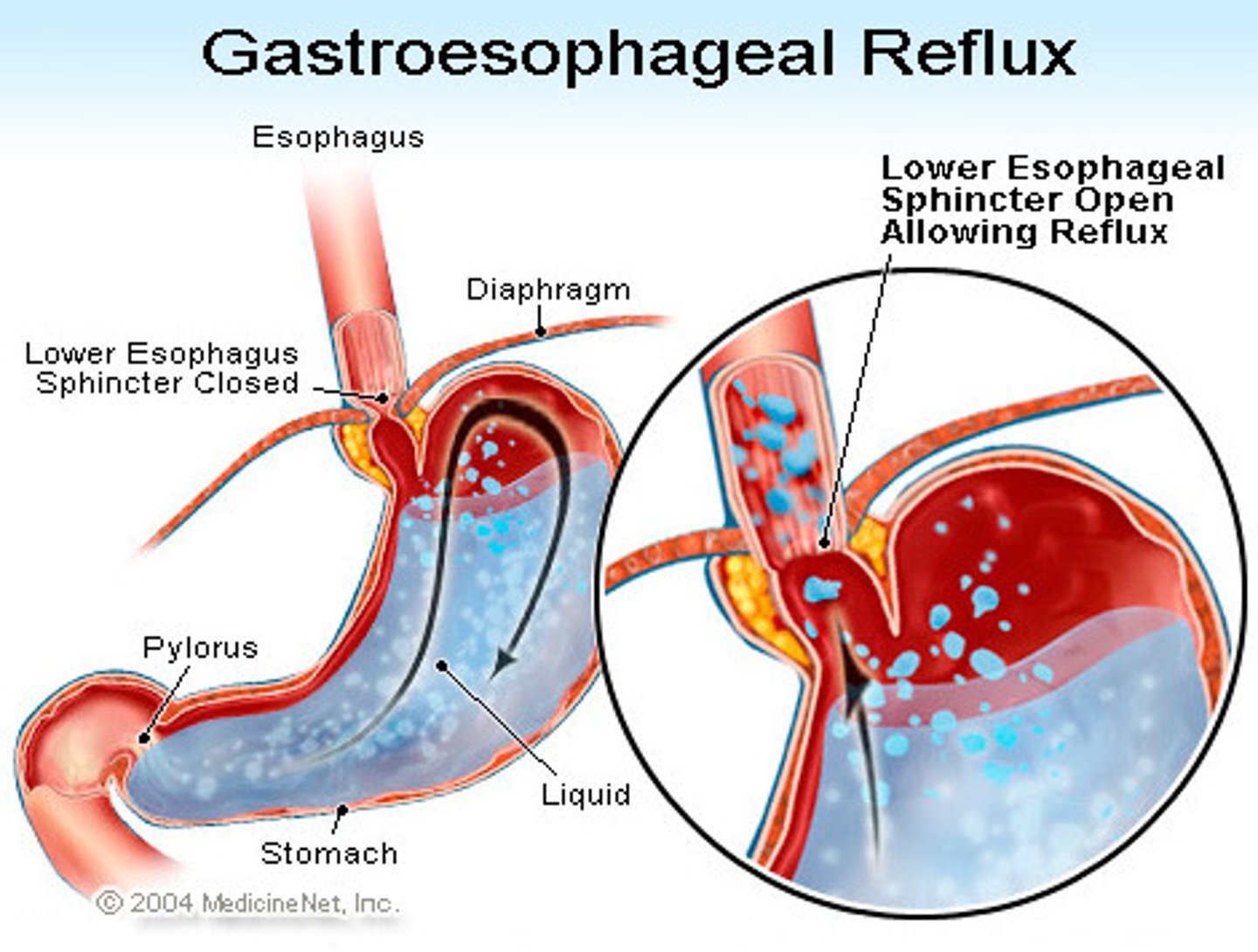
GERD
gastroesophageal reflux disease
aka heartburn and acid indigestion
lower esophageal (cardiac) sphincter relaxes inappropriately and allows stomach's contents (acid) to flow up to the esophagus
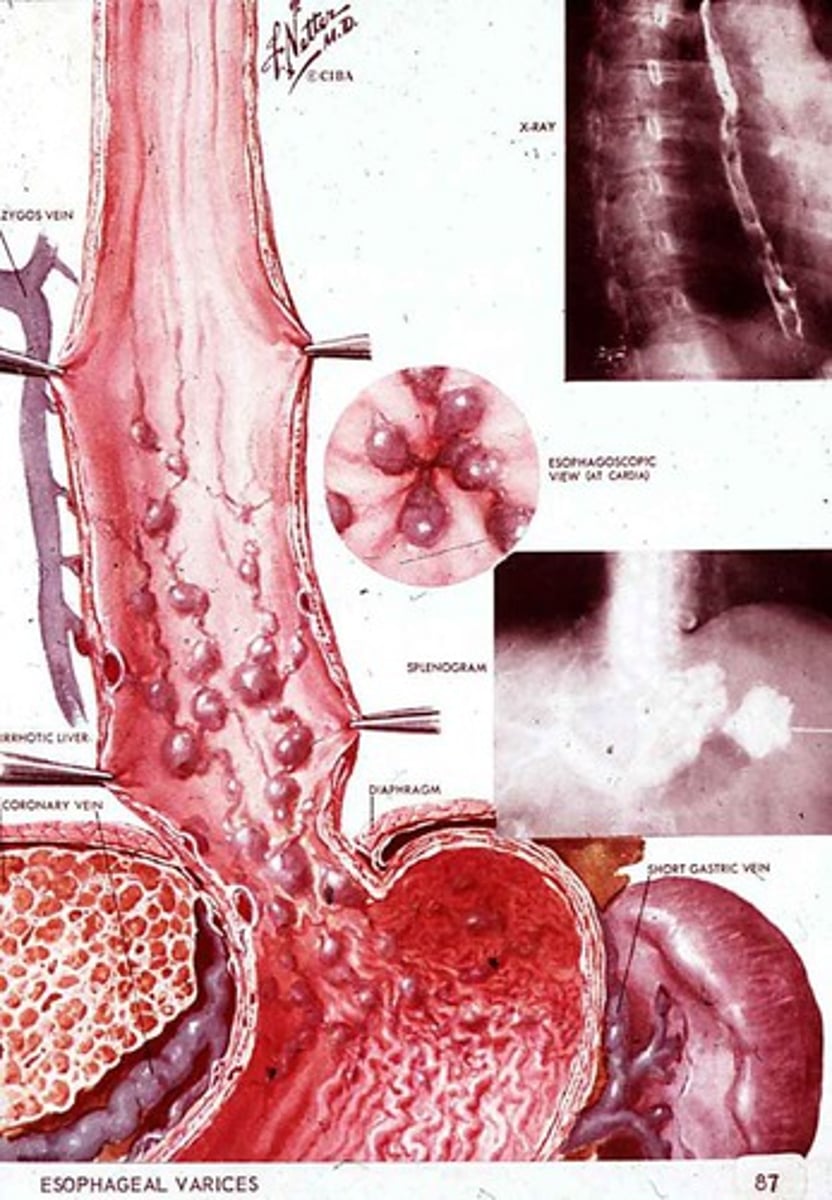
esophageal varices
abnormal, enlarged veins in the lower part of the esophagus that may lead blood or rupture
-> develops when normal blood flow to the liver is obstructed
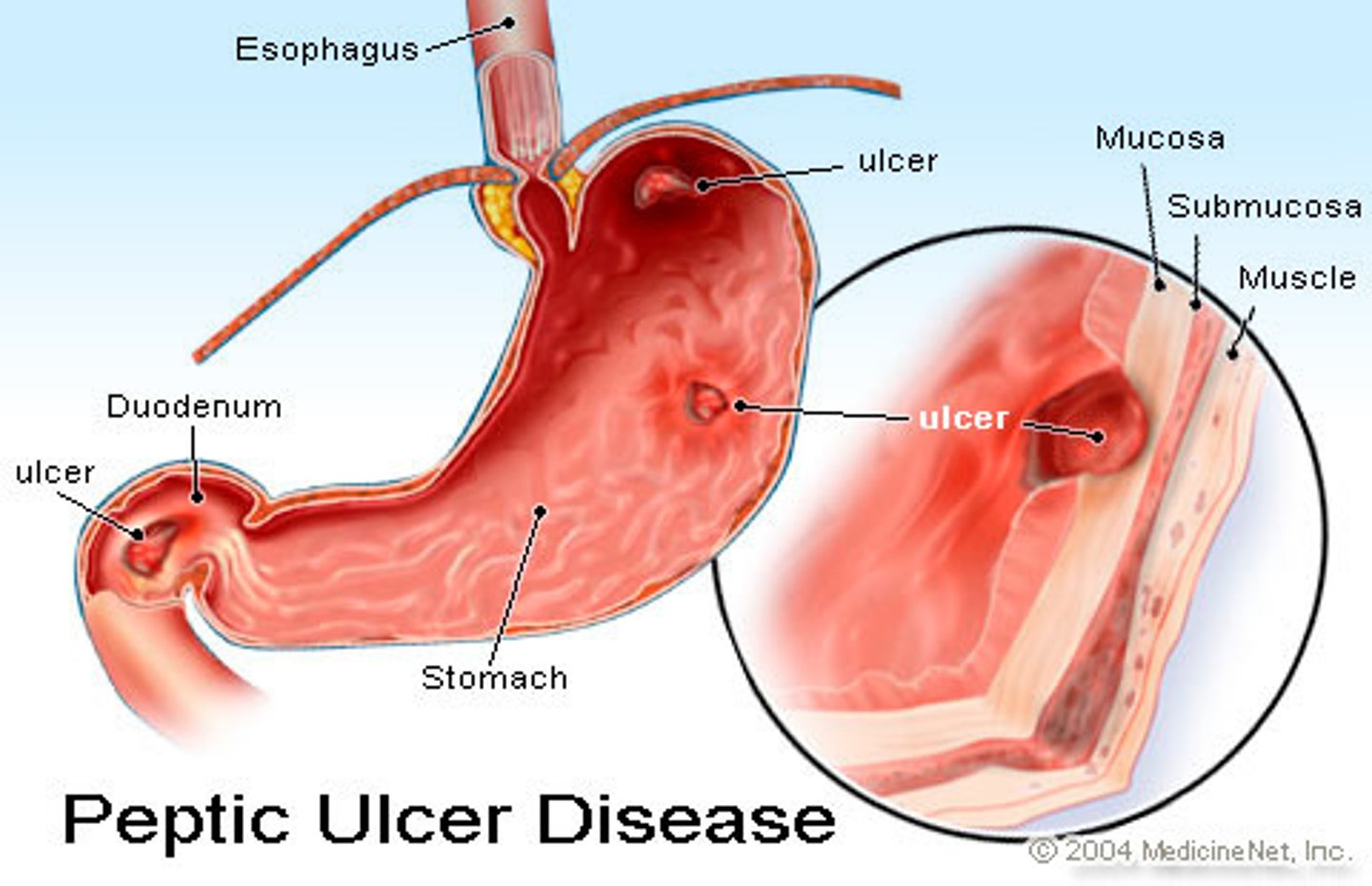
stomach ulcers
aka peptic ulcer disease
- most are caused by Helicobacter pylori
- infection can persist for years or life
- can develop either peptic and duodenal ulcers or both
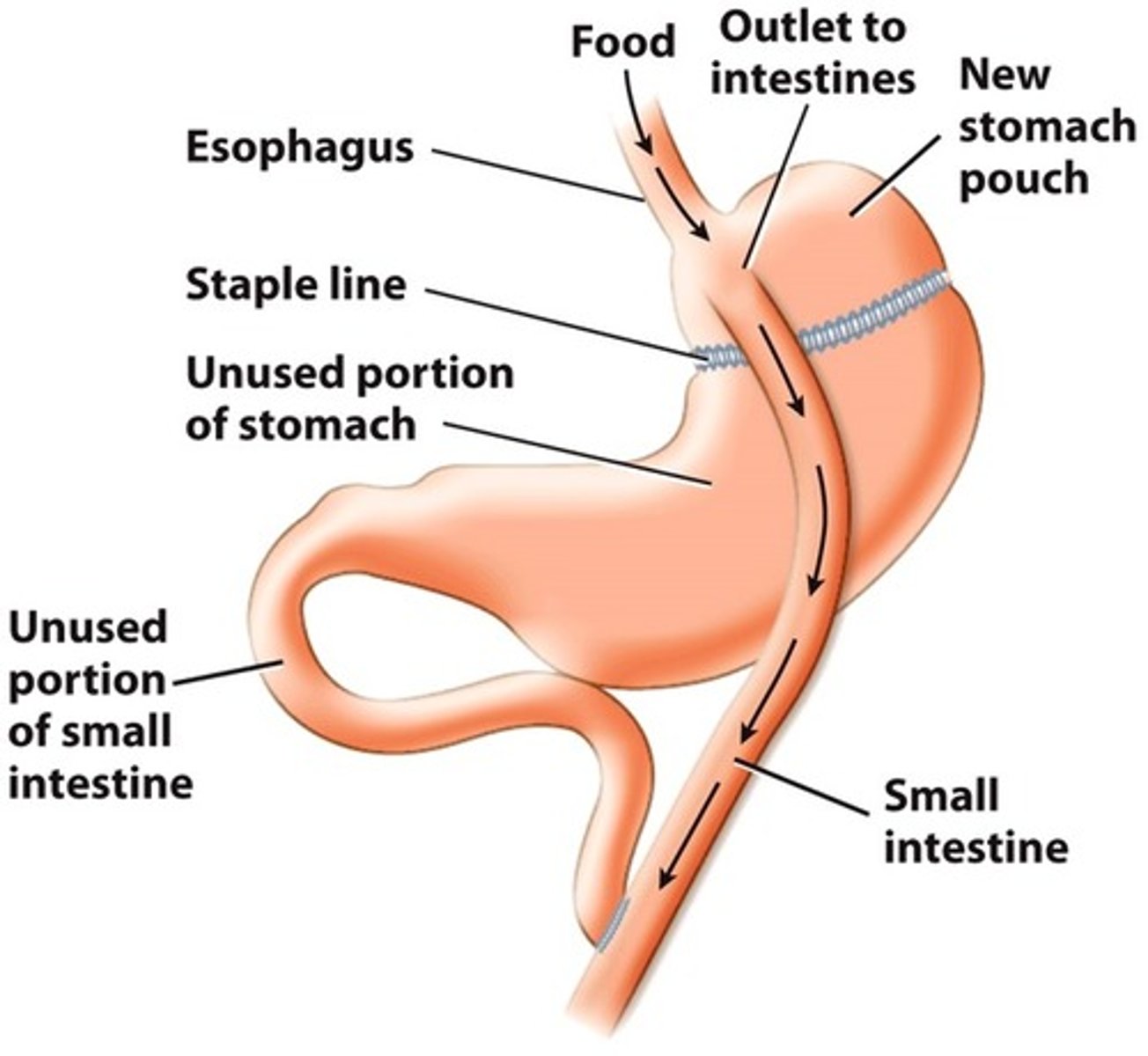
gastric bypass surgery
helps lose weight by changing how stomach/small intestine handle food you eat
-> smaller stomach = feel full with less food
-> no longer goes into some parts of the stomach and small intestine = body doesn't absorb all calories
last-ditch effort
hepatitis
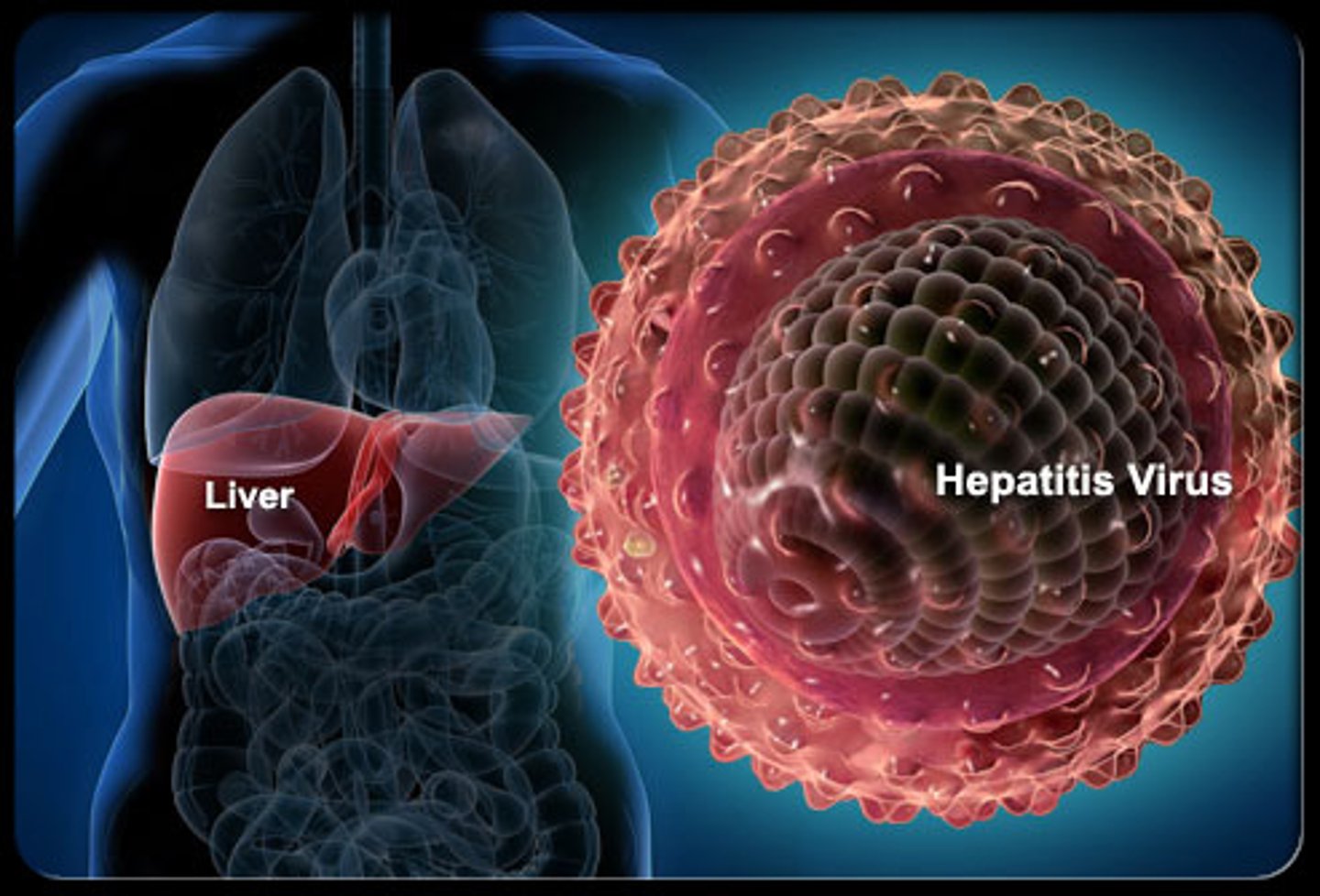
inflammation of the liver caused by a virus; comes in several versions (A -> G)
Hepatitis A: spreads via fecal-oral route; asymptomatic or mild symptoms
Hepatitis B: transmitted via blood/body fluids; anorexia, jaundice, swollen liver, coke-colored urine, clay-colored stool
lactose intolerance
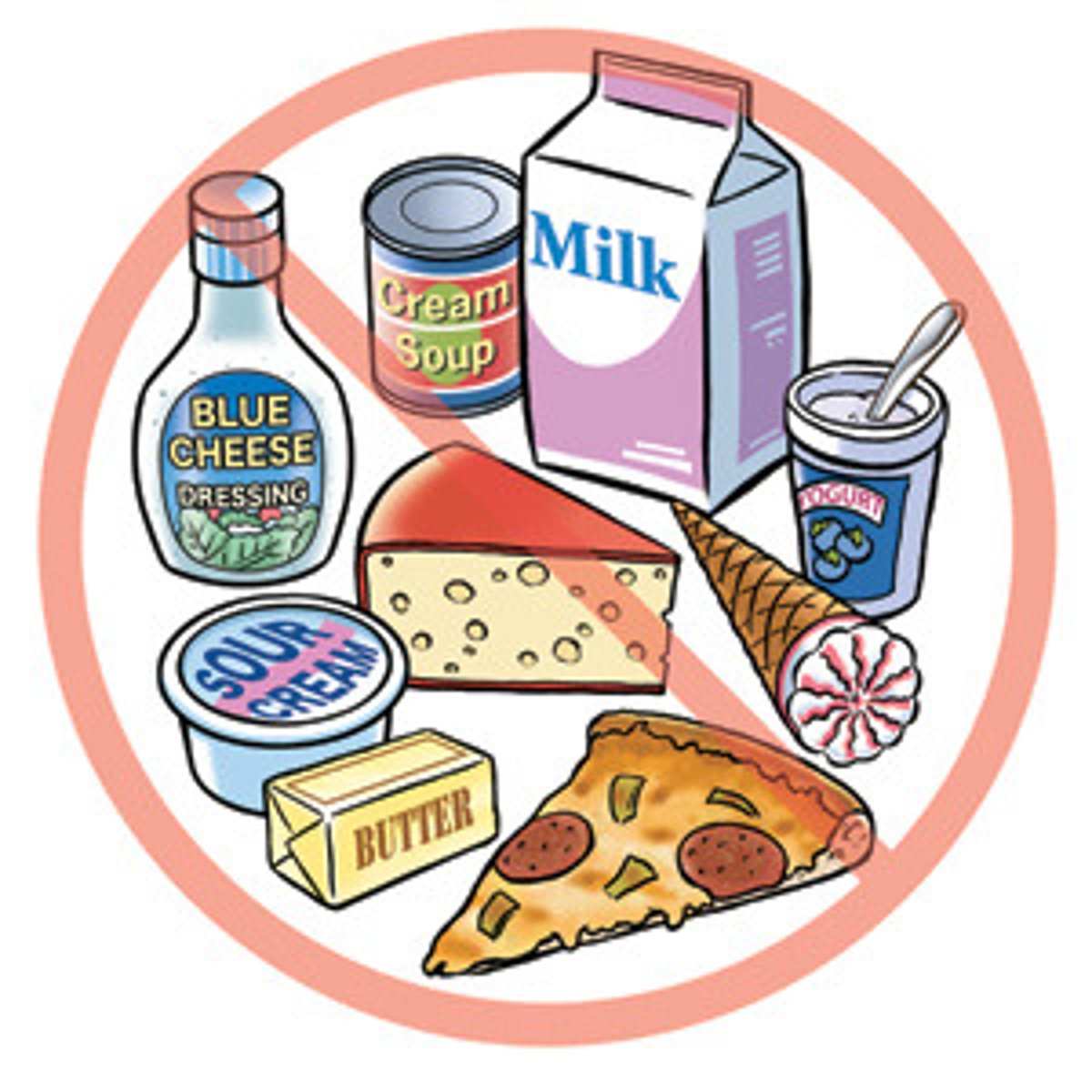
an inability to digest milk sugar, lactose (for babies)
- can cause small intestine pain and discomfort
- 65% of the worldwide population have this
gallstones
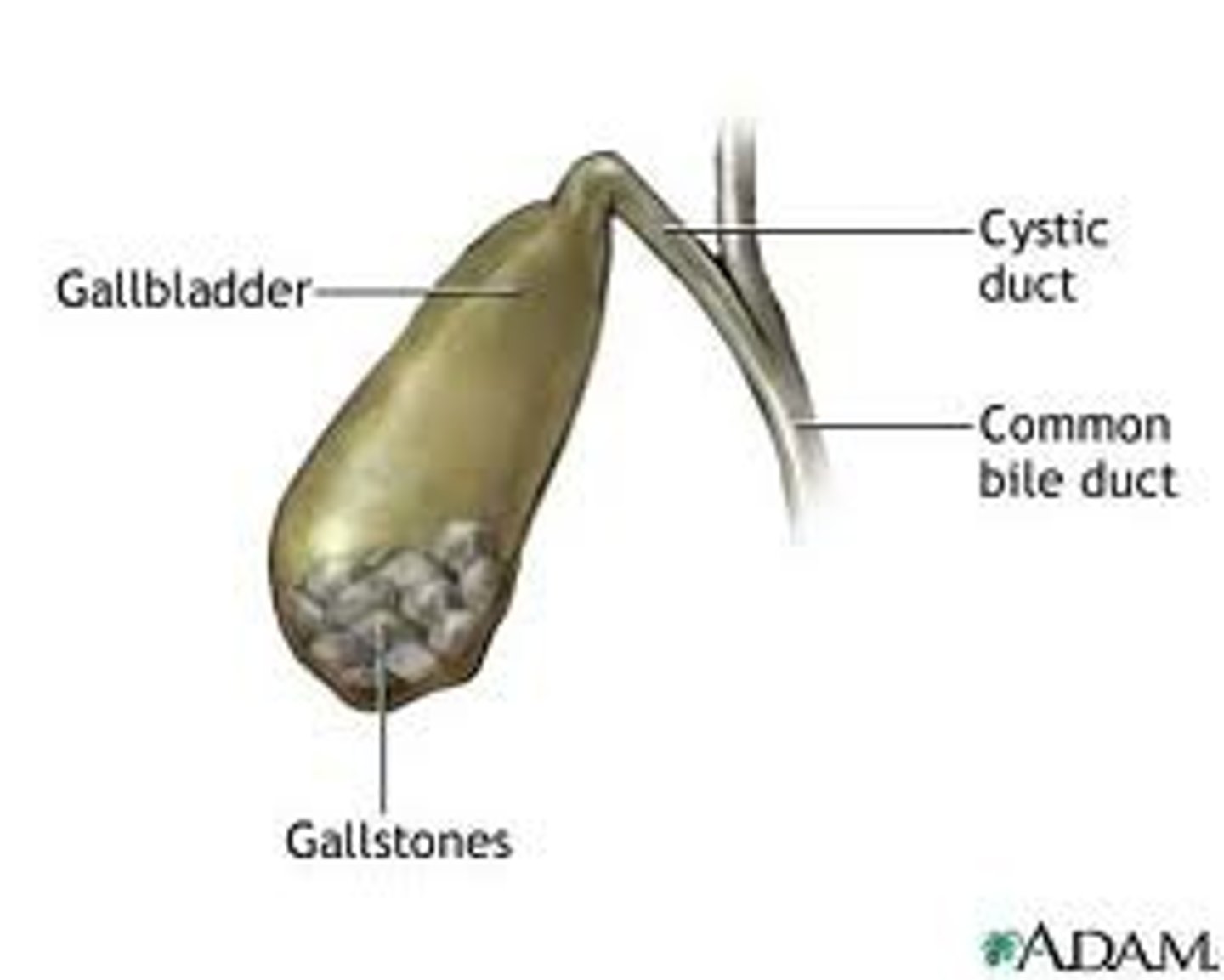
aka cholelithiasis
an accumulation of hardened cholesterol/calcium deposits in the gallbladder
- can pass into GI tract or surgically removed
celiac disease
autoimmune response to the presence of gluten proteins -> wheat, barley, rye
result is a truncation (flattening) of intestinal villi; leads to malnourishment and vitamin deficiencies
gastroenteritis
inflammation of stomach or intestines; inhibits nutrient absorption and leads to excessive H2O and electrolyte loss
Causes: bacteria, viruses, etc.
Fecal to Oral route of transmission
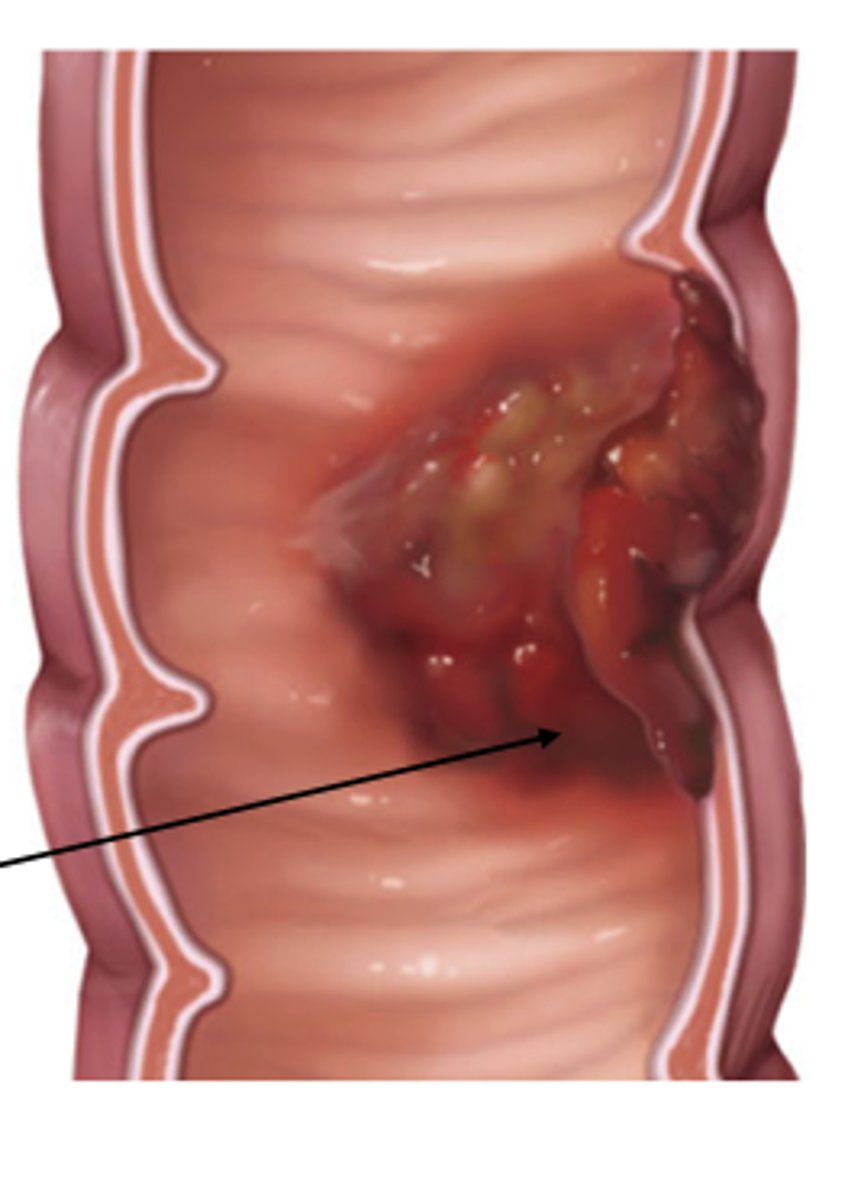
colorectal cancer
aka colon, rectal, or bowel cancer
Risk Factors: lifestyle, older age, inherited genetic disorders (rare