The Endocrine System Day one material
 Call Kai
 Learn
Learn Practice Test
 Spaced Repetition
 Match
Match Flashcards
 Knowt Play
1/40

There's no tags or description
Looks like no tags are added yet.
Name | Mastery | Learn | Test | Matching | Spaced | Call with Kai |
|---|
No analytics yet
Send a link to your students to track their progress
41 Terms
Endocrine System
Glands that secrete hormones into the bloodstream
blood carries hormones all over the body into different organs and cells
Hormones
Chemical messengers that regulate body functions
Target Cell
Cell with specific receptors for a hormone (lock n key)
Endocrinology
The study of hormones and endocrine organs
4 classic symptoms of diabetes mellitus (debbie)
Increased urination
Increased hunger
Increased thirst
Weight loss despite eating more
Fatigue
What is diabetes mellitus
An endocrine disorder where your body does not produce enough or no insulin too control your blood sugar levels.
What are the 3 P’s
Polyuria = Increased urination
Polyphagia = Increased eating/hunger
Polydipsia = Increased drinking/thirst
What are the three tests used to diagnose diabetes?
Urine test
Blood test
OGTT
How is the urine tests conducted? What was Debbie’s results
Get sample of urine with dipstick
Check to see if there is excess glucose in the urine
Debbie tested +
What does glucose in the urine indicate?
Blood glucose is so high it spills into the kidneys and then into urine.
(Glucose molecule is too big too filter through kidneys.
How is the blood test (serum blood glucose test) conducted
Patient fasts for 8 hours before
Vial of blood is drawn and level of glucose in plasma is measured
What is the normal blood glucose level
70-100 mg/dl (for grown teen/ adult)
What blood glucose level did Debbie have
112 mg/dl (she tests positive in pre diabetic area)
Oral Glucose Tolerance Test (OGTT) how is it conducted
Patient drinks 100g of glucose solution (basically pure syrup)
Over the next 3 hours, 5 vials of blood are collected
What is the normal OGTT results over 2 hours
below 140 mg/dl
what was Debbie’s OGTT results over 2 hours
150 mg/dl
What diagnose was Debbie given
Type 2 diabetes mellitus
What can majorily change how our body produces insulin
Diet and exercise
Major glands of the endocrine system? (and where are they located in the body)
Hypothalamus (brain)
Pituitary gland (brain)
pineal gland (brain)
Thyroid gland (neck)
Parathyroid gland (neck)
Pancreas (abdomen)
Thymus (chest/thoracic)
Adrenal glands (adbdomen)
Testes/Ovaries (pelvis)
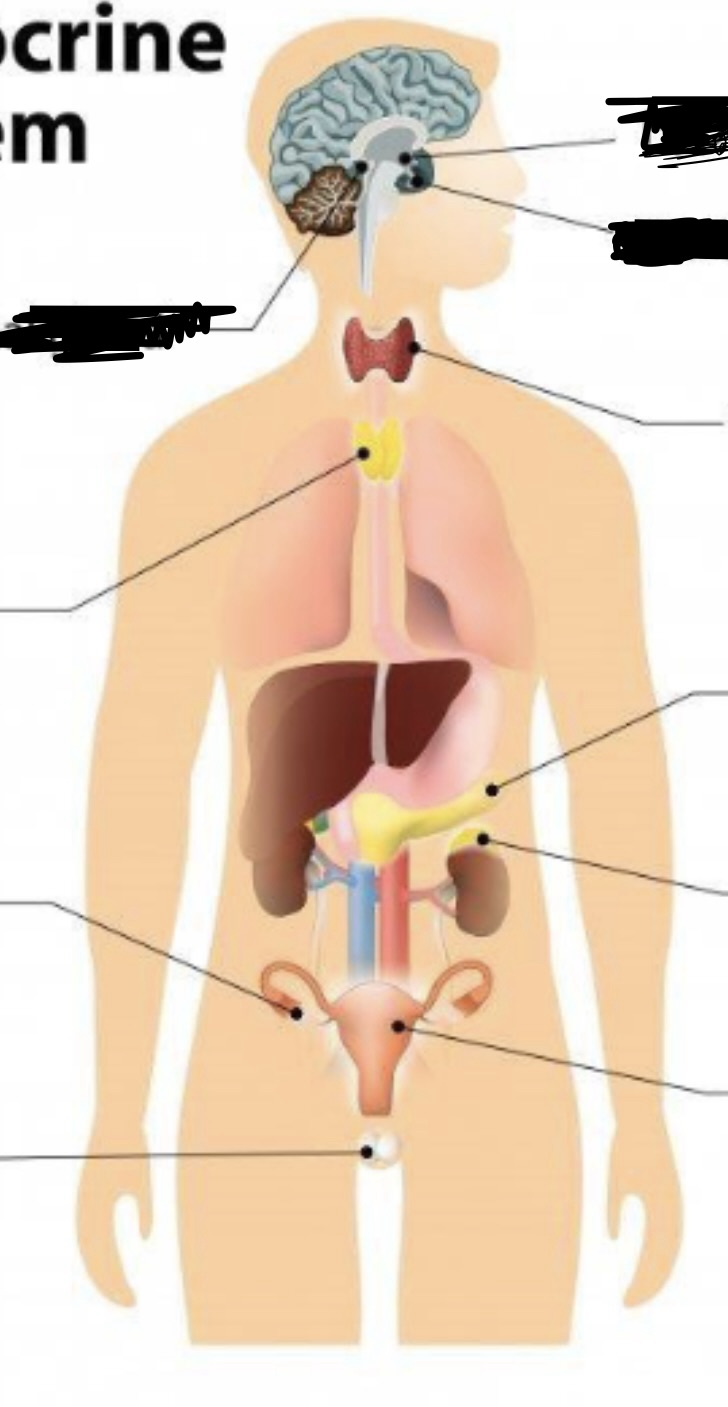
label the areas
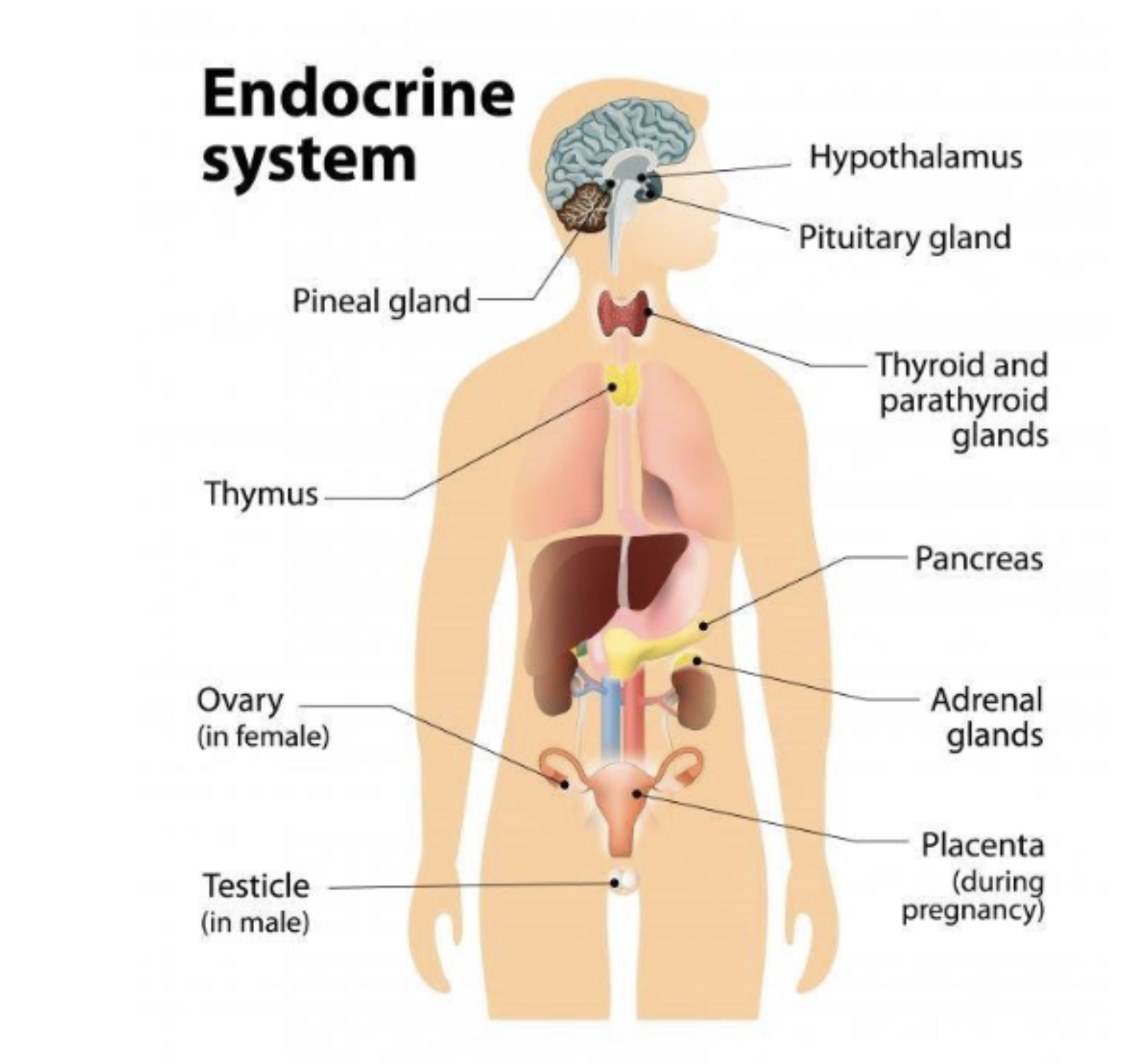
Whats functions does the Endocrine system control and integrate
reproduction
growth and development
Maintenance of electrolyte, water, and nutrient balance of blood (maintaining homeostasis)
Regulation of cellular metabolism and energy balance (Controls how cells use energy and nutrients)
Mobilization of body defenses (Helps the body respond to stress and injury.)
Endo
within/inside
crete
to secrete
Hormon
to excite or stimulate
What are the main control systems of the body
Endocrine system and nervous system
Compare the nervous system and endocrine system
Endocrine system acts with nervous system to coordinate and integrate activity of body cell
Nervous system
initiates responses rapidly
Short-duration responses (the effects don’t last very long)
Acts via action potentials and neurotransmitters
Acts at specific locations determined by axon pathways (has specific target)
Neurotransmitters act over very short distance. (travels quickly across a tiny gap called a synapse.)
coms out nerve (neurotransmitter)
Endocrine system
Initiates responses slowly
Long-duration responses (hormones stay in the body for long time)
Acts via hormones released into the blood
Acts at diffuse locations, target can be anywhere blood reaches (Only cells with the correct hormone receptor will respond.)
Hormones act over long distances
Expected through glands into the bloodstream (hormone)
what are our primary glands
exocrine gland
endocrine gland
Exocrine gland
outside secreting gland
has ducts
produces non hormone substances
Secrete products into ducts to carry secretion outside of surface or into an organ cavity.
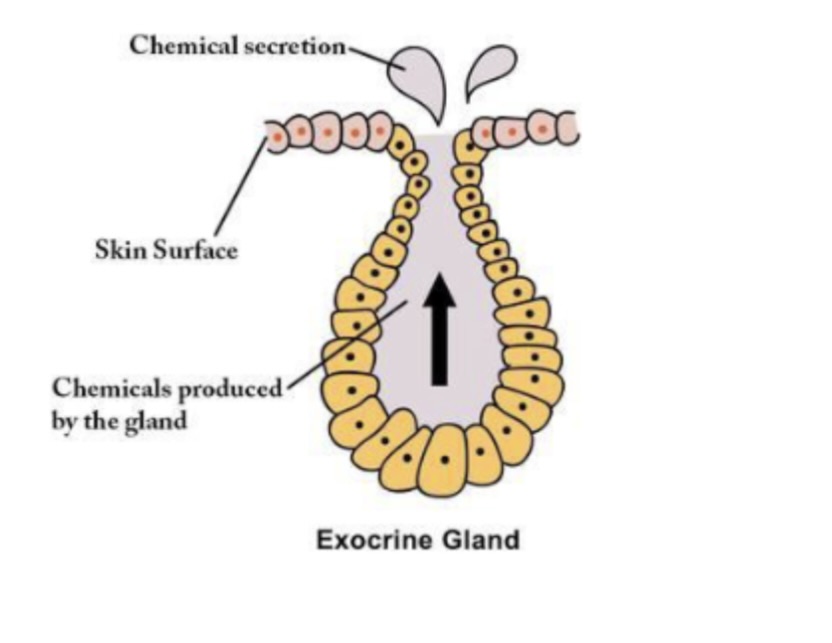
Example of Exocrine secretions
Saliva and sweat
Endocrine glands
Produce hormone
Lacks ducts
secretes directly into blood
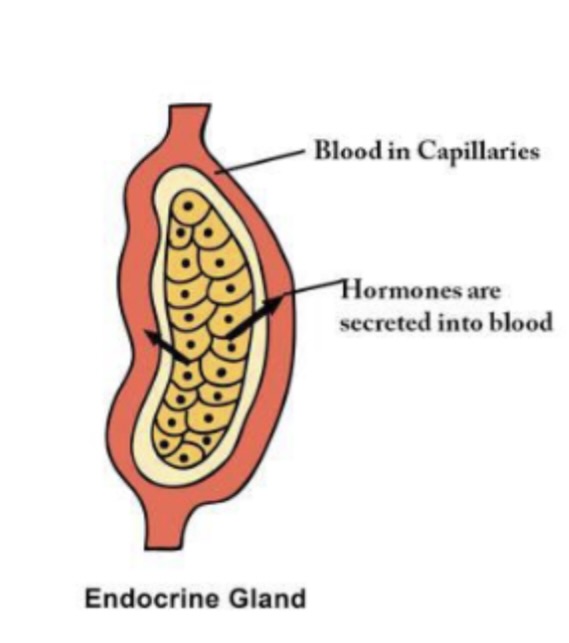
give some examples of organs that have both endocrine and exocrine functions
Pancreas, gonads, placenta
Are endocrine hormones produced only by endocrine glands? Explain.
No. Some tissues and organs contain small pockets of endocrine cells that also produce hormones, including adipose (fat) calls, the thymus, and cells in the walls of the small intestine, stomach, kidneys, and heart.
What are the main chemical classes of hormones
Water based/soluble
Lipid- based/ soluble
Water-based/soluble hormones are
Amine hormones
Petide/protein hormone
Eicosanoid hormone
Lipid-based/ soluble hormones are
synthesized from cholesterol
thyroid hormone and steroid hormone
Steps of water-based soluble hormone
Amine, peptide & protein hormones use the G-
protein “second messenger” cell pathway:
• 1. peptide/protein hormone (1st messenger) binds to
receptor on cell’s plasma membrane
• 2. Binding leads to activation of an enzyme inside the
cell that changes ATP into cAMP (2nd messenger)
• 3. cAMP activates a series of enzymes called a
“cascade”
• 4. Cell responds to enzyme-activated proteins and
does what the hormone wants to happen
Steps of lipid based/soluble proteins
1. Lipid-based hormone diffuses right through the plasma membrane
• It’s lipid-soluble (steroid hormones & thyroid hormones)
2. Receptor-hormone complex enters nucleus and binds
to specific region of DNA
• 3. Initiates DNA transcription to produce mRNA
• 4. mRNA moves to Ribosomes, then translated into
specific protein
• Proteins synthesized have various functions
• Examples: metabolic activities, structural purposes, or exported
from cell
Which chemical class of hormone cannot enter the cell
Water based soluble hormone
What is the difference between water based soluble hormone and lipid based soluble hormone based on parmocology
Water- based soluble hormone have to be injected because it can easily be broken down by stomach acids and digestive enzymes. (example: insulin is injected)
Lipid based soluble hormones can be taken orally since they can easily pass through stomach lining. (example: birth control can be a pill)