Bio - Digestive System
 Call Kai
 Learn
Learn Practice Test
 Spaced Repetition
 Match
Match Flashcards
 Knowt Play
1/110

Earn XP
Name | Mastery | Learn | Test | Matching | Spaced | Call with Kai |
|---|
No analytics yet
Send a link to your students to track their progress
111 Terms
What is the purpose of the digestive system?
to break down large macromolecules (carbs, lipids, nucleic acids, proteins) from our food into smaller molecules that can be absorbed by the body
Define digestion
the breaking down of food into smaller molecules usable by the cell
define ingestion
the process of taking food into the body
define motility
refers to the moving and mixing of food forward through the digestive tract
define secretion
the production and release of chemicals (hormones, etc) into the body
define absorption
the act of taking a substance into the cells of the body (where it will be used)
define egestion
the act of eliminating a substance from the body
define alimentation
the combined process of ingestion, digestion, and egestion (the digestive tract is also caused the alimentary canal)
define enzyme
biological catalysts (speed up chemical reactions, by lowering the activation energy of a reaction, without being used up)
what are the three main groups of enzymes?
amylase, protease, and lipase
what two major processes control ingestion?
a nervous system (when)
cultural conditioning (what)
what are the three factors involved in establishing the set point?
the concentration of glucose in the blood
low glucose = hunger
high glucose = satisfies
the distension of the stomach (feeling of being full)
the amount of body fat (long term control)
what is the control centre for the digestive system in the brain called
the hypothalamus
what are the two kinds of digestion possible in humans and explain each
1) mechanical digestion
physically breaking food down into smaller particles by chewing or churning
the purpose is to maximize surface area upon which enzymes can work so that digestion becomes more efficient
2) chemical digestion
using secreted enzymes to break large molecules into smaller ones
the mouth is the first place in the digestive process
what does absorption refer to?
the movement of the structurally simple food-stuffs from the digestive tract into the blood
what are two reasons why food may have not been absorbed
may have been unable (like when a dog swallows a ring or something)
your body just didn’t digest
ex: starch never came in contact with amylase to break it down
what are two other names for the digestive tract and define it
gastrointestinal tract (GI tract)
alimentary canal
a simple system which moves food by peristaltic contractions from mouth to anus
approximately how long is the digestive tract
7-9m
define paristalsis
the wave like contractions of the circular and longitudinal muscle layers of the digestive tract that mixes food with enzymes and moves it along the gut
what are the walls of the gut made of
smooth muscles
what are the four functions of the digestive system?
1) to physically tear food into smaller particles
2) to chemically breakdown large molecules into smaller molecules (by enzymes)
3) the absorption of nutrients into the circulatory system (to be brought to body cells)
4) eliminate undigested materials
what is the pathway of food?
mouth to pharynx to esophagus to stomach to duodenum to jejunum to ileum to caecum to ascending colon to transverse colon to descending colon to sigmoid colon to rectum to anus
what organs are considered accessory structures and what do they do?
includes: liver, gallbladder, pancreas, appendix
add important enzymes and molecules to help digest the food (but food does not enter these organs)
what happens in the mouth?
food is taken in and ingested and the digestion process begins
what is the function of the teeth?
to mechanically break down food (mastication) into smaller pieces each tooth type assisting in the process
Bonus: name all the types of teeth and how many are in the adult mouth (and how many we have total)
incisor - 8
canine - 4
premolar - 8
molar - 12
adults have 32 permanent teeth
what is the purpose of saliva?
starts chemical digestion
has buffers that prevent tooth decay from acidic foods
contains digestive enzymes secreted from three salivary glands
contains a mucus that acts a lubricant and aids in swallowing
what is salivary amylase?
enzyme that catalyzes the breakdown of polysaccharides into smaller polysaccharides and maltose
what is the function of the tongue?
to place food into the most appropriate teeth
contains taste buds which send information to the brain about the taste of the food
mixes food with saliva and rolls the food into a ball called a bolus
where is each taste (bitter, sweet, sour, salty) detected on the tongue?
bitter - back of the tongue
sour - sides of the tongue
sweet and salty - tip of the tongue
how does swallowing occur?
after chewing food, it’s placed near the back of the tongue
soft palate and uvula move to seal the nasal passage
epiglottis seals the trachea to prevent food from entering the lungs
the last voluntary step of the digestive system
what is the esophagus?
a muscular tube about 25 cm long and is about 25 cm wide that conducts food from the pharynx to the stomach
where is the esophagus located?
directly behind the trachea
what does the esophagus secrete?
a non-enzymatic mucous that acts like a lubricant
what three layers is the esophagus made of and describe them?
mucosa: inner most layer covered with mucous
submucosa: contains blood, lymph vessels, nerves
muscularis: 2 muscular layers
circular muscle
longitudinal muscle
what is at the end of the esophagus?
a tight ring of muscle called the gastroesophageal sphincter that prevents things from moving in either direction (bolus from moving back into the esophagus and gastric acid from splashing into the esophagus)
what causes movement of the bolus through the esophagus?
peristalsis (wave-like contractions)
where is the stomach located in the body?
on the left side of the abdominal cavity, below the diaphragm
what is the stomach?
a muscular sac that can expand in size to accommodate approximately 2 litres of food
How many layers are in the stomach and what are they?
1) mucosa
2) submucosa
3) muscularis
4) serosa
what is the mucosa in the stomach? what does it do?
first layer of stomach lining
has many folds called ruggae which hold gastric pits and gastric glands in between these folds which produce gastric juice
what is gastric juice?
a secretion that contains a variety of substances that aid in the digestion of food including enzymes that help in the breakdown of food?
what is the submucosa in the stomach and what does it do?
second layer of stomach lining
contains nerves and blood vessels that detect when food enters the stomach and initiates the release of the hormone gastrin into the blood stream
the gastrin acts on the gastric glands, telling them to release gastric juice
what is the muscularis in the stomach and what does it do?
third layer of stomach lining
a layer of muscles that contract frequently, churning and mixing the bolus with gastric juices to produce a semi-solid mixture called chyme
has three muscle layers:
circular
longitudinal
oblique
what is the serosa in the stomach and what does it do?
fourth layer of stomach lining
holds the stomach in place and secretes a lubricating fluid that eliminates friction between organs
what are the three contents of gastric juice and what do they do?
hydrochloric acid
loosens tough fibrous material
kills bacteria that enters stomach with food
pepsin - type of protease
breaks down proteins into amino acids and polypeptides
made as pepsinogen (inactive) and activated in the presence of HCl because it would destroy the cells that make it if it was active
lipase
breaks down triglycerides into fatty acids and glycerol
True or False: Amylase from saliva can survive in the stomach
False, it is destroyed in the stomach as the pH is very acidic
what does the mucus secreted by epithelial cells of the inner stomach do?
protects the stomach lining from HCl
how often is the stomach lining replaced?
approximately every 2-3 days
what happens to the chyme as it moves to the small intestine?
acidic chyme passes through the pyloric sphincter out of the stomach and into the duodenum
what is the small intestine and what are its two main functions?
main functions:
site of most digestion
absorption of nutrients
a long, coiled tube more than 6 m long in humans
length gives it more time to be broken down and absorbed
attached by a thin membrane called the mesentery to the rear wall of the abdomen
consists of three parts:
duodenum
jujenum
ileum
what is the duodenum?
first 25 cm of the small intestine
receives acidic chyme from the stomach
chyme is mixed with secretions from the pancreas, liver, gall bladder, via the common bile ducts as well as gland cells from duodenal wall
what is the jujenum?
about 3 meters long
contains more intestinal folds and glands than the duodenum
enzymes produced here remain attached to the intestinal wall and the peristaltic contractions bring the chyme in contact with the enzymes
main function is the absorption of nutrients
nutrient absorption is enhanced by the increased surface area
what are the three ways the surface area of the small intestine is increased
1) folds - increase surface area 3X
2) villus - increase surface area 10X
villi are tiny finger-like projections along the internal surface of the intestine
villi contain microvilli
function is to absorb small nutrient molecules back into circulatory via capillaries and lymphatic system
3) microvillus - increases surface area 20X
what is the ileum and what does it do?
makes up about 4 m of small intestine
fewer digestive enzymes than duodenum as well as smaller and fewer villi
main function is absorption of nutrients
how long / wide is the long intestine?
1.5 m in length and 7.6 cm in diameter
what is the path of the long intestine?
caecum to ascending colon to transverse colon to descending colon to sigmoid colon to rectum to anus
what is the pathway of feces in the long intestine?
receives secretions from the ileum via the ileocaecal sphincter
feces first enters the caecum and then moved through the ascending, transverse, and descending organ by rhythmic contractions into the rectum
what is the appendix and what happens if food gets trapped?
extends from the caecum and is a vestigial organ (no known function)
if food gets trapped, bacteria will build up and release toxins causing it to swell (appendicitis)
if the appendix bursts and releases toxins into the abdominal cavity, this is called peritonitis
what are the three major functions of the large intestine?
1) reabsorption of water
most of the 20L of fluid passed through the large intestine daily is reabsorbed
this fluid is mainly maid up of saliva, digestive juices, and fluid from food
2) vitamin production
vitamin k and some b vitamins are made by harmless bacteria that live in the intestines
these bacteria also produce a methane, carbon dioxide, and hydrogen sulfide gas mixture which is either absorbed or released as farts
3) egestion
formation and expulsion of feces
feces is stored in the rectum until it is full, sending a nerve signal to the brain causing you to have to shit
elimination is controlled by the anal sphincter (asshole)
what are accessory digestive organs?
organs outside the gastrointestinal tract
they create or store and secrete enzymes, hormones, and chemicals that are required for digestion
where is the pancreas located?
between the stomach and the duodenum
when does the pancreas release pancreatic juices
when chyme enters the duodenum, the hormone CCK (cholecystokinin) is secreted by the duodenum walls and causes the pancreas to release pancreatic juices and the liver to release bile
what is the hormone that the duodenum walls secrete to initiate the secretion of pancreatic juices and bile?
CCK (cholecystokinin)
what three things does the pancreas do to aide in digestion?
1) release pancreatic juice
travels from pancreas to duodenum via the pancreatic duct
contains 28 different enzymes
amylases: starch to sugar
lipases: lipids to glycerol and fatty acids
trypsin/peptidase: proteins into amino acids
peptidase breaks down polypeptides (proteins)
2) neutralize acidic chyme
pancreatic juices are alkaline due to high bicarbonate concentration
changes chyme from pH 2 to pH 8
if this doesn’t happen, ulcers can occur
3) release hormones
Insulin:
controls blood sugar levels by allowing glucose to enter the cells, storing glucose as glycogen
Glucagon:
when more glucose is needed in the blood, glucagon allows glycogen to be broken into glucose again
think: glucagone out the stored cells
what is secretin and what does it do?
a hormone produced by the duodenal walls
when pH in duodenum is too acidic, it is released into the blood stream causing:
the production of bicarbonate ions from pancreas
inhibition of gastric juices in the stomach
what is a gland?
an organ that secretes a substance like a hormone or an enzyme
what is an endocrine gland?
secretes hormones directly into the blood stream
ex: pituitary glands, adrenal glands, ovaries, testes
think of endothermic reactions: just as energy goes into the cells, hormones go right into the blood stream
what is an exocrine gland?
secretes into a duct
ex: sweat and digestive glands
think exothermic reactions: energy moves out of the reactants as hormones move out of the gland and blood stream (idk this one isn’t as straight forward)
what type of gland is the pancreas?
both endocrine and exocrine
endocrine: secretes insulin and glucagon into the blood stream
exocrine: secretes pancreatic juices into the pancreatic duct
what do secretory cells in exocrine glands do?
produce the product and secrete them into the acinus
what is the acinus in an exocrine gland and what does it do?
the hollow space surrounded by secretory cells that collect the product
send product to the duct
what two locations can ducts lead to?
a lumen
outside the body
what two secretions does the pancreas make, what enzymes do those secretions contain, and what is the enzyme function? also, where is the site of release for these secretions?
pancreatic juice
pancreatic amylase: breakdown of amylose into maltose
trypsin: breakdown of proteins into smaller polypeptides
lipase: breakdown of lipids into glucose and fatty acids
bicarbonate ions (not an enzyme)
neutralizes stomach acid
site of release: duodenum
what is trypsin released as and why? what catalyzes its conversion into active trypsin and what secretes it?
released as trypsinogen (inactive precursor) so it doesn’t break down the proteins and cells that made it
the enzyme enterokinase secreted by the duodenum catalyzes its conversion to active trypsin
why are lipids difficult to digest and how are they digested?
difficult to digest because they are insoluble in water
lipid molecules will group together to form fat droplets
bile produced by the liver (stored in the gallbladder) will emulsify these fat droplets by breaking them into smaller ones
this produces are larger surface are for lipids to work on as they act on the surface of lipid spheres
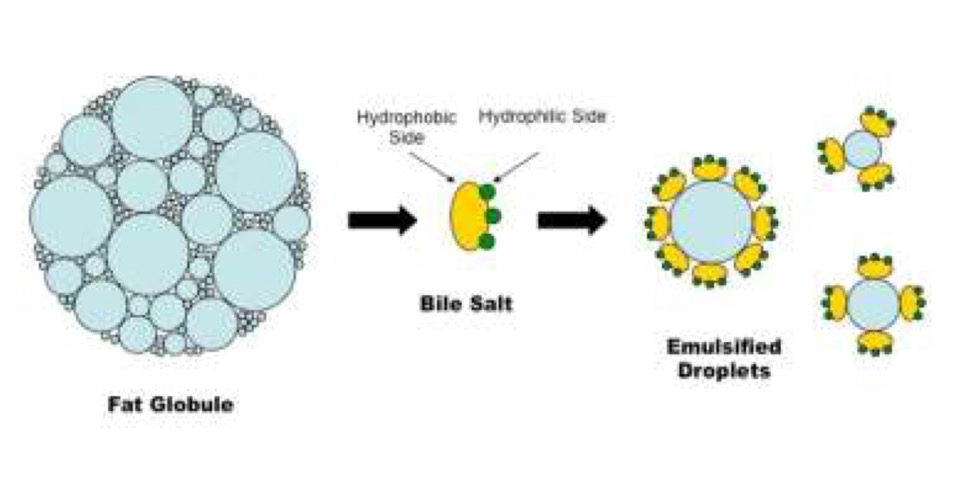
where is bile produced and stored, and how does it enter the duodenum?
produced: liver
stored: gallbladder
when food enters the duodenum, the gallbladder will contract, pushing bile into the bile duct where it will enter the duodenum
what do the small intestinal walls produce to digest indigested materials and where are they located in the intestine?
a variety of enzymes
some secreted in intestinal juice that mixes with chyme
majority are immobilized in the intestinal walls
name the 6 enzymes that are located in the intestinal walls and their functions? (what are their substrates and products)
maltase: maltose into glucose
sucrase: sucrose into glucose and fructose
lactase: lactose into glucose and galactose
nuclease: nucleic acids (DNA and RNA) into nucleotides
exopeptidase: proteins by removing one amino acid at a time
dipeptidase: dipeptides into two amino acids
what are the epithelial cells in the small intenstine?
cells that line cavities and features
create the villi that line the small intestine lumen and increase surface area
contain microvilli that increase surface area
what are the SI epithelial cell features that allow for absorption?
increased surface area due to villi and microvilli
tight junctions: connections between epithelial cells which fuse adjacent cells together at their membranes to form a seal so nutrients don’t get lost between cells
rich in mitochondria to produce ATP for active transport for absorption
pinocytotic vesicles to aide in endocytosis
how does absorption by villi work?
the epithelium that covers the villi forms a barrier to harmful substances but also must be permeable to allow for useful nutrients to pass through into villi
will absorb:
monosaccharides, amino acids, fatty acids, monoglycerides, glycerol, nitrogenous bases, mineral ions, vitamins
some harmful and some harmless but unwanted substances will be absorbed as well
what are the methods of absorption into epithelial cells
1) passive transport:
transport across a membrane that does not require energy
driven by concentration gradient
simple diffusion:
the molecules move through the membrane moving from high to low concentration
ex: lipids
facilitated diffusion:
the molecules are too large to pass through the membrane on their own
they enter the membrane via a pore or a carrier protein or protein channel
ex: amino acids and glucose
2) active transport
requires ATP energy
often moves molecules against the concentration gradient
transport proteins/protein pumps
proteins embedded in the cell membrane that require ATP to activate them
endocytosis
the plasma membrane forms a vesicle around the nutrient molecules to bring them into the cell
pinocytosis: for liquids and small molecules
phagocytosis: for larger molecules
outline triglyceride absorption
triglycerides are digested into monoglycerides and fatty acids
monoglycerides are absorbed via simple diffusion
fatty acids absorbed by facilitated diffusion
once inside epithelium cells, fatty acids combine with mono glycerides to reform triglycerides
they they form lipoprotein droplets by combining with cholesterol and being surrounded by phospholipids
lipoproteins exit epithelial cells by exocytosis and will either enter a lacteal and be carried away by lymph or a capillary and enter the blood stream
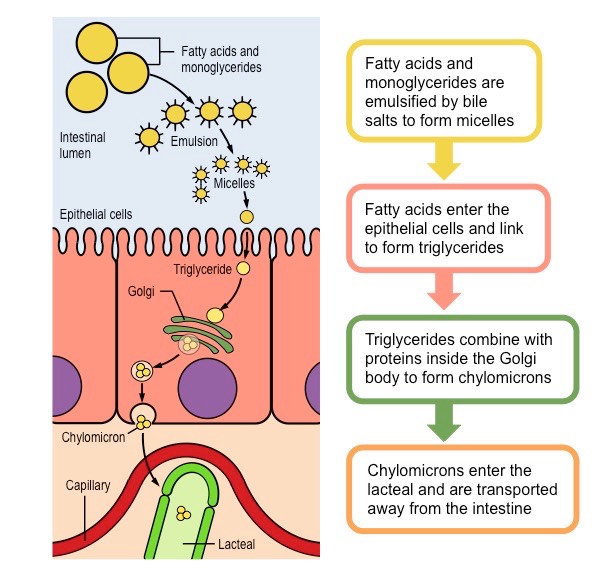
outline glucose absorption
a sodium-glucose symport will move Na+ and glucose together into the cell from the intestinal lumen
This occurs because of the sodium-potassium pump that moves Na+ out of the villus epithelial cells, resulting in a low Na+ concentration in the cell
this is considered facilitated diffusion because it moves with the Na+ concentration gradient
the glucose protein channels will move glucose into interstitial spaces inside the villi and into the capillaries
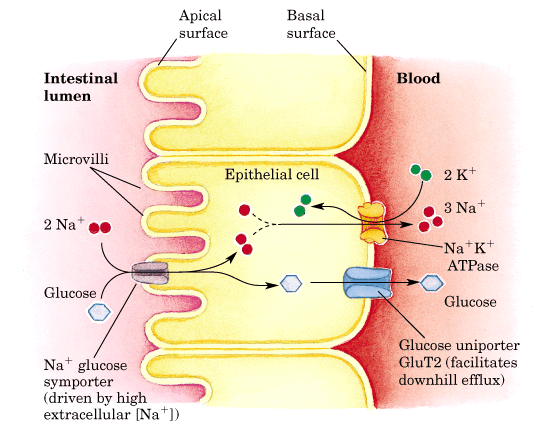
what four molecules cannot be broken down and are therefore egested in feces?
cellulose
lignin
bile pigments
bacterial and intestinal cells
why is cellulose unable to be broken down by the body?
cellulose has beta-1,4 bonds and is therefore indigestible by the body
explain the process of starch digestion
amylose breaks down the alpha-1.4 glycosidic bonds into maltose or maltotriose but cannot break down the alpha-1,6 glycosidic bonds in amylopectin
the alpha-1,6 glycosidic bonds are called dextrins
the following three enzymes are on the membrane of the microvilli and will complete digestion:
maltase: maltose to glucose
dextrinase: dextrins to glucose
glucosidase: maltotriose to glucose
what are the five roles of dietary fiber
1) increases feelings of satiety, making you feel satisfied and prevent overeating
2) prevent constipation because it draws water into the intestine and the greater the water content, the faster the movement of feces
3) fiber content in feces determines its rate of movement in the large intestine
4) slows down absorption of sugar (prevents type II diabetes)
5)increases the bulk of materials passing through the intestines
what is the function of the liver?
to produce bile which emulsifies fats in small intestine
helps regulate level of nutrients in blood and maintain homeostatic ranges
what are the two blood vessels that the liver receives blood from and what types of blood do they carry?
hepatic artery: carries oxygenated blood to liver tissues
hepatic portal vein: carries deoxygenated, nutrient rich blood from the digestive tract to the liver
both carry blood into the sinusoids of the liver
through which blood vessel does blood leave the liver?
hepatic vein which will join the inferior vena cava and bring deoxygenated blood back to the heart
what is the function of the sinusoids?
O2 rich blood from the hepatic artery and nutrient rich blood from the hepatic portal vein flow into the sinusoids of the liver
this is where the exchange of materials will occur between blood and hepatocytes
name the three components of the sinusoids and their functions
hepatocytes:
remove some things from the blood and add some
produce bile which will move in the opposite direction of blood towards the bile ducts
endothelial cells:
form the wall of sinusoids
spaces allow plasma direct contact with hepatocytes
kupffer cells:
cells that line sinusoids
ingest foreign particles and are involved in the breakdown of old erythrocytes
how does detoxification in the body occur?
liver is the main organ for this
toxins such as pesticides, medicines, food additives, and alcohol are removed from the bloodstream and broken down by hepatocytes and converted into non/less toxic substances
will take multiple blood circuits for all chemicals to be acted on by the liver because the hepatocytes cannot grab all the chemicals in one go
how is alcohol detoxified in the body and what are it’s long term effects?
hepatocytes attempt to remove alcohol from blood stream each time it passes through the liver
the breakdown of alcohol creates free radicals which can interfere with proteins, lipids, and DNA
alcohol —> acetaldehyde —> acetic acid —> carbon dioxide
long term effects:
interferes with normal liver metabolism of proteins, fats, and carbs
can lead to cirrhosis, fat accumulation, and inflammation
what four things are stored in the liver?
carbs are stored as glycogen
iron
after rbc are broken down, their iron is stored in the liver until it can be reused
vitamins but mainly:
vitamin A
vitamin D
how does the liver aide in the synthesis of plasma proteins?
plasma proteins: blood proteins produced by ER and Golgi in the hepatocytes
albumins: regulates osmotic pressure of fluids in the body and is a carrier protein
fibrinogen: involved in blood clotting
globulins: antibodies
how is the liver involved in the synthesis of cholesterol and what is it used for?
cholesterol can be ingested or made by the liver
used for:
the production of bile
production of vitamin D
production of cell membrane
production of lipid based hormones
the liver:
regulates amount of circulating lipids (including cholesterol) by:
synthesizing them as required
breaking them down
secreting them in bile
how are erythrocytes recycled?
after approx. 120 days, the cell membranes get weaker until they rupture which usually occurs in the spleen
spleen:
when rbc ruptures, they release millions of hemoglobin into the bloodstream and eventually pass through the liver where they are absorbed by kupffer cells via phagocytosis