Chemistry Final Exam I
 Call Kai
 Learn
Learn Practice Test
 Spaced Repetition
 Match
Match Flashcards
 Knowt Play
1/25

There's no tags or description
Looks like no tags are added yet.
Name | Mastery | Learn | Test | Matching | Spaced | Call with Kai | Chat |
|---|
No analytics yet
Send a link to your students to track their progress
26 Terms
In a closed container, when the rate of condensation equals the rate of vaporization, the system is:
A. Static and no molecules move between phases
B. At dynamic equilibrium
C. Experiencing net vaporization
D. Experiencing net condensation
B
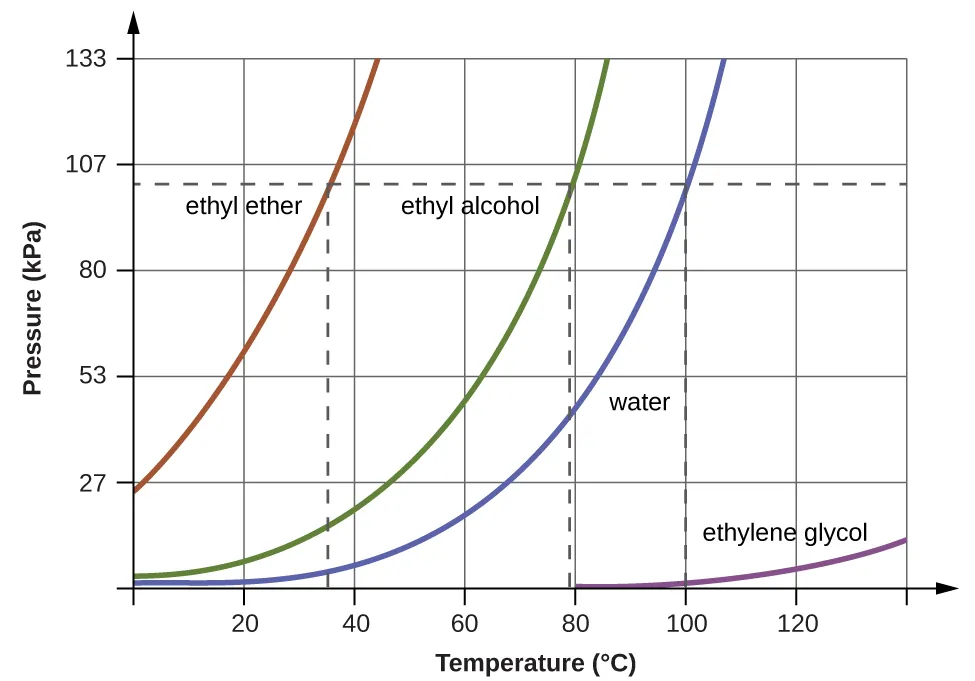
What happens when the vapor pressure of a liquid equals the external atmospheric pressure?
A. The liquid evaporates more slowly
B. The liquid reaches its boiling point
C. The liquid condenses
D. The liquid freezes
B
How much heat is required to vaporize 200.0 g of water at 100 °C if its enthalpy of vaporization is 40.7 kJ/mol?
451.8 kJ
Why can the standard free energy change (ΔG°) for a reaction be calculated from the free energies of formation of reactants and products?
A) Because ΔG° depends on the pathway of the reaction.
B) Because ΔG is a state function and depends only on the initial and final states of the system.
C) Because ΔG° values are always positive.
D) Because ΔG° for elements in their standard states is always negative.
B
When a reaction has a value of ΔG = 0, which statement best describes what is happening in the system?
A. The reaction releases the maximum amount of free energy to do useful work
B. The forward and reverse reactions occur at equal rates, resulting in equilibrium
C. The forward reaction occurs but the reverse reaction does not
D. The reaction has stopped completely and no molecular motion occurs
B
Why is carbon dioxide forced into soft drinks at high pressure during carbonation?
A. To increase the volume of the headspace above the liquid
B. To shift the dissolution equilibrium toward more dissolved CO2
C. To prevent hydrolysis of CO2 in the beverage
D. To lower the concentration of dissolved CO2
B
Which of the following is a major source of sulfur oxides in the atmosphere?
A) Photosynthesis in plants
B) Volcanic activity and burning fossil fuels
C) Evaporation of ocean water
D) Cellular respiration in animals
B
A salt solution will be neutral if:
A) Both ions are strong acids
B) Both ions are strong bases
C) Neither ion reacts with water
D) The salt is insoluble
C
The solubility product of silver iodide, AgI, is Ksp= 1.5 × 10⁻¹⁶. What is the molar solubility of AgI in pure water?
A) 1.2 × 10⁻⁸ M
B) 1.5 × 10⁻⁸ M
C) 3.0 × 10⁻⁸ M
D)1.0 × 10⁻¹⁶ M
A
What drives the flow of electrons in a galvanic cell?
A. The movement of ions in the salt bridge alone
B. The physical contact of the two solutions
C. An external battery connected to the cell
D. A spontaneous redox reaction between the anode and cathode species
D
What does a higher measured cell potential (voltage) indicate about a redox reaction?
A. The electrodes are closer together
B. The reaction is more spontaneous
C. The reaction is slower
D. The reaction does not involve electron transfer
B
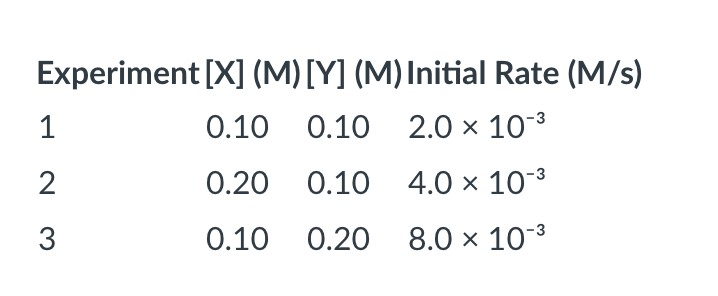
For the reaction:
X+ Y → Z
What is the order with respect to Y?
2
For the reaction
N2 (g) + 3H2 (g) ⇌ 2NH3 (g)
what is the primary industrial purpose of this reaction?
A. To produce hydrogen gas
B. To manufacture ammonia
C. To decrease atmospheric nitrogen
D. To produce oxygen for industrial use
B
Which of the following statements best describes radioactive decay?
A. Radioactive decay always produces a completely stable nucleus in a single step.
B. Radioactive decay requires an external source of energy to begin.
C. Radioactive decay is a spontaneous process in which an unstable nucleus transforms into a more stable nucleus.
D. Radioactive decay occurs only when a nucleus has equal numbers of protons and neutrons.
C
Which of the following statements best explains why nuclei with “magic numbers” of protons or neutrons (2, 8, 20, 28, 50, 82, 126) are especially stable?
A. They always have atomic numbers greater than 83.
B. They do not undergo any type of radioactive decay under any conditions.
C. They contain equal numbers of protons and neutrons.
D. They have completely filled nuclear shells, analogous to filled electron shells in noble gases.
D
Which functional group defines an aldehyde?
-CHO
Why is life on Earth often described as “carbon-based”?
A. Carbon is the only element in living things
B. All living things are formed mostly of carbon compounds
C. Carbon is the heaviest element in organisms
D. Carbon is only found in synthetic compounds
b
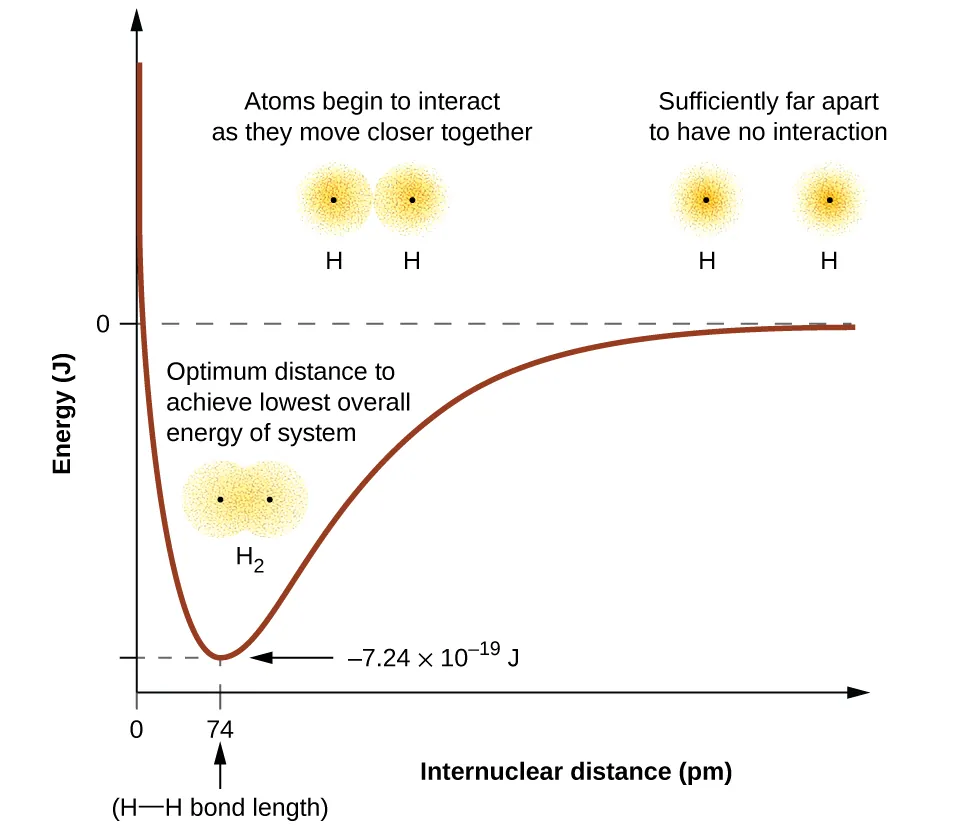
Which of the following statements about covalent bond formation is correct?
A. Bond length is irrelevant to the stability of the molecule.
B. Atoms are most stable when their nuclei are as close together as possible.
C. The bond length corresponds to the distance where the energy of the system is lowest.
D. All covalent bonds have the same bond length, regardless of the atoms involved.
C
Balance the equation
H2 + O2 → H2O
A. H₂ + O₂ ⟶ H₂O
B. 2H₂ + O₂ ⟶ 2H₂O
C. H₂ + 2O₂ ⟶ 2H₂O
D. 2H₂ + 2O₂ ⟶ H₂O
B
Determine the empirical formula for this compound:
acetic acid, C2H4O2
A. CH2O
B. 2C2H2O
C. CH4O
D. 2CH4O2
A
Why is the symbol for hydrogen written as H, but hydrogen gas written as H₂?
A. Hydrogen gas contains no atoms
B. Hydrogen atoms always exist alone
C. Hydrogen molecules contain two hydrogen atoms bonded together
D. The symbol H₂ represents two different elements
C
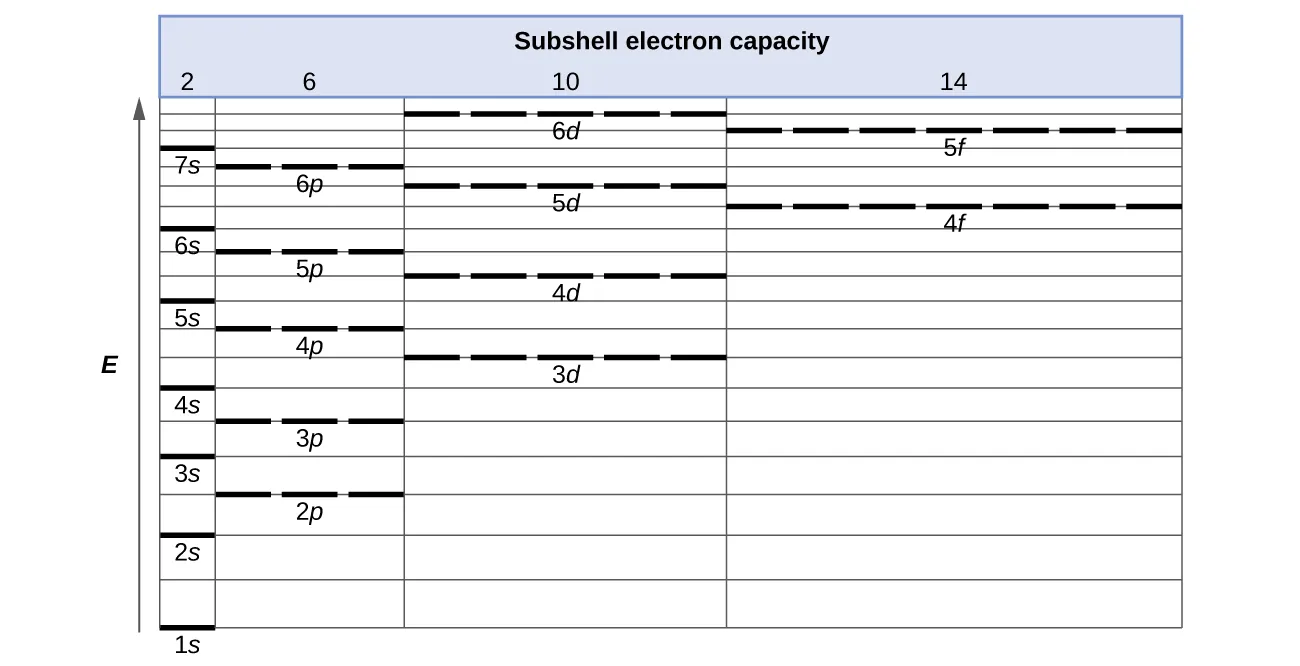
In larger atoms, which statement is true about orbital energies?
A. Orbital energy only depends on , not .
B. The 2p orbital is higher in energy than the 3p orbital.
C. The 3d orbital is higher in energy than the 4s orbital.
D. The 3d orbital is lower in energy than the 4s orbital.
C
The formula for the density of a gas is:
A) d=v/m
B) d=P/RT
C) d=M/V
D) d=N/V
c
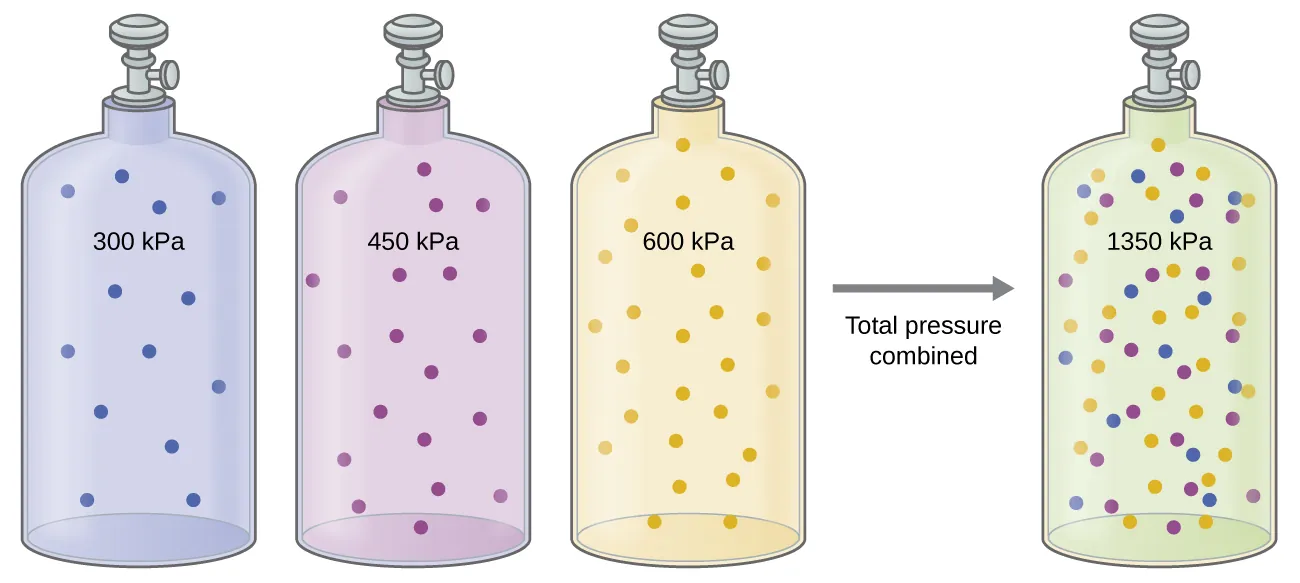
Three equal-volume cylinders contain gases at pressures of 300 kPa, 450 kPa, and 600 kPa. If the gases are combined into a single cylinder of the same total volume, what is the total pressure of the gas mixture?
1350 kPa
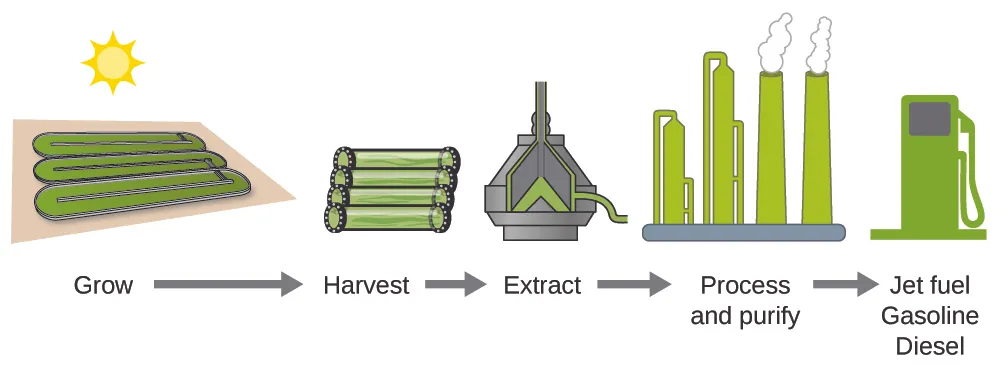
Which of the following correctly describes the process used to produce algal fuel?
A) Extract the fuel compounds from algae, grow the algae using sunlight and CO₂, purify, and then distribute.
B) Grow the algae using sunlight and CO₂, harvest the algae, extract fuel compounds, process as needed, purify, and distribute.
C) Grow algae in the dark, extract fuel compounds, perform transesterification, and then burn directly.
D) Harvest algae, distribute immediately, and then extract fuel compounds
b
Which statement correctly relates the calorie, the Calorie, and the joule as units of energy?
A. A calorie and a joule are defined identically, but the Calorie is a pressure-dependent unit.
B. A Calorie (food calorie) is equal to 1000 calories, and one calorie is defined as exactly 4.184 joules.
C. A joule is the energy required to raise 1 g of water by 1 K, while a calorie equals 1 N·m.
D. A kilojoule is defined based on water’s temperature change and varies with atmospheric pressure.
b