AMACE BT1-Nails (copy)
 Call Kai
 Learn
Learn Practice Test
 Spaced Repetition
 Match
Match Flashcards
 Knowt Play
1/94

There's no tags or description
Looks like no tags are added yet.
Name | Mastery | Learn | Test | Matching | Spaced | Call with Kai | Chat |
|---|
No analytics yet
Send a link to your students to track their progress
95 Terms
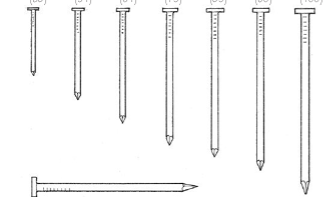
Nails
are straight, slender pieces of metal having one end
pointed and the other enlarged and flattened for hammering
into wood or other building materials as a fastener.
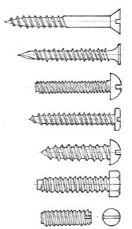
Screws
are metal fasteners having tapered, helically threaded
shanks and slotted heads, designed to be driven into wood
or the like by turning. Because of their
threaded shafts, they have greater holding power than nails,
and are more easily removable. The more threads they have per
inch, the greater their gripping strength. These are classified
by use, type of head, material, length, and diameter.
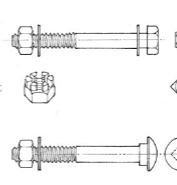
Bolts
are threaded metal pins or rods, usually having a head at
one end, designed to be inserted through holes in assembled
parts and secured by a mating nut. Carriage bolts are used
where the head may be inaccessible during tightening. Lag bolts
or screws are used in areas inaccessible to the placement of
a nut or where an exceptionallyl ong bolt would be needed to
penetrate a joint fully.
Adhesives
are used to secure the surfaces of two materials together. Numerous
types of adhesives are available, many of them being tailor-made for use with specific
materials and under specified conditions. They may be supplied in the form of a solid,
liquid, powder, or film; some require a catalyst to activate their adhesive properties.
Always follow the manufacturer’s recommendations in the use of it.
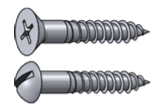
Wood Screws
Screws with a smooth shank
and tapered point for use in
wood. Abbreviated WS.
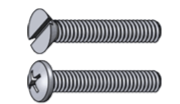
Machine Screws
Screws with threads for use
with a nut or tapped hole.
Abbreviated MS.
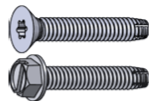
Thread Cutting
Machine Screws
Machine screws with a thread
cutting (self tapping) point.
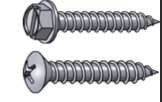
Sheet Metal Screws
Fully threaded screws with a
point for use in sheet metal.
Abbreviated SMS.
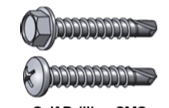
Self Drilling SMS
A sheet metal screw with a
self drilling point.
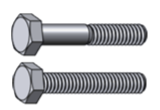
Hex Bolts
Bolts with a hexagonal head
with threads for use with a
nut or tapped hole. Abbrevi-
ated HHMB or HXBT.
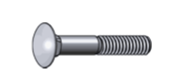
Carriage Bolts
Bolts with a smooth rounded
head that has a small square
section underneath.
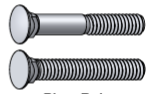
Plow Bolts
Similar to carriage bolts but
used for attaching the cutting
edge of a plow to the plow
blade.
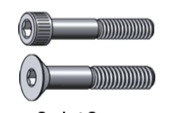
Socket Screws
also known
as Allen Head, are fastened
with a hex Allen wrench.
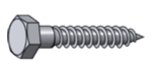
Lag Bolts
Bolts with a wood thread and
pointed tip.
Abbreviated Lag.
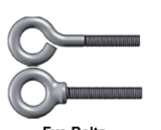
Eye Bolts
A bolt with a circular ring on
the head end. Used for
attaching a rope or chain.
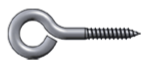
Eye Lags
with
wood threads instead of
machine thread.
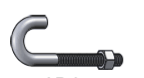
J-Bolts
are used for
tie-downs or as an open eye
bolt.
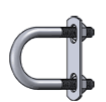
U-Bolts
for attaching
to pipe or other round
surfaces. Also available with
a square bend.
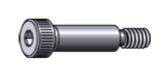
Shoulder Bolts
are used to
create a pivot point.
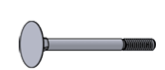
Elevator Bolts
are often used
in conveyor systems. They
have a large, flat head.
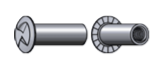
Sex Bolts
have a female
thread and are used for
through bolting applications
where a head is desired on
both sides of the joint.
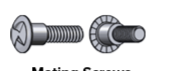
Mating Screws
have a
shoulder that matches the
diameter of the sex bolts
they are used with.
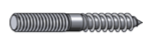
Hanger Bolts
have wood
thread on one end and
machine thread on the other
end
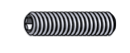
Set Screws
Machine screws with no head
for screwing all the way into
threaded holes.
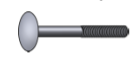
Timber Bolts
Machine threaded fasteners
with a wide domed head. The
head has fins underneath
that prevent the bolt from
spinning during installation.
Typically used in wood.
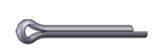
Cotter Pins
pins have two
tines which are bent apart to
hold them in place.
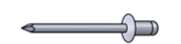
Rivets
Used to join sheets of metal.
During installation this
body is deformed to perma-
nently lock in place. it can be installed without
access to the back side of
the material.
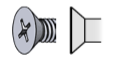
Flat
A countersunk head with a
flat top.
Abbreviated FH
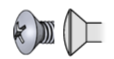
Oval
A countersunk head with a
rounded top.
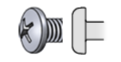
Pan
A slightly rounded head with
short vertical sides.
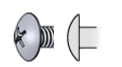
Truss
An extra wide head with a
rounded top.
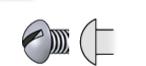
Round
A domed head.
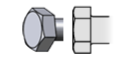
Hex
A hexagonal head
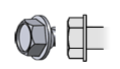
Hex Washer
A hex head with built in
washer.
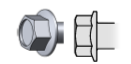
Hex Flange
A hex head with built in
flange.
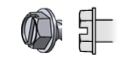
Slotted Hex Washer
A hex head with built in
washer and a slot.
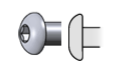
Button
A low-profile rounded head
using a socket drive.
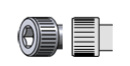
Socket Cap
A small cylindrical head using
a socket drive.
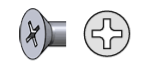
Phillips and Frearson
An X-shaped drive.
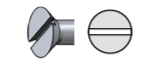
Slotted
A slot in the head.
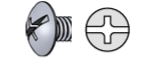
Combination
A combination of slotted and
Phillips drives.
Socket, Hex or Allen
A hexagonal hole for use
with an Allen wrench.
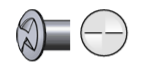
One Way
Installs with a normal slotted
driver but cannot be
removed without special
tools.
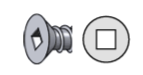
Square
Also known as Robertson
drive.
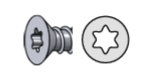
Star
A six-pointed star pattern,
specifically designed to
prevent cam-out and stripped
heads.

Flat
A flat washer, used to
distribute load.

Fender
An oversize flat washer used
to further distribute load
especially on soft materials.

Finishing
A washer used to obtain a
‘finished’ look. Usually used
with oval head screws.

Split Lock
The most common style of
washer used to prevent nuts
and bolts from backing out.

External Tooth Lock
A washer with external
‘teeth’. Used to prevent nuts
and bolts from backing out.
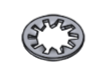
Internal Tooth Lock
A washer with internal ‘teeth’.
Used to prevent nuts and
bolts from backing out.
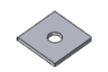
Square
A square shaped washer.
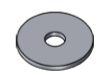
Dock
Dock washers have a larger
outside diameter and are
thicker than standard.
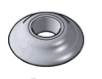
Ogee
Thick, large diameter, cast
iron washers with a curved or
sculpted appearance.
Typically used in dock and
wood construction.
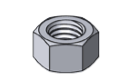
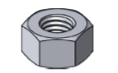
Hex
A six sided nut. Also referred
to as a Finished Hex Nut.
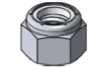
Heavy Hex
A heavier pattern version of a
standard hex nut.
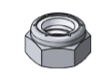
Nylon Insert Lock
A nut with a nylon insert to
prevent backing off. Also
referred to as a Nylock.

Jam
A hex nut with a reduced
height.
Nylon Insert Jam Lock
A nylock nut with a reduced
height.
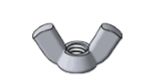
Wing
A nut with ‘wings’ for hand
tightening.
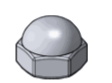
Cap
A nut with a domed top over
the end of the fastener.
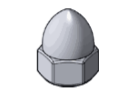
Acorn
have a high crown
type of cap nut, used for
appearance.
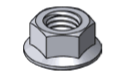
Flange
A nut with a built in washer
like flange.
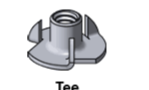
Tee
A nut designed to be driven
into wood to create a
threaded hole.
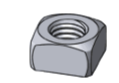
Square
A four sided nut.
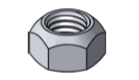
Prevailing Torque Lock
A non-reversible lock nut
used for high temperature
applications.

K-Lock or Kep
A nut with an attached
free-spinning external tooth
lock washer.
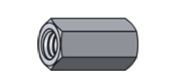
Coupling
are long nuts
used to connect pieces of
threaded rod or other male
fasteners.

Slotted
are used in
conjunction with a cotter pin
on drilled shank fasteners to
prevent loosening.

Castle
are used in
conjunction with a cotter pin
on drilled shank fasteners to
prevent loosening.
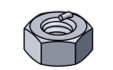
Pin Lock
A nut that does not require
an high installation torque
and can be installed and
removed without thread
damage.
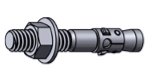
Stud Anchors
A.k.a. Wedge Anchors. One
piece expansion bolts for
heavy duty fastening into
stone or solid concrete.
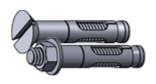
Sleeve Anchors
Heavy duty masonry anchors.
Does not require a solid base
material for installation.
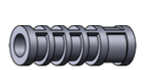
Lag Shields
Medium dury anchors for use
in concrete, brick or mortar.
Use with a lag bolt.
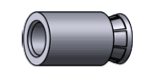
Machine Screw Anchors
A two-piece machine thread
anchor for use in stone, brick,
or concrete.
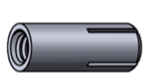
Drop-in Anchors
A heavy duty machine thread
anchor for concrete or stone.
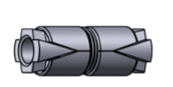
Double Expansion Sleeves
Expansion anchor for
masonry that ensures contact
along the length of the hole.
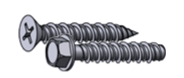
Concrete Screws
Used in concrete, brick or
block. A quick and easy way
to fasten in light to medium
duty applications
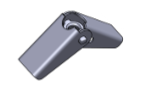
Spring Toggle Wings
Non-removable fasteners
that expand behind the
material, e.g. inside a wall, for
a secure grip.
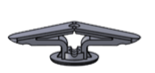
Plastic Toggle
When these anchors are
driven in they expand inside
the hole for a secure grip.
Drill hole the same size as
the anchor. Non-removable.
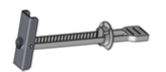
Kaptoggle®
A non removable anchor
commonly used for hollow
spaces such as drywall and
masonry block.
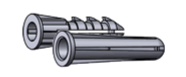
Conical Anchors
Plastic anchors used with
sheet metal screws. Can be
used in most materials.
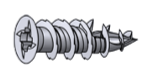
Self Drilling Drywall
Anchors
Quick-install plastic anchors
used in drywall with sheet
metal screws.
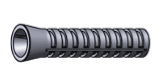
Wood Screw Anchors
This anchor is made of lead
and can be used with wood
screws or sheet metal
screws.
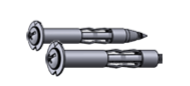
Hollow Wall Anchors
A.k.a. Molly Bolts. Used for
light duty anchoring in
drywall or other hollow walls.
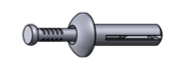
Nail Drive Anchors
Non removable anchors that
expand inside the hole when
the nail like pin is driven.
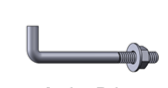
Anchor Bolts
L shaped, machine threaded
anchors. Typically embedded
in concrete when it is poured.
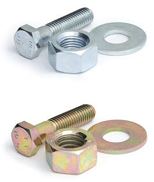
Zinc-plated steel
is a low carbon steel for
general use. Relatively
inexpensive, providing
moderate corrosion
resistance suitable for
indoors or otherwise
dry conditions. Color is
either a blue-ish tint or
yellow depending on the exact process.
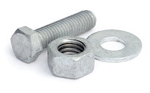
Hot-dipped galvanized
steel
has a thicker zinc
coating for better
corrosion resistance,
making it suitable for
outdoor use. Because
of the thick plating,
only galvanized nuts and washers will fit
galvanized bolts. The coating typically has a
rough, dull grey finish.
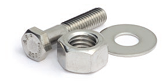
Stainless steel
offers
good corrosion
resistance, making it
suitable for outdoor
use and marine
applications, but is
more expensive than zinc plated.
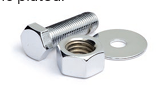
Chrome and nickel
plated steel
are
smooth and polished
for appearance. The
plating offers moderate corrosion resistance.
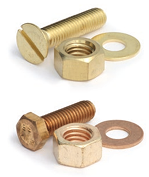
Brass and bronze
are
copper alloys with good
corrosion resistance.
More expensive than
steel, these materials
are typically used for
decorative applications.
Colors can vary
significantly.
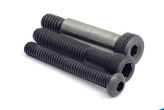
Alloy steel
is highly
hardened and usually
black oxide and/or oil
coated, offering little
corrosion resistance.
Fastener length
usually measured from
where the material is
assumed to be to the
end of the fastener.
countersunk
fasteners
are measured
overall and non-counter-
sunk fasteners are
measured from under the
head.