Vaping
 Studied by 1 person
 Call Kai
 Learn
Learn Practice Test
 Spaced Repetition
 Match
Match Flashcards
 Knowt Play
1/25

There's no tags or description
Looks like no tags are added yet.
Name | Mastery | Learn | Test | Matching | Spaced |
|---|
No study sessions yet.
26 Terms
What is vaping?
The action of using a battery-operated device which is used to heat up a liquid where a vapor is produced then inhaled
Other names for vapes
Electronic cigarettes (e-cigarettes)
Pens
Pods
Juul
E-hookah
Electronic Nicotine Delivery Systems (ENDS)
History of Vaping
1930: Patent granted to Joseph Robinson
1963: Herber A.Gilbert filed for a patent a device similar to an e-cigarette
2003: Hon Lik invented the first commercially successful e-cigarette
2006: E-cigarettes introduced to America / Europe
Vaping Devices
Disposable vapes
Pod style vapes
Refillable vapes
Can look like cigarettes, cigars, pipes, pens, USB memory sticks, highlighters and other everyday items
Vaping devices have evolved over time
Vaping devices
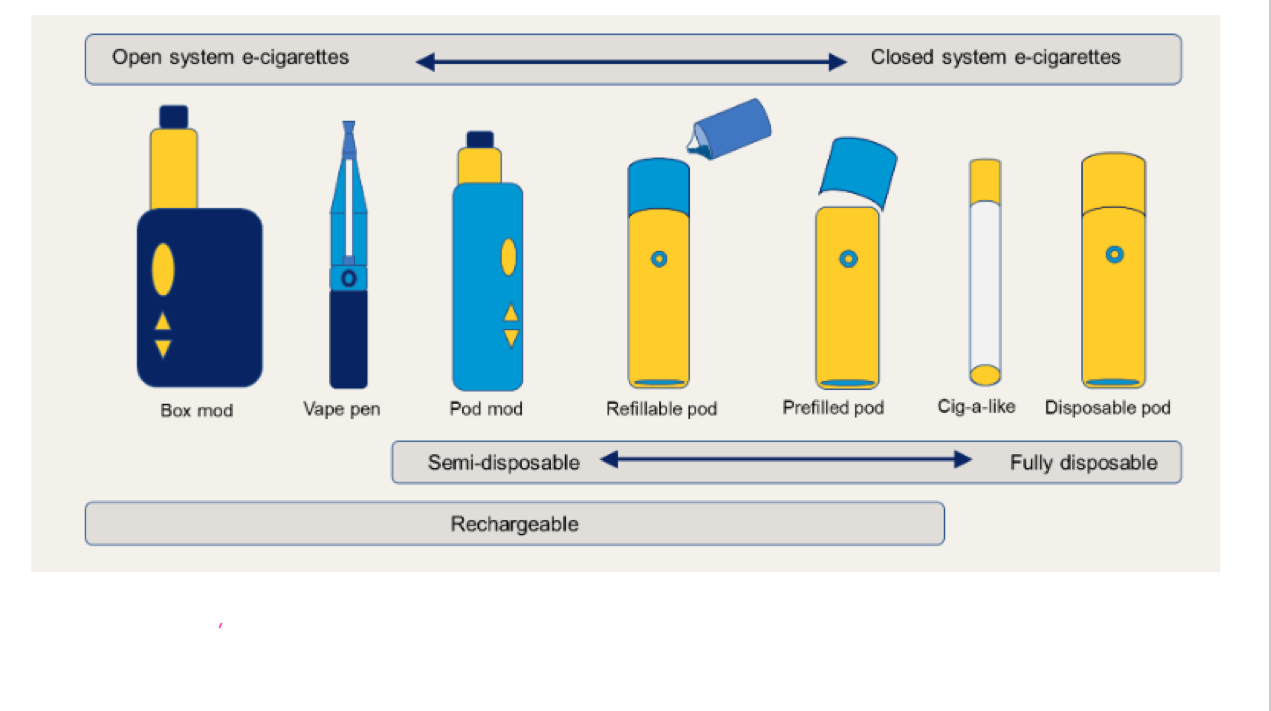
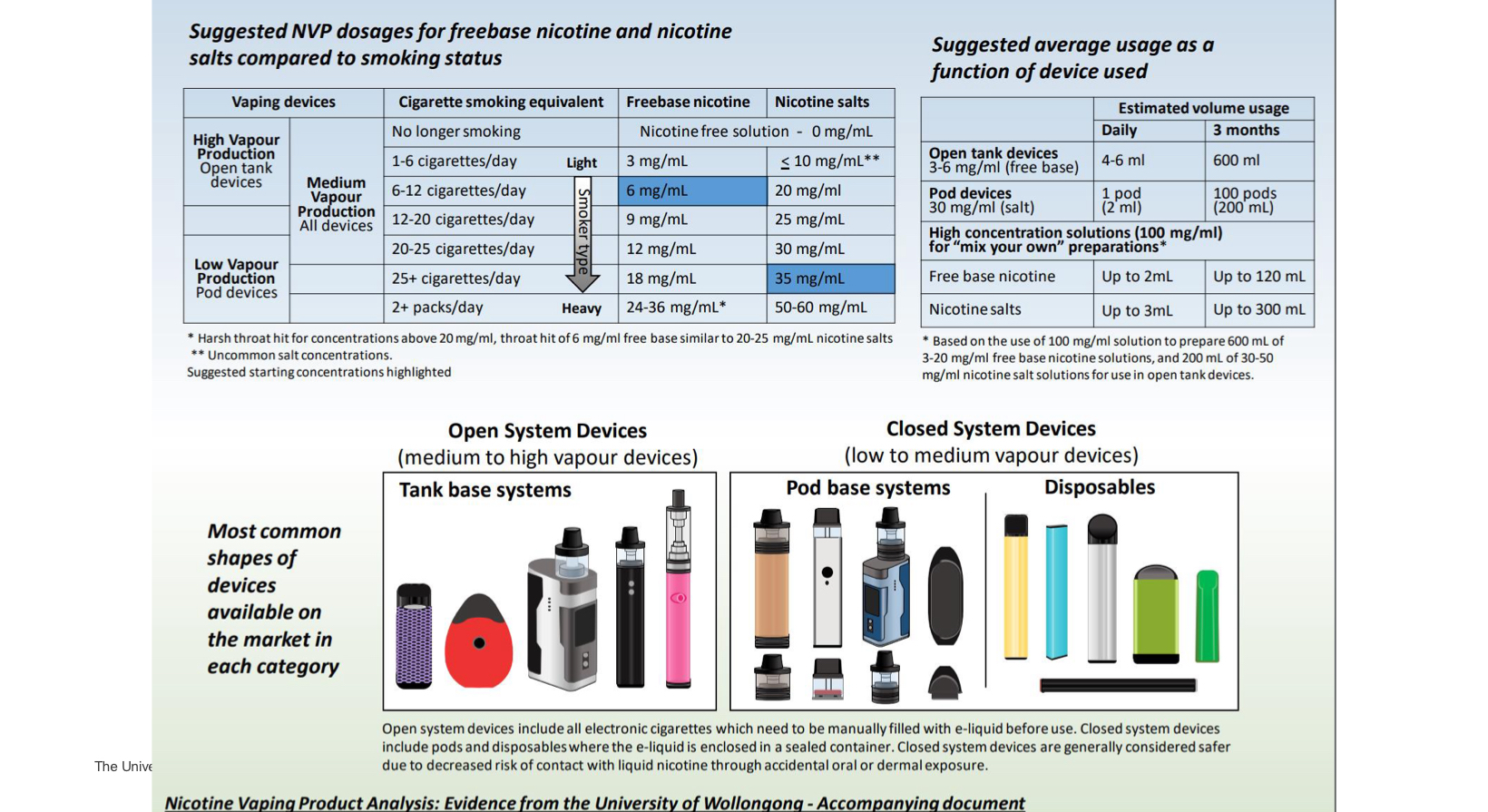
Open system: Users manually refill the e-liquid, users can change the nicotine strengths. Higher risk of misuse
Closed system: Used pre-filled cartridge that are not refillable
Disposable: Throw away after use
Rechargeable vapes: Contain a built-in battery that can be recharged via USB
Vaping devices
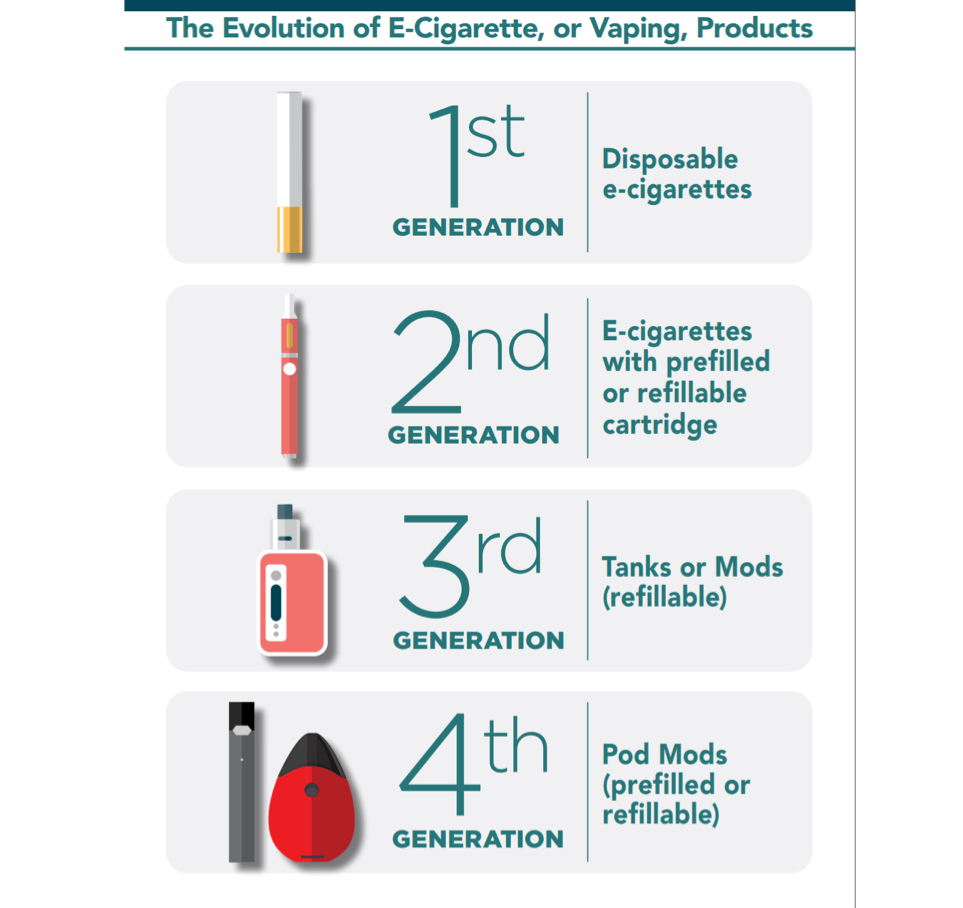
The evolution of E-cigarette
1st generation: Appearance: Resemble traditional cigarettes in shapes and size. Closed system with pre-filled cartridge, non-rechargeable
2nd generation: Appearance: Pen-like, larger than cigarlike. Typically, open system, refillable tanks. Battery rechargeable with moderate capacity
3rd generation: Appearance: Bulky, box-shaped, customizable. System: Advanced open system. Battery: High capacity, often removable batteries. High vapor production, intense flavor
4th generation: Appearance: small, sleek compact. Mostly closed system (pre-filled pods), some open pods. Battery: Rechargeable. Has taste
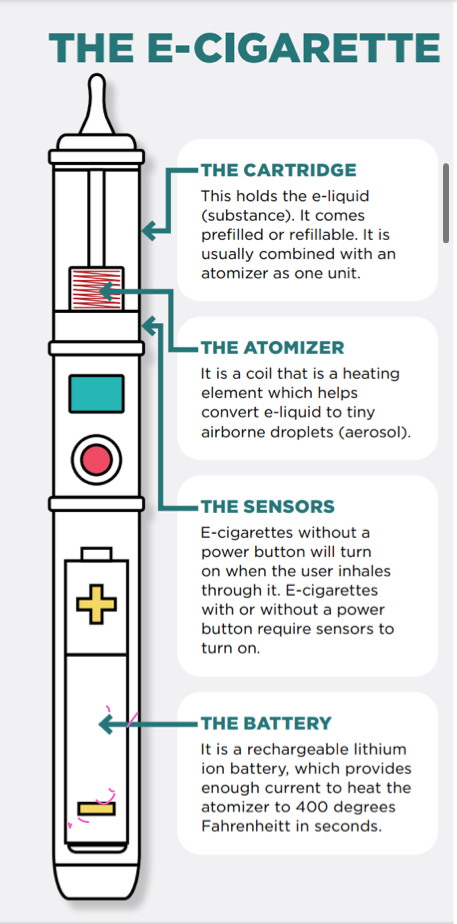
The anatomy of a Vaping Device
Most vaping devices have FOUR different components:
The cartridge: contains the liquid solution
The Atomizer: The heating source
The power Source: The battery
The mouthpiece: inhalation of vapor
Air —> sensor —> nicotine burns—> liquid vaporised
Main ingredients
Propylene glycol
Vegetable Glycerin
Glycerol
Flavorings
Nicotine
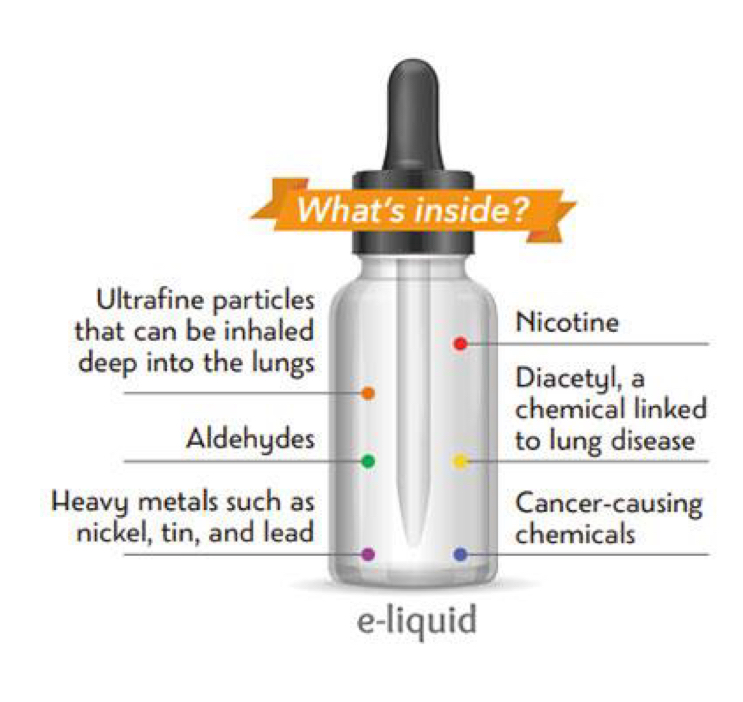
What’s really in a Vape E-liquid
Carcinogens: heavy metals
Volatile organic compounds: acetone
Inaccurate labelling.
Nicotine Free? Some do have nicotine in them
Epidemiology-Globally
E-cigarettes have been increasingly popular in recent years
Increase prevalence in America, Canada and the United Kingdom
Systematic review found that e-cigarette usage among American teenagers increased over 19% from 2011 to 2018
Lower prevalence in Asian countries
Estimated 35 million people are using ENDS
E-cigarettes made $15.7 billion worth of sales in 2018
Projected to more than double to $40 billion by end of 2023
Epidemiology- In Australia
Increasing in Australia
11% of the Australian population over 14 years has vaped (2019)
More than one in three 16-24 years old have vaped
NSW has the highest number of teenager-to-adolescent vapers
Lower usage of vapes among older age groups
Males are more likely to vape than females
The proportion of vapers among smokers and non-smokers has increased across all age groups except for the oldest
Vaping amongst Australian Teenagers
Widespread in Australian High schools
Becoming increasingly common in Australin Primary Schools
Usage is higher with age
Boys are more likely than girls to vape
Link to smoking cigarettes?
Regulation
Ban the selling of electronic cigarettes
Restrictions on the sale of electronic cigarettes
Amount of nicotine / other content of electronic cigarettes limited
Health warnings on packaging
Taxes on electronic cigarettes
Advertising and promoting restrictions
Regulation-Globally
The European Union (EU), has a nicotine concentration threshold of 20mg/mL
China limits nicotine concentration to a maximum of 200mg per e-cigarette
Denmark and Israel require plain packaging of e-cigarettes
The EU requires health warnings on products that contain Nicotine
Flavorings have been banned in Canada, Finland and the Netherland
Regulation - In Australia
June 2020: Crackdown on Vaping
October 1st, 2021: Prescription needed for purchase/importation of nicotine vaping products
November 2022: Therapeutic Goods Administration (TGA) to run a public consultation process on regulation of nicotine vaping products
Regulation in Australia
May 2nd, 2023: Stronger regulation/enforcement on e-cigarettes ‘including new controls on their importation, contents and packaging’
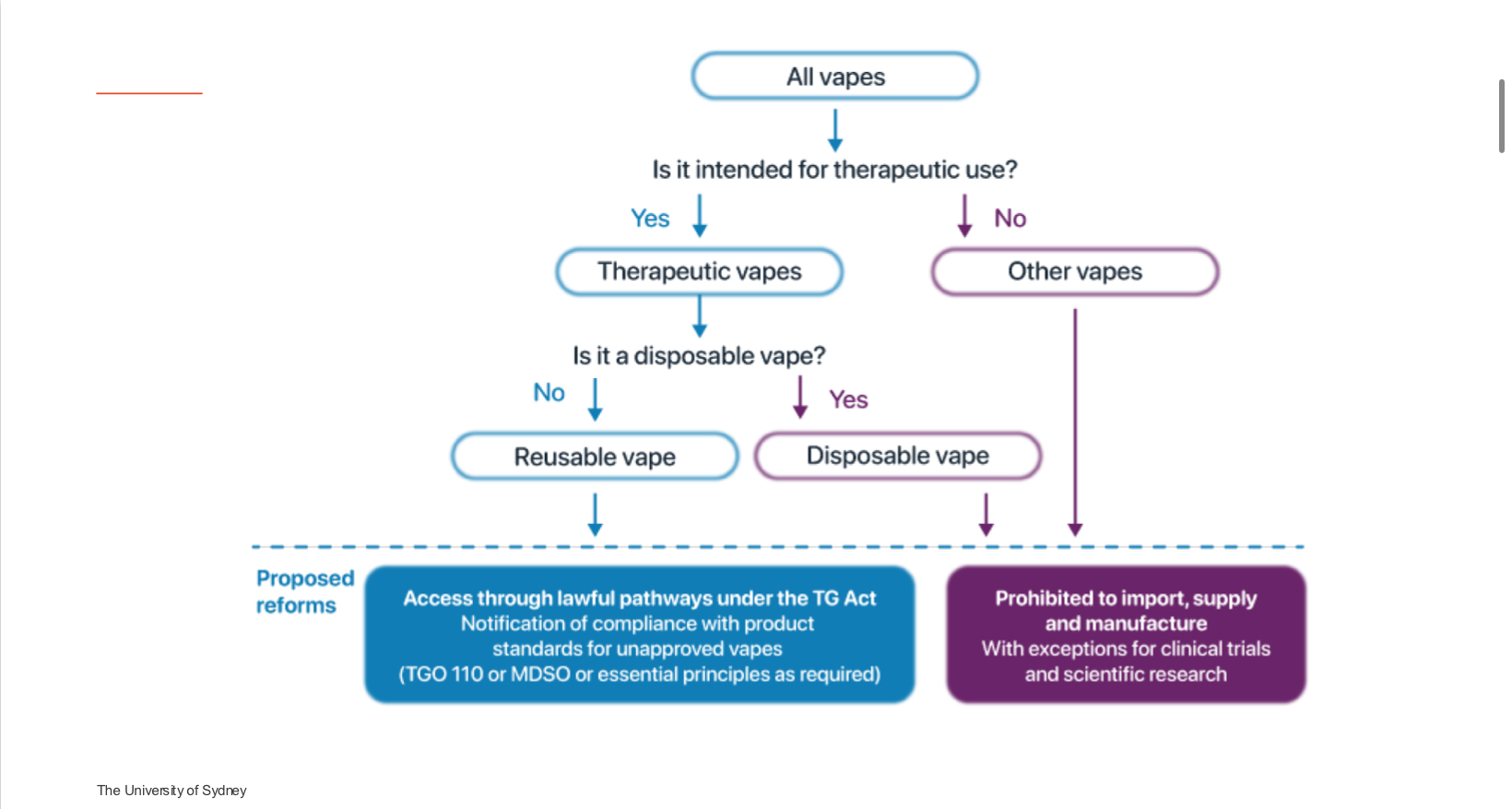
Banning imports of non-prescription vaping products
Authorization for all GPs to provide prescriptions for patients to obtain vapes
Vaping products to only be available in pharmacies
Pharmaceutical-style packaging with reduced flavors, colors and nicotine volumes
Ban on single-use disposable vapes
Investment in education and support programs encourages people to quit
January 1st, 2024: Imported disposable vapes BANNED
March 1st, 2024: Imported non-therapeutic vapes BANNED
Mid 2024 changes
Offence to commercially supply vapes
Enhanced requirement for e-liquid/device components
Minimum quality and safety standard for therapeutic vapes
New Regulation in Australia
March 1st, 2025: Vapes meeting the updated products standards can be imported or manufactured in Australia
July 1st, 2025: Vapes meeting the updated products standards can be lawfully supplied in Australia
Summary of Updated Product Standards
New requirements for device labelling/instructions for use
Plain design/Plain packaging
Restrictions on container volume and product names
Regulation in NSW
The smoke-free Environment Act 2000 and the Passenger Transport (General) Regulation 2017 prohibit people from using electronic cigarettes in smoke-free areas
Under the NSW Public Health (Tobacco) Act 2008, it is illegal to sell e-cigarettes or e-cigarettes accessories to a person under the Age of 18 years of age.
It is illegal to display, advertise or promote e-cigarettes
E-cigarettes that do not contain nicotine are legal in NSW. Adults can buy and use e-cigarettes that do not contain nicotine
E-cigarettes and e-liquids containing nicotine are a prescription only medicine
It is illegal for retailers (other than pharmacies) to sell e-cigarettes or e-liquids that contain nicotine, including online sales
Vapes purchase
Nicotine
A stimulant drug
Highly addictive
Rapid onset of action
Nicotine dependence
Nicotine withdrawal: mental and physical chnages
Nicotine in Youth
Harms the developing adolescent brain
Memory, Learning and Attention
Last cognitive and behavioral impairments
Brain synapses affected
Menal health is worsened
Nicotine- Cigarettes vs. Vapes
Cigarettes:
Has between 8-20 mg of nicotine
Only 1- 2 mg is actually absorbed by the smoker
A pack of 20 cigarettes has about 22-36 mg
Vapes
Comes in a range of volumes and concentrations
Dependent on vaping device
How many puffs a day
Nicotine concentration cigarettes vs vape
Nicotine content comparable?
Nicotine