American Arts/Identities Unit 1 Test (16 Objects)

0.0(0)
Studied by 0 people
call kaiCall Kai
Locked
learnLearn
examPractice Test
spaced repetitionSpaced Repetition
heart puzzleMatch
flashcardsFlashcards
GameKnowt Play
Card Sorting

1/15

encourage image

There's no tags or description

Looks like no tags are added yet.

Last updated 7:21 PM on 9/15/26
Name
Mastery
Learn
Test
Matching
Spaced
Call with Kai
Chat

No analytics yet

Send a link to your students to track their progress

16 Terms
1
New cards
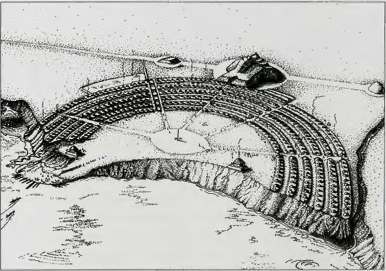
<p><strong>Description</strong>:</p><ul><li><p><strong>6 circular sections of Earth</strong> are piled up by rocks and oriented to the sky toward the spiritual realm. Included large temple mounds and effigy mounds (large animals like birds, seen as sky gods) </p></li><li><p>Used for <strong>public festivals and ceremonies</strong> (has center stage for performances)</p></li><li><p>Large workforce included <strong>stone making</strong>, in which they<strong> traded their stones for other resources such as copper, flint, and plummets</strong> (stone weights called hematite used for fishing nets, survived due to climate)</p></li></ul><p>(Eastern Woodlands)</p>

Description:

  • 6 circular sections of Earth are piled up by rocks and oriented to the sky toward the spiritual realm. Included large temple mounds and effigy mounds (large animals like birds, seen as sky gods)

  • Used for public festivals and ceremonies (has center stage for performances)

  • Large workforce included stone making, in which they traded their stones for other resources such as copper, flint, and plummets (stone weights called hematite used for fishing nets, survived due to climate)

(Eastern Woodlands)

Name: Poverty Point earthworks

Date/Decade: 1500-700 BCE
2
New cards
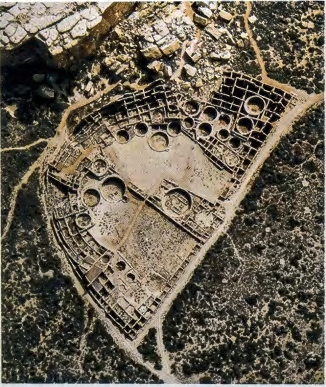
<p><strong>Description</strong>: </p><ul><li><p>Apart of a <strong>large apartment compound </strong>with large rooms made of horizontal sandstone blocks from nearby cliffs and floor beams made of wood from many trees.</p></li><li><p>The “<strong>Great kiva</strong>” was a building oriented to the sky (<strong>astronomical </strong>and spiritual purposes, <strong>sun </strong>important) using cardinal directions and was used for <strong>ritual ceremonies</strong> with ritual performers in the center. Holes signified humans crawling out of the underworld, birthed into the world</p></li><li><p><strong>Farmers harvested </strong>corn, beans, and squash from arid land, depending on seasonal changes <strong>connection to spiritual world for rain</strong></p></li></ul><p>(Southwest)</p>

Description:

  • Apart of a large apartment compound with large rooms made of horizontal sandstone blocks from nearby cliffs and floor beams made of wood from many trees.

  • The “Great kiva” was a building oriented to the sky (astronomical and spiritual purposes, sun important) using cardinal directions and was used for ritual ceremonies with ritual performers in the center. Holes signified humans crawling out of the underworld, birthed into the world

  • Farmers harvested corn, beans, and squash from arid land, depending on seasonal changes connection to spiritual world for rain

(Southwest)

Name: Pueblo Bonito, Chaco Canyon, New Mexico

Date/Decade: 850-1150 CE
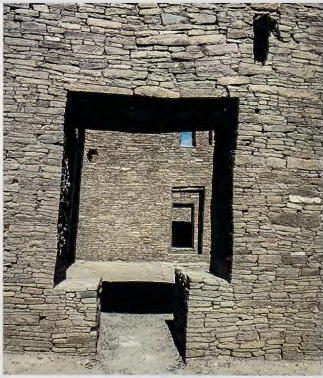
<p><strong>Name</strong>: Pueblo Bonito, Chaco Canyon, New Mexico</p><p><strong>Date/Decade</strong>: 850-1150 CE</p>
3
New cards
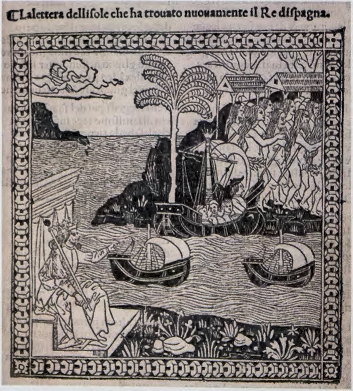
<p><strong>Description</strong>: </p><ul><li><p>Pieces of wood cut produce images of first New World Encounters accompanied with Columbus’s Letter. Native people ran away from Europeans.</p></li><li><p>Europeans appeared more advanced (ships, print, authority with scepter in hand, and military) than the natives and saw the Natives as vulnerable due to their nakedness (Christian roots from adam and eve)</p></li><li><p>Lack of traditions and religion, encouraged Europeans to control Natives with their own ideals built on structure and order</p></li></ul><p>(New Spain)</p>

Description:

  • Pieces of wood cut produce images of first New World Encounters accompanied with Columbus’s Letter. Native people ran away from Europeans.

  • Europeans appeared more advanced (ships, print, authority with scepter in hand, and military) than the natives and saw the Natives as vulnerable due to their nakedness (Christian roots from adam and eve)

  • Lack of traditions and religion, encouraged Europeans to control Natives with their own ideals built on structure and order

(New Spain)

Name: Woodcut accompanying published letter of Christopher Columbus

Author: Giuliano Dati

Date/Decade: 1493
4
New cards
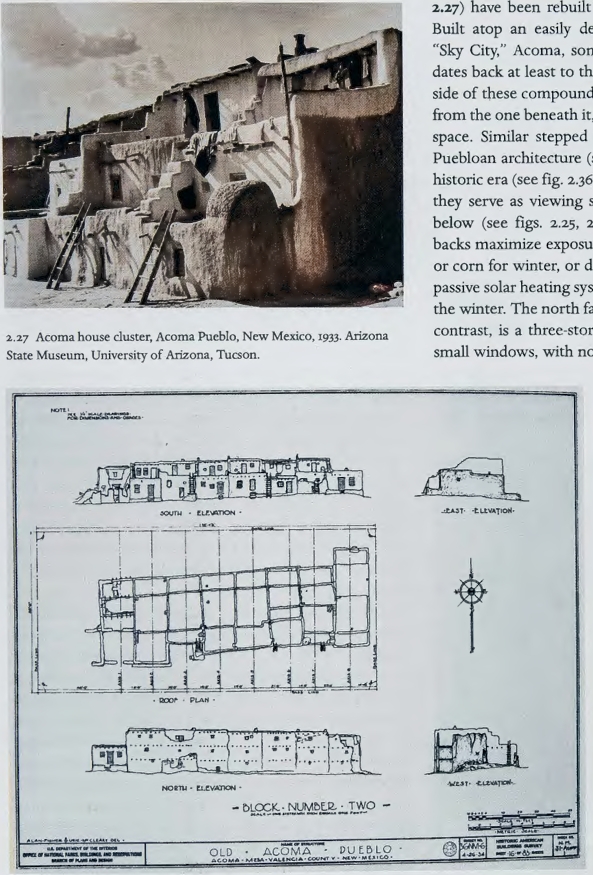
<p><strong>Description</strong>:</p><ul><li><p>(<strong>2.27</strong>): multi-story apartment compounds where the south side has each story setback from the one beneath it, leaving a rooftop for outdoor space. They maximize exposure to the sun to dry fruits and corn, do laundry, and keep the interiors warm during winter months.</p></li><li><p>(<strong>2.28</strong>): North side of apartment compound, has 3 story adobe walls made with adobe bricks, and had small windows and no entrance.</p></li><li><p>(<strong>2.31</strong>): A church named after Saint Stephen and built by missionaries, stands as highest mesa. Big, centralized structure with Arab influence, signified Spanish control over Acoma people after resistance, adapting to Spanish Christian culture</p></li></ul><p>(New Spain)</p>

Description:

  • (2.27): multi-story apartment compounds where the south side has each story setback from the one beneath it, leaving a rooftop for outdoor space. They maximize exposure to the sun to dry fruits and corn, do laundry, and keep the interiors warm during winter months.

  • (2.28): North side of apartment compound, has 3 story adobe walls made with adobe bricks, and had small windows and no entrance.

  • (2.31): A church named after Saint Stephen and built by missionaries, stands as highest mesa. Big, centralized structure with Arab influence, signified Spanish control over Acoma people after resistance, adapting to Spanish Christian culture

(New Spain)

Name: Acoma Pueblo, San Esteban, New Mexico (1)

Author:

Date/Decade: 1629-64
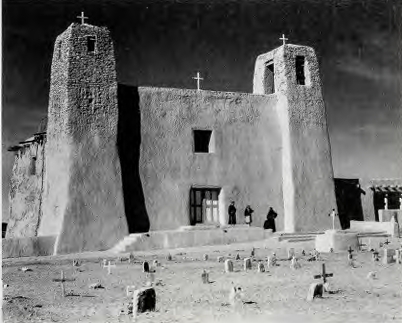
<p><strong>Name</strong>: Acoma Pueblo, San Esteban, New Mexico (1)</p><p><strong>Author</strong>: </p><p><strong>Date/Decade</strong>: 1629-64</p>
5
New cards
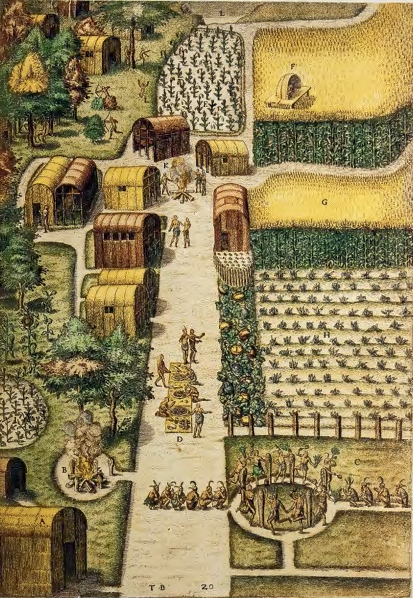
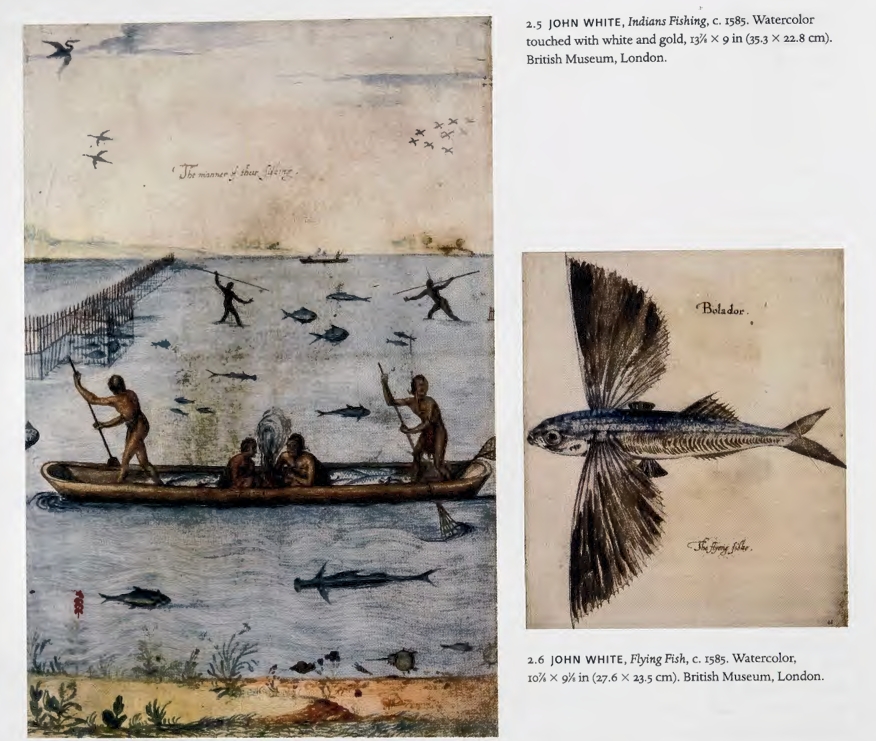
<p><strong>Description</strong>: </p><ul><li><p>(<strong>2.4</strong>): Displays <strong>Algonkian town of Secota</strong>, seen as organized with tobacco, corn, and squash fields. Included dancing ground toward the far right and buildings made by Algonkian women under shaded trees.</p></li><li><p>(<strong>2.5</strong>): Displays Algonkians way of fishing of where they kept the fish and how they caught them. Drew intricate species and designs of the fish. His painting of the Algonkian’s way of fishing shows his intellect and ability to distinguish between different species of fish through observing.</p></li><li><p>(<strong>2.6</strong>): His painting shows his knowledge on fish by his depiction of fish gills, fins, pattern, and the coloration. Represents the knowledge of Europeans and the world, allowing them to colonize and take over the Native people’s lands. They emphasized the marketable commodities and land to colonize.</p></li></ul><p>(English Colonies)</p>

Description:

  • (2.4): Displays Algonkian town of Secota, seen as organized with tobacco, corn, and squash fields. Included dancing ground toward the far right and buildings made by Algonkian women under shaded trees.

  • (2.5): Displays Algonkians way of fishing of where they kept the fish and how they caught them. Drew intricate species and designs of the fish. His painting of the Algonkian’s way of fishing shows his intellect and ability to distinguish between different species of fish through observing.

  • (2.6): His painting shows his knowledge on fish by his depiction of fish gills, fins, pattern, and the coloration. Represents the knowledge of Europeans and the world, allowing them to colonize and take over the Native people’s lands. They emphasized the marketable commodities and land to colonize.

(English Colonies)

Name: John White’s watercolors of Algonkian Indians

Author: John White

Date/Decade: 1585
<p><strong>Name</strong>: John White’s watercolors of Algonkian Indians</p><p><strong>Author</strong>: John White</p><p><strong>Date/Decade</strong>: 1585</p>
6
New cards
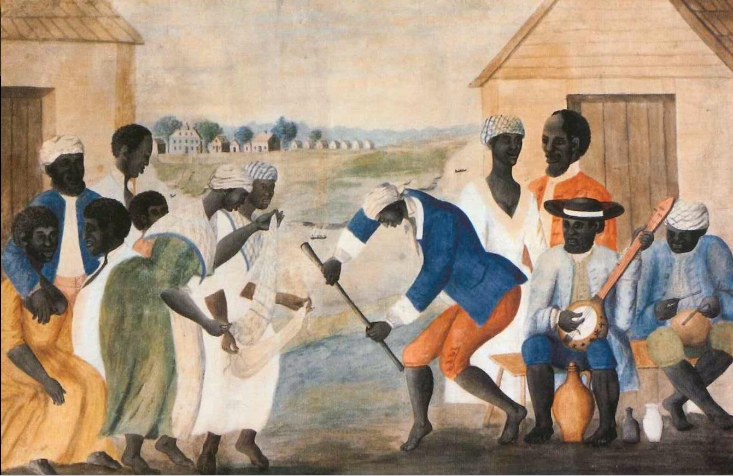
<p><strong>Description</strong>: <span> </span></p><ul><li><p>Dancing barefoot with sticks and scarves was a tradition among the Yoruba people of Nigeria and they used instruments such as the gourd and shekere</p></li><li><p>Jumping the broom was a tradition associated with weddings, which were illegal to slave masters</p></li><li><p>They wore African headdresses with unique prints showing resistance to slavery conditions. Image celebrates community, family, and tradition</p></li></ul><p>(English Colonies)</p>

Description:

  • Dancing barefoot with sticks and scarves was a tradition among the Yoruba people of Nigeria and they used instruments such as the gourd and shekere

  • Jumping the broom was a tradition associated with weddings, which were illegal to slave masters

  • They wore African headdresses with unique prints showing resistance to slavery conditions. Image celebrates community, family, and tradition

(English Colonies)

Name: Plantation Scene

Author: Unknown Artist

Date/Decade: 18th Century
7
New cards
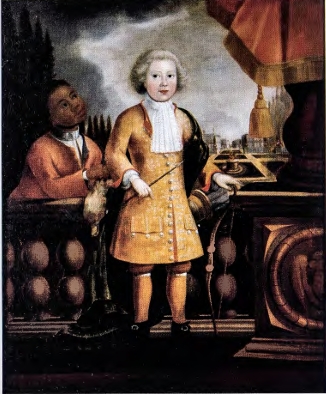
<p><strong>Description</strong>:</p><ul><li><p>Displays a<span>ristocratic young white man who is proud of his property (enslaved black young man), who is trained and obedient to his owner.</span></p></li><li><p><span>The black young man has a silver shackle around his neck, indicating his statues as property, he is also barricaded behind Darnall, and is looking up at him for his approval, signifying their power imbalance</span></p></li><li><p><span>Shows Darnell’s wealth and possessions that include his golden coat, bow and arrow (skill) and garden with structured geometric shape (order)</span></p></li></ul><p>(English Colonies)</p>

Description:

  • Displays aristocratic young white man who is proud of his property (enslaved black young man), who is trained and obedient to his owner.

  • The black young man has a silver shackle around his neck, indicating his statues as property, he is also barricaded behind Darnall, and is looking up at him for his approval, signifying their power imbalance

  • Shows Darnell’s wealth and possessions that include his golden coat, bow and arrow (skill) and garden with structured geometric shape (order)

(English Colonies)

Name: Henry Darnall III as a Child

Author: Justus Engelhardt Kuhn

Date/Decade: 1710
8
New cards
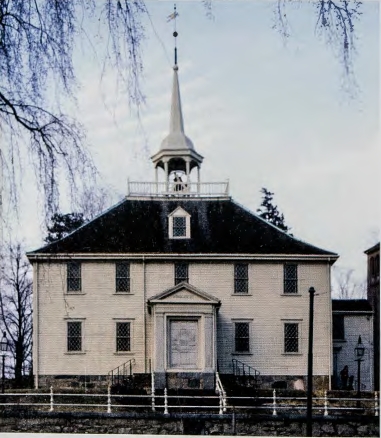
<p><strong>Description</strong>:</p><ul><li><p><span>Built for </span><strong><span>worship and governing people</span></strong><span> with social spaces for community</span></p></li><li><p><span>Made out of wood with clapboard siding, roof’s inner structures mirrored construction used for building ships. Seating plans were organized, and design of building was plain</span></p></li><li><p><span>Puritan ministers used plain words to speak to people’s heart and avoided exotic words. They wanted to focus on the word of God itself and wanted people to connect to God on an individual level</span></p></li></ul><p><span>(English Colonies)</span></p>

Description:

  • Built for worship and governing people with social spaces for community

  • Made out of wood with clapboard siding, roof’s inner structures mirrored construction used for building ships. Seating plans were organized, and design of building was plain

  • Puritan ministers used plain words to speak to people’s heart and avoided exotic words. They wanted to focus on the word of God itself and wanted people to connect to God on an individual level

(English Colonies)

Name: Puritan Meetinghouse, Hingham, Massachusetts

Author: G. E. Kidder Smith

Date/Decade: 1681/1731
9
New cards
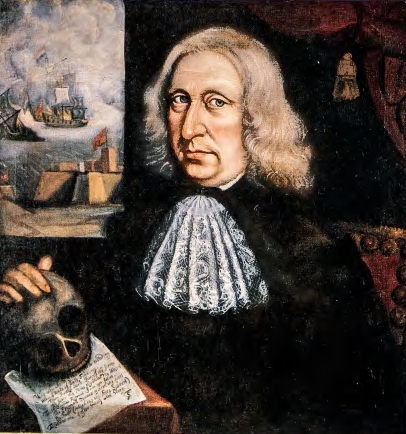
<p><strong>Description</strong>: </p><ul><li><p><span>He rests his hand on a skull, with a poem underneath reminding the viewer that they will leave the world and its dangers and riches to be clothed with the glory of God. (Common in puritan sermons, which encourages people to look within themselves for evidence that they have been saved by God’s grace).</span></p></li></ul><p><span>(English Colonies)</span></p>

Description:

  • He rests his hand on a skull, with a poem underneath reminding the viewer that they will leave the world and its dangers and riches to be clothed with the glory of God. (Common in puritan sermons, which encourages people to look within themselves for evidence that they have been saved by God’s grace).

(English Colonies)

Name: Self-Portrait

Author: Captain Thomas Smith

Date/Decade: 1680
10
New cards
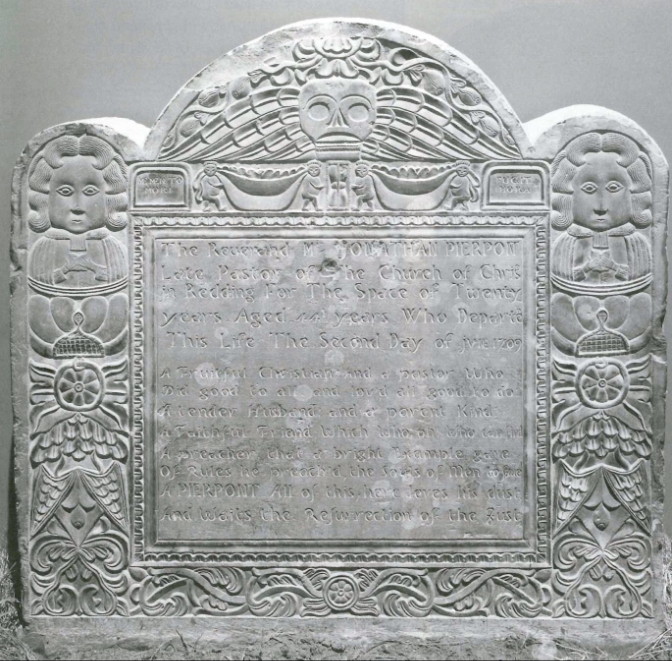
<p><strong>Description</strong>: </p><ul><li><p><span>Comes from colonial New England</span></p></li><li><p><span>Puritan gravestones had motifs of winged skulls which reflects death and mortality, and the soul’s continuous journey in the afterlife</span></p></li><li><p><span>Images of people praying reflect the purpose of life, in which Puritans believed that one should strive to get close to God and do good (Puritan art appears as mirror asking viewers to look into themselves and realize the purpose of life, which is fleeting)</span></p></li></ul><p><span>(English Colonies)</span></p>

Description:

  • Comes from colonial New England

  • Puritan gravestones had motifs of winged skulls which reflects death and mortality, and the soul’s continuous journey in the afterlife

  • Images of people praying reflect the purpose of life, in which Puritans believed that one should strive to get close to God and do good (Puritan art appears as mirror asking viewers to look into themselves and realize the purpose of life, which is fleeting)

(English Colonies)

Name: Gravestone of Jonathan Pierpont, Wakefield, MA

Author: Nathaniel Lamson

Date/Decade: 1709
11
New cards
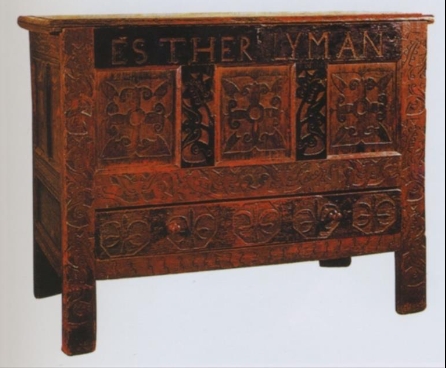
<p><strong>Description</strong>:</p><ul><li><p>Made of white oak with <span>multi-functional use, same techniques used to build house (planks are hammered together, sturdy, is durable). People who made furniture had other jobs (house making, ship-making)</span></p></li></ul><ul><li><p><span>Decorations are simplified floral motifs, basic pattern.</span></p></li><li><p><span>Homes had little privacy and many people could use storage compartments of chests, also as tables</span></p></li></ul><p><span>(English Colonies)</span></p>

Description:

  • Made of white oak with multi-functional use, same techniques used to build house (planks are hammered together, sturdy, is durable). People who made furniture had other jobs (house making, ship-making)

  • Decorations are simplified floral motifs, basic pattern.

  • Homes had little privacy and many people could use storage compartments of chests, also as tables

(English Colonies)

Name: Esther Lyman Chest

Author: Erastus Banks

Date/Decade: 1712-22
12
New cards
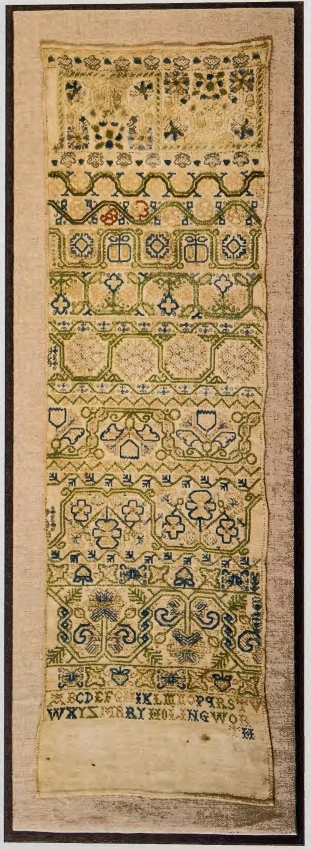
<p><strong>Description</strong>:</p><ul><li><p>Has abundant decorative floral motifs in a chain pattern and abstract, geometric designs. Reflects preference for nature in art</p></li></ul><ul><li><p>Craftsmanship of needle art represented by young woman who traveled from Massachusetts to England. Women were taught how to read and write through needlework</p></li><li><p><span>The sampler was a sampling of stitches showing off the expertise of a young embroider</span></p></li></ul><p>(English Colonies)</p>

Description:

  • Has abundant decorative floral motifs in a chain pattern and abstract, geometric designs. Reflects preference for nature in art

  • Craftsmanship of needle art represented by young woman who traveled from Massachusetts to England. Women were taught how to read and write through needlework

  • The sampler was a sampling of stitches showing off the expertise of a young embroider

(English Colonies)

Name: Sampler, Salem, Massachusetts

Author: Mary Hollingworth

Date/Decade: 1665
13
New cards
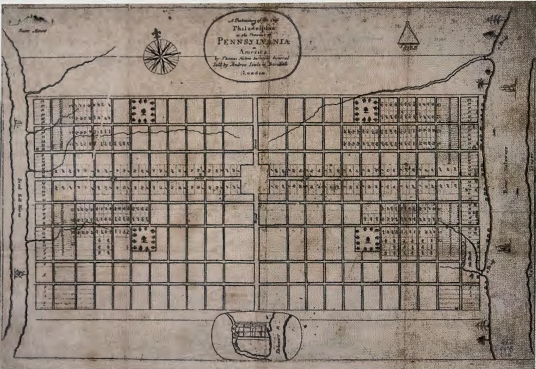
<p><strong>Description</strong>: Town established for religious purposes, as people sought a path to God without hierarchies of church principles. The plan was centered on fairness and equal access to services due to evenly sized blocks, central plaza, and wide streets with enough space. Design of city was based on Quaker ideals of community, peace and equality. Had governing places, and accessibility for firefighters.</p><p>(English Colonies)</p>

Description: Town established for religious purposes, as people sought a path to God without hierarchies of church principles. The plan was centered on fairness and equal access to services due to evenly sized blocks, central plaza, and wide streets with enough space. Design of city was based on Quaker ideals of community, peace and equality. Had governing places, and accessibility for firefighters.

(English Colonies)

Name: Plan for Philadelphia

Author: William Penn

Date/Decade: 1682
14
New cards
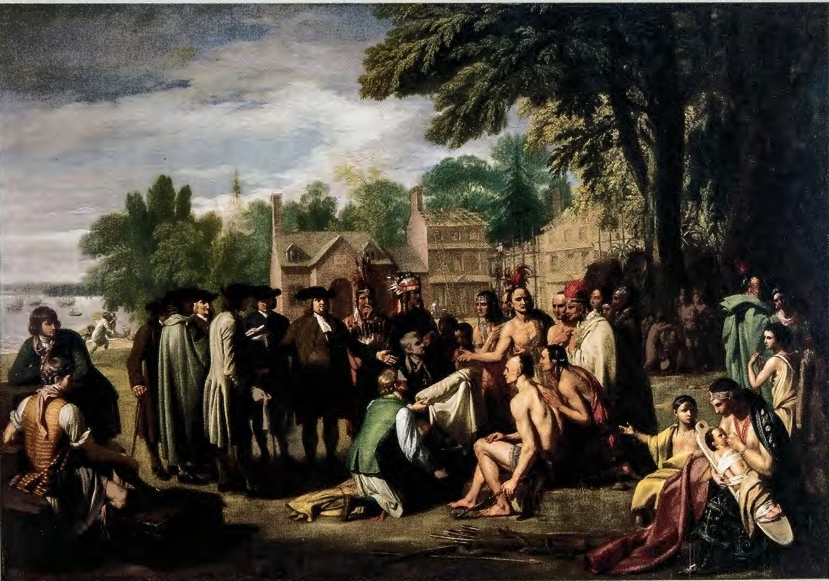
<p><strong>Description</strong>: </p><ul><li><p>Penn and the British had an agreement with the Indians under a giant Elm tree over the exchange of land, signified with the cloth that is handed over to the Natives</p></li><li><p>Painting was made 100yrs after Quaker plan (shown with advanced buildings in background) Treaty was made to appear as a calm exchange between equals.</p></li><li><p>Painting was commissioned by Penn’s son, who glorified his father, and Quaker Ideals</p></li><li><p>Painting served as propaganda for the good and inclusive Quaker Ideals, as relationship between Natives and British became worse with more land disputes</p></li></ul><p>(Late Colonial/Revolutionary Era)</p>

Description:

  • Penn and the British had an agreement with the Indians under a giant Elm tree over the exchange of land, signified with the cloth that is handed over to the Natives

  • Painting was made 100yrs after Quaker plan (shown with advanced buildings in background) Treaty was made to appear as a calm exchange between equals.

  • Painting was commissioned by Penn’s son, who glorified his father, and Quaker Ideals

  • Painting served as propaganda for the good and inclusive Quaker Ideals, as relationship between Natives and British became worse with more land disputes

(Late Colonial/Revolutionary Era)

Name: William Penn’s Treaty with the Indians in 1683

Author: Benjamin West

Date/Decade: 1771-1772 (1770s ok)
15
New cards
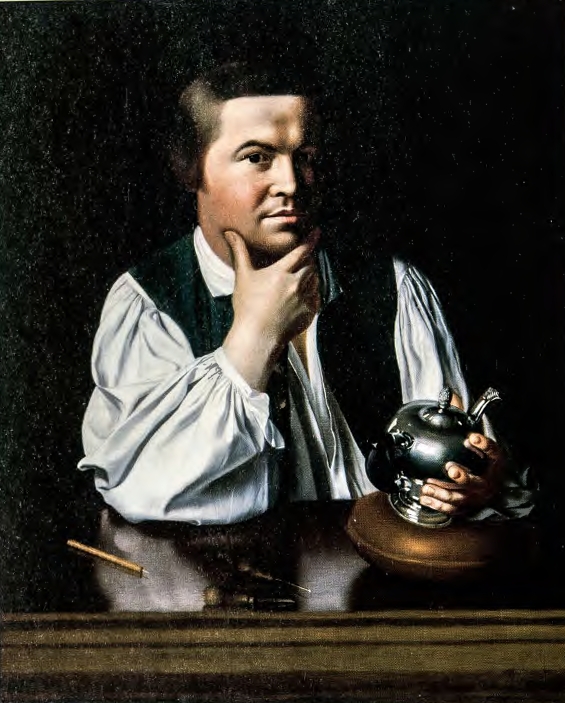
<p><strong>Description</strong>: </p><ul><li><p>Copley paints Revere as an intelligent typical person, a silversmith, who holds one of his creations: a teapot</p></li><li><p>The tools he uses to engrave lay on the table, reflecting his labor</p></li><li><p>The teapot was significant during this time period as it was made out of silver (high value) coming from Mexico</p></li><li><p>Copley’s art style focused on realism, show with the shine of the silver pot, the wrinkle of Paul’s shirt, and the wooden textures of the table</p></li></ul><p>(Late Colonial/Revolutionary Era)</p>

Description:

  • Copley paints Revere as an intelligent typical person, a silversmith, who holds one of his creations: a teapot

  • The tools he uses to engrave lay on the table, reflecting his labor

  • The teapot was significant during this time period as it was made out of silver (high value) coming from Mexico

  • Copley’s art style focused on realism, show with the shine of the silver pot, the wrinkle of Paul’s shirt, and the wooden textures of the table

(Late Colonial/Revolutionary Era)

Name: Paul Revere

Author: John Singleton Copley

Date/Decade: 1768 (1760s ok)
16
New cards
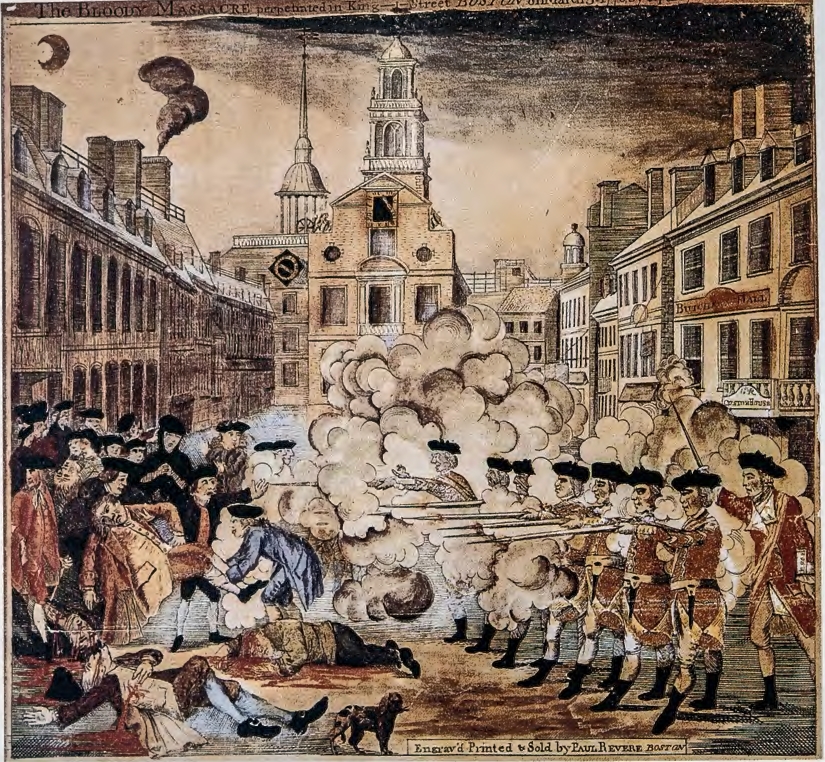
<p><strong>Description</strong>: A hand-colored engraving, called Broadside, which is a printed sheet. Sharp tools were used to cut into copper plate to print onto Broadside and color was applied by hand. It displays the rivalry between the Colonists in blue and the controlling British redcoats. The painting served as propaganda for colonists doubting British’s power/corruption over colonists. The redcoats (British) are seen as violent, as they are holding guns, firing and killing colonists. Eventually leads to Boston Tea Party.</p><p>(Late Colonial/Revolutionary Era)</p>

Description: A hand-colored engraving, called Broadside, which is a printed sheet. Sharp tools were used to cut into copper plate to print onto Broadside and color was applied by hand. It displays the rivalry between the Colonists in blue and the controlling British redcoats. The painting served as propaganda for colonists doubting British’s power/corruption over colonists. The redcoats (British) are seen as violent, as they are holding guns, firing and killing colonists. Eventually leads to Boston Tea Party.

(Late Colonial/Revolutionary Era)

Name: The Bloody Massacre

Author: Paul Revere

Date/Decade: 1770