ANSC 305 Exam 2
 Call Kai
 Learn
Learn Practice Test
 Spaced Repetition
 Match
Match Flashcards
 Knowt Play
1/69

There's no tags or description
Looks like no tags are added yet.
Name | Mastery | Learn | Test | Matching | Spaced | Call with Kai | Chat |
|---|
No analytics yet
Send a link to your students to track their progress
70 Terms
Relationship coefficient
*The expected fraction of the DNA that two animals have in common due to common and (or) direct ancestry
Parameter space: 0 (not related) -1 (complete relationship/clone)
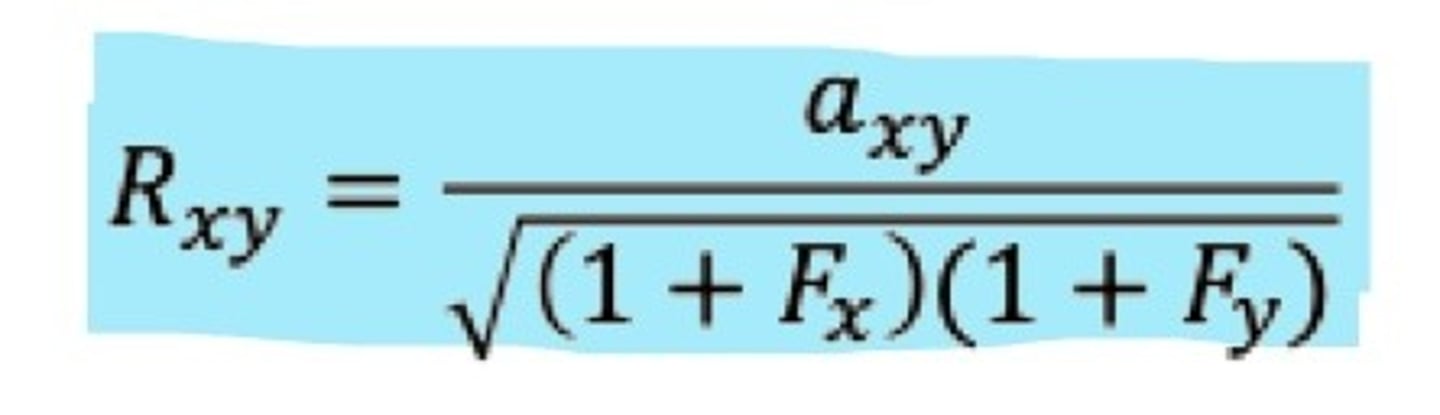
Rxy & Range of fraction of DNA
Parent/Progeny 0.5 (No variation)
Half siblings 0.25 (0-0.5)
Full siblings 0.5 (0(Parents passed on different genes to each progeny)-1 (identical twins))
Grandparent/kid 0.25 (0-0.5)
3/4 siblings 0.3125 (0-1)
Rxy Range of fraction of DNA
Parent/Progeny 0.5 No variation
Half siblings 0.25 0-0.5
Full siblings 0.5 0-1
Grandparent/kid 0.25 0-0.5
3/4 siblings 0.3125 0-1
Standard error (parent-offspring)
*Measure of precision of the relationship coefficient (measure of variability)
Rxy +/- Srxy Represents an interval w/ 0.68 probability that the true amount of DNA shared due to common and/or direct ancestry lies within
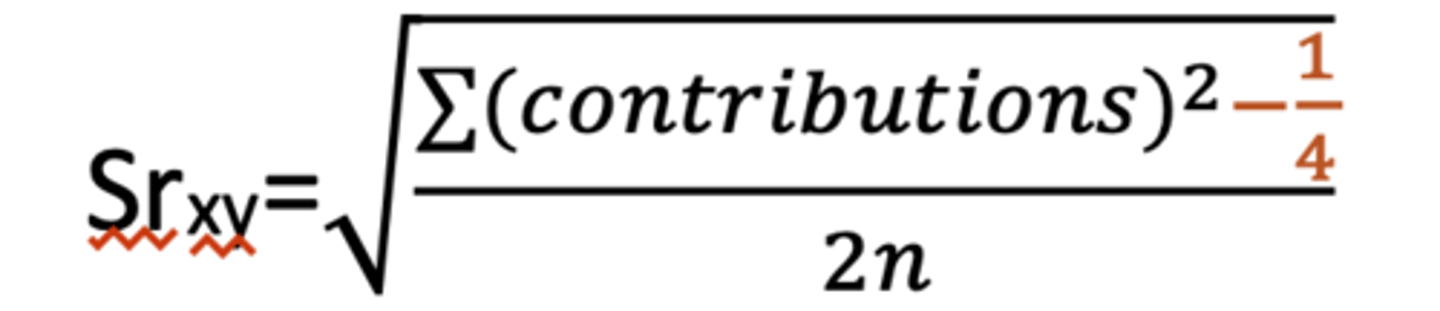
Diploid chromosome numbers
Cattle= 60 (n=30)
Sheep= 54 (n=27)
Pigs= 38 (n=19)
Goats= 60 (n=30)
Horses= 64 (n=32)
Additive relationship (axy)
*Measures the fraction of identical alleles shared by two individuals (on both chromosomes) that were inherited from common ancestors when averaged across all possible segregation outcomes
Inbreeding coefficient
*The fraction of DNA (pairs of genes) that will be homozygous (identical by descent) that would be heterozygous in a non-inbred individual of the population
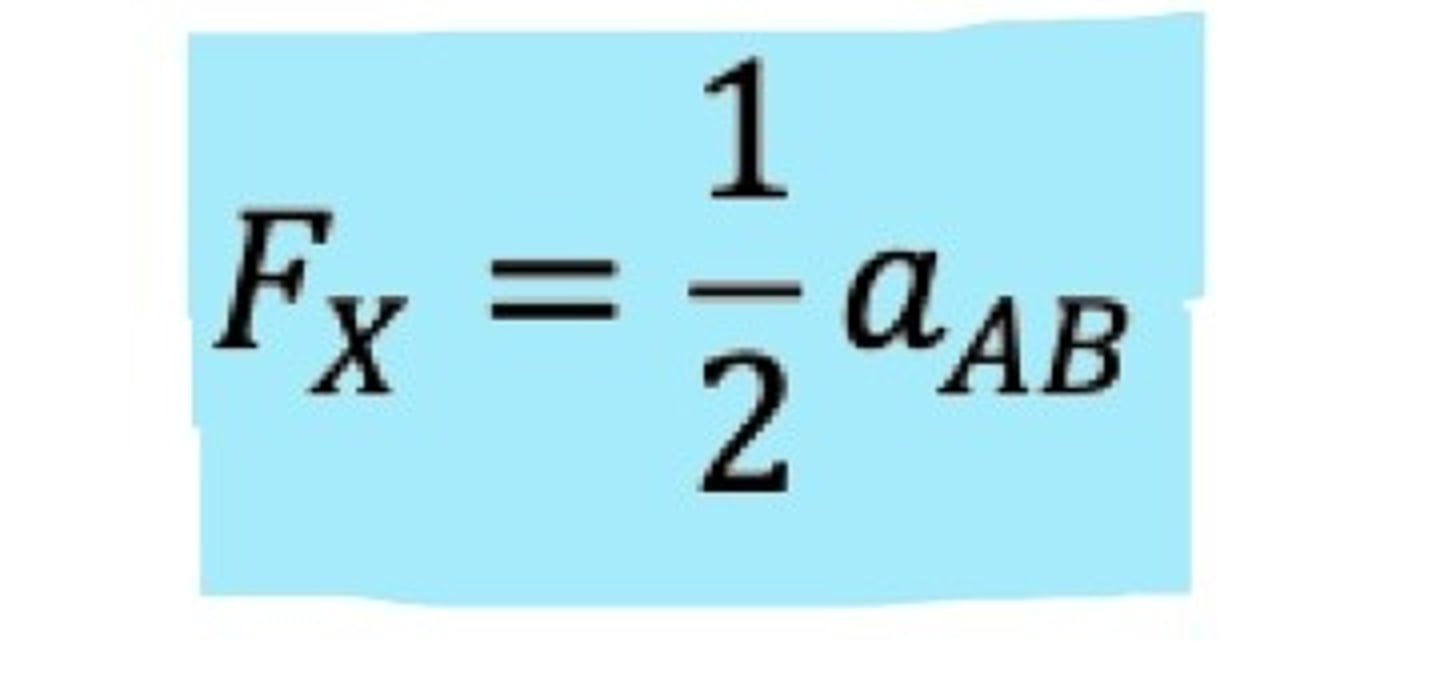
Parameter space
Rxy: 0-1
Fx: 0-1
axy: 0-2
Regression: -infinity, infinity
Correlation coefficient (denominator of Rxy): 0-1 (standardized axy)
Probability: 0-1
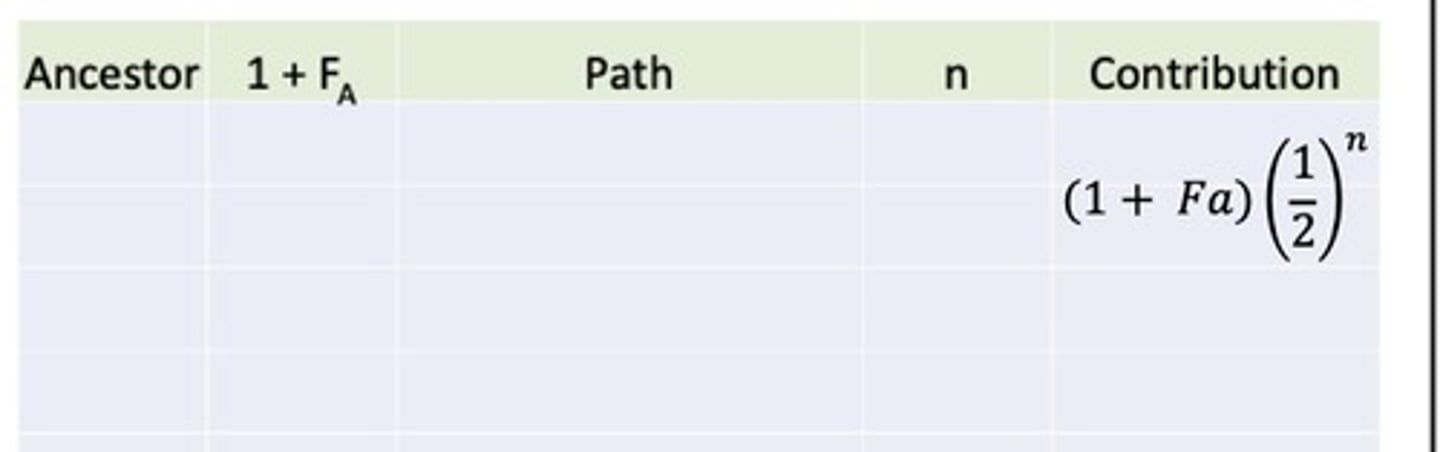
Contribution
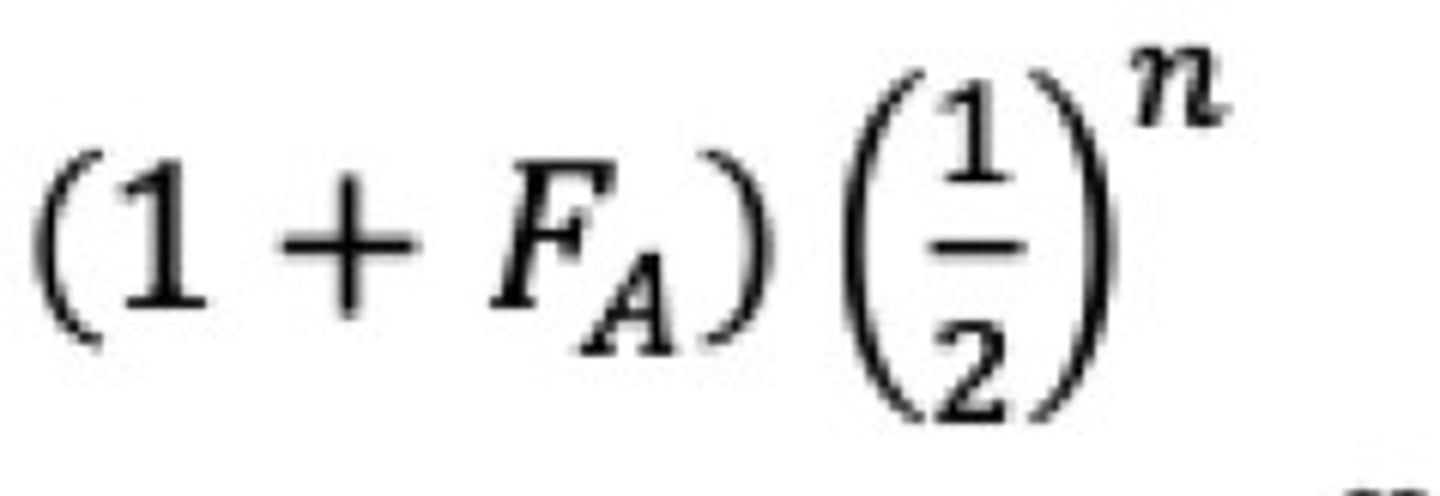
Arrow diagram process
1. Confirm or rule out direct ancestry for the two individuals
2. Identify common ancestor(s)
3. Establish inbreeding status of common ancestor(s)
4. Identify pathways of relatedness and the record the number of meiotic segregations (n) (any anc can only appear once)
5. Calculate pathway contributions
6. Square each pathway`s contribution (for standard error)
7. Sum pathway contributions= additive covariance and put in numerator of relationship coefficient
8. For each animal in the relationship coefficient, calculate 1+Fa and put the square root of their product in the denominator of the relationship coefficient
9. Calculate the standard error of the relationship coefficient as the square root of the sum of the squared contributions divided by 2 times the number of haploid chromosomes
Qualitatively inherited characters
Those where differences among animals are due to differences in genotype at one or two loci
Ex: Coat color, horned/polled, genetic disease
Probability
Parameter space: 0 (will not occur)-1 (100% chance it will occur)
*Frequencies as estimates of probability
-Allele frequencies
-Genotype frequencies
-Transmission probabilities
What genotypes are possible for a single locus with 2 alleles A & a?
-For Dominance genetic action, selection can be against the A or a
-For additive genetic action (dilution gene in cattle, can result in 3 distinct phenotypes), selection can be against either allele
Dominance Genetic action
-Dominance can be responsible for trait variation of qualitatively inherited characters
Wild-type allele
(+ or A) and recessive (a)
-Sometimes the recessive allele (aa) is considered the mutant (from the wild type) allele
-Recessive alleles are sometimes deleterious or even lethal
Lethal recessive
*homozygous lethal recessive alleles result in spontaneous abortion or the affected animal does not live long enough after birth to pass on genes
Deleterious recessive alleles
Gradation of harmfulness (persist in populations despite natural selection)
Selection against a recessive allele
1. Cull homozygous recessives (aa)
-You can see the difference between homozygous recessive and dominant or lethals use natural selection to get rid of recessives for us
2. Cull known heterozygotes (Aa)
-Can only tell from genetic testing, pedigree info, or progeny info
3. Breeding decisions based on pedigree/progeny info
4. Conduct informal/formal progeny test
5. Use progeny test info
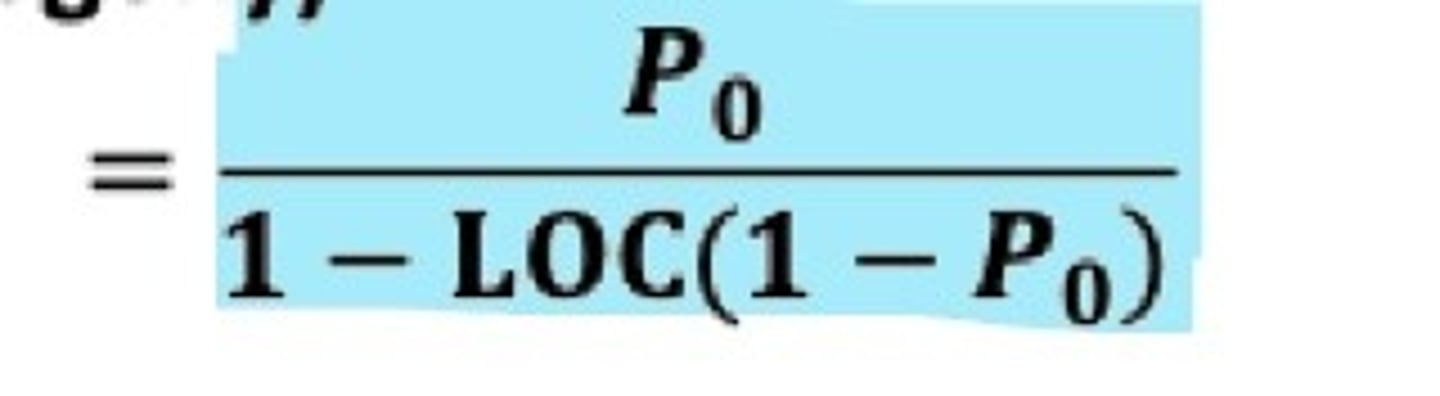
6. Use Po and LOC to calculate P(HD|CT)
7. Use P(HD|CT) as Po values for selection and additional progeny testing decisions
P0
*Probability that breeding prospects are AA (homozygous dominant) using pedigree information (before progeny info is available)
-Progeny information supplements pedigree information
-Probabilities of being homozygous dominant P(AA) can be used as selection criteria and deciding on progeny testing
Progeny test information used to:
1. identify and cull heterozygotes (carriers)
2. Calculate the level of confidence (LOC) for tested animals that are not detected as carriers
Carrier
*Individual that is heterozygous (Aa)
-Informal/Formal progeny testing can identify carriers
P(AA) with no progeny info
-Phenotypically dominant
-Ps and Pd are probabilities that the sire and dam of a given animal are homozygous dominant
-Ps and Pd are independent

Level of confidence (in results of progeny test)
*Probability of detection (not a clean test) of heterozygote in a progeny test
Ex: LOC=0.81 81% probability an Aa parent would have produced greater than/equal to 1 aa progeny if mated to the same test mates
-Independent test mates
-Passes the test if phenotypically dominant animal only produced phenotypically dominant progeny
-large pi: multiply parentheses (for each test mate) and subtract product from 1
-n: number of test mates(# of parentheses; Increasing # of progeny/ test mates statistically makes test better)
-mi: number of progeny produced by mating with the ith test mate
-P__: probability of being the subscripted genotype

P(HD|CT)
*Probability of AA conditional on previous info and on a "clean test" (no aa progeny)
-Parameter space 0-1 (probability)
Probability Example
-Black bull
-Before test info: Both parents were known carriers of the red allele
-Bull bred to 2 red calves (assume each produced 1 offspring)
-P0= (1+0+0+0)/(3+0+0-0) or from punnet square (1/4)/(3/4)= 1/3 (33% chance the bull is heterozygous dominant before info)
-LOC= 1- ((0+ 0(3/4)^1+ 1(1/2)^1)(0+ 0(3/4)^1+ 1(1/2)^1))= 3/4 (75% confident that the bull would have produced a homozygous recessive calf if he was heterozygous)
-P(HD|CT)= (1/3)/(1-(3/4)(1-(1/3))= 2/3 (67% chance he is homozygous dominant)
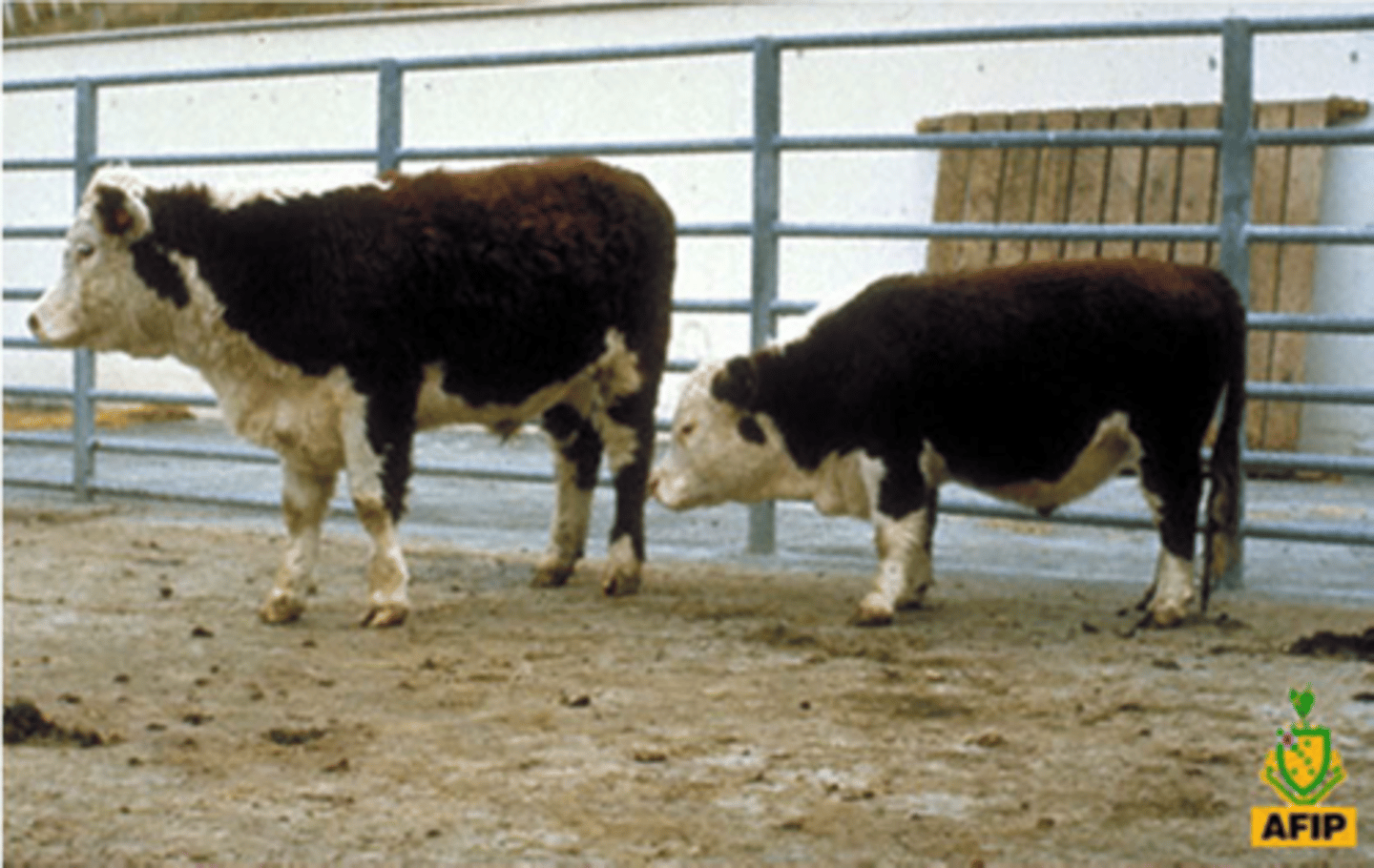
Snorter Dwarfism
Breed affected: Hereford
Appearance: Shorter body & head (skull deformed) than normal calf, potbelly, snorting when breathing
-Prone to bloat bc/ of difficulty breathing & belching
-Originated from sire Kansas lad--> traced to his offspring St. Louis Lad--> defect spread widely from popular sire WHR Royal Domino 51st
-Recessive allele
Test: N/A
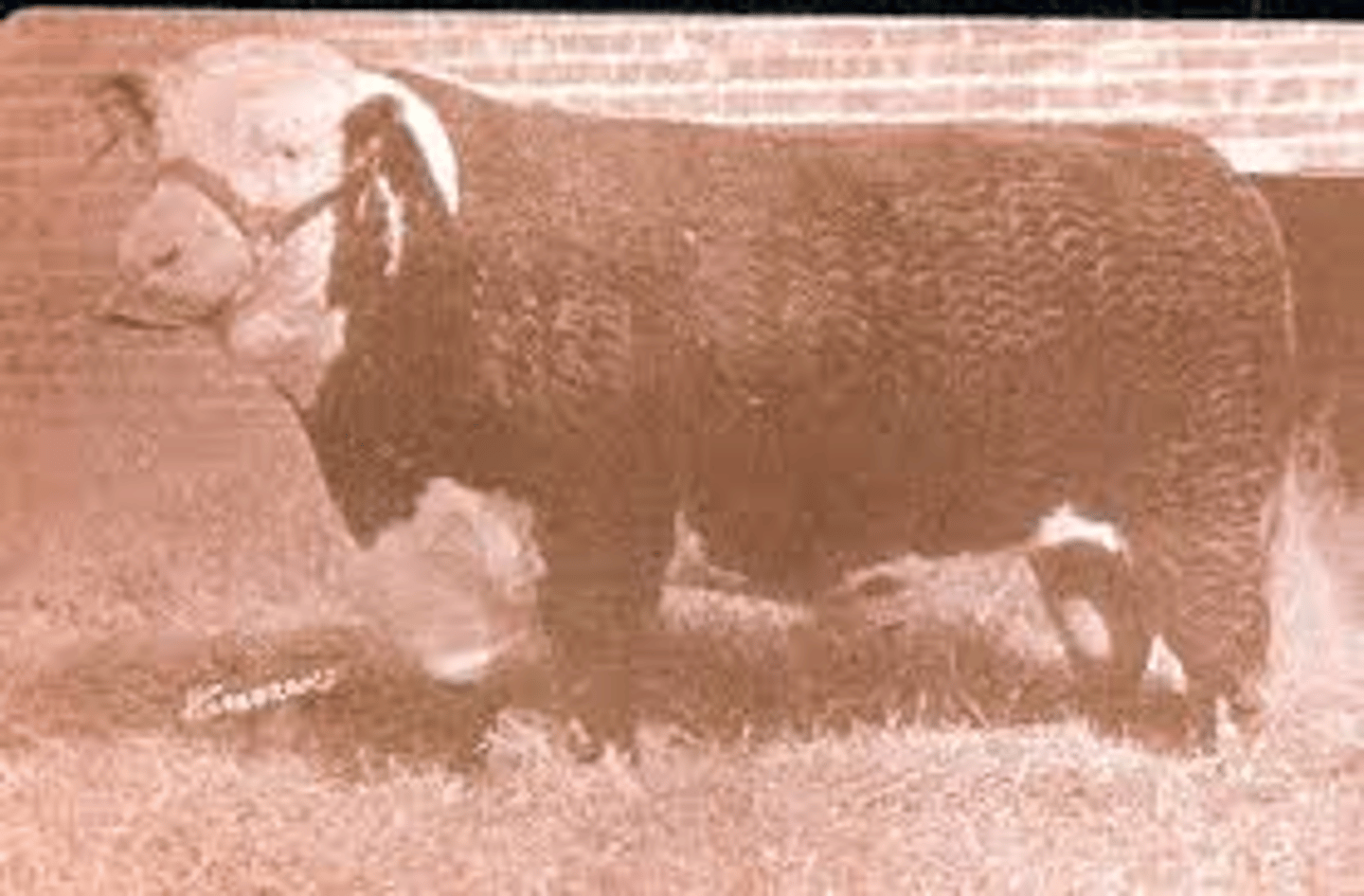
Comprest Herefords
Breed affected: Hereford
Appearance: 2 frame scores smaller than normal calves (~4 in.)
-Due to dominant gene (may be carrier of snorter gene)
-Originated w/ Comprest Conqueror
Test: N/A
Crooked-legged Dwarfism
Breed affected: Hereford
Appearance: Smaller than Snorter affected cattle & have crooked legs
-Due to crossing of 2 comprest herefords (contains both comprest & snorter alleles)
Test: N/A
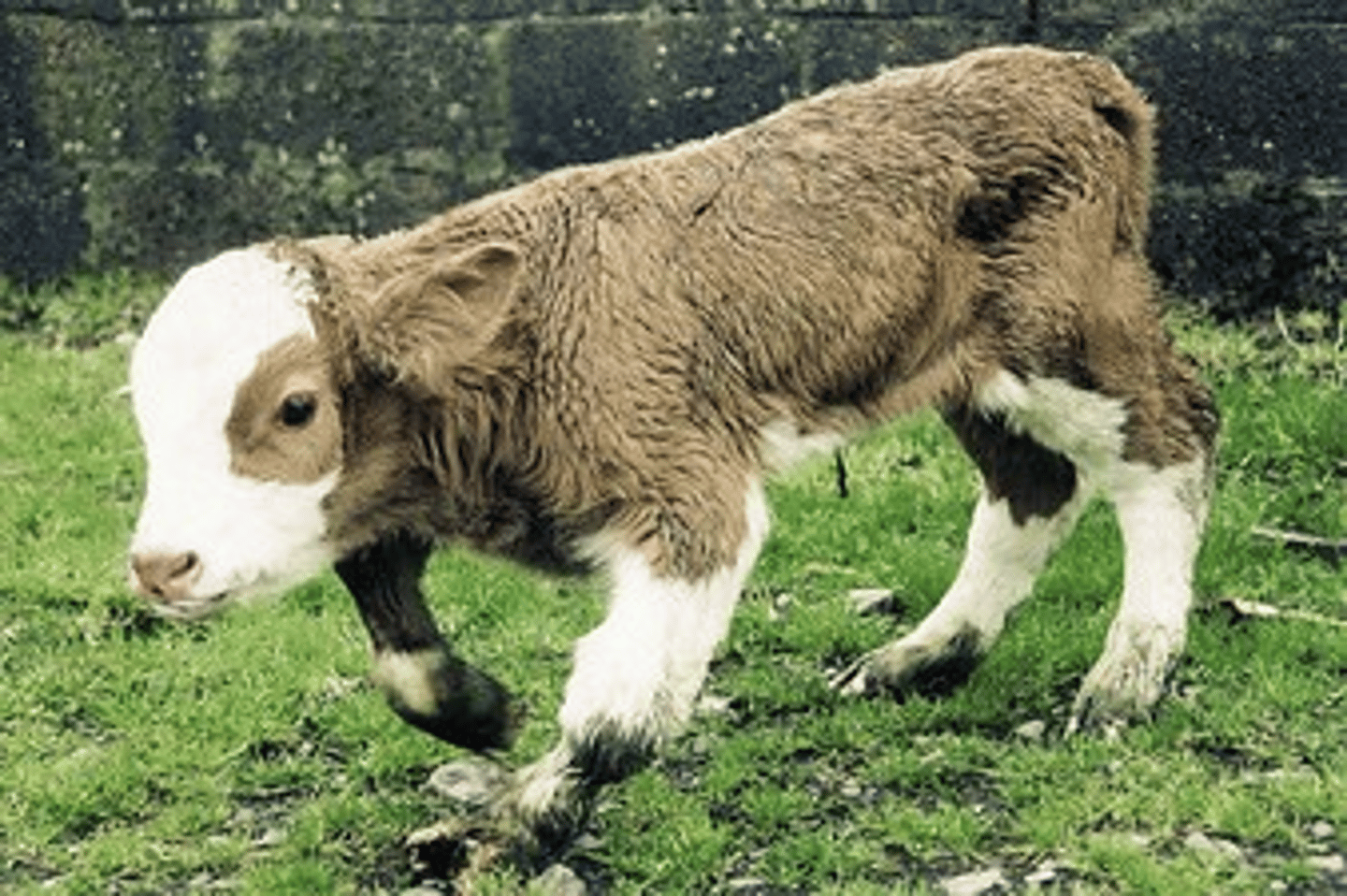
Needle-nose Dwarfism
Breed affected: Hereford
Appearance: Small head w/ pointed (elongated) nose & stunted body (BW=15lbs)
-Highly inbred calves
-Calves don't live past a year bc/ they can't chew their cud
-Lethal recessive
Test: N/A
Idiopathic Epilepsy (Shaker claves)
Breed affected: Hereford
Appearance: Neurological disorder causing seizures
-recessive lethal
Test: DNA test
Results: IEF or IEC
Hydrocephalus
Breed affected: Hereford
Appearance: Very pronounced head from fluid build up (internal), bulging forehead
-recessive lethal
-Resulted from selection against snorters
Test: N/A
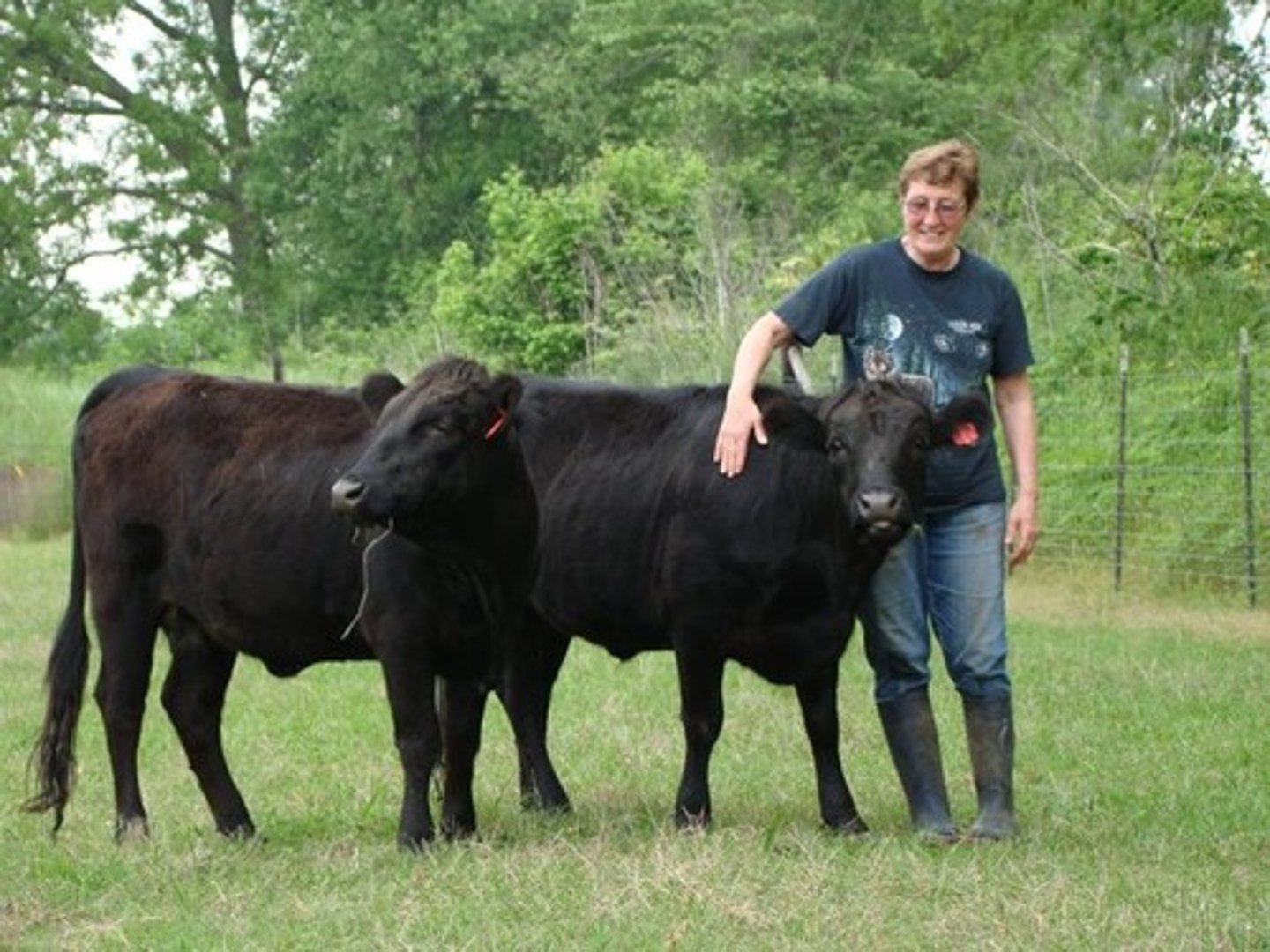
Dexter cattle
Breed affected: Dexter
Appearance: Shorter than normal cattle (Dexter breed already short)
-Heterozygotes are slightly shorter than normal calves
Test: N/A
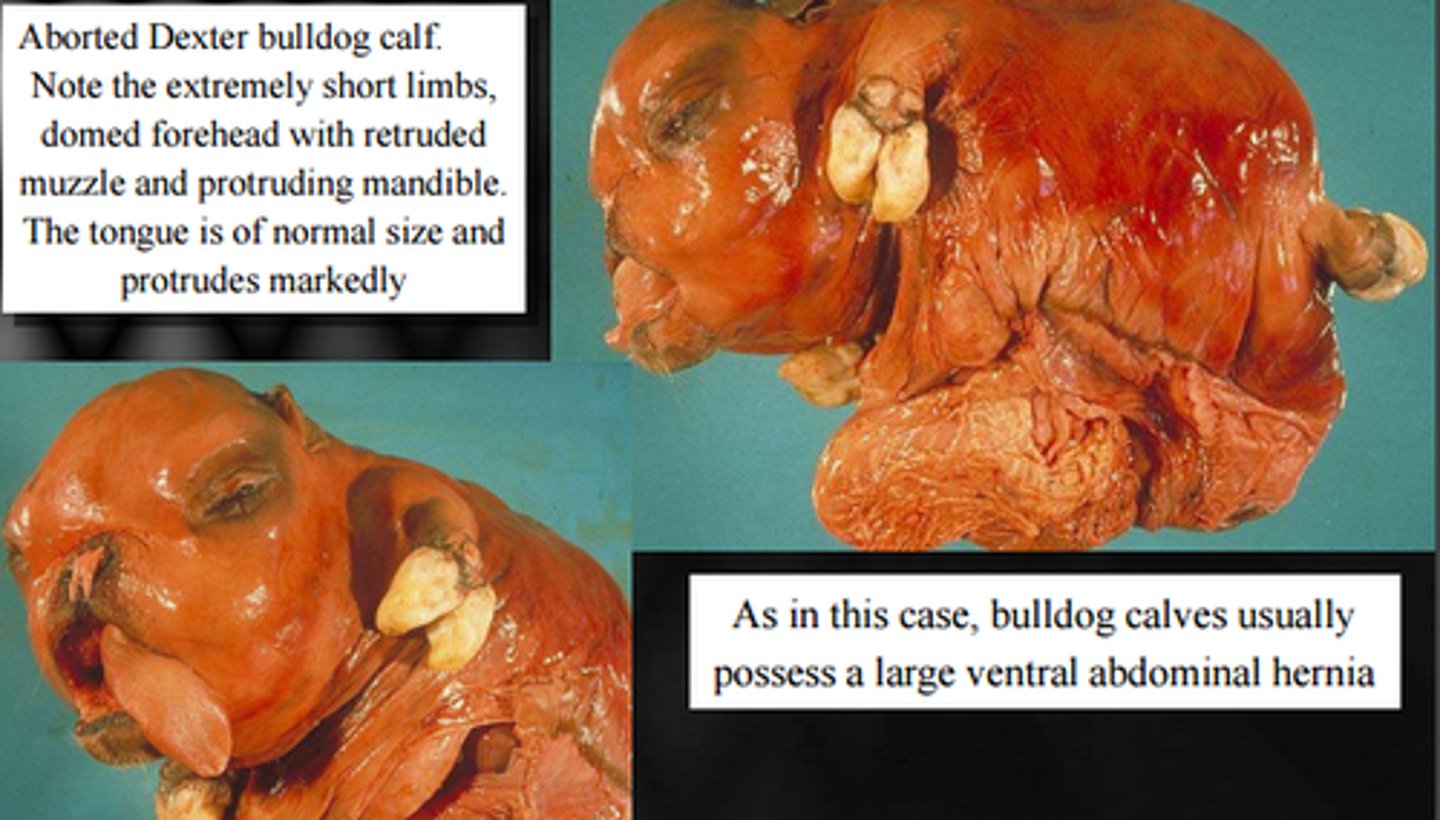
Bulldog Dwarfism
Breed affected: Dexter
Appearance: Bulldog face w/ small severely deformed body
-Lethal recessive from breeding of 2 affected (aa) Dexters
Test: N/A
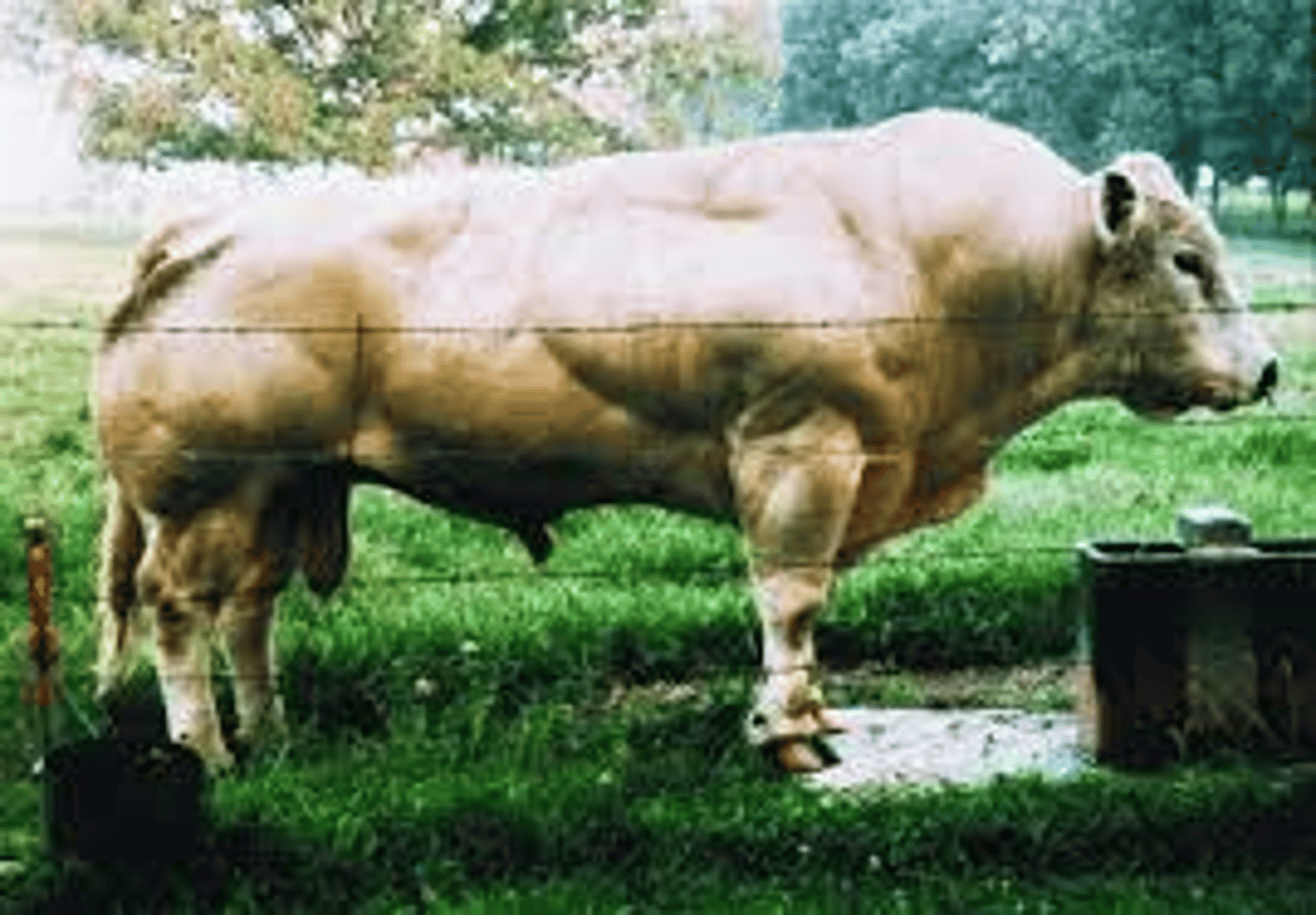
Double Muscling
Breed affected: Originated in Charolais & Belgium Blue (present in all breeds now)
Appearance: Myostatin mutation causes muscle enlargement w/ large grooves btw, causes structural problems (Females have small vulva/uterus, Males have small testis)
-Heterozygotes display some muscling (not completely recessive, intermediate)
Test: N/A
Palate-Pastern Syndrome
Breed affected: Charolais
Appearance: Cleft pallet & deformed pasterns (tendons contracted)
-recessive lethal (calf dies from being unable to suckle)
Test: N/A
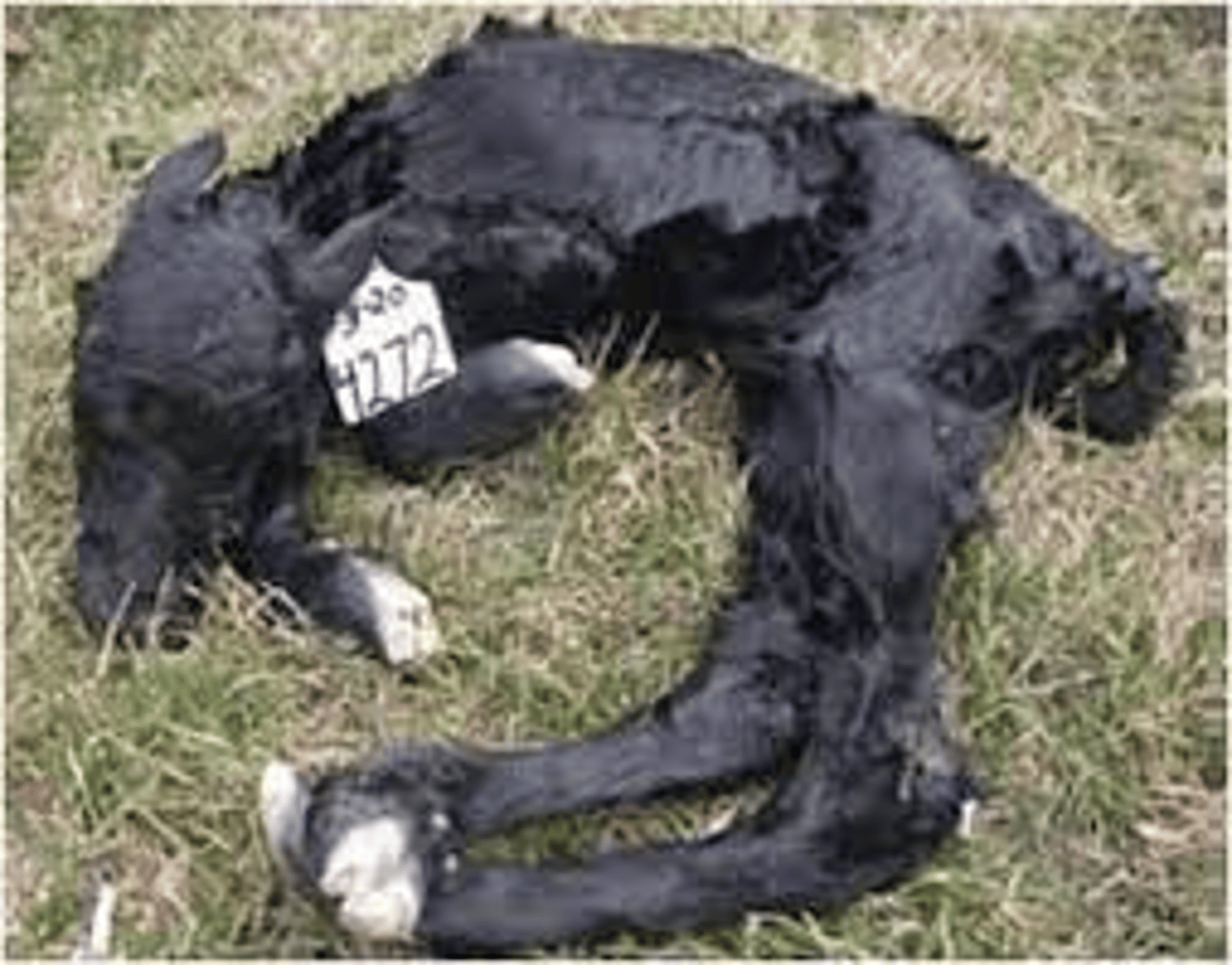
Curly Calf Syndrome (Arthrogryposis Multiplex)
Breed affected: Angus
Appearance: Deformed limbs (very rigid, fixed joints-->lead to dystocia) & spine (twisted), appear thin from limited muscle development
-recessive lethal
Test: DNA test
results: AMF (free) or AMC (carrier)
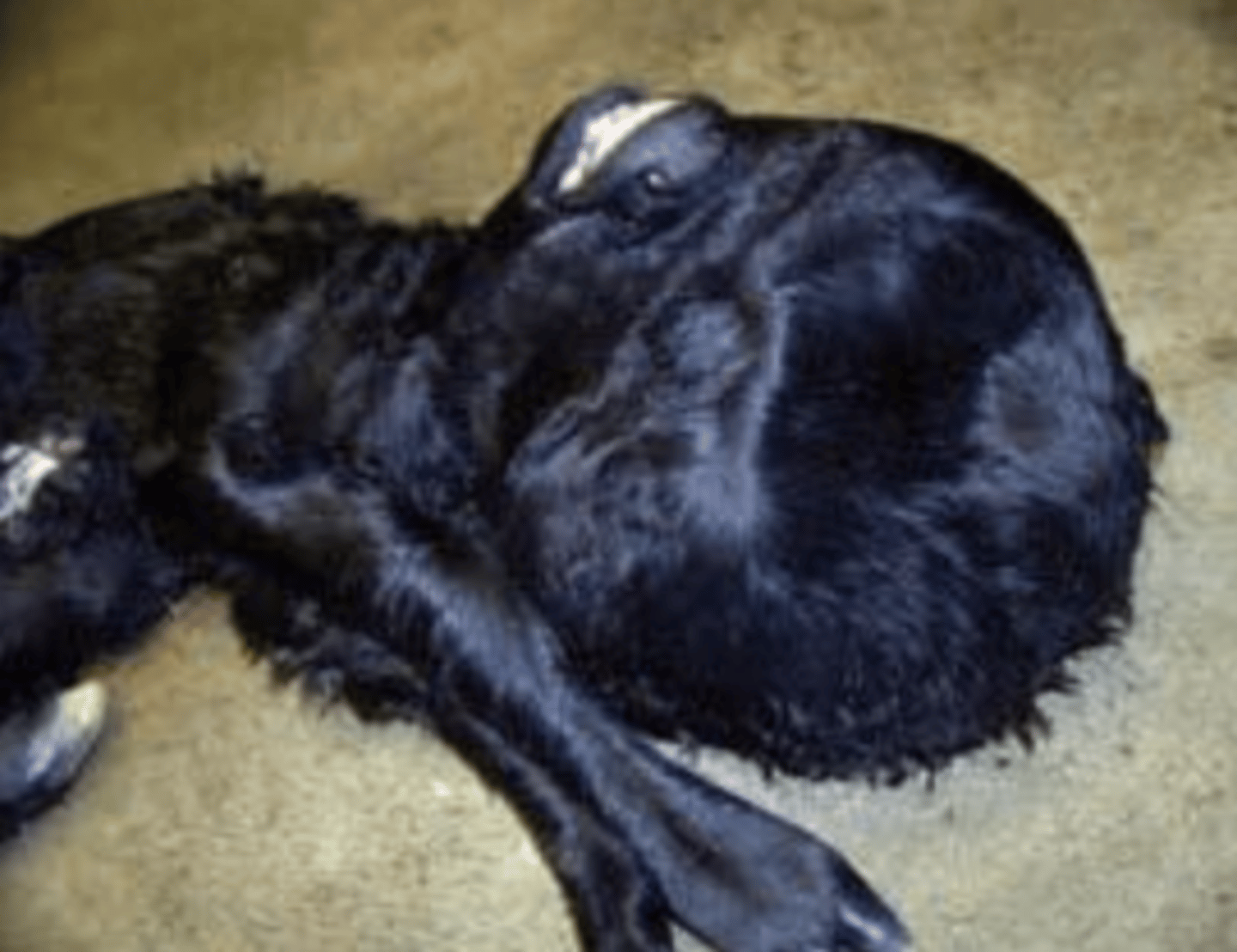
Neuropathic Hydrocephalus
Breed affected: Angus
Appearance: Head the size of a basketball/volleyball from fluid accumulation (external), cleft palate w/ malformed skull & spine
-recessive lethal
Test: DNA test
results: NHF (free) or NHC (carrier)
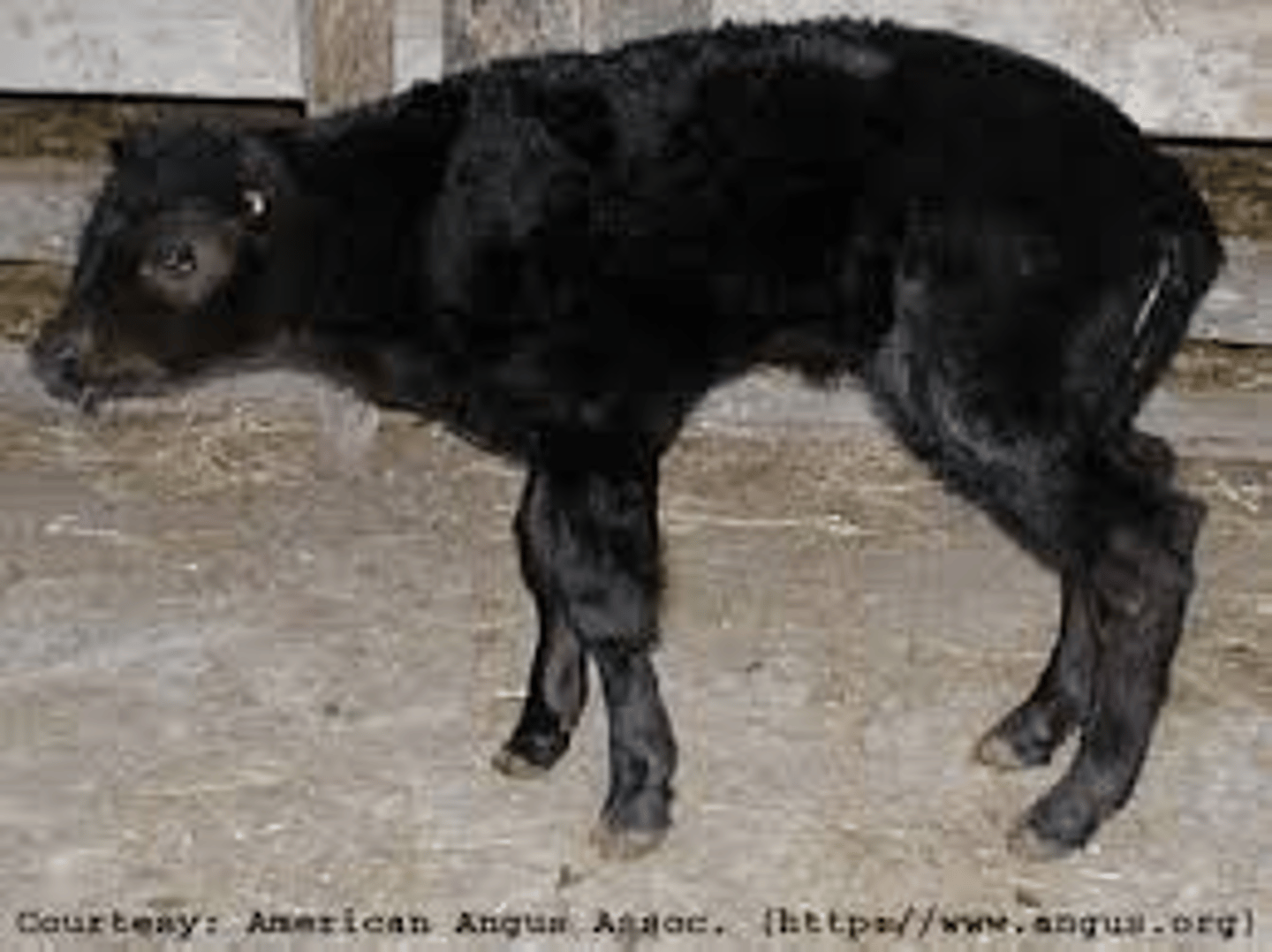
Fawn Calf Syndrome (Contractural Arachnodactyly)
Breed affected: Angus
Appearance: Spine is slightly arched, BW is normal, but slightly taller & slender w/ legs causing limited range of motion (walks like deer)
-Recessive
Test: DNA test
results: CAF (free), CAA (affected)*cannot register*, or CAC (carrier)
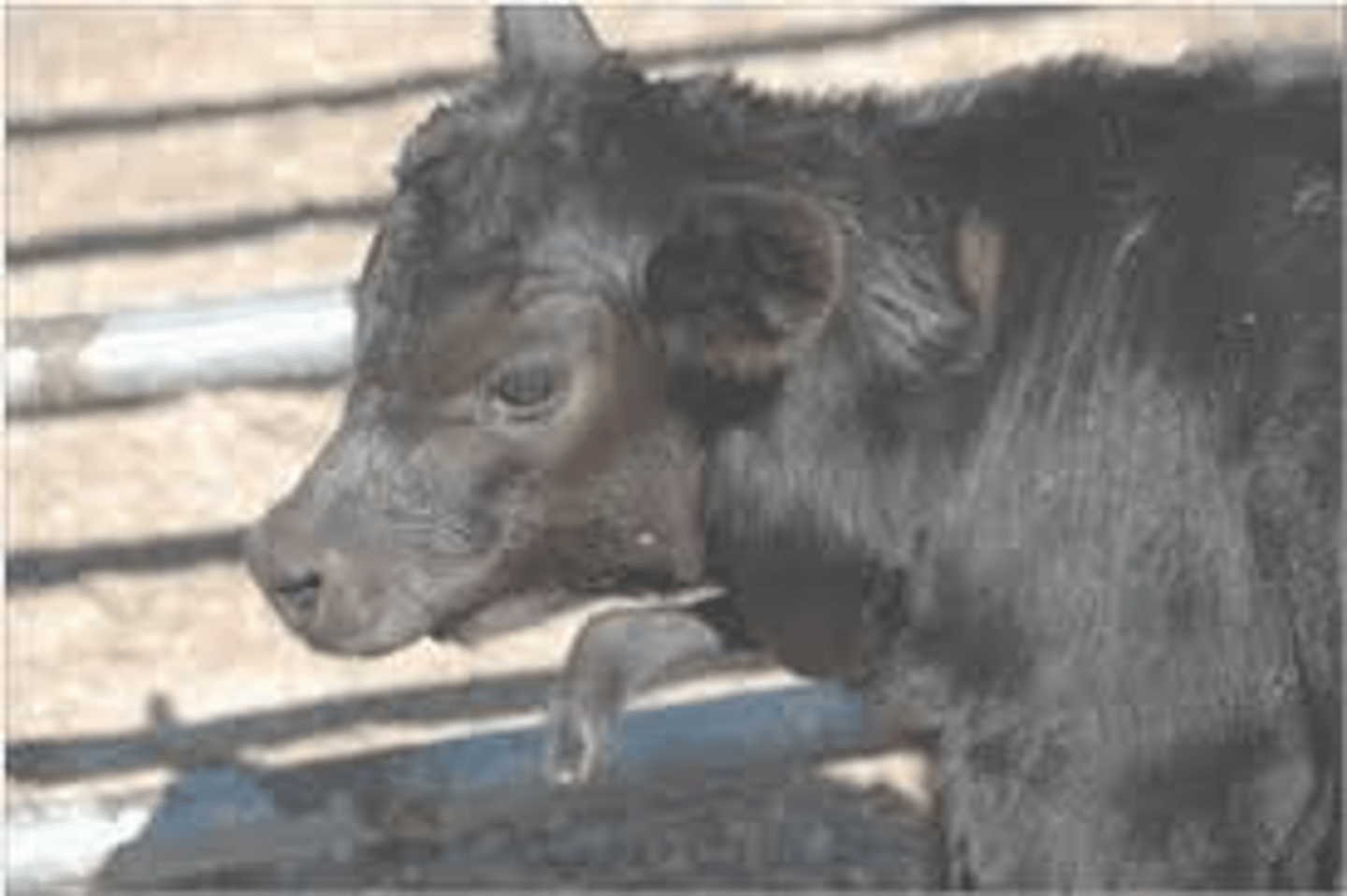
Developmental Duplication
Breed affected: Angus
Appearance: Born w/ additional limbs from the neck/shoulder area
-Recessive (calves can live if removed, death occurs from birthing difficulties)
Test: DNA test
Results: DDF (free), DDC (carrier), or DDA (affected) *can't register*
Osteopetrosis (Marble bone disease)
Breed affected: Angus/Red Angus (primarily)
Appearance: Born premature (2-4 wks) w/ short lower jaw and bones lacking marrow (break easily)
-recessive lethal
Test: DNA test
Results: OSF or OSC
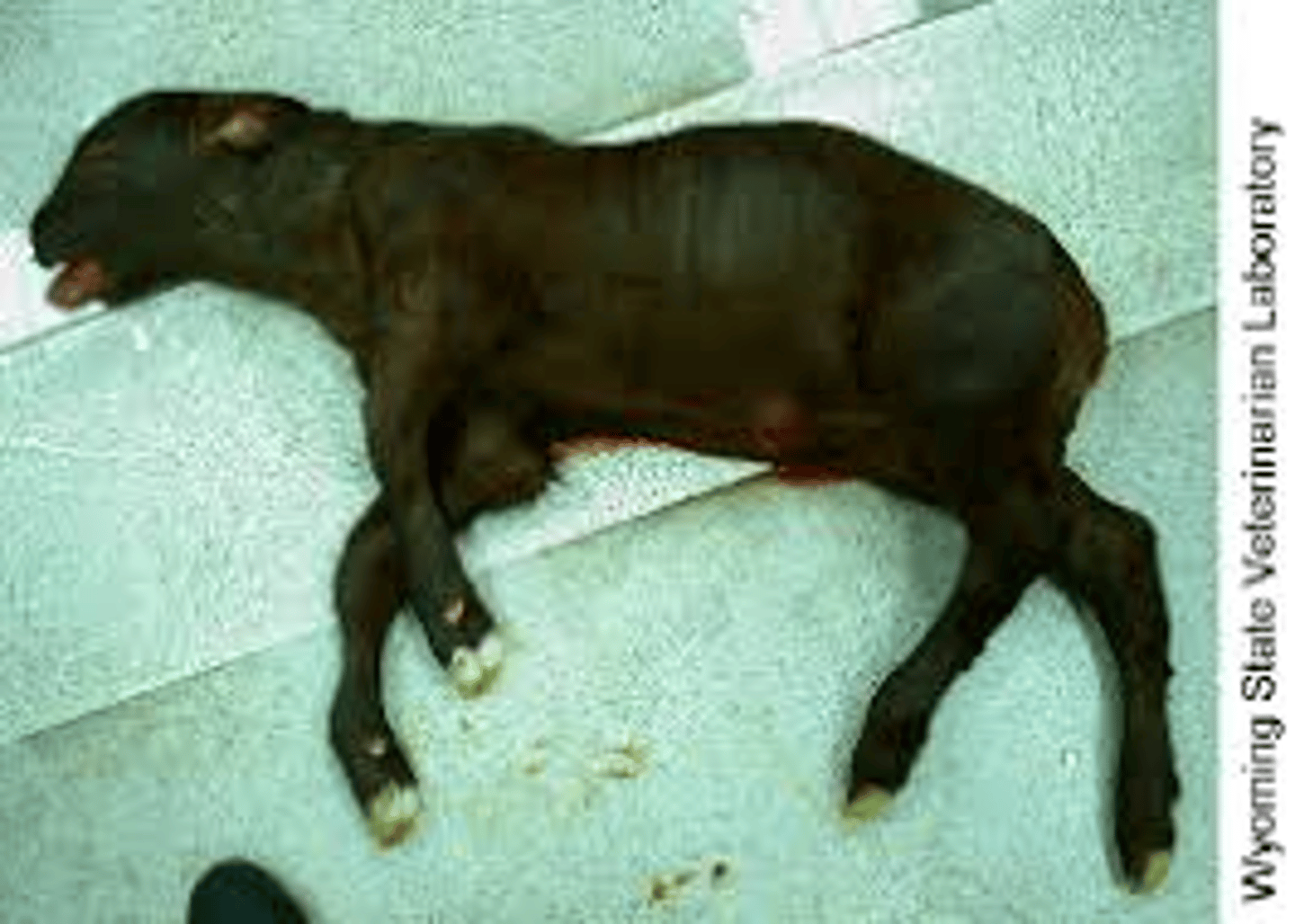
Itty Bitty Calves
Breed affected: Angus
Appearance: Calves are proportioned normally, but are extremely small
-recessive lethal (die bc/ cannot chew cud)
-May be the same as miniature Charolais cross calves
Test: N/A
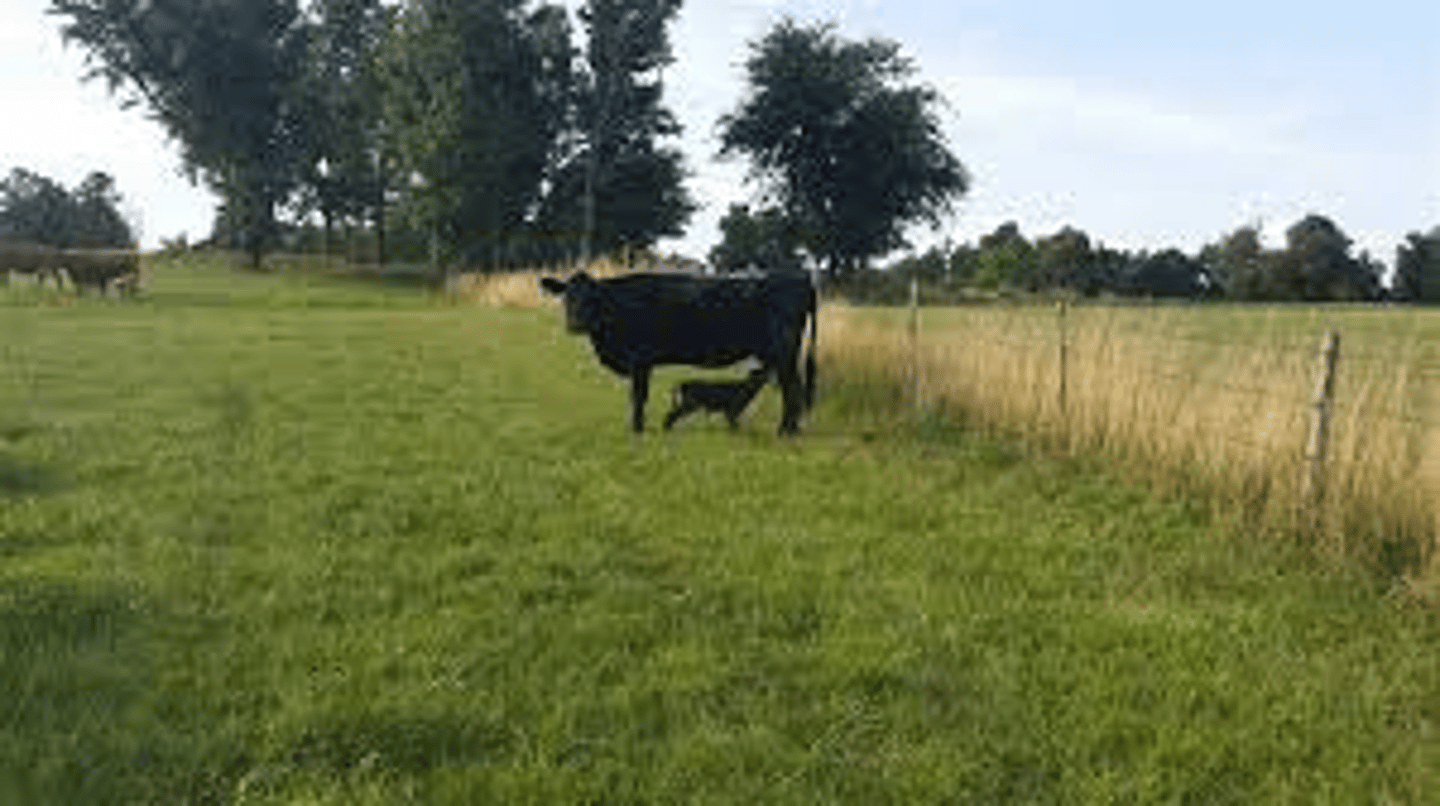
Tibial Hemimelia Syndrome (TH)
Breed affected: Shorthorn (show industry has spread to other breeds)
Appearance: Twisted legs w/ fused joints, large abdominal hernias, and skull deformity (visible spinal cord)
-recessive lethal
Test: Molecular test
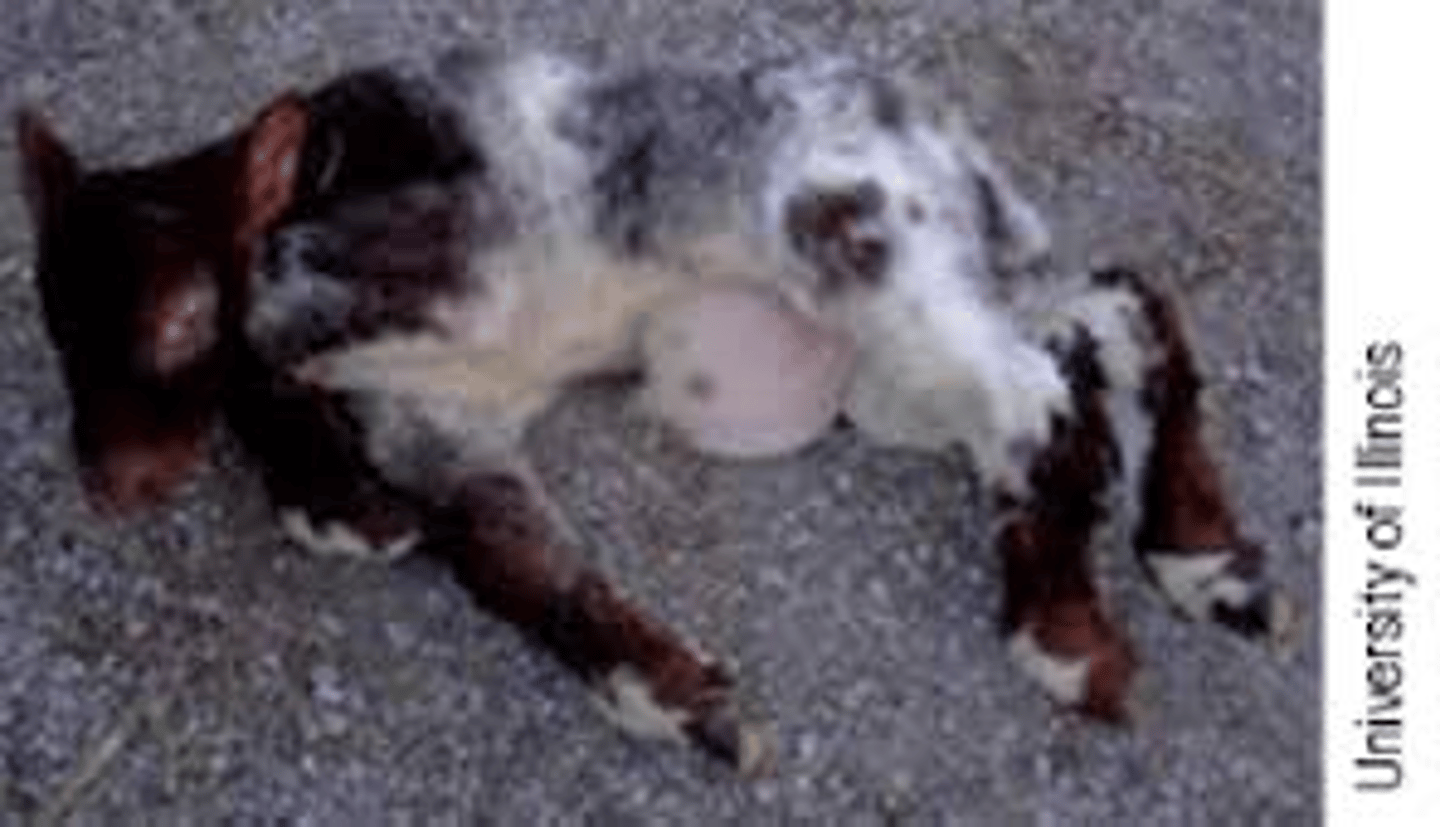
Pulmonary Hypoplasia with Anasarca
Breed affected: All show breeds
Appearance: Fluid accumulation in skin and body (causes dystocia from added weight, kills dam 50% of time) w/ underdeveloped/absence of lungs
-lethal recessive
Test: Molecular test
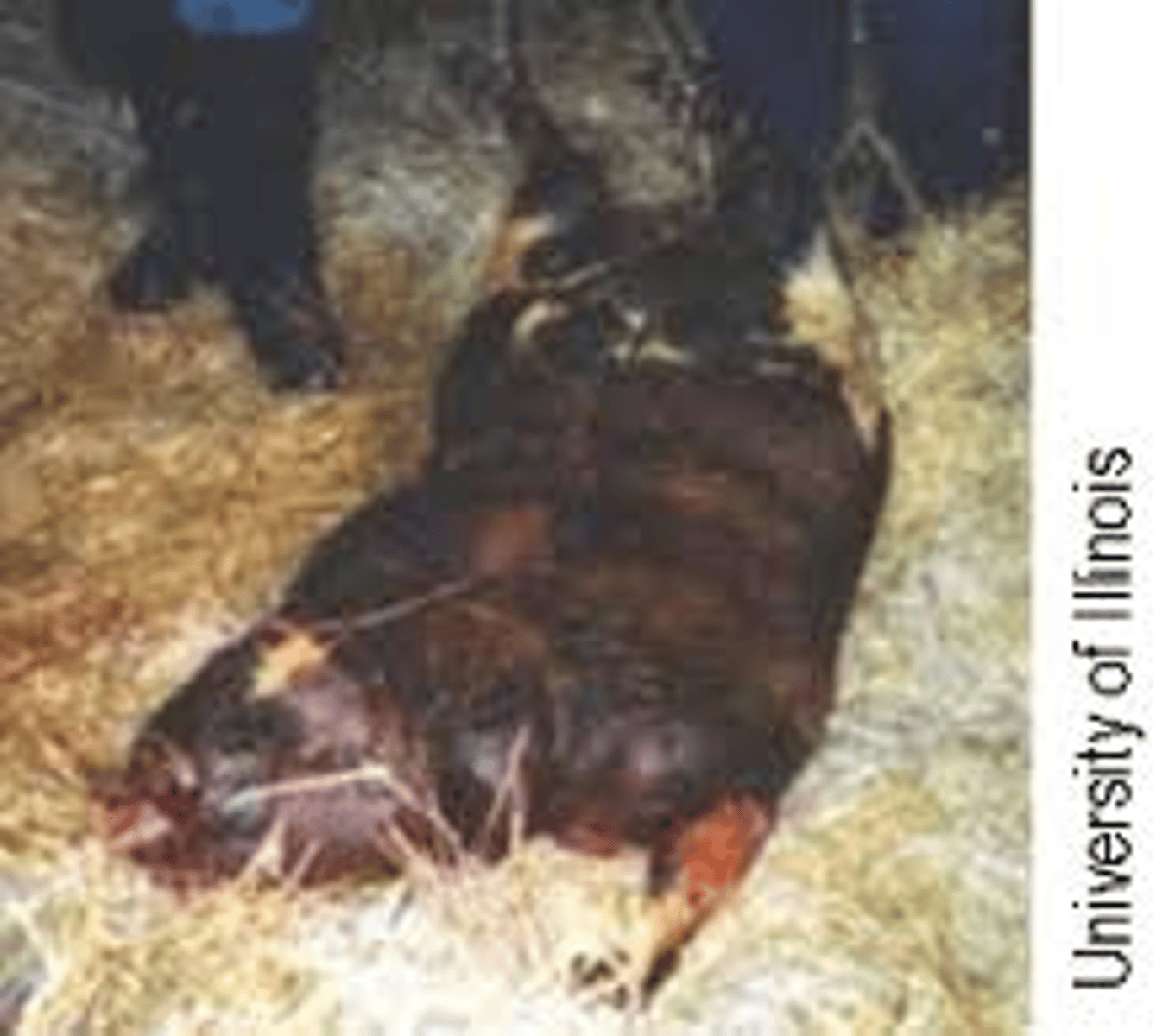
Callipyge
Breed affected: All sheep breeds
Appearance: Double muscling
-gene not expressed until 3-4 wks old
-No intermediate
Test: N/A
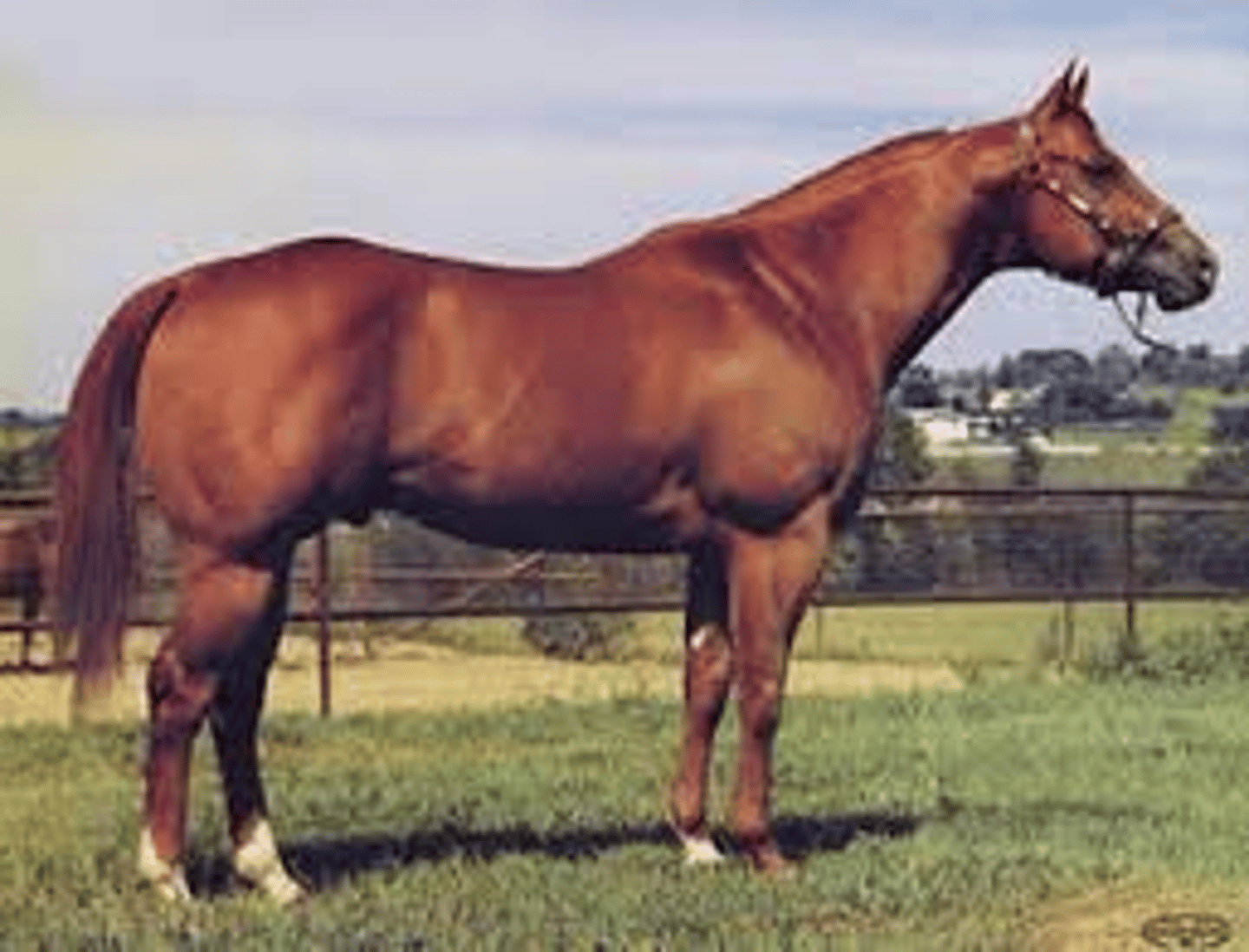
Impressive Syndrome (hyperkalemic periodic paralysis)
Breed affected: Quarter horse
Appearance: Double muscling
-Are stress prone & have uncontrollable shaking that leads to paralysis
-Dominant (present in heterozygotes)
-Originated from Impressive sire
Test: Molecular test
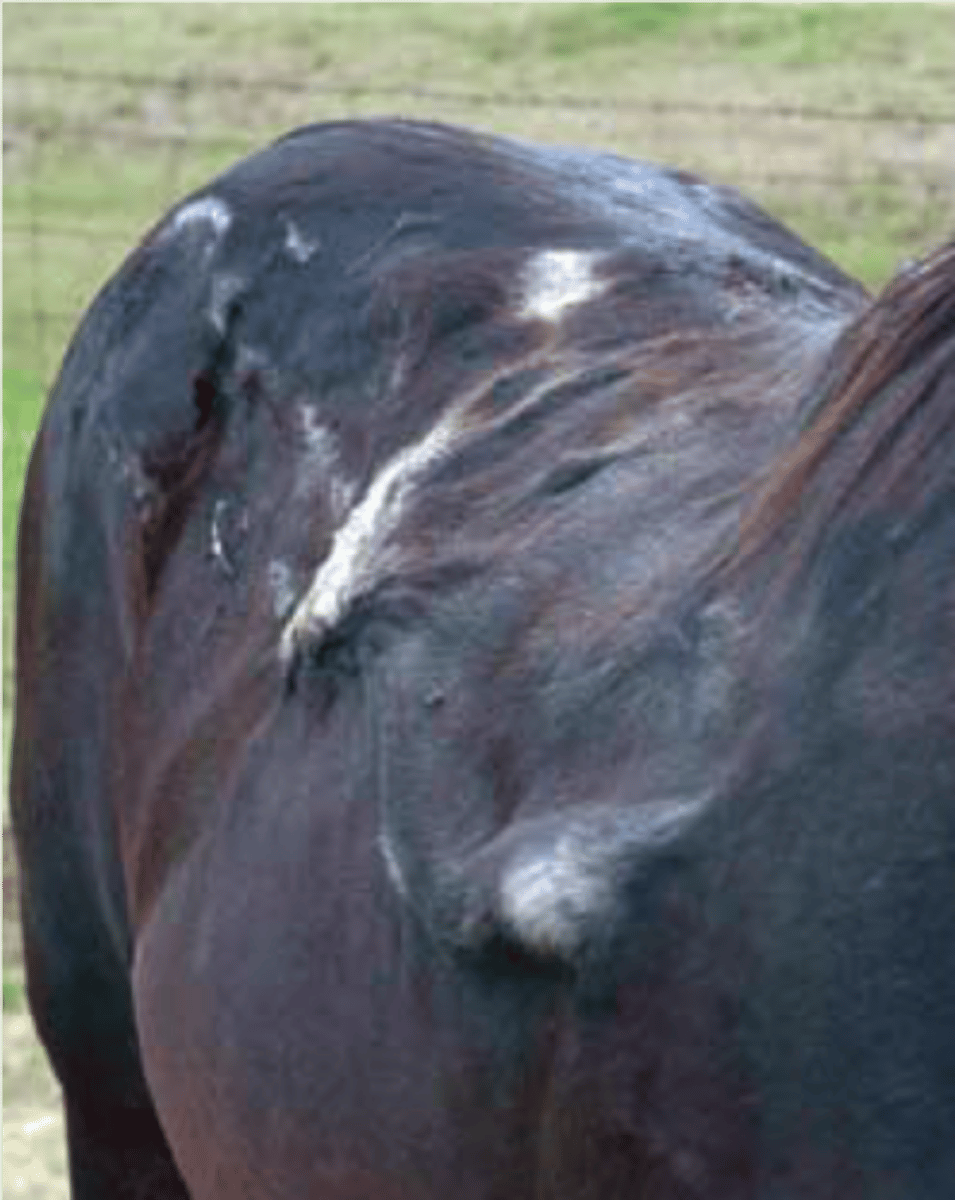
HERDA (hereditary equine regional dermal asthenia)
Breed affected: Quarter horses
Appearance: Collagen defect causes lack of adhesion btw/ skin and body
-Can live 2-4 years
-becomes present typically when breaking to ride
-Originated with Poco bueno
-recessive
Test: Molecular
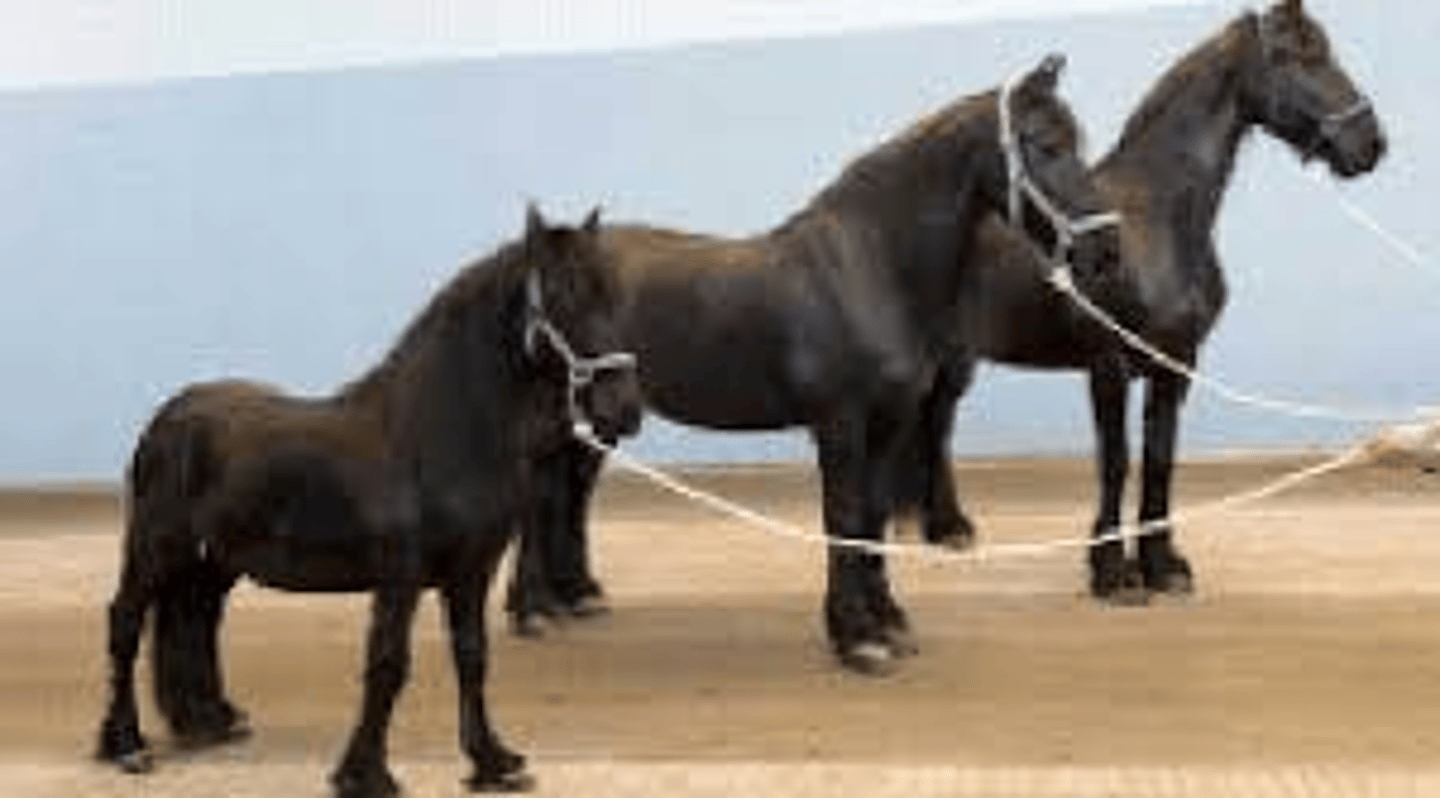
Dwarfism in Friesians
Breed affected: Friesian
Appearance: Stunted growth
-recessive
Test: N/A
Hydrocephalus in Friesians
Breed affected: Friesian
Appearance: fluid accumulation in the head
-recessive lethal
Test: N/A
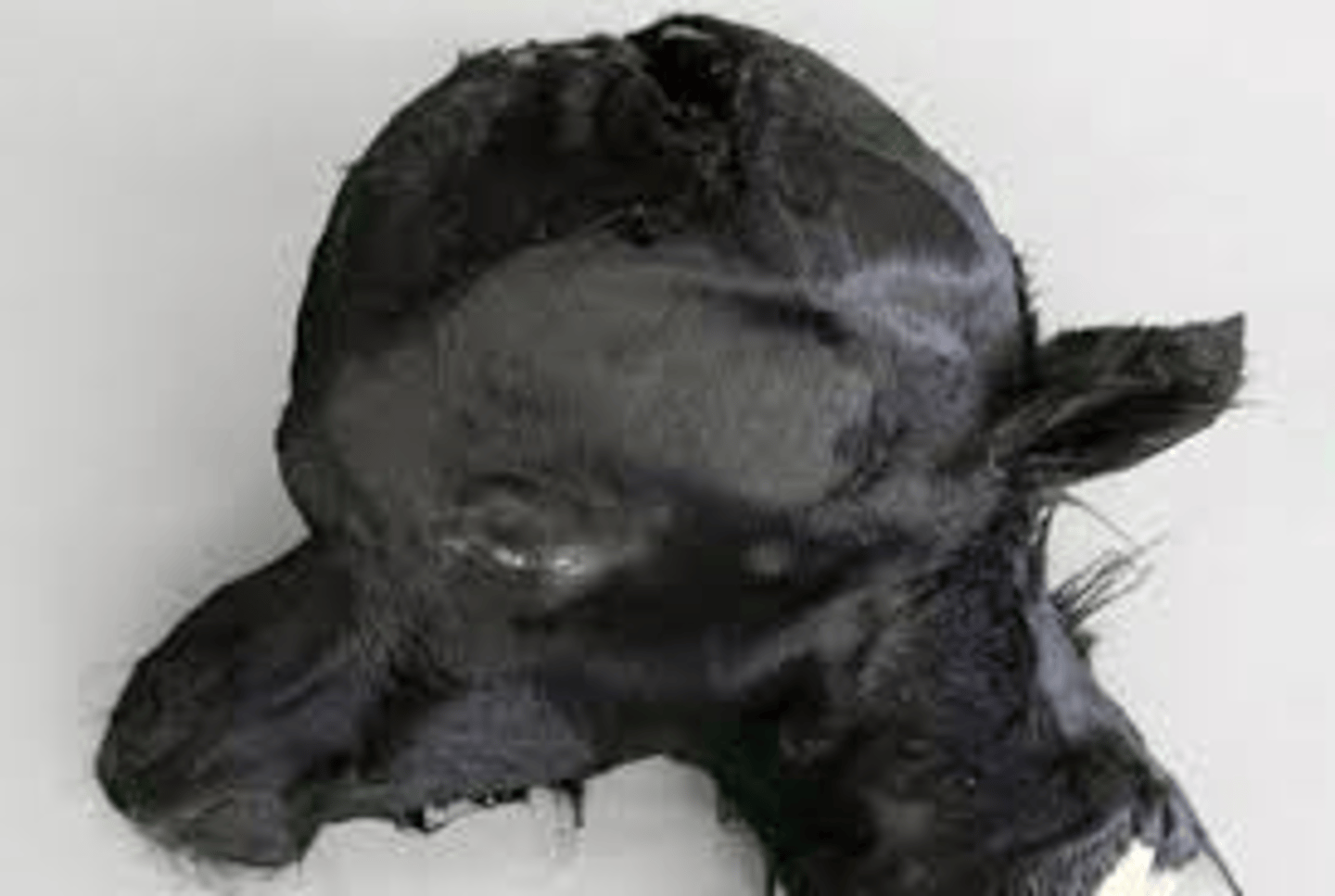
Syndactyly (mule foot)
Breed affected: Originated in Chianina (now in all breeds)
Appearance: One or more hooves are solid in structure (one toe instead of split)
-Begins with right front foot (1 foot most common) then moves counterclockwise if multiple are affected
-Recessive
Test: N/A
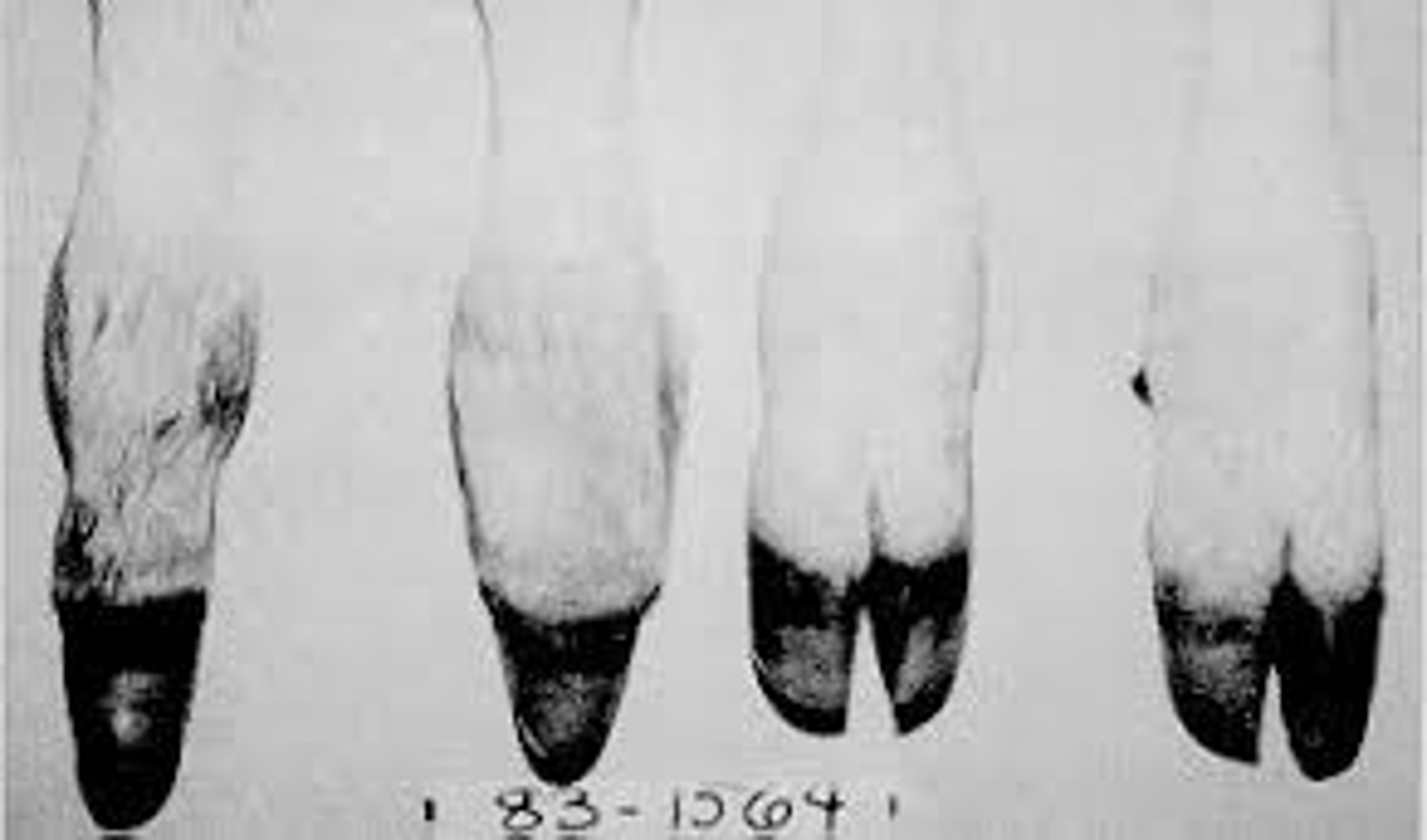
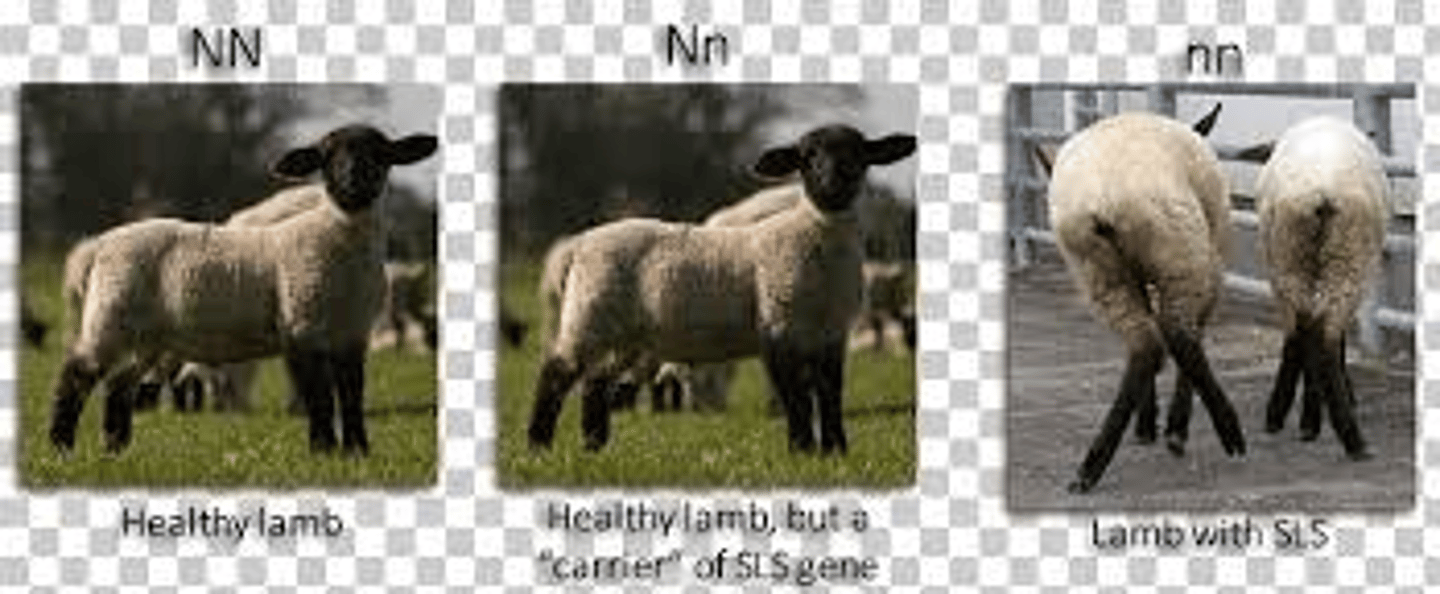
Spider Lamb Syndrome
Breed affected: Suffolk (hamps & dorsets have been affected from cross breeding)
Appearance: Legs are severely deformed
-Originated from Walking Tall
-recessive lethal
Test: Molecular
Results: NN (free), NS (carrier), or SS (affected)
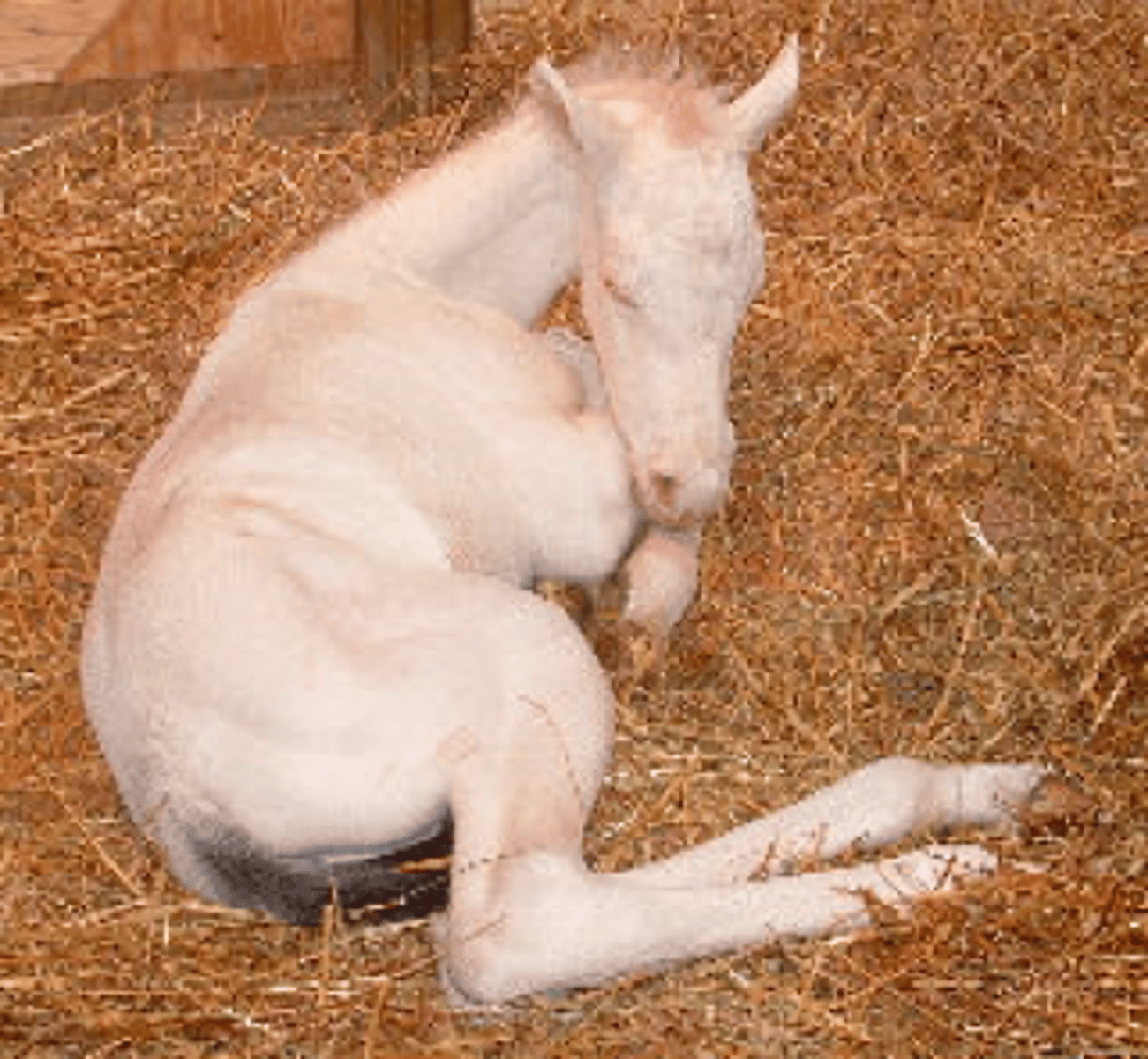
Lethal White Foal Syndrome in Frame Overos
Breed affected: Frame overos
Appearance: white foal w/ deformity in GI tract (kills foal)
-dominant (Ff --> normal genotype, FF--> affected)
Test: N/A
Brain hernia
Breed affected: All pigs
Appearance: large hernia in the skull
-lethal recessive (some have lived for studies)
Test: N/A
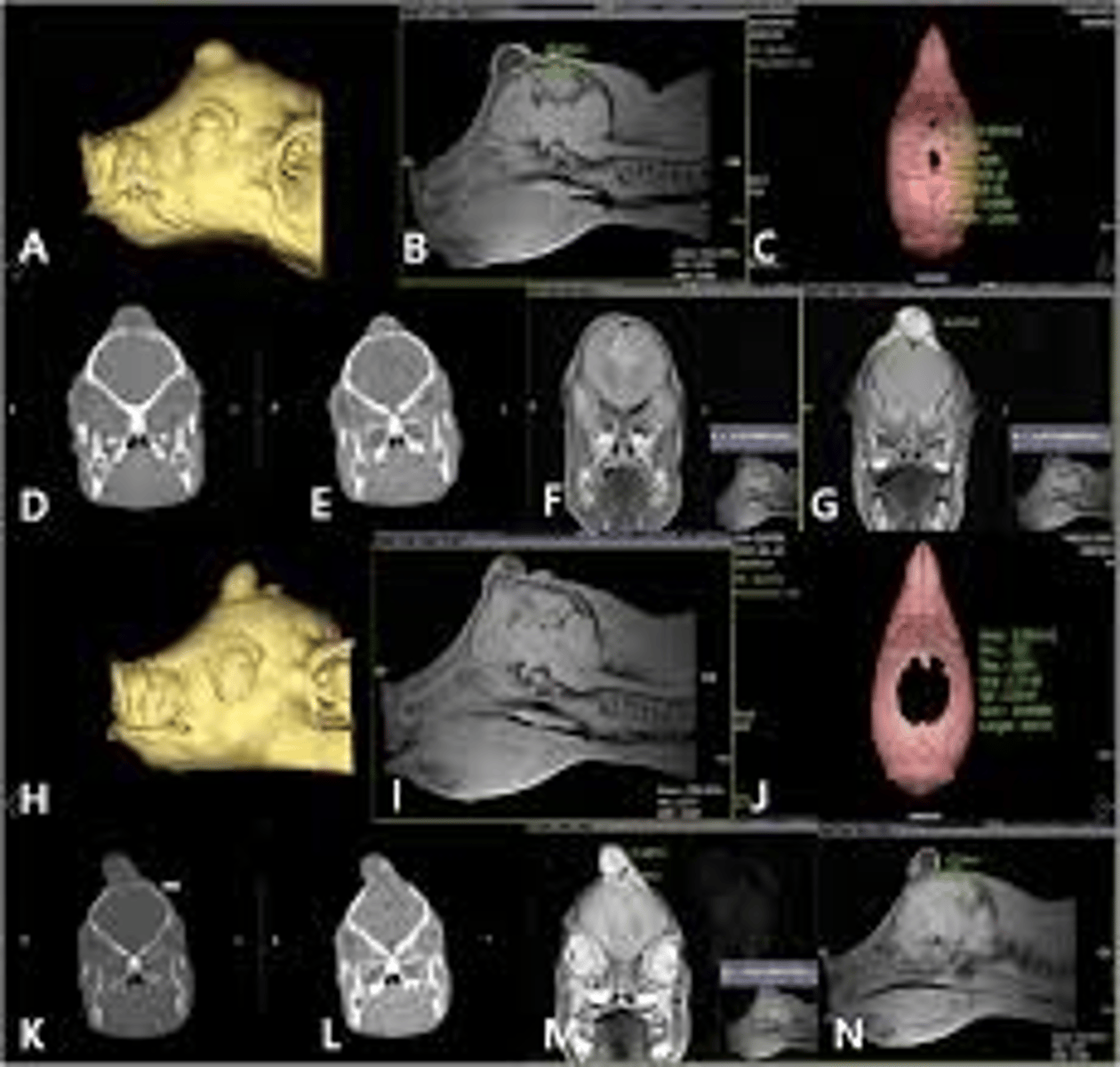
Recessive Dwarfism in Texel Sheep
Breed affected: Texel sheep
Appearance: stunted growth & deformed legs
-recessive
Test: N/A
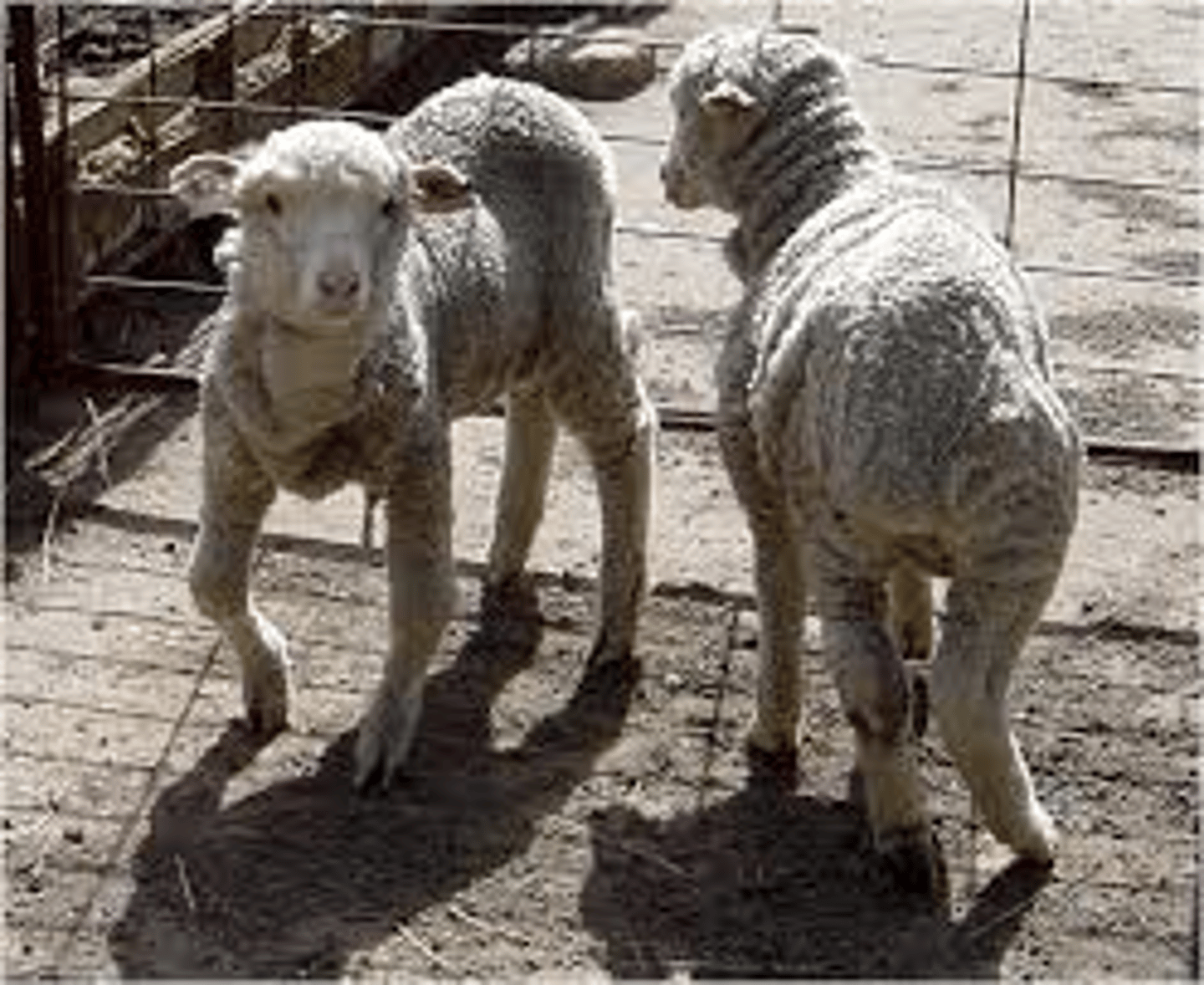
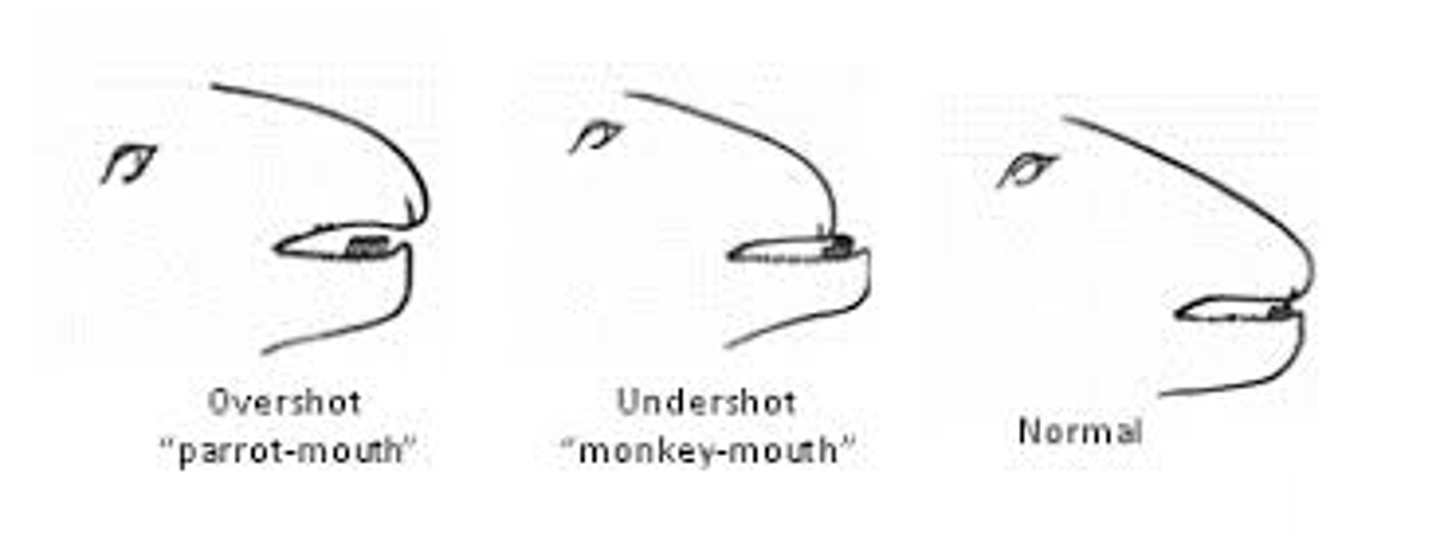
Parrot Mouth Dwarfism
Breed affected: Southdown
Appearance: top jaw longer (overshot) & stunted growth
-lethal recessive (die at 1-2 months)
Test: N/A
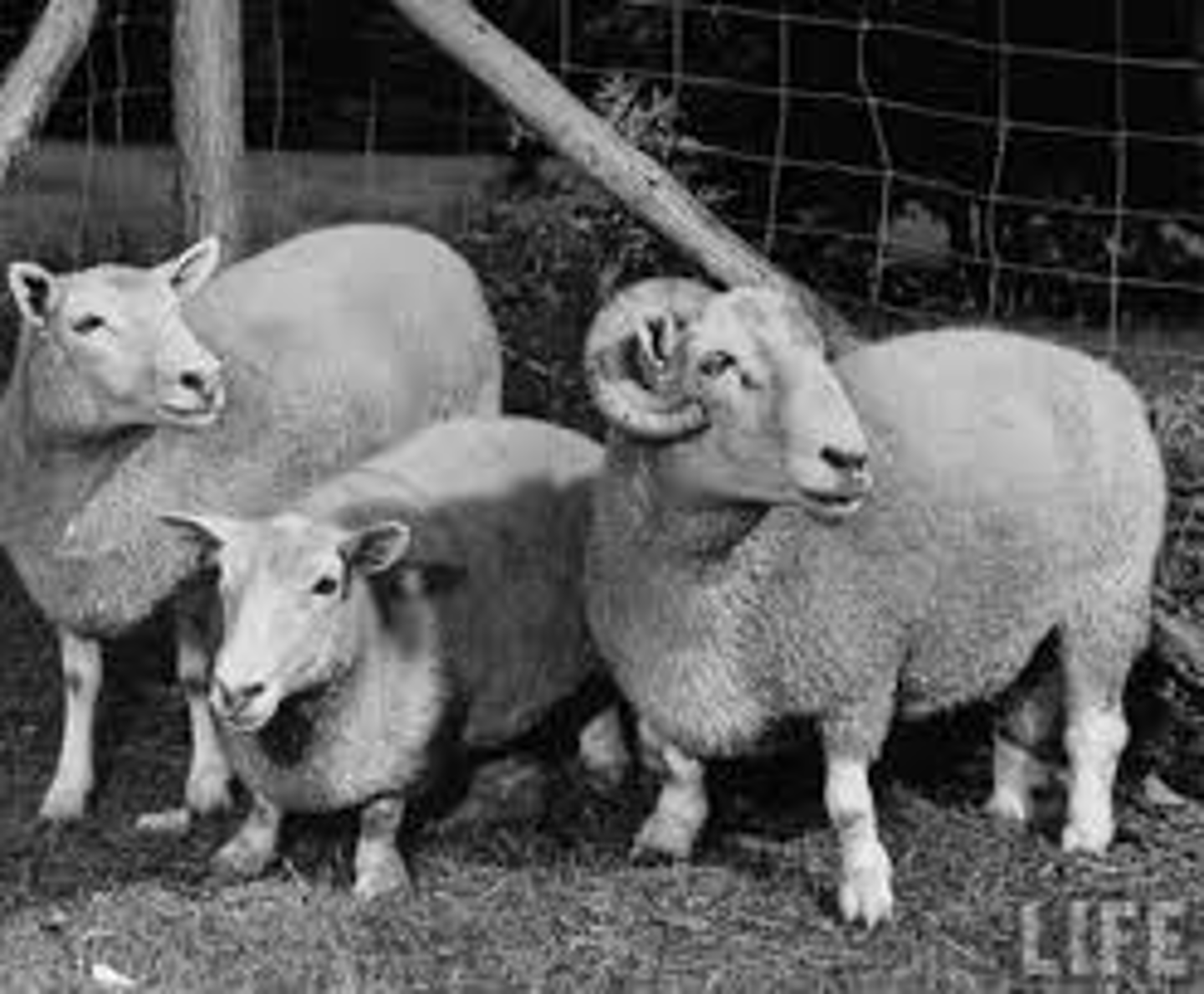
Ancon Dwarfism
Breed affected: Cheviots
Appearance: Deformed, short legs that turn out
-Heterozygotes are normal
Test: N/A
Dwarfism in Finewool Sheep
Breed affected: Rambouillet, Booroola-Merino
Appearance: Short, crooked legs that turn in
Test: N/A
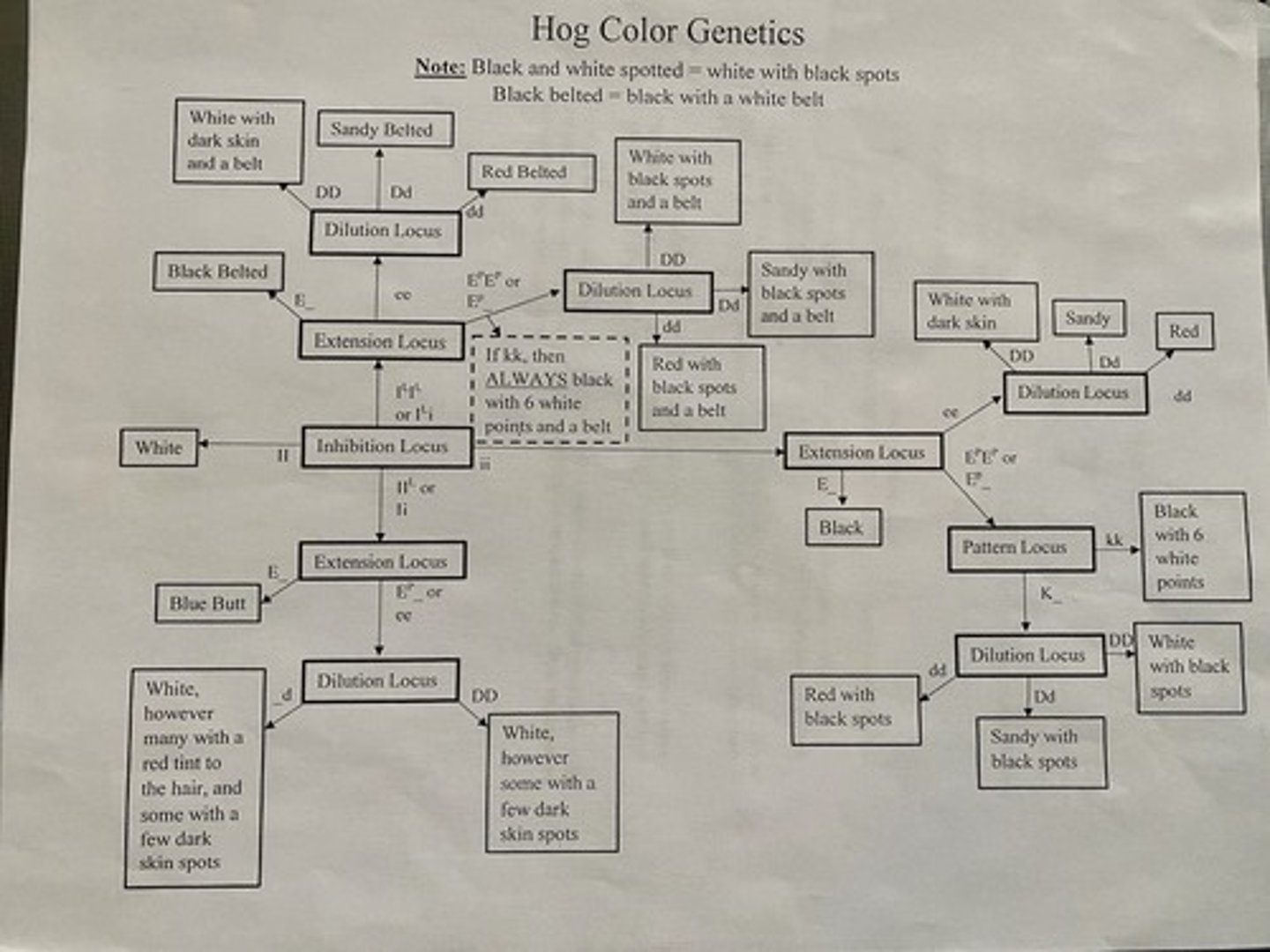
Pig Genotypes
Hampshire: EE dd KK I^l I^l
Duroc: ee dd KK ii
Yorkshire: E^p E^p DD KK II
Landrace: E^p E^p DD KK II
Chester White: E^p E^P DD KK II
Spot: E^p E^p DD KK ii
Poland China: E^p E^p DD kk ii
Berkshire: E^p E^p DD kk ii
Hog Color Genetics flow chart
Set-up:
1. Start w/ I
2. E
3. D
4. K
Rules to remember:
II (always white), I__(predominantly white),
I^l__ (something w/ a belt), ii (back to base color)
E__ (Black or Blue butt), E^p (black spots), ee (non-black base color)
DD (white), Dd (sandy), dd (red) (dilution of red, not black)
K (ONLY applies to E^p) kk (w/ ii results in black w/ 6 white points)
Dominance:
I> I^l >i
E> E^p > e
D,d (no dominance, hetero intermediate)
K> k
British Beef cattle breeds
Angus: Black, polled, Scotland, most # of registrations, marbling standard
Hereford: Red w/ white face, horned or polled, England, cancer eye (select for pigmentation)
Continental European beef cattle breeds
Charolais: White, horned, in France, but many in US are polled, France
Simmental: Originally light red and white, but many are black in US, horned or polled, Switzerland, dual purpose
Limousin: Originally red, but many are black in the US, horned or polled, France
Bos Indicus and Bos Indicus influenced beef cattle
Brahman: Bos Indicus breed, gray or red, most are horned, US origin from cattle that originated in India
Beefmaster: 1/2 Brahman 1/4 Hereford 1/4 Shorthorn, various colors, horned or polled, France
Santa Gertrudis: 3/8 Brahman 5/8 Shorthorn, red, horned or polled, US
Dairy cattle
Holstein: Black & white spotted, horned, Holland, Highest milk pro, highest pop. worldwide
Jersey: Brown or brown & white spotted, most are horned, Jersey Island (btw/ England & France), most milk fat
Finewool sheep
Rambouillet: White faced (white all over), rams horned & ewes have scurs or knobs, France
Medium wool sheep
Suffolk: Black faced w/ no wool cap, polled, England
Hampshire: Black faced w/ white wool cap & leg wool, polled, England
Hair sheep
Dorper: Either black headed or white (white head & body), composite of Dorset & Black headed Persian, most are polled, but many rams have scurs and some have horns, South Africa
Hair goats (fiber)
Angora: White, horned, produce mohair (do not produce cashmere), area that is now Turkey
Meat goats
Boer: Red headed, horned, South Africa **For all practical purposes, all goats are horned**
Terminal Sire type hog breeds
Duroc: Red, heavily muscled, down ears, US
Hampshire: Black belted, heavy muscled, up ears, US
Pietrain: White w/ dull black spots, usually w/ part of the black spots covered w/ white hair, extremely heavy muscled, up ears, Belgium
Maternal Hog breeds
Yorkshire: White, up ears, US, but largely of english origin
Landrace: White, large down ears, Denmark
Meishan: Black w/ white on the legs & often on the nose, large down ears, fat, have large litters, Meishan prefecture of China
Light horse breeds
Quarter horse: Various colors, including bay, sorrel, brown, black, gray, dun, palomino, buckskin, and grullo, speed at short distances, cow work, US
Thoroughbred: Various colors, including bay, chestnut, brown, gray, and black (rare), speed at intermediate distances, England
Arabian: Same colors as Thoroughbred, endurance, intelligence, Arabian peninsula
Appaloosa: Same traits and base colors as the Quarter horse w/ one of the leopard patterns, US
Paint: Same traits and base colors as the Quarter horse w/ one of the paint patterns, US
Draft horse breeds
Clydesdale: Bay, black, brown, or chestnut, w/ white on the face & legs, feathering (long hair) on the lower legs, heavy draft, Scotland
Percheron: Usually black or gray, but some bays & sorrels, no feathering, heavy draft, France