Chem: IMFs, Phase Behavior, Solutions, and Colloids
 Call Kai
 Learn
Learn Practice Test
 Spaced Repetition
 Match
Match Flashcards
 Knowt Play
1/52

Earn XP
Description and Tags
for chem 2 first test
Name | Mastery | Learn | Test | Matching | Spaced | Call with Kai | Chat |
|---|
No analytics yet
Send a link to your students to track their progress
53 Terms
intermolecular forces
attractive forces between molecules that arise from interactions between temporary, partial, or full charges in atoms, ions, and molecules
London (dispersion) forces
weak attractive forces caused by instantaneous-induced dipole interactions, all atoms and molecules
dipole-dipole
attractive forces between permanent dipoles, all polar molecules
hydrogen bonding
strong attractive forces between molecules with hydrogen bonded to a very electronegative atom, all molecules with hydrogen bonded to N, O, or F
ion-dipole
strong attractive forces between ions and molecules with a permanent dipole moment, any solutions formed between soluble ionic compounds and polar molecules
gas to solid and solid to gas
gas to solid: deposition
solid to gas: sublimation
when phase transitions occur
when the temperature (or pressure) allows for partial or complete breaking (or forming) of intermolecular forces between molecules
London-dispersion strength increases when
increasing molar mass
increasing surface area
highest boiling points
London-dispersion (compare molar mass and surface area) → polar → hydrogen bonding
vapor
a gas formed from molecules that escape from the surface of a liquid
vapor pressure
the equilibrium partial pressure of a vapor at a given temperature (stronger IMFs mean lower vapor pressure) (increases with increasing temperature) (normal boiling point is the temperature at which a substance’s vapor pressure is at 1 atm)
Clausius-Clapeyron equation
relationship between temperature and vapor pressure

enthalpy of vaporization
the amount of energy required to vaporize a substance per mole
heating curve
heat of vaporization and fusion: at a phase transition temperature, all of the heat added or removed goes into breaking or forming IMFs
otherwise, the temperature increases linearly when a substance is heated based on its specific heat at a given phase
phase diagram
a plot of pressure vs. temperature that shows the range of phase behavior for a given substance

triple point
point at which 3 phases are in equilibrium

critical point
point at which there is no distinction between the liquid and gas phases (substance forms a supercritical fluid)

phase equilibrium curves
points at which 2 phases are at equilibrium

crystalline solids
composed of atoms, ions, or molecules that have a long range repeating order called a crystal lattice
unit cell
the smallest divisible unit that repeats in all directions (most common is a cubic cell with equal edge lengths and 90* angles)
simple cubic
one atom at each vertex of a cube, 1 atom per unit cell, edge length= 2r

body centered cubic
one atom at each vertex and the center of a cube, 2 atoms per unit cell, edge length= 4r/square root of 3

face centered cubic
one atom at each vertex and each face of a cube, 4 atoms per unit cell, edge length= 2xsquare root of 2xr

molecular solids
a crystalline solid, held together by IMFs, relatively low melting points

ionic solids
crystalline solids, held together by electrostatic forces, relatively high melting points

nonbonding solids
atomic solid, held together by London-dispersion forces, relatively low melting points

covalent network solids
atomic solid, held together by covalent bonds, extremely high melting points (ex: diamond, graphite, quartz)

metallic solids
atomic solid, cations in an “electron sea”, variable melting points

solutions
homogeneous (uniform) mixtures where solute particles are individual atoms and molecules
solute
pure substance that is being dissolved
solvent
the pure substance that is doing the dissolving
enthalpy of solution
enthalpy of lattice: energy absorbed to break the solid lattice into individual ions, endothermic, >0
H2O molecules make room for ions and that is a tiny bit endothermic
enthalpy of hydration: energy released when water molecules surround ions in solution, exothermic, <0

miscibility
the ability for pure substances to mix without forming layers, depends on the enthalpy of solution and the natural tendency to maximize entropy (randomness)
“like dissolves like”
pure substances with similar intermolecular forces are likely miscible
solubility
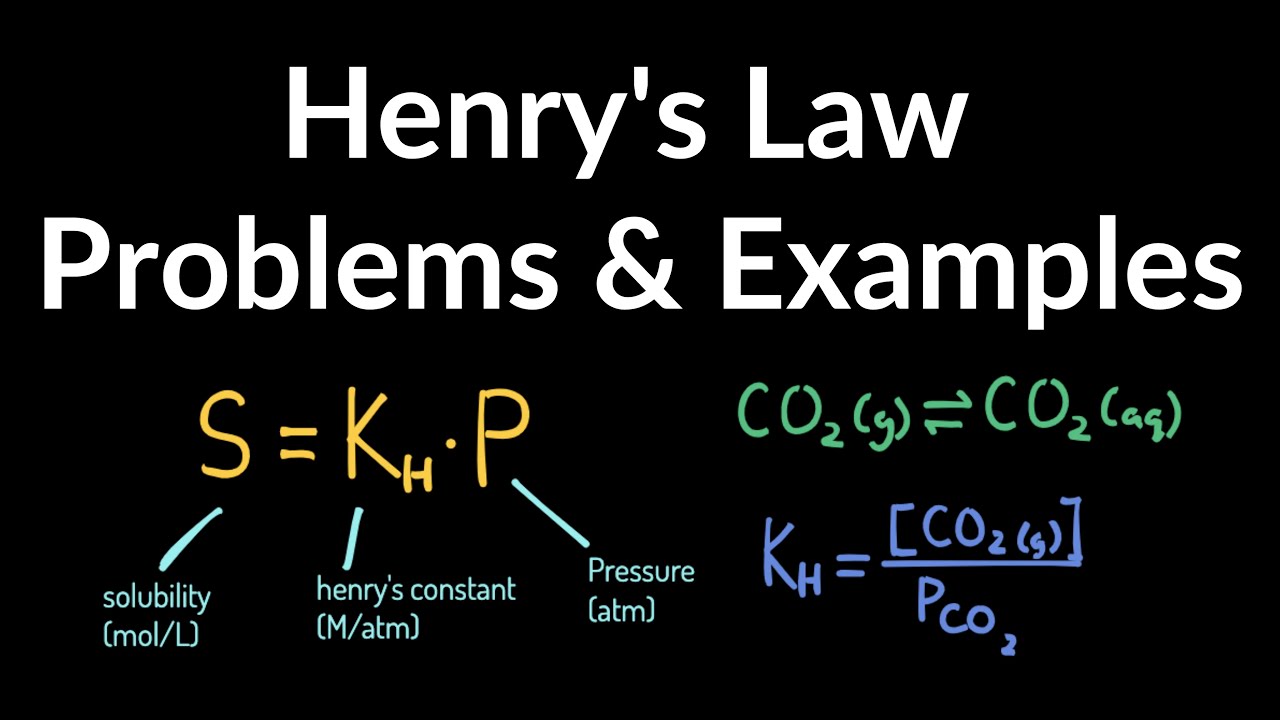
the amount of solute that must be added to a given amount of solvent to form a saturated solution (solid in liquid increases with increasing temperature) (gas in liquid decreases in increasing temperature and increases with increasing pressure) (Henry’s Law)
molarity (M)
moles of solute / liters of solution
mole fraction (XA)
moles of A / total moles in solution (total will equal 1)
molality (m)
moles of solute / kilograms of solvent (does not change with temperature)
percent by mass (parts per hundred)
(mass of solute / mass of solution) x 100%
colligative properties
solution properties that depend on concentration but not the identity of the solute (vapor pressure lowering, freezing point depression, boiling point elevation, osmotic pressure)
Raoult’s Law
relates the pressure of a solution to the mole fraction of the solvent

Dalton’s Law
for ideal solution of volatile substances, each substance contributes to the total vapor pressure

freezing point and boiling point
the change in the boiling point and freezing point temperatures depend on the molality (m) of the solution

osmosis
the flow of solvent from low to high concentration through a semi-permeable membrane
osmotic pressure
the amount of pressure needed to stop osmosis in a system

the van’t Hoff factor (i)
the ratio between the moles of ions and formula units dissolved in solution, estimated from the chemical formula of strong electrolytes, experimentally it is lower than expected due to ion pairing (ex: Ca(NO3)2 = 3)

colloids
are homogeneous mixtures where solute particles are 1nm-1um in diameter, colloid particles are large enough to scatter visible light, distinguished using the Tyndall effect
colloidal particles: solid or liquid
solvent: gas
aerosol (ex: smoke, fog)
colloidal particles: gas
solvent: solid or liquid
foam (ex: pumice, whipped cream)
colloidal particles: liquid
solvent: liquid
emulsion (ex: milk)
colloidal particles: liquid
solvent: solid
gel (ex: jelly)
colloidal particles: solid
solvent: liquid
sol (ex: paint)
soaps
acts as emulsifiers, ionic head that is hydrophilic, non-polar tail that is hydrophobic, form micelles that encase dirt and oils