Acquired Immunity 1
 Call Kai
 Learn
Learn Practice Test
 Spaced Repetition
 Match
Match Flashcards
 Knowt Play
1/21

Earn XP
Description and Tags
This set of vocabulary flashcards covers the essential components of acquired immunity, including antibody structure, classes of immunoglobulins, and the mechanisms of antigen presentation.
Name | Mastery | Learn | Test | Matching | Spaced | Call with Kai | Chat |
|---|
No analytics yet
Send a link to your students to track their progress
22 Terms
Two components of acquired immunity
Humoral - production of antibodies (missiles)
Cell-mediated - activated cells that kill organisms (soldiers). B and T lymphocytes
Specificity
The principle that only a specific group of lymphocytes, known as a clone, recognize an antigen from a particular microbe.
Antigen
A general term for a material that induces an immune response or reacts with antibodies.
Immunogen
An antigen that induces an immune response. All immunogens are antigens, but not all antigens are immunogens
Hapten
A low-molecular weight material that is non-immunogenic on its own but becomes immunogenic if conjugated to a carrier molecule.
Plasma cells
Activated B-lymphocytes responsible for producing antibodies.
Antibody Variable region
Located at the N-terminus of the antibody arms, these sites are responsible for antigen binding.
IgG
Monomeric, represents 85% of antibodies. Produced during the secondary response.
IgM
Pentameric, 10% of antibodies. Produced during the primary response.
IgA
5% of antibodies. Exists as a monomer / dimer (Dimeric IgA is secreted in saliva)
IgD
Monomeric. Present on the surface of B-lymphocytes.
IgE
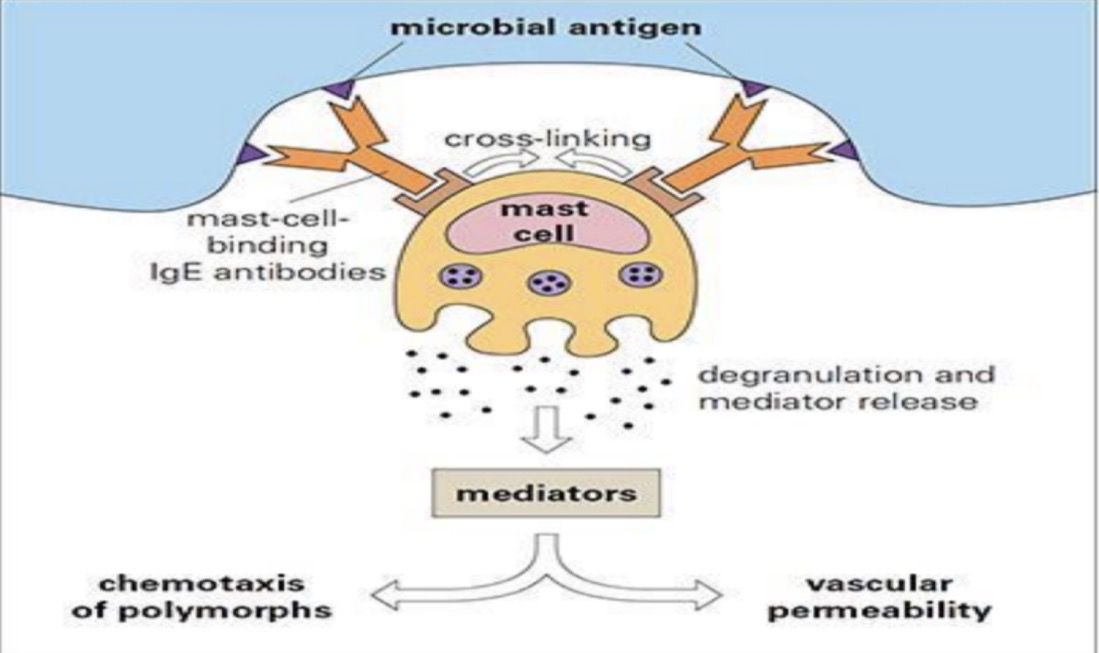
Monomeric; involved in acute inflammation, allergic reactions, parasitic infections.
What do antibodies do once they bind?
Neutralization
Agglutination
Opsonization
Complement activation (classical pathway)
Acute inflammation
Antibody-dependent cell-mediated cytotoxicity (ADCC)
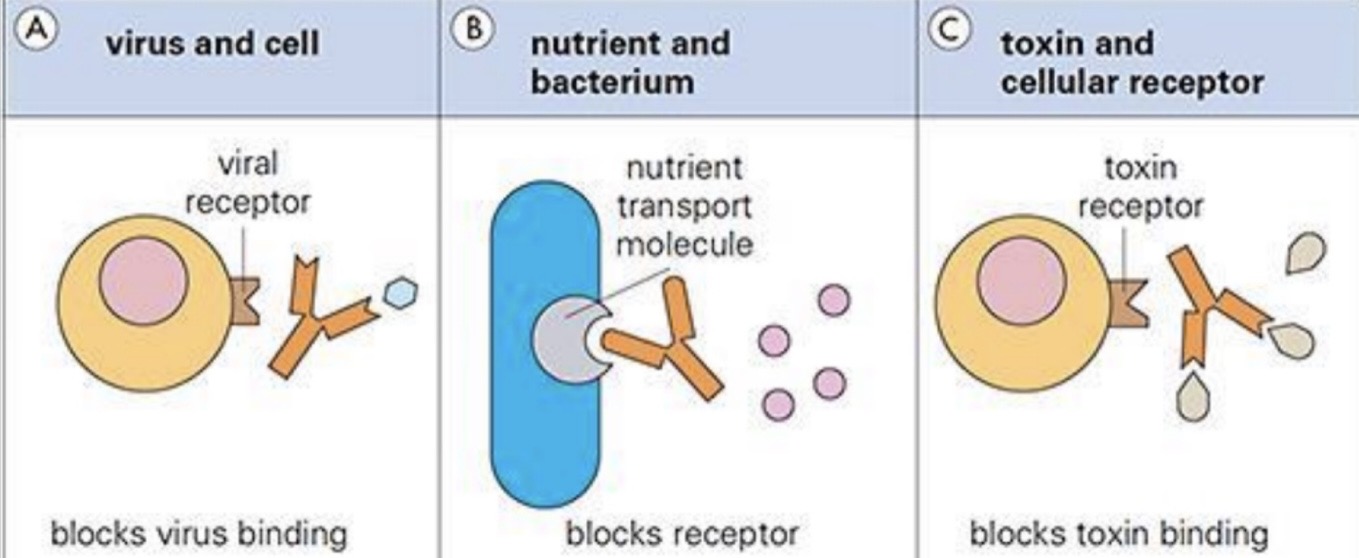
Neutralization
An antibody function that involves the deactivation of a toxin, prevention of viral attachment, or blocking a bacterial surface receptor.
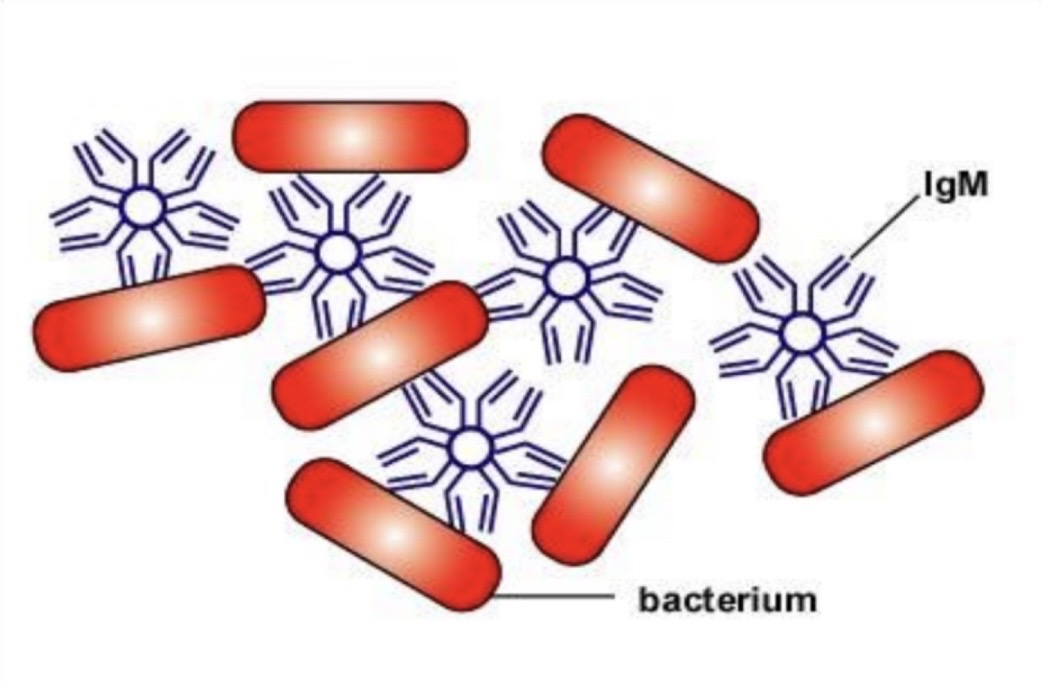
Agglutination
The process where antibodies cause the aggregation of microbes.
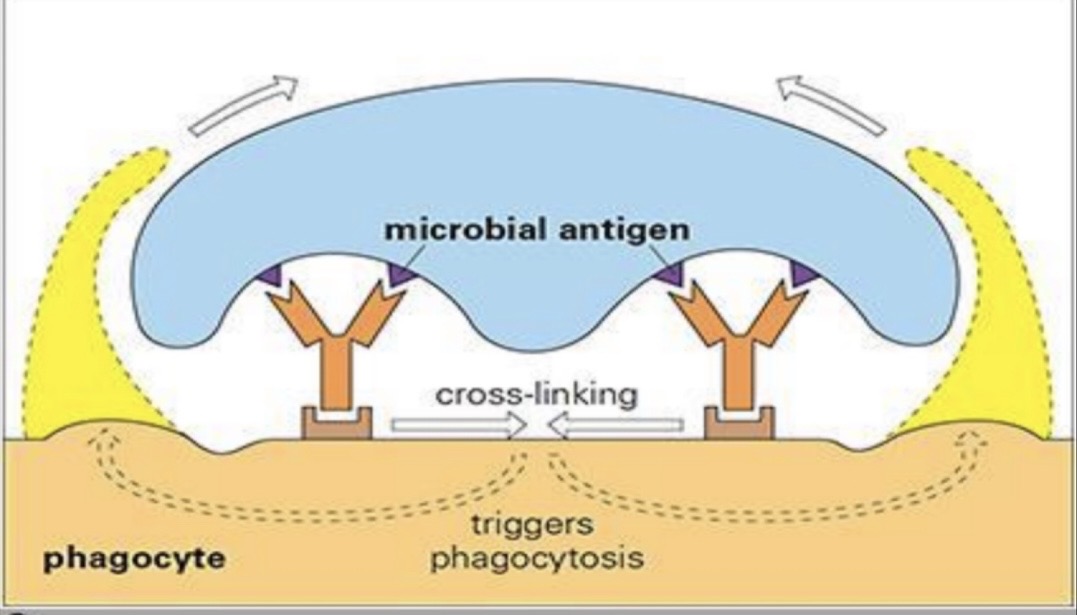
Opsonization
The coating of a microbe with molecules like antibodies, complement proteins, or acute phase proteins to make it easier for cells to engulf.
Antibody-mediated acute inflammation
Although acute inflammation is innate immunity, presence of antibodies makes this response stronger
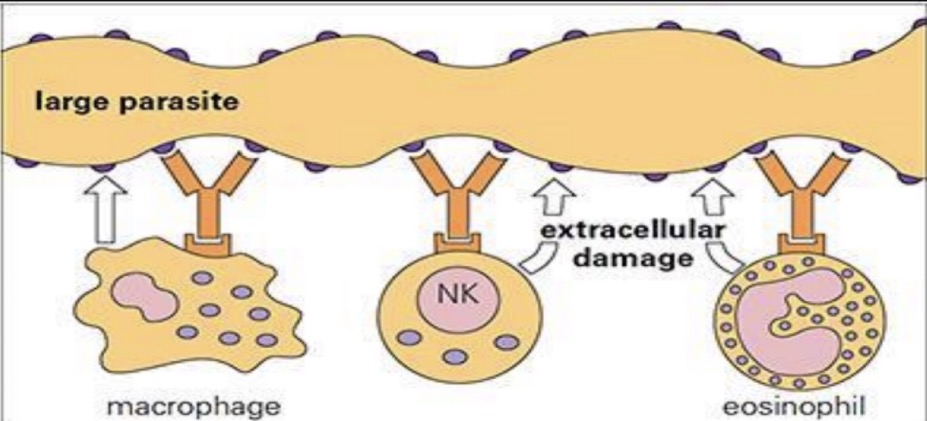
Antibody-dependent cell-mediated cytotoxicity (ADCC)
The killing of large parasites or tumor cells by NK cells, macrophages, and eosinophils.
Cytokines
Soluble proteins that serve as intercellular communication factors to regulate differentiation, proliferation, and activation / inhibition of immune cells.
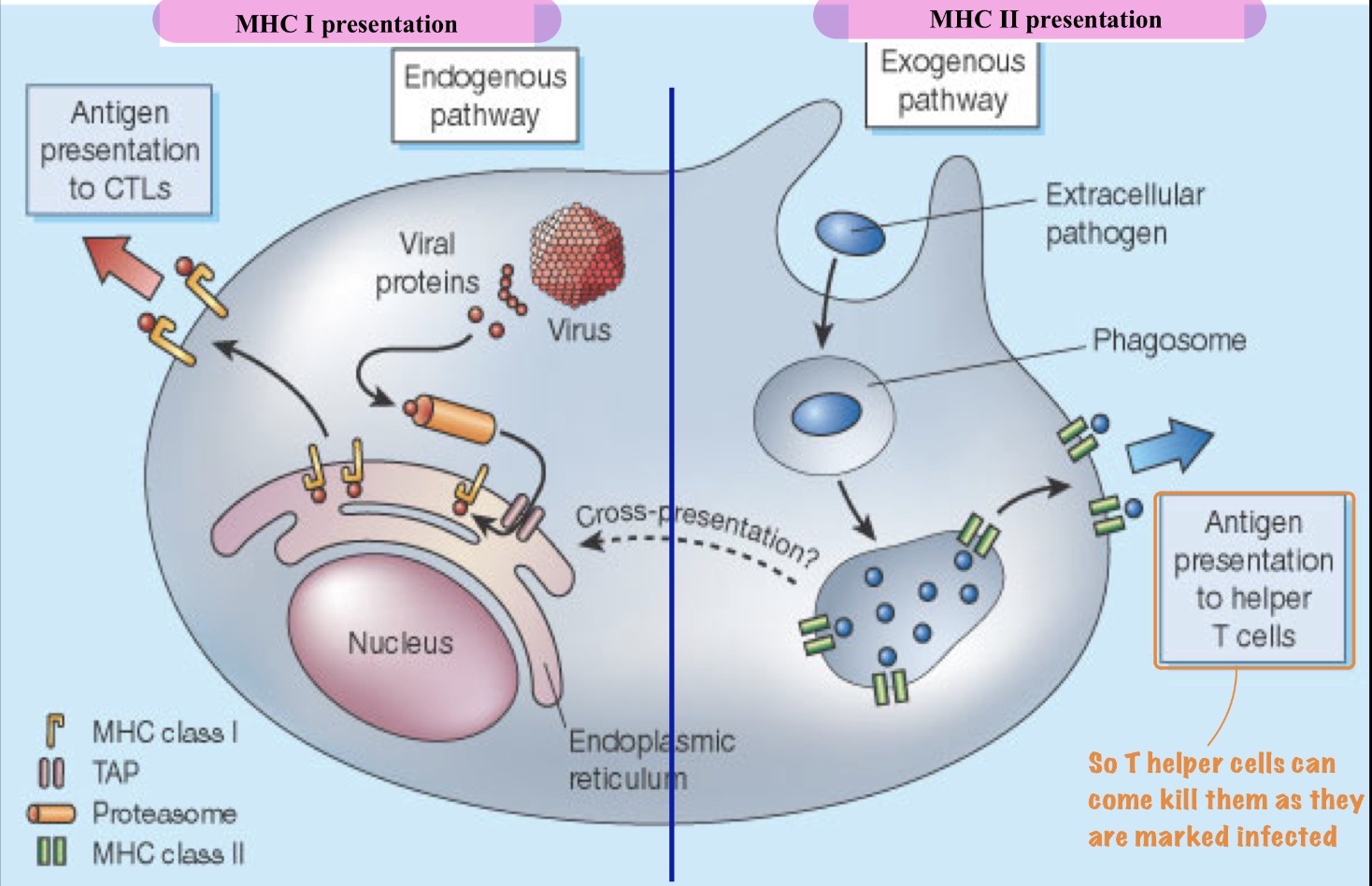
Major Histocompatibility Complex (MHC)
Process and present antigens to activate T-lymphocytes. MHC plays an important role in transplant rejection.
MHC I
MHC molecules present on almost all cell types that link to viral or self-antigens to activate T-cytotoxic cells.
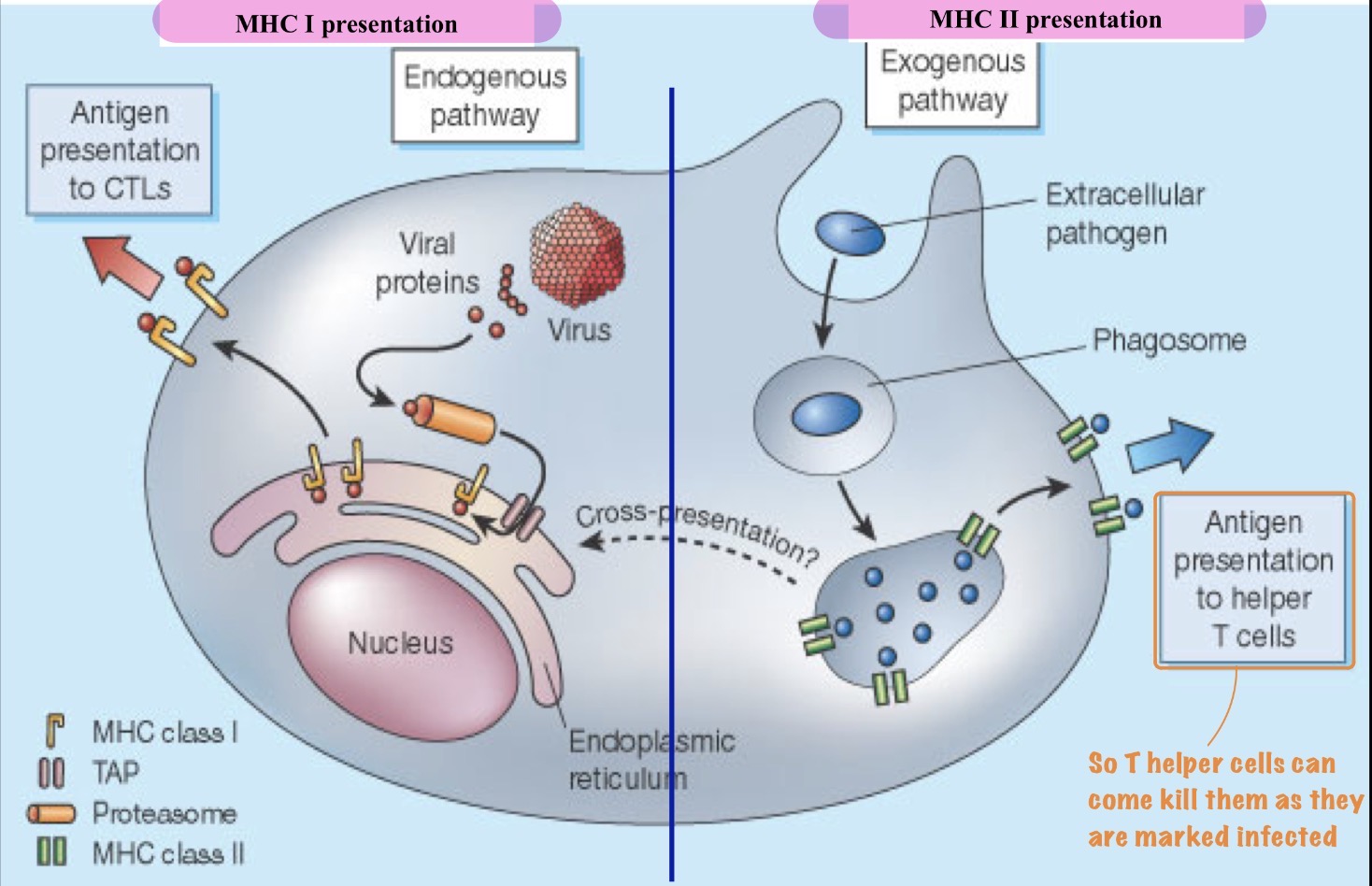
MHC II
Present on antigen-presenting cells (APCs) like macrophages, dendritic cells, and B-lymphocytes that activate T-helper cells.