DK Ching VD - Moisture Protection
 Call Kai
 Learn
Learn Practice Test
 Spaced Repetition
 Match
Match Flashcards
 Knowt Play
1/56

There's no tags or description
Looks like no tags are added yet.
Name | Mastery | Learn | Test | Matching | Spaced | Call with Kai |
|---|
No analytics yet
Send a link to your students to track their progress
57 Terms
moisture protection
restricting by various means the passage or migration of water or water vapor through a building assembly or construction
vapor retarder
a material of low permeance, as plastic film or foil, installed in a construction to retard the transmission of moisture from the interior environment to a point where it can condense into water; also called "vapor barrier"
dampproofing
the treatment of a masonry or concrete surface to retard the absorption of water or penetration of water vapor, either by applying a waterproof coating or by using a suitable admixture
parging
a thin coat of cement mortar for smoothing the surface of rough masonry or for sealing a masonry wall against moisture
waterproofing
a membrane or coating applied to render a surface impervious to water
asphalt mastic
a mixture of asphalt, graded mineral aggregate, and fine mineral matter than can be poured when heated and hardens when exposed to air, used as an adhesive, as a joint sealant, and in waterproofing
mastic
any of various pasty preparations containing bituminous materials and used as an adhesive or sealant
gravel drain
a layer or fill of crushed rock or gravel placed to ensure adequate drainage of groundwater while preventing the entry and flow of sediment and silt
drainage mat
a two-part material for draining groundwater, such as from behind a foundation or retaining wall, consisting of synthetic matting or an eggcrate core, faced on one or both sides with a filter fabric
filter fabric
a geotextile fabric that allows water to pass freely into an underground drainage medium but prevents fine soil particles from entering and clogging the system
geotextile
any of a class of synthetic fabrics used to separate soil materials, filter fine soil particles from drainage medium, or control soil erosion
foundation drain
open-jointed tile or perforated pipe laid around the foundation of a building for the collection and conveyance of groundwater to a point of disposal
flashing
pieces of sheet metal or other thin, impervious material installed to prevent the passage of water into a structure from an angle or joint
through-wall flashing
flashing that extends from one side of a wall to the other
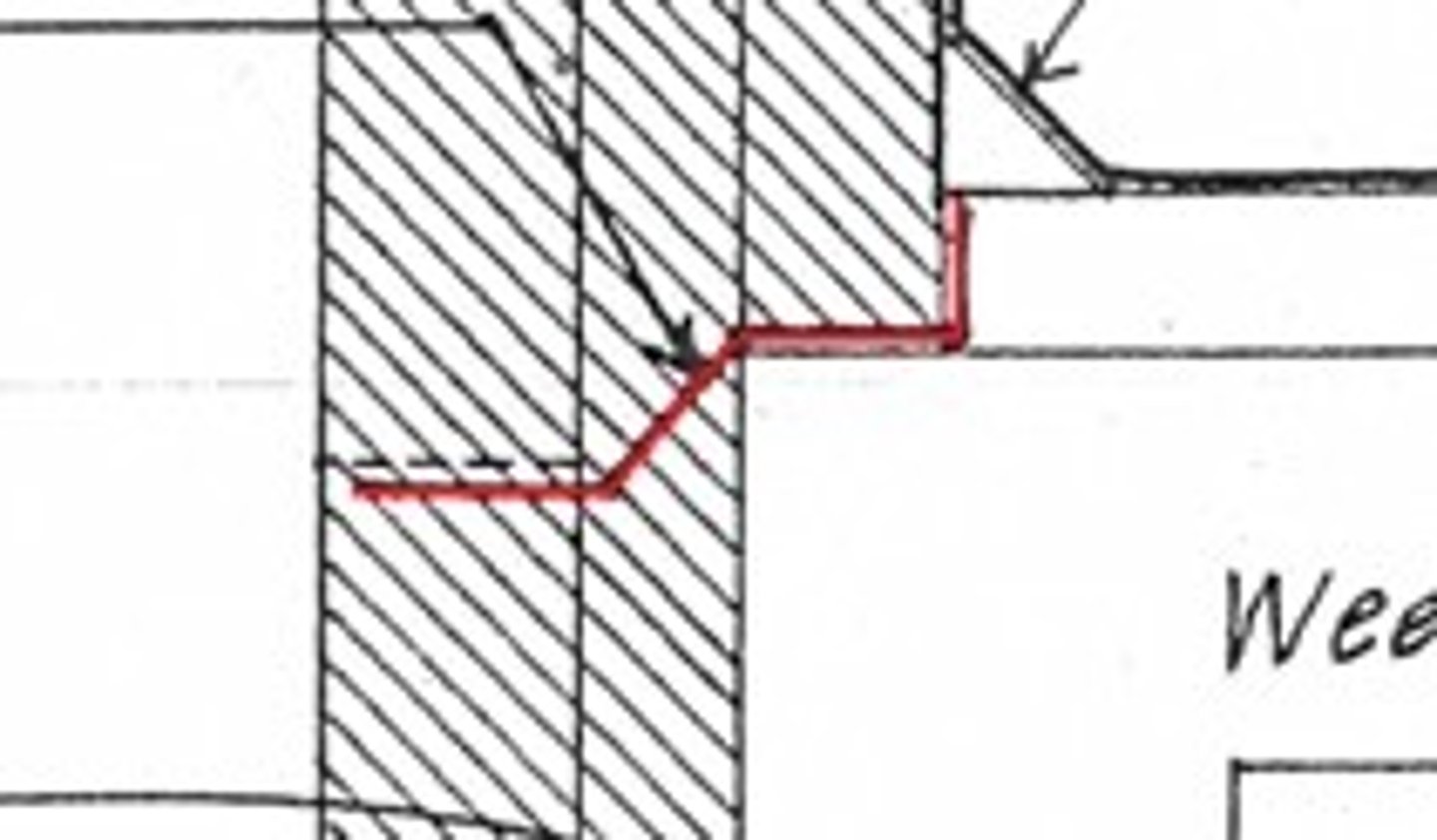
feint
a slight bend in the edge of a flashing forming a capillary break
pressure-equalized design
wall construction employing a rainscreen to eliminate any difference in air pressure between the exterior and the interior that would cause rainwater to move through joints in the wall
rainscreen principle
a concept for preventing the penetration of wind-driven rain through a wall, utilizing a rainscreen backed by a confined air space to shield an inner barrier where the primary air and vapor seals are located
rainscreen
an exposed outer layer of a wall, having openings designed to deter the penetration of rainwater and to equalize the air pressures on opposite sides of the facing
surface tension
the elastic-like force existing in the free surface of a liquid
capillary action
a manifestation of surface tension by which the greater adhesion of a liquid to a solid surface than internal cohesion of the liquid itself causes the liquid to be elevated against a vertical surface
wick
to draw off liquid by capillary action
capillary break
a space between two solid surfaces made wide enough to prevent the capillary action of moisture through the space
damp course
a horizontal layer of impervious material laid in a masonry wall to prevent the capillary rise of moisture from the ground or a lower course
cap receiver
a metal strip interlocking with and securing a cap flashing
cap flashing
flashing turned down to protect base flashing and prevent water from entering the joint; also called "counterflashing"
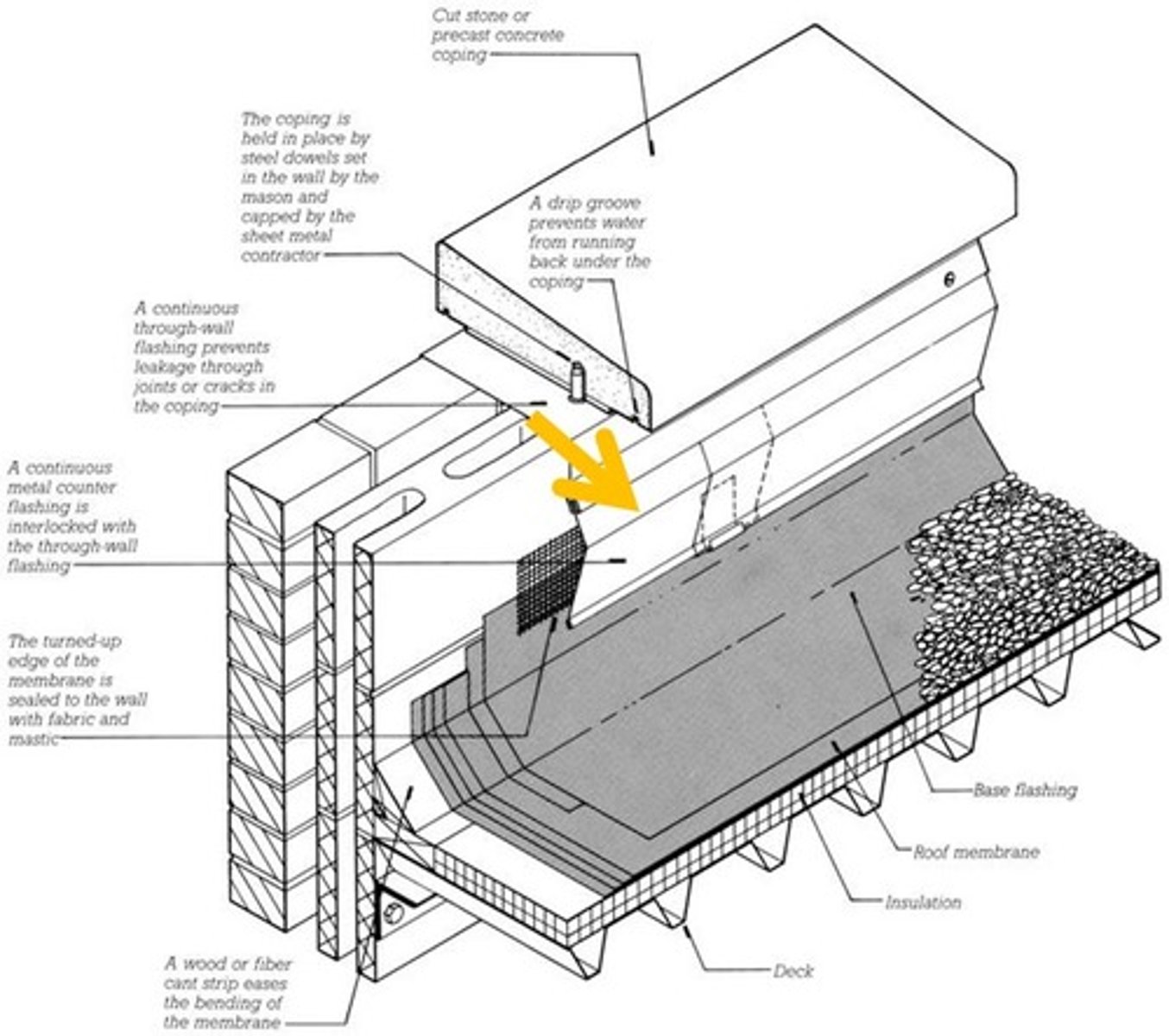
base flashing
flashing covering and protecting the joint between a roof and the vertical surface of a wall, parapet, or chimney
parapet skirting
roofing felt turned up against a parapet wall
cant strip
an inclined or beveled strip changing the pitch of a roof slope or rounding out the angle between a flat roof and a parapet [A]
![<p>an inclined or beveled strip changing the pitch of a roof slope or rounding out the angle between a flat roof and a parapet [A]</p>](https://knowt-user-attachments.s3.amazonaws.com/54b21d2c-e1aa-46d2-aeb6-6e45fba119d8.png)
tag
a strip of sheet metal folded over and used as a wedge to secure flashing in a masonry joint
lead wedge
a tapered piece of lead for securing flashing in a reglet
reglet
a groove cut or formed in a vertical surface to receive flashing
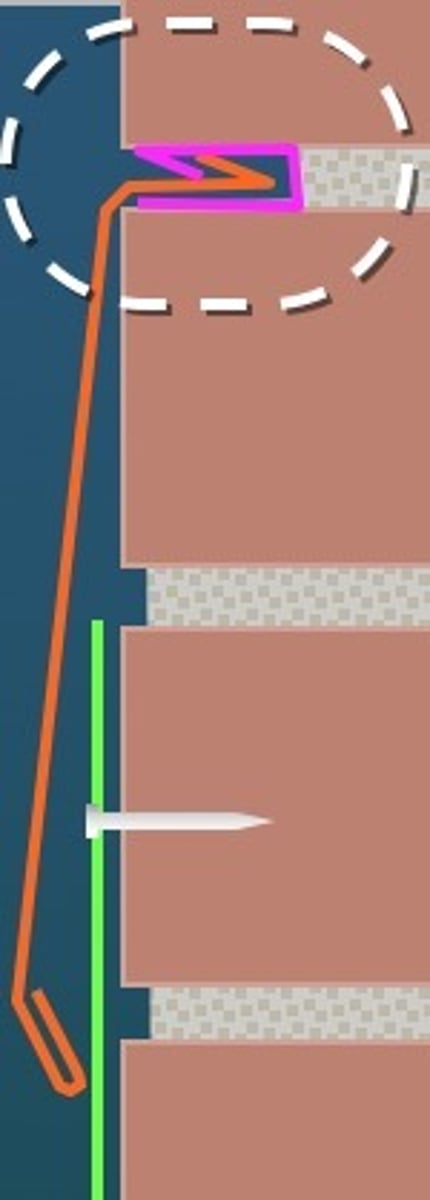
step flashing
flashing covering and protecting the intersection of a wall and the sloping part of a roof, consisting of L-shaped pieces that step down to follow the slope of the roof
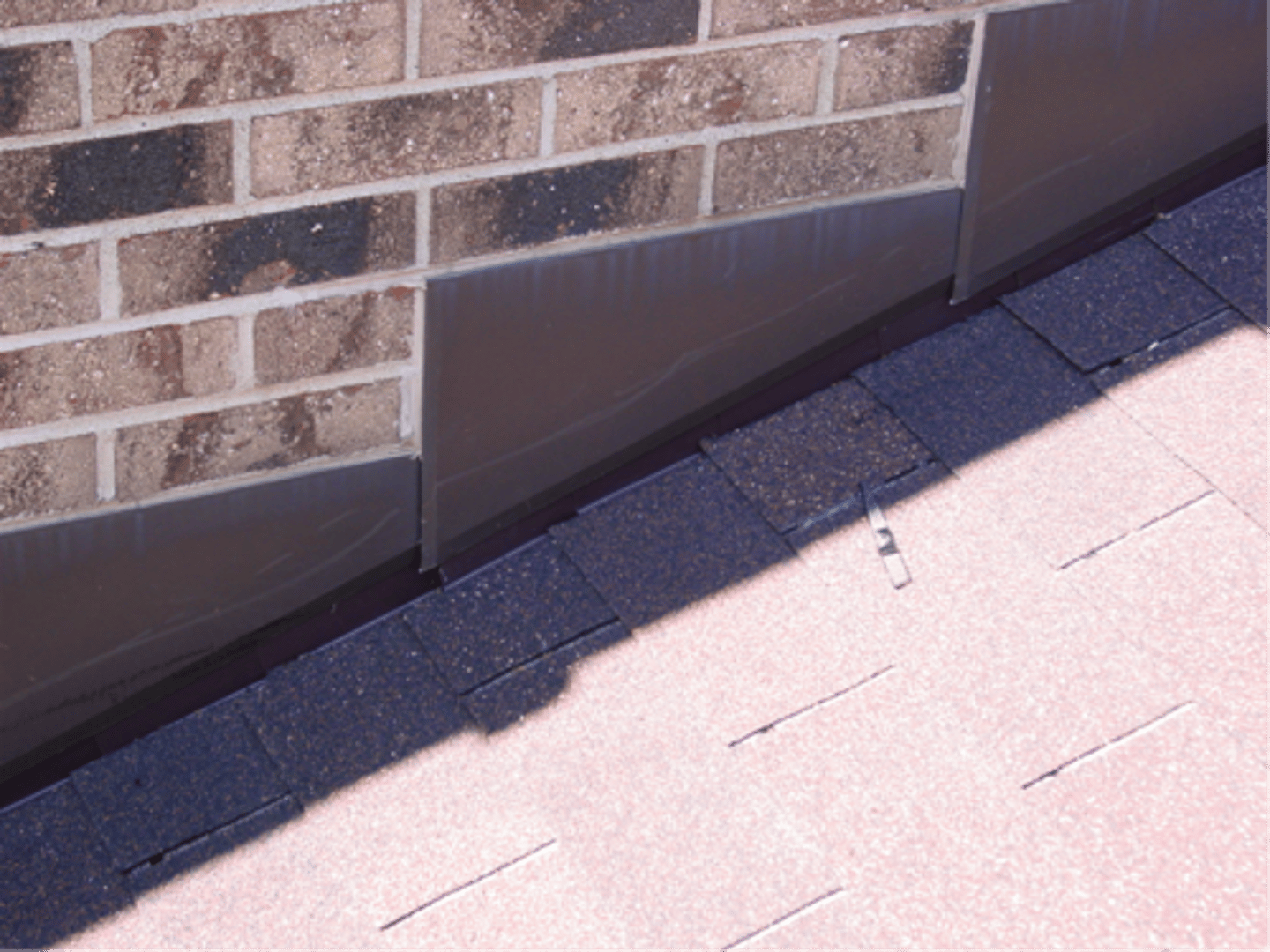
passing
the distance by which one sheet of flashing overlaps another
filleting
material, such as mortar, used as a substitute for flashing where a sloping roof meets a wall
collar
a metal flashing for a vent pipe projecting above a roof deck
roof flange
a flange that fits around and provides a raintight seal for a ven pipe penetrating a roof deck
joint sealant
any of various viscous substances injected into a building joint, curing to form a flexible material that adhered to the surrounding surfaces and seals the joint against the passage of air and water
joint movement
the change in width of a building joint resulting from a change in temperature
extensibility
the capacity of a sealant to be extended in tension
high-range sealant
a joint sealant of polysulfide, polyurethane, or silicone capable of elongations up to 25%, used for sealing joints in curtain-wall systems
medium-range sealant
a joint sealant of butyl rubber or acrylic capable of elongations up to 10%, used for sealing nonworking or mechanically fastened joints
caulk
a low-range joint sealant used for filling or closing a seam, crevice or crack in order to make it watertight and airtight
bead
a narrow deposit of sealant applied to a building joint
bond face
the surface of a building component or joint that serves as a substrate for sealant and to which the sealant is bonded
substrate
any material that underlies and serves as a base or foundation
primer
a liquid for improving the adhesion of a sealant to a substrate
joint filler
a compressible strip, rod, or tube of resilient material, such as neoprene or butyl, used for filling a joint and controlling the depth of a sealant; also called "backup rod"
bond breaker
any of various materials, such as polyethylene tape, used for preventing the adhesion of a sealant to the bottom of a joint
construction joint
a joint between two successive placements of concrete, often keyed or doweled to provide lateral stability across the joint

dowel
a short reinforcing bar extending equally into two abutting sections of concrete to prevent differential movement

expansion sleeve
a pipe sleeve that allows the housed element to move freely in a longitudinal direction
waterstop
a flexible strip of rubber or plastic inserted across a concrete or masonry joint to prevent the passage of water
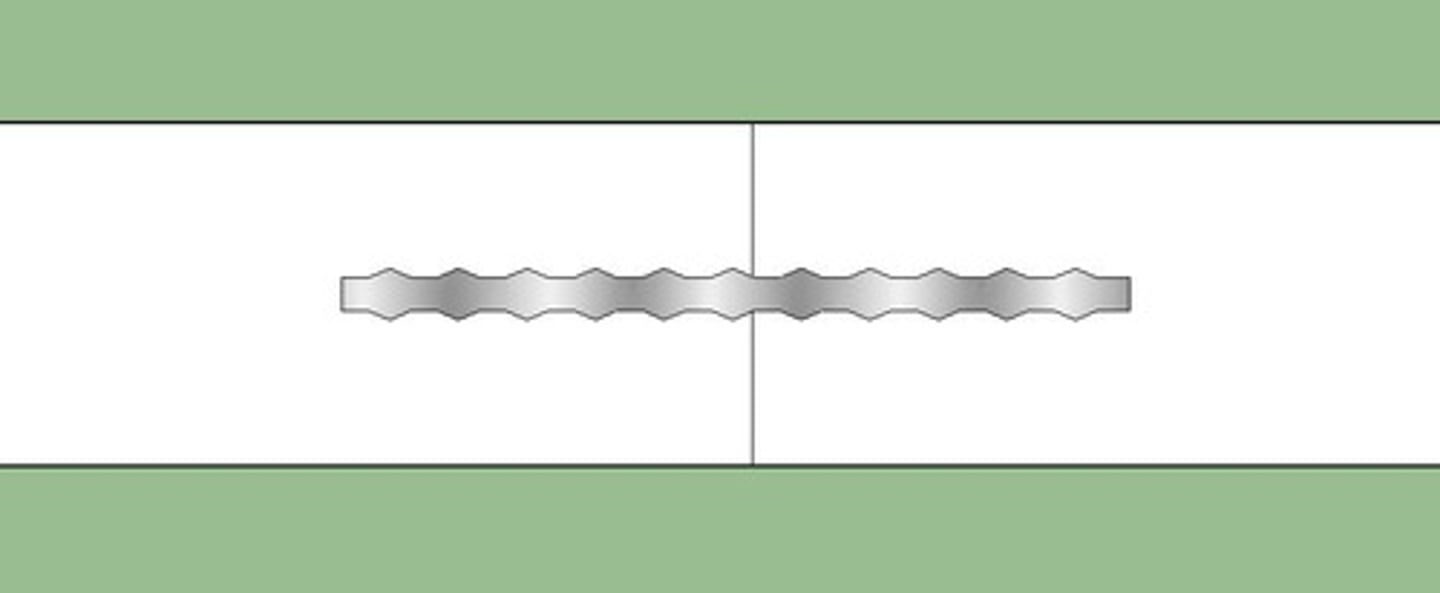
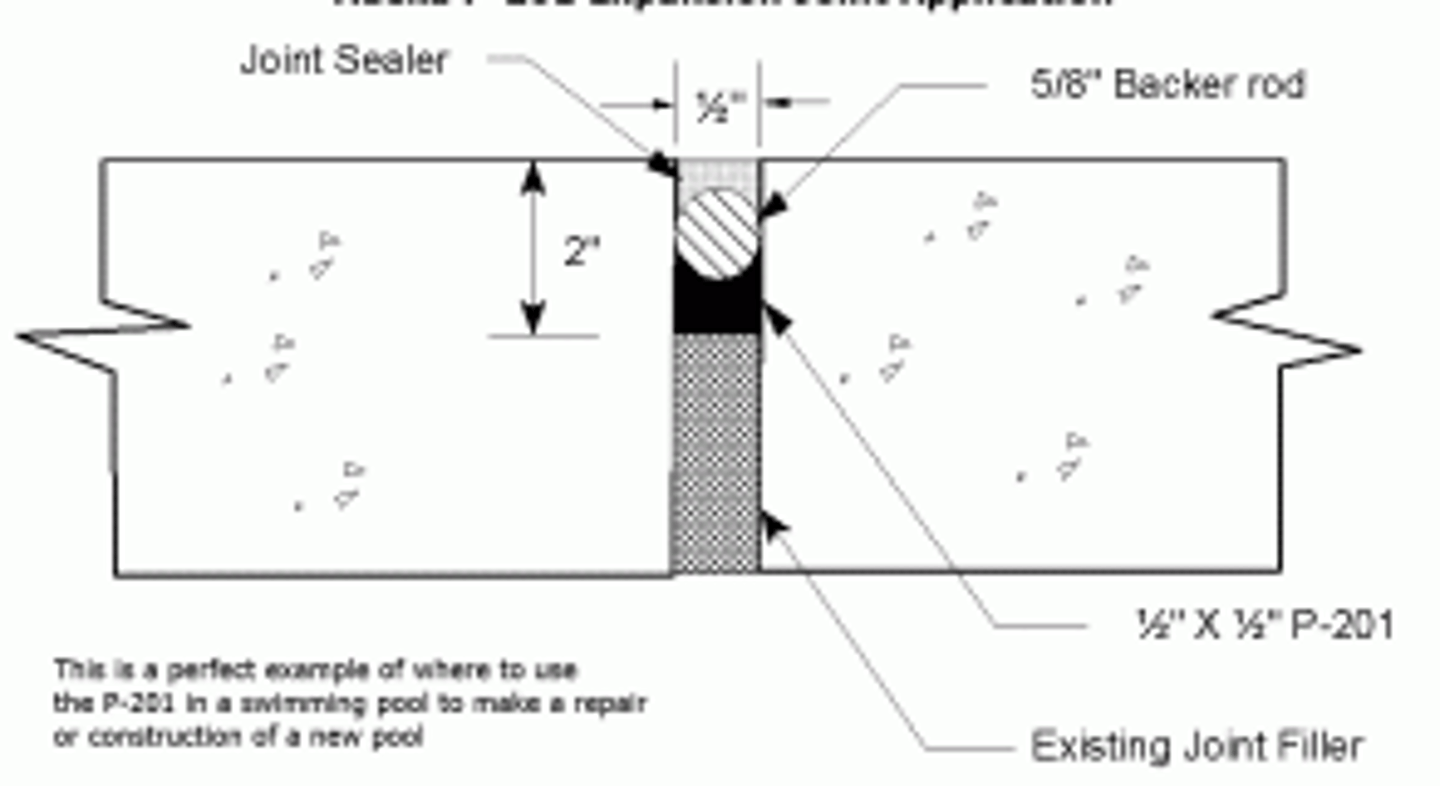
expansion joint
a joint between two sections of a building or structure permitting thermal or moisture expansion to occur without damage to either part
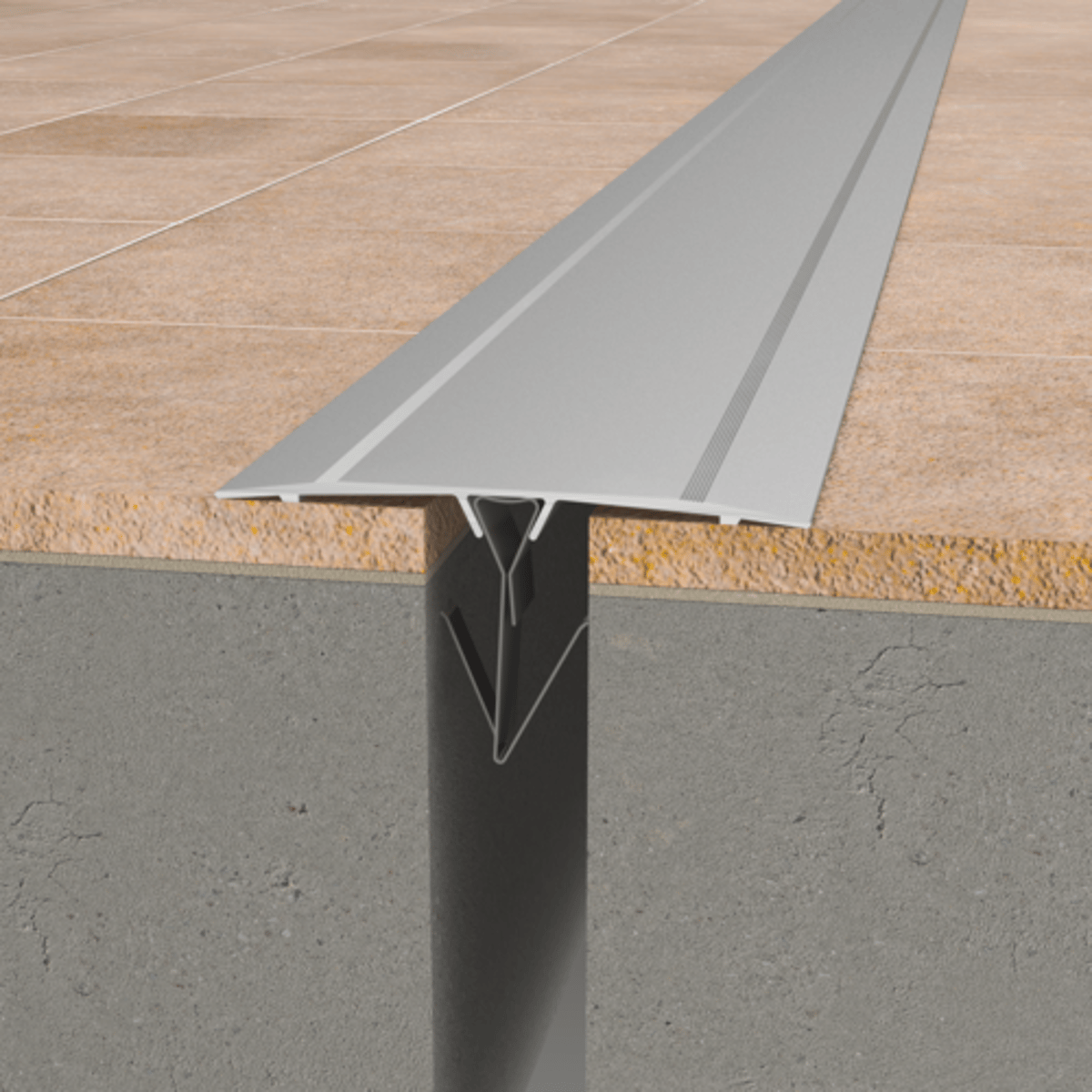
expansion joint cover
a prefabricated cover for protecting an expansion joint while allowing relative movement between the two parts being connected
control joint
a continuous groove or separation formed, sawed, or tooled in a concrete or masonry structure to form a plane of weakness and thus regulate the location and amount of cracking resulting from drying shrinkage or thermal stresses
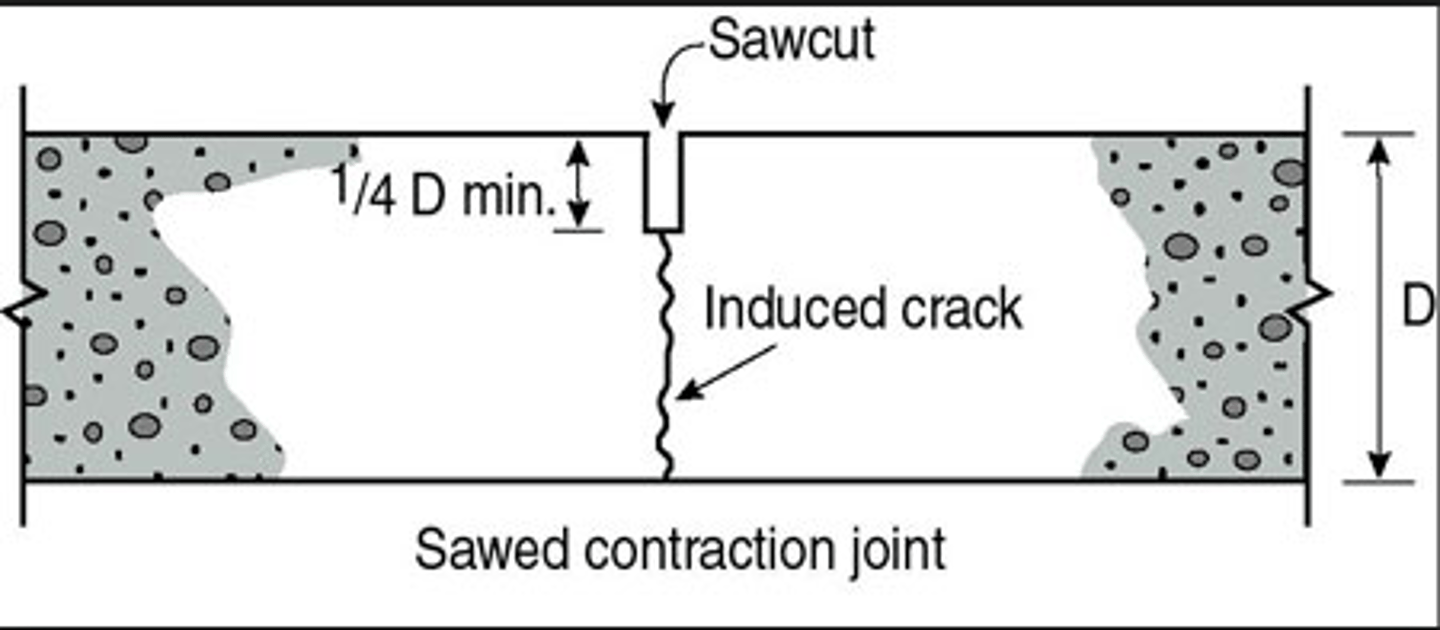
contraction joint
a joint between two parts of a structure, designed to compensate for the contraction of either part
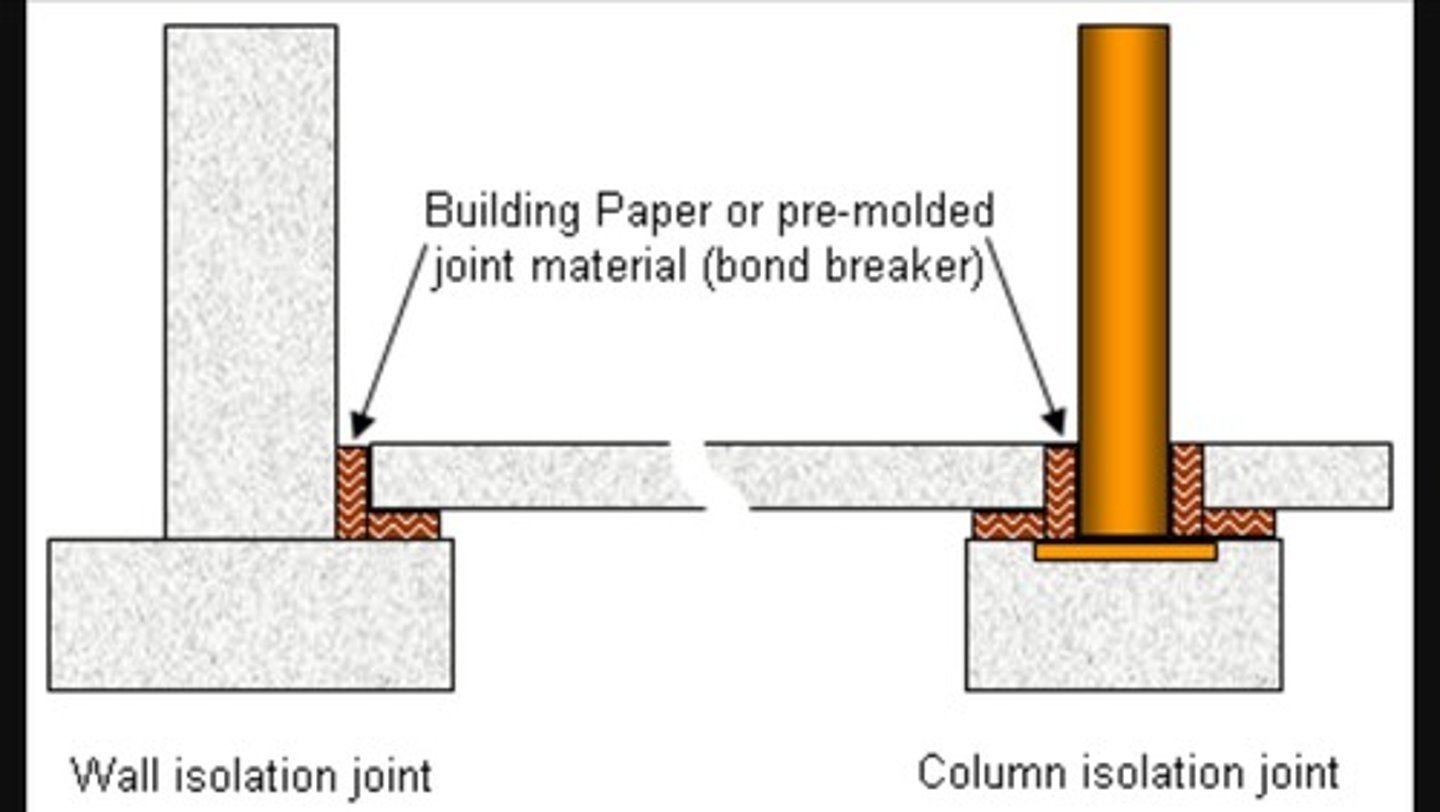
isolation joint
a joint separating two sections of a structure so that differential movement or settlement can occur between the parts